The observable universe the portion of the universe that we can in principle observe from Earth this isn't the entire universe however which is thought to be much larger but rather the section of the cosmos from which light has had enough time to reach us since the beginning of the cosmic time within this vast expanse lies a cosmic web of galaxies stars planets and an array of astronomical phenomena each telling a Unique story about the universe's history and its Dynamic nature the universe is estimated to be around 13.8 billion years old a figure that serves as
a testament to the vast evolving Cosmos that surrounds us this age is determined through a combination of observations and theoretical models with the cosmic microwave background radiation playing a pivotal role this radiation is the Afterglow of the Big Bang acting as a Snapshot of the infant Universe when it was just 380,000 years old by studying its properties scientists can work backwards to estimate the age of the universe Additionally the age of the oldest stars and the rate of expansion of the universe known as the Hubble constant provide crucial Clues by measuring the distance 2 and
the velocity of receding galaxies astronomers can calculate how long it Has taken for the universe to reach its current state together these pieces of cosmic evidence build a compelling picture of a universe that began billions of years ago continually expanding and evolving with Mysteries yet to be unraveled just as astronomers explore the vast Universe to understand its Origins many of us navigate the equally expansive Digital Universe but unlike the physical Cosmos Our online Universe can often feel like a black hole for personal privacy consider how unsettling it is when your private information like your full
name email or home address is exposed and traded across various platforms available to anyone who's looking I recently did a Google search of my own name and found my details on multiple data broker sites which was not only Sur surprising but incredibly unsettling unfortunately even companies you trust Can put your information at risk I don't know if you saw this but AT&T revealed that over 73 million customer records both existing and former customers were released on the dark web they recommend those affected use strong passwords monitor account activity and consider credit freezes or fraud alerts
from credit bureaus well Aura the sponsor of today's video handles all this for me and best of all I don't have to Download several different apps just because a company couldn't keep my data secure aura's features offer added Peace of Mind much like the peace we get from understanding the vast Cosmos just as we use Advanced Technologies to protect our astronomical observatories Aura uses sophisticated technology to keep our personal information safe I truly believe in taking every step possible to protect my personal universe as diligently as we Protect our view of the night sky you
can check out Aura for yourself and start a 2E free trial by visiting aura.com spacedust by using Aura you're not just locking the front door you're ensuring all entries are secure allowing you to explore the vast Digital Universe without fear in space four fundamental forces of nature act as the architects of everything we observe from the smallest Particles to the largest structures in the universe these forces are gravity electromagnetism the weak nuclear force and the strong nuclear force gravity perhaps the most familiar is the force of attraction between objects with mass or energy it's the
reason planets orbit stars and galaxies can Clump together electromagnetism governs the interactions between charged particles binding electrons to nuclei to form atoms and setting the stage for Chemistry and Life as We Know It the weak nuclear force is responsible for radioactive decay and certain types of nuclear reactions playing a crucial role in the nuclear processes that power our sun lastly the strong nuclear force binds quarks together to form protons and neutrons and holds these particles in the nucleus of an atom overcoming the repulsive force of the proton positive charges these four forces each distinct in
their own right weave together the Complex and beautiful Universe in which we reside driving the phenomena that underpin reality Dark Matter a term that evokes images of the Unseen and unknown refers to a hypothetical type of matter that does not emit absorb or reflect light making it completely invisible to current telescopic technology despite its elusive nature dark matter is believed to constitute about 85% of the total matter in the universe its presence is inferred from its Gravitational effects on inv visible matter radiation and the large scale structure of the cosmos for instance galaxies spin at
such speeds that without the presence of a significant amount of unseen Mass they would tear themselves apart similarly the gravitational lensing effect where light from distant galaxies is bent as it passes through a foreground Galaxy suggests there is far more mass present than what we can see Dark Matter plays a Critical role in the cosmos it acts as the scaffolding for galaxies and clusters of galaxies influencing their formation and evolution without Dark Matter the universe as we know it would not exist making it a fundamental but profoundly mysterious component of the cosmic puzzle Dark Energy
an enigmatic Force permeating the fabric of the cosmos plays a pivotal role in the universe's expansion unlike gravity which pulls Objects toward each other Dark Energy exerts a repulsive Force causing the universe to expand at an accelerating rate this phenomenon was discovered in the late 1990s when astronomers studying distant Supernova found that these exploding stars were further away than theoretical models had predicted indicating that the universe's expansion was speeding up not slowing down as previously assumed Dark Energy constitutes about 68% of the total energy content of the universe dwarfing the contributions of both dark matter
and ordinary matter its exact nature remains one of the greatest mysteries in modern cosmology but its effects are undeniable by driving the accelerated expansion of the universe Dark Energy shapes the fate of all Cosmic structures determining how galaxies stars and other objects will evolve over Cosmic time its presence challenges our understanding of physics Presenting profound questions about the origin composition and ultimate Destiny of the universe the cosmic microwave background radiation CMB is often heralded as the Afterglow of the Big Bang serving as a Monumental discovery that offers a glimpse into the infant Universe this nearly
uniform radiation fills the entire universe and is observed in the microwave part of the electromagnetic spectrum it originates from a time Approximately 380,000 years after the big bang an era when the cosmos cooled enough for protons and electrons to combine into neutral atoms allowing light to travel freely for the first time the existence of the CMB was predicted by theorists in the mid 20th century and was serendipitously discovered in 1965 by Aro penzias and Robert Wilson a discovery that earned them the Nobel Prize in physics the CMB is incredibly Uniform with temperature variations of only
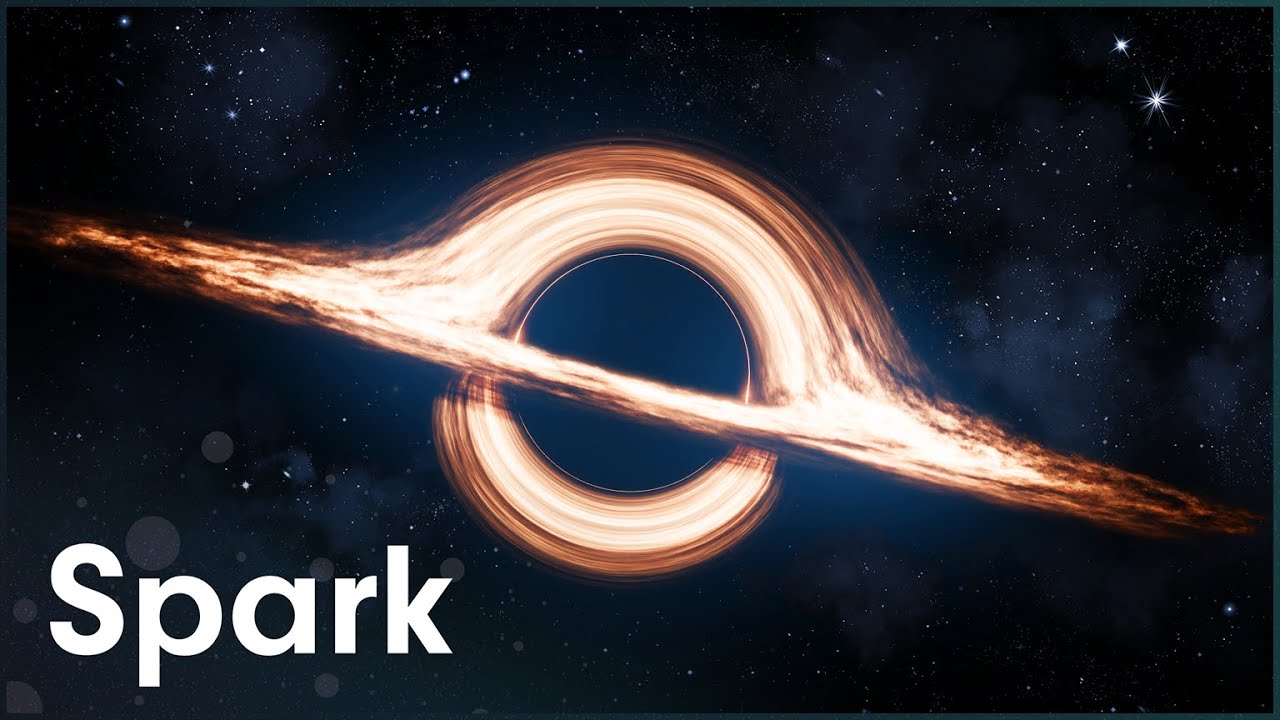
one part in 100,000 yet these tiny fluctuations provide a wealth of information about the early Universe including its composition age and the process of structure formation studying the CMB has become a crucial tool in cosmology helping scientists piece together the history and structure of the universe with unprecedented detail black holes those enigmatic regions of SpaceTime demonstrating Gravity's ultimate dominance form primarily from the remnants of massive stars that have ended their life cycles when such a star exhausts its nuclear fuel it undergoes a catastrophic collapse under its own gravity leading to a supernova EXP explosion if
the core remaining after the explosion is sufficiently massive more than about three times the mass of the Sun it will collapse into a black hole there are three primary types of black holes Recognized by scientists based on their Mass Stellar Mass black holes which are up to 20 times more massive than the sun super massive black holes which are millions to billions of times more massive than the Sun and lie at the centers of galaxies including our own Milky Way and intermediate Mass black black holes which bridge the gap between Stellar mass and super massive
black holes though they are the most elusive each of these black holes plays a Distinct role in the cosmos influencing the evolution of galaxies stars and possibly even the structure of the universe itself through their massive gravitational pull and mysterious properties super massive black holes lurking at the centers of galaxies play a fundamental role in the formation and evolution of galaxies acting as the celestial architects of the universe initially thought to be a rare anomaly these Cosmic behemoths are now believed To reside in the heart of nearly every large Galaxy including our own Milky Way
the intricate dance between super massive black holes and the galaxies that host them is evident in several key astronomical observations one of the most compelling is the tight correlation between the mass of a super massive black hole and the velocity dispersion of the stars in the bulge of its host Galaxy suggesting a symbiotic relationship that influences both the Growth of the black holes and the formation of the galaxies themselves the mechanism behind this interplay is thought to involve active Galactic nuclei AGN phases in which super massive black holes are actively accreting material during this process
they release vast amounts of energy in the form of radiation and Powerful Jets which can heat and disperse the surrounding gas thereby regulating star formation in the Galaxy this feedback Mechanism is crucial for explaining why the universe does not contain as many large galaxies as would be expected if star formation were left unchecked super massive black holes serve as both the anchors and sculptur of galaxies guiding their growth and shaping their properties in a cosmic ballet that spans billions of years wormholes a concept beloved by science fiction enthusiasts and the theoretical physicists alike are Proposed
passages through SpaceTime that could create shortcuts for long Journeys Across the Universe invisioned by Einstein's theory of general relativity wormholes are solutions to the equations that describe the gravitational field suggesting that the fabric of SpaceTime could be bent and connected forming a tunnel-like structure with two ends at separate points in the universe in theory this could allow for instantaneous travel between these two Points transcending the vast distances and the constraints of the speed of light that otherwise limit our ability to explore the cosmos despite their tantalizing potential the existence of wormholes remains purely theoretical even
if they do exist numerous challenges would need to be overcome to make them traversible a primary concern is stability theoretical models suggest that wormholes would instantly collapse upon Formation without some form of exotic matter to keep them open matter that behaves in way is contrary to known physics exerting negative pressure or anti-gravity additionally navigating a wormhole if possible would likely require energy amounts and Technologies far beyond our current capabilities consequently while wormholes ignite our imaginations and serve as a fertile ground for speculation and research they firmly remain within the realm of Theoretical physics patiently awaiting
empirical evidence or technological leaps that could bring them within our reach gravitational waves or ripples in the fabric of SpaceTime that travel at the speed of light generated by some of the most violent and energetic processes in the universe such as merging neutron stars black holes or even the aftershocks of the Big Bang itself these waves carry information about their Origins and about the nature of gravity That cannot be obtained through other astronomical tools Einstein's theory of general relativity predicted the existence of gravitational waves in 1916 posit in that massive objects accelerate or orbit each
other the warping of SpaceTime can propagate outwards much like ripples spreading on the surface of a pond after a stone is thrown into it the first direct detection of gravitational Waves by the laser Interferometer gravitational wave observatory ligo in 2015 confirmed Einstein's Century old prediction marking a Monumental moment in the field of physics and astronomy this observation not only confirmed the existence of gravitation waves but also provided the first direct evidence of binary black hole merges opening a new window for observing the cosmos the ability to detect these waves means scientists can now listen to
the cosmos Using these ripples to study events in the universe that are invisible or difficult to see with traditional telescopes gravitational waves thus affirm the predictions of general relativity in a spectacular fashion revolutionizing our understanding of the universe and confirming that SpaceTime is indeed Dynamic and malleable the shape of the universe a topic that continues to Fascinate cosmologists remains one of the grand Questions in modern astrophysics according to general relativity and supported by observations of the cosmic microwave background radiation the universe can be thought of in three possible shapes flat spherical or hyperbolic each implying
different implications for the universe's fate and size the most recent and precise measurements particularly those from the plank satellite suggest that the universe is flat with only a 2% margin Of error in a flat universe parallel lines never meet and the geometry we learn in school holds at Cosmic scales this flatness implies that the Universe extends infinitely in every direction provided it has has the same properties and laws of physics everywhere as observed however the question is nuanced as the universe could be flat but also curved back on itself in a higher Dimension much like
the surface of an Enormous balloon making it finite but unbounded despite the strides in observational cosmology questions about the shape of the universe remain at the frontier of what we can observe intertwined with the mysteries of Dark Matter dark energy and the Very fabric of space SP time itself the question of whether the universe is finite or infinite remains one of the most compelling and unresolved inquiries in Cosmology this fundamentally boils down to the universe's shape and expansion if the universe is flat as current data from the cosmic microwave background radiation suggests then it could
be infinite extending forever in all directions however a flat universe does not preclude a finite scenario if it curves cves back on itself in a higher dimension in a way that is not immediately apparent to its Inhabitants on the other hand if the universe were closed and curved like a sphere it would be finite meaning you could in theory travel in One Direction and eventually end up where you started much like circumnavigating the Earth the expanding nature of the universe driven by dark energy adds another layer of complexity to this question making it challenging to
determine definitively with our current understanding and technological Capabilities consequently the question of the universe's finiteness or infiniteness remains open a testament to the enigmatic nature of the cosmos and the limits of human inquiry beyond the observable universe lies a realm steeped in mystery and speculative thought as it encompasses regions of space that light has not had enough time to Traverse since the beginning of the universe to reach us the observable universe a sphere with a Radius of approximately 46.5 5 billion light years is all that we can currently observe encompassing galaxies stars planets and other
Celestial phenomena whose light has reached us over the span of 13.8 billion years however what lies Beyond is a subject of much conjecture and theoretical exploration theories suggest that the Universe continues Beyond this observable limit potentially infinite in extent filled with more galaxies and Structures similar to those we can observe some models propose a Multiverse an ensemble of multiple universes each with different physical constants and laws others speculate about the nature of space and time in these unobservable regions pondering whether they might significantly differ from the parts of the universe we can see however without
direct observations or signals from Beyond the observable boundary these ideas remain speculative grounded in Theoretical physics and mathematical models rather than empirical evidence the mystery of what lies beyond the observable universe challenges our understanding of cosmology inviting us to think deeply about the nature of reality and our place within it the prevailing view among physicists and cosmologists is that the laws of physics are Universal and consistent throughout the observable universe this foundational assumption underpins much Of modern astronomy and physics enabling scientists to study Cosmic phenomena billions of light years away with the expectation that the
same principles governing matter and energy here on Earth apply equally across the cosmos observations across a wide range of scales from the behavior of galaxies to the cosmic microwave background radiation the Afterglow of the Big Bang support this view showing remarkable consistency with the predictions of Theories such as general relativity and quantum mechanics however the question of whether these laws hold beyond the observable universe in regions we cannot see or measure remains open and is a subject of theoretical speculation some theories such as those proposing the existence of a Multiverse suggest that different regions of
SpaceTime could exhibit varying physical constants or even different laws of Physics altogether despite these speculative Frontiers within the vast expanse of the observable universe all evidence to date suggests a remarkable uniformity in the laws of physics hinting at a deep underlying Harmony in the fabric of reality in the grand tapestry of the universe the story of how the elements came to exist is a fascinating narrative that unfolds over billions of years at the Beginning moments after the big bang the universe was a hot dense sea of protons neutrons and electrons as the universe expanded and
cooled the first atoms began to form primarily hydrogen the simplest and most abundant element along with helium and Trace Amounts of lithium but this was just the beginning the real magic happened within the cores of stars gigantic nuclear furnaces that fused these primordial elements into heavier ones through the process known As Stellar nucleosynthesis Stars through their lifetimes Forge elements like carbon oxygen and ion essential to Life as we know it in the cataclysmic finale of their life cycles for the more massive stars at least Supernova explosions scatter these elements across space seeding the clouds of
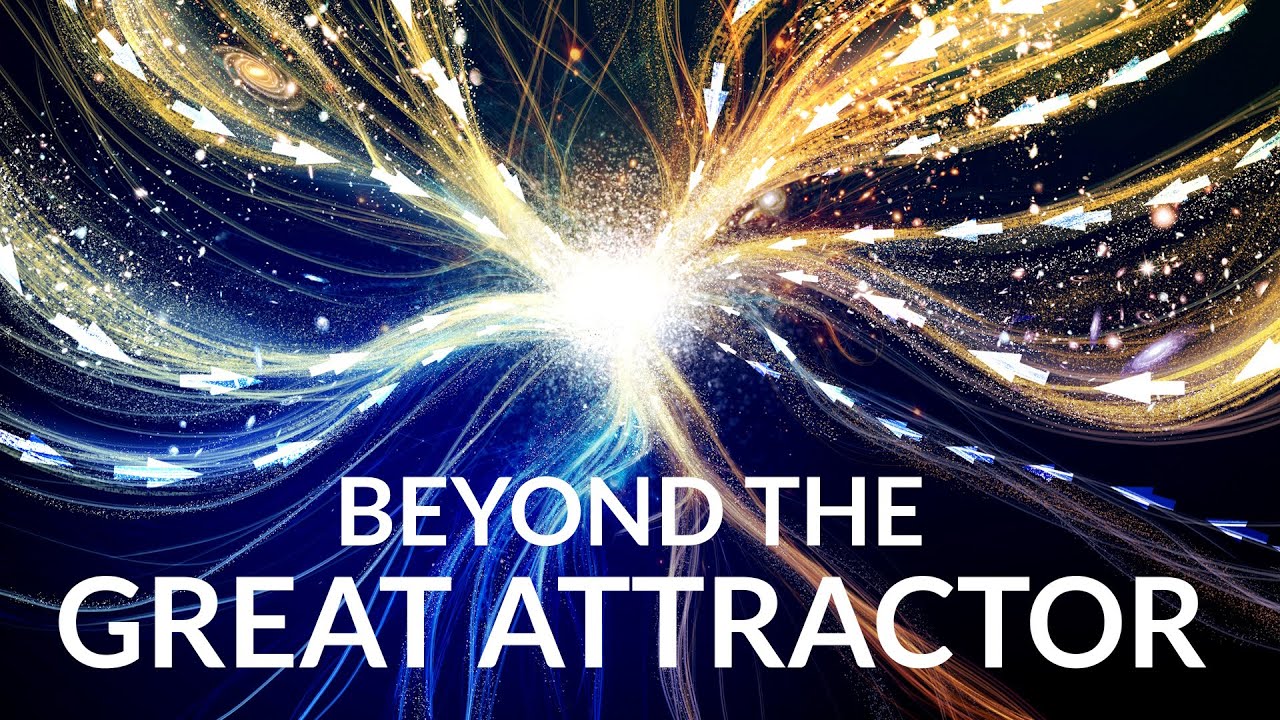
gas and dust from which new stars stars planets and eventually life can emerge so when we look at the diverse array of elements on The periodic table we're seeing the handiwork of countless stars that lived and died over the eons bequeathing us the building blocks of the cosmos the great attractor is one of the universe's most intriguing and mysterious phenomena it is an enormous gravitational anomaly located roughly 250 million light years away from the Milky Way in a region of space known as the Norma cluster despite being invisible to the naked eye and even to
Many of our telescopes due to its position behind the zone of avoidance a region of space cluttered with stars and dust from our own Galaxy that blocks light astronomers have been able to deduce its presence through its gravitational effects this massive entity is pulling not just our galaxy but hundreds or thousands of nearby galaxies toward it with a gravitational force that is both bewildering and or inspiring the reason why the great ATT Tractor is pulling galaxies toward it lies in the fundamentals of gravity as described by Isaac Newton and refined by Albert Einstein matter attracts
matter the great attractor estimated to contain the mass of tens of thousands of Milky Ways exerts a gravitational pull on everything around it the pull is a result of its massive concentration of mass which includes not just stars and planets but also Dark Matter a mysterious substance that does not emit Light or energy yet constitutes most of the mass in the universe as galaxies including our own fall into its gravitational well they are compelled to move toward the greater tractor journeying through the vast expanses of Intergalactic space drawn inexorably by its immense gravitational influence this
Grand Cosmic dance Guided by the force of gravity highlights the interconnectedness of all structures in the Universe cosmic strings are theoretical defects in the fabric of SpaceTime predicted by some models of the early Universe they are essentially one-dimensional cracks through which immense energy is concentrated line-like structures that stretch across the cosmos far longer than galaxies but incredibly thin nearly invisible originating from the tumultuous conditions of the universe's birth in the Big Bang nevertheless the search for Cosmic strings continues to excite scientists as they probe the universe's earliest moments and the fundamental laws of physics confirmation
of their existence would not only be a Monumental Discovery in cosmology but would also provide a tangible connection to the extraordinary conditions of the universe's formation the inflationary Epoch of the universe is a period that took place approximately a tiny fraction of a Second after the big bang during which the universe expanded at an exponential rate this remarkably brief Epoch lasting from around 110 billionth of a trillionth of a trillionth of a second to 100 thousandth of a trillionth of a trillionth of a second after the universe's birth is thought to have played a critical
role in shaping the cosmos before this period the universe was unimaginably dense and hot then driven by a mysterious Force associated With a hypothetical particle or field dubbed the inflaton space itself began to expand faster than the speed of light during this rapid expansion the universe increased in size by a factor of at least 100 quadrillion smoothing out any irregularities and setting the stage for the large scale structure we observe in the cosmos today the inflationary Epoch not only helps to explain why the universe appears flat and homogeneous on large scales but also seeds the
slight Irregularities that later evolved into galaxies and clusters of galaxies as the universe expanded it cooled allowing energy from the inflationary period to convert into particles eventually leading to the formation of matter as we know it the inflationary epoch though incredibly brief was a pivotal chapter in the history of the universe setting the initial conditions from which stars galaxies and ultimately life could emerge the concept of the universe Cooling down to absolute zero a theoretical temperature representing the complete absence of heat or thermal motion is intriguing but highly improbable due to the laws of thermodynamics
and the nature of the universe itself absolute zero quantitatively measured a zero Kelvin - 273.15 de C or 45967 de f is a state that has never been achieved even in the most controlled scientific experiments as the Universe expands it does in fact cool down this cooling is evidenced by The Cosmic microwave background radiation the Afterglow of the Big Bang which has cooled to a mere 2.7 Kelvin over the 13.8 billion years of cosmic history however reaching absolute zero is another matter altogether according to the third law of thermodynamics an infinite amount of work is
required to cool a system to absolute zero making it practically unreachable moreover the Presence of the cosmic microwave background radiation itself means the universe is filled with a low level of energy keeping it above absolute zero additionally as the universe continues to expand Dark Energy a mysterious Force accelerating this expansion plays a crucial role rather than leading to a state of absolute cold the current understanding suggests the universe may end in a scenario known as the heat death where it achieves a state Of Maximum entropy or disorder with energy distributed evenly and no place colder
or warmer than any other in this far future while temperatures might be extremely low they would still be above absolute Zer meaning the universe with its vast expanse and the laws of physics governing it will likely never cool down to absolute zero the largest voids in space often referred to as super voids are immense regions of the cosmos almost entirely devoid of galaxies stretching Across hundreds of millions of light years one of the most notable among these is the boties void discovered in the 1980s which is about 250 million light years across and contains only
a handful of galaxies a poultry count given its vast expanse these Cosmic voids Are Not Mere empty spaces they are fundamental components of the universe's large scale structure often found between filaments in the cosmic web a network of interconnected galaxies and Galaxy clusters super voids offer valuable insights into the universe and its Evolution their existence and properties are closely tied to dark matter and dark energy two of the most fxing elements in cosmology dark matter through its gravitational influence is thought to play a crucial role in shaping the large scale structure of the universe including
the formation of filaments and voids Dark Energy conversely drives the Universe is accelerated expansion affecting the Dynamics and development of voids over Cosmic time studying these voids also provides critical clues about the initial conditions of the universe following the Big Bang inflation Theory which posits a rapid expansion of the universe in its infancy predicts the kind of fluctuations in the density of the universe that could lead to the formation of large scale structures like Voids and filaments observation and Analysis of super voids therefore help astronomers and cosmologists test and refine their theories about the universe's
earliest moments the nature of dark matter and dark energy and the overall dynamics of cosmic evolution [Music] stars begin their life in the cold dense pockets of gas and dust scattered throughout galaxies known as molecular clouds or Stellar nurseries these Regions are predominantly composed of hydrogen the most abundant element in the universe along with helium and Trace Amounts of heavier elements the process of star formation kicks off when part of a molecular cloud begins to collapse under its gravitational pull this can be triggered by various events such as the shock waves from a nearby Supernova
explosion collisions between clouds or the influence of dark matter as the gas and dust collapse the Cloud's Core becomes denser and hotter initiating a battle between gravity pulling material Inward and pressure from the accumulating heat pushing outward when the cause temperature escalates to about 10 million de C nuclear fusion ignites this crucial stage marks the birth of a new star as hydrogen nuclei begin to fuse into helium releasing a tremendous amount of energy in the process this energy produces the star's luminosity and Provides the outward pressure needed to counterbalance the force of gravity setting the
stage for the main sequence phase of the Stars life throughout millions or billions of years depending on their initial mass stars will continue fusing hydrogen into helium in their cores the mass of the star determines its ultimate fate leading it down a path to become anything from a quietly fading white dwarf to a spectacular Supernova leaving behind a Neutron star or black hole thus the life cycle of stars not only illuminates the night sky but also plays a fundamental role in the chemical evolution of the universe forging the elements that make up planets and ultimately
life itself the life cycle of a star is a complex yet fascinating series of events governed largely by the star's mass at Birth initially all stars are formed from collapsing clouds of gas and dust known as molecular clouds which coales Under Gravity to form a protostar this protostar continues to gather Mass from its surroundings until the heat and pressure at its core are sufficient to ignite nuclear fusion marking the birth of a true star for the majority of their existence Stars remain in the main sequence phase during which they fuse hydrogen in into helium in
their cores the length of this phase varies significantly massive stars burn through their hydrogen fuel quickly and may live Only a few million years while smaller Stars such as the sun can continue for billions of years as stars exhaust the hydrogen in their cores they undergo dramatic changes average sized stars like the sun expand into red giants fusing helium into heavier elements such as carbon and oxygen in their core on the other hand the most massive stars become red super Giants capable of fusing elements all the way up to Iron the final stages of a
star's life are dictated by its mass smaller Stars gently shed their outer layers leaving behind a white dwarf which slowly cools over time in contrast massive stars end their lives in a catastrophic explosion known as a supernova which can result in the formation of a neutron star or black hole the Supernova process also plays a crucial role in enriching the interstellar medium with heavier Elements which can then be incorporated Into new stars and planets continuing the cycle of cosmic Evolution thus the life cycle of a star is not only an or inspiring Journey but also
a pivotal mechanism in the universe's ongoing story of creation and transformation binary star systems where two stars are gravitationally bound and orbit a Common Center of mass exhibit a fascinating interplace play that can significantly influence each other's Evolution the extent of their Mutual Influence largely depends on the distance between the stars in close binary systems the effects can be particularly profound one of the most dramatic processes in such systems is mass transfer if one star expands into a red giant its outer layers May extend beyond a threshold known as the r lobe entering the gravitational
influence of its companion the companion star can then accrete this material potentially Leading to significant changes in its mass luminosity and even its evolutionary pathway this Mass transfer can also strip the donor star down to its core hastening its Evolution towards the white dwarf stage binary systems can also experience common envelope phases where one star envelopes the other leading to a shared outer atmosphere this can result in a dramatic reduction in orbital separation and may end with the Stars merging into A single more massive object such merges can lead to the birth of unusual stars
or in the case of compact objects like neutron stars or black holes generate powerful gravitational wave emissions detectable by instruments on Earth moreover the presence of a companion star can alter the fate of a supernova explosion for instance in a close binary system where one star has become a white dwarf accreting matter from it its companion the added Mass can Trigger a thermonuclear explosion leading to a type a supernova this event can completely destroy the white dwarf and impact the evolution of the companion star therefore the Dynamics within binary star systems can lead to a
variety of intriguing and unique astrophysical phenomena showcasing the diversity of Stellar Evolution the mutual gravitational influence of binary companions adds complexity to their life Cycles contributing significantly to our understanding of Stellar physics and the life cycle of stars a supernova is a colossal explosion that marks the end of a star's life cycle characterized by an immense release of energy that can outshine an entire galaxy for a short period there are two primary types of supern noi each caused by different processes the first type known as a type a supernova occurs in a binary star system
where one of the Stars is a white dwarf the white dwarf acrs material from its companion star increasing its mass until it reaches a critical point approximately 1.4 times the mass of the Sun known as the Chandra secar limit at this juncture the intense pressure and heat ignite a runaway thermonuclear reaction that tears the white dwarf apart in a spectacular explosion type A supern noi are particularly valuable to astronomers as standard candles for Measuring Cosmic distances because of their cons consistent Peak brightness the second primary category encompasses type 2 type I and type IC supern
noi all of which arise from the core collapse of massive stars at least eight times the mass of the Sun in these Stars nuclear fusion processes progress from fusing hydrogen into helium and continue through increasingly heavier elements until reaching ion since iron Fusion consumes more energy than it Produces the star can no longer support its own gravitation pull leading the core to collapse the outer layers of the star crash inward onto the core then rebound and blast outward in a supernova explosion the remnants of this cataclysmic event May leave behind a neutron star or black
hole the circumstances leading to a supernova are a testament to the delicate balance between the forces of gravity and nuclear fusion that govern a Stars life And death the study of supernova not only offers insights into Stellar evolution but also influences our understanding of cosmic element formation as these explosions are responsible for dispersing many of the heavier elements essential for planets and life into the universe observing pulsers and magnetars offers astrophysicists a unique window into some of the universe's most extreme environments and the laws of physics That govern them pulses rapidly rotating neutron stars emitting
beams of electromagnetic radiation serve as highly precise Cosmic clocks their steady pulsation allows scientists to probe the universe's structure study the behavior of matter under extreme conditions and test the theory of general relativity especially when observed as part of a binary system pulsar's regular timing has also been pivotal in indirectly confirming the Existence of gravitational waves a key prediction of Einstein's theory of general relativity magnetar a special class of neutron stars with the most intense magnetic fields known as in the universe provide insights into the behavior of matter in exceptionally strong magnetic fields conditions unreplicable
in any earth-based laboratory the study of magnetar helps astrophysicists understand the Dynamics Of supernova remnants the mechanisms powering their immense magnetic fields and the strange behavior of matter in such extreme states they are also associated with spectacular astrophysical phenomena such as soft gamma repeaters and anomalous x-ray pulsers shedding light on high energy processes in the universe both pulsar and magnetars play a crucial role in advancing our knowledge of astrophysics from the Equation of state of neutron Rich matter which influences our understanding of both nuclear physics and the inner workings of neutron stars to the mechanisms
driving their emissions and their impact on the surrounding interstellar medium through these Cosmic Laboratories scientists unravel mystery iies regarding the fundamental forces of nature and the building blocks of the universe the end of a star's life cycle is a profound transformation governed Largely by its initial mass for stars like our sun the journey concludes relatively gently once they exhaust their hydrogen fuel they swell into red giants fusing helium into carbon and oxygen eventually they shed their outer layers into space creating a colorful Cloud known as a planetary nebula what remains is the hot core a
white dwarf which slowly cools and Fades over billions of years for significantly more massive Stars the ending is dramatically different having fused elements up to iron in their caes these Stars no longer generate enough pressure to counteract gravity leading to a catastrophic collapse of the core this triggers a supernova explosion a spectacular event that briefly outshines entire gy GES depending on the mass of the core Left Behind the Stars remnants will become a neutron star an incredibly dense object only a few kilometers in diameter but With a mass greater than the Sun or a black
hole an entity with gravity so strong that not even light can escape such violent deaths are not just Cosmic spectacles they play a key role in The Cosmic cycle of matter supern noi disperse elements heavier than helium Across the Universe seeding future generations of stars and planets with the ingredients necessary for Life the remnants they leave behind neutron stars and black holes continue to astound and Puzzle astronomers with their extreme properties providing key insights into the laws of physics under conditions unattainable on Earth thus the end of a star's life cycle marks not just an
end but a crucial step in the ongoing story of the cosmos neutron stars are the incredibly dense remnants Left Behind after a massive star undergoes a supernova explosion at the end of its life cycle they form when the core of the Collapsing star having exhausted its nuclear fuel is compressed under gravity's immense pull for stars with initial masses between about 8 and 25 times that of the sun this compression forces electrons and protons to merge into neutrons and neutrinos resulting in a compact object overwhelmingly composed of neutrons with a radius of merely about 10 km
but a mass 1.4 to 2.1 times that of the sun this means that neutron stars have an astonishing density with Just a sugar cube sized amount of material from one weighing as much as all Humanity the formation of a neutron star is a critical threshold in the cosmos balancing on the edge between having insufficient Mass to collapse into a black hole and having too much mass to end as a white dwarf the process releases a tremendous amount of energy primarily in the form of neutrinos and the resulting explosion A supernova is one of the universe's
most energetic events momentarily outshining an entire galaxy neutron stars possess magnetic fields billions of times stronger than Earth's and some spin at incredibly high speeds emitting beams of electromagnetic radiation from their magnetic poles when these beams sweep past Earth they appear as pulsing signals and are thus known as pulses scientists study these pulses to conduct experiments in conditions of Gravity and magnetic fields far beyond what could be replicated on Earth offering insights into the fundamental laws of physics neutron stars with their extreme densities strong gravitational fields and Rapid rotation rates remain one of the universe's
most intriguing objects providing a unique laboratory for studying matter under the most extreme conditions predicting exactly when a star will go supernova remain one of the great challenges in astrophysics The life cycle of a star particularly its end stages involves complex physical processes that depend on the star's initial Mass composition and even its rotation rate while astronomers have a general understanding of how Stars evolve and the conditions under which they end their lives as Supernova pinpointing the precise moment when a star will undergo this cataclysmic event is currently beyond our capabilities for massive stars on
the Brink of supernova the process leading to the explosion unfolds over millions of years but the final plunge into Supernova occurs dramatically and swiftly within the last few moments of the star's life signs such as heavy element Fusion in the star's core or a significant increase in neutrino emissions can indicate that a star is nearing the Supernova stage but these signals precede the event by a very short time from a human perspective Making timely warnings difficult advancements in observational Technologies computer simulations and understanding of Stellar physics are improving our ability to model the life cycles
of stars and potentially to forecast their ends more accurately observations of red super Giants the progenitors of type 2 Supernova for instance have shown pre Supernova changes in brightness and behavior hinting at a more turbulent and complex End of life stage than previously thought as research progresses astronom hope to refine their models to the point where predicting a supernova with greater Precision is possible offering deeper insights into the mechanisms of Stellar Evolution and the cosmos at large the Edington limit named after the British astrophysicist Sir Arthur Edington is a theoretical cap on the Luminosity brightness
a star can achieve while maintaining hydrostatic Equilibrium this concept is crucial in understanding how stars and other luminous celestial objects balance the outward pressure of radiation against the inward pull of gravity in simpler terms the Edington limit marks the point at which the outward force of radiation pressure from the light a star emits is equal to the inward force of gravitational pull trying to compress the star if a star's Luminosity surpasses this limit the Intense radiation pressure would overcome gravity potentially causing the star to expel its outer layers and leading to significant Mass loss this
limit isn't just a stellar phenomenon it's also significant in understanding the behavior of accreting black holes and other astrophysical phenomena for instance when material falls into a black hole it heats up and emits radiation if the accretion rate is high enough that the radiation's Pressure exceeds the Edington limit it can prevent additional matter from falling into the black hole effectively capping its growth rate the concept of the Edington limit thus plays a critical role in the study of high mass stars the formation and evolution of black holes and the Dynamics of galaxies it helps astronomers
predict the evolutionary Paths of different celestial objects and understand the mechanisms behind some of The most energetic phenomena in the universe at the heart of stars a cosmic Alchemy converts lighter elements into heavier ones through a process known as nuclear fusion it's in these scorching cores where temperatures soar into millions of degrees that hydrogen atoms under immense pressure fuse together to form helium this Fusion releases an incredible amount of energy part of which radiates outward lighting up the star as stars age and their hydrogen Starts to deplete they begin fusing helium into even heavier elements
like carbon and oxygen the process escalates in more massive stars where the temperature and pressure are Fierce enough to forge elements all the way up to iron however the creation of elements heavier than iron requires even more energy than the star can provide through Fusion this shortfall is overcome during the spectacular death throws of massive stars known as supern noi these Titanic Explosions scatter the Stars enriched guts across the cosmos sewing the seeds for new stars planets and ultimately life thus every atom of carbon every Speck of iron every piece of gold within us is
there because a star somewhere sometime under the unfathomable forces of its existence transmuted simpler elements into the complex beautiful diversity of the periodic [Music] table astronomers employ a variety of Ingenious methods to detect exoplanets those planets orbiting Stars beyond our solar system one of the most pivotal techniques is known as the transit method it hinges on the observation of a star's light dimming slightly when a planet passes in front of it momentarily blocking a fraction of its light this method not only confirms the presence of an exoplanet but can also provide information about the planet's
size depending on how much of the star's Light is obscured another fundamental approach is the radial velocity method which observes the wobbling motion of a star caused by the gravitational pull of an orbiting Planet this wobble affects the star's light spectrum causing a Doppler shift that astronomers can detect while this method reveals the planet's mass it's the combination of both techniques that allows for a more complete understanding of the exoplanet's characteristics such as its Density which hints at its composition these methods among others have led to the discovery of thousands of exoplanets unveiling a rich
tapestry of Worlds that range from gas giants larger than Jupiter to rocky planets that may Harbor conditions suitable for life all lying hidden in the immens vastness of our galaxy The habitable zone often dubbed the goldilock zone is a region around a star where conditions might be just right neither too hot nor too cold for Liquid water to exist on a planet's surface this concept hinges on the understanding that water is a fundamental ingredient for Life as We Know It the significance of this Zone lies in its potential to Harbor extraterrestrial life for a planet
located within this sweet spot the ambient temperatures allow for liquid water to persist fostering the right conditions that might lead to the emergence and sustenance of of Life Importantly the exact boundaries of the habitable zone can vary dramatically depending on the size and temperature of the star larger hotter stars have habitable zones that are farther out while smaller cooler stars have their habitable zones much closer in the search for exoplanets within habitable zones has intensified over the years with astronomers particularly keen on identifying earth-sized worlds that might host similar environmental Conditions to our own offering
the tant izing possibility of discovering life beyond our solar system this ongoing Quest not only expands our understanding of the universe's vastness and diversity but also sheds light on the delicate balance that permits life to thrive on our own Planet among the thousands of exoplanets discovered several stand out for their sheer Oddity challenging our understanding of planetary systems one Such world is hd189733b known as the Blue Planet not for vast oceans like Earth's but because of its glass rain with winds reaching speeds of over 5,000 m hour then there's 55 canri e dubbed the Diamond
Planet orbiting so close to its star that its temperatures could theoretically convert carbon into Diamond making it a planet that could glitter spectacularly another bewildering find is Tres 2B which holds the title of the Darkest planet known this world reflects less than 1% of the lightest it receives due to its light absorbing atmosphere making it darker than coal equally fascinating is Kepler 16b a planet with two suns a scenario straight out of Science Fiction yet it exists in reality these planets defy the once conventional planets characteristics observed within our solar system broadening the horizons of
planetary science and hinting at the diverse and Fantastical nature of the Universe the Intriguing possibility of Life existing on planets orbiting binary star systems where two stars are locked in a gravitational dance has captivated scientists and the public alike this scenario once relegated to the Realms of Science Fiction has garnered serious scientific attention following the discovery of planets residing in such systems the Dynamics of binary star systems add complexity to the conditions on orbiting planets influencing their Climates and the potential habitability these planets could experience a wide range of environmental conditions depending on the orbits
of the stars and the planet itself which can significantly affect the stability of climates necessary for Life as we understand it however theoretical models suggest that stable habitable zones can exist in binary systems particularly around circumbinary planets that orbit both stars at a sufficient distance These models offer tantalizing hints that such planets might maintain conditions amable to life despite the challenges posed by their complex orbital Dynamics the discovery of Kepler 16b a circumbinary planet residing in a stable orbit within its Stars habitable zone has further fueled optimism about the potential for life in these extraordinary
planetary systems as research advances our understanding of habitability continues to evolve Pointing toward a universe where the existence of life might be even more diverse and widespread than previously imagined planetary systems form out of the remnants of giant molecular clouds the birthplaces of stars in these cold dense regions of space a disturbance possibly from a nearby Supernova triggers the collapse of a portion of the cloud as this collapsing Cloud known as a protostellar nebula Falls inward under its own gravity it begins to spin Flattening into a spinning disc of gas and dust called a protoplanetary
disc at the center of this Maelstrom material accumulates to form a new star meanwhile within the surrounding disk particles of dust and Ice Collide and stick together gradually building up into larger bodies through a process called accretion these particles coales to form planetesimals the building blocks of planets which continue to collide and merge growing into Full-fledged planets over millions of years the planets clear their orbits of debris and the solar system settles into a stable configuration this process of planetary formation is thought to occur universally across the vast reaches of the Galaxy explaining the diversity
of planetary systems discovered by astronomers this intricate dance of creation from the collapse of a cloud of gas and dust to the emergence of a star with orbiting planets encapsulates the a Inspiring processes that govern our universe rogue planets those mysterious Wanderers that drift through space without a star to orbit offer astonishing insights into the mechanisms of planetary formation and the Dynam M of young solar systems these free floating bodies are believed to form in one of two ways either as standard planets that are ejected from their solar systems due to gravitational interactions particularly with
larger Planets or as Standalone objects that form directly from a collapsing cloud of gas and dust much like a star but without acquiring the critical mass needed for nuclear fusion the study of rogue planets challenges and enriches our understanding of planetary formation by demonstrating the diversity and variability of the processes involved the existence of rogue planets implies that solar systems can be quite volatile places with Dynamic interactions that Can dramatically alter the fates of their constituent bodies furthermore the possibility that rogue planets could form in isolation akin to Stars broadens the scope of our search
for planetary bodies and the conditions that might support them studying these Cosmic Nomads could unveil the conditions of the early universe offer clues about the frequency and distribution of planets in our galaxy and ultimately refine our models of planetary and star Formation super Earths are a class of exoplanets that possess a mass larger than Earths but significantly less than that of the ice giants Neptune and Uranus typically these planets have masses between 1 and 10 times that of Earth what makes super Earth's a fascinating subject of study is not just their size but the diversity
of conditions they may present which can vastly differ from our home planet given their greater mass super Earths could Have thicker atmospheres higher surface gravity and potentially stronger magnetic fields all of which could influence their geology climate systems and potential for hosting life unlike Earth some super Earths could orbit within the habitable zone of Their Stars yet present conditions that are unlike anything seen in our solar system for instance they might have surfaces covered entirely in ocean or be dry Rocky worlds with little to no Water additionally because of their size super Earths might be
able to retain their atmospheres better against Stellar winds offering unique environments for study the variety of super Earths discovered ranging from those with scorching surface temperatures to others possibly harboring oceans Under Ice highlights the rich Mosaic of planetary compositions and conditions that exist challenging our understanding of Planet formation and the characteristics that Make a plan Planet suitable for Life determining the composition of an exoplanet's atmosphere involves sophisticated techniques that take advantage of the ways in which atmospheres interact with light one key method is known as transmission spectroscopy when a planet transits or passes in front
of its host star from our perspective some of the Stars light filters through the planet's atmosphere different gases in the atmosphere absorb Different wavelengths of light leaving distinct fingerprints or absorption lines in the light spectrum by analyzing these lines astronomers can deduce which gases are present in the atmosphere another technique is emission spectroscopy used when the planet passes behind its star in an event called a secondary Eclipse by comparing the difference in light emitted when the planet is visible versus when it's obscured scientists can infer the Planet's atmospheric composition and temperature reflected light spectroscopy offers
a third method measuring the light that bounces off the planet's atmosphere to reveal clues about its makeup each of these techniques requires incredibly sensitive instruments often aboard space telescopes like Hubble or the James web Space Telescope to peer across vast Interstellar distances and analyze the faint signals from planets orbiting other stars through these Methods scientists have identified various atmospheric components in exoplanets ranging from water vapor to methane hinting at the diversity of Worlds that exist beyond our solar system the possibility of undiscovered planets in our solar system has intrigued scientists and sparked the imagination of
many despite the extensive exploration and numerous missions sent to study our neighbors there remains Speculation about the existence of a hypothetical Planet 9 this elusive planet is theorized to exist far beyond Neptune in the distant reaches of the solar system known as the Kyper belt a region filled with icy bodies and dwarf planets the speculation AR rises from observations of unusual orbits of some trans neptunian objects tnos which appear to be influenced by the gravitational pull of a large unseen object calculations suggest that if Planet 9 exists it could be many times the mass of
Earth possibly comparable to Neptune or Uranus and its Discovery would have profound implications for our understanding of the solar systems formation and evolution despite numerous searches and observations Planet 9 remains undiscovered its existence in inferred only through indirect evidence the search for it continues employing sophisticated telescopes and observational techniques highlighting The enduring curiosity and the Quest for knowledge that drives the field of astronomy whether or not Planet 9 is found the pursuit exemplifies the vastness of our solar system and the potential for new discoveries that lie within it the Goldilocks principle when applied to exoplanets
particularly in the search for habitable worlds beyond our solar system revolves around the concept of finding planets that are just right for Life as We Know It This principle is inherently linked to the habitable zone around Stars where conditions might be neither too hot nor too cold allowing liquid water a crucial ingredient for life to persist on a planet's surface the term draws on the fairy tale of goldilock and the Three Bears wherein goldilock prefers things that are not at the extremes but are just right in the context of exoplanets this means not too close
to their parent star to avoid Scorching temperatures that would boil away water and not too far to prevent freezing conditions that would lock water in Ice Additionally the principle considers other factors that could contribute to a planet's habitability such as its size which influences atmospheric retention and its composition which affects geological activity and by extension the recycling of crucial gases while the Goldilocks principle provides a foundational guide For identifying potentially habitable [Music] exoplanets galaxies those vast islands of stars gas and dust held together by gravity form and evolve through processes that span billions of years
reflecting the dynamic nature of the universe the current understanding is that galaxies begin as fluctuations in the density of matter in the early Universe after the the Big Bang dark matter which makes up most of the matter In the universe began to Clump together under the influence of gravity creating a scaffolding of sorts normal matter composed of atoms fell into this gravitational framework Cooling and condensing into clouds of gas within these clouds further condensation gave rise to stars and thus the first galaxies were born over time galaxies evolve through interactions with their environment and other
galaxies they can grow by accreting gas from The Intergalactic medium and converting it into new stars collisions and merges between galaxies are also common leading to dramatic Transformations a merger can spur bursts of star formation warp a Galaxy's shape and alter its path of evolution for instance many astronomers believe that our Milky Way will eventually merge with the Andromeda galaxy creating a new eliptical Galaxy throughout their lives galaxies undergo various phases from active star Forming to more passive states where star formation slows as the available gas is depleted the presence of super massive black holes
at the centers of galaxies also plays a crucial role in their evolution influencing the regulation of star formation through energetic feedback mechanisms in some the formation and evolution of galaxies are intricate processes influenced by a multitude of factors from the initial conditions in The early Universe to the complex interplay of internal and external influences over Cosmic time underscoring the everchanging nature of the cosmos the shape of a galaxy an aspect that has long fascinated astronomers is determined by a combination of factors including its initial conditions rotational Dynamics and its evolutionary history particularly interactions with other
galaxies galaxies are primarily classified into three broad categories Based on their shapes elliptical spiral and irregular elliptical galaxies range from nearly spherical to elongated ellipses and are defined by their smooth featureless appearance the shape of these galaxies is influenced by the random orientations of their star orbits without a defined spin axis the stars move in orbits that take them in all directions leading to the overall elliptical Structure spiral galaxies like our Milky Way exhibit flat disc-like shapes with well-defined spiral arms These Arms spiral out from the nucleus a bulge of older stars and are sights
of active star formation the shape of spiral galaxies is governed by the rotation of the Galaxy as the Galaxy spins differential rotation the variation in rotational speed at different distances from the center causes the gas and dust in the galactic disc to organize into Spiral patterns due to gravitational forces and density waves irregular galaxies which don't fit into the elliptical or spiral categories have shapes that are often the result of gravitational interactions or collisions with other galaxies these interactions can distort a Galaxy's shape strip away material and Trigger new star formation leading to a unique
and often chaotic appearance furthermore the presence of a dark matter Halo surrounding galaxies Plays a crucial role in shaping them by providing a gravitational scaffold that affects the Dynamics of stars and Gap Mass within a Galaxy in summary the shape of a galaxy is a complex outcome of its internal Dynamics the gravitational influence of dark matter and its interactional history with its Cosmic neighborhood showcasing the diverse and dynamic nature of the universe galaxies Collide due to the inexorable pull of gravity Acting over Cosmic distances in the vast expanse of the universe the gravitational attraction between
galaxies and the Dark Matter Halos that envelop them can draw these vast islands of stars toward one another despite the accelerating expansion of the Universe on the largest scales locally within Galaxy clusters and superclusters gravity can dominate leading to interactions and collisions between galaxies when galaxies Collide the Outcome is a dramatic and extended event that unfolds over millions to billions of years despite the vast number of stars Within These galaxies actual collisions between stars are extremely rare due to the vast distances separating them instead it's the interstellar gas and dust that interacts most dramatically these
interactions can trigger bursts of star formation as gas clouds are compressed and collapse under their own gravity forming new stars at a Prodigious rate the gravitational tugs between colliding galaxies can distort their shapes pulling out taals of stars and gas or forming structures such as Rings or shells over time the galaxies May merge into a single larger Galaxy the nature of the resulting Galaxy depends on the masses and original structures of the colliding Galaxies for example collisions between similarly sized spiral galaxies can lead To the formation of an elliptical galaxy super massive black holes at
the centers of galaxies also play a crucial role during collisions they can grow by a creating gas stirred up by the galactic merger if both galaxies had super massive black holes these might eventually spiral toward each other and merge releasing vast amounts of energy and potentially sending gravitational waves Rippling through the fabric of SpaceTime Galactic collisions are a Fundamental aspect of the universe's Evolution playing a key role in shaping Galaxy structures and driving their evolution through Cosmic time the title of the largest galaxy in the known universe as of current astronomical observations goes to IC
1101 located roughly 1 billion light years away in the center of the abled 2029 Galaxy cluster ic101 is an enormous elliptical galaxy that defies comprehension with its sheer size the Galaxy extends over about 4 million light years from end to end this makes it nearly 40 times larger than the Milky Way which spans about 100,000 light years across the massive scale of ic101 Harbors hundreds of trillions of stars far exceeding the number of stars in our own Galaxy the immense size of IC 1101 is believed to be the result of numerous Galaxy merges over the
course of billions of years in the dense environment of a Galaxy cluster such merges are more common allowing a Galaxy like IC 1101 to grow to such staggering proportions its colossal scale offers a fascinating glimpse into the processes that drive Galaxy formation and evolution on the grandest scales in the universe highlighting the dynamic and everchanging nature of the cosmos Galactic superclusters those colossal congregations of galaxies bound together by gravity weave an intricate tapestry Across the universe that significantly influences the structure of the cosmos think of them as the universe's version of urban centers where in
galaxies like our Milky Way reside these immense structures are not just random they dictate the distribution of matter and how galaxies move through space adhering to the cosmic web an extensive network of filaments made of dark matter that stretches across the entirety of the cosmos it is within this web that Superclusters outline the largest scale structures in the universe affecting the fabric of SpaceTime itself the gravitational forces at play Within These superclusters can bend the path of traveling light an effect known as gravitational lensing allowing scientists to study objects in the distant universe that would
otherwise remain unseen this interaction not only sheds light on the distribution and density of dark matter but also provides Invaluable insights into the universe's expansion rate and the Mysterious Dark Energy accelerating this expansion by understanding the role of Galactic superclusters WE peer deeper into the workings of the universe unveiling the cosmic interconnectedness that binds everything from the smallest particle to the largest structures known to humanity the role of The Intergalactic medium IGM the diffuse gas that permeates the space between galaxies is Vital yet often underappreciated in the grand scheme of cosmic Dynamics this ethereal component
of the universe acts as a cosmic Reservoir cradling the raw materials from which stars planets and ultimately life may emerge despite its ghostly presence the IGM is not a passive player it is an active participant in the life cycle of galaxies facilitating the process of Galactic renewal and evolution as galaxies drift through this Cosmic sea They engage in a complex exchange drawing in pristine gas from the IGM to fuel new star formation while expelling the remnants of Stellar Alchemy back into the void this continual recycling enriches the IGM making it a witness and contributor to
the chemical evolution of the cosmos moreover the IGM is threaded with the filaments of the cosmic web acting as the scaffolding upon which the universe's grandest structures emerge understanding the IGM offers Insights into the earliest epochs of the universe revealing clues about the formation of the first galaxies and the Very nature of the cosmos itself in a sense The Intergalactic medium is the cosmic connective tissue essential for the growth and evolution of the tapestry of the universe aaza short for quasi Stellar radio source is an astronomical Marvel that shines as one of the universe's brightest
beacons at the heart of aaza is a super massive black Hole Millions to billions of times the mass of our sun voraciously consuming surrounding gas dust and even stars as this material spirals inward it forms an accretion disc heating up to incredible temperatures and emitting immense amounts of light and energy outshining entire galaxies with its Brilliance quazars are not just luminous they are also among the most distant objects visible in the universe providing a glimpse into the cosmos's formative Years their light traveling billions of years to reach us acts as a time capsule revealing conditions
and processes at play in the early Universe Additionally the extreme environments around quers make them natural Laboratories for studying the physics of super massive black holes and the interplay between these Cosmic Titans and the galaxies that host them quers also play a key role in mapping the vast Cosmic web as their light can illuminate the otherwise Invisible filaments of gas stretching Across the Universe thus quazars are not only spectacular phenomena but also crucial tools for understanding the cosmos's grandest scales and earliest epochs active Galactic nuclei AGN and quers are both luminous phenomena that occur at
the centers of galaxies powered by super massive black holes consuming material from their surroundings however the distinction between them lies in their luminosity And the scale at which they are observed quaza represent the extreme end of the AGN Spectrum being the most powerful and distant members of this Cosmic Family they emit light and radiation across the electromagnetic spectrum from radio waves to x-rays with such intensity that they can outshine their host galaxies making them visible across vast Cosmic distances in contrast AGN is a broader category that includes other less luminous objects such as safer galaxies
And radio galaxies while all AG are powered by acction onto a super massive black hole their differences in appearance luminosity and observable traits depend on factors like the mass of the black hole the rate of accretion and the orientation of the Galaxy relative to our line of sight quazars and other AG are not only fascinating objects in their own right but also serve as critical probes into the mechanics of Galaxy Evolution and the Growth of super massive black holes over Cosmic time the youngest galaxies that we can observe are found in the very distant and
thus early Universe these galaxies are seen as they were just a few hundred million years after the big bang a period known as The Cosmic Dawn this era marks a pivotal chapter in Cosmic history when the first stars and galaxies formed Illuminating the universe for the first time observing These nent galaxies is a formidable challenge due to their immense distance and faintness however with the Advent of state-of-the-art telescopes such as the James web Space Telescope jwst astronomers are pushing the boundaries of Discovery further back in time jwst with its unprecedented resolution and sensitivity in the
infrared spectrum is capable of detecting the light from these infant galaxies which has been stretched into longer wavelengths by the Expansion of the universe through these observations scientists can study the formation composition and evolution of the earliest galaxies offering invaluable insights into the processes that shaped the universe as we know it today these youngest galaxies are not just faint smudges of light they are the seeds from which the rich structure of the modern Cosmos grew making their study essential for understanding our Cosmic Origins dwarf galaxies the diminutive counterparts to their more massive Galactic relatives present
a trove of cosmic Mysteries that challenge our understanding of Galactic formation and evolution one of the most perplexing questions they pose relates to their Dark Matter content despite their modest size dwarf galaxies are disproportionately rich in Dark Matter the illusive substance that does not emit absorb or reflect light making These galaxies essential for studying dark Matter's properties and distribution furthermore the survival of dwarf galaxies in the vicinity of much larger galaxies like the Milky Way adds another layer of mystery theoretical models predict that these smaller galaxies should be torn apart by the gravit ational forces
of their massive neighbors yet they persist suggesting there might be processes at play that we do not fully Understand Additionally the star formation history within dwarf galaxies presents its own Enigma these galaxies exhibit complex histories of star birth activity with some experiencing bursts of star formation followed by long periods of quesence this pattern challenges the simplistic view of Galactic Evolution and prompts questions about the factors influencing star formation on such small scales lastly the sheer number of dwarf Galaxies observed versus those predicted by cosmological models reveals a discrepancy known as the missing satellites problem theoretical
models forecast a much higher number of these Galactic underdogs surrounding galaxies like the Milky Way than what astronomers have detected pointing to potential gaps in our understanding of Galaxy formation or the nature of Dark Matter itself dwarf galaxies with their bewildering properties and behaviors serve as Cosmic Puzzles offering critical insights into the fundamental principles governing the universe's structure and [Music] evolution String Theory represents a bold and intricate framework aimed at unraveling the universe's most profound Mysteries offering a potential theory of everything that harmonizes the seemingly incompatible Realms of quantum mechanics and general relativity at the
heart of string theory Is the Revolutionary idea that the most Elementary particles traditionally seen as point-like objects are actually minuscule vibrating strings the specific vibrations of these strings are what give particles their unique properties such as mass and charge much like the different notes produced by strings of varying lengths and tensions on a violin one of the most tantalizing aspects of string theory is its implication for understanding the fabric of the cosmos It suggests that the universe may consist of more Dimensions than the four we are accustomed to three of space and one of time
according to string theory there could be additional hidden dimensions compactified and curled up at Scales so tiny they have eluded detection these extra Dimensions could provide the key to unifying all the forces of nature under a single phrase workk offering explanations for the behavior of particles at the quantum Level and the structure of the cosmos on the grandest scales moreover String Theory introduces the concept of a Multiverse proposing that our universe may be just one of many each with its own distinct physical laws and constants this Paradigm shifting perspective has profound implications for understanding the
origins of the universe the fundamental forces governing it and the ultimate fate of All Cosmic structures while String Theory remains highly theoretical lacking direct experimental evidence it continues to inspire physicists by offering elegant solutions to the most perplexing puzzles of the universe as such it stands at the frontier of our quest to comprehend the cosmos weaving together the fabric of space time and matter into a unified picture of reality the concept of the Multiverse Proposes that our universe is not the isolated existence we once believed it to be but rather just one of an immense
number or even an infinite array of universes this fascinating notion has led to the development of several competing theories each offering a unique perspective on the structure and origins of these multiple universes one prominent theory is the bubble universe theory which emerges from the idea of Eternal inflation it Suggests that within the vast expanse of space regions of SpaceTime have undergone different rates of expansion creating bubbles where conditions allow for the formation of galaxies stars and potentially life much like our own Universe each bubble is separate and distinct with its own set of physical laws
and constants another approach is the many world's interpretation of quantum mechanics which posits that every Quantum decision Point leads to a branching of the universe creating a near infinite number of parallel universes where every possible outcome of every decision exists exists in this view the Multiverse is an ever expanding tree of diverging realities String Theory as previously mentioned also provides a framework for the Multiverse suggesting that the different ways strings can vibrate give rise to universes with varying Properties according to this Theory the landscape of possible universes is vast each with its own set of
physical laws dictated by the string vibration patterns lastly the holographic principle proposes a radical reimagining of the universe's structure suggesting that what we perceive as three-dimensional reality is actually a projection of information encoded on a distant two-dimensional surface this Theory could imply a structure where Multiple such projections exist simultaneously as distinct universes despite the compelling narratives each of these theories provides scientific consensus on the reality of the Multiverse remains elusive primarily due to the significant challenge of obtaining empirical evidence nonetheless the exploration of these theories continues to push the boundaries of physics cosmology and our
understanding of the universe's very Nature quantum entanglement is a phenomenon that occurs when pairs or groups of particles interact in ways that cause the state of each particle to become dependent on the state of the other no matter the distance between them this Bond persists even if the entangled particles are light years apart leading to instantaneous changes in the state of one particle mirrored by the other Albert Einstein famously referred to this as spooky action at a Distance struggling to reconcile it with the principles of classical physics that governed much of our understanding of the
universe at the time the implications of quantum entanglement extend beyond the microcosm of quantum mechanics potentially affecting the very fabric of SpaceTime itself one FAS F ating proposition arising from theoretical physics suggests that entangled particles could create tiny invisible wormholes or Shortcuts in the SpaceTime Continuum that link them this hypothesis draws from the conjecture that the geometrical properties of space time described by general relativity May emerge from the quantum entanglement of particles as described by quantum mechanics essentially the profound connections between entangled particles could manifest as the very threads that weave the SpaceTime fabric together
while the idea that quantum entanglement could Affect SpaceTime is still highly speculative and lies at The Cutting Edge of theoretical physics it represents one of the most ambitious attempts to unify the theories of the very large general relativity with those of the very small quantum mechanics should these ideas be proven it would not only revolutionize our understanding of the universe but also open up new possibilities for understand understanding the mysteries of black holes the nature of the cosmos And the fundamental forces that govern reality the discovery of dark energy the mysterious Force driving the accelerated
expansion of the universe has profoundly puzzled cosmologists since its observation in the late 1990s while the standard model of cosmology incorporates dark energy as a significant component alternative explanations have emerged challenging and expanding our understanding of of the cosmos's Evolution one such alternative is the modification of gravity at cosmological distances this approach suggests that Einstein's theory of general relativity which describes gravity as the curvature of SpaceTime caused by mass might not work the same way on the grand scales of the universe as it does in more local contexts like our solar system theories such as
modified Newtonian Dynamics Mond and its relativistic extension TS tensor Vector scalar gravity propose Adjustments to how gravity behaves at Great distances potentially negating the need for dark energy to explain the observed acceleration of cosmic expansion another alternative lies in the concept of vacuum energy or the energy inherent in space itself which differs from the Dark Energy postulated to permeate all of space uniformly some physicists explore the idea that this vacuum energy might be dynamic changing over time leading to Variations in the rate of the universe's expansion throughout its history this approach often delves into the
realm of quantum field Theory and the properties of the quantum vacuum Additionally the in homogeneous cosmology models such as those based on the lametra Tolman Bondi LTB void models proposed that the apparent acceleration is an illusion caused by our position within a vast underdense region of the universe according to this View the Uneven distribution of matter on large scales influences the measurement of cosmic expansion making it appear as though the universe's expansion is accelerating more in some directions than in others while none of these Alternatives has yet displaced the dark energy Paradigm they play a
crucial role in pushing the boundaries of theoretical physics and cosmology they compel scientists to develop more precise measurements and more sophisticated Models driving our quest to understand the universe's most profound histories the anthropic principle is a philosophical consideration that seeks to explain the observed values of the fundamental physical and cosmological constants in terms of human existence it posits that the universe's laws constants and initial conditions appear finely tuned to allow for the emergence of life particularly human life as we know it the principle comes in various Forms from the weak anthropic principle which simply observes
that the Universe must allow for our presence since we are here to observe it to the strong anthropic principle which suggests that the universe is compelled in some way to bring about life one of the main contexts in which the anthropic principle is invoked is in dealing with the fine-tuning problem this problem observes that many of the universe's fundamental constants and Laws such as the strength of the gravitational force or the values of the fundamental particles masses fall within a very narrow range that allows for the existence of stars planets and ultimately life change these
values by even a slight margin and the universe could be a place where complex atoms couldn't form Stars couldn't ignite or any of a million other conditions necessary for life would not occur critics of the anthropic principle Caution against its tautological nature and warn that it might stifle further investigation into cosmological Mysteries by offering what seems like a convenient explanation for the fine tuning of the universe supporters however argue that it provides a critical framework for understanding why the universe appears as it does and encourages the search for theories that could explain these conditions such
as the Multiverse Theory where the Anthropic principle finds a statistical grounding in a cosmos with an infinite number of universes each with different physical parameters it should not be surprising that at least one ours has the right conditions for life regardless of the differing opinions on its utility and philosophical implications the anthropic principle undeniably plays a thought-provoking role in modern cosmology stirring debates on the nature of the universe And our place within it the notion that the Universe could be a simulation a fabricated reality orchestrated by an advanced civilization possessing colossal computational Powers has transitioned
from the realm of Science Fiction to a topic of serious academic discussion and debate this provocative idea suggests that everything we perceive experience and consider to be the physical Universe might be an artificial construct an elaborate Virtual reality One Foundation for this hypothesis is the rapid advancement of our own simulation Technologies video games and virtual reality environments for example have evolved from rudimentary graphics and mechanics to incredibly detailed and immersive experiences in just a few decades extrapolating this technological progression into the distant future one could imagine a civilization with the Capability to simulate entire universes
with unimaginable complexity down to the quantum level the simulation argument most famously proposed by philosopher Nick Bostrom poses that at least one of the following statements is true one most civilizations at our current level of technological development go extinct before achieving the capability of creating reality Sim ating Technologies two if such civilizations do Reach This capability they are not interested in Running simulations of their evolutionary history or three we are almost certainly living in a computer simulation proponents suggest that certain phenomena in quantum mechanics such as particles existing in a state of superposition until observed
could hint at the underlying digital nature of reality akin to the resolution of a simulated environment which only renders detail when there is a ious Observer to perceive it despite its intriguing Premises the simulation hypothesis faces significant skepticism and challenges not least being the question of empirical proof how could we as inhabitants of the simulation access or observe the hardware running it moreover the hypothesis raises profound philosophical questions about the nature of reality Consciousness and the meaning of existence as it stands the possibility that our universe might be a simulation Remains a topic at the
intersection of Technology philosophy and cosmology inviting us to ponder the nature of reality and our place within it even if definitive proof eludes us the discovery of the higs boson in 2012 at the Large Hadron Collider LHC was a landmark event in physics confirming a critical aspect of the standard model of particle physics the mechanism that gives Mass to Elementary particles The implications of the higs boson for our understanding of universe formation are profound and multifaceted firstly the existence of the higs bosin and its Associated field provides an explanation for the breaking of Electro weak
symmetry in the early Universe this symmetry breaking is a crucial event that occurred fractions of a second after the big bang leading to the differentiation of the electromagnetic and weak nuclear forces And allowing particles to acquire Mass with without this mechanism particles would not have mass atoms could not form and the complex structures that make up the universe from stars to planets to life itself would not exist furthermore the higs field offers insights into the conditions of the early Universe understanding how the higs field acquired its value in the vacuum its nonzero vacuum expectation value
Sheds light on the Dynamics of the early universe and can help refine our models of cosmic inflation this Epoch of Rapid expansion is thought to have smoothed out the universe's structure and seeded the small fluctuations that would grow into galaxies and clusters under the influence of gravity the higs BOS Discovery also opens new avenues for exploring beyond the standard model including theories of super symmetry extra dimensions and the Nature of dark matter the higs could play a role in these extensions of the standard model which attempt to address its limitations and unresolved questions such as
the hierarchy problem and the unification of forces lastly the precise mass of the higs boson has implications for the stability of the universe The observed Mass sits near a critical juncture between predictions for a stable universe and a metastable or potentially Unstable Universe suggesting that our universe might exist in a delicate State further investigations into the higs field could reveal insights into the fate of the universe including the possibility of vacuum decay in summary the higs boson is not only a Cornerstone of particle physics but also a key to unlocking the mysteries of universe formation
the laws governing the cosmos and the ultimate fate of all that exists a unified theory of physics often Referred to as a Theory of Everything toe represents the Holy Grail of theoretical physics a single all-encompassing framework that would reconcile all physical phenomena from the quantum to the cosmological scale this Theory would merge the four fundamental forces of nature the strong nuclear force the weak nuclear force electromagnetism and gravity into a cohesive model providing a seamless explanation for the workings of the Universe currently the standard model of partical physics successfully describes three of the forces strong
weak and electromagnetic within the quantum fi field Theory framework but it does not include gravity general relativity Albert Einstein's theory beautifully accounts for gravity and the structure of SpaceTime but is incompatible with quantum mechanics at the very small scales or at very high energies a true toe would need to Encompass the Principles of quantum mechanics and general relativity in a quantum gravity framework that works across all scales and energies one promising candidate for a unified theory is string Theory which posits that the fundamental constituents of the universe are not Zero Dimensional particles but rather tiny
vibrating strings whose modes of vibration manifest as the different particles and forces String Theory naturally Incorporates gravity and has led to the proposal of additional spatial Dimensions Beyond The Familiar 3 another approach is Loop quantum gravity which seeks to quantize SpaceTime itself presenting a universe composed of discrete loops woven into a fabric this Theory focuses on reconciling the geometry of general relativity with quantum mechanics without requiring additional Dimensions or the entities posited by String Theory a successful unified theory would need to make precise predictions that could be tested through experiments or observations ideally offering solutions
to outstanding puzzles such as the nature of Dark Matter Dark Energy the imbalance between matter and antimatter and the intricacies of black hole physics the implications of discovering a theory of everything would be Monumental not just for physics but for all of science it would profoundly Deepen our understanding of the universe potentially unlocking new technologies and ways of interacting with the world around us furthermore it would philosophically impact our place in the universe providing the most fundamental understanding of reality's nature ever achieved by Humanity quantum mechanics the branch of physics that governs the behavior of
particles at the smallest scales might seem at first glance to be Entirely separate from the vast largescale events that shape the cosmos however the principles of quantum mechanics exert a profound influence on Cosmic events and the structure of the universe itself at the very beginning of the universe during the Big Bang the universe was incredibly small and Quantum fluctuations temporary changes in the amount of energy at a point in space played a critical role these Fluctuations in the early Universe occurring at the quantum level are believed to have been magnified during Cosmic inflation an exponential
expansion of space this process could have seeded the slight variations in density that later grew into galaxies clusters and the large scale structure of the universe The Majestic tapestry of the cosmos we observe today may have its origins in the quantum fluctuations of the universe's infancy Furthermore quantum mechanics is key to understanding the life cycles of stars the fusion processes that power Stars including our sun rely on Quantum tunneling this Quantum effect allows particles to pass through energy barriers that would be insurmountable under classical physics laws enabling the nuclear reactions that fuel stars and produce
the heavier elements essential to life and the universe's chemical Diversity quantum mechanics also plays a role in the extreme environments around black holes the theory predicts the emission of Hawking radiation a quantum mechanical process where particle antiparticle pairs at the Event Horizon of a black hole can result in one particle falling in and the other escaping leading to the gradual evaporation of black holes over astronomical time scales in the realm of dark matter and Dark energy two of the biggest mysteries in cosmology quantum mechanics may offer explanations for example some candidates for dark matter such
as axians are hypothesized particles that arise from quantum theories similarly the puzzling properties of dark energy which drives the accelerated expansion of the universe may have explanations rooted in the quantum field Theory hinting at a vacuum energy that permeates all of space in conclusion the influence of Quantum mechanics on Cosmic events underscores the interconnectedness of the Universe from the smallest scales of existence to the grandest cosmic structures the principles of quantum mechanics not only enrich our understanding of the cosmos but also challenge us to conceive of the universe as a place where the boundaries between
the quantum and the cosmic are intimately linked delving into the realm of time Travel theories rooted in the equations of Einstein's general theory of relativity give some scientific Credence to the possibility among these the concept of wormholes stands out a wormhole in theoretical physics is a bridge through the curvature of SpaceTime which could potentially allow for shortcuts for long Journeys Across the Universe or more intriguingly for travel through time these hypothetical passages also known as Einstein Rosen Bridges have fascinated both scientists and the public for decades however the existence of wormholes remains purely theoretical and
the energy required to create or stabilize one often referred to as exotic matter has yet be discovered or understood moreover even if wormholes exist navigating them without encountering catastrophic conditions remains a formidable challenge that stretches the limits of our current understanding of physics Therefore while time travel remains a captivating Topic in both science fiction and theoretical physics we are far from making it a reality [Music] the search for life beyond Earth is Guided by certain fundamental criteria primarily based on our understanding of life as it exists on our own Planet at the core of these
criteria is the availability of liquid water often termed as the universal solvent which is Indispensable for all known forms of life water serves as the medium for biochemical reactions and AIDS in the transport of nutrients and waste within an organism additionally a suitable range of temperature is crucial it must be neither too hot nor too cold to sustain liquid water and prevent the destruction or immobilization of complex organic molecules another vital requirement is the presence of a stable atmosphere and Magnetic field which protect the planet surface from harmful Cosmic and solar radiation while also retaining
essential gases these gases include carbon dioxide nitrogen and oxygen which play pivotal roles in climate regulation photosynthesis and respiration lastly the availability of certain chemical elements such as carbon hydrogen nitrogen oxygen phosphorus and sulfur is essential for the construction of complex organic molecules including The building blocks of Life as We Know It nucleic acids proteins carbohydrates and lipids despite these criteria scientists remain open to the possibility of discovering life forms that exist under conditions Unthinkable to earth-based life life further expanding our understanding of the universe and the diverse manifestations of life it might Harbor extremophiles
are remarkable organisms that thrive in conditions which would be lethal for Most life forms on Earth these include environments of extreme heat or cold high acidity or alkalinity High radiation levels or extreme pressure conditions that are often found outside of the habitable zones we typically associate with life extremophiles are a diverse group encompassing bacteria ARA and some ukar Nots each adapted to survive and even flourish under these harsh conditions the study of extremophiles Has significantly broadened our understanding of the potential for life in the universe their existence prompts scientists to reconsider the conditions deemed necessary
for life if life can endure the boiling temperatures of hydrothermal vents on the ocean floor or the desiccating dryness of the atakama desert the possibility for life beyond Earth expand dramatically it suggests that life could potentially exist on other planets and moons with Environments previously considered too extreme such as the icy oceans of Jupiter's moon Europa or Saturn's moon Enceladus and even the harsh surface of Mars moreover extremophiles not only broaden the scope of habitable environments but also illuminate the biochemical adaptability of life for instance some extremophiles utilize sulfur or methane as an energy source
instead of sunlight suggesting that alien life forms could have entirely Different metabolic processes hence the study of extremophiles is revolutionizing the search for extraterrestrial life insinuating that the cosmos might be more hospitable than previously thought and that life's resilience and adaptability could allow it to thrive in the most unlikely places the search for extraterrestrial intelligence more commonly known as setti is an exploratory science that seeks evidence of life beyond Earth by Looking for some form of Technology signal setti scientists use highly sensitive telescopes to detect signals that are not of natural origin essentially listening for
messages from other civilizations one of the primary Tools in this search is the radio telescope which can detect radio waves emitted across the cosmos these telescopes listen for radio signals that have no natural explanation signals that may Indicate Advanced technological life a significant factor that drives this search is the understanding that electromagnetic waves such as radio or light can travel vast distances across space without being significantly dispersed or absorbed thus if an advanced civilization were attempting to communicate with others or even if their everyday technological emissions leaked into space these could potentially be detected by
seti programs here on Earth Seti research is Guided by various theore iCal and practical Frameworks one of the most renowned being the Drake equation developed by astronomer Frank Drake in 1961 this equation estimates the number of active communicative extraterrestrial civilizations in the Milky Way galaxy although significant parts of this equation involve conjectures it provides a systematic approach for thinking about the factors involved in the existence of extra Terrestrial intelligence however seti encompasses a wide range of strategies not limited to passive listening some scientists advocate for active seti or meti messaging extraterrestrial intelligence which involve sending
messages to stars that might host habitable planets these messages are intended to convey information about our civilization and our location in the universe in hopes of eliciting a Response despite Decades of listening and a few intriguing But ultimately unrepeatable signals like the wow signal of 1977 seti has not yet found definitive evidence of extraterrestrial intelligence however advancements in technology and our expanding understanding of the cosmos continue to improve the chances of making contact seti's Quest therefore remains one of the most profound and speculative Endeavors in human history embodying our innate curiosity about our place in
the universe and the possibilities of life beyond our pale blue dot the discovery of microbial Life on Mars would be a water shed moment in human history fundamentally altering our understanding of life in the universe if microbes were found on Mars it would provide the first direct evidence that life is not unique to Earth strongly suggesting that life might be a common occurrence throughout The cosmos this discovery would have profound implications across multiple disciplines scientifically it would spark an intense interest in understanding the biochemistry of Martian life are the Martian microbes similar to those on
Earth suggesting a possible panspermia event where life was transferred between planets or do they represent a completely independent Genesis of Life indicating that life can arise in multiple forms under varying Conditions the latter could significantly expand the parameters used in the search for extraterrestrial life encouraging scientists to consider a broader spectrum of environments as potential habitats for Life astrobiological the Discovery would validate Mars as a target for future exploratory missions aimed at studying these life forms in their native environment it would lead to a ramping up of biocurity measures to prevent Forward and backward contamination
between Earth and Mars ensuring that Earthly microbes do not interfere with Martian ecosystems and vice versa philosophically and culturally the implications would be just as staggering the knowledge that we are not alone in the universe could shift our Collective perspective challenging many to reconsider Humanity's place in the universe religions philosophies and societies might grapple with the Implications of extraterrestrial life potentially leading to new ways of thinking about existence creation and our responsibilities as a species finally on an international level the discovery could Foster unprecedented Global cooperation as Nations come together to study and understand the
implications of Martian life it might also spur a new space race as countries and private entities VI to contribute to the exploration and study Of Mars and Beyond in summary finding microbial Life on Mars would ignite a scientific revolution emboldening our quest for knowledge and possibly redefining our existence in the universe the discovery would Bridge planetary science and biology expand our understanding of life's potential diversity and deepen our appreciation of the profound question are we alone life's potential to adapt to Environments vastly different from those found on Earth underscores the resilience and versatility inherent within
the building blocks of biology understanding the mechanisms through which life could adapt to alien environments involves speculating on the principles of biochemistry evolutionary biology and the physics of other worlds on Earth life has demonstrated remarkable adaptability with organisms colonizing nearly every conceivable Niche from the deep sea hydrothermal vents where temperatures and pressures are extreme to the dry valleys of Antarctica where conditions are perpetually cold and arid in environments with little to no sunlight life forms might evolve to utilize alternative energy sources for instance on a planet with volcanic activity life could rely on chemosynthesis a
process seen in some Earth organisms where chemical energy is Used to produce food likewise on a world where water is scarce or non-existent organis isms might evolve mechanisms to extract moisture from the atmosphere or rely on liquid methane or ammonia as solvents for biological processes as speculated for life on Titan Saturn's largest moon radiation resistant organisms could evolve on planets with thin atmospheres or weak magnetic fields where the surface is bombarded with Cosmic Radiation Earthly extremophiles provide a precedent showcasing incredible resilience to high levels of radiation and suggesting the potential poal for similar adaptations in
extraterrestrial life regarding temperature and Atmospheric composition life forms might adapt to breathe different chemical compounds or thrive in a wider range of temperatures biochemical adaptations could lead to the use of alternative chemicals for photosynthesis or Different base molecules for genetic material diverging from the DNA and RNA we are familiar with each of these adaptations highlights the probable diversity of life in the universe driven by principles of evolutionary biology just as life on Earth has filled every available Niche adapting in incredibly diverse ways we can surmise that life if it exists elsewhere has similarly adapted to
the unique conditions of its home world this potential for diversity Not only broadens the scope of environments where we might search for life but also underscores the resilience of Life as a universal phenomenon capable of thriving even in the harshest conditions imaginable searching for Bio signatures on distant planets poses a captivating yet daunting challenge for astronomers and astrobiologists primarily due to the technical limitations and interpretive dilemmas we currently face bios Signatures are indicators of past or present life which can range from complex organic molecules to patterns in the atmospheric composition that suggest biological activity the
primary challenge in detecting these signatures lies in the vast distances separating Earth from potentially habitable planets which often reside in other star systems light years away this distance necessitates incredibly sensitive instruments that can capture and analyze The faint light passing through these distant planets atmospheres or reflected from their surfaces one of the main Tools in this Quest is spectroscopy which involves breaking down the light from a planet into its component colors Spectra enabling scientists to determine which gases are present in its atmosphere spere however distinguishing between bio signatures and AO signatures signals that mimic life
but are formed through Non-biological processes is complex for instance methane can be produced by geological activity as well as by life forms thus the presence of certain gases alone cannot unequivocally indicate biological activity without a comprehensive understanding of the planet's geology and chemistry furthermore the resolution and sensitivity of current telescopes often limit our ability to gather detailed information about these Distant Worlds While new telescopes both groundbased and in space are in development there remain significant technical hurdles to overcome in order to detect and analyze faint bio signatures with the necessary level of precision another challenge
is the potential diversity of Life assuming that extraterrestrial life would produce the same or similar bios signatures as life on Earth might limit our SE Arch life on other planets could have Entirely different biochemical bases producing bios signatures that we do not currently recognize as indicative of Life lastly the dynamic nature of planetary atmospheres including our own complicates the search seasonal changes volcanic eruptions and other natural processes can temporarily alter the composition of an atmosphere potentially obscuring or mimicking bio signatures despite these challenges the search for bios signatures continues to Be a key Endeavor in
our quest to answer the age-old question of whether we are alone in the universe each advancement in technology and methodology brings us closer to deciphering the clues that could reveal the presence of extraterrestrial life the search for life on icy moons such as Europa one of Jupiter's largest moons involves a multifaceted approach that combines remote sensing flyby missions and the prospect of future Landers or subsurface probe probes Europa is particularly intriguing to scientists because beneath its icy crust It is believed to Harbor a vast salty ocean which could potentially provide conditions suitable for Life remote
sensing through telescopes and spacecraft orbiting Jupiter allows scientists to study europa's surface and the faint plumes of water vapor that have been detected erupting through cracks in the ice these observations can Provide indirect information about the composition of europa's subsurface ocean and its potential habitability one of the Cornerstone strategies involved in probing icy moons like Europa is the deployment of spacecraft equipped with a variety of instruments designed to perform detailed reconnaissance of the moon's surface and its atmosphere if any NASA's upcoming Europa Clipper mission for example is set to conduct detailed flybys of Europa Using
radar to penetrate the icy crust and reveal the properties of the underlying ocean ice thickness and land Cape structure other instruments on board will map the surface composition search for subsurface lakes and analyze the tenuous atmosphere for Trace constituents including possible bio signatures a more ambitious strategy for the future could involve landing on the surface to take direct samples of the ice potentially drilling or melting Through the ice to access the ocean below such a mission could search for Life directly in the water analyzing its chemical makeup searching for organic molecules or even microbial life
in addition to these specific strategies the search for life on icy moons like Europa also requires interdisciplinary collaboration combining expertise in geology chemistry oceanography and astrobiology this holistic approach is Vital for interpreting the data collected considering the possibility that life if it exists there might be fundamentally different from life on Earth by piecing together dat from multiple missions and adopting Innovative analytical techniques scientists hope to uncover the mysteries of Europa and other iy moons potentially making groundbreaking discoveries about the conditions for life beyond our planet the question of whether Venus or Titan could host life
invites speculation based on our current understanding of these worlds and the adaptability of life to extreme environments both bodies present environments radically different from the Earth's and pose unique challenges to the prospects of Life as We Know It Venus with its thick carbon dioxide atmosphere temperatures hot enough to melt lead and clouds of sulfuric acid seems an unlikely host for life in its Current state recent observations however have hinted at the presence of phosphine gas in Venus's upper atmosphere a potential bio signature here on Earth because it can result from biological processes this has reignited
discussions about the possibility of microbial life existing in the more temperate regions of the venusian atmosphere where conditions are less extreme life if present would likely be airborne surviving within Cloud droplets But this remains highly speculative without direct evidence Titan Saturn's largest moon presents a different set of possibilities with its thick nitrogen dominated atmosphere vast lakes and rivers of liquid methane and ethane and a subsurface ocean of water Titan is a world of Interest when considering life's potential adaptability the surface with temperatures averaging around- 290° f is too cold for Life as we know it
however The subsurface ocean could provide a habitable environment protected from the harsh surface conditions if life exists in Titan's subsurface ocean it would have to be capable of thriving in cold high pressure conditions potentially using chemical energy from hydrothermal vents as a source of energy similar to some extremophiles on Earth Earth moreover Titan's methane cycle analog to the water cycle on Earth and complex organic chemistry in its Atmosphere and on its surface provide an intriguing case study for Prebiotic chemistry and the conditions that might support life or its building blocks in both cases the possibility
of Life hinges on life's adaptability to environments very different from those on Earth future missions aimed at closely analyzing the atmospheric composition of Venus or exploring the subsurface ocean of Titan are crucial to uncovering these celestial bodies Secrets and the potential they hold for hosting life the prospect of contaminating other worlds with Earth life presents significant ethical considerations that intertwine with the scientific pursuit of exploring and potentially colonizing celestial bodies this concern is rooted in the principles of planetary protection which aim to prevent biological contamination of both the target celestial bodies and the Earth Upon
return missions the ethical considerations can be broadly classified into concerns about scientific Integrity preservation of potential extraterrestrial ecosystems and the broader implications of human expansion into space firstly from a scientific standpoint contaminating other worlds with earth-based organisms could irreversibly compromise the Integrity of future astrobiological Studies if microbial life from Earth were to be introduced to environments like Mars or Europa distinguishing indigenous life forms from contaminants could become impossible leaving us eternally uncertain about the existence of extraterrestrial life secondly the introduction of Earth life to other planets or moons could potentially threaten indigenous ecosystems assuming they
exist analogous to how invasive species have disrupted ecosystems on Earth earth-based microbes could outcompete native life forms for resources leading to their decline or Extinction this raises ethical concerns about Humanity's responsibility to preserve and protect the natural state of other worlds respecting them not merely as resources for exploitation but as entities with their own intrinsic value the broader implications touch on Humanity's approach to space exploration And colonization ethical considerations include are we extending a history of Earthbound colonialism and exploitation into space what rights do present and future generations of humans and potentially other life forms
have concerning pristine extraterrestrial environments these questions invite a reflection on our motivations for exploring space and whether they align with a respectful and sustainable Approach that prioritizes scientific discovery and the preservation of cosmic Wilderness over the exploitation of resources the outer space Treaty of 1967 and the guidelines by the committee on Space research kaspar provide a legal framework aimed at addressing some of these concerns stipulating that exploration should avoid harmful contamination of celestial bodies however as technology advances and the prospect of human missions to Mars and Beyond becomes more tangible these ethical considerations demand a
nuanced and forward-thinking approach to space exploration that integrates respect for extraterrestrial environments commitment to scientific inquiry and a thoughtful consideration of Humanity's place in the universe [Music] the or cloud is a theorized massive shell of icy objects that is thought to exist in the outermost reaches of our Solar system far beyond the orbit of Pluto and the known Kyer belt it's named after the Dutch astronomer Yan ort who proposed its existence in 1950 to explain the origins of long period comets those that take more than 200 100 years to complete an orbit around the sun
this distant cloud is believed to be a vast reservoir of icy bodies or comets that were ejected from the inner solar system by the gravitational pull of the giant planets early in the solar systems History the or cloud is thought to extend from about 2,000 to 100,000 astronomical units AU from the Sun One AU being the distance from the Earth to the sun this immense distance makes the or Cloud incredibly difficult to study directly and its existence is largely inferred from the behavior of long period comets and computational models of the solar systems formation the
mysteries of the or Cloud are numerous and tantalizing for Astronomers for instance the precise composition and distribution of the objects within it and how these objects have evolved over time remain largely unknown the or Cloud may also hold Clues to the conditions and processes of the early solar system potentially offering insights into to how comets are delivered to the inner solar system and the role they played in delivering water and organic molecules to Earth which could have been crucial for the Development of Life another compelling mystery is the influence of external forces on the art
cloud stars passing near the solar system the tidal influence of the Milky Way and even the gravitational effects of Dark Matter could perturb the orbits of objects within the cloud potentially sending them hurtling towards the inner solar system as long period comets such interactions could have profound implications for understanding the Dynamics of our solar system within the broader context of the Galaxy furthermore the art cloud might not be unique other stars are likely to have their own distant cometary clouds which could influence our understanding of planetary system formation across the universe as such unlocking the
secrets of the art cloud could not only elucidate aspects of our own solar systems past but also provide invaluable insights into the formation and Evolution of planetary systems far beyond our own nebuli the spectacularly luminous clouds scattered across the cosmos are formed through a variety of astronomical phenomena each contributing to the breathtaking diversity observed in these Cosmic nurseries the Genesis of a nebula is often categorized by the process leading to its creation which includes the death throws of stars the birth of new stars Or the collision and interaction of interstellar matter one common cause of
nebul formation is the death of a star as a star reaches the end of its life particularly those with masses similar to or greater than our sun it may undergo a dramatic transformation in the case of low to medium mass stars this involves swelling into a red giant and then shedding its outer layers into space forming what is known as a Planetary nebula this expelled material glows brightly as it is ionized by the radiant energy from the remaining hot core of the star now a white dwarf for more massive stars their demise comes in the
form of a supernova explosion a cataclysmic event that ejects the Stars outer layers into space forming a supernova Remnant nebula The Crab Nebula resulting from a supernova observed on Earth in 1054 is a well-known example these processes enrich the interstellar Medium with heavy elements synthesized in the Stars core over its lifetime alternatively nebuli can form as stars are born in giant molecular clouds regions of dense gas and dust gravitational forces can lead to areas of collapse where material begins to accumulate and form new Stars this process can create emission nebuli which glow in various colors
depending on the gases present often hydrogen which glows red and the intensity of the ultraviolet Radiation from the young hot Stars forming within the Orion Nebula is a prime example Le of a stellar Nursery where new stars illuminate the surrounding gas from which they formed reflection nebuli characterized by their blue hue form when Starlight is scattered by the dust within these clouds unlike a mission nebula the gas in reflection nebula is not ionized the nebula shines by reflected Starlight the pleades star cluster surrounded by a Reflection nebula is a beautiful instance of such an interaction
additionally dark nebuli such as the Horsehead nebula occur where dense clouds of dust and gas obscure the light from the background stars or emission nebuli appearing as Silhouettes against the brighter background the formation of a nebula regardless of its type marks a significant phase in the cycle of Stellar Evolution contributing to the Cosmic ballet of creation and destruction that shapes our universe these processes not only give a stunning Celestial phenomena to observe but also play a crucial role in the distribution of elements across the cosmos facilitating the birth of future generations of stars and possibly
planetary systems the Kyer belt a vast region beyond the orbit of Neptune populated by Icy bodies and dwarf planets holds key insights into the Early stages and evolution of our solar system comprising remnants from the solar systems formation over 4.6 billion years ago the Kyper belt is considered a treasure Trove for understanding the process es that shaped the early solar neighborhood one significant aspect of the Kyper belt's role in solar system formation is its function as a reservoir of primordial debris the objects within the Kyper belt including comets icy planetesimals and dwarf planets like Pluto
are relatively unchanged since the solar systems formation these bodies are composed of a mixture of ice and rock materials that were abundant in the outer regions of the pre-solar nebula by studying Kyper belt objects kbos scientists can glean information about the chemical composition and physical conditions of the early solar system offering Clues to the processes that govern the formation of planets and their Satellites the Kyper belt also provides evidence supporting models of planetary migration observations of kbos and their orbits have contributed to the development of the nice model which suggests that the giant planets migrated
outward and inward before settling into their current positions this migration would have dramatically reshaped the solar system influencing the distribution of kbos and possibly triggering events like the late heavy Bombardment a period when the inner solar system experienced an increased rate of asteroid and Comet impacts furthermore the Kyer belt structure and Dynamics offer insights into the gravitational interactions that continue to influence the solar system the presence of resonant objects whose orbits are in in resonance with Neptune highlights the ongoing influence of planetary gravity on distant solar system bodies Additionally the Kyer Belt's apparent Edge at
around 50 astronomical units from the Sun poses questions about the processes that limit its extent and the potential existence of unseen distant solar system objects influencing kbos such as the hypothetical Planet 9 in studying the Kyper belt astronomers and planetary scientists are not only uncovering the history of our solar system but are also gaining a broader understanding of planetary systems Around other stars the processes observed in the Kyper belt including planetesimal formation and planetary migration are likely common features of planetary system Evolution throughout the Galaxy making the Kyer belt a case study for comparative planetology
and the search for life beyond Earth comets often described as dirty snowballs or icy dirt balls are frozen remnants from the solar systems formation residing in the outer reaches primarily in the OR Cloud and the Kyer belt composed of ice rock and organic compounds these celestial objects embark on highly elliptical orbits that occasionally bring them into the inner solar system where their interaction with the sun provides a spectacular show and valuable scientific data the significance of comets in understanding the early solar system lies in their composition and trajectory being relatively unchanged since their Formation over
4.6 billion years ago comets are considered time capsules that preserve the primordial materials from which they formed when a comet approaches the sun it heats up causing its IES to sublimate and release gas and dust into space forming a glowing coma and sometimes a tail this material provides critical clues about the chemical makeup of the early solar nebula The Cloud of gas and dust that collapsed under Gravity to form the sun And the rest of the solar system spectroscopic analysis of comet Comas and Tails allows scientists to identify the specific elements and compounds present offering
insights into the conditions and processes active in the early solar system for instance the detection of water and organic compounds including amino acids in some comets has profound implications it suggests that comets could have been a source of water and Organic materials for the early Earth possibly contributing to the origin of Life moreover the orbits of comets shaped by gravitational interactions with the giant planets provide evidence supporting models of planetary migration understanding these orbital Dynamics helps reconstruct the Solar System's evolutionary history giving insights into how it reached its current configuration recent missions to comets such
as issa's Rosetta mission to Comet 67p churyumov gimeno have revolutionized our understanding standing by providing unparalleled close-up observations Rosetta's findings including the discovery of molecular oxygen and nitrogen in the comet's coma Challenge and refine our models of solar system formation and chemical evolution in summary comets serve as a bridge to the distant past offering crucial clues about the composition conditions and processes that prevailed In the nent solar system their study not only enriches our understanding of our Cosmic neighborhood's Origins but also places our solar system within the broader context of planetary system formation Across the
Universe fast radio bursts FBS are one of astronomy's most enigmatic phenomena first discovered in 2007 these are intense bursts of radio waves originating from deep space characterized by their brief duration Lasting only a few milliseconds yet releasing as much energy as the sun produces in nearly a day the fleeting nature of FBS and their vast energy output have puzzled scientists since their Discovery FBS exhibit a Telltale dispersion signal a pattern that indicates the burst has traveled through space for a long time traversing through Interstellar and Intergalactic media that stretch and Scatter the waves this dispersion
suggests that FBS originate From sources billions of light years away beyond our own galaxy The Milky Way the exact sources of FBS are still a subject of intense research and debate within the astronomical community commity initially all detected FBS were one-off events but in 2016 astronomers identified a repeating frrb indicating multiple bursts coming from the same location this discovery was crucial as it suggested different types or sources of FBS allowing for more targeted Observational strategies to trace their Origins several possible sources and mechanisms have been proposed to explain FBS including highly magnetized Neutron Stars known
as magnetars binary star mergers and even more exotic phenomena like cosmic strings recent observations closely Link at least some FBS to magnetars within our galaxy giving credence to the theory that these highly magnetic remnants of supernova explosions could be a source or at least A type of f frb detecting and studying FBS involves Global collaboration using networks of radio telescopes positioned around the world to monitor the sky continuously the transient and unpredictable nature of FBS requires Widefield radio surveys that can capture large SES of the sky at once hoping to catch these elusive bursts in
the ACT understanding FBS is not just an Endeavor to solve an astronomical Mystery it offers the potential to use these powerful bursts as probes of the universe their interaction with Interstellar and Intergalactic matter provides a unique tool for studying the large scale structure of matter in the cosmos opening new windows into understanding the universe's Evolution and the distribution of matter across vast distances venturing billions of light years into the cosmos astronomers have Pushed the limits of modern technology to observe the most distant object known to humanity a Galaxy named gnz11 this remarkable Galaxy is located
and astonishing 13.4 billion light years away which means we are observing it as it existed just 400 million years after the big bang in terms of distances that vast numbers cease to Simply Be measures and become storytellers recounting Tales from the universe's infancy the discovery of gnz11 was made possible by Combining the power of the Hubble Space Telescope with the technique of spectroscopic red shift allowing scientists to peer back in time almost to the dawn of galaxies this observation does not just stand as a record for distance but deeply influences our understanding of the the
universe's early days providing insights into Galaxy formation and the rate of cosmic expansion astronomy enthusiasts and experts alike Marvel at The fact that by studying gnz11 we're essentially looking back over 13 billion years witnessing the youthful glow of a galaxy evolving in a universe much younger than the one we know today gamma ray bursts grbs are the most energetic explosions in the cosmos events so powerful that for a brief brief moment they outshine entire galaxies they occur in two main forms short duration bursts which last less than 2 seconds and are thought to result From
the merger of neutron stars and long duration bursts lasting more than 2 seconds often associated with the Supernova explosions of massive stars when these colossal events occur they release a flood of gamma rays the highest energy form of light this radiation travels Across the Universe until it reaches Earth where it is detected by satellites and observatories tuned to gamar Ray frequencies the study of grbs has revolutionized our Understanding of the universe in several ways they act as Cosmic lighthouses Illuminating the most distant and ancient reaches of the universe thus providing insights into the conditions of
the early Universe mere seconds after the big bang additionally by observing the Afterglow of gamma ray bursts astronomers can gather crucial data on the rate at which the universe is expanding and how it has changed over time furthermore the extreme Environments created by grbs allow scientists to test the laws of physics under conditions that cannot be replicated on Earth offering clues about the behavior of matter and energy at the very edge of our understanding through the lens of gamma ray bursts we learn not only about the universe's dramatic events but also about the fundamental properties
that govern the cosmos itself magnetar a rare type of neutrons star with an incredibly powerful Magnetic field serve as Cosmic Laboratories for exploring the mysteries of the universe's magnetic forces these celestial bodies possess magnetic fields a thousand times stronger than those of ordinary neutron stars making them the most magnetic objects known in the universe their magnetic fields are so intense that they can rip the very atoms apart and warp the empty space around them understanding magnetar is crucial for astronomers and physicists as it Provides valuable insights into the behavior of matter under extreme magnetic conditions
that cannot be replicated on Earth the significance of magnetars extends beyond their puzzling features they also play a pivotal role in the study of cosmic magnetic fields observations of magnetar help scientists unravel the processes that amplify magnetic fields in astronomical objects offering clues about the Magnetic properties of various Cosmic environments from stars to galaxies furthermore magnetars are thought to be the source of some of the most mysterious phenomena in the universe such as fast radio bursts and gamar Ray bursts linking them to fundamental questions about the universe's structure and evolution by piecing together the puzzle
of magnetar researchers aim to unlock broader secrets of the cosmos including The origins of magnetic fields and how they influence the development of the universe Rogues Stars also known as Intergalactic or runaway Stars embark on solitary Journeys across the cosmos having been ejected from their home galaxies this Grand Escape usually begins with dramatic celestial events that serve as Cosmic slingshots in binary star systems if one star goes Supernova the explosion can Propel the surviving companion star at speeds fast Enough to escape the Galaxy's gravitational pull alternatively Close Encounters within densely populated star clusters can result
in gravitational interactions that fling one or more stars outwards at incredible velocities sending them hurtling into the vast Intergalactic space the study of these Rogue stars is not just a tale of cosmic Escape Artistry but holds deeper significance for unraveling the mysteries of the universe observing These stars as they travel through the voids between galaxies can provide unique insights into the nature of gravitational interactions at both Galactic and Intergalactic scale additionally Rogue Stars can act as probes shedding light on the properties of Intergalactic space a realm that remains largely unexplored due to its diffuse nature
these Intrepid stars in their silent Voyage Through The Darkness challenge our understanding of the Forces that bind galaxies together and the fates that await celestial bodies wandering the cosmic ocean white dwarves are the dense cooling remnants of stars that have exhausted their nuclear Fuel and shed their out into layers these Stellar remnants are incredibly dense a white dwarf's mass is comparable to that of the sun while its volume is similar to that of Earth this high density arises because the atoms within a white dwarf are squeezed together so tightly That the electrons are stripped from
their nuclei forming a state of matter known as electron degenerate matter white dwarfs emit no new light or heat but glow due to the residual thermal energy from their previous Stellar lives gradually fading away over billions of years the study of white dwarves is crucial for understanding the life cycle of stars including the future of our own sun in approximately 5 billion years the sun will exhaust its nuclear fuel expand Into a red giant and eventually shed its outer layers leaving behind a white dwarf by examining the properties of white dwarfs astronomers can infer the
sun's future characteristics such as its temperature luminosity and size in its final stages furthermore white dwarves serve as Cosmic chronometers helping scientists determine the ages of surrounding star clusters in the Galaxy observing these Celestial Embers not only provides a glimpse into the Ultimate fate of many stars including our sun but also enriches our understanding of Stellar Evolution and the dynamic life cycle of the cosmos [Music] the Drake equation formulated by astronomer Frank Drake in 1961 is a probabilistic formula used to estimate the number of active communicative extraterrestrial civilizations in the Milky Way galaxy this intriguing
equation considers several variables Such as the rate of star formation the fraction of those stars that have planets the number of planets that could potentially support life the likelihood of Life developing the of intelligent life the ability of civilizations to communicate and the longevity of such civilizations the Drake equation doesn't provide a definitive number of extraterrestrial civilizations rather it lays out the factors that would need to be considered to make such an Estimate the significance of the Drake equation lies in its capacity to convert the speculation about alien life into a quantitative inquiry stimulating scientific
discussion about the exist of extraterrestrial intelligence and guiding Empirical research in astrobiology and the search for extraterrestrial intelligence set by examining each factor in the equation scientists can systematically assess the likelihood of contacting alien Civilizations although the equation includes variables that are currently impossible to ascertain with certainty it encourages the collection of empirical data and the development of theories relating to planetary systems the origin of life and the evolution of intelligence the Drake equation thus serves as both a speculative tool and a road map for Research into one of Humanity's most profound questions are we
alone in the Universe life on Earth is carbon-based meaning that carbon atoms serve as the backbone of all known forms of life a choice made by Nature due to carbon's unparalleled ability to form stable complex molecules with other elements however the vastness of the universe suggests tests the possibility of alternative biochemistries non-carbon-based life forms if they exist would likely be radically different from Life as we know it both In their internal chemistry and their physical manifestations one popular hypothetical alternative to carbon is silicon a possibility due to silicon's position directly below carbon in the periodic
table meaning it shares some chemical properties however silicon forms bonds that are less stable and versatile than carbon suggesting that silicon-based life if possible might exist under different conditions such as high Temperatures or pressures where silicon chemistry could be more favorable such life forms might metabolize reproduce and evolve in ways profoundly alien to us potentially utilizing materials like metals or gases that are toxic to carbon-based life the exploration of non-carbon based life forms expands the search for extraterrestrial life by challenging our Earth Centric definitions of of life and pushing the boundaries of biochemistry Planetary science
and astrobiology these theoretical life forms underscore the diversity of environments where life might arise and adapt suggesting that life's potential extends Beyond The carbon-based Blueprint found on Earth into the furthest reaches of the Cosmic Landscape the fairy Paradox grapples with the contradiction between the high probability of extraterrestrial civilizations existing in the Milky Way Galaxy as suggested by factors like the abundance of stars potentially habitable planets and the age of the universe and the complete lack of empirical evidence for or contact with such civilizations named after physicist enrio fery who famously asked where is everybody the
Paradox poses a significant question in the search for extraterrestrial intelligence if the universe is teaming with life why have we found no trace of It several resolutions to the fmy paradox have been proposed exploring a wide spectrum of possibilities one the rare earth hypothesis suggests that while simple life may be common the specific conditions required for complex life are exceedingly rare making Earth an exceptional case two the great silence the idea that advanced civilizations might be intentionally silent either for their self-preservation or because they have Moved Beyond traditional forms of communication that we can detect
three the transend Ascension hypothesis posits that advanced civilizations eventually transition to higher states of existence possibly involving Dimensions or Realms unfathomable to humans thus becoming undetectable four technological limitations our current technology might not be Advanced enough to detect signals or evidence of extraterrestrial civilizations or we might not recognize Such evidence even if it's before us five the zoo hypothesis suggest Ts that extraterrestrial civilizations are aware of us but have agreed to not interfere or make contact treating Earth as a sort of Wildlife Preserve six temporal displacement civilizations may arise and become extinct or evolve beyond
recognition in such a manner that their existences do not overlap in a manner conducive to detection or contact each possible resolution opens Up profound implications about our place in the universe the nature of life and intelligence and the future of human civilization the fery Paradox remains a Cornerstone of astrobiological and philosophical inquiry into the existence of extraterrestrial life encouraging a multidisciplinary approach to understanding our universe's vast silent Mysteries the concept of the galactic habitable zone GHz refers to regions in a galaxy that are most likely to support Life as we know it based on various
factors such as the right distance from the galactic center to avoid excessive exposure to lethal radiation and the presence of stars with stable planetary systems containing the Essential Elements for life this zone is thought to offer the optimal conditions for the development and sustainability of complex life including Advanced civilizations due to the balance of necessary stellar and planetary Conditions the potential for advanced civilizations living within the GHz hinges on several key assumptions about the universality of carbon-based life the necessity of water as a solvent and the stability required for life to evolve from simple to
complex organisms if these assumptions hold true across the Galaxy then regions within the GHz could indeed be teeming with life including civilizations that have reached or surpassed human levels of Technology and social organization the search for such civilizations within the GHz primarily involves the detection of exoplanets located in the habitable zones of their star with missions like Kepler and Tess leading the charge additionally projects under the umbrella of the search for extraterrestrial intelligence setti focus on detecting signals that could indicate the presence of technologically Advanced life while no definitive evidence of such civilizations has yet
been found the GHz remains a promising area of search in the quest to answer the age-old question of whether we are alone in the universe the vastness and diversity of the Milky Way suggest that if the condition are right Advanced civilizations could indeed exist in the galactic habitable zone possibly exploring the cosmos much like we are the kardashev scale a method of Measuring a civilization's level of technological advancement based on its energy consumption categorizes civilizations into three types type 1 2 and a three each demonstrating significantly greater technological capability and energy management a type 1
civilization also known as a planetary civilization can use and store all of the energy available on its Planet technological signs of such a civilization would include Advanced Methods of renewable energy harvesting such as global scale solar wind and hydroelectric power and possibly the beginning stages of controlling weather patterns to maximize agricultural output there might also be the ability to mitigate natural disasters through technology a type 2 civilization or stellar civiliz Iz ation can harness the total energy of its planet's parent star the most often cited mechanism for this is the hypothetical Dyson Sphere a vast
Structure or series of satellites surrounding a star to capture its power output technological signs might include large scale space structures such as Dyson spheres or swarms Stellar engines capable of shifting a star's motion and the ability to prevent or initiate Stellar phenomena such as controlling solar flares a type 3 civilization or a Galactic Civilization can control energy on the scale of its entire host Galaxy Technological signs of such a civilization would be on a scale difficult to imagine but could include the manipulation of black holes the colonization of vast regions of the Galaxy with interconnected
communication and transport networks and perhaps even the ability to manipulate dark energy or execute large-scale star system engineering projects detection of these signs might come through various means including Anomalous energy readings across astronomical distances that do not match natural phenomena highly regular or structured radio or light emissions suggesting artificial origin or observations of Mega structures or their effects on local space communication with an advanced alien civilization would present unique challenges and opportunities primarily due to the vast distances likely involved and the unknown nature of the Alien's language cognition and Technology several methods have been proposed
and explored with a focus on using Universal mediums and Concepts that any technologically capable civilization might understand one of the primary means considered for initiating contact is through the use of radio waves which travel at the speed of light and can cover vast distances through space with minimal signal Degradation messages might consist of simple mathematically based signals at first l aaging prime numbers or the basic principles of physics as a common ground as these elements are Universal and not dependent on specific cultural contexts for more complex messages scientists have proposed using the cosmic language of
mathematics and science such as binary codes or pictorial representations that depict fundamental aspects of human knowledge And biology the arachbo message of 1974 for example was a binary encoded message sent into space that contained information about human DNA our solar system and basic mathematics and physics elements that in theory any civilization advanced enough to receive the message would understand receiving a message from an advanced alien civilization would pose its own set of challenges requiring Global cooperation to decipher the Content without presupposing humanlike patterns of thought or communication depending on the medium used be it light
radio waves or something entirely unforeseen scientists would first work to identify the signal as artificial and then attempt to decode any inherent structure or repetition that suggests intentional communication ultimately the key to successful communication with an advanced alien civilization might lie in The establishment of shared understanding through fundamental Universal Concepts and the patients to listen and learn from signals that could take years decades or even centuries to be exchanged the Endeavor would require not just technological prowess but a deep commitment to peaceful and purposeful dialogue across the Stars Dyson spheres are hypothetical Mega structures conceived
by physicist Freeman Dyson in 1960 the concept involves constructing a vast shell or series of Rings or satellites surrounding a star to capture a significant portion if not all of its energy output Dyson proposed this idea as a solution for the energy needs of an Advanced civilization one that has reached or surpassed a type 2 status on the kardashev scale capable of harnessing the energy of its star to support life and technological expansion on a grand Scale the presence of a Dyson Sphere would be a Monumental indication of intelligent life because its construction would require
not only advanced technology but also a highly cooperative and purposeful civilization the engineering challenges alone materials capable of withstanding close proximity to to a star stable orbital mechanics to prevent collapse or drift and efficient energy transfer systems suggest a level of technological Sophistication far beyond current human capabilities astronomers hypothesize that the search for Dyson spheres could be conducted by observing unusual energy signatures in the cosmos A star encased in a Dyson Sphere might emit distinct infrared signatures as the structure absorbs the star's energy and radiates it at lower temperatures monitoring for stars that unexpectedly dim
without typical explanations like an eclipsing companion or Stellar variability could Also suggest the presence of a structure like a Dyson Sphere partially obstructing the Stars light while no evidence of Dyson spheres has been detected their potential existence galvanizes the search for extraterrestrial intelligence pushing the boundaries of how we conceptualize alien civilizations and the technological Marvels they might create Dyson spheres stand as a theoretical Testament to what profoundly Advanced Societies might achieve serving as beacons for sety researchers scanning the Galaxy for signs of life beyond Earth Interstellar travel a concept that remains firmly in the realm
of Science Fiction for Humanity might conceivably be within reach of advanced alien civilizations the theoretical strategies proposed for such Monumental voyages rely on overcoming the vast distances between stars and the speed of light Li itation these strategies reflect both a Mix of our current understanding of physics and imaginative extrapolation of future Technologies one proposed method is the Generation ship a spacecraft designed to support multiple generations of inhabitants during a voyage that could last hundreds or thousands of years such a ship would need to be a self- sustaining biosphere capable of providing life support indefinitely another
intriguing concept Is the suspended animation or cryosleep where Travelers are put into a state of deep hibernation significantly slowing biological processes and reducing the need for resources during the journey this strategy would allow the original crew to survive the long trip without aging significantly warp drive technology is a more speculative idea grounded in the concept of bending or warping SpaceTime to allow a spacecraft to travel faster Than light effectively shortening the distance between origin and destination while purely theoretical and reliant on exotic forms of matter that may not exist it's a staple of thought experiments
about Interstellar travel the Wormhole Bridge concept postulates the existence or construction of wormholes shortcuts through SpaceTime connecting distant parts of the universe if navigable wormholes could be discovered or created and stabilized They could allow near instantaneous travel across Galactic distances however like warp drive the science behind wormholes is highly speculative lastly laser or light sail propulsion represents a more grounded approach utilizing powerful ground or space-based lasers to push a spacecraft with a massive highly reflective sail the constant light pressure accelerates the craft to a significant fraction of the speed of light this method while Still
requiring immense technological advancements is rooted in physics principles we understand today each of these strategies embodies the immense challenges and the boundless imagination involved in contemplating Interstellar travel for an advanced alien civilization employing one or a combination of these methods could theoretically make the journey between the Stars feasible presenting a fascinating field of speculation for Scientists and science fiction enthusiasts alike the concepts of panspermia and directed panspermia present intriguing possibilities that challenge traditional views on the origin of life on Earth stretching our understanding of life's Beginnings beyond our own planet and possibly even beyond our
solar system panspermia posits that life exists throughout the Universe and is distributed by space dust meteoroids Asteroids comets planetoids or potentially by spacecraft in the form of unintended contamination by microorganisms directed panspermia goes a step further suggesting that life on Earth might have been seeded deliberately by an advanced extraterrestrial civilization these hypotheses challenged the conventional notion that life originated independently on Earth through abiotic processes that led to the formation of The first simple biological entities instead panspermia and directed panspermia introduced the idea that life or at least the basic ingredients necessary for life could have
originated in the vastness of space and been transported to Earth thereby kickstarting the complex process of evolution that led to the diversity of life we see today if panspermia or directed panspermia were proven to be true it would have Profound implications for our understanding of life in the universe it would suggest that life is not a rare Earthbound phenomenon but a cosmic occurrence potentially common throughout the Galaxy or even the universe this would significantly change the approach scientists take in their search for extraterrestrial life placing more emphasis on finding life or its precursors in the
most extreme environments not just those that closely Resemble Earth's moreover directed panspermia raises philosophical and ethical questions about the motivations of any civilization that might engage in seeding life elsewhere it beckons us to reconsider our place in the universe and the potential connections we share with other life forms perhaps derived from common ancestors far across the Galaxy the discussion surrounding panspermia and directed panspermia challenges not only our scientific theory but also our Philosophical ethical and cultural paradigms about the origin and uniqueness of life making contact with alien civilizations raises a host of ethical considerations that
stretch across the Spectrum from the protection of humanity and Earth's biosphere to the moral obligation of respecting and preserving the autonomy and integrity of extraterrestrial beings and their environments these considerations are Crucial due to the unpredictable nature of such contact and the profound imp implications it could have for both humanity and alien civilizations one major ethical consideration is contamination the risk of biological cross-contamination that could prove catastrophic for either Humanity or the alien life forms this includes the spread of microorganisms that could lead to diseases for which neither side has immunity as well as the
Introduction of invasive species that could disrupt ecological balances cultural contamination also poses significant ethical dilemmas similar to historical instances on Earth where contact between technologically disperate cultures resulted in the erosion of the less technologically advanced culture encountering a civilization with vastly different social moral and technological Frameworks could lead to unintended harm Raising questions about the right approach to such interactions another key consideration is consent particularly in scenarios involving civilizations less advanced than ours the ability to give informed consent to interactions assumes an understanding of the implications of such contact raising ethical questions about interference and
the imposition of our presence or values on another civilization security and hostility Concerns are also Paramount the possibility that contact could lead to hostile actions either as a direct consequence of the encounter or through misunderstandings requires careful consideration of the potential risks to humanity and whether the pursuit of knowledge justifies such risks responsibility and governance present further ethical challenges including who has the authority to make contact and speak on behalf of humanity As well as how such decisions are made in a manner that is inclusive and representative of Earth's diverse cultures and Nations lastly there
is the question of alterity or the ethical recognition and respect for the otherness of alien beings this encompasses the challenge of approaching Conta with a mindset that acknowledges and values the unique nature of alien civilizations without imposing anthropocentric biases on the Interaction addressing these ethical considerations necessitates a multi-disciplinary approach incorporating insights from science philosophy sociology and international law to ensure that any attempt at making contact is conducted responsibly with a careful weighing of potential benefits against the risks and moral obligations to both humanity and any extraterrestrial beings we might encounter do you think we will
ever be Able to find life let us know your thoughts in the