Why is it so hard to get the bass end of your mix right? If you're asking this question I'm guessing your problem goes something like this: you spend ages crafting your mix, and it sounds perfect when you listen from your mixing chair. But play it in the car, or on a PA system at the club, and the bass is all wrong: maybe it sounds weak and anaemic?
Or more likely it booms wildly out of control. Either way, it doesn’t remotely resemble what you thought you had when you mixed it. Strap yourselves in now because I'm about to hit you with a load of bad news.
But don't despair because there is a bit of good news at the end as well. The problem here is that your monitoring system is not telling you the truth. I say monitoring system because I'm including the room as well as the speakers and amplifiers.
But let's start with the speakers themselves. I've seen a lot of nonsense talked online about monitors, and what type you should buy, for example: "don't get monitors with eight inch drivers if you're working in a small room". Well in fact the size of your drivers isn't particularly relevant.
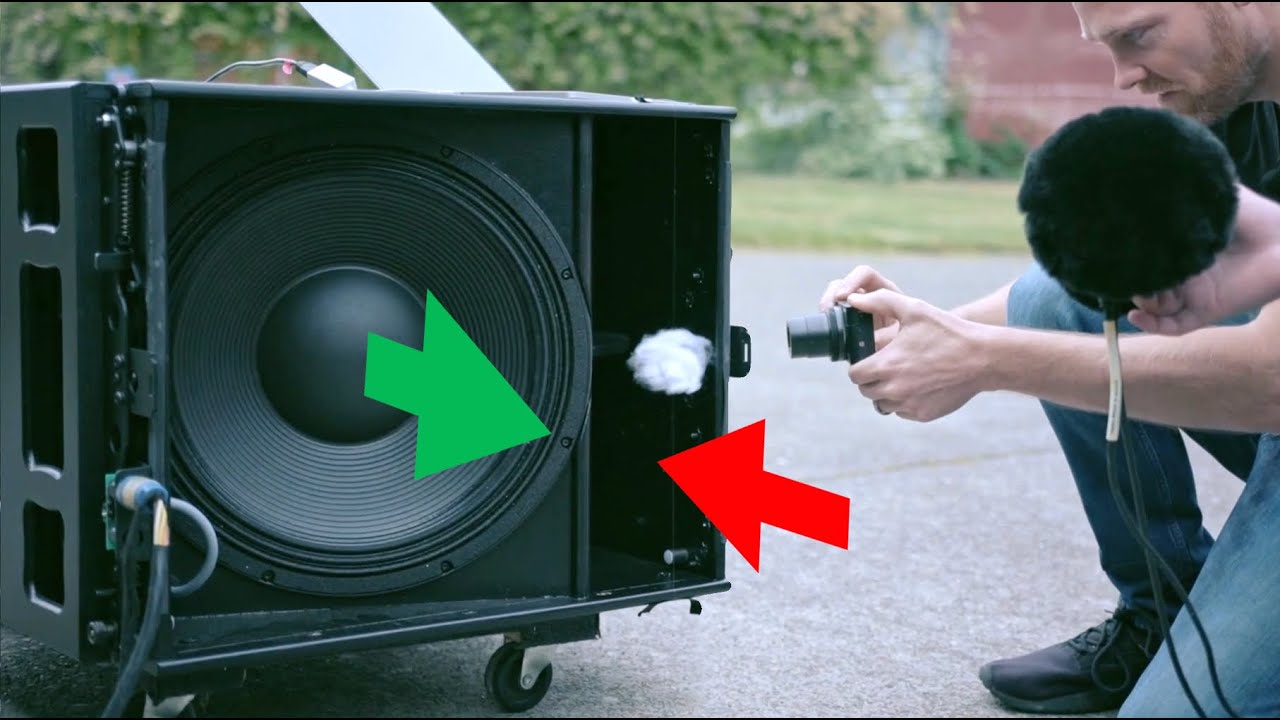
But a related factor that is, is the size of the cabinet your speakers are mounted in. We need the drivers to be enclosed in a cabinet so that out of phase signals from the back don't interfere with the wanted signal from the front. But when we seal the driver inside a box we trap a volume of air, which acts like a cushion, pushing back on the driver as it tries to move.
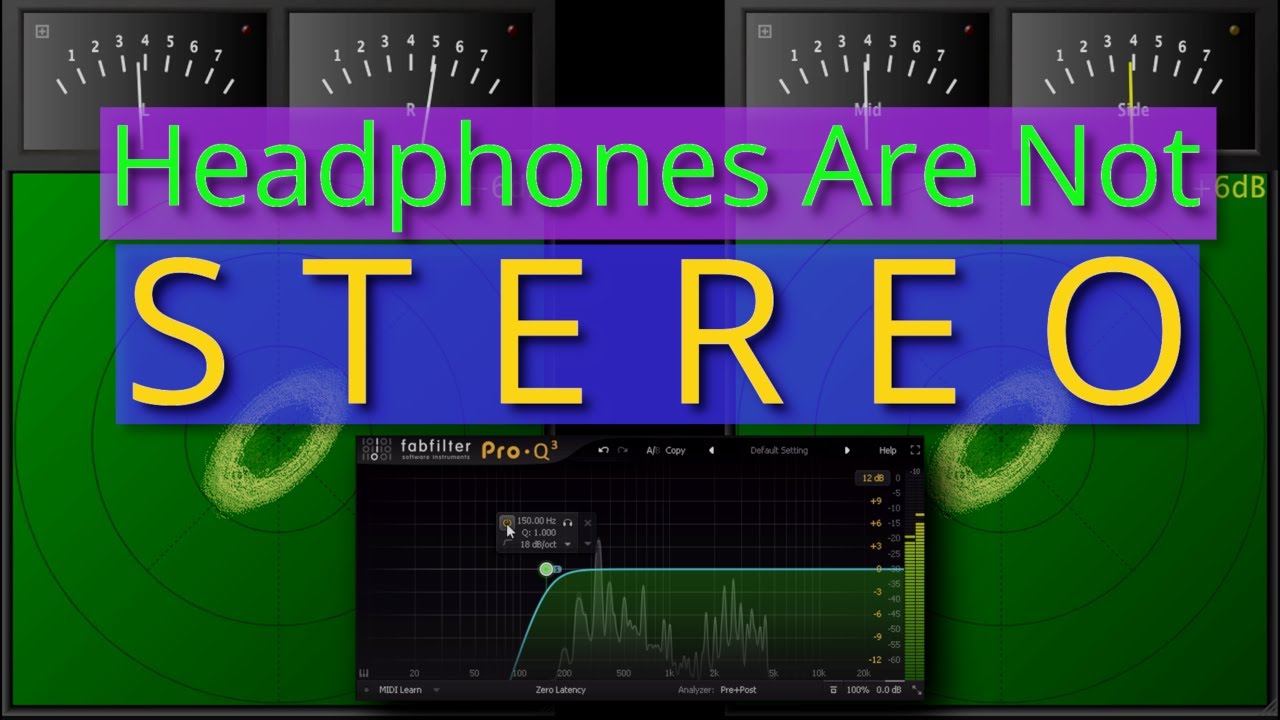
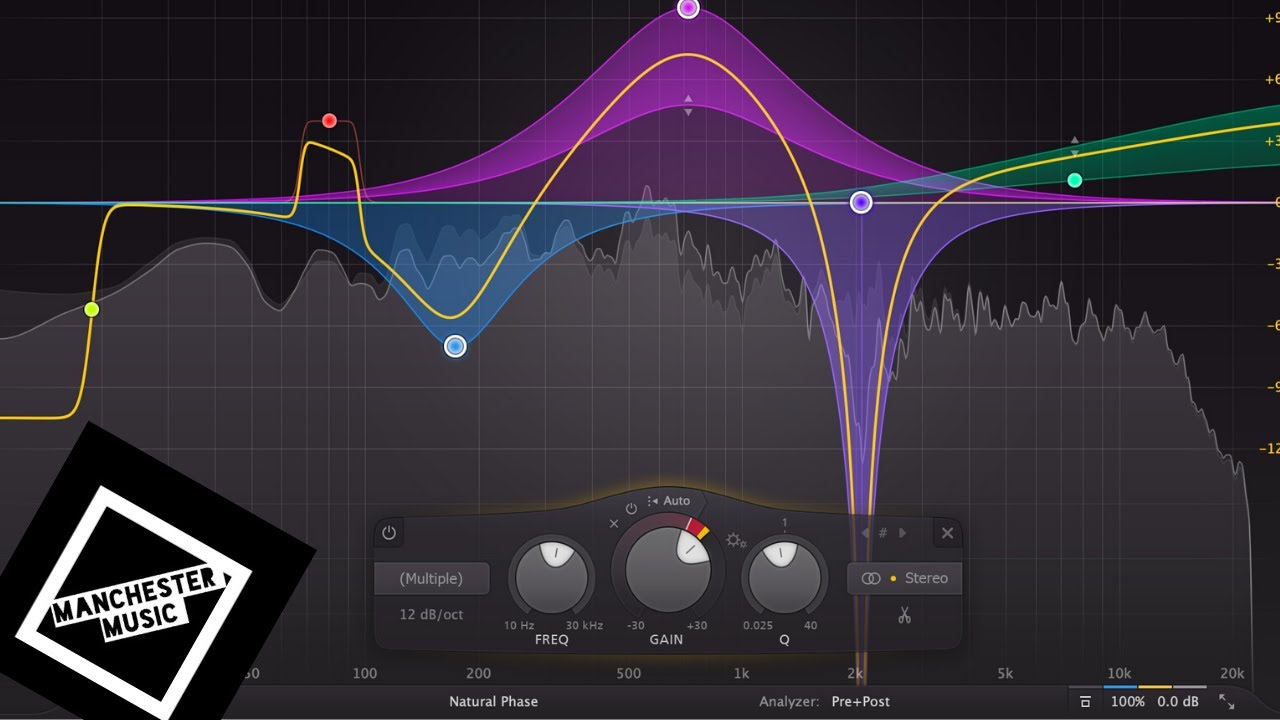
This effect is much more pronounced at low frequencies, so the result is a high pass filter, which I'll represent with this high pass filter in Pro-Q3. Speaker designers are probably shouting at the screen at this point, but this is accurate enough for our purposes. The famous NS10 monitors are a sealed box design, and are known for a bass light response which needs to be adjusted to: this is the reason why.
However, most small or medium speakers use a reflex port design, meaning there's a carefully tuned hole of some kind on the front or back or sometimes the side of the cabinet. This makes the filter steeper, so it has much less effect on the low midrange and upper bass frequencies, but the low sub bass rolls off faster. Ported designs are more pleasant to listen to as they don't sound as thin and bass light as sealed boxes.
But trying to judge what's going on below that very steep cutoff is a challenge. And there are also issues with phase shift, and group delay: the latter means those low frequencies that are boosted by the port are slightly delayed, which smears transients and makes it harder to judge the boominess of a kick drum. Here's the kicker though: whichever type of design your speakers use, the effective cutoff frequency of that high pass filter is determined by the volume of air trapped in the box.
Or in other words, by the size of the speaker cabinets. This is one area where size matters, and bigger really is better. If you're lucky enough to have the space and money for huge floor standing designs, or soffit mounted main monitors, the high pass filter will be low enough that it's not really an issue.
But, as excellent as your small near field monitors might be in every other way, they will not be able to reproduce very low frequencies accurately. This is simply a law of physics that we currently can't circumvent. If you're mixing in a genre that relies heavily on sub bass content, near field or even mid field monitors aren't going to cut it unless they're getting some help from a subwoofer.
Beware though: the subwoofer has the same issue. It needs to be physically large to reproduce the lowest octaves properly. If it isn't significantly larger than your main monitors, its not really going to give you more accurate bass, just more bass, which definitely isn't the same thing.
Basically get the biggest unit you have the space and funds for, you won't regret it. More bad advice I've seen online: don't get a subwoofer unless you have acoustic treatment. Ok, so you definitely do need acoustic treatment.
Specifically, bass traps in the corners of the rooms. You can buy these ready made, or make some pretty effective ones yourself if you have some DIY skills, but beware of the foam wedges that are often marketed as bass traps: foam doesn't cut it for sub bass frequencies, don't bother with these. However, while room acoustics can be an even bigger problem than small monitors for accurate bass, its really a separate problem.
You need a monitoring system that can accurately reproduce those frequencies, and you need a room that doesn't then screw it up too badly, and both those need to be right for you to be able to consistently nail the low end of every mix. At the end of the day it doesn't matter if you fix the room first, or fix the monitors first. If anything you could argue that its better to add the sub-woofer first, so you can more easily judge how much bass trapping you need.
I hope you know by now that I'm not a gear snob. I wouldn't normally tell you that your mixes suck because your equipment isn't good enough. But this is one exception: if you want to be able to consistently nail the bottom end for bass heavy styles, you need to be able to hear what you're doing down there.
Because here comes the good news: when your monitors are telling you the truth, getting the bottom end right becomes quite easy. Compared to the midrange, where you're often balancing umpteen different sources, and trying to keep them all clear of the vocal, the low end of your mix is usually just kick and bass. Or maybe even just an 808 covering both duties.
When you can actually hear what you're doing, this is a walk in the park. Especially with a few tricks up your sleeves, which we'll get to shortly. Before I move on though, a quick word about headphones, which would seem to offer a solution to both the problems of speaker size and room acoustics.
The challenges of mixing on headphones are a subject in their own right, and I'm maybe not the best person to talk about it anyway as I don't usually mix on headphones. But let me quickly introduce you to a couple of pairs I own. These are Beyer DT250s, and they're looking a bit scruffy because they survived many years service in my gig bag for use at front of house.
They're great and I like the sound, but if I try to mix on them I invariably end up with way too much sub bass, as they don't really do much of that. That's not a problem for front of house cans of course, as no headphones can compete with a wall of 18 inch PA subwoofers, and there's no point even trying. Ok, now here's a pair of Beyer DT770 pro.
These are great for tracking, and I'm wearing a pair to record this voice over. But if I try to mix on a pair of these I have the opposite problem, and I always mix the sub bass too low. I suspect I would get better results using some kind of headphones calibration to correct the frequency response.
But what I'm trying to say is, headphones might be a solution, but you'll need to choose those headphones very carefully. That's enough about monitoring. Let's get to the philosophy: what is a bass sound, exactly?
The basic fundamental requirement, if you'll forgive the puns, is a low fundamental. And in fact, we can have only that: this sine wave counts as a bass part, albeit one you won't be hearing at all if you're listening on your phone speaker… this is literally just low fundamental… and it ceases to be a bass part if I play it too high up the keyboard… that fundamental needs to be below about 100Hz or else it doesn't count. However, once you've fulfilled that requirement, pretty much anything else goes.
I can add a second harmonic… or a third… or a 13th… I can switch to a saw or square wave to get a whole harmonic series… I can use additive synthesis to generate waves with unusually prominent high harmonics… when the sound gets aggressive enough it might get categorised as "bass / lead" rather than just "bass". . .
but it remains bass so long as that low fundamental remains within our bass region. Alright, given that's the case, there are two fundamentally different ways we can create deep sounding bass. Apologies for the pun, didn't intend it that time.
Anyway, I'm coining my own terms for these, don't expect to find them elsewhere. But I'm going to split bass sounds into two categories, which I'll call Body Bass and Brain Bass. Let's start with Body Bass: in this case we make the bass sound deep and weighty by having lots of that low fundamental.
Drm and bass probably provides the purest examples of this approach: the bass part might actually be just a sine wave… and when played through big club system subwoofers, those low frequencies vibrate your whole body, and are felt as much as heard. If that's the approach you're taking to your bass part, then your kick drum will need to accommodate it. It's no accident that drum and bass kicks tend be be distorted and aggressive, with little in the way of deep low sub bass: they need to leave that lowest region clear for the bass to dominate, otherwise they'll conflict and it will sound cluttered and boomy.
I think of this as "spectral separation": if the kick and bass have very different dominant frequencies, they can play simultaneously without interfering with one another. Alternatively you can have temporal separation, which is just a pretentious way of saying: the kick and bass don't hit at the same time. The most obvious example of this would be four to the floor 909 kick drums, with bass notes in between… but the approach can also work well with much more complex patterns.
Of course this is more of an arrangement tip than a mixing tip, but the arrangement is really the first stage of the mix, and the better it is the better the mix will be. Of course, sometimes you're going to want a bass part to seem continuous… with a deep kick drum thumping through it nonetheless… in that case ducking can be really helpful. You actually have a choice when it comes to which Fabfilter plugin you use for this task: you could use the Pro-G gate plugin, switched to ducking mode… you'll also need to enable the external sidechain input, and make sure your kick drum is routed to that input… the method for that will depend on your DAW, so check the manual if you're not sure how to achieve it.
I usually go with a pretty fast attack time… and often a bit of lookahead as well… the threshold needs to be set low enough that every kick drum hit triggers significant ducking… and then the most important parameters become the Range control, which sets how much ducking is applied… the Release control, which determines how quickly the gain rides back to unity again… and possibly the Hold, which can be used to create more obvious pumping effects. Or you could use Pro-C2: again we need to switch to the external sidechain, and again you'll need to route that from your kick channel in your DAW… I usually go for a hard knee… and turn the ratio all the way up… the ratio won't go negative as in Pro-G, but you can usually compensate for that with a lower threshold… and then use the Range to set the amount of ducking… subtle settings can still be useful, even when obvious pumping isn't desirable: just a few dB of ducking will usually be masked by the kick drum and be unnoticeable, but will still make those two parts much easier to balance against each other. Using Pro-C2 gives you the option to choose different compressor styles to get different release behaviour: the Pumping style can be useful in this context.
Or of course you could also use Pro-MB. With a single band running this is just a full band dynamics processor, and you can key it from an external sidechain signal in much the same way. But this one also gives us an interesting extra option: we could just duck the low frequencies… and leave the mids and highs unaffected.
This isn't necessarily better, however. Obviously, if your bass part is just a pure sine wave, its not going to make any difference at all. This kind of setting only makes any sense if there are some higher harmonics present.
So let's talk about higher harmonics. Body bass parts have a problem in that they don't come across well on smaller speakers. It's obvious really: if you're relying on that low fundamental to create the weight in the sound, you're going to need bug chunky sub woofers to do it justice.
But that leaves us with a problem, because lots of music is listened to on systems that don't have big chunky sub woofers. If your bass part doesn't have enough higher harmonics its going to simply disappear on many systems. There are a number of ways to deal with this issue.
But they all, in some way, involve adding higher harmonics. If it's a synth part you might be able to open up a filter a bit, or layer in more oscillators tuned higher… or you could use distortion to generate those higher harmonics instead… or you could take a more arrangement based approach and layer the part with something else, like a guitar playing the same notes but an octave or two higher. All these techniques will change the sound of your mix however, so you may have to make a decision about how much you want to compromise, purely for the sake of compatibility with small speakers.
And, going back to the ducking issue: if you've added extra higher harmonics to help pick out the bassline when the subs aren't present, it might actually be beneficial for them to be ducked by the kick drum, along with the low fundamental. It provides an extra clue to your brain that, actually those partials are part of something deeper and bigger that's interacting with the kick drum. Ok, final body bass tip: when the kick and bass hit together, and need to both have impact at the same time.
I'm going to use 808s as the ultimate example of this: in case you're confused, in certain musical genres the term "808" has come to mean a certain type of bassline created from the pitched tail of a Roland Tr808 style kick drum. Ironically, this type of hybrid kick and bass part is often created without any actual involvement from an 808 drum machine or samples thereof. I can't speak for the majority of producers, but personally I'm more likely to combine a punchy kick drum sample… with a pitched tail generated by a synth… and I get the impression this is pretty common practice these days.
One advantage of this method is that the kick element can remain at a constant pitch… while the synth part moves around to create your bassline… which is harder to achieve if you're using a sample of an actual 808 kick. In this case your choice of kick sample is critical: if you pick one that thumps more in the bass region, rather than booming in the sub bass, it will probably fit better. Also pay attention to the phase relationship: its always worth trying flipping the polarity of the bass or kick, to see if they work better one way then the other.
But it can also be useful to manipulate the phase in other ways: a high pass filter on the kick can sometimes be helpful, not just because it reduces the low frequencies that can clash with the bass, but also because it will rotate the phase of the kick's low frequencies, and change the way it blends with the bass. And of course, don't forget to bus these parts together so you can glue them with compression and saturation. One final more arrangement based observation however: the musical key might be significant when using body bass parts.
Most of us are used to western equal tempered tuning, and treating all keys as more or less equivalent. But there’s only a narrow range of sub bass frequencies that vibrate your whole body in that satisfying manner: less than a full octave. Of course there’s no rule to say that your 808 part has to be tuned to the root note of the song, or even that your music has to have a recognizable key centre at all.
But if you do want your 808 to hit the root note, you’ll tend to get better results in keys like G or A, which will put the root note around 50Hz, than you will in keys like D or E, which will have you either down at around 40 or up at around 80. Alright, now we need to talk about the other category of bass part: "Brain Bass". Again, don't expect to find these terms anywhere else, these are my own inventions!
I'll demonstrate that with a simple pedal bass part, starting with just a low fundamental sine wave: the simplest, most "body bass" part possible. Now let's add the second harmonic: another sine wave an octave higher. The part seems thicker and fatter, and if you're listening on smaller speakers, probably a lot louder as well.
But it's still playing the same notes, right? We still perceive that lower sine wave as the fundamental, and if I turn it off… our part now sounds an octave higher, as you would expect. Let's put the low fundamental back, and add the third harmonic as well, which is another sine wave tuned an octave plus a fifth higher than the fundamental.
Actually it's not exactly that, as western equal tempered tuning only approximates these things, but it's close enough. Again, this changes the sound of the bass… but it doesn't change the note we perceive: we're still hearing that first sine wave as the low fundamental. Now here comes the magic part: this time when I turn off that low sine wave… we still hear the notes at the same pitch.
Sure, the part loses some of its weight and depth when I turn off the lowest sine wave. But we still hear it as a low bass part. And that loss of low weight might not matter in the context of a mix where the kick drum is providing that in spades.
In fact its a positive bonus. And it explains all those mixes you've listened to where the kick drum seems really deep, but so does the bass, in a way that doesn't seem like it should be possible. If you feel a little suspicious of this kind of psychoacoustic trickery, consider this: if we look at this bass part on an analyser we can clearly see there are only two partials.
Let's temporarily add that low fundamental back in: that's the part that our brains are effectively synthesizing inside our heads, even though it's not really there. Ok let's mute it again… and now I'm going to run the remaining two partials through some distortion… this adds higher harmonics, of course. But it also causes these two partials to intermodulate, which means we also generate sum and difference partials.
The difference between a second harmonic, at two times the fundamental frequency, and a third harmonic, at three times the fundamental frequency, is of course one times the fundamental frequency. And sure enough, there's the fundamental frequency again on the analyser. So it's your choice how you think about the psychoacoustic element: either your brain hears those upper harmonics, and calculates that there must be a low fundamental causing that harmonic series to emerge.
Or the inherent non linearities of your hearing mean those sum and difference partials actually appear inside your head. But either way, it's a tried and tested phenomenon, and most modern pop and rock mixes rely on it. If you ever wondered why you can listen to a mix on small tinny speakers, yet still hear the bass guitar clearly; and moreover still hear that its playing low, deep bass notes, even though you can't feel the weight of them; this is what's going on.
With this kind of bass part I often find it makes more sense to duck just the low frequencies in response to the kick drum… if there's a lot of space between the kicks, you might want the low fundamental of the bass to come up in between. But it's still not a given that this will always be better than full band ducking, which will affect the groove of the part more obviously, which might be a good thing. Probably my favourite technique for this kind of bass part is parallel distortion.
I like to use a relatively hard type of distortion. . .
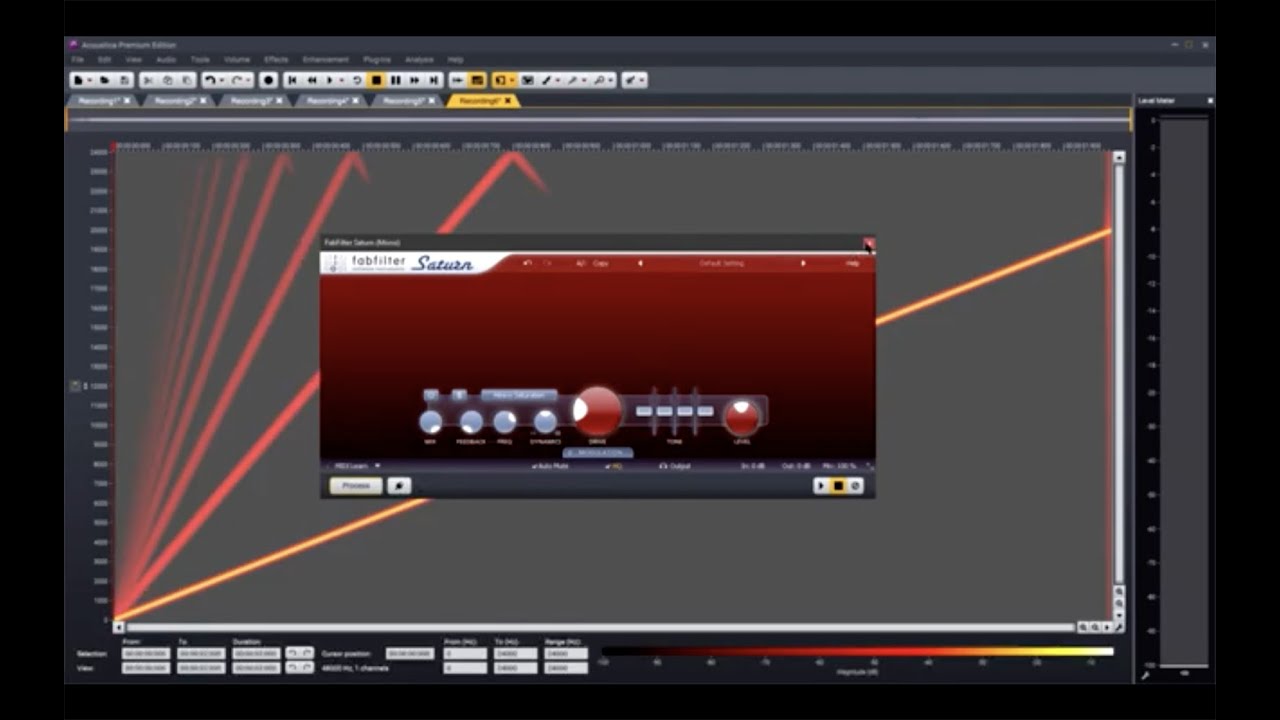
Saturn's Heavy Saturation style works well… and I crank it until there's just a bit too much… not so far that its fizzing and farting continuously… but enough that I can clearly hear it breaking up, in a way that seems inappropriate for the song. But then I take that distorted signal, and just blend it gently into the mix. It's almost magical how this doesn't sound distorted any more, but adds clarity and definition at the top end, and also makes it seem deeper and more solid at the bottom end.
Another good distortion trick: put an EQ before the distortion, and cut the bass region around 100 to 200Hz by a lot. Then add another EQ after the distortion, and put that region back again. Now the distortion doesn't sound so farty and obnoxious: the low fundamental and the midrange get extra harmonics, and intermodulate one another, but the meat of the part stays relatively clean, and we can pile on a lot more of this distortion before it starts to sound nasty.
Final tip: try both those last tips together. Your parallel distortion can also have emphasis and de emphasis EQ if you want. If you're scared of the phase shift in parallel, don't be.
First of all the two EQs will tend to cancel out each other's phase shift. If they're perfectly matched but with inverse gain settings, the phase shift will disappear completely. And anyway, the phase shift from EQ bell or shelf filters is actually pretty harmless.
While you do need to be a bit careful if you're running high or low pass filters in parallel, bells and shelves will just work exactly as you'd expect, with no nasty surprises. On the other hand, high pass filters used in the usual manner and inserted on the channel, are most definitely your friend when it comes to mixing bass. There are three different ways in which they can help.
First of all, anything thats not a bass part should be kept clear of the bass frequencies, which might mean high pass filtering if they do have any low frequency content. Don’t be afraid of phase shift: this is rarely an issue, and switching to linear phase mode is rarely a good idea unless you’re running the filter in parallel in some way. Back in my live sound days I would sometimes mix on systems configured with the subwoofers patched from an aux send instead of the main console outputs like the rest of the signal.
Then you would only turn up that aux send for the channels that needed sub bass content: typically kick drum, bass, and maybe floor tom. In effect this meant a steep 24 dB per octave highpass filter on any channel that wasn’t sent to the subs, with the cutoff set to whatever frequency the subs were set to crossover at: typically around 80 or 100 Hz. You can replicate this in your DAW with an 80 or 100Hz highpass filter on every channel thats not a bass part, or perhaps by creating a subgroup for everything except bass parts and highpass filtering that group.
The second way that highpass filters can be useful is, counterintuitively, on the bass or kick parts themselves. If you tune them low enough to include the low fundamental of the part, it won’t make that part seem any thinner or less weighty, but it might help to tighten it up by removing the rubbish below that, that isn’t contributing anything useful, and couldn’t be reproduced by most speakers anyway. And you can even use the resonance to bump up that low fundamental and add extra weight at the same time… And the final way that high pass filters can help is really an extension of the last one: do the same kind of thing, but use the colourful filters in Volcano 3 instead of the clean filters in Pro-Q3… and experiment with the different filter styles, and different amounts of drive.
This is an incredibly powerful way to shape the low end: some filter styles can add really powerful extra low thump or boom: try the Hollow or Metal styles for that kind of thing… while other filter styles are useful for tightening up and controlling parts that are already a bit too thumpy or boomy But of course, all these tips I've outlined rely on you being able to hear them properly. So I'm going to loop back and reiterate the point I made at the start: if you're suffering from the translation issue I described at the top of the video, these tips aren't going to help you much. Improving your monitoring needs to be your top priority in that case.
But I'm going to finish up with a problem that starts to emerge when you do have a big juicy subwoofer and bass traps, your system can reproduce the low frequencies effortlessly and accurately, and your room doesn't screw it up too much. Now the low frequencies can start to suffer from the same issue as all the rest: over time your ears become accustomed to the balance you're hearing, and adjust themselves to compensate, as if you had an EQ inside your head that was automatically flattening the frequency response. If you're working in bass heavy styles, with monitors that can push out that low end without complaining, its easy to end up with too much of those low frequencies, and a mix that will sound overblown on most normal systems.
This brings to mind a question that someone posted on my own channel, but then for some reason immediately deleted so I couldn't respond. It went something like: "when mixing bass heavy styles, should I expect them to look bass heavy on an analyser? Or should I still aim to get the mix flat?
". So first of all I need to slap a big warning label on the idea that you should aim to flatten out the response on an analyser. While an analyser can be useful to diagnose problems you're hearing, if the only problem is that it looks wrong, that's not a problem.
Plenty of great sounding mixes don't look flat on an analyser. And it depends also on the analyser itself: settings such as smoothing can have a dramatic effect on the way the results appear, so the same mix might look completely different. Most obviously, the slope setting will be a factor here: in fact, the only type of signal that genuinely looks flat on an analyser is white noise.
This is all frequencies at the same level But white noise sounds unnaturally bright to human ears. Most real world sounds, and most recorded music is closer to a pink noise spectrum, which is basically just white noise with a three dB per octave tilt filter applied. And so, many analysers apply a corrective tilt, to make pink noise look flat instead.
And some people find they're happier with a steeper tilt of 4. 5 dB per octave instead. Of course, music is not pink noise: usually we like it to be more interesting than that.
And the deviations from a pink noise spectrum are part of what makes it so. Use the analyser to help you understand what you're hearing, and don't ever do anything only to make it look better. That said however, when your mix is sounding lumpy, it's very often the case that you can identify peaks on the analyser that might explain that lumpiness, in which case try pulling them back and see if it helps.
And within the range at which our hearing is most efficient, a vaguely pink noise-ish kind of spectrum usually does sound balanced to our ears. And yes, that applies also to low frequencies, even in bass heavy genres. There are two reasons why deliberately over hyping the low frequencies is a bad idea, which boil down to: small speakers; and big speakers.
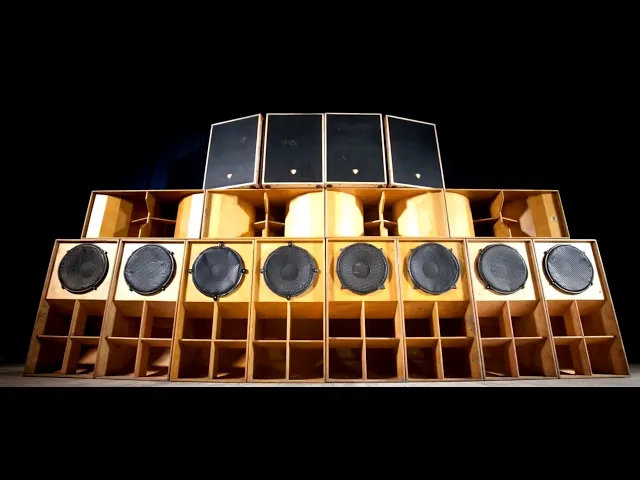
If you try to brute force deep bass out of small speakers that can't handle it, it usually doesn't go well. Probably it will just crap all over the rest of your mix. There's a reason why big PA systems have lots of huge subwoofers: you just can't do low frequencies properly otherwise.
But, big PA systems are rarely tuned flat. Usually the subs are rather hyped. This is true even of the big line array systems that bands pay through at festivals, which are generally tuned to a more flattering kind of smile curve.
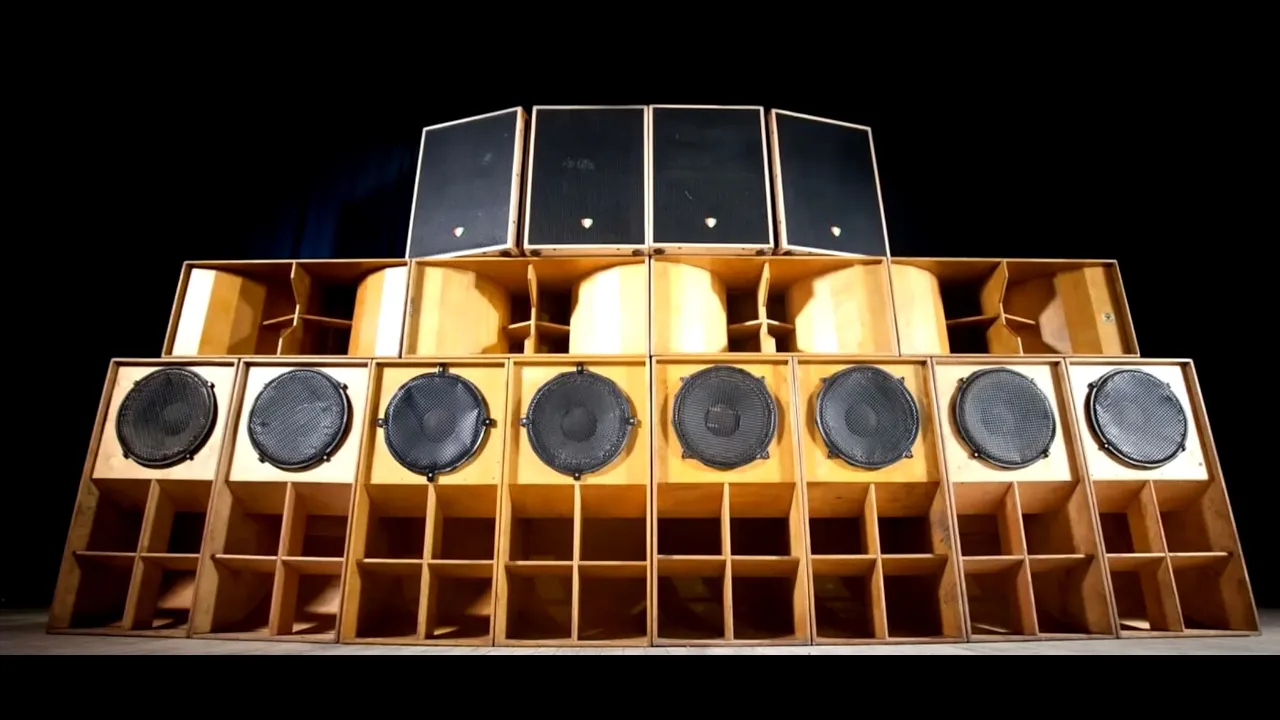
And especially true when you get into sound system culture, where there's no such thing as too much sub bass. The chances are, when your mix does get played on a big club system, the subs will be plenty hyped already, and if you try to help them along by hyping them in your mix as well, everything will get really overblown really quickly. However, while most club systems provide plenty of sub bass, few of them manage to produce tight and accurate sub bass.
Even if the subs themselves are excellent, nightclub acoustics tend not to be, and chances are your big kicks and basslines are going to resonate for longer than you intended. So in fact, keeping your low frequencies tight and punchy is often a good strategy. If you're like me, and you often get a bit carried away dialing in a big bottom end for your mix, some multiband compression can be very beneficial, either on the master, or possibly a subgroup that ties together everything that's going to hit the subwoofers.
I often like to use fairly gentle ratios… and dig down quite deep into the dynamics of the sub bass… this helps to preserve the overall dynamic shape of the low frequencies, and helps to avoid it feeling stodgy and congested. And the release setting is also important here. It's all about the feel for me: when the release is too fast, the mix can start to feel slow and sludgy, like wading through treacle… but set it too slow and you'll start to lose the weight and depth.
The attack time isn't as important in this case. Super fast attack times are kind of redundant anyway, as nothing is super fast down that low, by definition. But sometimes slower settings can help to enhance the low punch of a kick drum.
When set appropriately the low band of a multiband compressor can be a very powerful way to reign in the peaks of the low frequencies, while keeping the average levels high, and can help you to keep the low end consistently solid without ever booming out of control. And speaking of booming out of control, my final tip: take care of note ends! When you're trying to create tight and punchy low end, the timing of the end of your bass notes can be just as important as the timing of the start.
That's all, thanks for watching.