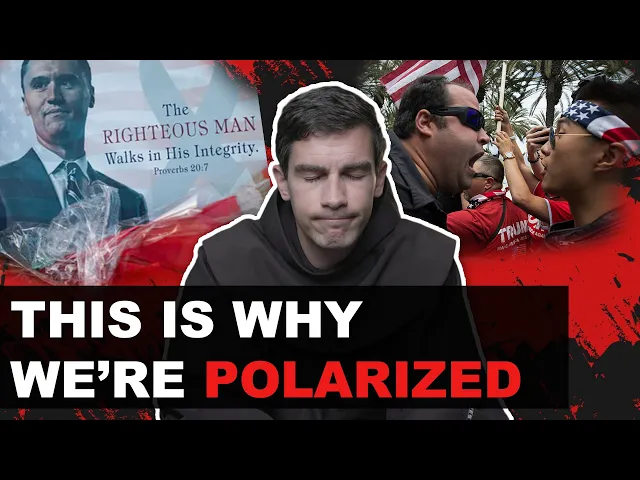
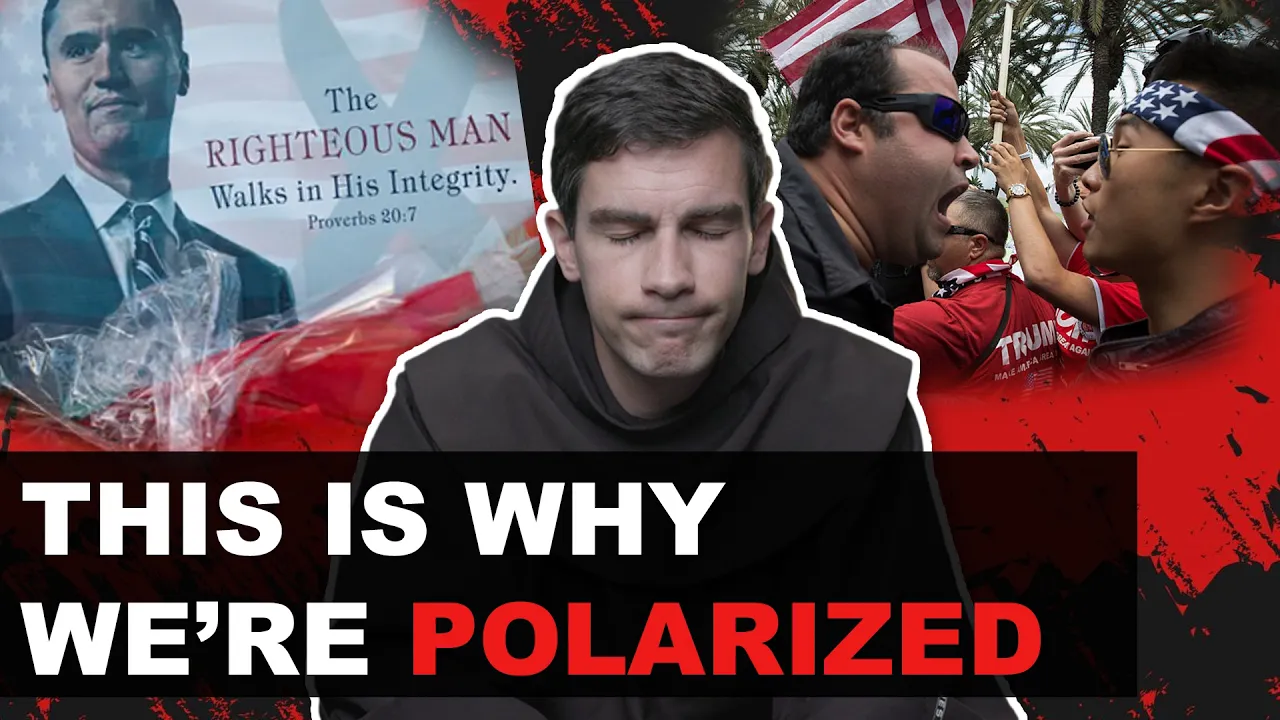
I’ll be honest with you… I’m not thrilled with the idea of making this video, but in the wake of the assassination of Charlie Kirk, in reflecting on what happened and how people have reacted to it, I don’t know how I can keep this to myself. I have a lot to say, and so I hope you’ll stick with me til the end. On the day of the shooting, Charlie Kirk had not even been declared dead yet and the world was abuzz, not just with speculations, but accusations.
In the early hours after it happened, we had no visual identification, no name, no manifesto, no nothing, but it did not stop people from every corner of the political spectrum from absolutely losing their minds. I saw people on the right immediately talking about how they—being liberals—hated conservatives, immediately condemning, even threatening their perceived enemies. Seven different historically black schools received racist death or bomb threats, forcing lockdowns.
Senator Lindsey Graham said that it was, and I quote, “an effort by the radical left to dehumanize the MAGA movement. ” President Trump, with no information on the shooter whatsoever, immediately made threats to go after liberals. The left was no more measured.
Immediately after the shooting, some were celebrating Kirk’s death, producing super cuts of what they believed to be his worst opinions, claiming that he got what he deserved, laughing at what had happened to him. I saw so many people saying something that started with, “I condemn political violence, but…” and then inserting something judgmental, condemnatory, and downright mean. In almost every case, there was very little concern for the humanity that had been violently ripped away, the trauma that people had faced, the serious problem that our country needed to reckon with.
No, the attention immediately went to who could be blamed, regardless of whether or not it was true. I can tell you, in the last week, I have heard far more shouting than tears; far more hatred than mourning; far more politicking and manipulative messaging than anything consoling or productive. And so, this is where we are in our country right now: divided and tense.
Ready for a fight. Looking for an enemy, and more willing to blame someone else than to ask challenging questions about ourselves or to seek constructive solutions for everyone. In some ways, there is nothing new about this—we have been divided for a while, on the brink of disaster for years.
And yet, it was this week that something clicked for me, that two root causes became crystal clear. The first is that we truly do not understand one another. This may not sound like a novel idea but I’m telling you, the problem is far worse than I thought.
I always knew that people consumed news that fit their preference and were encouraged in their beliefs, but I’m convinced we live in completely alternate realities. So many people live in such isolated silos, with such distorted images of what the other person is like, that it’s no longer a matter of mere disagreement, it’s a matter of having no idea who the person they hate actually is. In my many conversations with those who were fans of Charlie Kirk over this past week, I asked people how they felt, what they were thinking, how they made sense of it.
Without exception, and to my great surprise, actually, I kept running into the same reaction: his fans could not understand why anyone wouldn’t like Charlie Kirk. I’m not saying they didn’t agree with the people who didn’t like him, I’m saying they couldn’t even imagine how any person of good will could have a disagreement with him. Person after person told me how heroic he was, how loving, how morally good, how he was just a good person all around, basically, that anyone who didn’t like him must just be evil.
Now, I’m not interested in going down the road of evaluating his moral character or giving my own opinion of him, but I would think, even for those who loved the man, that they would be able to see why someone who was gay, someone who was black, someone who had lost someone to gun violence, might be at least a little uncomfortable with his words. I mean, he did say that mass shootings were worth putting up with, that the civil rights movement was a huge mistake, that gay people were out to corrupt your children. Which may all be statements with merit and defensible and worth debating, but are all statements that should lead one, one would think, to at least say, “Oh, yeah, I can see why someone wouldn’t like him.
I can see why, if I were in their shoes, that might be offensive. ” But no. Person after person, literally dozens of people, expressed dismay and confusion, were just incredulous—how could anyone do this?
It’s because they—being liberals—hate us and are completely unhinged. They are the problem in the world. I was dumbfounded by this.
In a highly tense, polarized world where no one is perfect, all I experienced were people who felt that they were innocent victims. In this a conservative issue. Sadly, it is not, and I can say that I have experienced nearly the same thing from siloed liberals as well.
Do you know many times have I heard someone say that the only reason that someone would vote for Trump is because they’re unintelligent, racist, misogynistic, and greedy? People say this all of the time—I hear Christians say this all of the time—without any irony or sense that they might be unfairly judging someone. So many people on the left fully believe that conservatives are just dumb, hateful people and there’s nothing you can do about it.
And so what I’ve experienced from liberals about Charlie Kirk is the very same problem, just on the other side: they cannot imagine why anyone could like this man. It’s not just that they disagree with him, they saw him as illogical, mean-spirited, and evil, and anyone who was a fan of him must be an idiot. Again, I’m not interested in going down the road of evaluating his moral character or giving my own opinion of him, but I would think, even for those who didn’t like the man, that they could at least understand why some people would resonate with what he said.
Families are in crisis. There is so much confusion in our world. White working class men are facing an identity and mental health crisis.
Conservatives are shot down or made fun of for their beliefs in academic settings and constantly in media. I would think that a people who say they champion the weak and outcast, who empathize with people of minority cultures and religions, could put themselves in the shoes of a college-aged conservative guy, who’s seen nothing but chaos in the world, and at least understand why he would find comfort and community in what Charlie Kirk preached. But so many can’t.
It’s not just that they disagree, it’s that they cannot even put themselves in the others’ shoes to feel what it must be like for that person, and so they are able to judge, condemn, and dismiss people like him as bigots and misogynists. For so many people, on the right and on the left, it is much easier to paint a simple caricature that’s easy to hate and dismiss than to acknowledge that someone else may have a point of view worth considering, that their experience may be different from ours and we might not fully understand it. And so that’s point one, that we don’t understand each other, and it took me a while to get there so I’m going to move quicker now, but the second reason is just as important: we are polarized because there is a lot to be gained by certain people when we’re polarized.
I said before that I saw more shouting than tears in the wake of his death of his death, and I think that there is good reason for this: shouting gets more engagement. As awful as it is to accept, outrage gets more votes, more fundraising, and more clicks than love or forgiveness. Anger sells.
And this, I think, is one of the great tragedies of our age. Our grief has been commodified. Our attention has been weaponized.
The algorithms know that if we are angry, if we are scared, if we feel that someone out there is trying to take away what we love, we will stay online longer, share more links, click more ads, and spend more money. Politicians know that if they can present themselves as the only defense against the “radical other side,” we will give them our votes and our loyalty, even if they have no actual solutions. Media companies know that if they can keep us fighting, we will never turn the channel.
The truth is, there are powerful forces that want us divided, because division is profitable. And so, every tragedy, every controversy, every misstep is an opportunity to capitalize. Instead of mourning, we are incited to rage.
Instead of reflection, we are pushed to react. Instead of solidarity, we are encouraged to retreat into our ideological camps. I have to admit my own part in this.
In 10 years I have never once mentioned gun violence on this channel, despite it being a very important personal issue to me. Maybe it was fear that kept me away, maybe there’s something so different about this situation that I just had to say something… but maybe it’s because this is the most trending topic and I knew that I would get clicks if I made a video about Charlie Kirk. That is the temptation of our world, and while I think that I’m doing this for the right reason, to call us to act more like Christians in our love for our enemy and desire for reconciliation, I know that many others our there have built their entire brands on moments like this.
They thank God for tragedies like this. And what happens to our culture when tragedies… become opportunities? When ratings and donations are highest when things fall apart?
Well, it would seem that there would be little motivation to hold things together, and even an incentive to make things worse. Why are we polarized? Why do we jump to conclusions and expect the worst from each other?
Why is it that we don’t truly understand each other? Sometimes, it’s because people who have a lot to gain from terrible situations WANT it to be this way. As Christians, we have to be about something different.
We have to resist being the type of people that take cheap shots at our enemies, that rejoice at our opponents misfortune, that actively root for the ruin of another. As Christians, we must never forget the words of St. Paul who teaches us, that “As a body is one though it has many parts, and all the parts of the body, though many, are one body, so also Christ.
” and so… “If [one] part suffers, all the parts suffer with it; if one part is honored, all the parts share its joy. ” If we are to lived this, we are must start by seeing the other as our own. They are not our enemy, whoever they are.
They are not pure evil. They are not someone we can discard without any care. If we are sons and daughters of God then that person is our brother and sister, and we cannot call ourselves sons and daughters of God if we hate his other children.
It should break our hearts when we see division and we should resist any attempt by others in dividing us further. We defeat our enemy not my owning the libs or canceling those who don’t pass our purity tests—we defeat our enemy by making them our friends. And so how do we do this?
I’d like to close with a short story, a legend, in fact. It’s called St. Francis and the wolf of Gubio.
As the story goes, St. Francis came upon a town living in fear because of a ravenous wolf. The wolf had attacked the people, stolen their sheep, and left them in turmoil.
St. Francis refused to accept this, and so leaving the safety of the town, he made the sign of the cross, went into the woods after the wolf, and upon finding it, admonished the wolf for its sins against God and against its neighbor. As it is a legend, the wolf responded by bowing its head in contrition, at which point Francis noticed something: the wolf was hungry and lonely.
And so instead of killing the wolf or further punishing it, do you know what he did? He made an agreement between the wolf and the people: feed the wolf and it will be their friend and protector. He recognized what was caused the wolf to act with evil in the first place, and he removed it.
He freed the wolf. Eventually, the wolf became so beloved by the people that when it died, they mourned it with a funeral. That’s a path forward.
This is how we overcome polarization. One, we have to have courage. We cannot be afraid to wade out into the dangers of the world where people may not accept us.
We need people who are willing to put their life and livelihood on the line to stand for something that matters. Two, we need to be a people of prayer. We are not about to do this alone and we need to constantly remind ourselves to act more like Jesus, and to seek the things that he seeks.
Our prayer cannot be for our own safety or for what we want, but for us to become more like Jesus and for his will to be done. Only prayer will remind us of this. Three, we need to speak clearly.
How many people in this world have no idea that they are doing wrong because no one has had the courage to stand up to them? We need people with conviction to point out the errs of the world, with charity, of course, so that we can hold the world accountable and lead it to conversion. And four, most importantly, we need to heal our enemies.
We need to find what it is about them that they hope and fear, why it is they are our enemies in the first place, and we must work tirelessly to break the chains that bind them. Jesus did not come for the saints but to free the sinners, to heal and reconcile those who were enemies of God. Our failure to put that are our highest priority is why we are in the mess that we’re in right now.
It is not “their” fault. There are people who do evil in the world, absolutely, but we are called to something greater. We are the ones who know that evil is not the way, that violence is not the answer.
That hating your enemy gets you nowhere. And so when we act like the world, returning violence for violence, I believe that God will deal with us much more harshly because we are the ones who have been commissioned specifically to do the opposite, to love our enemies, to be meek and peaceful, to set the prisoner free. My brothers and sisters in Christ, we must rise above this mess.
We must get to know the person we do not know, breaking through caricatures and weak assumptions to see who they really are. We must block out the voices that gossip and misinform, that only want to divide, and instead seek the truth. We must see the person against us, not as evil, but an opportunity for grace and mercy.
It is not an easy road ahead, for sure, but what option do we have. This is our moment. This is where God triumphs—when in the face of fear, hatred, and violence, love and forgiveness prevails.