hello Heroes uh this is going to be maybe the most challenging lecture because of the nature of the content and because of that I'm going to have sort of a devotional or two at the end as well and kind of a different kind of a devotional at the beginning the 16th century was a tumultuous time religious and bad lines were drawn you were either Protestant or Catholic anabaptists tried to be separate but they still came under the Protestant umbrella it was very difficult within families communities and Nations gradually things developed and changed until Vatican 2 between 1962 and 1965 opened up Windows and Doors between Catholics and Protestants and the world in this lecture and perhaps with your knowledge Poland has remained very Catholic do you know whom the first polish Pope was Cardinal Carol wola was Pope John Paul II from 1978 until 2005 Stalin decades before had cynically asked how many tanks does the pope have well popes turned out by the millions when John Paul II visited his home country but most significant to me was what he did every summer when he was still Archbishop and Cardinal of krackow Poland do you know what american-based group he brought into trained the priests in evangelism discipleship and other areas none other than campus Crusade for Christ now known as crew that organiz ization was started by Bill brigh after World War II and he in turn was discipled by henriet amirs a First Presbyterian Church of Hollywood so please don't see The Counter Reformation as a still picture see it as part of a video that one day would have a very Catholic Cardinal Who Would One Day become a pope deploying the tanks of a very aggressive Protestant group to train priests so here we go as I have shared before and we'll share again to every action there is an equal and opposite reaction the Protestant Reformation was a powerful movement to which the Catholic Church felt it had to respond in this lecture you will learn about the purpose organizations individuals councils one in particular and outcomes of the Counter Reformation here you hear from brittanica. com of the purpose The Counter Reformation in the history of Christianity the Roman Catholic involved efforts directed in the 16th and 17th centuries both against Protestant reformation and toward internal renewal the Roman Catholic Church responded to the Protestant challenge by purging itself of the abuses and ambiguities that had opened the way to revolt and then embarked upon recovery of the schismatic branches of Western Christianity with mixed success The Counter Reformation took place during roughly the same period as the Protestant Reformation actually According to some sources beginning shortly before Martin Luther's Act of nailing the 95 thesis to the door of Castle Church in 1517 now listen to this from Wikipedia The Counter Reformation or the Latin Contra reformatio also sometimes called the Catholic Revival was the period of Catholic Resurgence that was initiated in response to and as an alternative to the Protestant reformations at the time it is frequently dated to have begun with the Council of Trent 1545 to 1563 and to end with the conclusion of the European Wars of religion in 1648 though this is controversial the broader term Catholic Reformation reformatio Catholic also encompasses reforms and movements within the church in the periods immediately before protestantism or Trent and Lasting later close quote and I looked up the popes of the 16th centuries that is the 1500s as generated and summarized by artificial intelligence and I found the subtle differences to be interesting first was Pope Alexander V 6 who was Pope from 1492 to 1503 he was known for his controversial Reign and the Italian Borgia family's influence second came Pope Pas III in 1 153 but his papacy lasted only 26 days marking a brief and largely uneventful term third was Pope Julius IUS II who reigned as pope from 1503 to 1513 he was renowned for his patronage of the Arts and commissioning Michelangelo for the cistin chapel as part of the Vatican so be sure to look up that beautiful artwork fourth is Pope Leo the 10th 1513 to 1521 a mediche that is Italian Pope which they pretty much all were known for his lavish lifestyle and the sale of indulgences which sparked the Reformation you remember that was part of what Martin Luther responded to fifth was Pope Clement iith he was Pope from 1523 to 1534 his papacy was marked by political turmoil and the sack of Roman 152 27 by mutinous troops of Charles I the Holy Roman Emperor according to Wikipedia the sixth pope of that century was Pope Paul III who ruled from 1534 of 1549 he initiated The Counter Reformation and convened the Council of Trent the seventh Pope was Julius III who reigned from 15 50 to 1555 who was known both for his efforts to reform the Church and his patronage of the Arts Pope Paul IV ruled from 1555 through 1559 he implemented strict reforms and established the Roman Inquisition ninth was Pope Pi IV who ruled from 1559 through 15 65 he continued the work of the Council of Trent and sought to consolidate Catholic Doctrine I will conclude with the 10th I won't go through the whole Century but with fifth Pope pasus the 5th who ruled from 1566 through 1572 he was known for excommunicating the English or British Queen Elizabeth I who returned the English church to being Protestant and enforcing the reforms of the Council of Trent I'm going to look now at organizations and in individuals from britannica. com the main group to remember is the Jesuits who came into being during The Counter Reformation it was founded by St ignacius of lyola in 1534 and the main thing to remember M about this group was that they swore allegiance to the pope lyola was a Spanish Soldier and now I'm quoting directly from britannica.
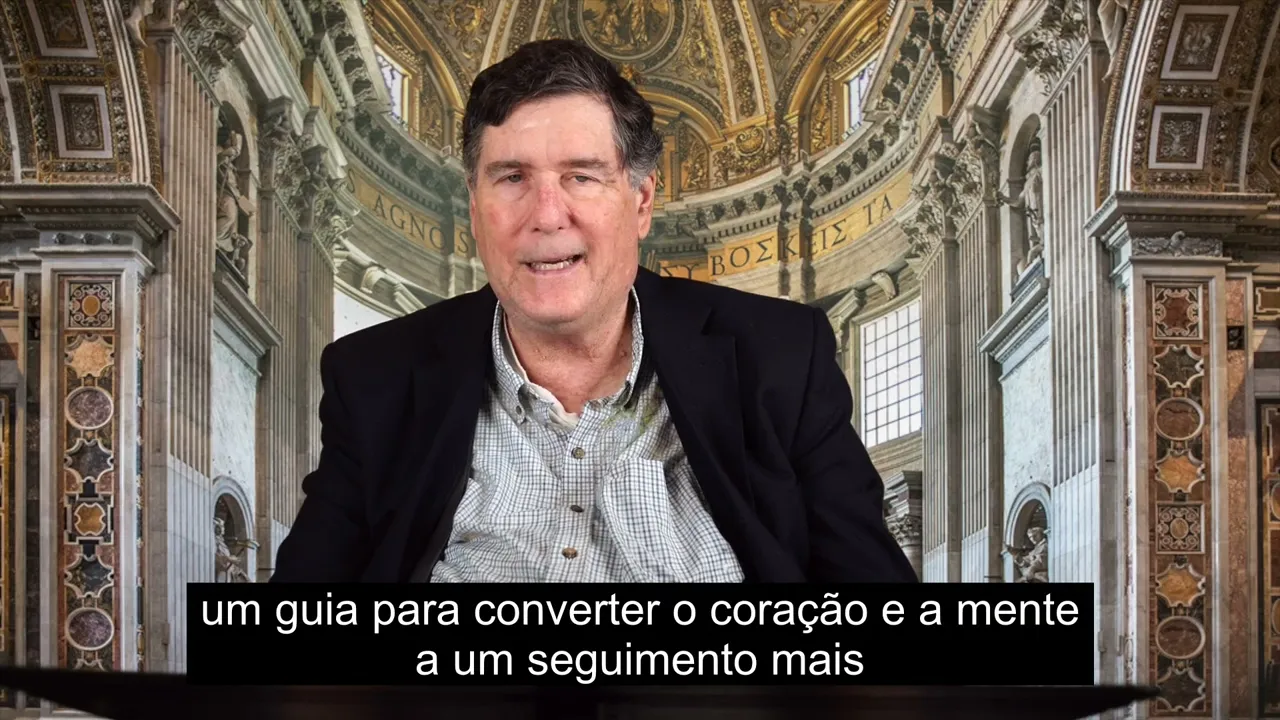
com the order grew out of the activity of ignacius a Spanish soldier who experienced a religious conversion during a period of convalescence from a wound received in battle after a period of intense prayer he composed the spiritual exercises a guide book to convert the heart and mind to a closer following of Jesus Christ on August 15 1534 in Paris six young men who had met him at the University of Paris and made a retreat according to the spiritual exercises joined him in vows of poverty Chastity and a pilgrim Gage to Jerusalem if this last promise did not prove possible as it did not they vowed to accept any Apostolic work requested by the Pope in 1539 Ignatius drafted the first outline of the orders organization which Pope Paul III approved on September 27th 1540 the society introduced several Innovations in the form of the religious life among these were the discontinuance of many of the medieval practices such as regular penances or fasts obligatory on all a common uniform and the coral recitation of the lurgical office in the interest of Greater mobility and adaptability other Innovations included a highly centralized for of authority with life tenure for the head of the order probation lasting many years before final vows gradation of members and lack of a female branch that would all seem to be influenced by the uh influence of the military to me that's not in the quotation but just seems to make sense particular emphasis again this sounds like the military was laid upon the virtue of obedience including special obedience to the pope emphasis was also placed upon flexibility a condition that allowed Jesuits to become involved in a great variety of Ministries and missionary Endeavors in all parts of the world the society grew rapidly and it quickly assumed a prominent role in The Counter Reformation defense and Revival of Catholicism almost from the beginning education and scholarship became the society's principal work the early Jesuits however also produced preachers and catechists who devoted themselves to the care of the young the sick prisoners prostitutes and soldiers they also were often called upon to undertake the controversial task ask of Confessor to many of the royal and ruling families of Europe the society entered the foreign Mission field within months of its founding as ignacius sent St Francis Xavier his most gifted companion and three others to the east more Jesuits were to be involved in missionary work than in any other activity save education by the time of Ignatius death in 1556 about 1,000 Jesuits were working throughout Europe and in Asia Africa and the New World by 1626 the number of Jesuits was 15,5 44 and in 1749 the total was 22589 close quotes when I look again at the history of Christianity in Asia I will look a bit at St Francis Xavier when it came to their mission efforts the Jesuits gave in synchronism at times combining other religions with Catholicism they combined religions they encountered with Catholicism the Jesuits are to be praised for standing up for minorities but their occasional syncretistic efforts brought about controversy and even occasionally condemnation you can see the online site that I use for the following material another of Rome's strongest weapons in The Counter Reformation was the Society of Jesus the Jesuits a religious order founded by Ignatius de Loyola in 1539 so there will be some overlap here the order was dedicated to furthering the cause of Catholicism and propagating its teachings and missions among non-believers in 15403 of loyola's followers Simeon Rodriguez who was Portuguese Pao Certe who was Italian and Francisco zavier who was Spanish arrived in Portugal samayo Rodriguez de azavedo became the tutor of the King's son and later found founded the Jesuit schools at coimbra and aora I'm not sure about the spelling and pronunciation of The Last Word by 1555 the Jesuits had control of all secondary education in the realm and by 1558 had established a university in aora uh I'm not sure of this name it might be pious II or yakim III invited the Jesuits to carry out their Apostolic mission in the lands of Portugal's overseas Empire Francisco zavier left Portugal in 1541 for India as a result of the King's request he arrived in Goa in 1542 and immediately began proing among the indigenous inhabitants converting many thousands from Goa he went to coochin and Salon which is today Sri Lanka in 1545 he traveled to malaka and in 1549 to Japan where he stayed for two years after returning to Goa in 1552 he went to China where he died evangelization began in Brazil in 1549 with the arrival of six Jesuits led by father Manuel de Nega who accompanied Tomas TOA the first governor general they built a church at Simone Salvador de Basilica as well as schools at Rio de Janeiro here is more on Francis Xavier with some overlap Francis Xavier born Francisco de hudo aspa I apologize for the pronunciation the Latin would be Franciscus sairus The Basque would be you pronounce it for me kavier Kaa French franois Xavier Spanish Francisco Havier Portuguese Francisco savier live from 1506 to 1552 uh became a saint was a basque cleric he was a Catholic missionary and made a saint who co-founded the Society of Jesus and as a representative of the Portuguese Empire led the first Christian Mission to Japan he was born in the town of zavier kingdom of naar he was a companion of Ignatius of lyola and one of the first seven Jesuits who took vows of poverty and Chastity at mon martra Paris in 1534 he led an extensive Mission into Asia mainly the Portuguese Empire in the East and was influential in evangelization work most notably in early modern India he was extensively involved in the missionary activity in Portuguese India in 1546 Francis Xavier proposed the establishment of the Goen Inquisition in the letter addressed to King John III that's who it may have been when I was trying to figure out the spelling of Portugal while some sources claimed that he actually asked for a special Minister whose sole office would be to further Christianity in Goa others disagree with this assertion as a representative of the king of Portugal he was also the first major Christian Missionary to venture into Borneo the maluku islands of Japan and other areas in those areas struggling to learn the local languages and in the face of opposition he had less success than he had enjoyed in India zavier was about to extend his mission to Ming China when he died on Shang Chuan Island and as you can see here even with the best effort sometimes historians can agree disagree about various details of someone's life he was beatified by Pope Paul V in 1619 and canonized by Pope Gregory v 15 in 1622 in 1624 he was made co-patron saint of naar known as the Apostle of the Indies Apostle of the Far East Apostle of China and Apostle of Japan uh he is considered to be one of the greatest missionaries since Paul the Apostle in 1927 Pope pasus the 11th published the decree Apostolic chorum in missus naming Francis Xavier along with teres of Leu co-patron of all foreign missions he is now co-patron saint of Navar with Fair Meine the day of Navar in Navar Spain marks the anniversary of Francis Xavier's death on December 3rd and for more information on Francis Xavier see Pages 9 through1 13 in Moffet Volume 2 which I will share about a bit on the history of Christ Christianity in Asia the coming of the Jesuits 40 years after the first Portuguese Landings marked a second stage in the latinization of the Indian Church well I guess I'm sharing it now their first and greatest representative was the famous Francis Xavier whose whole life contradicts the unfortunate modern stereotype of Jesuit missions as a rigid organ organization centered military style spearhead of Western colonialism The Genius of the early Jesuit missions was at spiritual bases born in a burning bases born in a burning personal spiritual commitment to the overwhelming reality of a God who created the world not by accident but with a purpose it caught fire as an explosion of mission to the world for which Christ died before the organization came the fire and the vision Ignatius of Lola the founder of the Jesuits wrote his spiritual exercises before he wrote his constitutions and The Splendid order and organization of the latter was the child of the fire and the exercises the first missions were spontaneous and personal the missioner personal vow of obedience to the pope formulated ated in 1539 was rooted in Mission quote I promise special obedience to The Sovereign pontiff as to the missions emphasis added by Moffet in the manner specified in the apostolic letters and in the Constitutions Francis Xavier was a consumate example of the Jesuit ideal fiery missionary spontaneity linked to uncompromising organizational obedience he reached Goa in 1542 and despite his rank as a Papal nuncio or representative with special powers directly commissioned by both the Pope in Rome with special powers directly commissioned by both the pope and Rome and the king of Portugal he refused to find lodgings for him and chose to stay in a poor little cottage near the the hospital he served in India for the next 10 years concentrating with genial un patronizing compassion on lepers slaves Sinners unbelievers and the poorest of the poor one Observer of Xavier's First Years in India said you would have thought he had seen Christ with his own eyes in those poor sick persons and employed all his labor in and serving him I ask you and that was a Clos quote with Moffet but I ask you if that reminds you of another missionary that's right Mother Teresa 400 years later mfet concludes his overall discussion of Francis Xavier and The Counter Reformation on page 13 it is not good news a further step in the aggravation of Indian sens abilities in the process of westernizing Christianity of the Thomas Christians established in the first century by the Apostle Thomas was the establishment of the Inquisition in 1560 enforcement of the distasteful form of religious control was placed in the hands of the new and first Archbishop of Goa who now carried a double title bishop and Grand Inquisitor even Xavier as observed above in accordance with his Jesuit vow of absolute obedience had early added his profession or acceptance to the proclamation of the Inquisition as it was applied in Portugal and had written in 1546 that it would prove useful in India it was his understanding however that it would be used only against new Christians presumably converted Muslims Hindus or Jews who renounced their faith in apostasis nevertheless the Palace of the Inquisition in Goa represented an everpresent threat to leaders of the Thomas Christians who might be targeted as Heretics if they were tempted to stray from the Orthodox Latin ways of Portuguese Christianity into their old old traditional Syrian patterns by 1572 Catholics numbered their memberships at an estimated 280,000 it might be in the millions today here is some more on Sam Rodriguez de azavedo he was born in 1510 and lived until 1579 he was also known in English as Simon roderik was a Portuguese Catholic priest and one of the co-founders of the Society of Jesus I believe this is from Wikipedia a Portuguese nobleman Rodriguez was one of the six very first Companions of Ignatius of lyola at the University of Paris who took vows of poverty and Chastity at the chapel of mmart on August 15 1534 the group of friends in the Lord will ultimately form the nucleus of the Society of Jesus approved in 1540 in regini militantes ecclesi the Regiment of the militant church or the church militant after some years working under the direction of Ignatius in Italy he was sent to Portugal where his strong personality immedi mediately attracted many young men to the society and he became very influential at the Royal Court unfortunately as the provincial of the Portuguese Jesuits he allowed certain spiritual devotions to develop into extreme aesthetical practices and thus caused public Scandal nighttime public calls to penance with self- flagellation in the streets of kumra several letters of Ignatius calling to restrain and obedience fell on deaf ears The Province was in two minds as many Jesuits admired and respected him but complaints were made and Rodriguez was recalled dragging his feet he finally reached Rome where at his own request he was tried in 1544 his three Jesuit judges found him guilty of excesses and lack of obedience all penances were lifted by Ignatius except that he was not allowed to return to Portugal he was assigned to other duties in Italy and later Spain Rodriguez was recalcitrant and for several years sought to overthrow the decision against him but his appeals to friends he had made in high places were unsuccessful eventually he gave up these attent and returned to obedience as an old man he was allowed to go back to his native country where before dying he wrote a history of the early years of the society let's look now at education during the 1530s Ignatius of lyola gathered up a small band of fellow students and you can see this is from the jesuit's own site the small band of students at the University of Paris they called themselves Amigos and El seor friends in the Lord the companions took vows of poverty and pledged to stay together and keep serving Christ in the world after earning their degrees a little over a decade later the first Jesuit school opened in Ms Sicily in 1548 today 3,730 schools carry on this tradition all around the world caring for 2. 5 million students in places ranging from Egypt in Kenya to Nepal and Biz in Canada and the United States there are 30 Jesuit colleges and 91 pre-secondary and secondary schools with a shared goal of developing competent compassionate and committed leaders in the service of the church and Society one distinctive aspect of Jesuit education at all levels is the emphasis on teaching the whole person mind body and spirit the schools Foster not only intellectual development but also moral and spiritual growth at the high schools the aim is to produce students who are open to growth intellectually competent religious loving and committed to doing Justice by the time they leave those are five characteristic pinpointed by the periodically updated profile of The Graduate of a Jesuit high school at graduation better known as the grad atrad report I've just let the Jesuits speak for themselves as you can see or hear the Jesuits while still Catholic are not concerned as much about Counter Reformation issues now in the 21st century Georgetown University and Boston College are Jesuit schools two of the best known 20th century Jesuit thinkers were Pierre desarda and Carl ronner and now I look at the Inquisition and I give you the website information the eruption of the Protestant Reformation in the first Decades of the 16th century brought forth a Roman Catholic response to Counter Reformation a determined campaign to strengthen the Roman Catholic church and restore religious unity to Europe one of Rome's key instruments to purify Doctrine and root out heresy was the Inquisition The Counter Reformation soon reached Portugal and uh the pope II was granted permission to establish the court of Inquisition in 1536 the court did not begin its work until 1539 when the first Inquisitor General was replaced by a religious zealot an Archbishop who stood for public confession and immediate execution as elsewhere the Inquisition in Portugal dealt with all forms of heresy corruption and disbelief but its main victims were the so-called new Christians Jews who had converted to Christianity after Emanuel the first had ordered in 1497 the expulsion from Portugal of all Jews who refused to accept the Christian faith many Portuguese believe that the new Christians secretly practiced Judaism at home and the Inquisition was used to stop such an Abomination courts of the Inquisition function in larger settlements around Portugal the first public burning of a heretic took place in 1540 in Lisbon in the next 150 years an estimated 1,400 people perished in this tragic manner I use the word tragic in Portugal next comes the Council of Trent and here we learn from britannica. com early calls for reform grew out of criticism of the worldly attitudes and policy of the Renaissance popes and many of the clergy but there was little significant papal reaction to the Protestants or to demands for reform from within the Roman Catholic Church before midcentury Pope Paul III reigned from 1534 to 49 is considered to be the first pope of The Counter Reformation it was he who in 1549 convened the Council of Trent which is hail as the most important single event in The Counter Reformation the council which met intermittently until 1563 responded emphatically to the issues at hand and enacted the formal Roman Catholic reply to the doctrinal challenges of the Protestant Reformation it thus represents the official adjudication of many questions about which there had been continuing ambiguity throughout early church about throughout the early Church in the Middle Ages what emerged from the Council of Trent was a chastened but Consolidated church and papacy the Roman Catholicism of modern history its doctrinal teaching was a reaction against the Lutheran emphasis on the role of faith and God's grace and against Protestant teaching on the number and nature of the sacraments the either or doctrines of the Protestant reformers justification by faith alone the authority of scripture alone were anathematized in the name of a bothan doctrine of justification by faith and works on the basis of the authority of both scripture and tradition the privileged standing of the Latin Vulgate was reaffirmed against Protestants insistence upon the original Hebrew and Greek texts of scripture no less important for the development of Roman Catholicism modern Roman cathol Catholicism was the legislation aimed at reforming and reforming the internal life and discipline of the church discipline and reforms attack the corruption of the clergy and affirm the traditional practice in question of clerical marriage the council condemns such abuses as pluralism there was an attempt to take on the training of candidates for the priesthood indeed two of its most far-reaching Provisions were the requirement that every dases provide for the proper education of its future clergy and seminaries under Church offices and the requirement that the clergy and especially the Bishops give attention to the task of preaching measures were taken against luxurious living on the part of the clergy and the fin ccial abuses that had been so flagrant in the church at all levels were brought under control strict rules requiring The Residency of Bishops in their dicese were established and the appointment of relatives to church office was forbidden prescriptions were given about care and the administration of the sacraments and in place of the lurgical chaos that had been happening the council laid down specific prescriptions about the form of the mass and lurgical music earlier councils the Council of Trent did not result in the diminution of papal Authority here's a look at some other groups and individuals from britannica.