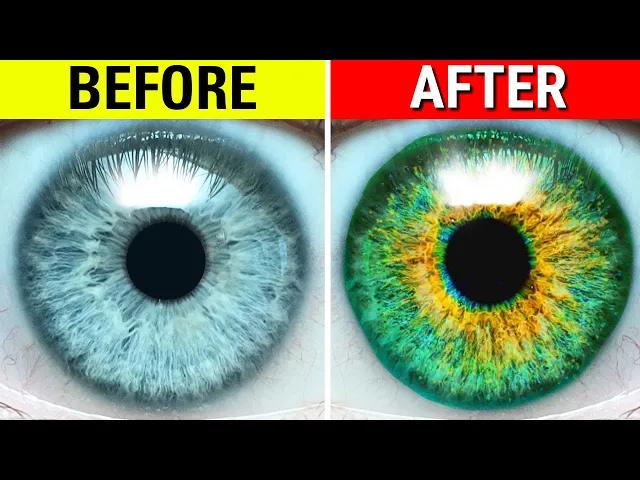
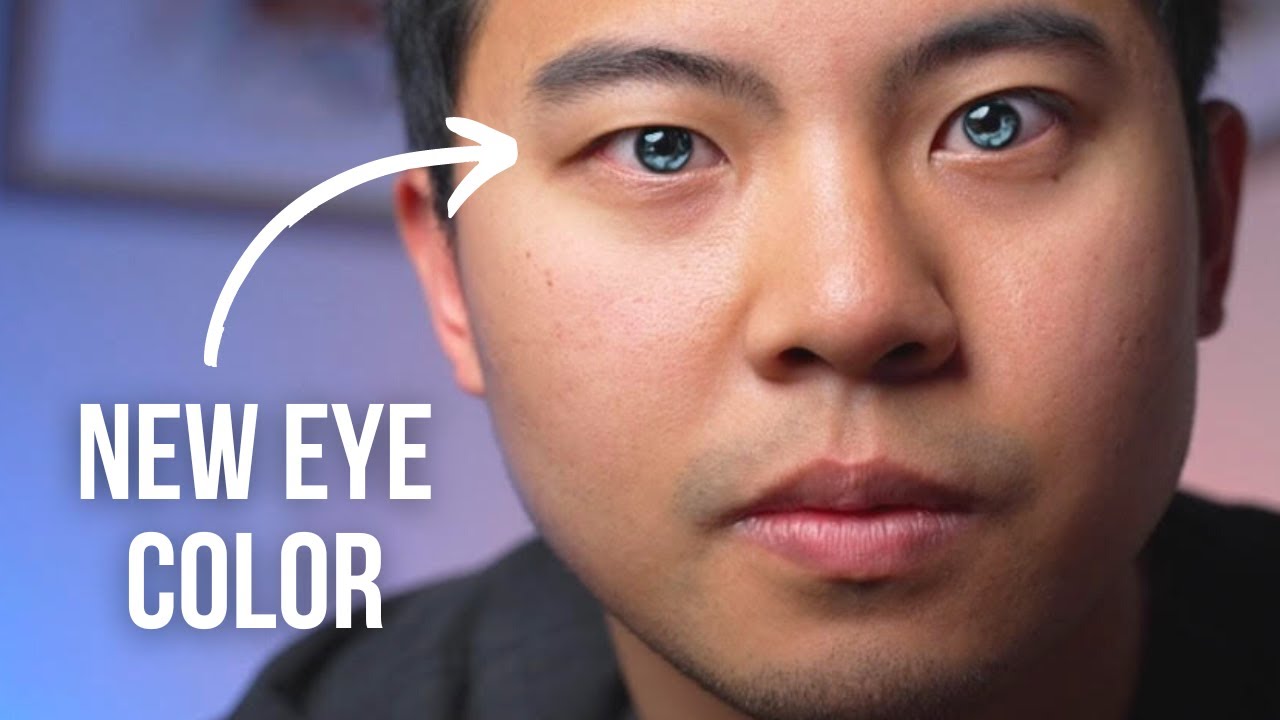
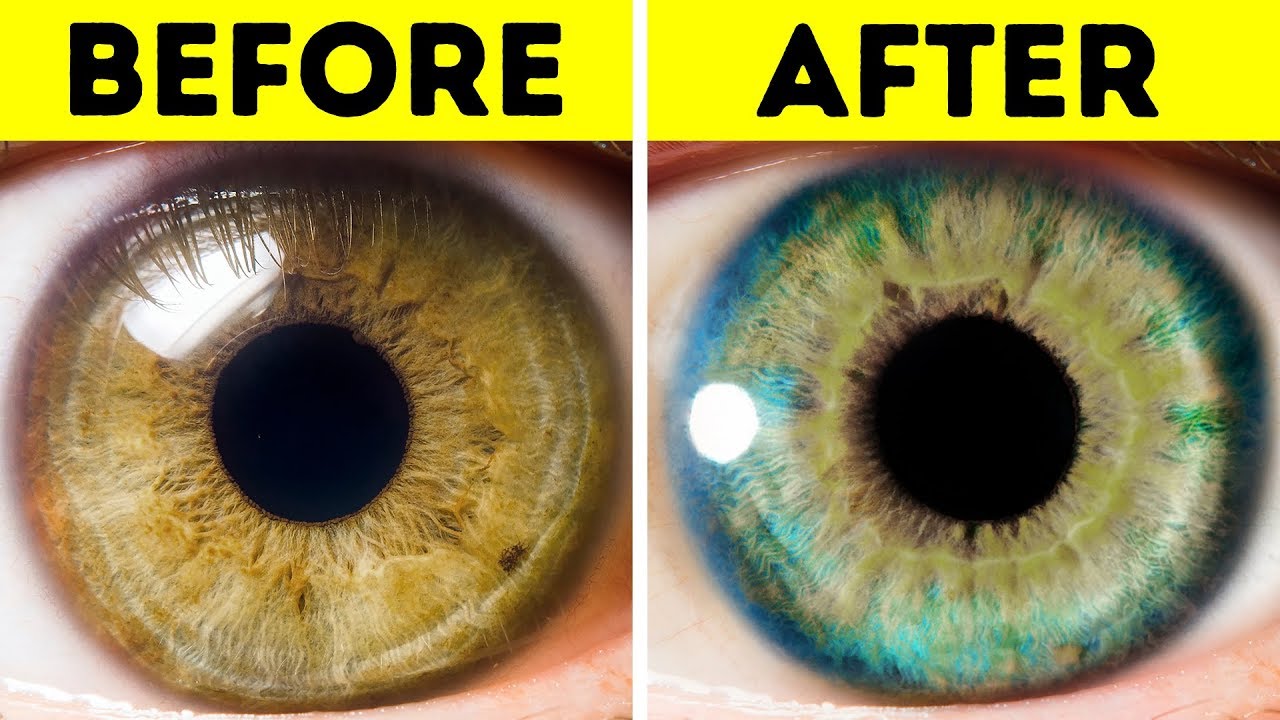
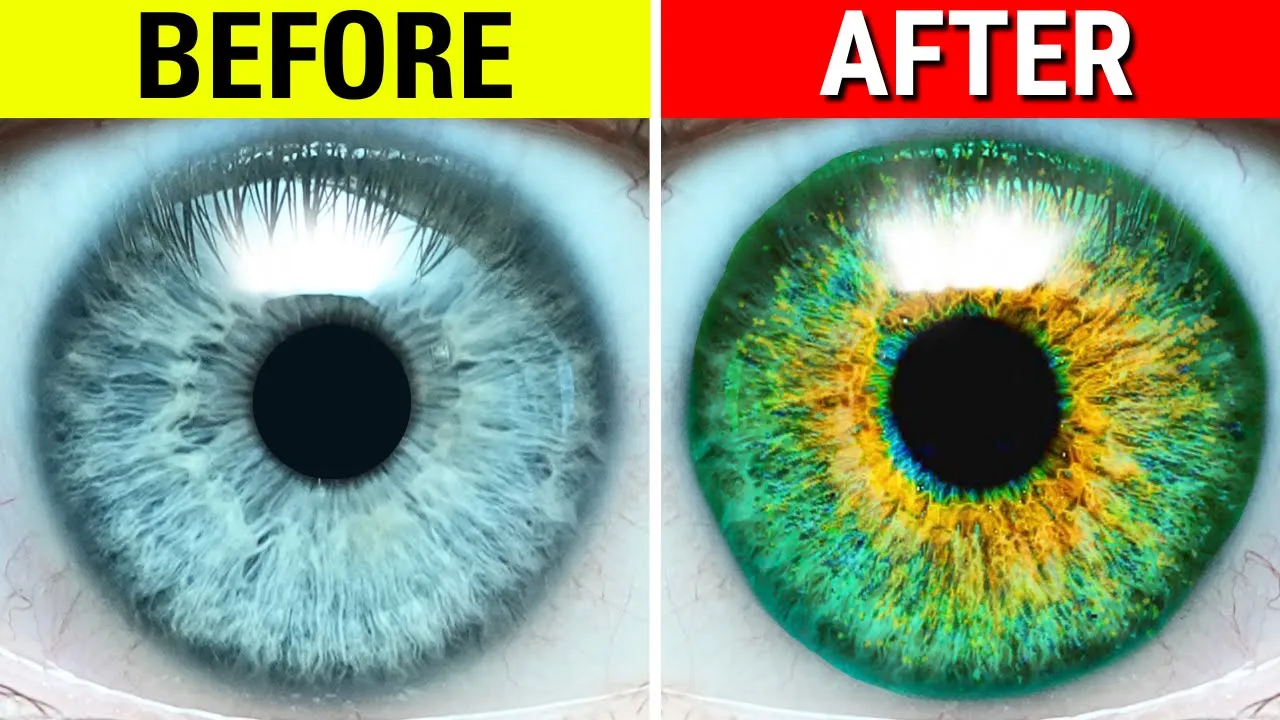
Okay, so how do you change your eye color? Like for real, is it possible to change your eye color from, let's say, a brown eye to a blue eye or vice versa? Well, turns out there are a few ways, but some ways are safer than others.
So in today's video, we're going to break down the three ways to change your eye color, including how it works, what is safe, and what to watch out for. If you're new here to the channel, my name is Dr Joseph Allen. I'm a board-certified doctor of optometry, and this channel is all about helping you learn about the eyes, vision, and helping you see your very best.
Now, over the years, I've had a lot of viewers as well as patients ask me if it's possible to truly change your eye color. And it turns out that yes, science has figured out a few ways. First, let's talk about the eye color-changing eye drops because there's a good chance if you've already done some of your own research on the subject, you've seen some advertisements for these types of drops on the internet.
And then, at its medical root, there are medications known to change the color of the eye. For example, in glaucoma, there's an eyedrop medication known as a prostaglandin analog. And these drops are known to increase the amount of melanin deposited in the iris, usually turning more of a blue or a hazel eye to more of a brown-colored eye over time.
And these affect about 20% of patients who are taking these types of medications. But with a quick internet search, it is not hard to find various advertisements for these eye color-changing drops. For example, one brand that I found is called Fancy Drps, and looking at the ingredients, it looks like it mostly has various salts and preservatives in it, as well as these two ingredients.
First is a trademarked ingredient called Fancy Complex, which I did try to look up in the U. S. trademark search engine and I could not find it so it's hard to know really what it is and if it does or maybe doesn't work at all.
And then there's also something called Ganoderma extract. I dug into the research on this Ganoderma extract, and while I couldn't find much, I did find a few articles listing Ganoderma extract as having an anti-pigmentation effect. So if these types of drops do anything at all, perhaps they can help prevent pigment deposition in a darker iris and slowly over time make it more of a lighter-colored eye.
However, the main concern that myself and other eye doctors have is that these drops have not been tested or approved by the FDA here in the US. And that means we have not idea really what the ingredients are, how they work, or if they work at all. It all could just be really fancy marketing.
And probably even more important is that we don't know if they are safe, either short-term or long-term. In fact, they're even flagged with big red danger flags on the iDrp safety website. So I do not recommend anyone go this route.
But I do think it may be possible for eyedrops to change the eye color just because we have some medications that are known to cause this pigmentation change. But please let me know in the comment section if you or maybe a friend of yours have used these sort of drops and have they had any effect or have you seen any side effects? Again, let me know in the comments because I would like to read that.
Otherwise, just as a side comment, keep a lookout if you see any advertisements that maybe include my name or likeness for something like this, because I do not give those sort of endorsements out and I've seen some things come my way. So if you see anything like that, please send me a DM over on Instagram and let me know what's going on and what you're seeing 'cause it scares me to think that somebody's trying to use my name, my likeness, this brand to promote. .
. something that could potentially be harmful. And that's just kind of the scary world we live in right now.
Okay, so what about eye color-changing surgeries? Yes, if you are really serious about changing your eye color permanently, there are a few procedures to help with this. The two most common ways to change the eye color through surgery include having an iris implant put inside of the eye or through a new form of eyeball tattooing that is referred to as keratopigmentation.
Various forms of iris implants have existed for some time now. This is where a surgeon will implant an artificial iris inside of the eye in front of an existing or damaged iris. I will say I have one patient right now who has one and they are kind of like works of art because it's amazing how well they can customize and match the colors of one iris to the other eye which maybe hasn't been damaged.
This procedure is FDA approved for people who've had trauma to an eye or maybe congenitally reborn with a defect of some kind. The one important thing though is that it's not without complication, right? These sort of procedures are invasive, and people are known to have side effects such as not only external effects, but it's not only external effects, but it's not only external effects.
light sensitivity, the high risk of cataract formation, and glaucoma is a potential issue, which unfortunately can be a blinding eye disease. The newest procedure called keratopigmentation is honestly quite fascinating. This is where your surgeon doesn't change the color of the iris per se, but instead they use a femtosecond laser to create these small channels or tunnels in the cornea.
And then they inject a colored dye into those channels, depending on what color you want for your eye to look like. Again, digging into the research, a review report from 2022, although smaller studies did report that there was a 90% excellent outcome from the providers and that patient satisfaction was 92. 5% of these cases.
And there was overall a good safety profile. With side effects, the most common one was extreme light sensitivity, but only lasted about 30 days after the procedure. But as usual, with any of these sort of procedures, there's always a chance for other complications, including warpage and clouding of the cornea and the surface of the eye.
There's also a chance for infection, as well as. . .
some sort of problem happening with the dye leaking further into the eye or an inflammatory response to the type of dye they used. And there's also chance for color fading and changing over time. Now, despite these few publications largely showing good safety profiles, I will mention that the American Academy of Ophthalmology did publish in January 2024 their own consensual about these procedures.
And I will quote, "With purely cosmetic surgeries on the eye, it's just not worth the risk when it comes to your good vision. " For me personally, the one thing I'll note is that just looking at these results, I do agree that they look rather cool and striking, especially from a distance. But when you get in close, like with a friend, or maybe you're having an intimate moment with a lover, we love to see them.
look into their eyes and with these sort of procedures, you can tell that it's not their real eye color. Just something to keep in mind. Finally, probably the safest way to change your eye color is with colored contact lenses.
Most brands of colored contacts do come in stock color options covering from brown to green to hazel, you even have purple and blue. blue and even some honey amber colors and basically every color in between. There are also different theatrical or Halloween contact lenses which we've covered pretty extensively in previous videos and I'll put links to those in the description if you want to learn more about those.
The nice part about colored contacts is that not only do they help change the color and appearance of your eyes but they also enhance your eyesight if you require a power in your prescription and if you don't like the color of your eye and you want to go back to the original color you can just go ahead and remove them from your eye and you're all set. One thing I will say about colored contacts is that it's still super important to be safe about what brand of lens that you're wearing and where you are buying them from and I say that because research shows that colored contacts carry a sixteen point five times times greater risk of infection than just with normal contact lenses. And this is because of poor manufacturing and the sales and distribution of these types of lenses being largely unregulated.
Meaning that we don't really know how a lot of these brands are manufactured. We also don't know how long they've been maybe sitting in shipping containers around the world and it's also possible that your lenses could be expired. expired before you even receive them.
So it's just super important that if you're going the route of colored contacts, that you first make sure that you are wearing a proper and respected brand of colored contacts, that you are fit by a professional and wearing a lens that is gonna be healthy for your eye and that you're buying the lenses from a trusted source. I will add here that-- probably the best brand of colored contact lenses on the market right now and in my opinion are the Alcon air optics colors and the dailies colors and the reason I say that is because these lenses have some of the most modern designs in contact lenses and the way they fit the eye and they have more breathable material meaning they allow more oxygen to the eye which is necessary to keep the eye. healthy.
In fact, most other brands of colored contacts that I see just like on the internet most of those other brands are really old technology and they have a very low oxygen transmissibility that's way below the industry safety standards. But as always don't just take it for me if you're interested in colored contact lenses ask your local eye doctor about it and what they think is gonna be best for you and your eyes. eyes.
So those are the three ways that we have to change your eye color. Please let me know in the comment section which a favorite part of this video was and if you just enjoy learning about the eyes and seeing your best then definitely please subscribe to the channel so you don't miss our next video. Otherwise, thank you so much for watching.
Really appreciate you being here. Keep an eye on it and we'll see you in that next video. Peace.