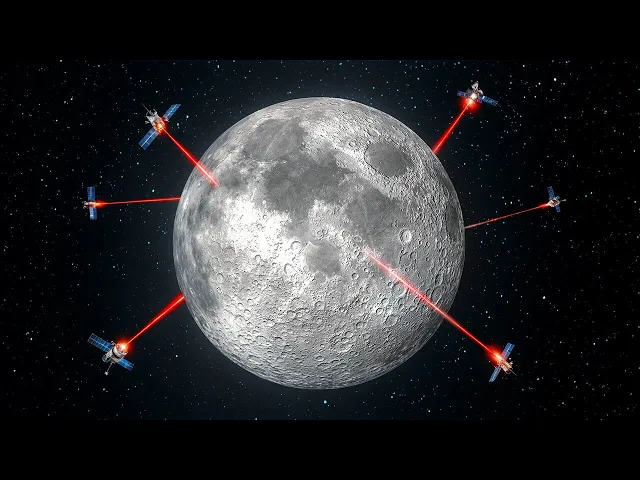
our moon exploration project started out in 1969 sure there have been some problems along the way but astronomers are certain will get back up there pretty soon and with better knowledge and Technology however there's an 800-year-old trick that might become way more useful than fancy GPS Tech and Powerful Rockets it's called the Fibonacci sphere some scientists at a Hungarian University stumbled upon this idea while studying the Moon they believe it might be useful to better understand how the moon spins and how it's a bit squished while it goes around Earth you might believe that our
planet and its satellite are these perfect little spheres floating in space well that's not true they are in fact like slightly deflated soccer balls because of all the gravity rotating movements and Tides the GPS technology we use here on Earth is already adapted to these less than perfect ball proportions remember our planet is a bit flattened at its poles if we're going to make a map system for the moon we need to do the same for its shape called a selenoid or what scientists call the moon's version of our Earth's shape since the Moon is
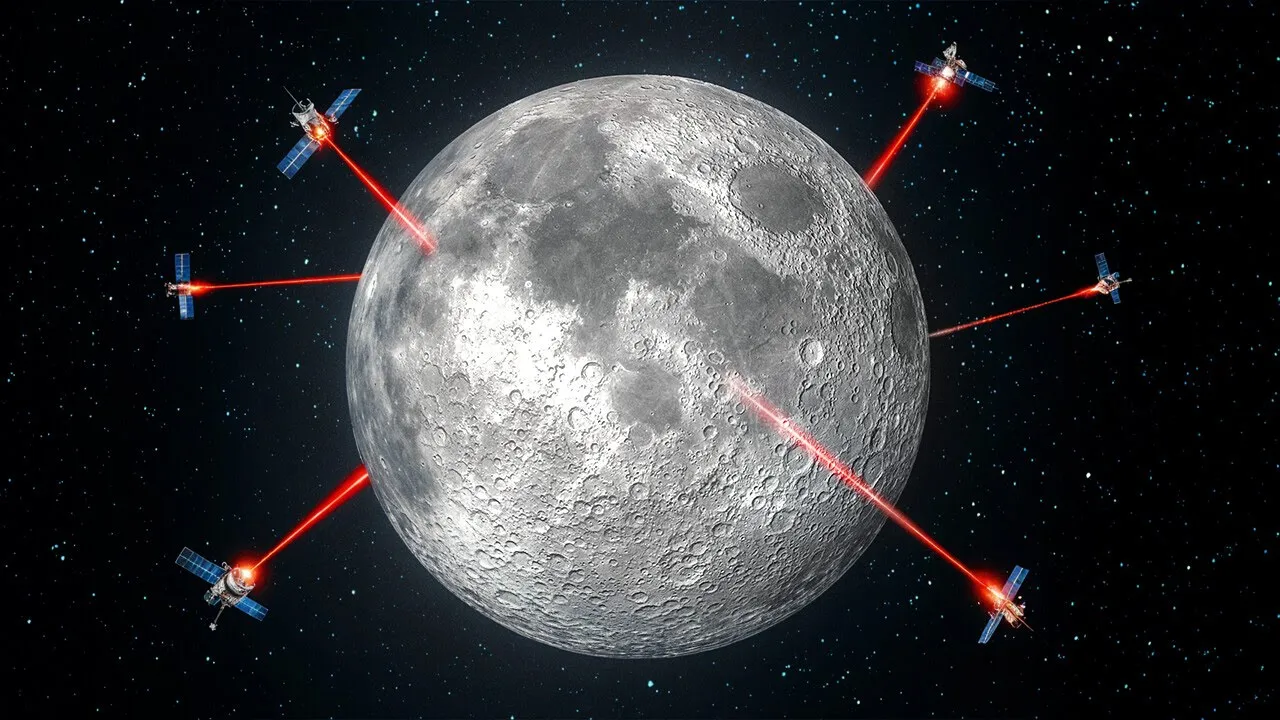
less compressed than our planet scientists have been taking a shortcut until now they've been looking at our satellite as a simple ball shape however with all these new projects coming up in the following decades and even some exciting trips we might end up having on the moon we need to be more precise scientists now believe we should get the real data and start drawing an accurate picture of the Moon here's where the Fibonacci sphere comes in handy it's a clever Solution that's been used by mathematicians to spread points out evenly on a ball scientists recently
used it to map around 100,000 spots on the moon using data previously collected by NASA and what they found was crucial for our understanding of the moon's shape for instance we now know that our satellites poles are about3 Mi closer to the center compared to the moon's equator sure it might seem like a tiny detail but if we adjust our GPS software accordingly before we land on the Moon again it might save us from getting lost up there this level of math hasn't been done since the' 60s for the moon but we already know it
works wonders here at home so it only makes scientists better prepared for future missions this is n't the first time people have used fibonacci's findings to come up with clever Solutions we've also seen it put to work in finance Agriculture and in computer science let's see where it all came from Legend has it that the Italian mathematician Fibonacci wasn't really that interested in mathematical sequences at first but rather in rabbits so he came up with this interesting puzzle what happens if you place a pair of rabbits in a certain space for a year he also
set some theoretical rules for starters all those bunnies come in boy girl Pairs and they can start reproducing after just a month each month each bunny pair adds one more pair of bunny Offspring The Last rule was that all bunnies would be Invincible for the year doing the math he got this series of numbers one 1 2 3 5 8 and so on if you look at this series again you'll notice that every number is the sum of the two before it the first two that's your starting bunny pair next you'll see the number two
which is the first pair and their first Offspring pair word caught on about this interesting sequence and math lovers began studying it more closely they started seeing this pattern very often in nature like in how leaves grow on a plant or how seeds arrange on sunflowers there's even a little experiment you can do to check it out start by grabbing some paper and a pen try drawing the Fibonacci spiral start with a tiny Circle then go bigger and bigger using those Fibonacci numbers the first Circle should just be a tiny dot on the paper or
the equivalent of zero next Circle one unit another Circle still one unit keep it going and you'll see that the circles form this spiral pattern even as it continues to grow it keeps its shape you might have also stumbled upon the Fibonacci spal as a symbol of hypnosis in all fairness there's little evidence you can confuse someone by making them stare into a spiral for a while but its effects on our focus and our optic nerves can't be ignored after you've stared at a spinning spiral you might see how objects get smaller or bigger depending
on the direction of the swirl it's easy to understand why some experience this sensation as hypnotizing this interesting series of numbers appears in our day-to-day lives even if we don't notice it it can also be used in more practical instances like converting miles to kilometers let's look at the series 1 2 3 5 8 13 pick any two numbers side by side say 13 and 21 do the calculations and you'll notice that 13 miles is about 21 km same with 34 and 55 music and math might not seem like they're connected but if you had
asked the great Mozart he probably wouldn't have agreed it seems he was very passion about numbers from early on in his career he loved finding cool number patterns in music like some sort of hidden messages his own sister even remembered him doodling math all the time even on the sides of his music sheets some scholars believe he might have even played around with the Fibonacci numbers if that's really the case then he might have used the ration to balance out parts of his Tunes what about other types of art well it's also said that Leonardo
da Vinci used the golden ratio in his master masterpieces like the Vitruvian Man and the monolisa also when it comes to Great pieces of architecture the Parthenon might have used this pattern too anytime you see buildings with columns spaced just right you can be certain that's where the builders Drew inspiration from the Great Pyramid of Giza is another great example there's no official record to prove it but the pyramid's shape is so close to the golden ratio that it's kind of obvious you'll also see this pattern appearing naturally in our environment go out in our
garden and check to see if you have any pine cones lying around see those scales they're set up in a pattern according to the Fibonacci sphere even the bones in our body seem to be growing based on the same proportions we've got one torso one head and one heart then there's stuff that comes in pairs our arms legs eyes and ears for instance for the number three think about the composition of our Limbs and the three main sections in our hand the wrist part the middle Palm part and our fingers which are also split into
three by the way oh speaking of fingers their bone lengths have this ratio too this design helps our fingers move smoothly especially when grabbing objects the Fibonacci sequence can be seen in the way ocean waves curve and how Rivers split and flow too weather patterns can also follow this rule some whirlpools and hurricanes form and spread out in the same way the Fibonacci spiral does zoom out and you'll see that spirals aren't just found here on Earth they're also everywhere in space and it isn't random most galaxies including our Milky Way are spirals think of
it like this generally stars in a young Galaxy don't all appear at once some are faster When developing others take their time this makes gravity pull in different ways making the young Galaxy spin like a disc as it spins different levels of gravity stretch it into getting these spiral arms on the flip side if all the stars in a young Galaxy appear at the same time gravity just smooshes it all into an egg shape or what the astronomers call elliptical that's it for today so hey if you pacified your curiosity then give the video a
like and share it with your friends or if you want more just click on these videos and stay on the bright side