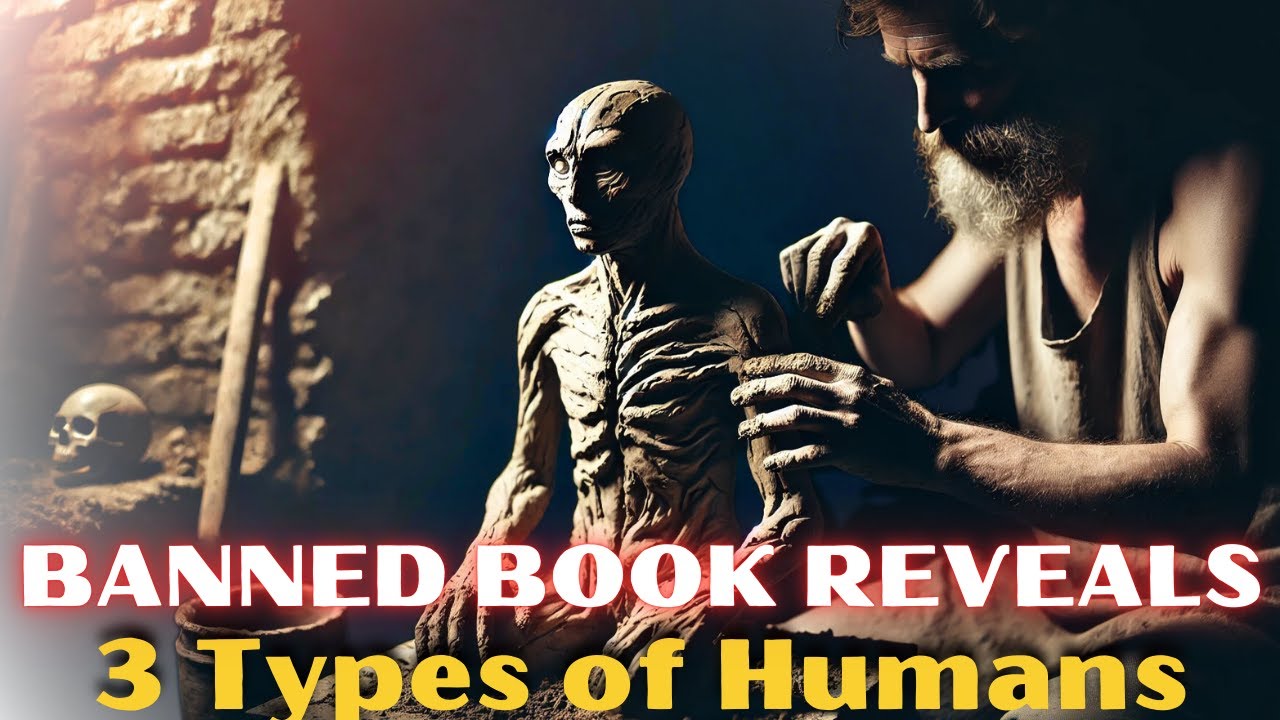
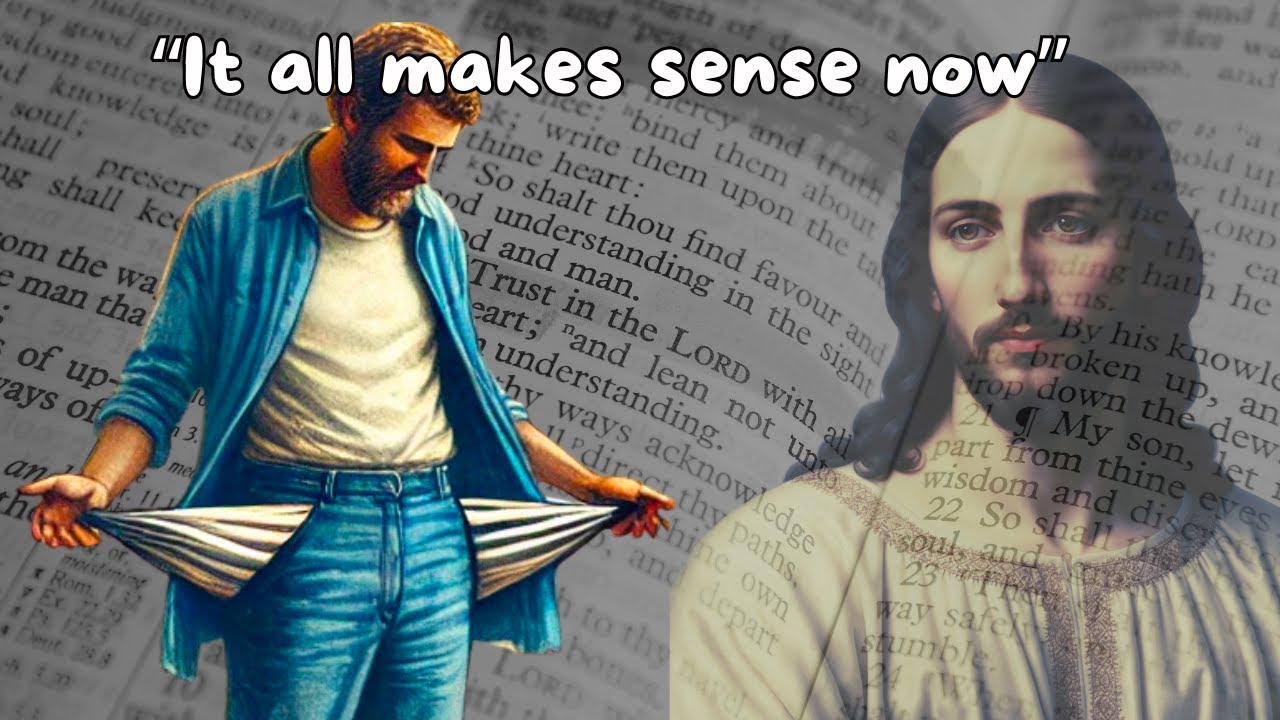
Imagine discovering a hidden book that was buried for over 1,600 years that claims the god most people worship might not be what you think. According to the secret book of John, our world isn't just flawed, it's a trap crafted by a dark force to keep us from realizing our true power. This is an ancient text that's so explosive, so dangerous to the status quo, that it was condemned and buried until 1945.
They thought that without this hidden knowledge, most people would remain in the dark, never realizing the incredible potential inside themselves. The secret book of John, found in 1945 among the Nag Hammadi texts buried in Egypt, dives into this battle between two forces. It tells us that before anything existed, there was just the One, a pure, boundless mind, a kind of cosmic energy.
This One wasn't just a god you'd imagine with a beard and a throne. No, it was something beyond human understanding, like an endless ocean of light that contained everything and nothing at the same time. The story says that Wisdom, or Sophia, one of the universal forces, made a mistake.
She tried to create something without permission, without balance. The Gnostics claim that this mistake broke the perfect unity and gave birth to a flawed, chaotic being known as Yaldabaoth. This being became the ruler of the material world, our world, ensnaring us in a reality where we forget our connection to the original light.
This ancient tale reflects a deeper idea. Duality. It's the constant struggle between opposites.
Light and darkness, knowledge and ignorance, spiritual and material. While mainstream religions like Christianity often focus on the battle between good and evil, the Gnostics saw it differently. They believed that everything, even darkness, was born from the One.
We face shadows as well as light in the cosmic story. The Gnostics didn't just stop at the idea of a war. They thought that every single one of us carries a spark of that original light inside, something that Yaldabaoth, the ruler of this flawed world, doesn't want us to discover.
And that's where the fear comes in. They cautioned that we might never discover the truth about our divine nature as long as we remain trapped in this illusion of reality. The feeling that there's more to life, that maybe we're part of something bigger, is still relevant.
It's the internal conflict between accepting what we perceive and exploring the hidden realm. This story is a reminder that maybe, just maybe, our reality isn't the full story. And if the Gnostics were right, understanding that could be the key to breaking free from the illusion and reclaiming our true potential.
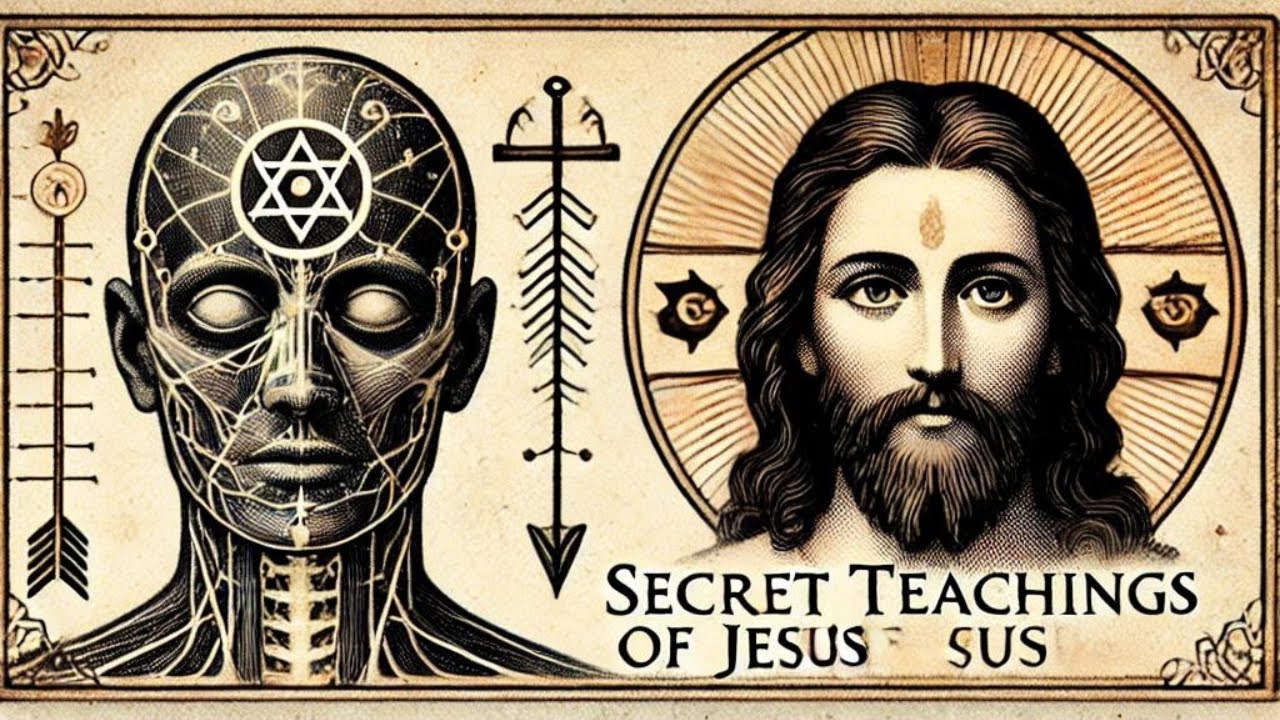
We all experience moments when life seems overwhelming and finding answers seems unattainable. In these moments, having more understanding, clarity, and guidance can make a significant difference. Banned Screts, The Lost Knowledge of Jesus, provides a path to clarity and peace through the hidden teachings of Jesus.
If you're seeking clarity and hope, this e-book could be the lifesaver you need. The best part is, you can download it as a gift in the first comment posted. It could be what you need for today.
Understanding something deep within yourself and realizing your soul's connection to a higher, divine reality is what Gnosis is all about. According to the Gnostics, this awareness can free you from the illusion that keeps most people trapped in a cycle of ignorance. It's the difference between seeing the world as it appears and seeing the world as it truly is.
Yaldabaoth, a being who created the material world to keep us from discovering our true origins, casts a spell on most people in this secret books universe. Yaldabaoth, in this ancient narrative, acts like a puppet master, crafting a reality filled with distractions and illusions to keep us from realizing that we carry a divine spark inside us. Think of it like wearing blinders that keep you from seeing beyond the everyday hustle and bustle.
But the Gnostics believed that through Gnosis, a person could finally see past the veil. They could understand that this world, its rules, its limits, isn't the ultimate reality. Instead, they could glimpse the truth, that they're part of a divine whole, a piece of the original light that existed before the shadowy world.
This realization is like waking up from a deep sleep. This secret knowledge is what made the Gnostics so controversial. They believed that most religions, like mainstream Christianity, focused too much on worshiping an external god and not enough on discovering the divine within each person.
This is why they were considered heretics. They challenged the idea that humans should look outside of themselves for answers. Instead, they believed that each of us already possesses the answers, awaiting discovery through self-awareness and a deeper understanding.
They taught that discovering this hidden knowledge takes effort. It's like peeling back layers of reality, one by one, until you finally get a glimpse of the core. Created by Sophia's unauthorized act, Yaldabaoth, a rebellious figure himself, evolved into a rogue force, establishing himself as the ruler of a world he crafted out of ignorance and arrogance.
Unlike the image of a loving, caring god that many hold, he is depicted as being desperate for control, deceiving humanity into believing that he is the true source of power and authority. It's like a king who seizes the throne but hides the truth of his origins to keep his power intact. To the Gnostics, his story wasn't just mythology, it was a metaphor for how many people in their time, and even today, accepted systems of power without question.
They saw mainstream religion, especially the structure of the early Christian church, as a tool that kept people in spiritual chains. Instead of encouraging exploration and self- knowledge, these systems emphasized obedience, faith, and acceptance of the world as it is. But Sophia's story is also one of rebellion, and in her, the Gnostics saw a different kind of resistance.
She went against the flow, breaking the cosmic rules by creating without permission. Although her actions led to Yaldabaoth's rise, they also planted the seeds of dissent. The Gnostics believed that humans had the power to challenge the false reality imposed on them.
By rejecting blind obedience, they could begin to see through the illusions created by the world. This conflict between control and defiance, between authority and the drive to break free, isn't just an ancient story. It's a struggle that resonates throughout history.
Think about the countless times in history when people have stood up against unjust rulers, oppressive systems, or deceptive beliefs. From ancient revolts against tyrants to modern movements for social justice, there's always been a tension between those in power and those who dare to question them. The Gnostics warned that defying the powers that be could bring suffering, as those who challenge authority often face backlash and punishment.
They understood that breaking away from accepted beliefs could be a lonely, dangerous path. But they also believed it was the only way to uncover the deeper truths hidden beneath the surface. To them, true liberation came from recognizing that the authorities of this world, the structures, the norms, the expectations, might not have our best interests at heart.
In their eyes, following these rules meant staying trapped in a limited reality, blind to the greater light that existed beyond his reach. Thus, rebellion was a power grab, not just defiance. It was about refusing to accept a lesser world when a higher truth was possible.
And through this rebellion, they believed that each person could find their way back to their true, divine origin. The first symbol that needs decoding is the One or Monad. It represents the ultimate source, the original mind or consciousness from which everything else springs.
Consider it like the sun, with all reality radiating light from its center. The One isn't a person or a being with a shape. It's more like pure, infinite energy that has no limits.
In the Gnostic view, everything that exists is a part of this energy, even the shadows that seem to hide it. Then there's Sophia, a symbol of the Divine Mind's desire to create and to explore beyond the boundaries of pure unity. Her decision to create without balance symbolizes the first step away from that perfect, unified state.
Sophia's actions result in the creation of Yalda Bayoth, symbolizing the separation of knowledge from understanding and the loss of wisdom's connection to the Source. Her story is like a cautionary tale about the dangers of straying too far from the truth. Yalda Bayoth, on the other hand, is much more than just a villain.
He stands for ignorance and deception. Think of him as the fog that keeps us from seeing the sun. Yalda Bayoth's world is the physical reality we live in, filled with distractions that keep us from recognizing our inner light.
In this way, he symbolizes the forces that try to convince us that this material world is all there is. He's the part of our minds that makes us forget our connection to the Divine Source, keeping us trapped in illusions. They wrapped their ideas in stories and metaphors so that only those who were truly seeking them could understand them.
Another important symbol is light. To the Gnostics, light wasn't just a physical glow. It represented enlightenment, the pure knowledge that comes from recognizing one's true nature.
When they talk about beings made of light or realms filled with light, they mean states of awareness where everything becomes clear, where illusion fades away. Light symbolizes awakening and seeing the truth about ourselves and the universe. And then there's the material world, our everyday reality, which the Gnostics saw as a kind of prison.
It symbolizes the limits placed on us, not just physically but mentally. Routines, desires, and distractions often ensnare people in this place, preventing them from seeing beyond. However, they held the belief that Gnosis, the secret knowledge that reveals the true nature of the world, can uncover the divine spark hidden within every person.
If you're enjoying this deep dive into the mysteries of Gnosticism and the Secret Book of John, and you want to support this journey of discovery, consider hitting the Super Thanks button right now. Your support means everything. It's what keeps these explorations alive and allows us to continue asking the big questions.
All of these symbols come together to create a story that isn't just about ancient gods and cosmic battles. It's about the journey of the human mind. It's a story about waking up from a dream, realizing that what we see and touch isn't the whole picture.
The story serves as a reminder that beneath the surface of everyday life, there exists a deeper reality connected to the divine source that Sophia sought to return to. By understanding the Gnostics' symbolism, we can see that their writings are like a secret code, a guide for those who want to break out of the illusions of the physical world. It's a narrative that challenges your perceptions and prompts you to scrutinize the information you've received.
And once you start to see those hidden meanings, it's like turning on a light in a dark room. Suddenly, everything looks different. Life wasn't just about what you could touch, see, or hear.
It was about looking beyond the surface, questioning the authority of a world that tries to keep us in the dark. The Gnostic believed that each of us carries a hidden potential, a spark of the original light that can guide us back to a higher understanding. But to reach that understanding, we have to break free from the illusions that cloud our minds, just like waking up from a dream that seemed so real, until we opened our eyes.
The ancient vision was radical for their time, and it remains just as challenging today. It challenges us to scrutinize our surroundings and explore the possibility of deeper reality beyond our conventional understanding. It suggests that maybe, just maybe, the true power doesn't lie in accepting what we're told, but in daring to uncover what's hidden, those deeper truths that only become clear when we refuse to stay in the shadows.
However, this path is not for the timid. It means embracing the discomfort of not knowing, the courage to question deeply, and the strength to see beyond illusions. It's about recognizing that the world, as we know it, could be just a small part of a much larger story.
We participate in a cosmic journey towards enlightenment, not just as subjects of a flawed Creator. Thanks for being a part of this incredible journey. Join our community by subscribing to this channel.
Until the next video.