the Greeks attached great importance to the culture military and economic growth of their policies but what were their views on societal duties what was their daily life like their living conditions their diet and their clothing as you already know in the ancient Greek World there were many city-states known as polis born into citizen families attained citizenship of the polis upon reaching adulthood this citizenship granted them the right to property and participation in the governance of the state significant State matters were continuously discussed and collectively decided by the citizens requiring a substantial amount of time therefore
Greek cities had public squares where citizens could gather these communal meetings fostered the cohesion of the citizens and their shared interests the most significant locations in the city were the Acropolis and the mountain with numerous impressive public buildings Architects placed great emphasis on the beauty in Grandeur of these public buildings as they were symbols of power for each City an impressive example of Athens greatness is the Acropolis which still Towers over the city despite the passage of thousands of years while public buildings were accessible to all the Greek home was a secluded world of private
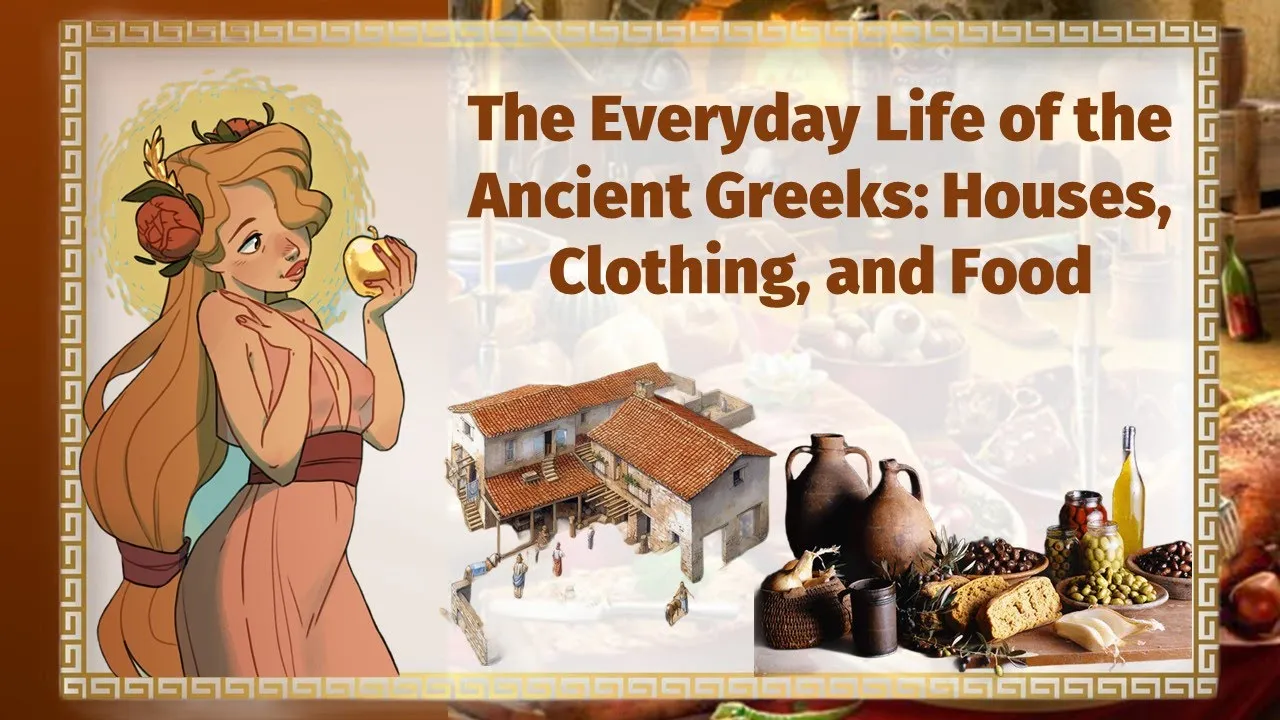
life the houses consisted of multiple buildings surrounded by high walls in the center there was a courtyard often with a pool the windows were never opened towards the street in every house a sacred fire burned continuously in a designated room dedicated to the Goddess Hestia the protector of the Home and Family Life the houses were built from stone or clay bricks at night the rooms were lit with small clay lamps while wealthy people had large metal stands with burning oil the residential buildings were closely packed together and the streets were narrow winding and unlit wealthy
individuals tried to live outside the city walls the walls of the Living Spaces in affluent houses were always painted in vibrant colors the Greeks particularly loved the colors blue and red as well as various ornaments in rich houses colorful Stone patterns were laid on the floor the clothing of ancient Greeks consisted of wide fabric panels wrapped around the body and fastened with special closures women's clothing reached the ankles while men's clothing reached the knees the garments were made of wool or linen the Greeks placed great importance on their participation in the public life of the
polis the daily diet of the Greeks was very simple in the morning they simply ate dry bread with water or goat's milk for lunch there were barley flatbreads with goat or sheep cheese and a few olives it was only in the evening that the meals became more substantial with barley porridge vegetables and fish was consumed in large quantities meat from sheep goats or cattle on the other hand was considered a delicacy and was only eaten on special occasions the main meal was considered the main course and was taken at nightfall sometimes there was an additional
light snack before dinner men and women had separate meals in small households men ate first and then women in wealthy households dishes were served and prepared by servants in poor households where there were no servants women and children took care of food preparation the ancient Greeks ate at tables while sitting on chairs the tables often had legs shaped like animal feet such as lions lower tables and long benches were used for banquets and celebrations meals were typically eaten with the hands sometimes a spoon was used as well food was served on simple terracotta plates in
later times more elaborate sets of dishes made of precious metals and glass were also used in ancient Greek culture there was a well-developed culture of feasting one of the most popular forms of socializing for the Greeks was the Symposium which meant a communal feast or banquet only men participated in symposia women only took part in the events as dancers and flute players a symposium or festive banquet consisted of many rituals such as hand washing spreading incense adorning and decorating the vessels with flowers the first sip of wine had a ritual character and was drunk from
a common vessel the Symposium had two parts the first half was dedicated to eating and the second half to drinking wine there were various performances and games wine drinking was always accompanied by light snacks such as nuts roasted wheat or Honey Cakes the role of wine pour was taken on by young men who served the guests wine diluted with water the assembled guests were entertained by musicians playing the kithra pan pipes and Liars at luxurious Banquets various artists such as singers acrobats and dancers performed participants in ancient Greek feasts reclined on elevated beds and ate
with their hands bones and food scraps were thrown directly onto the floor instead of using napkins crusts of bread or pieces of dough served as substitutes for plates some literary sources such as Plato's Symposium and xenophan's banquet describe ancient Greek Banquets in great detail the availability of meat in ancient Greek cuisine varied greatly depending on the location and social status meat was more easily accessible in rural areas the ancient Greeks hunted hairs and birds with Nets and traps they kept chickens and geese as pets while wealthy Farmers kept pigs sheep and goats in cities meat
was less accessible to most people and usually only sausages and awful were available Spartans had a special type of Stew called the black stew which consisted of pork vinegar salt and blood the black Stew was considered a valuable dish and was served only to older Spartans while the younger ones only ate the meat in ancient times Spartans had a distinctive diet Spartan Cooks were forbidden from preparing anything other than meat the black Stew was particularly well known and according to Plutarch it was extremely unappetizing Plutarch speculates that The Bravery of the Spartans was simply attributed
to the fact that someone who was forced to eat this stew every day did not value their life particularly highly both athletes and Olympic Champions adhered to a meat-rich diet vegetarianism was also popular in ancient Greek society this was promoted by various Cults such as the cult of Artemis and the pythagoreans who rejected the consumption of meat as well as by ascetic practices that were seen as a means of spiritual purity some religious doctrines also believed in transmigration of Souls and that one should not eat animals as their bodies could become the dwelling place of
a human soul since Greece was mostly a coastal region fish and seafood were more popular than meat the most affordable fish was the parrotfish while the most expensive was the North Atlantic tuna sturgeon bass and swordfish were also popular additionally octopuses mussels and Squids were caught and preserved in large barrels for later sale Greek cities also consumed eggs primarily from quails and chickens a popular dairy product was sheep and goat cheese while milk was not widely consumed due to difficulties in storage and accusations of barbarism among vegetarians including renowned philosophers and thinkers fluid intake was
limited to water water was the main drink of the ancient Greeks and women would fetch it daily from Wells and Springs the ancient Greeks were Pioneers in winemaking and spread these techniques throughout Europe the quality of wine was determined by its geographical origin the most expensive wines came from thas and lesbos later the Greeks developed various types and qualities of wine inferior wines were made from pressed residues or inferior grapes honey and herbs were often added to the wine the Greeks often drank wine heavily diluted with water it was not common to drink wine undiluted
and doing so was considered a barbaric custom wine was stored in leather jugs and bottled in amphery sealed with resin the best wines were marked with special stamps that were associated with their regions of origin such wines were called branded wines food and wine played an enormous role in the development of the culture of ancient Greece until the 3rd Century BCE the Greeks always emphasized Simplicity when it came to matters of nutrition Alexander the Great mocked the luxury and extravagance of the Persian Court he told a story about a Ponta King who had hired a
Persian cook and demanded that he prepared the Spartan black stew the cook replied to the king that he should first bathe in the river and then be exhausted from physical exercises before demanding the stew over time ancient Greek cuisine evolved and became more complex it was no longer customary to restrain oneself when it came to eating during Banquets the Greeks devoted a significant part of their conversations to wine and gastronomy they discussed the merits of different wines varieties of vegetables and types of meat [Music] we appreciate your time and attention we would love to hear
your thoughts and feedback so please feel free to leave your comments Down Below in the comment section don't forget to subscribe to our Channel Echoes of the ancient world to stay updated with more captivating content like this thank you once again for watching and we look forward to seeing you in our future videos goodbye for now