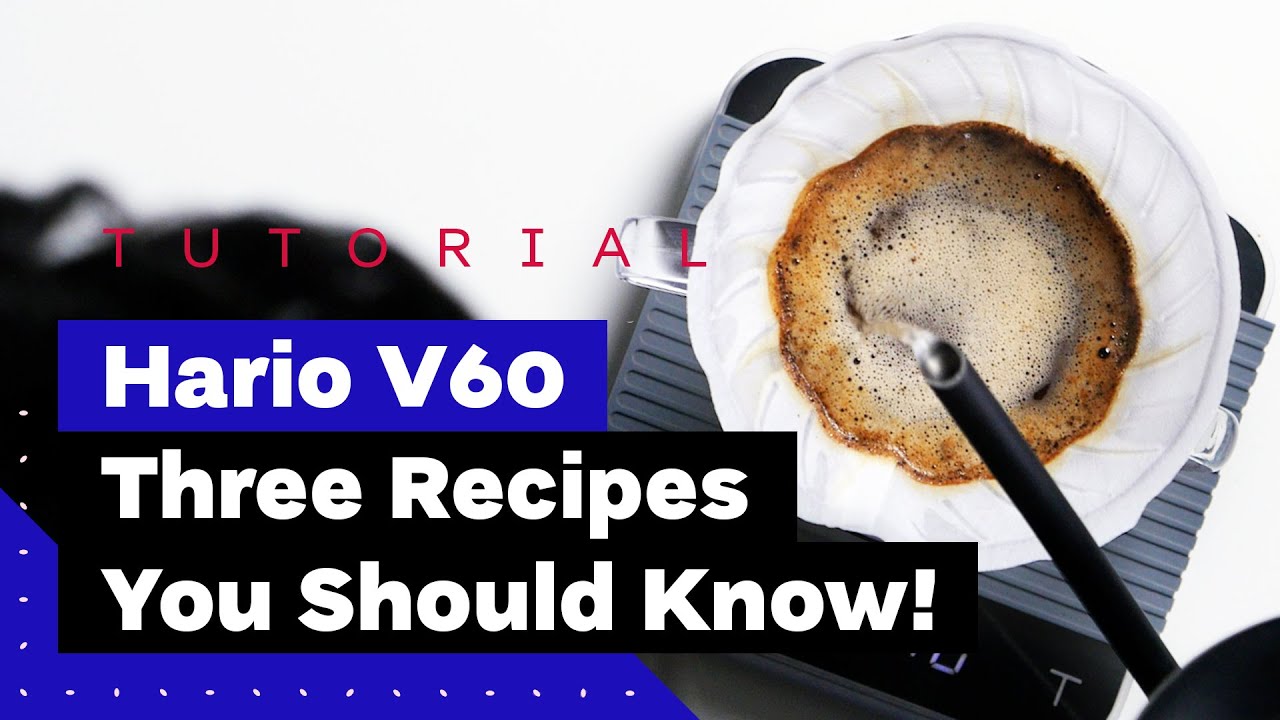
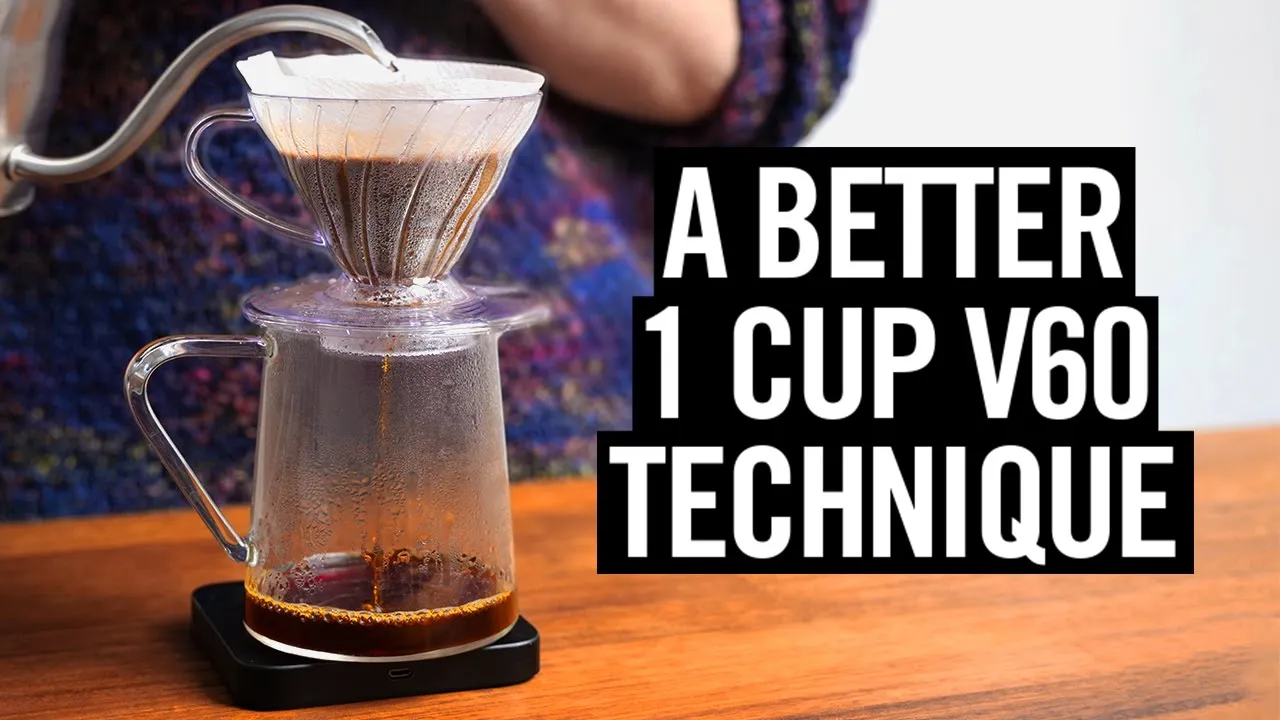
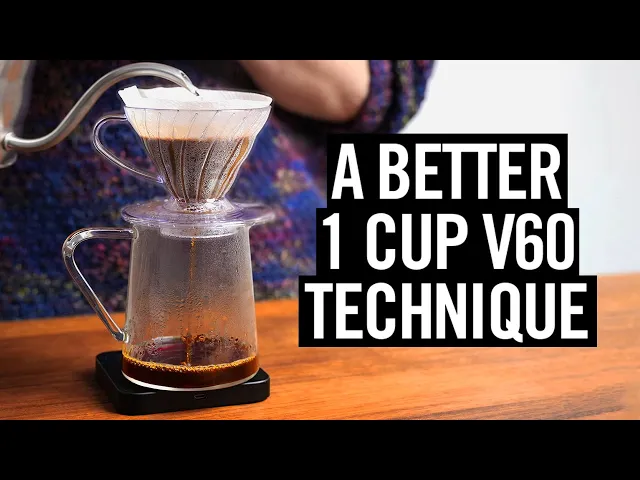
today we're going to talk about a better one cup V60 technique now a few years ago actually I released a video on the V60 technique that I did a load of testing on and I was really happy with the results but I did get one consistent piece of criticism it was a difficult technique to get great results from with a smaller amount of coffee and I think that was probably Justified criticism so we acquired a few different v60s we did a lot of testing we went back to the drawing board and we have ended up
I think with a really fun really easy technique that gets really delicious results here's how the video is going to work I'm going to walk you through the technique as I brew some coffee and highlight the key steps involved then I'll talk through some of the decisions and testing that we did in terms of why we're recommending that you do it the way we recommend you do it so let's get into it now this technique actually has quite a lot of crossover with the original technique we're still going to use 60 grams of coffee per
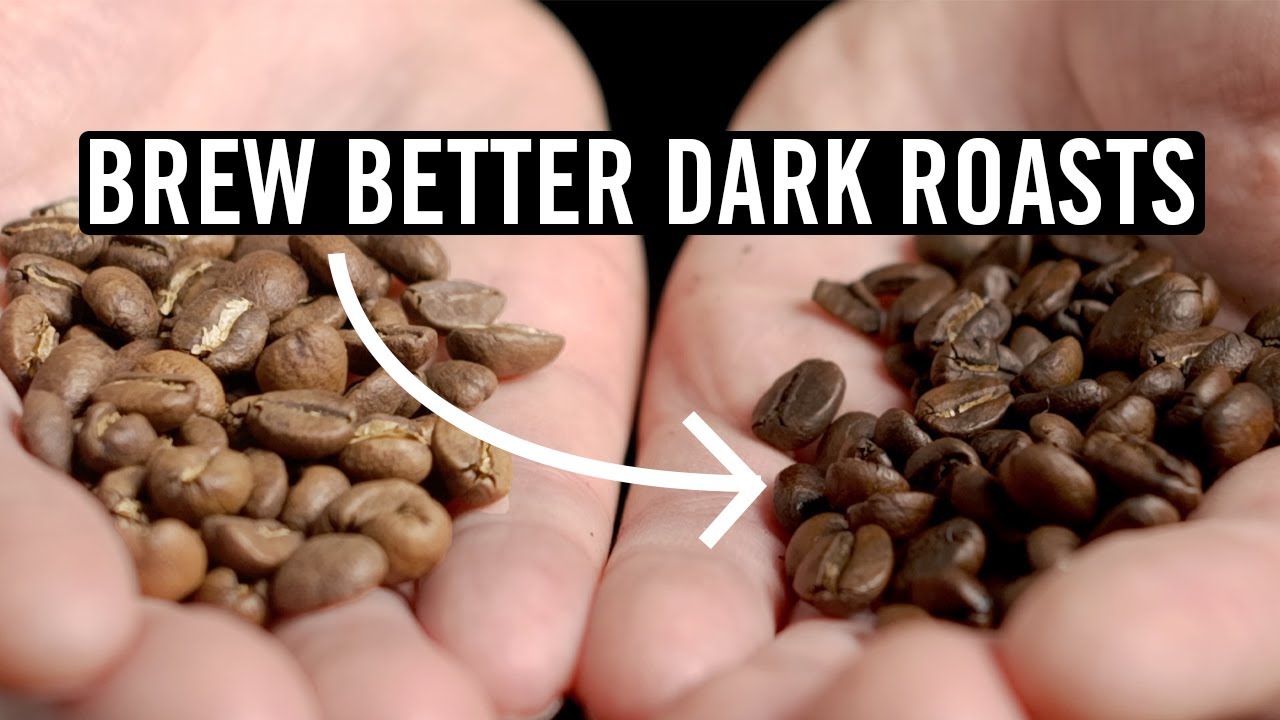
liter but because we're Brewing one cup today we're just gonna have 15 grams of coffee beans to 250 grams of water here I've got my 15 grams of coffee it's a relatively light roast with will touch on techniques or adjustments for darker roast levels a little bit later on now because we're Brewing 250 grams right now it's a pretty good idea to carve that up into 20 blocks by that I mean 50 gram blocks how we Brew is going to be in essentially five blocks of 50 grams and that's the easiest way to think about
it if you're Brewing 18 to 300 those would be 60 gram blocks if you're Brewing just say 12 grams that would be a 40 gram block the maths we're going to keep relatively simple today the other consistencies with the technique is you definitely want soft filtered clean tasting water involved there we're going to be boiling it to 100 degrees Celsius and using it fresh from the boil in addition we are going to be using scales to brew because those are just the easiest way to kind of track what you're doing Without Really having to think
about it too much so I'll grab some coffee and I'll show you the grind setting it's probably finer than most people expect but it's not super fine but certainly when I see a lot of people struggling with the technique I think that they're using a slightly too coarser grind of coffee so I'll show you the Grands now that's definitely finer than most people would typically use for a V60 but I think with lighter roasted coffees especially you do want to be this fine to get all of the good inside of them you could go coarser
for darker roasts but here for this coffee this has been tasting pretty great as for the Brewer itself I would recommend the plastic one cup V60 one it's the cheapest and that's really important and two it takes the least amount of work to get it hot uh to the point that it won't drop the temperature we did quite a lot of temperature testing and this is adequately preheated by sort of a kitchen sink hot tap if that runs hot enough to be slightly uncomfortable to touch I I dislike the idea of using boiling water to
preheat this thing it just feels like a waste of energy and a waste of water so a very hot kitchen tap rinse the paper get the Brewer hot and that way you'll have a better tasting brew and it's primarily actually the bloom where the temperature is impacted most of the Brew in the plastic one anyway ends up at the same temperature because plastic's better for thermal retention one rinsed Brewer one preheated Brewer I'm gonna put our coffee in and just dig a little mound in the middle like a kind of a volcano almost turn on
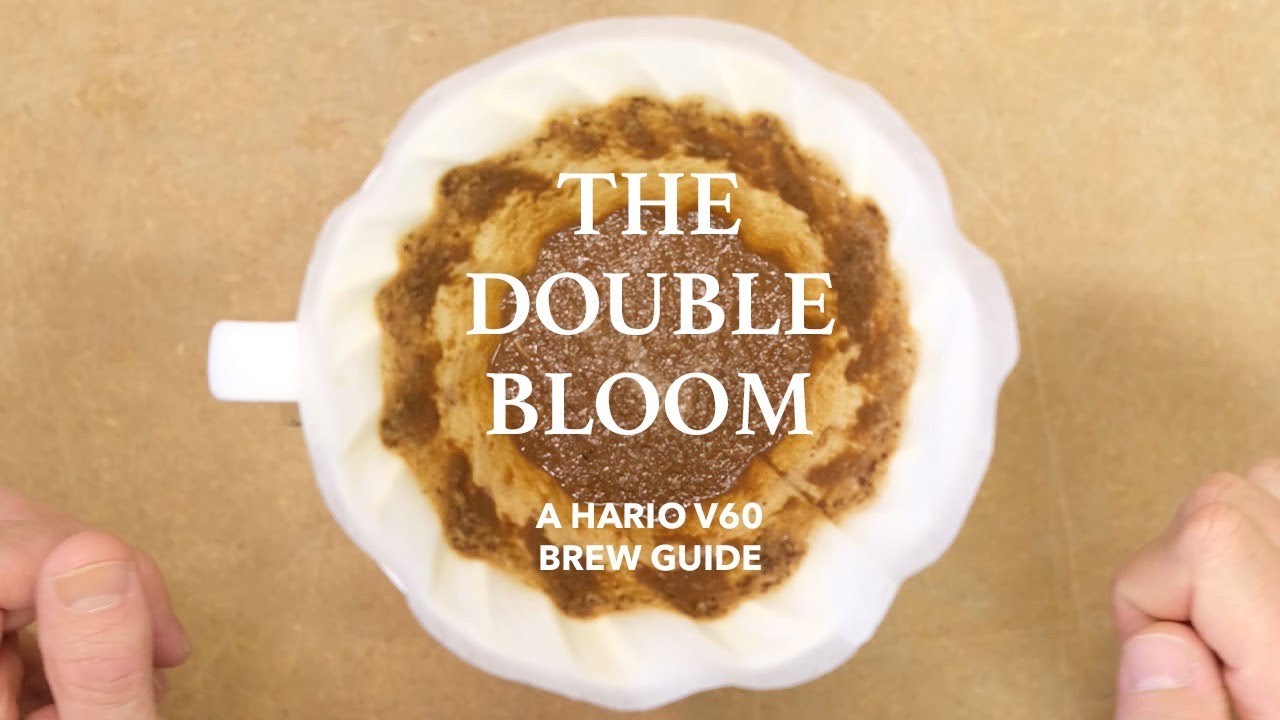
and zero your scale and then boil your kettle so as soon as your kettle's boiled start your timer and Bloom with up to about 50 grams of water might be a little less that's okay that feels like it's good and give it a gentle swirl the point here is not to kind of get the grounds right up the walls of the V60 it's just to do a good job mixing together the grounds in the water to make sure all the coffee is starting to Brew at the same time we're going to bloom leave it like
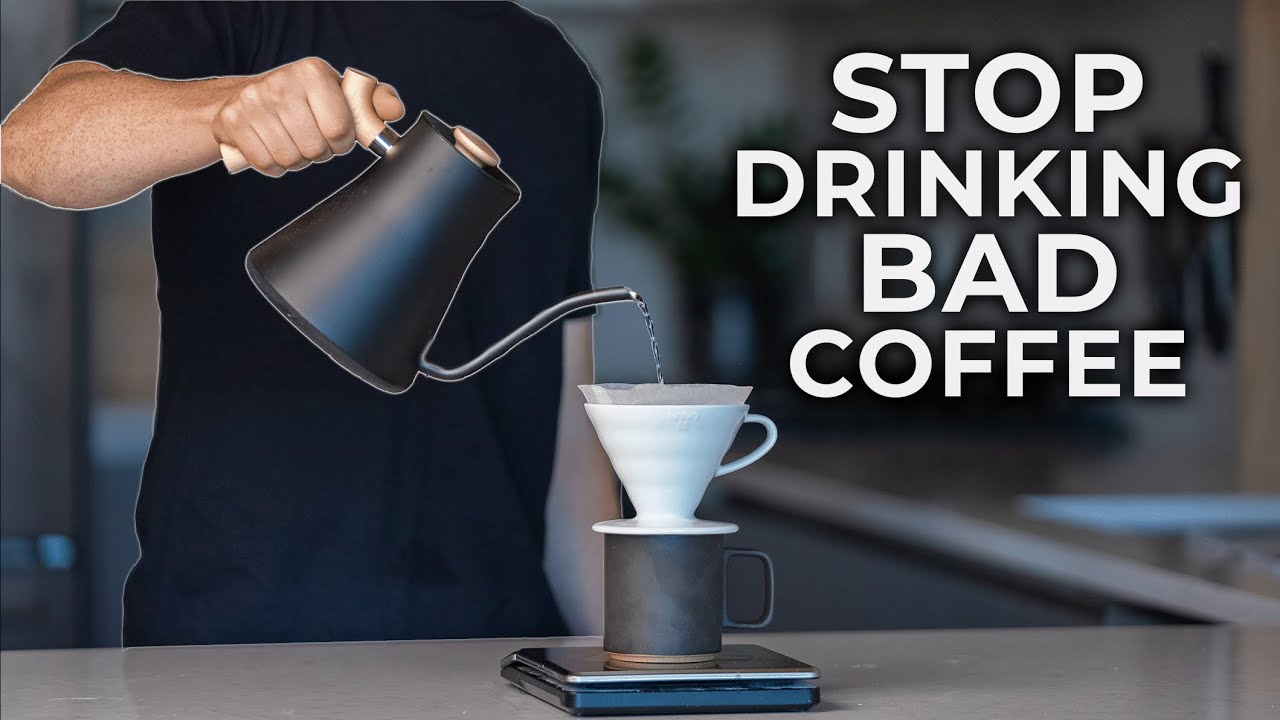
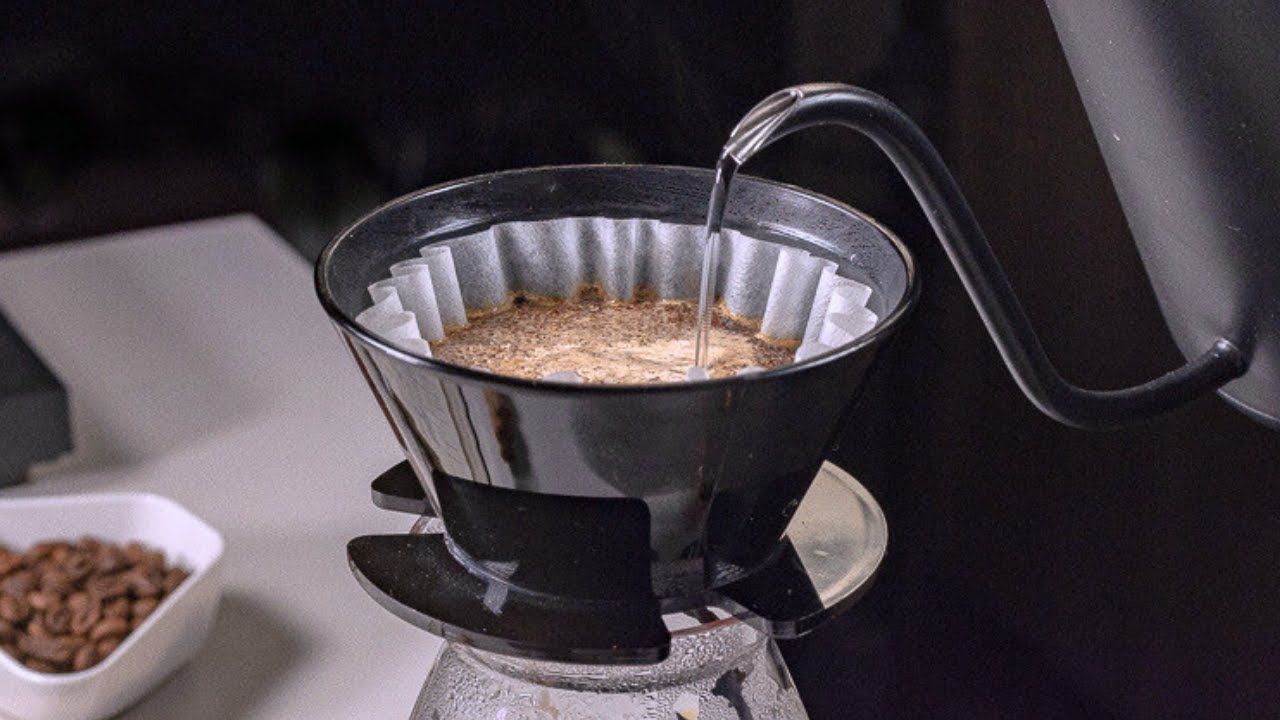
this for 45 seconds before we pour our next block of water to take us up to 100 grams at about one minute this is easiest with a pouring Kettle but a pouring Kettle is not essential we've tested this extensively with other kettles too keep the spout relatively low it's quite a slow pour in circles and then what we're going to do is pulse so at 110 we're going to add another 50 grams of water and that should take us about 10 seconds pouring in circles as you go don't obsess over every second over every gram
we're looking for approximately that amount in approximately that time another 10 seconds of waiting and then another 10 seconds of pouring to take us to 200 grams keep moving in circles and then that last dose take us up to 250 at 2 minutes that point give the Brewer just a gentle swirl you should have plenty of space at the top to be able to do that it shouldn't be full to the brim if it is your grind may be too fine and then let it draw down let it drain out now we tested this with
a few different papers we tended to see Brew times of around three minutes but your mileage may vary if you've swirled too aggressively you might have clogged the filter paper that will slow down the drawdown your grinder May produce more fines that'll slow it down too you still kind of have to go by taste a little bit in terms of nailing that ground size but with most good grinders I think a three minute Brew time is pretty normal in most circumstances again the point here is not to obsess over nailing the exact numbers we found
this to be really a pretty tolerant recipe and as we get to three minutes the bed is dry we have brewed a delicious cup of coffee so the question that you'll probably have is why was I doing the pulsing the way that I was doing it and we did a huge amount of testing on this to try and understand what worked well now depending on how quickly you pour and from what height you pour you'll vary the way that you agitate the bed of coffee with that stream coming in what we generally found worked best
was always to use a circular Port throughout regardless of anything else it helped to distribute the water across the coffee and it helped distribute the agitation across the coffee you'll see a number of techniques that recommend a center pour we didn't have great results with that unless we were pouring from higher up to the point that the stream as it fell was broken now a while ago we did a video on pouring kettles and as part of that we discovered something kind of interesting the higher you pour from then the less agitation you actually create
in the coffee it seems like as the stream begins to break as that hits the bed of water that energy is dissipated whereas if it's a continuous stream that stream fell into the coffee and and sort of agitated it much more effectively I recommend Foundation here is that you keep the spout relatively close to the bed of coffee and your paw speed should agitate it just about enough which is why we recommend pouring at about five grams a second some scales will actually give you that information if you want it that seems to do a
really nice job in terms of agitation but not generating channels because we were pulsing it means we could have a sort of moment of vegetation the bed would settle again a moment of vegetation the bed would settle again and and we didn't have issues with uneven extractions but we did get to have a nice amount of agitation to increase the extraction to get a sweeter Fuller more delicious cup what we saw is with a center pour if you pour just in the middle and you don't Swirl at the end then you kind of see what
you did to the bed and a centipore just created a kind of massive crater in the middle of the bed and led for an uneven taste whereas The Pour from higher up actually didn't do that it just didn't taste as good because it hadn't done as much agitation it's all a lot I know but the ultimate recommendation or the ultimate best practice from our testing was these little pulsed pores are 50 grams every 10 seconds giving that really nice mixture of even distribution and even agitation that was controlled and actually pretty repeatable regardless of the
kettle that you were using and actually in terms of Brew temperatures for darker roasts I would be down at 80 through to 85 going up to sort of maybe 90 medium rows then 90 through 95 but light roasts you want to be at Boiling Point coming back to these Brewers again the difference in thermal stability and the sort of Need for preheating between the plastic and the others is really massive both the ceramic and the glass really needed a lot of preheating and you have to do that with boiling water which I find a little
bit wasteful and frustrating but they are nice objects to own and if they are preheated they do Brew kind of normally they're kind of the same as everything else but one interesting fact that sort of blew my mind is we brewed a non-preheat and a preheat side by side and the end extraction was identical right we can't detect a a measurable increase in extraction from preheating The Taste night and day and this is a classic example of measurable extraction does not always correlate with the best tasting cup of coffee and this was so interesting for
us to taste that that drop particularly in the bloom of temperature really left the cup feeling less sweet more acidic and just less enjoyable overall so preheating I think is really important with lighter roasts using freshly boiled water straight off the boil I think is really important we found that once you were kind of in the ballpark of the technique the coffee tasted pretty good and if the coffee were to taste really bad the first thing I would look at wouldn't be necessarily the technique I would be more concerned about grind size or grind quality
I would be more concerned about water and I would potentially be then concerned about the coffee itself there are a lot of different V60 techniques out there and they pretty much mostly all work this for me felt repeatable easy you know I could teach someone to do it very quickly but there are other techniques you should definitely play with and explore but I'd love to hear how you get on with this one but don't obsess over the technique you're gonna get good results if you have good water freshly ground good quality coffee ground at the
right setting but now I want to hear from you down in the comments below which aspect of this technique do you want more explanation of do let me know if you try it and let me know how your results go do make sure you dial in that grind though go as fine as you can before you hit that kind of wall of harsh bitterness and a search of astringency because you're getting channeling and it's kind of under over extracted tasting that's too fine go back a little coarser but don't be afraid of going a bit
coarser than you maybe usually do I'm going to enjoy this coffee and say to you thank you so much for watching and I hope you have a great day

![[HARIO] V60 Five-Pour Recipe - Matt Winton (World Brewers Cup Champion)](https://img.youtube.com/vi/YIC-2nFQ7vM/maxresdefault.jpg)