I just hit 300,000 subscribers on YouTube in the business niche with over 17 million organic views. And in this video, I'm going to be showing you exactly how I did it and what I would do differently if I had to start over from zero today. Now, if you've been thinking about starting a YouTube channel, or maybe you have, but you feel a little stuck, this video is literally going to save you years of your life so you don't have to go through the pain of trial and error.
You're going to learn how to grow your YouTube channel like crazy. And I'm going to walk you through step by step on how you can get your first 100, your first thousand, and even your first 100,000 subscribers. And to be honest, when I made the decision to become a content creator full-time, it completely changed my life.
I went from being a normal regular tech sales rep in Silicon Valley to building the business of my dreams. one that allowed me to move away from Silicon Valley into Ho Chi Min City, Vietnam, and finally live a life of freedom, the freedom that I've always dreamt about having. And to make this all work, it's not about just chasing the views.
It's about building a following with intention and turning your content into a money printing machine. Now, I developed a unique content system to do this, and I call it create to sell. And in this video, I'm going to reveal the secrets on how you can do it for yourself.
Now, the first step of building a massive YouTube audience is having crystalclear clarity on who your avatar is. Now, when most people are starting out building their YouTube channels, they often are very selfish. Naturally, they're going to make content about things that they are interested in.
But the reality is, you don't make content just for yourself. That would be an expression of art. If you're trying to build a massive following and do it with precision, you have to understand who you're making content for.
It can't just be random. It can't just be, "Oh, I feel inspired. I'm going to make a piece of content.
" You cannot expect people to watch it, right? So, here's the common mistake most people have when they're starting out. When they're thinking of themselves as a creator, they'll talk about their own interests like sports or travel, politics, and even business.
And they think, "Oh, I'm going to be a personality, and people will just come to me because I'm so interesting. " The reality is there are very few people in the world who are that interesting where they can just talk about anything and their whole aura and charisma carries the entire video. For average or even just regular people, even if you're above average, you actually need to take a whole different strategy.
And that is picking a niche and completely dominating it. Because the way YouTube is working right now, the YouTube algorithm will basically find more people that like your content. So, if you put out one piece of content and it hits, they're going to serve that video to people that watch your last video.
So, if you're talking about sports and politics and religion and business, you know, and the video seems very scattered and random, number one, you're not giving a reason for why people should even follow you. And number two, the algorithm is going to be all out of the whack because it's not going to know who they should recommend your content to. You have to make it easy for the algorithm to understand who you want to go after.
How we're going to do this is we're going to use the pillar strategy. So let's say you are a creator and you pick a niche, right? So you know, one of my niches that I'm going after right now is going to be personal brand.
So I'll use myself as an example. If I create content around the idea of building a personal brand, building a following and monetizing it and being able to travel the world and all these things, I'm attracting a certain type of person. Probably they're a 9-5 employee who wants to start their own business or maybe they started their own business, but they need a little help becoming a bigger personal brand.
So naturally, the topics that I'm going to gravitate to are freedom and lifestyle videos talking about my experience moving to Vietnam, social media growth, how to grow a following similar to the video you're literally watching right now, and even sales because once you have views, it's not enough to get the views. You need to convert them into dollars. So it doesn't mean I have to talk about the same topics.
You know, it's just one narrow topic. When you have a subject like personal brand, it can split into many different things as long as it serves and solves the problems for this specific ideal customer. And I'll tell you, in the early days before I started talking more about business and personal branding in general, I actually started in the tech sales niche.
So, you know, back in the day, I would talk about how to get a job in tech sales, you know, how to perform well on your job, how to do cold calling, uh how to do a discovery call. These are all related to the sales subject. And I know it helped a lot of people in sales who were especially starting out.
And because I was so narrow in that niche, I became one of the top creators in that tech sales niche and I was just dominating for a lot of the keywords uh on YouTube. And then over time as I gained more experience, I decided to switch my niche more into general business as I got more different experiences. And then now I'm talking more about personal brand.
So just because you pick one niche today, it doesn't mean you have to stick with that niche for the rest of your life. Once you start making videos and they start actually hitting and you start building a following, what I would recommend and it's what I actually did is I would take the hit video and I would create multiple variations of that one video. So if you notice on my YouTube channel right now, you know, you'll notice that the last 10 videos was about how to grow a personal brand.
And that's because there's an audience out there that really loves this stuff. So why not cater to this audience and give different perspectives? So it's not like I'm talking about the same subject or same thing over and over.
I'm finding different angles and different nuances to number one show my expertise and number two build an audience and show the YouTube algorithm that hey I'm looking for people who are looking to build a personal brand. Please serve my content to them. And now speaking of personal brands, if you're actually someone who is looking to build your personal brand, maybe escape your 9-5 and start your own thing or if you have your own thing, get more clients by putting yourself out there and getting more leads coming to you.
You definitely want to check out our master program, Founder X. I've helped a ton of people at this point, you know, quit their 9-5, go full-time as a content creator, and even people grow their social media followings to sign high ticket clients. So, if that's something you are interested in because now is really the best time to take your personal brand seriously, make sure to check out everything we're doing over at founderx.
net. We have free trainings there and you can directly book a call with me and my team to see how we can help you. So once you have a clear idea of who your ideal customer is, the next step in this process is going to be building a cult.
Now I know the word cult has a a lot of negative connotations, right? But the truth is cults exist everywhere. It's not necessarily a good or bad thing.
If you take Nike for example, I would consider people that buy the products a cult. If you think if you think about Apple, people that buy Apple products are also in a cult. But what exactly does it mean to be a cult?
To me, what it means to build a cult is to create a powerful identity. your audience can step into. So for Nike, they are telling people, hey, if you consider yourself an athlete and you're really like go for it, this is the brand for you.
For Apple, in my opinion, they sell the idea of creativity. If you are someone who does creative work, a YouTuber, a musician, you should buy an Apple MacBook because this is the tools that creators use. So for your personal brand, in your content, think about what identity are you creating to attract your ideal customer.
If you notice for me, our signature program is called founder X, meaning we are attracting people who want to either become founders or they see themselves as founders and they want to connect with other entrepreneurs, right? It's very clear. Now, the opposite of what you want to do when it comes to building a cult is being stuck as a how-to creator.
So, I made this mistake in the past, but it did grow my channel, and I'll explain. In the beginning, when I first started YouTube, I made a lot of how-to videos. how to cold call, how to get a job, how to, you know, send a cold email, right?
And these videos really took off. Now, I did make money from it and I was able to monetize, but the problem was people really came for the how-to tips. They didn't really know anything about my personality.
I would never really show my true self. I wouldn't even tell people that I would be living in Vietnam and traveling around. I would just make my videos in my room.
And a lot of times people thought I was doing all this while in California, but in fact I was doing it from different places all over the world. Now, as I start to learn more about personal branding, I started to open more, share more of my life, share more of my day-to-day. I take my, you know, Osmo Pocket 3 everywhere I go now to catch some B-roll clips to show people like, hey, like this is actually how I'm living.
And it's possible to actually make money online by showing more of your personality and not being stuck as a how-to creator. You know, people are actually fall in love with you. You know, we're all selling commodities in a sense, right?
Like Nike, like they're selling shoes. Shoes are a commodity. You can buy any shoe for like $10, right?
And it'll probably do the same thing. But the reason why we would spend $200 for the same exact shoe is because they have to check on it. because we feel that brand resonates with our identity.
That's why if you've noticed at the beginning of this video, I used a lot of B-roll clips of my life. I'm trying to in a sense build a cult or a belief that if you're able to build a personal brand and monetize it, you can also live a life of freedom. And that's the cult that I want to build.
It's not a negative thing. It's just a belief. Now, a powerful part of building cults is that you need to sell the idea of transformation.
So, it's not enough just to teach an idea. You need to show people that they can go from whatever situation they're in today, put in the effort and work and follow the blueprint in order to completely transform their lives for the better. For example, if I say, "Hey, you know, back in the day, I used to work a 9 to5 in a tiny little cubicle and I show a picture of this, a lot of people are going to relate because a lot of offices in America literally look like this, right?
" And when I contrast that with like, hey, me traveling around and living in Vietnam, what happens is that it shows a clear before and after transformation. I was a regular 9-5 employee working in Silicon Valley and now I'm an entrepreneur with the ability to travel and work anywhere in the world. So, it's a clear transformation that a lot of people want.
And so, to attract people to buy your services, you need people to see this transformation and believe in themselves that they can also do it, too. And if they need some help, they're going to ask for your help and then you can sell coaching, consulting, or whatever program you have to help them achieve the goal that they already want. And so when you're building this quote, you don't have to hard sell anything.
You don't have to beg and please buy my program. All you need to do is show them the proof that you are who you say you are. And if they connect with it, they would love to buy from you.
And speaking of loving to buy, let's talk about printing money. Because at the end of the day, we want to create content. We want to give value to people, but it's not going to be sustainable unless you're making a full-time income.
I've talked to a lot of people who are creators or try to become creators. And sometimes they'll do it for a couple months. And they'll typically give up and I'll ask them like, "Why why'd you stop?
Like you were doing pretty good. Like in one year you should like be taken off. Like what's up?
" And they would say, "Ah, no, you know, it's just so tiring. I don't have time to edit and like I'm not really making much money. " It's always the money that discourages people.
If you're making money doing something and you're getting a reward for the hard effort you put in, you don't mind doing it, right? If somebody knew that the reward was going to be on the other side, they would put in the effort to break through, right? But the problem is when you're making content after content and it's not getting traction and you're not making money, you're probably wondering, "When is this going to end?
I can't do this anymore. I would rather spend my time at a normal job. " And so creators end up broke and then they give up.
So what's the solution? Well, it's something I've done since the very beginning of my YouTube career, and that is have something to sell. So, the moment I actually started YouTube, I had a course that I had planned to sell from the very beginning.
And the course basically helped people with their sales. It helped them get a sales job. It helped them generate leads.
You know, basically all the experience I had working in tech sales. I put my knowledge into a course and that's what I sold in a couple months in. You know, I didn't I didn't start selling anything until I think it was like 3 to 6 months in.
And all I would do is I would put a link in the description and I would say, "Hey guys, if you're looking to, you know, learn how to, you know, develop your scale skills or whatever, click the link in the description and, you know, check out my course, right? " And so once I got it going, it was making money off the bat, right? Like thousands of dollars per month.
I already knew from the very beginning that I was going to succeed on YouTube because I was making money even if my following was really small. So even at less than 10,000 subscribers, I was still making like a full-time income off of YouTube, right? And in fact, these days, if you're going high ticket, selling something from $2,000 to $5,000, even if you just have a thousand subscribers, that's enough social proof to sell a $3,000 coaching program or something, right?
Because this day and age, it's more and more easier to sell these higher ticket programs because people are understanding they're not getting the same value out of school anymore. The traditional education is not what it was. And so, people are looking for alternative education.
And if they like you and your personality and you got that cult going on and people believe in you and you really are who you say you are, you can actually sell something high ticket. I've had clients that I work directly with who had no following. They were just an employee at a company and I helped them create their offer and they were able to sell two to $3,000 high ticket programs without much of a following.
And it's just their first run in entrepreneurship. If somebody from zero entrepreneur experience can do that in a matter of like one or two months, why not you? Now, you might be wondering, okay, Patrick, sounds cool, but what am I supposed to sell?
And let me give you the easiest things to sell if you are starting out in content creation. The first thing is going to be digital services, right? This is probably the easiest.
It's essentially when you're doing work for another person. For example, let's say you used to have a 9 toive job managing social media accounts. Well, you technically could make content about what you did at your job, build a following, and then offer a service as a freelancer or an agency running other people's social media, right?
And you could probably have five clients at a time and make more than your 9 toive job. So, just providing any type of service, doing something for somebody that will make you money. In this day and age, you can provide any type of service online.
It's normal to, you know, provide the service like through a zoom call, Google meets, you know, send PDFs. It doesn't matter as long as you can solve the problem. It doesn't matter where you are in the world.
You can sell to anybody. For me personally, I've had students from over 150 countries go through my programs, right? So, you know, the internet just broke down the entire barrier.
You don't have to sell to your area locally. You can sell to anybody in the world as long as you solve a real problem. And the second thing you can sell is going to be digital products, right?
So, a digital service when you're doing work for someone online. A digital product is really just a product that exists online. There's no physical aspect to it.
Um, it's it could be things like buying an ebook, uh, you know, a downloadable PDF, an online course, right? These are all considered digital products. Now, for me, in the Founder X program, you know, what I do is a mix of both.
So, we have an online course where we teach people all the things I'm doing to build my personal brand and I share all the secrets and that's why people buy, right? because they see what I'm doing and they're like, "Damn, I want to do that, too. " Now, not only do we have the digital course product of it, we also have group coaching calls.
So, I do two group coaching calls every single week. So, everybody that's in the program, they get the knowledge and they get to talk to me and I help them on exactly how to build an online following and monetize it, right? So, you can even be creative and combine two things together to provide the maximum amount of service.
Now, why do I do both of them versus just a digital product or just services? It's because I think about what's going to be the best for the person to get the result. And people watch on their own time.
They learn at their own speeds. Some are faster, some are slower. So why not have a digital product where I don't have to teach everything over and over.
They can just watch the videos and then when they have specific questions or they get a little lost or maybe they don't understand thing or they need some feedback, they talk to me live on the group coaching calls. So in my opinion, that's one of the best ways to help clients get results. Now, I'll also include another variable here, and that's going to be coaching and consulting.
Technically, coaching and consulting is a service, but the reason why I kind of put it in its own category is because when you're doing coaching and consulting, you're essentially selling your advice or your expertise. When you're providing a digital service, I see it more as like, hey, I'm going to close for you, right? I'm going to run your social media account.
I'm going to do something for you and actually be the one to do the work. Whereas for coaching and consulting, you're not doing the work for them. You're helping them do the work by sharing your advice.
So if you're helping, you know, somebody lose weight, you know, at the end of the day, it's that person's body. They're they're going to be the one that has to go to the gym, but you can give them advice, a nutrition plan, you know, keep them accountable in order for them to achieve their goal, right? So that's why it's its own category.
But I would say these are typically the easiest things to sell because it doesn't really cost anything to start these kind of businesses. All you need is a camera and a laptop and you're basically in business. You don't have to buy inventory.
You don't have to really spend money on ads. You create content, get on the phone, you sell them, and that's pretty much it. Now that you have something to sell, the next step to really take your YouTube game to the next level, and I'm talking this is how you're going to get to 100,000 subscribers is you're going to want to master packaging.
Most creators spend 90% of their energy and time on the video itself. Meaning they're writing the videos, editing it, adding graphics, and all these things in the video. The problem is when you're spending so much time on each individual video and you put it out and you don't have much of a following in the beginning, you might get like 20 views, 50 views.
And it's very discouraging because if you're spending like a whole two weeks on one video and it only gets 20 views, you're not going to want to do it again because you feel defeated. So, what's the solution to the problem? It's to hyperfocus on the packaging.
Now, to me, packaging is really just the way you present your video before somebody clicks. So, the variables are going to be the idea. Is this topic or idea interesting enough?
Does it solve a deep burning problem for your ideal customer? Does it spark some kind of curiosity to get someone to click? If not, no one's going to watch.
Doesn't matter how good the information is on the inside if the idea itself is not good. Now once the idea is good, the next step is going to be the title and the thumbnail. Now for the title, is it clear?
Is it emotionally charged? Is it clickworthy without being clickbait? And a lot of times to do this, you add a lot of curiosity into the thumbnail.
Now, when we're talking thumbnail, does it spark does it visually spark emotion or curiosity within the first second somebody sees it? Is the facial expression strong? the text, the contrast between the text and the colors and the subject, you know, is it enough to stop the person from scrolling?
Because if not, nobody is going to click on the video. Okay, one of the two most important variables that YouTube uses to determine whether your video goes viral or not is going to be click-through rate. And that is just the percentage at which when somebody sees your video on their homepage, for example, what is the probability that that person is going to click on your video?
And so what are the variables that affect it? It's just like I was saying, it's a combination of the idea, title, and thumbnail. So when we're looking at packaging, basically looking at the idea, thumbnail, and title, right?
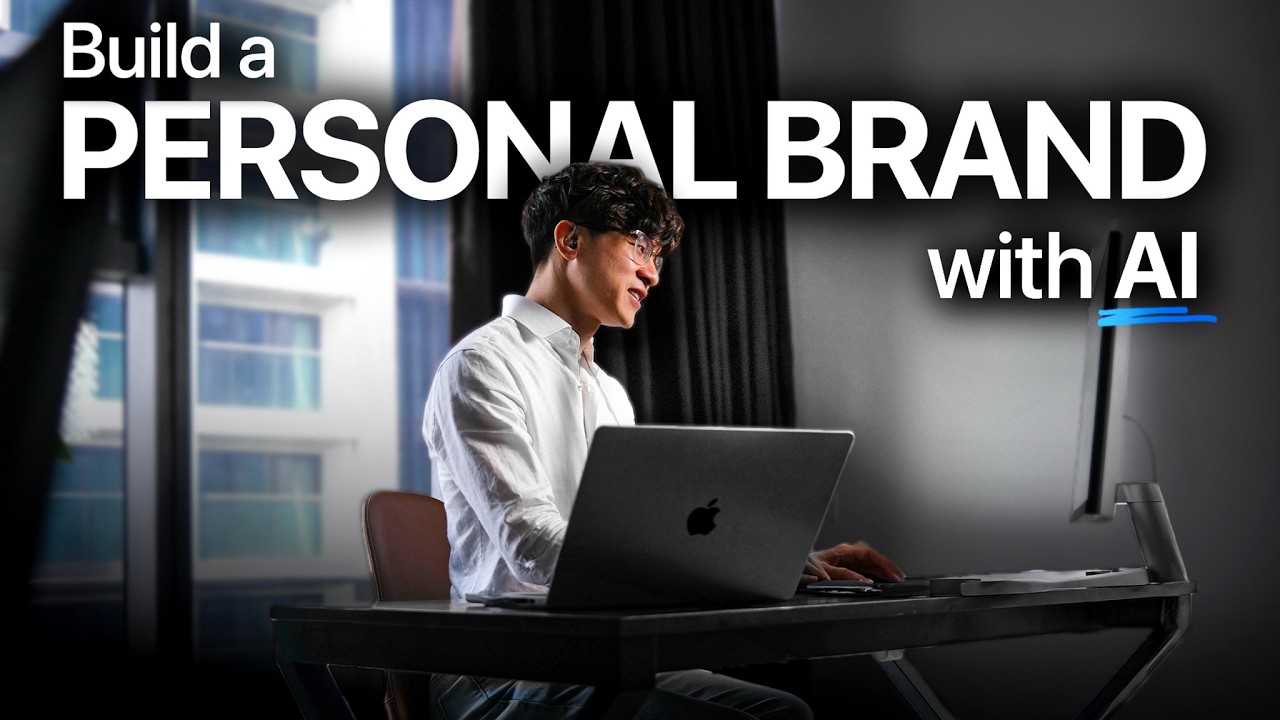
So let me give you one of my recent videos that I put out on how to build a profitable personal brand from scratch with AI. So why is this video working? And it actually does have a high click-through rate.
It's because number one, the topic itself. A lot of people in 2025 want to build their personal brand, right? So when they see this like long guide which is like 34 minutes, they probably think, "Wow, this is like a master guide on how to build a personal brand.
" So the idea itself is strong. Now number two, we're adding in the element of build a personal brand from scratch. So it's kind of built for people who are starting out in their journey, right?
So they're going to think like, "Oh, I don't have a personal brand yet. Patrick seems like a credible credible guy. Look at his, you know, he's working in his office.
It looks pretty sick. So I'm going to basically cook on a video, right? So it has that authority to it for beginners especially.
Now the the extra touch that I added to this video is the idea of adding AI into it because these these days everybody wants to use AI. They want to find shortcuts to use chat GBT the speed up the process. So I made a video putting all these concepts together.
The idea of the personal brand people using AI it's for beginners and I show authority by showing myself working in my office. And that's kind of future pacing right? I'm saying like, "Hey, if you are able to build your personal brand, maybe your life might look like this.
" And to give you an idea of like how far we go when it comes to trying to get the highest clickthrough rate possible, we actually AB test our thumbnails, right? So, every time we drop a video, we always have at least two thumbnails and we see which one's going to perform better because, you know, we can have a guess on what we think is better, but the data never lies, right? So, we had two two thumbnails here.
One of them with me at my desk, another one same exact, you know, photo set, but we we had the camera at a higher angle, right? And the, you know, the graphics and the text are a little bit different. And, you know, the one on the left one slightly by 0, you know, 3ish, but still that's still more clicks.
That's going to be an extra like couple thousand views. And so, in YouTube, it's like a game of slight advantage. Meaning, you might think it's only 0.
3%. But if a video has a higher clickthrough rate than another video, that first video is going to get more views, even if it's just a little bit better, right? If you're 1% better than everybody else, you're going to suck all the views in.
It's kind of like, you know, it's like a almost like a winner take all kind of environment, right? Think of it like that. Cuz if you think about, okay, if you're the number one basketball star, let's say you're Michael Jordan during his heyday, you're getting like all the benefits, right?
Everybody knows who you are. You're getting all the brand deals. You're making all the most money, right?
Does anyone remember who was number five? you know, who was the fifth best basketball player back in Michael Jordan's time? I don't remember.
Right? So, that's the thing. These slight advantages will make the difference between blowing up your channel or not.
So, don't just like take a thumbnail and just randomly guess the title and just like throw it up there after making the content. Really think about the title and thumbnail very deeply. And for me personally, I'll spend 60 70% of the time on the title, the idea, and the thumbnail, 40% of the time on the video itself.
Can you imagine that? It's because I know that picking the right idea is the most important part of succeeding on YouTube. Now, I'm going to give you an advanced technique on how you can find amazing packaging ideas.
And that is you just need to steal it. Okay? You need to steal outliers.
Now, when I say steal, I don't mean you directly copy and just like totally rip what someone's doing. I'm saying look at what someone's doing. See their outliers.
What are videos that are performing exceptionally well compared to everything else? and then take elements of that DNA and remix it. So if you go on my channel for example, right, and I'm using a tool called Vid IQ to get these little numbers here, you'll see which videos are performing extremely well relative to others.
So if you look at this one, how to build a profitable personal brand in 30 days, it got 11 times more views than my other videos. So if I was trying to steal my own content, I would look at this video and be like, okay, why is this video doing so well? What's up with the the title?
What's up with the thumbnail? Let's watch the first 30 seconds. Let's see why people are engaging with this piece of content.
Right? In fact, if you really think about my strategy, I steal my own ideas all the time. Because once I know that, let's say a video like this hits, I'm going to recreate this video multiple times and have different angles.
In fact, this video itself is almost like a recreation of this vid, um, this personal brand video, just with a different spin and focusing on YouTube because when I find a format that hits, why would I need to change it? I just need to keep running the same strategy and it makes it easier to create content. And another tip for you is that just because you steal someone's packaging, it doesn't mean it's going to work for you.
I see people copy my thumbnails, the titles, and sometimes the video, you know, concept itself, right? And they don't get as many views. And it's because number one, if they're just stealing it completely off the bat, like it doesn't feel that original, right?
So people just think like, "Oh, he's just another copycat. " That's why you have to remix things and offer a fresh perspective, right? And number two, you know, you yourself have to be an attractive character, right?
So if you don't have aura, you don't have presence on camera, even if you stole my thumbnails and titles, it doesn't mean you're going to get views because maybe you're not an interesting character yet, right? So, you know, like the idea of taking outliers absolutely does work, but don't get discouraged if you're not getting as many views. You have to understand there are different variables that all work together to determine your success.
But now that you understand click-through rate and you understand how to make really good packaging, the next step is actually optimizing for maximum watch time. So, YouTube is going to optimize for average view duration and as much average view duration as possible, right? So, the more people watch your video, the more ads they could serve inside a video.
The more ads that they serve, the more money they as a company will make and the more ad revenue you will make. So if you think about it, you want to optimize for longer watch times so that YouTube can make as much money as possible. If you help them make money, they will in turn put your video in front of others so that you will somehow make money.
So let me go ahead and give you some sauce on what the analytics look like on a video that did pretty well for me. Right? So like we were saying, I had a video called how to build a personal brand with AI.
So it is one of my better videos for sure. All right now going into this if we look at the watch time in the average view duration it's going to be 6 minutes and 40 seconds right with the average percentage viewed it's going to be 19. 1%.
So on average each person is watching 6 minutes and 40 seconds which is actually quite a lot in the more educational space. Okay. Now the clickthrough rate which I showed you before is also extremely high which is 6.
6%. Right. So you put these together it's it's a it's a winning video.
And the key thing you want to watch out for is that my personal benchmark is I want every video I put out to have at least 70% of viewers there in the first 30 seconds. And usually it's not. I'll be honest, you know, it's it's actually very hard to hit 30 seconds, 70% every single time.
Some people say like, oh, I try to get like 80% or what 90%. But it's actually very hard to do in the more, you know, education kind of space. Possible, but hard.
And then, you know, basically a video kind of tapers off and you know, most people's videos kind of look like this, right? It's just a natural like fall-off. Now, if you're like Mr Beast and like every 10 seconds there's another dopamine rush on like something crazy happening.
Yeah. You know, you're going to have a lot more retention and that's how he gets, you know, hundreds of millions and billions of views, right? Because people watch all the way through.
Now, for education, it is slightly different because you're not entertaining. You're you're you're teaching something and it's not the easiest to retain that attention. Now, something I want to share with you is like what are the things you really need to look for when it comes to like how viewers find you.
The best thing is going to be YouTube recommendations. So, what happens is in a video, it's going to recommend your stuff on someone's homepage and the up next side, right? And you can see most of my views are coming from these recommendations.
Meaning, it's not just SEO of people typing in personal brand. It's the algorithm just pushing my content to more people. So, this, in my opinion, is the best way to go viral by recommendations because there's no limit to how far YouTube can recommend you.
As long as they think this video is going to hit with more people, they will keep pushing it and pushing it and pushing it. And if you have backtoback hits in a row, that's how you actually get that scale of like getting each video getting more and more views than the next. It's not easy to do, you know, backtoback hits, but if you are able to do that, then that's when your channel like really explodes, right?
because they're going to think, "Wow, this guy's a freaking star. Like, every video is like slapping. Let's just keep pushing it to more and more people.
" So, if you ever have trouble figuring out like, "Huh, how come YouTube's not recommending anymore? " Look at the stats I showed you. What's your click-through rate?
What's your watch time? What does it look like in the first 30 seconds? Is YouTube recommending you or not?
Once you have a pretty good breakdown of these things, just like put it on a piece of paper, right? And then benchmark it with, let's say, my analytics. And you'll see if your click-through rate and your watch time is way lower than mine, then YouTube's going to recommend me over you.
And that's just how it goes. So then you have to think, okay, how do I make a better thumbnail? How do I make, you know, my first 30 seconds really hot?
Right? And so that's what I would hyperfocus on. Now that you understand, you know, generally how to make good content, the next tip is volume, volume, volume.
Now, to actually become good at YouTube, you cannot escape the reps. You have to put in the work and consistently make videos. If you're starting out, I would recommend high volume.
Like most of the videos you are going to put out are going to suck. And if you spend two weeks to make one video, it's gonna suck anyway. So, you might as well speed up the process.
So, instead of putting, you know, one video out every two weeks, at minimum, you have to put one video out a week. That's how I personally started. Just one video out per week.
In the beginning, I was so slow at it. I cared so much about every little detail that I would only put out one video a week, you know, but I would do everything myself, right? From the editing, the the title, the idea, you know, the thumbnail, right?
So, it took me a week to put out one video. And then over time I got better and better at the process where you know a video like this I might just sit down you know write the concepts and just film it all in one day right and it doesn't even take me a full day to do but you have to develop that skill set like I'm only able to do this because I've been doing YouTube for 5 years plus and you know it's a big difference compared to when I started right your skill sets will go up but it's that volume like it's something you cannot escape like don't think oh it has to be perfect and it's going to get a million views it's not for the most part like most People are delusional when they're saying they're perfectionists. They're just afraid that it's not going to work and they're going to look stupid and then they're going to give up.
And if you are very serious about being a creator or a founder creator, you have to understand that it never ends. This is the job that you essentially signed up for. Yes, there are different ways to outsource different things and help get other people to help you make the content, right?
right? Where you can maybe just be in front of the camera, but you have to work to that point to hire the people to do a good job at that. And and it just never ends, right?
You this is this is just how it is. Don't expect to be a content creator and not make content. And if you have to put out 100 videos before you make a dollar, then that's what you have to do.
This is what you signed up for. And if you want to give up, then this isn't for you. I'm sorry.
That's just the reality of how the game goes. But once you do get the ball rolling and you start making some money and you can afford some help, the next tip I have for you is going to be extremely important. And that is building a team.
These days, you're not just a random YouTuber creating content by yourself. All the biggest creators have massive teams helping them with all aspects of content. Now, I'll tell you for me, my progression of how I did it, you know, starting from zero subscribers all the way to now.
In the beginning, I did everything myself. Then after a couple months of doing it, basically the money I had, I basically invested into an editor, right? I just found a freelance editor off of a Facebook group.
So I had that guy doing my editing, paying him like 40 bucks per video. And then over time, I was like, "Okay, now I need a better editor, and I need someone to do it full-time because now things are really taking off. " So, having a full-time editor was one of the first hires that I had.
And the person that I hired to be the full-time person is still one of the people that edits my videos today till this day. And then the second hire that I had, and I had hire actually hired these people both at the same time, was someone that to help me more on the marketing side. Um, so this person first started out as an editor because they were kind of creative.
And then I was like, "Hey, we already have an editor. why not you help me with the packaging, the ideas, the thumbnails and you know all the other aspects of content that isn't editing and so those are I would say the key most hires for me personally having a marketer and an editor because it takes a lot off off my plate once you don't have to edit you save hours of times per week once you don't have to like post every video yourself and do the thumbnails and research things then you saves a lot of that time right so then my time is focused on figuring out okay what's the vision for the brand writing the content itself I still do that actually um and and filming the video. But then the way the video is set up is like once we have this you know whole production and you know every week we try to improve one thing per week um I just really sit down turn on all the lights and film and that's pretty much it.
And then when we want to change something my team will come in rearrange different stuff do the lightings in different ways. So that offloaded a lot off of my plate right and so even as we start expanding the team there going to be different people handling the shorts the long form the written content. It's like my job here is to be the face and the personality and have the vision and create the core pieces of content which is our long form.
Once you take the long form, we can distribute it in many different ways to all the other channels which doesn't have to be me anymore, right? So you create once and you distribute forever. That's the game.
So don't think that in, you know, in the beginning it's going to suck. It's going to feel like you're doing like 10 different jobs at once, but once you have the money to hire a team, I promise you it will become easier. And now, if you made it this far, you're probably extremely serious about creating content on YouTube and building your personal brand.
Which is why I highly invite you to check out founderx. net, which is the elite program that we have in coaching people on how to quit their 9-5 to building a personal brand and also for entrepreneurs to build a personal brand as well and sign high ticket clients. These are all the secrets that I personally use to build my following and how I hire my team.
But you're going to get all my SOPs, processes, and secrets and all the advanced tactics that I'm doing to this day. Right? So, if you want to peek under the hood and you want some help and you really just want to talk to me and my team to see how we can help you, make sure to go to founderx.
net, book a call with us. And you know, the last thing I'll say is now it's never been easier to actually build a personal brand and make money from it. It's it's like it's the best time it's ever been.
The algorithms are super strong. anybody can become a success story overnight and replace their job with a full-time income. You see all these kids doing it.
You see all these adults doing. You see everyone doing it these days. Every day there's a new creator popping up.
So the question is why not you? So if you are really serious about this and you really just want to explore the opportunity, check out founderx.