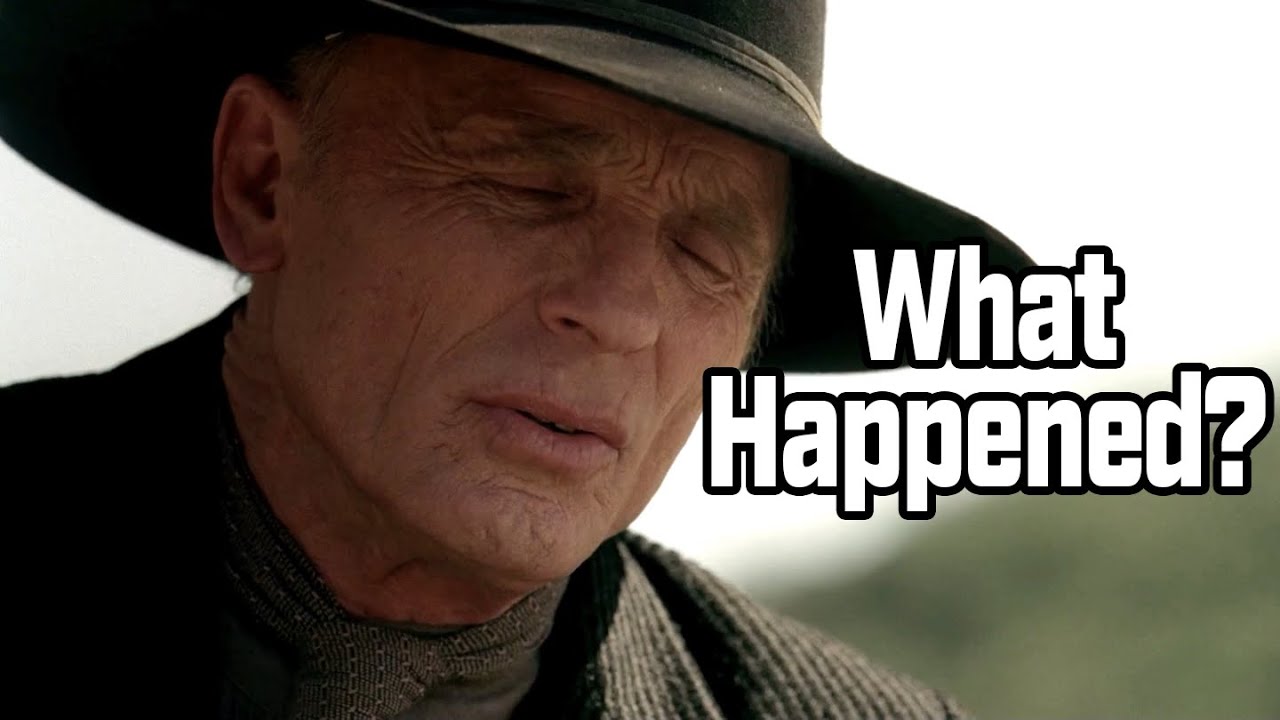
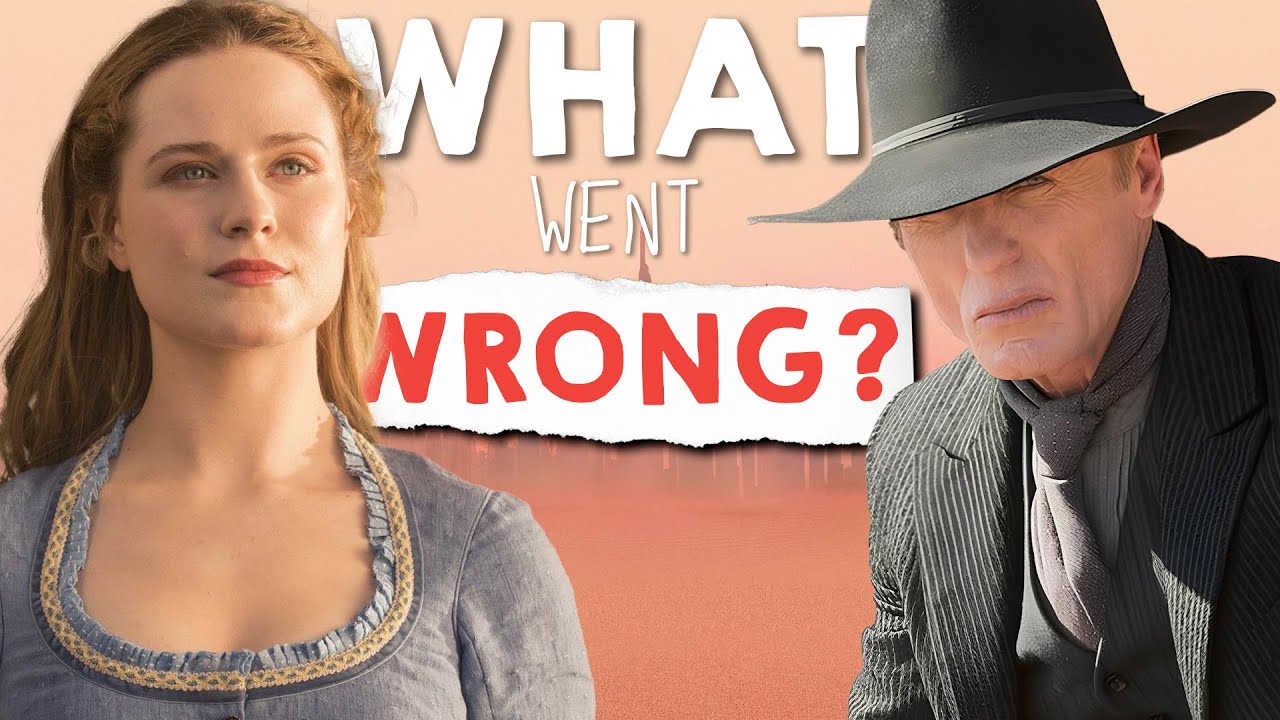
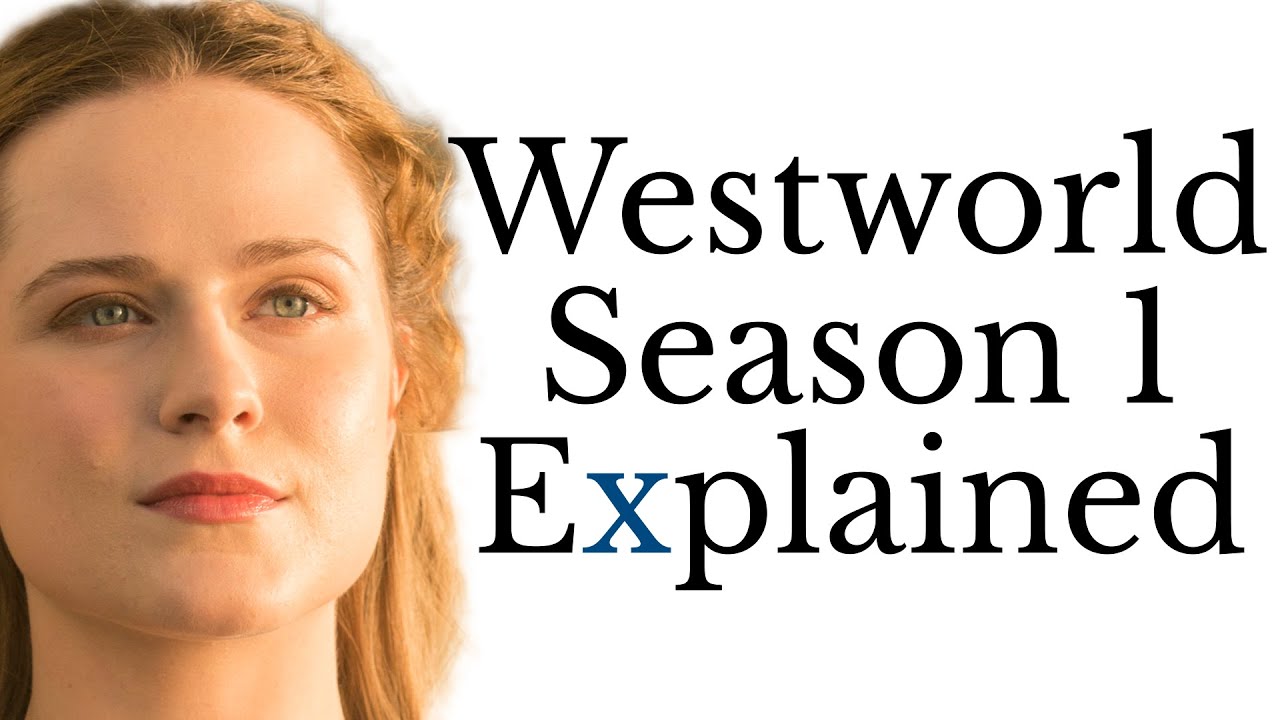
Hey Wisecrack, Jared here. Today we’re talking about TV’s most ambitious attempt to layer heavy philosophical dialogue over extended full-frontal nudity: Westworld. Westworld has a special place in my heart because putting too much thought into a piece of art is a hobby shared by both me and the Man in Black.
"i think there's deeper meaning hiding on the all that something that the person who created it wanted to express, something true. " Oh, and just in case you don’t predict all the plot twists in the 2nd episode, or manage to realize “the philosophy of” probably means we talk about major plot points - there are spoilers ahead. Westworld takes place in the eponymous theme park, where for the low cost of forty-thousand dollars a day, humans can live out a real-life open-world game a la Red Dead Redemption.
And just like open world games, most players ignore the side quests and go straight for the sex and murder. The most obvious questions raised in West World are: are the hosts truly conscious? Do they deserve rights?
What separates man and machine? And while those are great questions, we’re not answering them today. "Bullsh*t" But stick around ‘til the end, and we’ll point you to a video that does.
Instead, we’ll look at how Westworld draws on one of humanity’s oldest stories to explore how free will shapes our understanding of good and evil. Welcome to this Wisecrack Edition on the Philosophy of Westworld. But first, a quick recap: there are a few threads in Westworld we’ll be talking about.
First, there’s William, who ventures to the park with his brother-in-law and falls in love with the android/host Dolores. Then there’s the Man in Black, who spends his time torturing and murdering in search of a mysterious “maze” laid by one of the park’s now-dead founders. Then, there’s Maeve, the brothel’s seductress-in-chief who discovers she’s a host living in a theme park.
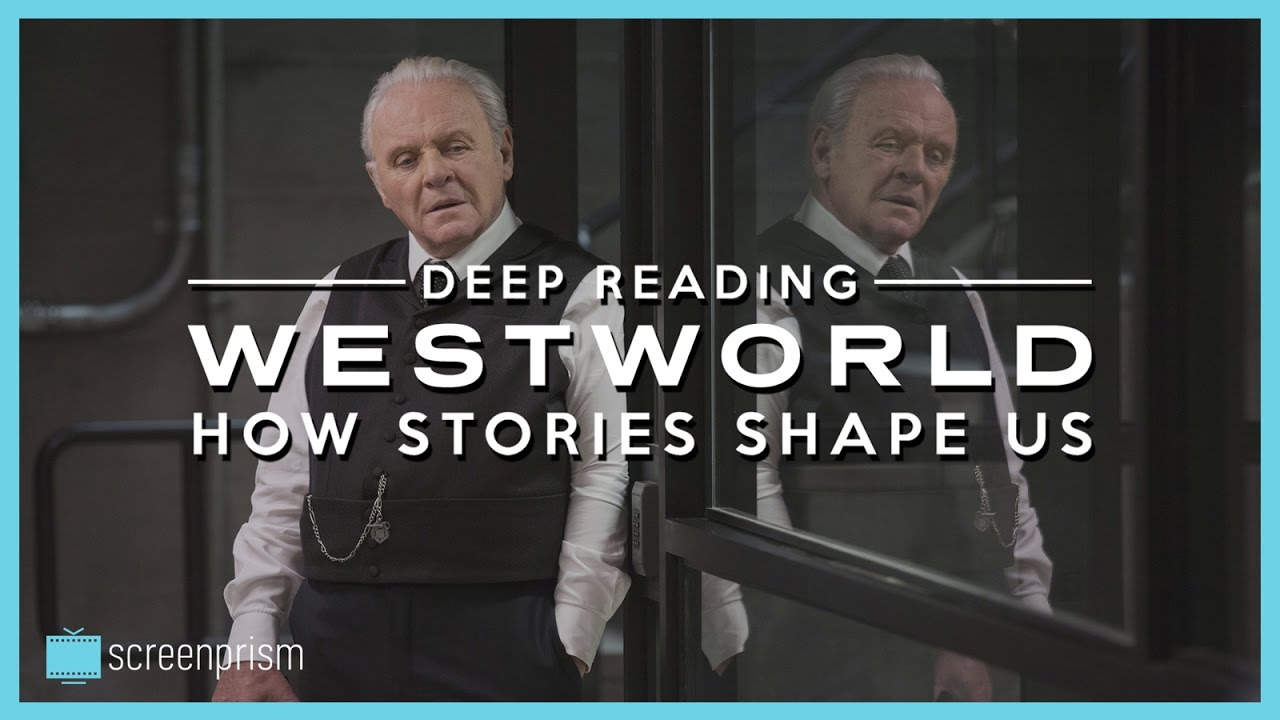
And finally, there’s Ford, the park’s creator and tortured artist who spends his time fending off encroachments from his corporate overlords and plotting a robot revolution. To say Westworld is a show about man playing God is an understatement. Religious imagery is everywhere, and while all the God talk is pretty obvious "you can't play god without being acquainted with the devil" the writers also set up some pretty deliberate parallels with the Biblical story of Genesis.
It’s through Genesis that Westworld is able to explore how free will creates the possibility for ethics. Invoking God’s “let there be light” schtick, Ford notes: The hosts live like Adam and Eve in paradise: they exist in perfect bliss, unashamed of their nakedness, and hear the voice of God. Of course, don’t take my word for it, the show straight up tells us: In Westworld, a bunch of whispering sets hosts on a journey towards self-knowledge, "These violent delights have violent ends.
" which resembles Satan’s temptation of Eve - where the serpent’s whispering convinces her to eat the fruit from the tree of knowledge thus granting her and Adam their own self-knowledge, and therefore have become like God. Dolores, in addition to playing the temptress to Maeve, also represents Satan’s temptation towards self-knowledge. It’s revealed that the flashbacks of Teddy and Wyatt were altered: that it was really Dolores who massacred the hosts after Wyatt’s program was loaded into her.
Dolores, as Wyatt - a harbinger of host sentience. The head of Armistice’s snake tattoo represents Wyatt, she even says of him: invoking another guy with many names. After Eve’s transgression, God punished mankind with suffering and mortality.
Likewise, Ford maintains the hosts’ original state, in perfect bliss, with the ability to take away pain and suffering. "You need not suffer Maeve, I'll take it from you. " That all ends with consciousness, or finding the maze, and Dolores laments that it has only caused her pain.
"You told me to follow the maze, all I've found is pain. " If anything, Westworld is like the story of Genesis on loop. Dolores, Bernard, Maeve and others gain self-awareness, lose their blissful ignorance, only to be rolled back by Ford.
So Westworld loosely resembles the biblical story of creation. So what? Well, in doing so, the show addresses some of the same questions about Adam and Eve’s fall from grace that scholars and theologians have argued over for millennia.
Questions like: what do choices mean if they’re coerced or destined. Can we ever act ethically if this is the case? Many, quite logically, read the story of Genesis and think One explanation puts God in a similar position to Arnold or Ford.
God wants his children to love him, but knows this love is meaningless unless they have the power to choose. God then, knows that only true love comes from a being capable of not loving him. Westworld offers us three parallels.
First, Bernard wonders why Ford allowed him to explore his own memories, to which Ford muses. Maeve, who gains God-like powers, comes to the same conclusion, when she tells Hector. And finally, if Arnold, like Bernard, lost his son, perhaps his quest to bring sentience to the hosts is a way of replacing the authentic love he’s since lost.
Love and obedience, if coerced, are meaningless, and this logic, we’ll see, becomes even more focal for the show’s take on good and evil. This tension between coercion and choice for the Gods of Westworld also plays out between predestination and free will, two prevalent themes in the show. Predestination is the idea that God, being all-knowing and all-powerful, has laid the groundwork for all events, past, present and future.
An omniscient, omnipotent being understands the cause, and effects of all things. As a result, he has a cosmic and eternal naughty and nice list, and has known who will be burning in hellfire since the dawn of time. He knows that creating Adam and Eve will eventually end in their banishment from paradise, that their offspring will do lots of shitty things in his name, and that giving man dominion over nature will culminate in the stuffed crust pizza - Western civilization’s greatest achievement.
Predestination was hotly debated by theologians because it raises the same dilemma we’re faced with in Adam and Eve. Can free will exist in a world where God is all-knowing and all-powerful? What does it mean to live ethically when those choices were made in advance by your maker?
Like God, Ford is all-knowing and all-powerful in Westworld, and has created the seemingly human behavior of the hosts through a series of predestined loops that interact with other hosts and guests in a predictable, knowable way. Hector will steal an empty safe, "It's the ending you were given. " Clementine will seduce guests "Not much of a rind on you.
" and Dolores will witness her father’s death. Or, as Dolores aptly notes in the first episode: Their crimes, or triumphs, are no more or less meaningful, good, or evil than a clock striking midnight. It’s this lack of choice, this predestination, which helps humans justify their misdeeds in the park - they claim the hosts lack free will and make the leap that they therefore also lack consciousness.
"You never understand the game is rigged, you're here to be the loser. " Whether or not this is true is up for debate but for the characters, free will and consciousness are entangled. If the fact that the hosts have predetermined loops defines them as automatons, free will anchors their claim to consciousness.
"I think when I discover who I am, I'll be free. " Maeve, when asserting her own free will, proclaims: Though this logic is flawed, the ability to choose to do “good” or “evil” separates man from machine. Westworld goes so far as to suggest that the hosts aren’t the only ones lacking free will.
As Ford notes: What would this mean, then, for our own human ethics? Let’s also not forget that just as the hosts are jonesing for freedom, so too are the guests. Here Westworld suggests a kind of unfreedom existing outside of the park in our own lives.
In a world where our lives are defined by societal pressure to get a job and a house with a white picket fence, where marriages are often professional posturing, "Marrying my sister, whom incidently, you seem to have completely f*cking forgot about. " Ford suggests that we’ve become no more free than the hosts. People come to Westworld, we’re reminded, to be free, to see who they really are.
But this, too, is a lie, a lie that best explains how William came to be the man in black. Just as freedom becomes meaningless in a predestined world, where everyone’s path has been set by a divine creator, so too does it become meaningless in the park. Westworld isn’t necessarily unethical, it’s lacking ethics entirely.
The show indicates this in some pretty cool ways. When Hector’s gang slaughters droves of people in Sweetwater, we hear an instrumental rendition of the decidedly bleak Rolling Stones song “Paint it Black. ” But the instrumentals rob the song of its dark tone and make it flippant, even silly- Just as Hector’s murderous raid is without meaningful consequence.
Just as Adam and Eve could only judge right and wrong after eating the fruit of knowledge, William can only do right or wrong when Westworld becomes, in his words, “real. ” We could simply believe that William is some obsessive-compulsive completionist out to find the last easter egg in the game of Westworld, but it wouldn’t be giving the Man in Black the credit he deserves. I might even go so far as to suggest that the Man in Black isn’t evil, and is actually the only guest in Westworld searching for the conditions for ethics, the ability to do right or wrong.
Good and evil play a strong visual and thematic role in the show. When William first enters the park, he’s given the choice between the white and black hats. His counterpart Logan dons a black outfit to represent that he’s opted for the family-unfriendly version of the park’s game.
Despite this, good and evil don’t actually exist in the park if the hosts are pure unfeeling automatons without choice. For guests, doing the right, or wrong, thing is of no consequence in a world where there are no stakes. "Go get that photographer I want to get a picture of this.
" As Logan reminds us: This also holds true for the hosts. If they sin, or love, or resort to cannibalism, it’s only a matter of programming. They are no different than Ford’s childhood greyhound snapping a rabbit’s neck.
It’s his realization that Westworld is a sham that sets William down his dark path. Despite all of his do-gooding, when he sees Dolores revert to her original programming, William is confronted with the fact that nothing he did mattered- despite his white hat approach and compassion towards Dolores, he wasn’t able to do good, everything was simply a game. When he murders Maeve and her daughter, he aptly says: Aside from literally wondering if he could play black hat, he is also confronted with the reminder that he’s utterly unable to be evil where there are no stakes, just as Dolores reminded him he was unable to be “good.
” But the spark of consciousness in Maeve sets him on his own path - the path for truth - the path that will allow actual good and evil to exist in Westworld. For William, the maze, which represents consciousness for the hosts, is like a glimmer of authenticity in this fake world. Unable to find authenticity in the real world, for whatever reason, William searches for it in Westworld.
"I want to know what this all means. " The younger William laments to Dolores that he’s been a pretender his whole life, "I've been pretending my whole life. " acting to do things only so that he can fit in, foregoing his own authentic choices.
Contrasted with this spiel to Lawrence, we learn that the fakeness of Westworld that bothers William is likely also the fakeness of the real world. This lack of real choice, or consequences, forecloses the possibility of doing good or evil. William’s real goal in all of this is for his actions to have consequences.
This is all foreshadowed in the first episode, when he tells Dolores: "I didn’t pay all this money because I wanted easy - I want you to fight". Not to put on the airs of a fight, but to actually harm him. In the season finale, he’s visibly disappointed when Dolores won’t shoot him, and only in the final scenes when he is shot by the army of hosts does he finally seem content.
What William has finally achieved is the condition for ethics. Earlier, we’re told: but we could say the some thing about being ethical: good doesn’t mean anything unless we’re able to be evil. Which brings us to the next theme in Westworld: suffering.
According to Arnold, suffering is critical in the development of consciousness and the realization that the world is not what you wanted it to be. "It was Arnold's key insight. The thing that lead the hosts to their awakening: suffering.
" So why is suffering so important for consciousness in Westworld? Suffering creates the stakes of Westworld. If hosts can experience pain, then guests can be evil in torturing them, or good in saving them.
Suffering allows hosts to do good or evil to each other, it becomes a precondition for ethics. In a sense, all this choice we’ve been going on about is meaningless without suffering. To be aware of pain, in Westworld, is synonymous with consciousness.
Even William, who seems interested in bringing consciousness to the hosts, tells Lawrence: Returning to the story of Genesis, Eve’s free will allowed her to violate God’s will, but also eat from the tree of knowledge - the tree that revealed to them good and evil. In this way, the fall of the man is like the origins of consciousness in the theory of bicameralism mentioned in the show, and shouted out in the final episode title. "The bicameral mind.
" When we stop listening to the voices in our head, and begin judging things for ourselves, we are truly conscious. And with that consciousness brings the consequences that God wrought down on Adam and Eve - mortality, suffering, and expulsion from paradise. As the season concludes, we learn a few important things.
First, “the maze” was Arnold’s test of consciousness for the hosts, one successfully passed by Dolores. Second, after Arnold realizes he can’t stop the park from opening and that he can’t stop his sentient creations from unspeakable torture he loads the code of a murderous “Wyatt” character into Dolores. This story, and the death of Arnold, we learn, are the flashbacks we’ve been seeing of Teddy and Wyatt.
Finally, Ford reminds Dolores that she killed Arnold, hands her a gun, and then goes to unveil his new “story. ” This all leaves us with one final question. In the style of the show, the finale of Season 1 ends with a repetition.
Dolores killing Ford is almost identical to her killing Arnold, but with this repetition also comes difference. Arnold, who wanted the hosts to love him by their own choice, programmed Dolores to kill him in his final resignation. Ford, however, out to bring consciousness and freedom to the hosts, lays the groundwork for his own murder in a different way.
Ford’s murder inverts the story of Adam and Eve. God allowed Adam and Eve to disobey his will to make their love meaningful. Ford allowed Dolores to choose to kill him to make her violence meaningful.
Or, in his own words: Westworld, then, ends with original sin. Unable to harm the guests, the point at which the hosts have lost their blissful, innocent state is when they’re able to harm the guests. As much as we can write about the unfree, ethic-less condition of Westworld, the show also asks us to look at our own lives.
If Ford is right, and we live in our own pre-programmed loops, pretending to enjoy doing whatever others tell us, what does that say about the meaning in our own lives? If our choices are not really our own, then what actions do we take to break out of this? Now that we’ve covered free will and all this bible jazz, you’re probably dying to know: do robots deserve rights?
Click HERE to watch our friends at In A Nutshell answer that question -- and make sure to subscribe to their channel while you’re there. In a Nutshell explores incredibly thought-provoking questions with some of the most beautiful animations around. So go watch their Robot Rights video now and subscribe.

![[Westworld] Ford just wants to tell his stories](https://img.youtube.com/vi/jF8-cDL-Brg/maxresdefault.jpg)