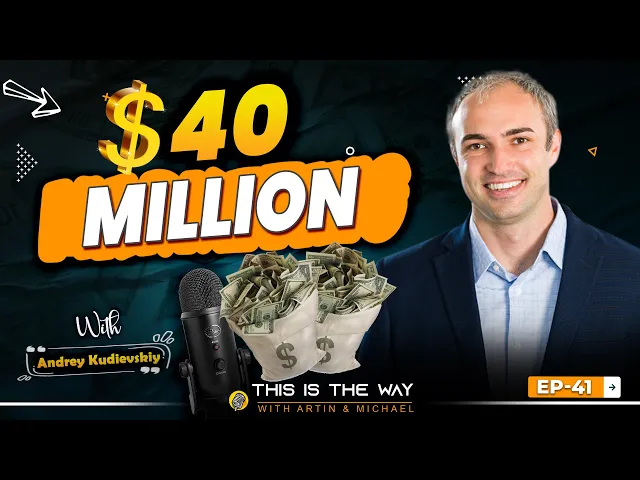
Starting and scaling a company to 1 million in revenue is difficult taking it to 10 million is even more challenging today's guest managed to hit 40 million in revenue and he's going to tell us [Music] how Andre is a founder and CEO of Distillery a fullservice software design and development company based in Los Angeles within 5 years of starting his Career in Tech at the age of 19 19 Andre had established his first company which was eventually sold to a Fortune 500 company recently Andre was named by Inc magazine as one of the 25 inspiring
entrepreneurs to watch welcome Andre welcome thank you so much aren thank you Mike it's great to be on your podcast no it's great to have you and uh just learned that you're uh you're streaming live from Mexico right now for us from your Mexico City office so that's that's That's wonderful let uh I I just wanted to kind of start more kind of going back you know you said you started your career in Tech and 19 and obviously very soon started uh your first company which is obviously very impressive would inspired you to dive into
entrepreneurship at such a young age and how did you navigate the challenges that come along with trying to become an entrepreneur at that such a young age with not with very little experience Very good question so um I come culturally from the background where entrepreneurship is not necessarily been valued uh nor present I was born in Russia and I relocated to United States about 12 years ago at this point so for me honestly that was something that I saw in my dad and I believe that he taught me how to be an entrepreneur uh from
the very early age I was selling fishing supplies on a local market so if you ask me about pretty much anything About the hooks the sizes of uh the lines Etc I'm still you know I have this vividly in my memory and I will still be able to give you a good Sal speech regarding that but yeah following the steps of my dad was the um kind of the nature for me uh I went to the university that was highly technical um it was radio Technic University uh in Russia so you may imagine that a
lot of people there were just I want to be a quer I want to be a PR prammer I want to Be a software developer I think I was just different uh you know having Dad looking at him when I was growing up and actually participated with him in his activities uh brought me to where I am right now and for the challenges uh well I think just starting early um you you don't get a credit you don't uh you know you have to earn your stripes I will tell you one know funny story when
I was starting my company I bought glasses it's not prescription glasses they were Actually like Empty Glass glasses just to look a little bit older now if you look at me right now obviously this glasses anymore the hair is gone but at the age of 19 2022 you could see pictures of me wearing glasses where in reality I never needed now we buy hats instead oh yeah so for you then obviously having your um your dad you know kind of I guess Foster some of that sort of entrepreneurial mindset was there any question for you
that you Would go down that route had you thought about going any route that might take you into you know typical 9 to5 or that way or were you like entrepreneur no matter what here so as a matter of fact I did work 9 to-5 job I would call it actually 9 to9 sometimes 12 hours straight um I enjoyed it I loved it because that was bringing me to my lifetime dream uh which was as a matter of fact reloca to United States I'm one of those uh you know Young Minds I was Back in
the days where it's like I don't want to live in my city I actually don't want to even live in Moscow which is capital uh I would like to go to United States um as a matter of fact my original dream was New York and I started to explore how can I be there legally of course so uh that required building a company uh back where where I was born building some sizable business and um the you know operations here in United States and then then relocating Myself as executive multinational transfere to United States so
you know I can go back to 15 years ago and actually backt track of why the decisions were made how they were made that brought me to the place where I am right now so entrepreneurship has always been on my mind but working 9 to5 9 to9 uh was still part of my career part of my history and uh you know brought me some good organizational skills that are I believe Important for every single entrepreneur was that a big piece though the you know when people talk about their why and their purpose did you see
that as that pathway to be able to become because you said you are US citizen at this point yeah so was that is that a criteria you saw as a way to be able to come in and do it or was it just an additional benefit it was a criteria honestly it was always like the main reason um to go and uh I I tell a little bit about the Drop that I had in the past it was actually software development uh I am a software developer by trade um I was educated to be a
developer I became Microsoft SQL Server certified database administrator database uh designer and that's how the company my company my own company has started because we started doing the database work so I used this 9 to9 drob as a stepping stone to get to my entrepreneurship career because otherwise it would be a little bit Challenging to start something where you don't really know um how to do things so for me uh I I knew the basics I knew how to do how to do provide services what I didn't know is how to do business that was
a very steep learning curve when you you know look at your previous customers that you been working for and you understand all right that's I'll use numbers um liberally but let's say that uh the price per hour is $150 it's like Okay if I start my business I can charge $150 per hour no questions asked well I was wrong in 95% of the cases because what goes into this price it's actually a lot of sales marketing you have to have operations you have to have uh people on the ground talking to clients you have to
have your own um you know account payables account receivables so this number was ultimately in the first few years when I started my career was not even achievable uh but knowing how To deliver Services know how to the the actual technology was immensely helpful because you know me being on the all the technical conversations originally when the company just started you wear many hats you're CEO CTO CH Chief technology officer Chief Information officer and I felt like I was feeling all these roles at least okay you know in your n to n were you deliberately
thinking here are the things that I need to learn which Would then help me launch my company at some point or that's not how you were thinking you just let it go as as you know without any strategy well the honest answer is there was a strategy it just didn't work yeah so uh my understanding of how to run business how to uh figure out all the right steps ultimately has proven to beon and I made so many mistakes that I wish I had not made uh I closed this gestal by going to UCLA Anderson
NBA Program finally but yes when I did it when I already had a foundation I had a work in business I knew how to read pnl I knew what's the difference between profor and you know other financial statements that's when I finally got my business degree not before and I wish I wish arton that it was the reverse I wish me getting the proper uh education Financial business and then only started my business I wonder for some people though who do that then they end up down This whole other pathway so the fact that you
were in there and you know had figured that out by the time you got there the degree other you know just uh probably taught you a few other things about what you needed to do about it but it ensured I don't know sometimes I think the downside in degrees is sometimes people learn to think a certain way while when you actually are in the business in entrepreneur then you you know it's like learning on the Streets for like a better way to uh put it I'm sure did you achieve the $40 million Revenue Milestone before
uh UCLA or after that was in progress so while I was doing my education it's a two-year program um you know this actually happened and um as a matter of fact I should have started NBA program a year before but pandemic hit uh I got scared it's like why would I go to the university there's probably more People that I would like to meet in person at this moment so I decided to postpone waited for a year and then you know these two years then came later and um the Milestone was achieved while I was
actively uh in the program and then would you say that the Milestone hits faster because of UCLA and without it it might have taken longer or you think it was going to happen anyway it was going to happen uh why I think so we were you know we were financially driven towards This number I knew that it's if it wasn't on the books or in the books but it was like we were training towards it uh what happened is after I graded is to build a strategy how to get to a larger number what does
it look like what things I need to put in order and uh you know even going to some courses like U board meetings and uh building this executive presence that actually helped me to put together my very first fiduciary board of directors which I did Not have prior to joining UCLA program got it and um like you know I know we'll talk about what strategies you're using today but what strategy did you use to get to the 40 million Revenue Milestone so um three things and I'll start with the easier one uh know what you
do and do it minion say no to anything else uh and I I'll tell you about the nature of the business for Distillery uh we provide Nearshore Latin American based Engineers To us-based companies and we do it very well uh a talent uh super smart AI enabled Engineers working for us-based businesses now there is plenty of other options that you can do you can invest in other startups you can do you know some crazy Technologies should you want to but knowing and sticking to the Core Business that is very important and trust me the reason
why I'm so confident speaking about this piece of strategy because I've done left and right I've Done pretty pretty much everything that I should not have done invested where we didn't need to be uh at all as a company and uh you know said yes too many times where the obvious answer should have been no so uh sticking to what we know and doing this and kind of stay in the course um it sometimes it does eliminate some you know very lucrative opportunities but honestly speaking when you speak about the rate of startup success it
is far less than 100% it is Actually less than 50% so uh ultimately it's easier and more beneficial to go and uh go to Las Vegas Place some bets on a relay you actually have better chances to get your money back so that's that's number one uh number two is I mentioned this but building the executive team not making sure that this is not just Andre's show Andre's company but having a solid executive team in place and the addition building the board of directors so I personally have An open oversight even if I'm the majority
shareholder of the business I want to report someone I want to be on my toss every single day and Mak it sure that we continue uh scale and operate uh as a real growing business for me the board Edition was just the most uh one of the most traumatic events in my life because as an entrepreneur you're calling the shots like we're going to do this we're going to do that now there is someone else who Is verifying your decisions saying no to you sometimes uh providing some guidance advice recommendation so it took me a
little bit of adjustment um over the course of the last year when we uh started doing the board meetings uh but I think that this is the best thing that uh happen happened with us and our board is reasonably small because the company is not that big enough and we're not publicly traded but super smart people Very very very intelligent each of them is much smarter than I am at at least in their specific field uh I have the third one strategy wise um going to yeah we we had a history of me building the
company back in Russia before I relocated but then I decided that we need to be closer to our clients so I came to United States to be on the ground we built the sales team to be on the ground we built client partnership team to be all the to be on The ground talk to our clients every single day now the last thing the last step was well let's bring developers also closer to uh you know walking these corridors and while we're our Engineers are all in light America they're in the same time zone they're
in Mexico they're in Argentina we have office in Peru and this is very important because when you work together in the same time zone 3 p.m. 4 P p.m. 500 P p.m. you can ask the same question there is no difference There is no difference with engineer who is sitting in Mexico versus someone who sitting in you know Sacramento because they're all in the same time zone together uh I think that that's the third part of the strategy of relocating the delivery centers to be most convenient for our clients because in our world speed a
lot of times is number one priority so three steps interesting I I have to ask on the the board member uh side of it how did you go about Selecting who that was going to be selection was difficult uh but the start was asking the network um making Mak sure that I personally know where my weaknesses are and where I don't need to cover uh and again transparency is the key my weakness is sales revenue I I always want more every company does it's not just me I'm not greedy uh and then second operations making
sure that we have someone uh who is who has spent their life in operations working in Bigger companies who have been where I am where I want to be going to network has proven to be uh half beneficial meaning that we did hire one board member then uh expanding the Rolodex and literally asking going through Linkedin and seeing the company that I believe is doing extremely well reaching out to their executive SE level person and saying look this is my business this is what I want to do I need help uh what do you want
and I've got many NOS I got so Many people just saying I might not be the right feat uh this is not for me you guys and we're not startup by the way we're not growing 10 time 10 10 folds every year where service business is quite linear but ultimately after several iterations asking people if not begging them to join uh I got I got to where we need to be from the board membership perspective but it's it's people you know and not being afraid to ask from people you don't know and how Often did
you meet with your board it's once every quarter um and you know three times we meet in person we fly everyone in executive team board members uh and then one time a year we do virtually it's around the holiday season because people are busy and uh we don't want to give them you know piece of mind that you don't have to plan extra two days out of your schedule uh interesting note the next World meeting is actually going to be happening here in Mexico City in Our office oh cool that's awesome that the I think
a lot of entrepreneurs struggle as you kind of mentioned initially with the idea of having this board and somebody else that might tell them you know what to do but it's like at the same time it's like yeah we're not challenging our assumptions I always think back to um uh being media industry um like Pixar's approach to movie making and while they've had such a great track record within it's because even though You might have a director on a movie ultimately they have the Brain Trust of these individuals whose job is to help you say
you could do this better or this could be done better because then the ultimate outcome of what you have is is amazing so I I I love that you challenged and pushed yourself to that and I I can only imagine how much that'll benefit your business instead of having to learn from the mistakes that some of these board members could tell You I've done that before warn you be careful so amazing Andre I have a question about just offshore development in general sometimes there's a stigma attached to it that if you go offshore even Nearshore
that you're you're paying less but you're sacrificing quality because you're going offshore how have you overcome that potential perception that americ might have very good question Artin well first of all perception is perception and you can't really overcome it until you provide data a solid data to say here is here's how we measure things and I'm probably going to be technical for the next minute or so but you know you go to the J board you measure how many uh uh how many points you deliver how many stories you deliver uh every Sprint and then
you show that we're not just the same efficient as your team on the ground inhouse we're Actually here we're 5% more here 10% more and in cases when our current clients don't use AI to enable their developers to develop faster we are actually seeing as much as 20 to 40% in some case especially quality insurance automation once you start bringing AI in it you can cover you unit test so much faster you can write so much more working the same amount of hours so the the goal is to not to break the stigma it will
exist but the goal is to here is The hard data it's very hard to argue with hard data it's almost impossible and when you showcase this uh the conversation suddenly becomes easier and you're moving away from this topic uh you're you have proven your uh your work you are saying that guys yes we are as a matter of fact less expensive than your local talent but we are not less efficient we are the same I have to ask quickly just because uh as I think about you and your name and general why just Stillery well
it's a c name right you hear about this once and you remember who is Andre where it came from but we have a story uh now I joke about this back in the days and this is me repeating stick to what you know well and do it we used to have a business model called up enabled business we will take your idea distill it down to Basics and build you an application so it was all about taking the best ingredients in the distillation process and just you Know release something beautiful and we've been featured by
Apple several times building applications but um this is where the Distillery came from later on obviously it didn't become the reflection of what we're currently doing however we all love the name we got used to it uh I love our logo and it's a good conversational piece when you start uh you know where the steers oh do you do something with alcohol actually no we Don't do anything with alcohol it's reverse Engineers outsourced yada yada but yeah that that's just part of our history we're not willing to let go we gotta be using Distillery name
up until up until we decide not to but there is no no end inside you don't have a hidden Distillery or bar at any of your locations though I wish uh we play this name by sending our clients a bottle of whiskey for uh some celebrations that's that's How we go around it that's great um I want to take it back to what you were talking about um the perception and you touched on AI so can you just go into little specifics of how are you incorporating Ai and specifically like gen into your business now
we help our clients to build software and our goal is to build as accurate as possible and as fast as possible nii as a matter of fact solves both of the in many cases we have in the introduction of co-pilot for Example or codium this that's another platform similar to co-pilot but not own by Microsoft uh that actually reduces the amount of bugs introduced during each development cycle and we have even seen cases when our clients would equi uh you know the teams with ch gtp4 licenses uh that piece would introduce again the agility if
you don't know something you just you ask CHP explain me this function if you have never seen it before it will do it I would say that This is the kind of main dve main usage uh but I also want to you know people are people are thinking about AI as a magic tool it is not at least not at this current state uh we have seen Engineers sometimes just spending more time uh playing with this especially in the beginning during the adward process but we also know that uh AI is being you know all
has been trained on the models on other people code on other uh you know companies code uh our client are Usually wellestablished companies and they take this seriously so we we think about we you know we disable uh a lot of clients code access to uh CH GDP and to uh co-pilot they don't have you know they called fed into this humongous data set that uh AI is and U kind of we want to take their privacy and security very very seriously that sometimes uh you know is a challenge to even introduce AI or even
talking to clients about why they need it and and and know you Mentioned chat GPT and co-pilot is that like the main tools you use are there other kind of smaller tools that are part of the tool set that Engineers use yeah for now yes uh plus codium codium supports about 70 languages and copal is you know Microsoft uh owned now uh I personally actually use a very interesting tool I speak a very basic level of uh Spanish I speak three languages but uh Spanish is unfortunately not my strongest so what I Do I record
the video uh I upload this to this tool and it just basically gives me back my recording with my lips synced to a perfectly finished pronunciation that some people complimented me not knowing that that actually wasn't Andre okay I know like 11 Labs I think it's 11 labs and some others are doing some really crazy stuff like when it comes to voices and even how people are starting to sell their voice likeness or their VOC goals so that somebody else Can then turn that into whatever thing but yeah whatever you're using it sounds good if
nothing else I might just try to play jokes and impress my friends who live overseas you know when I suddenly start speaking that language the implications I could see even when it comes to I don't know if you're using this way but where companies that are creating software that has the needs for instructions and use case around the world it's like to be able to create Those videos and stuff like that for everybody kind of on the fly with the same person it's it's incredible obviously your teams are using gen but are you providing Ai
and gen services to clients yet or is that still too early we call it AI enable development meaning that we're not developing the new model um of video recognition for example for our clients but uh we deliver Engineers who know how to use pretty much any tool and Uh that helps them to be more efficient uh to actually build AI models you you know you have to do this you have to just focus on this one and this is and I'm not afraid to say this that might not ever be our course Trends however we
are using AI we're training our developers and uh I keep using this word but it's AI enabled development that's the service that we provide to our clients got it uh all right let's take it back to uh uh the company and where You see it going I know you have uh Ambitions to hit a 100 million in Revenue so how do you go from 40 to 100 I mean that that's not a small getting to 40 is no small fee but 100 you're like playing in the big leagues now getting to one million for most
businesses is yeah exactly so I do you see you guys achieving that number very good question so um number one let me comment on $1 million business uh I believe that this is something that you Can built yourself or maybe with a small group of friends duable 10 is where in my perspective the glass cing is for businesses it's it becomes sort of impossible to build the $1 million business with your just your friends and not hiring any outside Talent not bringing someone in the company which uh we we were lingering around $10 million for
two years so I know exactly what it is and know exactly how to break into this uh the goal is to set this U model Moving forward by saying what am I missing I'm missing scalability in myself great let's bring the management I'm missing the scalability on the finance side let's bring bring the strong Finance partner create line Etc so whenever we need money we go and we expand we use it wisely to grow uh board of directors uh I started with advisory boards as a matter of fact just people um advising what to do
and we were meeting also on a quarterly basis uh it Turned into full-time uary board of directors that are you know people who have been where I want to be and them given the guidance and uh uh and advice but the path 200 is still needs to be walked uh in my perview now I need to identify well what else we need to do where is the weakness and eliminate it I believe that another Milestone that we need to hit is lingering around 50 to 75 million that's another glass ceiling that you need to overcome
and that's Where you or I will need to to think about how do we build a machine an operation that simply doesn't fail a service that provides the same highest level of satisfaction for all our clients no matter what the client is no matter what the industry is and that's again as a growing business it's always a pain you want to make sure that you hire the best people thus you lower the speed of hiring do we want to allow us to you know get B players or C players In the team uh I would
rather not I would not allow it while I'm here in my co it so it's still it needs to be what I wish I I will give you the I wish I had the answer the exact answer I do this I do that three things and we're on 00 million Mark tomorrow no but I I know the weeknesses that we need to make uh that we need to overcome I know the steps to um that we need to walk to get to100 million and by the way I I just want to comment on the100 Million
number Because a lot of people just use it very liberally saying 100 million Revenue Etc like okay the business can be $5 million Revenue startup worth $100 million service businesses usually are being based on the uh multi multiple of eida so for us to be aund million Business from The valuation perspective we actually don't need to be a100 million Revenue business we can stop we can stop less we can stop quite below this number so I think my motivation is to get to at Least $100 valuation very very soon and then walk the past $100
Revenue re re Devolution even even higher and that's a great clarification because it's true people you toss those numbers around it all depends on how you look at especially because certain companies have higher multiples too when you look at those the software can be you know um one of those I'm curious as you mentioned the um the the piece about how obviously hiring great people you know Is a is a is a key thing and this may come off across the wrong way but what I will say is and not to say that when we
were at Disney Disney didn't hire great people but I will say when I was at Netflix like they were laser focused on only hiring like the best people and they had this process and way that they they did that and great people are known to get results that are usually 400 to 500 times um you know uh or four to five 10times grade four you know than than The average individual so there's a huge benefit there and especially if you enable them to think for themselves and get out of their way to this degree but
at the same time as you said when you're also building that machine there say find balance between letting people go and um you know determining how you're still ensuring that quality and other things don't suffer if everybody's running and that you don't have multiple processes so how are you thinking about That at this phase um are you looking to introduce other groups whose role is to focus on that or are you just making really clear measurables or or you know goals for these individuals so that they don't you know fly uh too crazy like how
how are you approaching it because I could see I saw the upside and the downside at Netflix it's not a can of worms Mike uh but let me comment first on um a talent hiring a talent when we launched the Office here in Mexico um we first brought uh Engineers from Russia absolutely amazing people super smart and we'll let them hire the team here first because they wouldn't let hire someone who is n or okay they would hire some they would hire peers to themselves and maybe they were gone now this kind of the the
core continues to build itself and I'm a strong believer in it but there is also a belief that some people are good for you know you go zero To one in the company U nothing to something and then from something to five times something that takes a different mindset that some people not all but some may not even overcome uh I will touch a very dangerous subject that uh at some point it might be me who says all right if we ever hit $100 million and we will maybe there is no maybe I will take
the board seat we'll step back and we'll hire someone else who will do a better job than I can in scaling Companies why because this is the biggest company I ever worked for every day I come to work that's another biggest company that they ever work if we grow it and hopefully tomorrow and the two weeks from now it will be still the biggest company I ever worked for every single day so my uh while goals importance important kpis are important uh for the team that you you started building the company with I believe that
at some point you need to either upill Them or provide them the education or at some point in life maybe even find uh another uh team members who been there done that and they will just bring the knowledge uh to you and you will go faster with less mistakes so that's my mindset on how to go to where we want to be I love it it's uh it kind of going back to your your board member thing too of just acknowledging in your own self-awareness of you know it's the what got you here might not
get you there and A lot of people look at that sometimes just in terms of their team which is one thing but the fact that you're looking at it even on yourself and saying no you want what's best for the the company the team long term like that's that's amazing I love that mentality Andre you've obviously made this big leap going from first of all N9 to n and and being a the developer and software engineer by Trey so now a CEO and a leader of uh how big is the company now How many people
uh we have about 400 people yeah as that's that's a big company um what would you say are kind of your leadership guidelines and principles that kind of help you lead 400 people uh give control don't micromanage uh I know that I'm just thrown the wars but there is a lot behind it uh I used to be a micromanagement uh am potentially still falling sometimes uh in this category uh but trying my best every single day to If you hire someone who is smart and they're they should be smarter than you are in the specific
field Finance sales operations trust them give them responsibilities but also don't forgive to give them abilities and now this that's how I operate uh meaning that I would like to be inform but I don't want to tell you what to do that's the principle uh another one is and that's what I learned at UCLA Anderson is to be aware how people Perceive you I can contact people I uh I don't want to call myself a likable guy that's awful no but uh going to the employees just you know sitting with them right next to them
having lunch is what I enjoy doing however what I be became aware that well some people may actually get scared there is a CEO who came to their desk and ultimately asking you for lunch it's like am I going to be fired next day or what what is that why is that so I I started to take this Cautiously rolling out the communication saying look I would like to have a team with uh a team lunch with everyone who's in the office today and by the way we're gonna get once we finish this conversation we're
going to get to lunch all of us so uh that's that that self-awareness what does the COO title brings to you besides you being you know just normal regular human and how other people see you I think that changed my style as well how I Manage people and how I try to lead them forward I would like to lead them uh by example I would like them I would like to give them Authority and I would like them to not be never be scared of me or a CEO coming to them uh next sitting next
to them at their desk yeah I mean a lot of things that you said also kind of carry into culture and you know I'm a big believer where that culture is top down and whoever the top is whether it's a uh a vice president of An organization or the CEO at the very top their personality usually emulates down to be the culture too it can't it can't be it has to be organic uh so do you focus on that like I'm going to build a culture or your leadership principles just organically have build a culture
in your company I hope that the answer is the second organically the culture is just being built but no we also Focus uh specifically on building culture uh it is partially my Responsibility plus we have HRS in every single location HR Partners who help us uh you know build this camaraderie build even if you're working on different projects you still have something to talk about and um ultimately people who have been on a project for some time they uh you know they stick together and we love deploying teams not just Engineers but uh culture difficult
uh that is my I I think that's one of the things that you need to never stop Working on just keep building continue check in run the uh you know research survey report uh figure out what people want sometimes there are some little things that cost virtually nothing the team is missing and we don't want to miss on that uh we want to have a culture of experimentation that's by the way what we have at Distillery feel free to fail don't be afraid there will never be a retaliation but if you don't try that's going
to be a problem meaning That if you haven't done something and uh you haven't done this before because you were afraid scared that's not what we want we want you to always do your best and if you fail one thing will happen we will learn from mistakes and we will move forward that's all and you as you said arent you do this from the top you do this with your managers you made you know some mistake uh I I don't know I can't come up with a recent one I think we're doing just fine but
you you Made a mistake let's sit down let's discuss how this happened and let's I'm asking one question what did you learn if there is an answer what what was learned what we can go to what can we do to prevent it from happening in the future and then we go never ever bring this up into the conversation there's a story that brings to mind where it's individual I forget the company or who it was but uh they ended up getting called into the office with the CEO and In that scenario persons like uh they
had just made a mistake that cost the company quarter million dollars and they walked in there knowing okay I'm fired aren't I and the boss goes fired we just spent a quarter million training you uh you know when you look at what you could take away from that that person never going to make that mistake again you better believe they're going to be trying to you know set it right but I love your philosophy of how you approach Things honestly and I'm sure arton felt the same way everything you said is how he and I
have tried to approach um our teams as as well even while they were you know smaller teams and what you're leading um now I think it's incredible and I'm I'm really curious on that uh dive it a little bit more into the culture part because you mentioned um HR and sometimes HR companies especially as they get larger can become even the name Human Resources sometimes becomes a joke For people because Human Resources it really feels like no this is a company resource trying to protect the company it feels more like legal than actually thinking about
fostering and growing a culture so how are you considering that as your company grows so that it doesn't just become another legal department and that um you know there really is and I'll just I referenced n again versus a a Disney example because both of them were known for their cultures but what I Will say at Netflix that was really different is the job and the role of this person was you know along with that CEO to basically be these culture ambassadors so how do you approach that with your human resource team question and I
think it's one of my nightmares Mike that people will go to HR when there is issue and nothing else basically they will never say a word if everything is fine we make sure that our HR HRS are participating in all our Events so we're on Distillery Tech nights they're organizing this they're making sure that the team is invited feeling welcome there is always a human touch and yeah if there is a problem we'll tell you please come to us but not sitting at their desk but rather being involved in the day-to-day activities and we're not
that big enough I you know I wish we were talking about Netflix sizes but um for us if you are on the ground with engineers in the office and We're hybrid company meaning that there is no office if you want to come come but HRS actually they come every single day they they I want them to be in the office and that creates this sort of I'm not afraid of HR HR is a friend if I have a problem this is the person who will help me to resolve it but also I will say that
being proactive and from HR side and not wait until something happens reach out check in uh we have the list of cadences with medians with Every single engineer we want to understand if even if there is no information are you doing okay are you all right it's the project fine your client your teammates Etc and I think that what brings this to a cultural piece of we care we're people company I keep repeating to our team some some say the distiller is a technology comp like guys you couldn't be more wrong we are a people
company our product is our people is our Engineers yes we produce services To our clients but it's it's all about people if we don't have people we don't have a business incredible I love it I'm waiting I just as you I hear you say these things again it sounds like an incredible uh company because again the the approach that you take um just Fosters the best of people you know we're talking about not trying is failing but trying and making mistake and the lessons learned so looking at your journey uh From 19 to now going
from zero to 40 million what are some what are the most valuable lessons that you've learned through this journey whether it's Leadership Lessons or entrepreneural lessons or life lessons like what are those top three lessons that you've learned I'll start with the most painful one um you can't do this alone I was I was cocky I was not asking for advice I was I thought that I I know everything look I I made it I came to United States Who else from my friends did it and I'm from the middle of nowhere in Russia small
75,000 people town and now I'm in Los Angeles and I have a business um it it took some courage to recognize and realize that you know what Andre you're I will say it you are not the best but if you surround yourself with people who are best in their areas where you have weaknesses and I wish I have done this faster um honestly that we would be in a different place uh I would be uh Potentially you know much more bigger business and better person that's number one uh number two education do it early never
afraid to put money in it education is what brought me from Russia to United States I went to luckily I got the second place on the U Southern Southern math Olympic Games in Russia um so that brought me to the best university that I could attend to and then this got gave me a good job and then coming to United States I always Had this kind of itch of well you're not a business you I identify myself as entrepreneur but you're not a business person you don't have this regalia you don't have this you know
check mark uh or LinkedIn uh Thing by say attended so I did one year of Stanford virtually uh which gave me a little bit of courage and then I I went to USA I wish I started UA five years before I actually did it I wish I went to Stanford the moment I landed in United States I for Whatever reason I waited for several years so education get it early it will pay back uh it always will Don't Be Afraid spend money uh it does cost a lot especially in United States but gosh I think
if I if there is an advice that I would give to 19 years old myself go and do it now because you will get busier tomorrow you will have wife kids partner Etc do it as early as possible uh and last but not least um honestly I am I'm more or less conservative uh leader Meaning that my re tolerance is compared to an average person on Earth probably high because I'm an entrepreneur but I really wanted to push myself get into Crea line draw the funds hire five more salese build the revenue machine do it
faster so uh getting overcoming the fear of uh having less money in the bank that I would like to be always am last gusan it you know this is the third thing that I I wish that I have corrected earlier and now again I'm Still considering myself as optimistically conservative person I do like to have a Runway I not comfortable when startups are running out of money in months and a half and they cannot make a payroll but at some point in my life I was way too conservative for a good entrepreneur that speaks to
me because I know I've uh I slow that direction as well at T I was like ah look back at the say you uh mentioned something about here was when you were Saying about the school in the education and you focused and you happen to mention institutions around it but I'm curious to actually your thoughts especially as the world does change more and more and some people put less emphasis on the actual institutions do you um obviously there's been an impact there for you but when you look at like a lot of your your team
members and stuff like that is that something the degree where they went it's as important To you or is it more about the self-starting since people can also get their hands on education you fill a strong poll one way or another yeah it's a very good question Mike um I believe for some people well the motivation of going back into school was different and some people just needed degree because they work in uh top four companies and without the NBA status you just you hit the ceil already you you have to uh jump over it
so that's one thing that I Believe why education still matters second overcoming for me that was overcoming imposter syndrome uh is you know enabling myself to well I actually have it now there is nothing else that I can do nothing more uh it's the top of the crop go go go there is nothing that holds me back uh and I will never think about of not having the education but also I've seen some some folks I believe wasting their funds and wasting their money on the education I don't Know how that's going to continue um
especially speaking of the United States based system where everything is you know you have to have some um money and time to be educated I came from from the background when my first University that I attended to and I got the master degree in computer science was free I literally paid Zer and my accommodation I lived in the dorm was big fat zero uh I paid for food that's all so uh it's difficult for me to kind of bring this Model to United States and understand in a you know in the world of possibilities whether
all this was this would work better uh but um I I'm a big believer in in education I I strongly believe that if you want to change your life that's what will uh do the most efficient thing yeah that's a great Point what you mentioned there too about that investment I think that's the struggle some people have as they look at the ROI because back to what you were saying too About then the family and all that well some people might still be paying for their college by the time they get there so it's this
interesting balance but I also think yeah it depends the career things you're going down I'm just watching a video too that really honed in on you know kind of the key difference between what people make in their life is the zip code that they live in and sometimes the education going to one of these universities is What gives them a new zip code which then opens them up to so much more versus if they never left that in the first place and tried to pursue because back to who you're surrounded by you're then surrounded by
a different set of people than you might when you drop yourself into you know that other um whether it be business education or app but we're attaching major subjects here but U let me just make one comment uh when we hire Engineers software Developers to Distillery um you don't have to have a diploma no you have to pass the test you have to pass you personality test all the programming tests the need diploma is not even part of the consideration if you have it good it's not going to be considered whether or not you're working
for us or don't yeah that's good I no I actually appreciate that I had that conversation once again with somebody from HR and I said well they said what Level degree does this person need I'm like honestly they don't they can do fine with this job the training they get is mainly on the job anyway with what they do and um heck art and I came out with degrees and we jumped into a job and at that point it was already changing to new technologies anyway but so when I said to HR well why why
do they have to have that degree and they just said well they just need a degree and I'm just like what kind of an answer Was that so again I like your approach and you know I think um uh there's so many individuals too these days who they start teaching themselves at 12 like that's not even you know most people wouldn't even be thinking about that till later in life and especially I think people with programming and skills like that or anything where you just need a computer so I I appreciate your approach uh shows
that I disagree with some of the hard pushes on these these Degrees what kind of personality test do you run personality test that would go to HR team and because there are different personalities personality tests for uh sales uh meaning that you know you have to differentiate between H Hunters Farmers whom to put best in the job and then on the developer side we want to make sure that people are open for communication if you're complete introvert you can be a good developer but you know we put you on the team and You will struggle
and the team will struggle with you so uh we're checking this it's a coffee test ultimately a little bit more sophisticated but would I want to have a cup of Cofe coffee with youu with youu I would and with art as well obviously but some bues yeah interesting no but I think that's great too because a lot of people don't they don't art and I for a while they were actually thinking about building out the software to help people with that hiring Process more because even when we were in you know large companies it's like
wow so many people are left to their own about what it means to uh hire people and don't get me wrong leave people to their own to this degree of their decisions but give them the right sort of structure and understanding you know depending on what you're trying to break down and especially the cultural fit stuff like that is so critical to make sure you get that right when you hire People so Andre I don't think we asked you but I want to ask you a question before I ask the main question are you a
a dad I am I'm a dad of two beautiful girls the for me the most beautiful people on this planet and um I will go as far as saying every time when I once they were born and I ask myself a question of five why why I work why I exist why why why after five why I always land at I want to give my kids a Chance that they didn't sorry I didn't have in my life I I work for them that's a great I mean I think I put it I I'm the same
way Mike I have a boy and a girl uh and Mike has three boys but uh the reason I asked that question is coming back to the education question what advice would you give your daughters like are you going to push them Stanford Harvard UCLA or is it it you know what you go figure it out education is important you just go Figure it out I I have a well- Defined answer for this which I had to come to agreement with my wife first but we will provide you an opportunity hopefully to have any choice
you want private college whatever you really decide to go to but you will have to do this and you will have to decide which was not my experience when my parents gave me whatever they could give me which was enough but little I could never even think about even going to a capital of Russia to Moscow because it was too expensive I could have never gone to United States because it was out of the level of affordability completely just undiscussable what I want my kids is if they want to go to London East Coast or
just stay here and go follow their dad's path and become a bruin this is going to be there this year my goal is to enable them and provide the choice I love it for me with my boys too it's very similar approach um while I'll admit That because I had come from you know working most of my life 9 to five or 9 to n or what I call it um I do want to make sure I do a better job than I mean this with all due respect you know my parents but of making
sure that they're introduced more to entrepreneurship at this young age kind of like what you said you had experienced because that's not something that I had um had as much and I think just being exposed to it takes away some of that fear and Edge Because you know what's possible so that by the time they hit that decision they could then really make the right decision for their future we'll see though parenting can also be considered a big experiment but I'm you know my older daughter she I work from home most of the time uh
until I travel and visit our locations our offices but U she wants to be a manager and when I asked her well what is the manager well I want to be like my dad talk to People right already have chosen her barer yeah yeah that's honor to kind of wrap this up um what advice would you have for your 19 you know going back if you were 19 and anybody that's kind of you now what advice would you have for them follow your dream Don't Be Afraid um you will experience setbacks and they are only
setbacks they should not discourage you from continuing what you strongly believe in that's a great great answer great answer um how can people Find you LinkedIn I live and breath LinkedIn so if anyone wants to connect Andre kki that's a difficult last name but I'm the only one on LinkedIn with this last name so in a way that makes it easier we'll make sure to uh link it uh uh when the episode releases so again Andre thank you so much uh for joining us today this has been fascinating insightful and a little bit validating I
would say for me probably Mike too cuz a lot of things things you said we believe In to so we're like wow there's others that you know have the same mindset so we appreciate that uh and for you know whoever is watching and listening if you have a question for Andre or any comment don't hasit drop it down below and then and we'll get answered for you again thanks again we'll see you in the next one fantastic thank you so much AR thank you Mike really appreciate the time