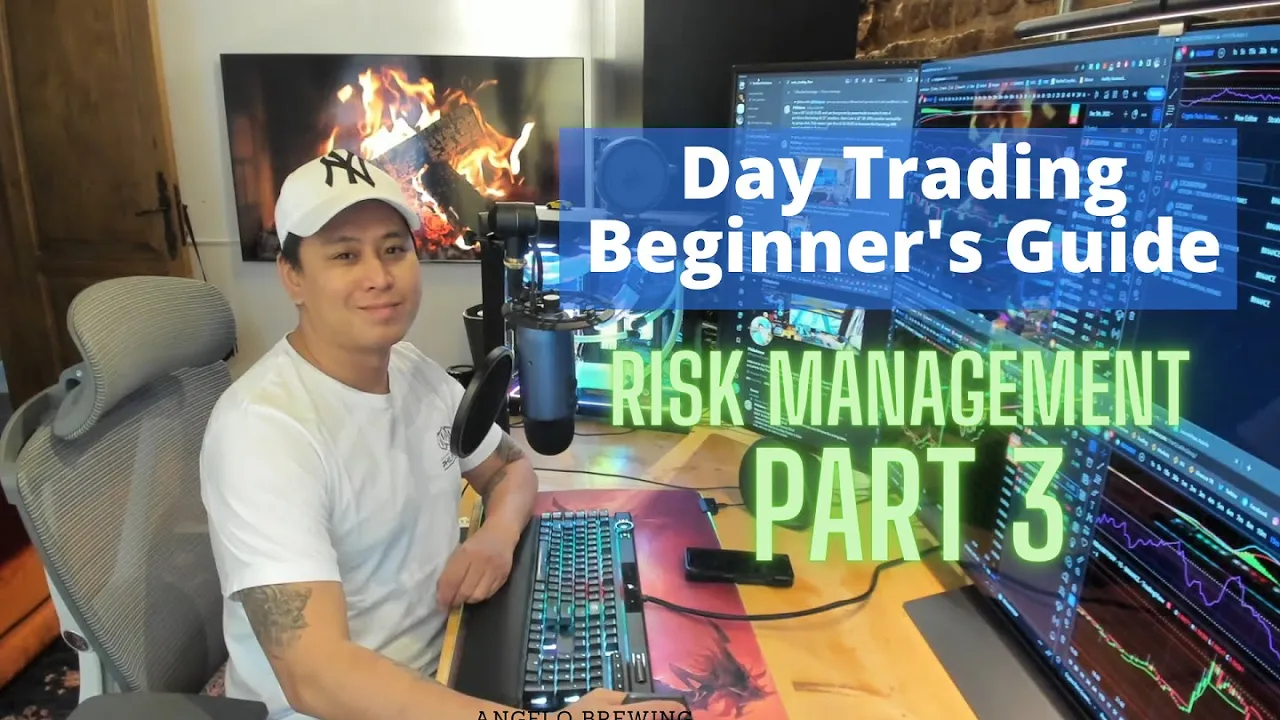
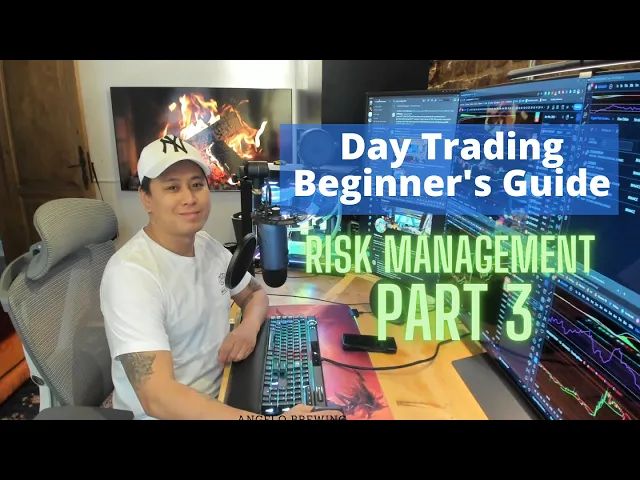
hello everyone welcome back to part three of the day Traders beginner's guide in this mini series I'm going to go through a list of topics that I think are the most crucial to understand which could overall increase your success in the market and also give you awareness to the fundamentals before you decide to enter the market it's always good to do tons of research before you dive anything that can have serious consequences such as losing money and in this topic for part three we're gonna go over the basics of risk management and specifically what we'll go over is basics of risk management how do emotions affect trading controlling emotions fear greed patience discipline and confidence did you know that 95 of traders that go into the market with zero game plan and no risk management plans whatsoever they end up getting liquidated every single time their balance eventually diminishes because there's no plan to actually prevent the amount that they lose because if you can't prove vent how much you lose how can you protect your Capital if you can't protect your Capital how can you preserve it and then how can you grow it capital is the number one most important aspect and you need to protect that because most traders in my opinion they need to think about how much they can lose but the majority of Traders they go into the market really new thinking about what kind of strategies should I be learning let's learn all about technical analysis what are the best strategies to use and the last thing that they focus on is risk management so this might not be the funnest topic for a lot of people but if you actually focus on risk management and focus on developing a plan that's going to last long term that's going to prevent you from turning small losses into catastrophic ones it's going to help you long term and be profitable I've heard so many Traders and of stories of how people were just down a small amount but they ended up turning that very small loss into something catastrophic because they're a deer caught in the headlights and whenever you're down a small amount and you don't have a plan or the discipline to cut your trades that trade could turn into a massive one and then when it turns into a catastrophic loss you're paralyzed you're like a deer caught in the headlights just standing there wondering what you should do and a lot of newer Traders they go through these emotions and the majority of times they're over leveraged as well so because they're over leveraged if the market drops even further when you're in a long position they end up getting liquidated then they go back into the market when they get a little bit more Capital they try to do the same thing with a better strategy but it just doesn't work out because they lost a very similar weight the number one reason why Traders either fail or they're successful is because of their risk management abilities you simply cannot protect your Capital if there's no plan in place so I'm going to go over some of my successes and failures and some of the things that I've learned over the past eight years that can hopefully give you an idea of some of the things that are very important when it comes to trading and this is designed to be an introduction to day trading so it's not an advanced guide in any way so you can do more research yourself and if you're extremely interested in learning more as well there's always my masterclass course that's the complete day trading guide it gets you a lifetime access to my Discord group and a lifetime access to me as well so you can ask questions and I do a live stream every single day five days a week we do in a technical analysis on bitcoin we do a market Live Scan and we also build a watch list together it's a community of very like-minded people and you can find out more in the information down below when I first started out trading I was putting in about six hundred dollars a week into my trading account that was all the money that I had and it was going 100 into the trading account and my first huge mistake that I didn't realize later was that I was focusing on the profits and what I could make every single week I didn't even think about the losses that could be incurred at all as thinking to myself hey if I made one percent of six hundred dollars every week if I compounded it it would turn into a huge number over time and that was absolutely true and I was always thinking about the profit it was the number one priority and then much later I realized that if I could do things completely differently I'd probably go back and tell myself the profits come as a bonus when you get better as a Trader and the most important thing that people should focus on right now would be to make the good trades first and focusing on managing your risk so if I had to go back in time instead of putting in that six hundred dollars because I didn't have a lot of money back then my net worth was next to nothing I would have told myself only allow amount of risk that you are okay to lose the best advice that I can give you if you're starting out as a newer Trader or somebody that's starting to develop your risk management plan would be to trade small don't trade your entire net worth your entire paycheck that's coming in putting in the gigantic balance with the goal of profiting rather than learning because that's the exact mistake that I made and I wish that I knew much better back then to play smaller because then I could have used it as a time to learn rather than blowing everything that I couldn't really afford to lose at that time and just as an example it's kind of like if you're gonna go on a vacation if you're gonna have an event of some sort you're gonna budget what you can spend on this event of course it's so different than trading as well you need to budget what you can actually lose and be realistic with yourself there's a really high chance that you're gonna blow everything that you put into the market the first time and if you think about how competitive the market is is it really likely that you would out trade a professional Trader that's been doing it for five six seven years as a newer Trader probably not that likely this professional Trader has tons of skills on you tons of experience and years on you where they've gone through trials and tribulations they made so many mistakes that they've learned from these and progressed from them you don't have that experience yet if you go into the market being as pessimistic as possible in terms of hey I acknowledge that I could be losing a gigantic amount of money I should probably play a lot smaller you might actually be more successful than the people that go into the market thinking to themselves hey I'm gonna make a crap ton of money if I put in a lot of money the goal of trading is to learn at the beginning and I think that the position sizes that you play you have to earn them and the position sizes that you play they eventually grow proportional to your skills so when you start out you might be playing only a few hundred dollars so for example myself I was starting out with about two thousand dollars like when I was starting out total bankroll maximum amount that I had but over about eight years now I've grown it to my largest position size that I've played in my life was 1. 4 million dollars and that was just last year and then this year I played 1. 3 million dollars as well so these are position sizes when you earn the right to play them because the strategies are really different when it comes to playing larger sizes so once again keep your position small go into the market with only what you can afford to lose this is a way of managing your risk risk is simply defined as a way of controlling how much money you could lose and there's going to be different steps and different levels that you can Implement into your risk management strategy and the first strategy would always be to limit how much you can actually play if you don't limit how much you can play you can guarantee that it's going to turn into a catastrophic event I've heard all these stories before that they go into the market and they get wasted by the market the Market's got a really special way of humbling you as a newer Trader a lot of people get into crypto because they hear about the Allure we're just of day trading in general of making a huge profit in a short amount of time yeah it's definitely possible in a bull market not with that much experience but the hard part is actually keeping your profit so making it as easy but keeping it that's a completely different skill set and many people made a crap ton of money during the bull market in 2017 and last year as well but most of them ended up losing it back to the market because they didn't have a way of protecting themselves and preserving it so we have to also understand that these are different markets a bull markets very different than a bear market and in the bear Market it's important to really manage your Capital so you don't lose it and the goal is to just hold on and survive not profit and mentally because if you survive in a bear Market you can thrive in a bull market you have to have these assets you can't lose them if you lose your asset which is your Capital how are you going to have it into day trade and do well in the bull market that's coming up so always play small protect your capital and know for a fact what is your limit that you can actually use to trade that's going to be one layer of protecting yourself another layer that you can add to your risk management strategy would be the percentage that you would be willing to risk per trade so just as an example a lot of people go into the market thinking that they need to have a lot of money and to play bigger to make a lot of money but then they end up leveraging for example they have a one thousand dollar bankroll and they end up leveraging that 20 times to twenty thousand dollars while the market only needs to move five percent because five percent of twenty thousand dollars is gonna be one thousand dollars so if it moves five percent they're gonna end up getting their entire bankroll liquidated in a five percent move and then what happens their bankroll is completely shot they've got to start over again so over leveraging is one of the hugest risks when it comes to trading and a lot of newer Traders do believe that I need more money to make more money and I've seen it time and time again when these mistakes are made it's devastating to them personally and especially emotionally so after I started making all these mistakes and learning from them and I realized that hey I've got to start protecting my capital and this happened really early in my career of trading so after I realized this I started focusing on risk management I didn't leverage at at all because I realize it's a very dangerous thing to do perhaps when the trade was highly confluent and there was a high probability of winning and my confidence was really high I would have leveraged 3x but no way you would have caught me leverage 5x or 10x or 20 at like a lot of newer Traders do nowadays and the majority of people that do leverage 20x and they keep posting it you have to wonder like when they're posting a good trade and they show it with a high leverage how many trades did they actually need to make to get this one good trade just so they can take a screenshot of it and show it it doesn't show any consistency over time the people that end up leveraging high they get liquidated because they have no risk management skill when you think about the discipline required to not leverage how would they also have the discipline to cut their losses it goes hand in hand interchangeably if you don't have the discipline to not leverage high you're also not going to have the discipline to cut your losses when it actually matters and I've seen time and time again that people are leveraged high at the market as we've all seen crypto do it can Spike up it can Spike down tons of percentages in a very short period of time and when this happens that's how liquidation Wicks just knock out people entirely from the game so it goes hand in hand when people leverage really high amounts they're playing 100 of their balance so if they're risking 100 of their Capital that they have that's not really a good risk management strategy a really good amount to risk would probably be an average between one to two percent it really depends on what you personally prefer to do my three general rules when it comes to position sizes and these are very general advice that I'm giving you based off my experience this is what I would tell a newer Trader I would tell them that they can trade a position size with three different ways one would be a percentage of the bankroll that they have for example if you have a thousand dollars as your bankroll and you're just starting out you might want to limit it to 50 that you would trade and of that 50 that's 500 that you would be trading you would probably want to risk between 1 to two percent this way if you lose and you go on a series of losing streaks even if you lost five six times in a row you can still maintain that 500 position size since you initially only started with fifty percent of your overall balance now the second way that I would recommend to position size would have a fixed dollar amount no matter what even as your bank roll grows you'll say to yourself even if I grow up to two thousand dollars I'm only going to trade with a 500 position size and I'll keep doing this until I reach for example a five thousand dollar bankroll despite how long it takes this limits the amount that you play and you're being strict with your position sizing and this shows discipline and it's another layer of adding to a risk management strategy now the third way that I would recommend to position size would be to have a variable position size and what that means is depending on first of all the volatility of that particular coin that you're trading also depending on the probability of winning that trade is also extremely important and the problem ability would be determined by how many confluent reasons are there to enter a trade if you find more reasons to enter a trade and it's leading much more one way than the other then your confidence could also be higher as well and whenever there's a confident trade with the higher probability of winning and more confluent reasons to enter where the stars are lighting up and it's really tilting one way more than the other that you believe I would definitely add a higher position size than I normally would so if I've committed to for example a 50 position size of my overall balance if the confidence is really high for a particular trade I'll probably add more size to it like I normally do and you're going to come across many situations where there are many confluent reasons to enter a trade and add size for example for one of my favorite strategies would be a five Elliott wave count that we see combined with bearishly diverging RSI combined with a macd crossover combined with a trendline break these strategies of mine that I always look for to get these confluent reasons when the trend line does break and I end up show supporting it there's a very high probability of me winning the trade so if I see the setup I'm going to add much more size than I normally do and just going back to however leveraging just for a moment when people high leverage it's going to be the end of your career if you have the ultimate goal of making money fast and neglecting risk management so the people that end up leveraging extremely high they've never built a bank roll to begin with that's why they're leveraging high people who have a bigger bankroll they don't leverage high they leverage one two three at most for example myself I'll leverage between five to ten now but it's Justified because of all the news with FTX that's happened before and the exchange closing down have to be extra careful on an exchange so I'd rather keep a low amount of capital on an exchange and leverage higher than to keep a huge balance on Exchange just in case it ends up collapsing like FTS and then if I lose I'll add more to the balance but the goal is to keep my funds off of an exchange it's more of a mitigating type of strategy and regardless of the reasons these people give you about why they leverage high it's all Bs these people leverage High because they've never grown their balance to anything substantial before like myself right I do leverage high but it's for a reason but I have obviously grown my account to something substantial already where I can always send myself more money down the road but if you're new in the market and that's the entire bankroll that you're playing with you're just gonna get destroyed so you have to implement these different layers of protection to keep yourself from doing stupid things so this way your emotions are not nearly as affected when it comes to trading so if you play your entire bankroll you're going to be shocked and surprised and in awe when you end up losing your bat your entire balance so just to quickly review you have to limit the amount of capital that you're bringing into the market you don't want to play your entire bankroll or net worth you're a newer Trader you're still learning risk management you're not profitable yet if you're not profitable yet the last thing you should be doing is adding more money to your bankroll to your position sizes because there's a high chance chance that you'll just end up losing it all have to make sure that we focus on learning first and developing proper strategy and discipline so we can grow and protect this capital of ours the second thing that you should do is limit the amount of a percentage that you lose per trade and also the third thing is leveraging that's a key thing that you should not be doing never focus on trying to make money in the market when you're first beginning always focus on good trading first and protecting your capital and developing really good habits so when you're trading emotions like fear and greed they're gonna come up all the time and these are emotions that need to be controlled and risk management it helps you keep these emotions under control if you say to yourself I'm only going to play 50 of my bankroll on the exchange well that's one way of ensuring that your emotions are not going to get affected because you've already set a rule for yourself if you said other rules like okay I'm only gonna play for example 20 of my net worth I'll keep it on an exchange well that's another rule that you've set for yourself so you don't have to be too stressed out if you lost it because you've already he accepted that fact so risk management is a great way to leave out these emotions of yours one tool that's commonly used by Traders is the long and the short tool that we'll be able to find on trading view if you click on right here and then you go to the long tool then you click where you want to enter a trade or thinking of entering it then you click on the placement here this green and red is going to come up so with this green and red what it tells you is the risk to reward ratio the risk to reward ratio is a ratio telling you how much you can win versus how much you can lose so for example if you're in a trade where you can win 100 and lose a hundred your RR would be one to one if you're in a trade where you could possibly win 200 but only lose 100 then your RR is two to one you want to focus on trades that have a high RR because over the long run you can actually be profitable even if you're not winning more than 50 a lot of professional Traders they're going to have win rates anywhere between I would say 60 to even 80 but Traders can still be very profitable even if they have less than a 50 win rate as long as they're focusing on high risk to reward setups and they're sticking to their stop losses and adhering to these risk management strategies that they're upholding for themselves so the way that we use this tool is very simple if you take a look over here so for example if you wanted to risk two percent on a trade and then you wanted to get a possible four percent gain now this RR if I went up to four percent over here if you take a four percent possible gain versus the two percent possible loss that's going to be an RR of roughly two to one there's a lot of different values on here just as an example this one there and this one here is based off of the ATR ATR is the average true range that tells you the average value within a certain period of time so the default one that I use is 14 an amateur day trader and the professional day trader they'll put their stop losses in different places and they'll use different methods as well most newer Traders will simply take the low before they're entering and then putting a stop loss slightly below it but what ATR does is it allows you to figure out the average movement so you can assign the best place when you factor in Wicks because Wix happen all the time in crypto as we've all seen and the ATR based off of the average moves it helps you decide where the best place for stop loss would be so you don't get taken out and this is something that's more complicated which we can dive into more in my master class course or in the Discord training group as well there's always going to be a lot of fear greed patience discipline confidence a wide range of different emotions that you'll be going through as a Trader I know that the scariest feeling is being in a trade where you're down a lot and you didn't make the right decision to begin with to cut your losses I'm sure you can all empathize with that situation where you decided to just wait a little bit longer to see what would happen and you decided to ignore your stop loss and because you ignored your stop loss it resulted in the coin going against you even more and then you're even down more in your position and that's a horrible feeling so then you make a decision right you gotta force yourself to really decide what should I do in this situation and then you wait more and then it turns into a catastrophic loss so a lot of people approach me and they ask me hey Phil I'm in a really bad situation right now I didn't stop myself out I'm down like double digits in percentages like 20 30 percent close to getting liquidated because they're leveraged as well and then they asked me hey Phil what should I do and I never tell them what to actually do I don't even look at the coin what I always tell people if you're in a really bad predicament and you got yourself there because you didn't stop yourself out now you're just close to the brink of liquidation or something really bad and catastrophic happening what I tell people is consider taking your loss then the reason for this is because well it's showing you that you have the discipline to actually take your loss which can translate to the next trade forcing you to take your loss even earlier it's gonna come with a very expensive lesson but nevertheless it is a lesson that you will learn in a very very harsh way but you have to accept no matter what the consequence if you do end up cutting your losses and the market does end up reversing you can't say to yourself Shucks I should have waited because the market ended up reversing and I could have lost a little bit less that's not the best way to trade because maybe you got lucky this time because you held on and you waited for the market to reverse maybe you got lucky the next time in the next few times after that but there's gonna be that one time where the market does not recover and you simply get destroyed ask yourself if you waited and the market does drop even more and you got liquidated how much worse would you feel you probably wouldn't feel that great you would say to yourself I could have stopped myself a little bit earlier when I had a chance to and look at the position that I'm in now a lot of these situations that you're in it's going to have an overwhelming amount of emotions added to your trading and what risk management does is it tries to eliminate these emotions by having a very strict set of rules that you abide by so the emotions don't get the best of you often times before I go into a trade I ask myself how much money could I lose lose I don't go into the market thinking how much I could win because I know that good trades will result in making profit when you make good trades the profit is a bonus back in my days I used to lose a lot of money to parabolic rallies because every time I saw this parabolic move up I would try to jump in on it but what ended up happening was I would either catch it at the top and then it drops down and then I panic and then I stop myself out I lose a lot of money because parabolic rallies tend to drop just as fast as they go up and then surely enough the market ends up continuing to the upside so parabolic rallies have this nature of just being crazy volatile going upwards downwards and one time last year I ended up shorting AXS with a 1.
3 million dollar position and I took a 100 000 loss in less than nine minutes this was one of the most devastating trades that I've ever taken in my life and here's the loss 103 655 it was huge this position it was actually 1. 45 million dollars or so so since then I've made rules for myself to prevent this type of things from happening if you have rules that prevents you from taking on too much risk and doing the appropriate things when it matters it's going to prevent you from losing catastrophic losses like this one so I just wanted to let you know that everybody goes through these trials and tribulations and you have to persevere through these mistakes and use them as learning lessons if you don't set these rules to prevent yourself from losing money you're never going to be able to get to that level of professional trading that I know you could get there if you tried and when it comes to being a confident Trader the confidence comes from making good trades where you end up being profitable let's say you're going to the gym and you're exercising every day and the goal of that is to get fit of course right but most people that go to the gym are extremely confident and the reason for that is not because they look great it's more so because they're consistent with what they do they're promising themselves I'm gonna go to the gym every single day or five days a week and I'm making a promise to myself to go there and I'm gonna commit to myself so the confidence is developed from The Habit that they're actually performing they're gonna go there every day and exercise so combined with of course how they look and how they feel and making a promise to themselves they're developing this consistency that's the key so when a Trader becomes more confident they're developing consistency as well you're consistently stopping yourself out you're consistently making the right decisions when it comes to minimizing your risk you're consistently not taking parabolic moves that can make you end up losing a lot of money you're consistently keeping your bankroll the same size you're consistently keeping that position size the same you're consistently not leveraging high or at all in any way so these small Center rules it prevents you from making huge mistakes and this is why a lot of Traders end up losing money they don't focus on these psychological and emotional and risk management aspects of trading and that's why in the first three parts you haven't even seen me really open up trading view for you yet because I'm trying to give you the lowdown on what I think is the most important especially how he contributed towards me trading with two thousand dollars to begin with to trading up to 1.
![Hands-On Power BI Tutorial 📊Beginner to Pro [Full Course] ⚡](https://img.youtube.com/vi/5X5LWcLtkzg/maxresdefault.jpg)
![DAX Filter Context Basics [Full Course]](https://img.youtube.com/vi/Rpa8mDH7mes/maxresdefault.jpg)
![How To Trade Futures Contracts [Full & Live Explanation] | Trading Tutorials](https://img.youtube.com/vi/sJELO5PGY00/maxresdefault.jpg)

![React Tutorial For Beginners [ReactJS] | ReactJS Course | ReactJS For Beginners | Intellipaat](https://img.youtube.com/vi/9vZ8ELqerPo/maxresdefault.jpg)
![Hands-On Power BI Tutorial 📊 Beginner to Pro [Full Course] 2023 Edition⚡](https://img.youtube.com/vi/77jIzgvCIYY/maxresdefault.jpg)


![Power Automate Beginner to Pro Tutorial [Full Course]](https://img.youtube.com/vi/1p5kI7SYz4Q/maxresdefault.jpg)