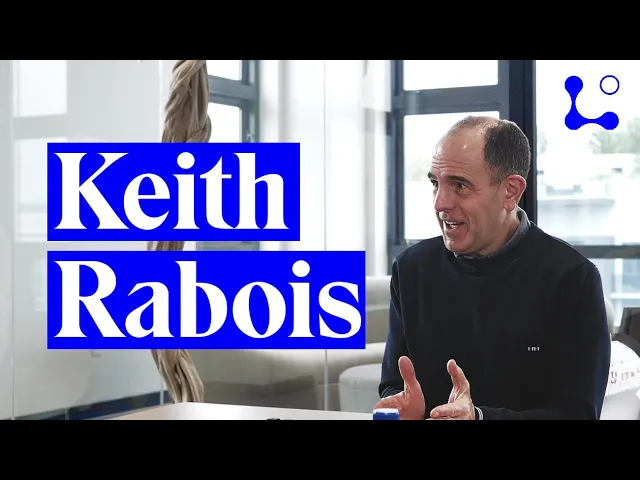
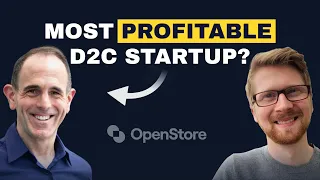
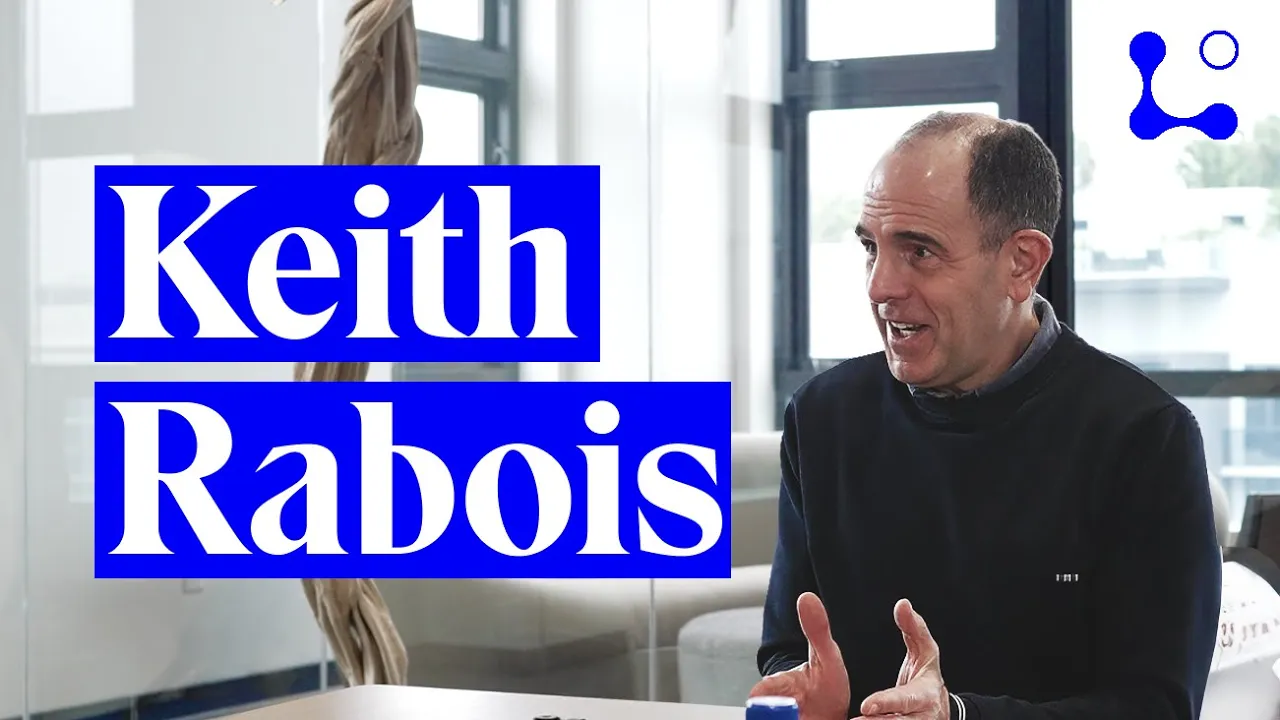
We don't know how to meet new Founders there's only so many Elon in the world and that's the limiting factor you either have a superpower or you don't you need to be in the top one to 15 basis points on some Dimension or the chance you're going to build the next Nvidia really is zero everybody is's a VC everybody's an angel investor everybody's a seed investor is chasing after the 5 10 15 people a year That have a non-zero probability of rearranging the planet to their will [Music] Wendy up here that is Keith raboy it's
his second time on the podcast so I'll keep this brief today he's a managing partner at Coastal Ventures and CEO of open store Keith is a bit of a legend in the startup World he's an early investor in names like Airbnb paler door Dash airm ramp in YouTube and has operated at Places like PayPal LinkedIn square and as the co-founder of open door this makes him a pretty opinionated Encyclopedia of knowledge on how to run a company with the rare experience of having been on both sides of the table I found myself referencing Keith quite
a bit but realized there wasn't an interview that tried to concentrate many of the most important of those practical lessons in one place so we sat down and gave it a Shot we spoke about the Hollywood model of startups picking co-founders identifying attra rting and assessing Talent raising capital building a board delegating metrics and knowing what to measure this is the Laos here podcast we choose to go to the we deliver right to the desktop we're going to reinvent the phone it the real real uh higher level question I think is the bottom neck to
innovation in startups being created in The first place so in your opinion which part of the startup value chain is the constraint from us 10 Xing the number of exceptional startups is it this is really straightforward really simple Capital yeah cap there's too much Capital chasing too few Founders the scarce resource is world class Founders people have the potential to be a world class uh founder the idea that you can take a company from scratch overcome all the inertia inertia and reinvent an Entire industry or change the planet is borderline ridiculous actually for most people
and so there's a scarcity of people who a are kind of crazy enough to actually embrace that challenge and then also have the vent diagram overlap with the skill set Talent superpowers to pull that off and create the iconic companies so it's a little bit like major league baseball there's only so many people in the world the entire planet that can throw a fastball over 90 mph and there's Only so many a fraction of them that are left hand handed and if you're not left-handed as a you know predominant um sort of athlete and you
can't throw a fastball over 90 M hour your chance of actually playing in the major leagues as a pitcher rounds to about zero on the entire planet of 4 billion people and we still have not figured out really how to train somebody who isn't throwing at least 90 88 89 mes hour how to get over 90 despite all the advances in science And cameras and technology and that's true of Founders we don't know how to meet new founders there's only so many eons in the world and that's the limiting factor everybody's a VC everybody's an
angel investor everybody's a seed investor is chasing after the 5 10 15 people a year that have a non-zero probability of rearranging the planet to the will so if you're a founder and looking for the things that move that needle from being Zero to nonzero you talk I don't think you can I really don't you either have a superpower or you don't you can have a superpower and waste it lots of waste talented God's gifts intelligence you know that that happens all the time happens in sports too there's athletes who have potential who get injured
there's athletes who have potential to use drugs and get distracted but if you don't have a a superpower your chance of creating this company is literally zero Now there are ways of finding out whether you might have this superpower or magnifying or amplifying the superpower but you really need some superpower you need to be in the top one to 15 basis points on some Dimension or the chance you're going to build the next Nvidia really is zero okay before we go pend the paper here you've done a pretty good job of summarizing your philosophy on
where to build uh this is a quote find large Highly fragmented industry with low NPS vertically integrated solution to simplify value product break this down how do you identify those pockets and why integrate vertically yeah so fundamentally this is my pin tweet so anybody wants to you know consult it just go to my X profile you'll find it right on top um the basic I wouldn't say this is an exclusive formulation I just think it's a common denominator of many many many very successful startups Vertical integration vertical integration is the key to building a trillion
dollar business typically with not there are some exceptions I'd say meta Google are not vertically integrated but most are more vertically integrated and the reason why is they're very diff it's very difficult to get vertically integrated to build it takes more Capital more time more talent but when you're when you build vertical integration nobody can compete with can Compete with you for usually 10 20 30 years let's talk about smartphones she the only profitable smartphone manufacturer in the world at any scale is Apple and it's because they're vertically integrated nobody can do anything about it
Amazon can't do anything about it meta can't do anything about it Google can't do anything about it because they don't really know how to do vertical integration vertical integration means they've integrated the Chips the software and the hardware to be completely uh sort of uh not even symmetrical actually create accumulating advantages by integrating the combination so the chips are designed for the use case the software is designed to take advantage of some of the dimensions of the hardware the hardware is designed around the limits and advantages of the software those are all reinforcing and it's
going to take 30 years before Someone creates a competitive device probably what happens is devices go away before someone figures out how to compete with apple successfully and build a profitable device in a lot of ways the the the first you know weeks the first month the first six months of a company's existence are the very very most important in determining its trajectory and in this context you talk a lot about the Hollywood model of startups like in in excruciating time And detail identifying the key solvable variables that will affect your company's trajectory then recruiting
co-founders that burn down the those core few key risks of a company like casting for a movie is this fundamentally at odds with the common sort of Silicon Valley advice of essentially talking to users throwing stuff at a wall and seeing what stes yeah 100 % so it's a bit of like the canonical question is mathematics Discovered or invented so I don't believe startups are discovered I believe they're invented you forge it through willpower so it's like a movie you have a vision of how the world could be better how an industry can be better
how a product to be better and then you execute across that vision and that requires producing the movie which is you know involves Capital casting and then creating trailers which is Basically your marketing and selling tickets which is really your Revenue and so just like a movie you start with a vision of how what could be and then you turn that into reality and then you hopefully turn that into both critically acclaimed movie and a blockbuster when starting a company how should you think about the Matra y Now versus micr timing so what I mean
by that is Amazon was started only a year after worldwide web was released into The public domain but Google is the 11th search engine how do you reconcile well I don't think y now means like are you first second third fourth or fifth why now is what enabling Technologies what enabling sea change has occurred in the world what's changed because like if you think about this concept of inertia inertia is your worst foe as a startup as a Founder the world just isn't going to suddenly embrace you and you need to create momentum literally in
a physics Sense so inertia into momentum if you can identify a crack in the world where things are in a sort of are volatile or things are in transition there's often an opportunity to ride a wave of momentum that you don't have to create from scratch creating your own momentum from scratch is either very painful or very expensive so if you can identify some someone else's wave to ride this a little bit what happened with Nvidia they were smart enough they Were really doing gaming chips smart enough to see somewhere in their data that these
AI consumption use cases were starting to become important and then double triple quadruple 10x out and everybody else the intels the amts completely missed it so dots were propelled along among a lot of other things but that wave of AI starting and noticing that wave versus everybody else ignoring it with blinders enabled Nvidia to be the company that we see today so The Y now can be the beginning of the AI wave the why now can be people are going to have you know a Computing device in their pocket think about the mobile wave but
to try to identify where where the worlds that are kind of in transition and then trying to capitalize on that you can create startups from scratch through willpower and create your own momentum but it's a hell of a lot easier if the world kind of is changing uh in a flux and you're taking advantage of Capitalizing on that yeah you talk a lot about integrating vertically obviously but how should you know whether or not to go multiproduct is that something that should be baked in from the outset or something that is responded to the market
sort of said so I think it's um opportunistic more often than intentional meaning you start with a product it resonates you have product Market fit you're doing really well successfully as a startup and you see There's other value propositions that your customers are demanding and their logical extensions of what you already do is the best way to build multiple product the ways that are less attractive but sometimes happen in SAS businesses is the economics of your business aren't very good they're mediocre so your payback time on sales and marketing against your Revenue can be acceptable
but not exciting and so that drives from a top down perspective The CEO say I want to have multiple products to kind of expand lifetime value that's a lot less exciting than when it's fairly organic and the customer is basically saying please help me solve this other problem you've been excellent at what you do I've got this problem over here and there's some synergies between what you've already created and what you're expanding into got it um there's a question of how a lot of this sounds in theory versus how It actually plays out in practice
you back a lot of really successful companies at the earliest stages of the most successful call it you know top 10 how many of them roughly scaled and executed against the same key risks and on the same idea that they identified at the outset I'd say 70% it also depends upon when you're going to DeMark and start measuring from from time of raising seed Capital it's probably 80 to 90% from time the founder started the Company it might be more 60 but by the time I intercepted many of these companies as the early stage or
First Institutional Investor angel investor it's probably 80 to 90% but if you dialed back before they actually pitched me it might be like as low as 60 uh the ones that have succeeded in evolving I think it's more like the term people talk about pivoting but they forget the derivation like in basketball you're only allowed to Pivot if you keep one Foot on the ground you can't move both feet so a pivot where you have a foundational principle and you're editing your direction based upon that foundational advantage that can be very attractive so for example
you can talk about the orgins of PayPal PayPal was a we're going to be money U from pal pilot to Palm Pilot company and the foundation of that though is we needed a unique identifier per person per user and that was an email ellias so the email Ellas Was the critical ingredient and then as the pal pilot world wasn't really exploding as much as forecast and the use cases back in you know 199 9 and '98 around beaming money to each other weren't so obvious people did recognize that the email Ellas was a more more
Universal more approachable and prot uh more broad uh product extension and that was the foundation of PayPal was the email Alias and so it wasn't like completely Abandoning the heritage of the company right okay let's talk about starting a team um you said the biggest lesson you've learned from the no Costa is that the team you build as the company I mean you know like any good advice or wisdom that sort of is something that you know is true but when it's expressed it becomes that much more you know impactful that said team building and
ensuring that the foundation of a team is as strong as possible you've said It's like working with concrete when it's liquid you can shape it and once it's solidifies you have to take a jackhammer to it to fix it which is very noisy and expensive in the case of co-founders that fix can be fatal what are the least obvious but most important traits to have in co-founders making sure that your founding DNA is correct from the start I I think there's two principles in in co- in identifying co-founders and co-founder matchmaking One is simply a
compliment which is everybody who is a successful founder as we discussed has super power has a superpower or more but typically they also have things that they're either weak at or don't like to do so having a compliment and the best possible compliment may vary by your business objectives the market you're in sometimes it's a technical compliment sometimes it's a sales compliment sometimes it's a marketing compliment a Product compliment to identify your strengths and what are the gaps in your DNA then secondly I think it's important to have alignment around first principles so you don't
want to be debating are we in office versus remote that's not constructive um you cannot have that debate every month but the application of principles with a Founder who's insightful that is very helpful so someone who can help clarify your thinking makes your thinking better you Can actually usually tell even in a coffee whether someone could help you clarify your own thinking when I meet somebody new that I'm potentially recruiting some role in that coffee conversation they usually ask very sharp questions that make me pause and think about the problem set and the challenge I've
Been Working On In a Different Light and if they can't do that in the first hour usually they can't do it After the first six months P taught you that as a startup you need to recruit undiscovered talent because if Talent is easily legible they usually get hired Away by someone more well capitalized I think it's Eric lman and ramp who calls this the Money Ball strategy yep what are specific reasons someone can be mispriced like what shapes or archetypes of individual should you be keeping an eye out for yeah so you know fundamentally when
you start a startup You're like one to two people sitting in a proverbial garage and you have to compete with Talent with open AI or Google or meta or apple or Nvidia and so you have to have some Advantage some comparative advantage the mispriced talent is almost surely the most most appropriate Advantage you can sort of create and Forge it's difficult but like at a conceptual level you're looking for talent that these large companies just don't know how to process accurately so Lack of data points I like the legible concept if someone's very young and
early in their career they may not have enough data points to read so you find a 19-year-old you know does Google know how to assess a 19-year-old are there enough data points maybe not that's great second thing is uh most large companies not all but most become sort of homogeneous in their hiring process and so people who have disruptive characteristics break the mold those People can be very very very high leverage so if you identify people who have like a screw Lo somewhere uh a standard homogeneous hiring process where everybody has an effective veto will
tend to eliminate those people too so you can identify those types of people you can sometimes find G geo geographic Talent that's become more difficult the last 10 years than 20 or 30 years ago where there's places that large companies aren't looking I think That's a lot less common and available now but 20 years ago you probably could create Geographic Arbitrage but you should be able to isolate at a minimum of a Founder is why do I have some Alpha here that other people are going to miss it could be also historical experience like for
example if you've known someone for 15 years perhaps you have data points that aren't going to show up on a LinkedIn profile that aren't going to be processed in a standard hiring process So that can be a competitive Advantage too it's hard to scale that almost nobody has relationships you know over X period of time with enough people to scale a company but selectively that could be very strategic um okay let's talk about how to hire and sort of rock down the list here starting with ATT track in town I think like sort of an
underrated aspect of this entire process is that Silicon Valley itself Has become a little more consensus right like it's become sort of a a a common cre P like a Harvard graad was before it used to be uh you know really the only the Misfits yeah when I started my career when I started my career or at least when I graduated from Stanford Only The Misfits who couldn't get real jobs started companies like that was literally true when I left Stanford and then you know after The Social Network I think is how many people DeMark
the Change it became a mainstream career occupation that was aspir ational for quote unquote normal people another way to restate this is I last June I interviewed Max lechin founder PayPal firm uh on stage and this video is available publicly and he described me as the most normal person that worked at PayPal so to show you we had 254 people in Mountain View and I was the most normal one um that was kind of the type of the set of characters that went into Startups I don't think I'd be the most normal person at most
startups today okay so fast forward to today right with more options noise more average people um you need to get pretty good at attracting great talent so what are practical ways to cut through the noise and not just attract people but attract the right kinds of people too so I think there's two principles the canonical advice is you have to have a mission that's compelling and I think there are Some companies that can create such a differentiated Mission I think Ander is a really good example of this dialing this back of you know we're going
to make America great we're going to make protect democracy we're going to use technology to insulate to democracies from authoritarian and totalitarian regimes and terrorists um so that was contrarian and and differentiated in 201617 less so now but that that was a magnet an attraction for a certain type Of people paler had that that you know a decade earlier or maybe even 15 years earlier and so I think that those kind of missions can be compelling and create the right um sort of signal to noise ratio of candidate candidate to candidate if you don't have
that much of a differentiation then I think you need to use other techniques and those are more challenging actually in a world where Everybody's getting funded in a hot Market much more difficult challenge for Founders than when the market collapses when the startup Market is difficult it's easier to cut through the noise as a company as a new company so I think then you have to have a compelling answer to an old Peter teal question which is how are you going to recruit your 20th employee you can recruit your first 10 through personal connections through
will but after that you need a Really strong answer why is this person who has incredible Talent going to join you versus all the other options now again back to the point about recruiting people that have some Alpha if the people are going to get excluded from a lot of other options you can close so that's great you have to create momentum after the first 10 or 20 anyway momentum does attract Talent it doesn't always attract the right talent and you have to filter I think cultural values can work So if you have really just
like you have a crisp Vision that is differentiated if you have non non mundane non-trivial non-bal cultural values that can be a signal to the right kind of people so if you say we're going to do X and that's very different than y that can bring in the right people too so having very strong cultural principles that are differentiated from the rest of the planet does create a nice signal and noise ratio um so from moving to from Attracting to assessing looking back on your time at PayPal you realize you were actually pretty bad at
assessing perspective hyers but you were much better at getting to read on friends and existing employees um turns out you weren't bad at assessing Talent you just were bad at assessing strangers right yes so when you don't have years to get to know people which is in most cases if you're hiring what are some practical ways to get data points on someone Quickly and specifically what should you be it's really difficult I you may have to invest the time and energy to get data points it's like as a VC the same problem account I have
the same problem I confront every single day so I meet a Founder for the first time and then 20 to 40 minutes I to decide whether we're going to seriously consider investing and if I have only those 20 to 40 minutes that's a pretty limited data Set to draw a line about the potential slope of this person and this team over the next decade so you think about it from math again geometry you can draw infinite number of lines through one dat a point if I have any more experience with this person or this team
drawing those lines becomes much more talkable and much more accurate if I have a lot of data points with this person I should make that call every time so for example Let's be very concrete um when my friend Max Le actually Max rhs and um his co-founders were raising money for fair in 2015 many people Mis assessed both the opportunity and the team Max had worked for me for 2 and a half years um I played soccer with him for probably four or five and so I just need to make that call perfectly I have
so many more data points and so much more context that I should never be a VC if I can't make That call every time now when I have to make a call with competing with like the Alfred Lind and Sequoia where we have the same data points that's going to be challenging to have more Alpha and be more right than him so for example he did make the wrong call in the seed he didn't invest because he listened to the general wisdom about the team in the market later he realized he was wrong and SC
is on the cap table and we're very excited About having them as partners and building the company but it's really difficult when you only have limited data set and the same thing you know when I was considering leading the seed round for doorx there was 17 different startups trying to do some version of food delivery and people always ask me this question well how' you know the back door house I was like well Tony was intern at Square I knew Tony and I was like well if we're going to bet on Anybody if anybody can
solve this problem which is a really hard math problem actually um to get deliveries per hour to the threshold where you can be profitable is really a math problem a routing problem on drivers and of Dashers and it's like Tony's brilliant he's math major undergrad he should be able to solve this or it's not solvable and so having an unfair advantage of having worked with Tony and knowing his background um led me to make that call Much more accurately than other people got it um going on to you mention T this is a nice a
nice segue a chronically overlooked aspect of this process of hiring often is doing proper references F uh Tony notoriously did 20 reference checks for any one candidate what do most people get wrong about references and how do you do them well so I think so there's a big debate here so Tony mentioned on stage when I was interviewing him last year that he does 20 references for any critical High V recommends V recommends about 10 I think references are challenging though because most people well let's talk about founder references and and references for hir I
think references for hiring or no-brainer at a minimum you should perform 3 to 10 period references for founder are tricky because most people are calling don't know how to assess potential founder They're thinking through the lens of an and Founders are different and so for example applying the fair metaphor one of the reasons why my friend Alfred and several other investors pass was they did references on Max and they weren't particularly good Max was not the best employee trust me um but if You' asked the question does he have the potential to be an outstanding
worldclass founder the answer is obviously yes but if you ask the wrong question like is this Person great at their job the answer would have been no so you you need to know what you're asking so for example one savy investor I know did actually called Jack dorsy and asked about Max and Max and Jack was accurate and said max actually can be a great founder but if you just asked General people who worked at Square you know his strengths and weaknesses you'd got a lot of more mediocre answers about his like you know Talent
as a as an employee because he Didn't like for example listen to Direction very well okay just because you found someone talented in this price and you've assessed them properly doesn't mean you don't they don't have other options and doesn't mean they're fully bought in um how do you close a perspective higher effectively I think it's Mike at tra who talks about anti- selling form well Mike uses the anti-cell process at tra which is basically to really amplify their Cultural values which includes really Olympian work ethic um in office culture you know Etc and it's
not really to close the candidate it's to more filter candidate um sort of the discussion we had previously make sure that they're hiring the right people to really close strongly highlighting the differences from the other companies to make sure the individual is opting in to the right I mean hiring is a matchmaking process and so you want to hire the right people For your company and so that's the an part I think for closing I think the best way to close is typically I start with asking the candidate what they're optimizing for like what are
they optimiz what are they trying to get out of their opportunity and so because of this matchmaking depending on what their goals are it may or may not be the right fate but at a minimum I can address their goals and explain and articulate how this particular company this Particular role helps Advance their own goals second I think that the other thing you want to do is talk about the challenges which are here's the muscles you're going to buildt here's the excitement you personally and the company I think that's what motivates the best people are
Alles and building muscles intellectual muscles challenges motivate people and challenges I used to say when I was young challenges Propel me um and so I think that's true of Talented ambitious people and so you really want to highlight the challenges and I think that can be very effective and then finally on closing a little technique that Jack dorsy taught me at Square which is he would always ask candidates that he wanted to hire last kind of question in an interview context would be is there anything that would stop you from accepting an offer and then
because he would attempt to extract what the blocker's concerns were Like what are you concerned about he could then directly address them I think sometimes there's concerns and they're sort of surpressed and so sometimes candidates reject offers and you don't even really understand why and then later you learn and you're like oh that's a stupid reason that was dumb I could have answered that in a split second so I think Jack being transparent and clear and provoking actually is very effective got it next point in the step Here is is promoting Brian and Airbnb doesn't
believe in general managers whoever is the best of the specific thing manages that's an old PayPal technique that Peter Peter really adop uh probably created yeah in his words a manager who doesn't know how to do a job uh is is they're managing it's like a Cavalry General who can't ride a horse that often means promoting internally your framework for understanding when to promote comes down to whether an Employees personal growth rate is outpacing the growth rate of the company exactly what are good signs someone scaling that their growth is outpacing out of the company
or even Vice ver well the the easiest way is kind of a a Brian technique Brian chusy technique which is how far ahead of the curve are they thinking so a person an executive a leader who's just delivering goals just in time pretty good and especially for a High growth company that that alone can be pretty impressive however what you really want is someone who can think 3 to 6 months ahead the curve and is seeing because different solutions opport uh different solutions to challenges have different lead times and so if you can think three
or six months ahead you can invest ahead of the lead time that's required to address problems if you can just think in if you can just think in time a lot of potential Opportunities that would have been effective are ruled out because the lead time is too long so that's why you want roughly 3 to 6 months ahead of the curve they like where are the blind spots and how far ahead is this person thinking so they can oh the really most amazing exacts you know sort of when a problem arises and you think there's
going to be a significant Pro a significant Challenge and you're talking to and they're like nope already thought of That I've got this this and this ready to go and you're like okay great and it happens like for example I'll give you a very specific illustration but it is metaphorically applicable to almost every role so in techn in the technical World sometimes you know your traffic can grow 10 100x imagine the old example would be like some high-profile TV show would feature your website think opra back in the day and your traffic you know would
spike by 10 or 100 AC at hour So a really strong architect back in the day would have thought this through 50 different ways and they would have had actually they would have had to have hard extra Hardware available they would have thought about all the moving pieces they have CDN they can layer on blah blah blah blah so when you go on Oprah or NBC News whatever back in the when they had traffic would feature you nothing would ever break but unless you thought about that months in advance Actually with Hardware sometimes a year
in advance there was no way your servers could keep up with that Spike and traffic and then you lose all the opportunity and so this is true in marketing it's true in every part it's just a little less easy to explain but you always want to be thinking that far ahead if this were to happen what would I do and then when your executive looks at you and says this is is happening you're like okay no problem we're just Going here here here here here and then if this doesn't work then we'll go here here
here and here that's a great leader yeah it seems that at some point in a company's life cycle there's going to be some regression toward the mean and the quality of hires that you bring on you can help combat this by making sure your first 10 employees are excellent that your company and people around you are extremely you know culturally aligned which we'll talk about in a bit but a Great way of doing this is by interviewing candidates yourself for a really long time how long should you continue interiew for a CEO when does that
tradeoff stop making sense well I'm not sure it ever really stops making sense um I believe Tony at D said he kept up for about 2,000 or sale employees that's pretty high uh I think that's where for the most part either Jack or I interviewed everybody for the first 500 and I don't think you need a Homogeneous answer by the way I think there can be subcomponents of your team where the leader of that team has proven that the talent on or her team is exceptional extraordinary and they know how to scale their team and
you can maybe relax a bit in just that sector and then still insist about interviewing candidates and every other role doesn't make all the other Executives thrilled when you do this but it does work it allows you to leverage your time and say I'm going to interview 80% of new applicants and but this engineering team everything about them is world class the leader has hired you know hundreds and all the caliber keeps going up and blah blah blah and say I'm not going to try to second guess this person because they've proven the hiring muscle
and you know what you have to explain to the other Executives is there's a difference between how well you do your job sometimes like how effective are you at Executing and your muscle at hiring and they're different like skills they're related but they're different and so sometimes you have a first-time leader who's been promoted who's extraordinary that's why he or she's been promoted however they haven't yet hired 100 people in their career so they may or may not be perfect at hiring yet and you definitely want to help calibrate longer term structurally how do you
think about creating a monopoly on Talent so for Example SpaceX for a while and still to an extent a monopoly on really exceptional aerospace engineers so to the extent you aren't building the only company in the sector what else can you do here well I think that is true like building building a monopoly in a sector is a great idea SpaceX open AI I think to some extent when it started other than Deep Mind at you know at Google really was a monopoly for people who had world class AI ability on the research Side and
that was actually the fundamental premise of our investment so as many people know KB was the first and only Institutional Investor and opening Eyes First fin external financing R and the basic thesis other than um my partners and I knowing Sam really well and having confidence and conviction about his abilities was this was the only critical density of world class AI Talent X Google and so would you take that bet sure would take that bet all Day long if if you're the only alternative to Google succeeding in AI in the western world that seems like
a pretty reasonable investment hypothesis that was literally the investment hypo hypothesis so if you don't have the ability to create and Forge a monopoly in a unique industry unique industry taking advantage of unique skill sets it is much more difficult uh to achieve a monopoly on talent and I I think you can break through sometimes which is like Once a year or so there's startup that just goes like vertical and because of that they have an unfair advantage in recruiting Talent I'd say ramp has been able to do that where ramp has been extraordinary literally
from day one to basically day five five we going do our fifth somewhere about fifth year board meeting um in a few hours and I think they've been able to create a monopoly on certain type of engineering Talent and our intern CL it's sustained our Intern class for the last two years is by far the best in the planet and so that should Propel us for another few years so but you need that vertical you know sort of execution road map and the metrics that support that to create a different kind of Monopoly okay let's
talk about raising Capital so we've started a company we built a small team now let's talk about fundraising you have a great analogy that a startup is kind of like an airplane taking off People often fundrais the idea of extending Runway when they should actually paying attention to hitting milestones in essence whether their PL is actually lifting off raising too much money can even be dangerous because it makes you spend against that amount but that in mind how much money is the right amount to raise and how can you work yourself backward into that number
in your own specific I think the most important thing is to Define what lift Means what is lift for us and lift for us is both an internal goal but also something that external people will accept SL be impressed by sort of validate externally and so depending on what kind of startup you are what stage you're at identifying the lift can be different uh so you want to be very specific if we do X Y and Z we will have achieved lift so in a deep Tech startup that might be different it might be we
can put a rocket you know up here or Something we can do this this this and you know a more classic business oriented Financial startup it might be some some growth rate at some payback or some what whatever the kind is then working backwards from that lift how much money will it take us to achieve that inflection think of an inflection what are the two or three inflection moments for this company and then we're going to shoot for proving this inflection in this financing it's also a Good way to raise Capital by the way when
you talk sit down in front of investors with your keynote debt you want to say like here's where we are and here's the next inflection for my company and this is what I need Capital to achieve this inflection and and here's why and then once you achieve that inflection by definition the valuation will go up by 3 4 5 6 act so that that it's a pretty consistent coherent sort of worldview of Financing as far as screening investors themselves goes your part of the Coosa says 70% of investors are actually valued attractive I think it's
hilarious I think it's probably true um besides the table states which are unfortunately rare someone who will at least Do no harm as a good brand will you know to an extent you less dtive capital in like a quick and minimally distracting fundraise process and to otherwise stay completely out of the way um what should You be looking for in an investor well I think's let's take let's let's defer the harder question of what you should be looking for and let's go to the simple technique I think the biggest mistake Founders make is they don't
do reference checks on investors and it makes no sense to me it is much easier for me to fire a Founder than it is for a Founder to fire me and so if anything the level of scrutiny intelligence I do should be greater that the founder does on the Investor the other way around but almost no founder very few take that seriously and that's how you figure out the matchmaking exercise because I I am actually a better partner for some Founders than other Founders even within our portfolio there are founders in the KV portfolio that
are better fits with me and there are some that would be better fit with my partner David widen or venod or or or sere and so sometimes we actually discuss this internally About when a company comes in to present who's the best pairing and it may be different actually than the person who sort of sourced the original opportunity and in sometimes even years later we will switch and swap um so I think it's very critical like so there are things I am particularly good at as an investor and giving as a conary and a mentor
sometimes and there's things that David is extraordinary at for example and there's things that vode is much better Than meat and so depending on what the company needs what the founder needs every founder and every company is different every founder has different superpowers some you know have strong financial Acumen some have none some have you know great technical prowess some have very limited and so you're pairing there and then the stage of the company sometimes you need different things in the beginning you may need unfair advantages and hiring and Assessment culture later you may need
IPO preparation stuff and so that also changes but I I I just think Founders are often superficial and negligent in doing reference checks sometimes it's really easy like you're comparing two offers the best case is you have multiple offers great the best way to do a reference check is let's say you have two offers you know from these two VCS or these two partners go find five Founders that worked with both if it's Someone who's been in the business good news is many people on Venture you know I've been doing this I've been doing this
for starting my 13th year some people in Venture sometimes do it for 20 30 40 years so it's often easy to find three or four or five Founders that have worked for the same person so again let's talk about it I'll give you a specific example let's say you were you were you know had this great opportunity to take a term sheet from Alfred lynet Sequ or me we probably overlock with five or six different Founders that we work with closely and you should call them all up and ask them what are the differences and
you're going to get actually I'm sure all these people like Alfred and will get positive reviews and most of them probably like me but there are differences in what I can do to help a startup and what he can do even though Our advice is actually quite consonant like almost all the time and that's why We like working together but like a Founder could choose very wisely and that's where you're get you're grading you know very much at the margin most of the time you're choosing between someone who's much worse than Alfred and me um
but Founders like should take this more seriously okay let's talk about boards speaking of people that are really hard to fire youve said one of the best ways to fill the board directors is to find people you wish you Could hire but are in positions in their lives where it's not really feasible so similar question when should you build a board and what specific traits should you look for in board members so this was Jack dorsey's philosophy at Square we had a very high-profile very talented ambitious board literally from the very beginning so we recruited
people like Larry Summers to our board we had rolloff who lead seoa on our board we had Mary merer on our board we had a Phenomenal board and these were people that could all add value and basically the point of a board is to identify blind spots when a CEO makes a mistake it's a very expensive sometimes fatal mistake and so what board members can do because of their peripheral vision or depth of experience is highlight things and clarify your thinking so you don't don't create an unforced error and that that is extraordinary valuable like
sometimes an unforced error sets you Back a year sometimes permanently and so having people that can ensure probe pressure test you're thinking is extraordinary people say that in sometimes you hear people say and articulate views that you can do this without a board I just don't really believe it 99.9% of the time the reason why is typically if you try to do it through a non-board structure the the advisor person doesn't have enough Context to be useful there really aren't that many people on the planet that are 50,000 foot level should be able to give
you feedback if you're if you're a world class founder that person really needs to have 10 20,000 per uh foot visibility to be useful and I think other than a board construct we haven't created too many scalable ways to provide enough and sufficient context where you can provide value there are people like Marrion generally doesn't take board seats venod Doesn't take board seats except it's square and so I think you can create structures like I know for example the way V does this is once a month or once a quarter he'll do an update a
review sort of with a founder and expect like a presentation that pretty detailed and that does allow his brain to train on the information the context so that he can be uh you know value creating in in that hour hour and a half session but it's really challenging and the's also Been doing this 40 years and much more clever and smart than virtually everybody else and that's why maybe Mark andreon is also much more clever and sharp and has been doing this for like 35 years also maybe able to pull this off most other advisers
are not Veno kosa or Mark andrees okay let's get into how to operate um for context here for a minute you're generally of the belief that most nbes wisdom is bad that hiring good people and empowering them to do Their job sounds nice on the surface um and it even could could be but it could also destroy your company um this is because people default to hiring since they want to manage people new teams get created BL means nothing gets done people get complacent so you can't tell good employees from bad ones and the cyle
perpetuates itself So to avoid all this you need to be completely accountable and Hands-On at all times period great all said nothing to Add let's start with identifying problems in your organization you have this uh this this metaphor tree oping that running a startup is a bit like the ER some things might look like problems that are actually self- recovering will go away uh others are actually problems that need treatment how do you create a system for identifying the most important things and how do you discern a cold from the flow yeah so any healthy
startup meaning vibrant high potential Startup is a bit chaotic actually um process is not your friend and it should be a mess the process of innovation is messy it's not an original quote but like basic concept and so what you're really doing is trying to identify which mess which piece of the mess to fix in what order and why and that's why I use the hospital nurse triaging concept because you everybody comes into n ER has some symptoms there's a reason why they're There most people don't like to go to the AR so there's a
good filtering mechanism and most mes start up kind of have that like generally by time it rises something Rises to your attention as CEO or founder or co-founder there's some symptoms um and you'd be nice to be proactive and get you know attract get devote attention before there symptoms but often you're somewhat reactive and the key is isolating where there's a high leverage like high L Asymmetric upside or downside and so this is the flu issue which is you know you have a flu it's annoying but if you wait 5 days and drink water and
stuff and all kind of PS there are times there things that look superficially like a flu or the cold if you wait the patient dies and that's why there's an art and a science to emergency room triogen there's a checklist that actually they apply to make sure that the patient eyes unfortunately there's not a great Checklist for startups to the art part probably predominates over the science and there's some benefits of wisdom but what you're really doing is looking at this problem and saying if I don't do anything here is are things going to get
10 worse because if not you want to substitute that attention energy your brain powered your scarce energy to finding things that have 10x upset then you ask the same question which is if I intervene here if I spend time if I Double click here if I do some work or editing by myself can I create can I Forge a 10x Advantage can I reduce our marginal economic our marginal cost by 50% can I accelerate our growth by 50% these things compound so you basically want to constantly be channeling your energy to things that have asymmetries
classic power law kind of problem so it's always like filter filter filter if I you know 10% just doesn't matter unless I can compound that 10% times 10 years and so I've got to like isolate what am I paying attention to and why what's the potential of the issue asym asymmetrically and if it's not just let the chaos be take a bit and it'll resolve itself you have another great framework that the job of a CEO looks more like that of an editor than a writer um that a CEO you review all of the work
and when you do it's about simplifying initiatives and clarifying goals with that writing then allocating Resources and delegating against them and this is all in the interest of ensuring consistent voice being a broken record in your words and your actions that hey these are the one or the two are the three things that we're focused on this is how we're accomplishing them and this is who's working on them and repeating in being crystal clear about that Vision where you're going and what your goals are as a company in what other ways can you ensure consistent
Voice well I I I do think consistent voice matters especially in anything that's touching the customer and I think generally speaking as your organization scales you have scams in your organization different leaders from different backgrounds and so it starts showing up the products you shap start showing inconsistencies and so the editorial metaphor of like you know this is bar from Jack dorsy like when you read The Economist Every article you read in that issue has a very consistent voice and it would it would actually confuse you if you write an article that was out of
tone with the rest of the issue and so having an editorial standard like The Economist is what you want to do as a CEO and so often because you do have leaders that come from different backgrounds with different depths of experience you're editing to harmonize the tone and that's very valuable so that customers feel That the website's consistent with theet marketing which consistent with the product which is consistent with the value proposition some salesperson told them and it all feels like one unified voice another interesting point you make about operating is that you if you
want people to make the same decisions as you you need to give them the same information um one way you talk about doing this is literally having uh clear open uh conference rooms an open floor Plan um and open sourcing notes for meetings even what are other practical ways that you can create I think data data transparency is critical whether it's dashboards everywhere you can be done by email but quantitative context access uh board decks so we always every company I've been involved in we go Slide by slide through every board presentation and don't edit
it and like try to replay the conversation uh where we can and so I think you want to give This is kind of a Netflix principle like lack of context is like usually the problem and so CEO has constant context by definition and usually what frust to seeo when they get annoyed or miffed at an executive employee is there's a delta in context which is why the employee or Deputy has gone astray but it's ultimately CEO's responsibility to disseminate as much information so that everybody has the same context which means more often than Not people
will come to the right decision sort of naturally you talk a lot about barrels uh effectively these very rare Force multiplying individuals in an organization you have the ability to take a concept from inception to fulfillment rallying people around the idea and going through those tough values when things aren't going so well uh more practically you talk about the need to constantly expand the scope of responsibilities for people and give Them increasing degrees of freedom in order to find their true capacity and identify those those unique people what specific common trait do they share and
what makes them so rare in the first place well let's start with the Conant of barels I'm me and back into this many cosos hire a lot of people and then they look around they feel like they're getting less done or they're certainly not getting more done you know in a lot in a greater than linear Fashion and they get frustrated it's like I went took out from 50 to 100 it we get no more done or less done or twox done but now 3x the reason why I think behind this is there is a
coordination tax every time you add employees there's more time coordinating and communicating against the increased productivity but the fundamental root cause of the problem where incremental hiring does not improve output is that very few people within Your organization are going to be barrels and what a barrel is as you described is someone who can take a concept and make turn it into reality and those people are incredibly scarce a rough ratio and a healthy company might be might have two or three barrels per 100 200 employees and that defines the number of simultaneously challenging project
projects the organization as a whole can Embrace and the number of projects and initiatives that CEO can Prudently Greenlight let's talk about PayPal back in the day everybody talks about the critical density of talent we had at PayPal that was fairly unique of the 254 people in Mountain View at IPO between 10 and 17 people might have been barrels that's an incredibly High ratio but it's still 10 to 17 but that's maybe order magnitude at least half order magnitude better than a very healthy very successful St so you're Always looking for barrels minting barrels is
incredible because you just added an the ability to say yes to some new project and with a shot of some asymmetry so three asymmetric BS versus one if they're in the right hands it really does change the option value uh and expected value perhaps of the company now how do you find a barrel the problem is barrels you can't really identify from a LinkedIn profile they All people who are product managers all look somewhat similar Engineers look somewhat similar you really need context and they need to probably be context in your culture what would be
a person kind of person to be successful barel at Apple is almost surely different than one who would Thrive at Google for example and those are both great companies both iconic companies so you need to watch people within your organization typically and This is where the expand the scope and challenge you know sort of advice from David sxs actually originally at PayPal uh kicks in which is the way you tell is you start with someone and you give them a project and you know might have a defined scope it might be something that's relatively challenging
but not extraordinary and then they Thrive and they succeed they give them something more complicated more challenging and push the and just rinse And repeat the way and then you watch and you can do that one by one um another uh sort of hack I sort of developed in if you have one office is you just watch who goes to whose desk and when you see a flock of people going to the same person's desk especially if they don't report on that person that's a sign this person's both got influence and people are flocking to
this person's desk because they think they can help and if other people in the organization Think this person can help solve real problems they almost surely can let's talk about supervising where you argue that degrees of micromanagement should vary depending on the task relevant maturity of an employee I think any grow talk yes this is high out management 1982 nothing original I'm just restating it how does how does that work do that well basically different people have different levels of tax relevant maturity as the CEO you're Always responsible for the results of the organization you
are always accountable always responsible so what you want to do is sample or and it just like a manufacturing process which is why the book is entitled high upine if you read the first chapter it's all about running a factory that startups like a factory so you're sampling and you're basically sampling quality at different um sort of Paces just like you would in manufacturing process so you Know if you're creating chips you have to have a 99.99999 whatever it is sort of uh success rate you can't have defax or your your products like the economics
just don't work and that's how semiconductor chip sampling goes and it's like it's like people people have different propensities to make mistakes or succeed and you're going to intervene at different uh sort of rates based upon the evidence about how successful they Like to be so some people who've never done XY or Z before you may need to sample every day probably not every hour but every day some people may have tackled this exact problem successfully three times before you might sample that every quarter and so having a different you know propensity to sample and
then different level of editorial feedback based upon the person's curriculum prior curriculum um is the general simplification of his advice in High output management but I think everybody should read the original let's talk about delegating quickly you use a framework of a 2 by two Matrix for whether or not to delegate based on on the consequences of the decision on the x- axxis and your level of conviction on the Y so if you're high conviction for a high consequence decision you decide for yourself if you low conviction for a low consequence decision delegate the decision
but what about those other two Scenarios if an important decision you have low conviction in or something you believe in strongly but just doesn't matter that much what do you do yeah so the quadrant the easy quadrant is high conviction High consequence that's what you get paid for as the CEO FAL low conviction low low importance you don't want to delegate first of all just to see like learn you can learn about your colleagues like how good are they um so it's an opportunity for them to stretch And build muscle but also youd observe how
strong how strong are their muscles so those are great the hard ones and the hardest one is probably high consequence low conviction that's the one that matters the most and then there's just set of techniques about what you do and I I address this in some length in my how to operate lecture in YC I gave in 2014 I think so short version is some of those basically it's just like what can I do to get smarter Like what information can I get specifically that improve the probabilities of making the right call usually people are
very uh let's say lack aasal in addressing this problem they say oh for example let's wait or let's study this or but they don't specifically identify what information if I had would alter the probabilities of making the call this way to First that way because Then you could a dispatch people to get that information or find a proxy for the information and you can define a timeline of like well we'll know this information by tomorrow we'll know it next week or next month so you're not procrastinating a difficult decision the other framework is something I
borrowed from the military which is you basically want to make those calls at about a 70% conviction as a startup you don't want to wait to 9 99% it's basically 70% probably the speed need 70% with high can 70% you want to violently execute the decision there I I also believe in this concept from bar to mouth the path dependency which is making the decision and deciding that you're going to be successful is more important than the option value of waiting most of the time and so I think there are s of techniques of addressing
that but that is by far the hardest quadrant um two more for you one is You've done a 180 on your old beliefs so now it's that as a Founder you should be measuring inputs not outputs in your organization what does that practically mean why do you change mind quality of thinking so inputs are how thoughtful how compelling is the analysis in tal problem outputs are the results so I've shifted from a results orientation to an input orientation Jeff basos explains this is the best so he Basically articulates the reason why outputs are dangerous which
is first if you want to do something incredibly difficult incredibly challenging if you tell people in your organization signal to people that they're going to get measured on the output a lot of your best people aren't going to raise their hand because they know it's difficult they know the probability of success is 10% and so if an organization thinks that the only way You get promoted the only way you're compensated you know successfully the only way people respect you is by the results no one's going to sign up for your 10% degree of difficult uh
difficulty challenge but that can be the asymmetric in know advantage that propels the company for the next decade and you want your best people raising their hand not your worst people so that alone is compelling to me just watching Organizations is we have a real significant challenge I want the three best people in the organization to tackle it and if I if they know they're smart they're Savvy that's why they're the three best people they know that the probability of success is only 10 15 20% and so I want to orient the incentives differently so
quality thing this is also very true in investing I think at KV we're very disciplined about quality of thinking and inputs not just looking At the returns so we all send memos or emails about investment and we gauge our colleagues by the quality of thinking in the memo the analysis uh and the level of insight into the three most important questions for example the assessment of the founder that's more important as we assess our colleagues than a decade later the output over some time frame a decade two decades in Venture maybe two four years of
a startup those things Harmonize quality of thinking inputs do track and harmonize with outputs um a Larry summis of this is over the long time frame merage shows itself um you know and I think that's true but in Long lead Time Investments as a VC or a startup there's a disconnect and so being able to lean on the inputs is much more successful there's another great book by the way I highly recommend the score takes care of itself by Bill W Who's a famous football coach and he basically prescribes his methodology that if you want
to win football games you want to win the Super Bowl which was his goal and he was very successful at it actually building a very losing starting with a very losing team and very incompetent organization into a repeat Super Bowl uh Champion starting with the inputs literally the inputs of here's a manual on how to properly answer the phone call of your Receptionist here's how you run your route as a receiver and that if you do every single thing every single day correctly eventually the score I.E the game resolved will take care of itself because
you've done every possible thing to create an advantage for yourself and that's going to turn into wins and it did on the topic of measurement um let's talk about metrics as we close out here it's clear that simply spending money isn't really a good solution to growth To be strategic you need to look at your business like an equation see its levers their trade-offs and understand the impact of moving a lever on other parts of the equation you're notoriously obsessive on CA to payback ratios why does that matter and what are other important company metrics
that you think are chronically associ other than the founder assessment which is the primary re I invest or don't invest startup if the business is operational Meaning it's running as a product in the market it's trying to scale the the most important metric to me by far Poss probably by an order magnitude versus any other metrics is just payback time to payback the reason why first of all it's standardized across wall a wide swap of stores how do you compare like a tra to a ramp very different markets very you know very different stages but
you can use payback um generally speaking long Payback means your product Value proposition either is limited or your ability to articulate and communicate it is poor and when you have a clear value proposition that is compelling to a Target set of customers the product sells you know just moves off the shelf so you're overcoming inertia and the more expensive overcoming inertia is the more diluted the value proposition is or the articulation and so payback kind of gives you a feel for that of like okay Great I see this ratio it shows me how much friction
there is in the system which is actually another physics concept one of the reasons why I think physics Majors do really well as Founders there you can borrow so much from physics anyway so I use that it normalized really well secondly it tends to mean that the startup also is relatively Capital efficient obviously if your payback time is what we call tight like say sub six months every the Fact you're growing but you're getting Revenue in healthy Revenue because you measure payback by contribution dollars you're getting healthy dollars back even while you're grow so your
need to depend upon external finances significantly less than let's say if your payback time was a a year you might need 2x 3x 4X 5x more Capital just to grow at the same rate so I think that can be like junk food growth sometimes so roughly speaking below 6 months I'll like thrill 6 to n months I think can be very attractive over 12 months I'm almost never in process I've got one more question for same to ask at the end of every interview I think last time I asked you this you said sleep in
the upside of stress what should more people be thinking about those are good answers um I don't you know I don't know if the world's changed that much in two years um since we last did this but um I think sleep every day that goes by every month That goes by every year that goes by people are going to realize that sleep is the most important thing you can do to improve your life your happiness your professional success and certainly your health um Brian Johnson you know actually is on this Crusade where he does a
billion different things spends a billion dollarss they're trying to live longer but he in the last two months I've noticed that he started distilling the wisdom down to just sleep and he's Right second thing is I think you want to challenge yourself like you're on this planet to accomplish something to do something um you know my favorite proverb is from Ben Franklin which is you either want to write something worth reading or do something worth writing about so I think the way you do that is you constantly challenge yourself and stress is it your body's
barometer of where you're actually challenging yourself that's all for you great thank You good to see you good to see you