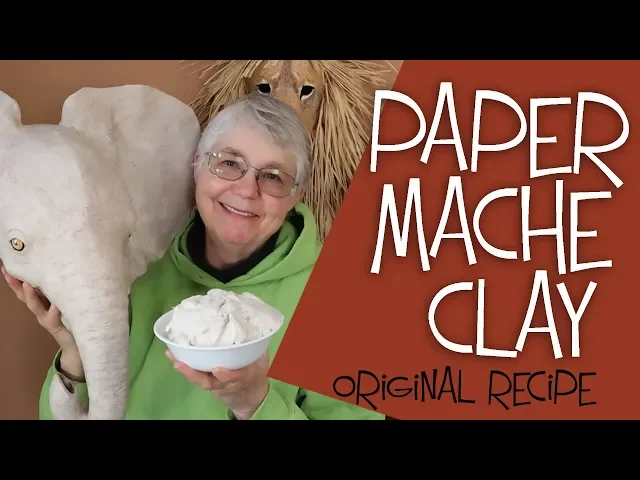
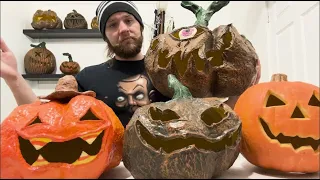
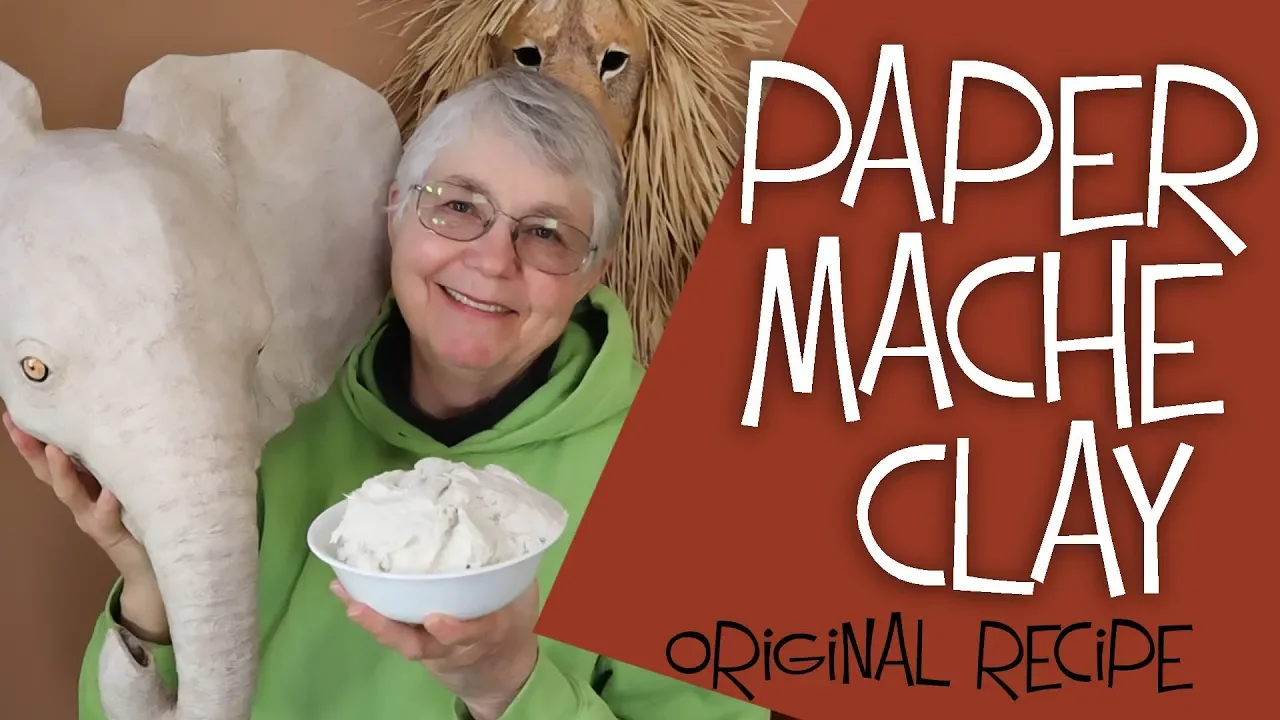
hi i'm johnny from ultimate paper maché calm and I decided it's about time that I put out a new video about my original paper mache clay recipe this is the same recipe that I use for all the projects in my book make animal sculptures with paper mache clay the recipe itself went online on YouTube for the very first time ten years ago I think and it's a lot of people have used it all over the world now a lot of other youtubers have come up with variations and I've come up with a few variations too
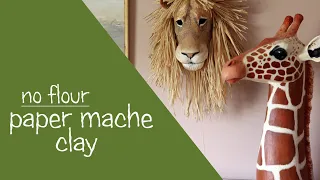
if someone recently asked me which of those variations is my favorite and it's still this one the very original recipe that I came up with ten years ago it dries really hard you can put on a really thin almost paper thin layer like I did for the elephant and the lion back here and it still is really really strong it replaces the traditional paper strips and paste no no of course over the years I've answered a whole lot of questions from people who have used the paper mache clay or who are thinking about it but
aren't quite sure what is this stuff or why doesn't that work I'm gonna try to answer all of those questions in this video so now let's go ahead and make some paper mache clay it's really easy to make your paper mache clay you're going to need a couple of large bowls a spoon some cups to measure with and an electric mixer the materials that go into paper mache clay or Elmer's glue-all or Elmer's clear this is a PVA glue so if you live in another country that's what you asked for is just a white glue
or PVA glue you'll need some drywall joint compounds from the hardware store or Walmart that's where i get mine if you're not sure what right well joint compound is I'll tell you that in just a minute you'll need some white flour and you'll need some toilet paper now the original recipe does call for two tablespoons of either mineral oil or linseed oil and I didn't happen to have any today so I just left it out it really doesn't hurt anything so don't go out and buy some special if you don't have any on hand now
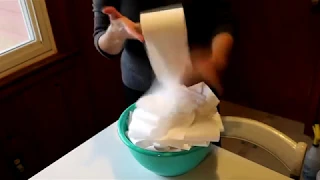
the first thing we need to do is get our paper ready I use toilet paper exclusively in part because I'm really lazy just as soon as it gets wet the fibers fall apart and what we really want for a nice smooth clay what some people have done is soaked newspapers for a much longer time they soak it in hot water for maybe an hour or two and then they put the wet newspaper and the water into a blender make sure that there's water in there so you don't burn up the motor and they just blend
it up and that will break apart the fibers of recycled paper so that does work I don't happen to do it because like I said I'm lazy toilet paper works really really easy but we do want to measure it we want about a cup and a quarter of wet paper so I stick the paper in water get it wet press it down into measuring cup until I get about a cup and a quarter of it and then I go ahead and put it back in the hot water I want all those fibers to be separated
just swirl it around with your fingers and make that happen now we don't want totally totally wet paper in our paper mache clay so we do need to get some of the water out in fact we want most of the water out but you have to be really careful that you don't press out too much that's that can be a real problem and if you press out so much of the water that it's almost dry it won't fall apart when you run your mixer you'll end up with big globs and bumpy lumps in your paper
mache clay so go ahead and test it in your hand can you push it around and have it come apart even though most of the water has been pressed out then you're good to go next we need to add some drywall joint compound drywall joint compound is made for the construction industry and it's used to cover the the edges between two sheets of drywall or gypsum board sheetrock there's a lot of different names for it now if you live in a country where they don't make flat walls like this out of plaster board or drywall
then you won't be able to find drywall joint compound in your stores and you'll have to just use traditional paper mache a lot of people ask me can you make paper mache clay without drywall joint compound the answer to that is no but you can make paper mache just mushed up paper mixed with a glue or paste that's traditional paper mache but you can't make paper mache clay without the drywall junk count and hopefully that makes sense there's one company the DAP company that puts something in their formula that just doesn't work with a glue
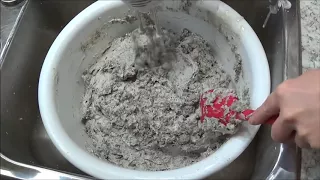
it just turns into a little rubbery balls it doesn't work at all so use any other brand of drywall joint compound and the brand I use is from Walmart we want one cup of the drywall joint compound we want three-quarters of a cup of Elmer's glue-all mix it on high keep mixing for several minutes because you really want the mixer to tear all of the paper fibers apart so it'll be nice and smooth and then you start adding your flour you're going to use the flour to make you the mixture stiffer and this is when
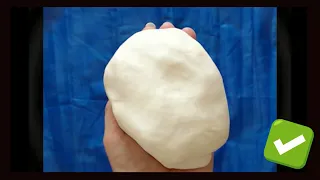
you get to decide how stiff you want it for instance if you want a really thin layer like I use when I'm covering my mass patterns or when I want to create a hard solid surface with my first layer I'll use a really small amount of flour to make a really thin mixture of the paper mache clay but when I want to add texture or if I want to actually sculpt with the paper mache clay like I did with my owl then I'll add more flour I can mix mine using my really cheap little mixer
here I think it cut me too cussed me 12 bucks I mix it up to the point where it has half a cup of flour in there but when I want more than that I'll switch out the beaters to the the kneading beaters I think they're the bread mixing beaters some mixers don't have those but if you do have them it makes it a lot easier if you have a lot of flour in the mixture because if you don't the paper mache clay has a tendency to kind of crawl up the beaters and gets on
the inside of your mixer which is kind of a pain in for rare to get out so switch it over if you can by this point it might also be possible simply to mix it in by hand although that's not going to be easy this is how I normally use it I'll just use a knife and spread it thinly over my armature it will dry really hard even if you only have an eighth of an inch on there so you don't need a whole bunch now one thing you do want to do of course is
make sure that your sculpture dries as fast as possible after you've got your form completely covered and you can do that easiest if you put it in front of a fan or if well like right now my furnace is going on so I can just put my paper mache clay sculpture right over a furnace vent if you want it to be even warmer in there you can actually create like a convection oven by putting a cardboard box in front of your furnace vent and put your paper mache clay sculpture in there if you don't use
up all of your paper mache clay you can keep it very tightly covered with plastic for a couple of days if you want to keep it for like a week go ahead and put it in a refrigerator and if you need to keep it longer just put it in a container with a really tight lid and put it in freezer now I do want to mention that because I invented this stuff ten years ago I've got I'll probably two or three hundred projects out on my website at ultimate paper mache um that uses paper mache
clay so make sure that you go check those out I've also got a lot of projects on YouTube mass animal sculptures you name it they're right here on my channel at ultimate paper mache so be sure that you subscribe hit the bell thingy so you don't miss the next one coming up that's going to be real soon I've got one that I think it's gonna be really fun now like I said there are two variations of this recipe that I have online one of them is the paper mache clay without flour and the other one
is the silky smooth air dry clay recipe so go ahead and click one of those if you'd like to see how those work then go make something and come back and visit me at ultimate paper mache calm I'll see you there