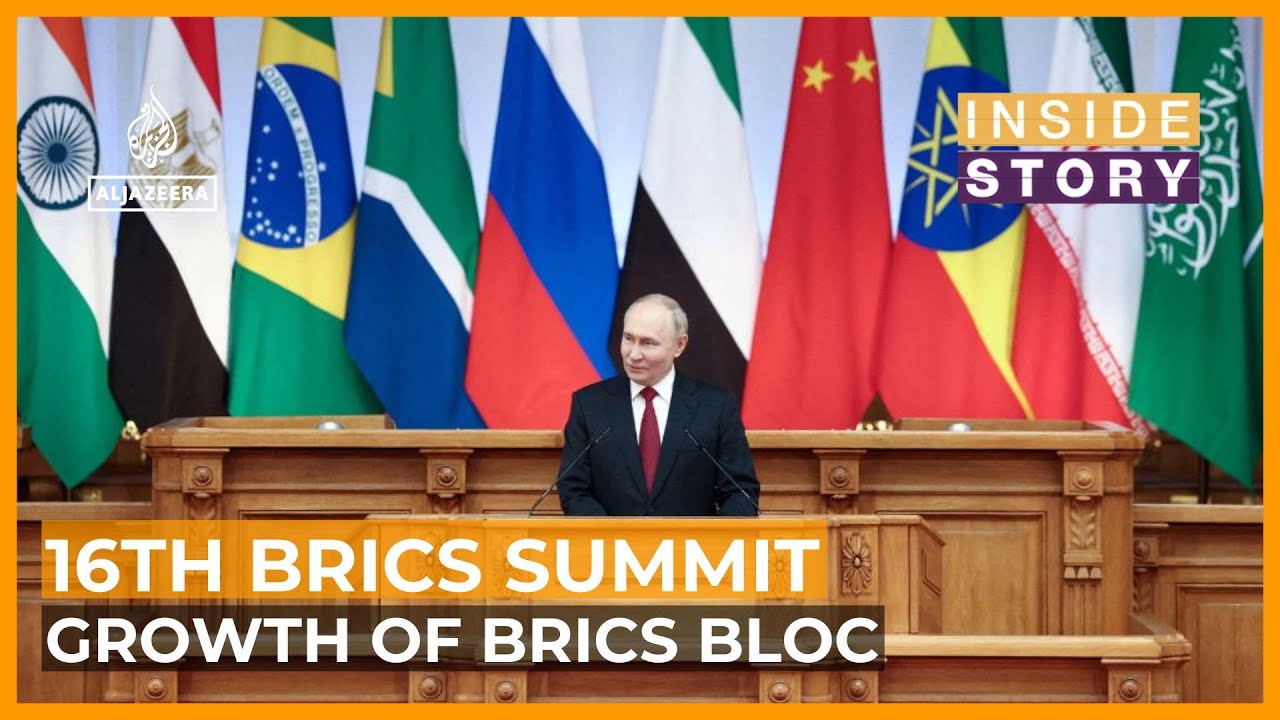
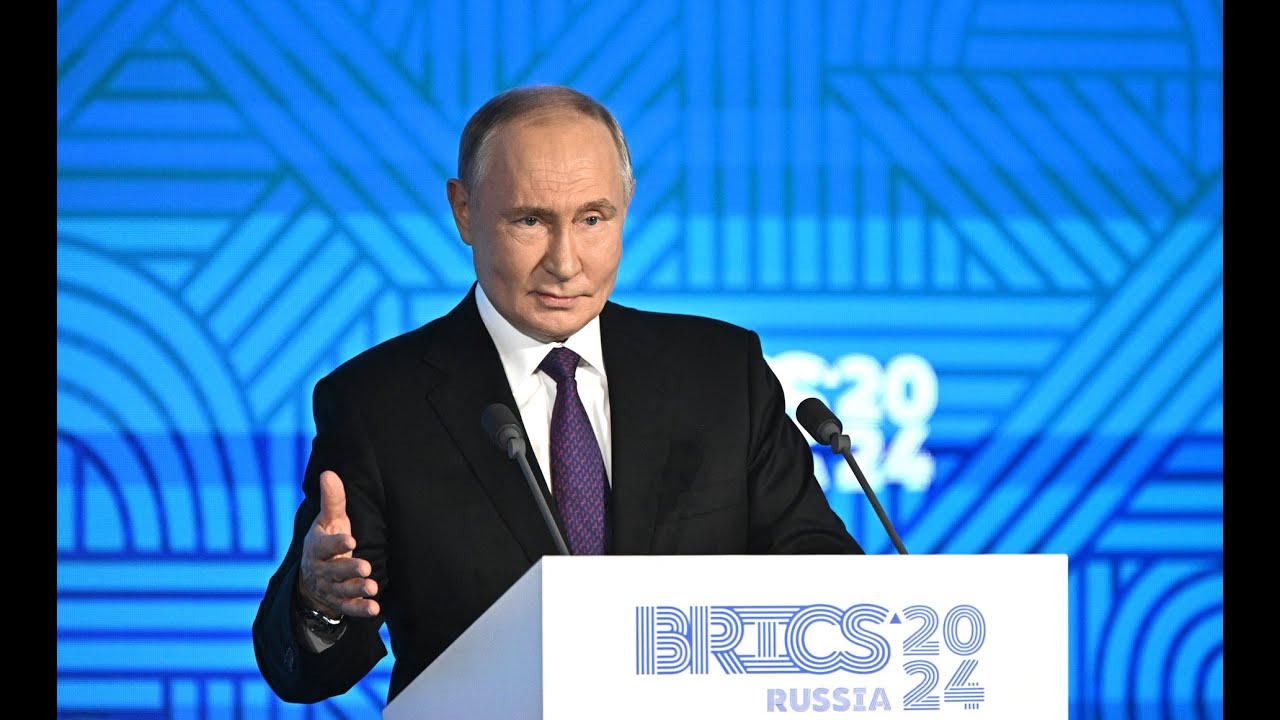
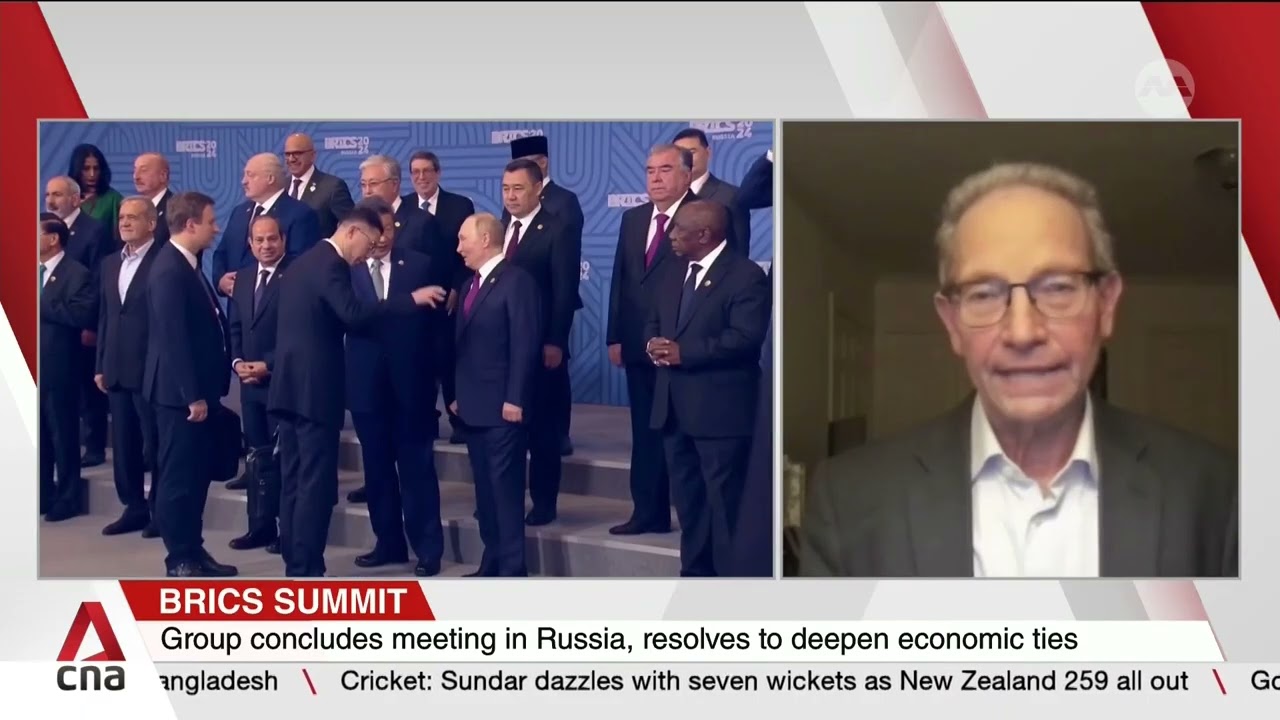
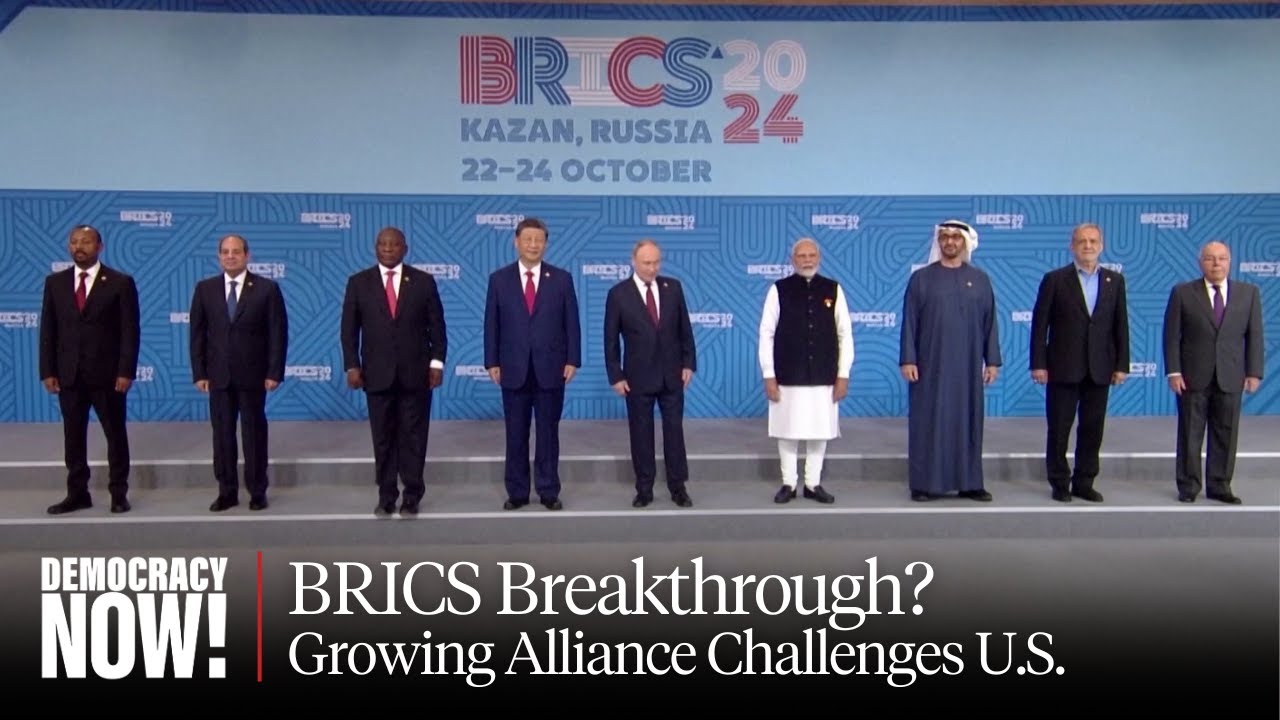
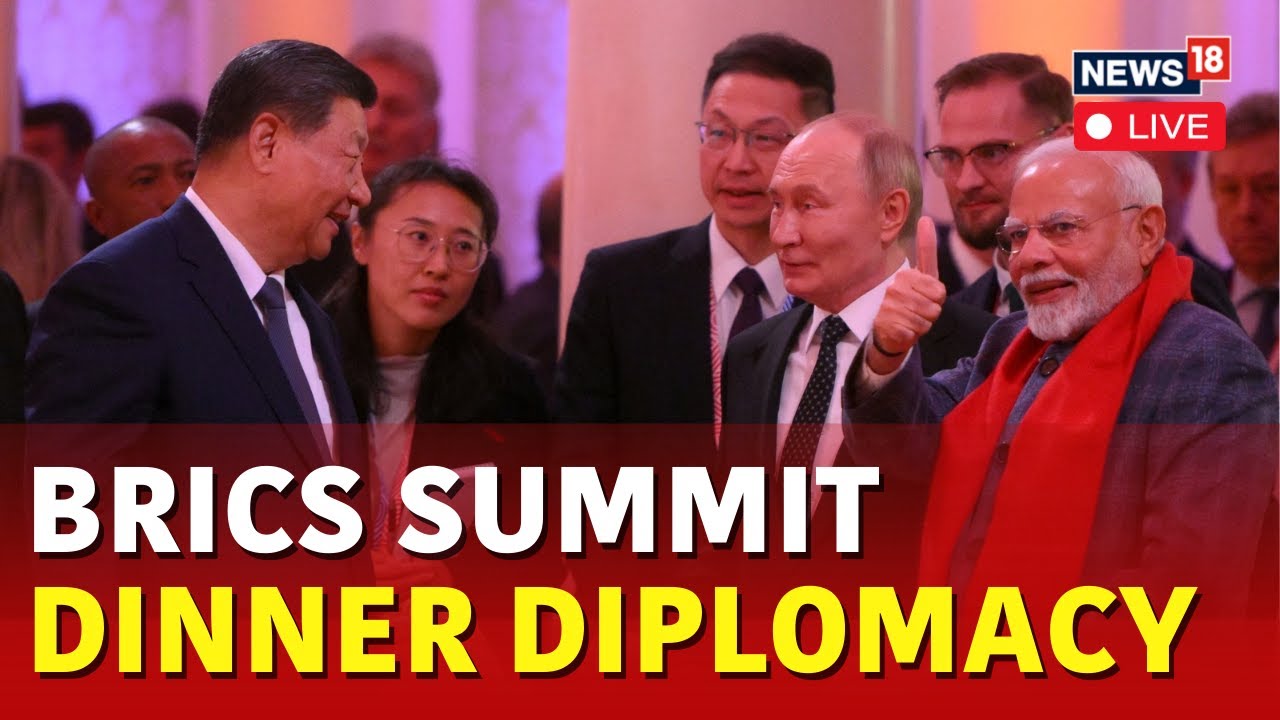
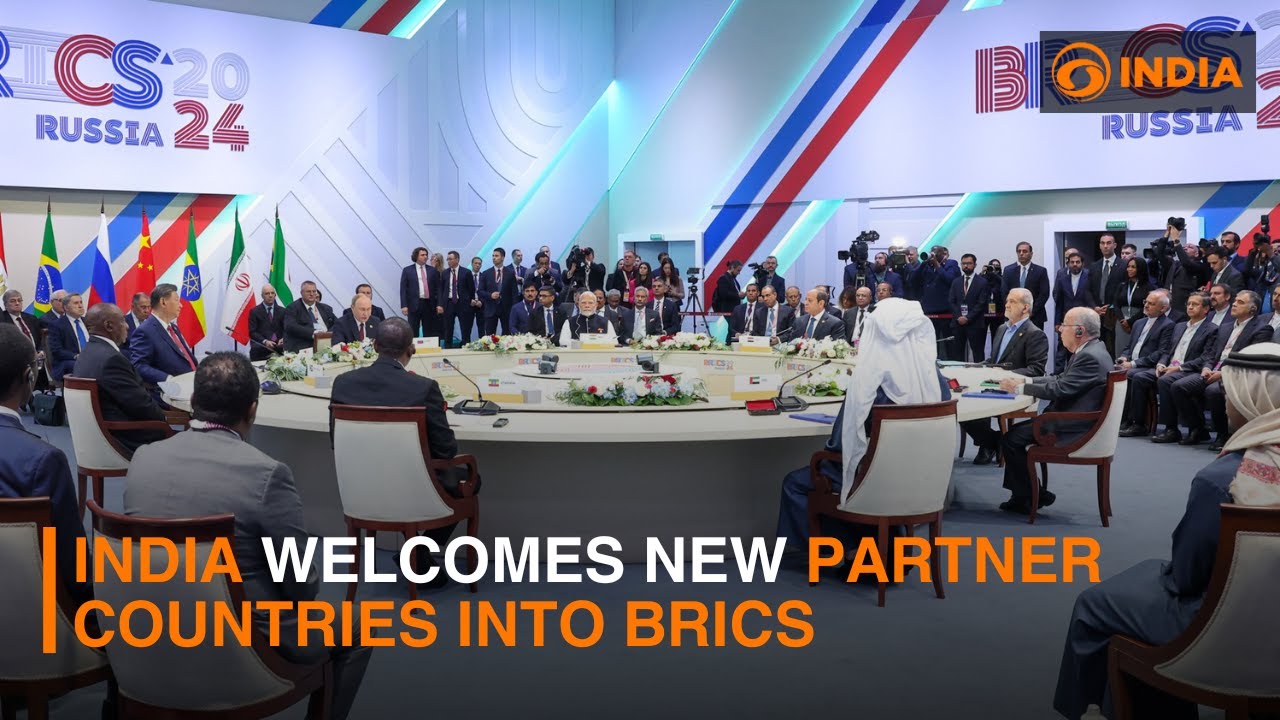
the bricks group of Nations looks likely to expand in the near future Russian President Vladimir Putin has told a meeting of the group that over 30 countries have expressed a desire to join bricks Putin says the group will discuss its expansion at the meeting while keeping in mind the need to maintain efficiency president suap posa is also expected to address the summit meanwhile un Secretary General Antonio GES Al arrived in the Russian city of Kazan today to attend the meeting of the heads of state of the bricks group earlier this week Ukraine's foreign Ministry criticized
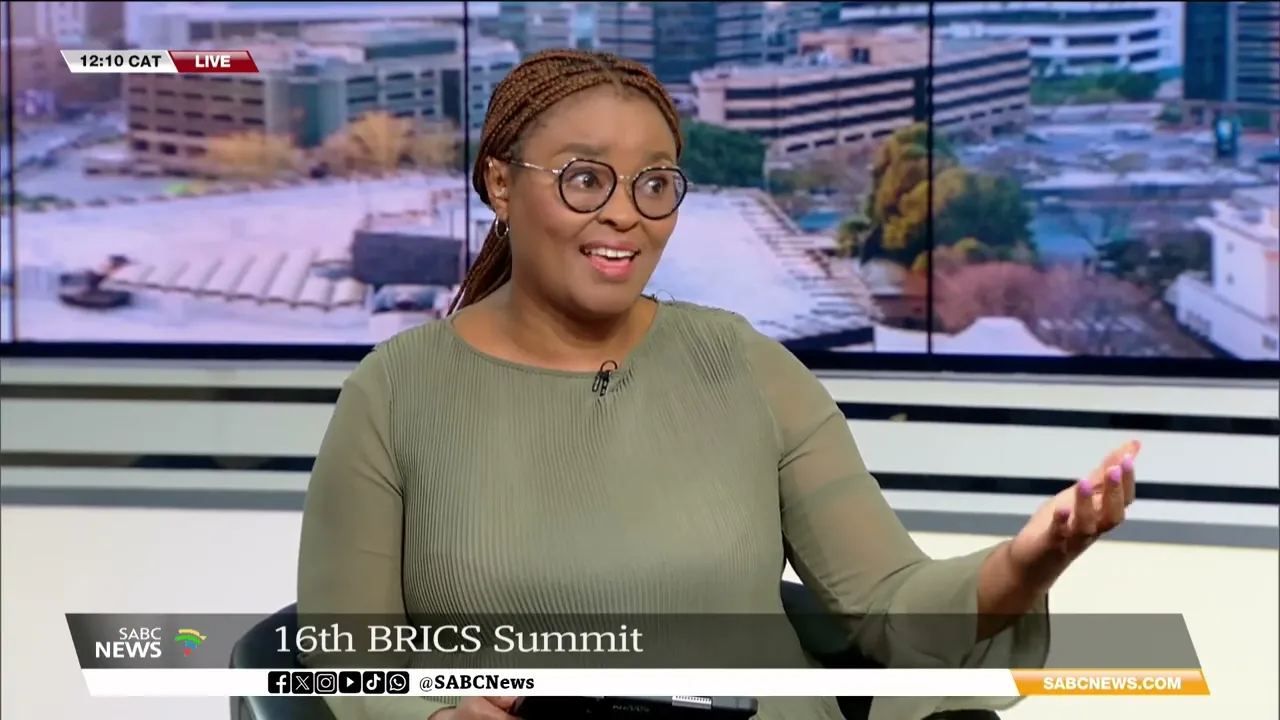
Ceres for accepting Putin's invitation to attend the bricks Summit while staying away from a peace Summit on the war in Ukraine ceres's office has said he would discuss the Ukrainian conflict with Putin as well as the crisis in the Middle East well as you see there those were live visuals in Kazan where President Vladimir Putin is addressing uh the summit there uh in studio with me I do have panelists Kenneth Dr Kenneth ker he's an economist from vit University uh mikao Kuai he's a senior researcher at The Institute for Global dialogue and Sophie MC sabc
News International editor and of course uh we are going to be discussing you know some of the implications of this brick Summit um bricks membership the expansion thereof and so without any further Ado we'll get straight to it thank you so much for joining us super so this is the first bricks meeting under the new expanded format uh with the additional countries of Egypt Ethiopia UAE um and I forget the other one but yeah so uh and of course Saudi Arabia has still yet to admit or allow you know to agree to joining bricks as
it has been extended the invitation but from your Vantage Point what sort of uh what do you think each of the parties has to offer in this grouping um and uh is it really an equal is it an equal is it equal partnership uh perhaps I can start with you m um thank you so much once again for for for inviting me to this conversation the same question put differently would be is it an unequal you know uh you know a partnership uh and you know you can judge it you know in any which way
you you you want depending on the lens um but I tend to look at what the bricks documents actually say you know and you know how decision making tends to you know get taken uh and if you know we agree that you know Briggs arrive at decisions you know based on consensus you know then one could make an argument you know that you know there's a fairly you know equal you know uh relationship yes if you like yeah and this is despite the you know of course the nature differences in the bilateral you know relationship
between different members yes Dr kma there's a conversation 30 countries additional countries want to join bricks over and above the new ones um isn't it wise to give it time to actually assimilate the new ones that have joined and see how the organization works or would it be beneficial to suddenly have more people uh more countries admitted and come January 2025 there's an additional five countries there what are your thoughts around that yeah so the country you forgot I think was Iran so it's UA Iran Egypt and Ethiopia that's right and I think it's really
significant that it's growing as rapidly as it is it seems to be cap capturing the imagination of many countries around the world to be part of this growing block and I think what guides South Africa our Doctrine with regard to this and what are our objectives and for those other countries joining would be two things the one is the economic significance of this block you know the ability to expand trade and investment for South Africa we're an open economy trade is about jobs whether we can export citrus fruit uh meat into these new markets it's
about jobs and we all know that's our priority the second is around the principles guiding the reshaping of the global order and participating in that as well so those are the two things that countries want to be part of Sophie um president Raposa is expected to speak imminently at the summit what can we expect him to say based on what he's been saying already and what you already know well I think the president will communicate a message that cooperation is quite important and that cooperation will be uh in relation to uh trade and investment security
and culture and I think at this point in time where you have challenges in different regions of security that will come uh as part of the president emphases and that will be your Palestine question in particular where the president will call on members states to support the cause of the Palestinians and also uh indicate to member states of bricks that it looks like uh the world is uh looking away in terms of the uh many people who have died in Palestine and also calling out Israel and I think he going to characterize what Israel is
doing in the Middle East as a genocide keeping that uh narrative and being consistent in line with with South Africa's position as they approach the hearing of that International uh court of justice which will happen soon in and the Netherlands but secondly he's going to emphasize a need for cooperation on issues of security because we know that advisers of member states of bricks did meet as part of the buildup to this meeting looking at peace and security around the world and of course I think for me of interest will be the UN secretary General's uh
statement to member states we know that when H he was in South Africa last year the emphasis was on the transformation of the multilateral institutions such as the IMF and the World Bank that has uh reached Itself by date in terms of its mandate just not helping developing countries and that message the SG will take to the G20 later in Brazil showing that consistency and up to cop 29 he will again communicate this message particularly looking at climate change and these are the issues that are going to dominate the talks but on the marins I
can tell you it's going to be more interesting rather than at that round table and as China is now presenting a powerful nation and I think the issue of trade particularly when you look at the uh trade uh challenges between China and the United States of America yes now you say we see that xiin ping the president of China is addressing the summit mik I wanted to ask you about uh Russia's push for an alternative Financial architecture given the fact that of course they're under heavy sanctions from Western Nations but over and above that it's
felt that it might be a good mechanism for brics members and other countries uh to join so that they can you know freely trade and so on and so forth what does that look like uh in your view how quickly can they do this a a bricks currency seems to have been written off for now trading amongst themselves in in each other's currencies how soon can that take shape do you think um a couple of things um it it's not so much you know a a a an alternative Financial architecture per se that they're looking
at instituting at to this bricks uh Summit you will recall that um last year at the the Johannesburg 2 declaration The Summit AT in in in santin instructed you know practically the the Ministers of finance and governors of The Reserve Bank to go and investigate you know a feasibility uh of you know a payment sort of uh you know system you know uh clearance you know mechanism you of sorts right uh to see what sort of model what sort of instrument you know can be devised to make trading between uh intra bricks you know trade
you know smoother easier you know and therefore attract you know greater integration and so on um and of course that was against the backdrop of you know some debates you know around whether or not there would be a single currency and of course you know it was argued by many that look you know you hardly have an integrated you know bricks you know economy if you like right there isn't enough you know of integration there isn't enough you know of um the many criteria you you require for such uh but you know at least at
the very least you know some sort of instrument you know that can you know be easier and more accessible to everybody uh could be a start you know of something you know going forward now of course it was you know paged at pitched as an addition to what currently you know is on offer in World such as Swift you know and the others so it's not a replacement of anything and I think it's a very important point to make because in 2009 when uh the the first brick statement brick statement at the time yeah specifically
says right that there is no intention to replace anyone or anything there is no attempt you know to combat anyone or anything however a reform of the financial architecture is necessary and is important right so you have to have some me of equity you know some me of democratization of the system multilateralism broadly by the Global Financial architecture specifically so this is another attempt you know another move you know maybe small you know but another move towards you know that you know particular goal as well the NDB for instance was another you know exercise you
know in that in that direction as well yeah you're jumping ahead I wanted to ask Dr ker about the the NDB Dr you might have some comments around the The Not So alternative Financial architecture question that I but I wanted to ask you about the the new development Bank um obviously its role is to help bricks countries invest in infrastructure boost their countries and so on and so forth uh to what ex extent has it been successful in this regard so far and what further mandate do you see it getting at this particular Summit in
terms of how much more it can do because of course uh many of these developing countries need investment in in INF infrastructure in order for them to you know to move to the next level yeah there's tremendous Financial gaps in the world in terms of look at Africa the gap between the infrastructure that we need to Electrify to build the roads to build the ports to build the rail so that we can trade um is very important and the bricks bank has got a role the new development bank has got an important role to play
in that but I think it's early days you know it's it's still being capitalized sou Africa's put Capital into it itself and I think it's early days I think it will do an important job it will fill some of those gaps but as South Africa we're going to have to box Smart in this global environment there's going to be there's there's what do they call it path dependencies you know we our historical trading partners are still important to us these are just new opportunities that we need to work on so we might still need to
go and speak about uh access to European markets access to American markets it's a goer it's all of these are on the agenda but what brics brings us is a new opportunity to look at trade and financial flows in areas that we really haven't had them and we could really deepen them and the potential is quite quite significant mik can South Africa um have its cake and eat it when it comes to trade and investment relations with the East and the West we are increasingly living in a polarized world where you know it's them and
us and we see that with certain Wars that are taking place certain conflicts that are taking place and there is a quite quite a real possibility that Donald Trump will come into power um you know come January uh and if that's the case we know he wasn't particularly favorable to Africa in his previous Reign so to speak do you think that he would definitely want to punish a country like South Africa for you know liasing with the likes of Iran China uh and and Russia you know so um do you think that there could be
consequences in that regard which then influence other Western countries in terms of how they perceive South Africa and the opportunities we have I know there's a Goa but apparently a Goa really doesn't scratch the surface that much in terms of trade but still it's symbolic infrastructure well there is a lot to it high standards many dimensions you also have to consider that you know South Africa is an independent sovereign you know State and so are the other fellow members of the DRS block so if you were to say to South Africa that look you know
you can only have friends with this one and that one and the other because we trade with you and not that one and the other or else we will withdraw you know our trade it doesn't it can't quite work like that right because I don't see them punishing India for example exactly there you have it I mean they've got you know serious agreements you know with India going on and in fact they also by the way still have a relationship with China You know despite you know you know some of these challenges you know going
on um so so the a simple answer would be yes that's how it must be you know South Africa and well many you know countries across the Globe and an alligned uh bricks itself you know says it is not an alliance per se you know it is a foreign right uh the the countries are coming together say look you know we need to look at various instruments to improve you know the living conditions of our you know various peoples uh we need to look at you know how the global economy works and does it work
for everybody and the reality is you have you know a dysfunctional multilateral system you know and that is why you have the likes of bricks you in fact the G20 you know exists precisely because you know you have a multilateral system that is you know shaky you know uh among others so it it it you can't punish South Africa you know for having you know trade and you know relations you know with others just because the US is you know an issue with Iran or China or the other South Africa is a member of the
nonaligned movement right uh we do not want to take sides on issues right per se uh we want to do business with everybody you know we want peace you know in the world we want you know to do precisely what that thing that that un chter you know uh uh you know wants you know to see done I mean the authors of the UN Charter wanted to encourage and promote you know peaceful relations between states South Africa wants that the Jan chter also says you know we must promote development and so on multilateral system is
supposed to achieve that you know promote development that hasn't been happening in decades that is why you have brecks and South Africa wants that not to you know take part you know in great power battles and great power theves we have no business in that we're a small economy uh we want to trade with everyone we want to you encourage our young people to to innovate things to produce things we want to achieve manufacturing so so we we have to take decisions that are just best you know in our national interest and we are not
you know in a you know battle with anybody you know over anything so if you have seen you nodding your head furiously at the comments and the inputs that have been made but over and above any comments that you want to make around what we've been discussing I wanted to ask about South Africa representing you know at uh forums like G20 and forums like bricks um is it enough for the whole African Continental voice well I think it's not enough I think many countries would want to be in those uh meetings but fortunately when you
look at the changes that were brought in relation to the G20 uh when it was uh uh in Asia there has been an agreement that H the African Union will be part of the G20 and of course uh preparations are currently underway and this year African Union had Representatives with all the meetings that took place in Brazil as part of the buildup to Brazil as you know that Brazil will be hosting the G20 this year and already in South Africa those interactions have started already we saw the AU delegation meeting with the shepher uh a
week ago and preparations are underway soon as South Africa takes over on the 1st of December you'll see those meetings happening in South Africa and the African Union will be represented in relation to braks that expansion besides this meeting where you have member states there's going to be another meeting today and tomorrow of friends of bricks where you'll see other countries coming in Venezuela is there you have a Congo is there you have many other countries who will engage in the same way it happened in South Africa where there was yes a meeting of member
states full member states and later friends of bricks and those who want to join bricks and therefore the interaction is Broad and I think African countries those who want can do that and we know unfortunately this time around it coincides with the Commonwealth meeting in Samoa starting today and therefore some of the leaders you have seen coming to bricks are currently in Samoa I'm inan Nigeria uh Rwanda to mention the few you know all the Commonwealth member states and therefore yeah the world is changing and the GS of the General Secretary of the United Nations
going to uh bricks it's because a number of countries will be there and some are African countries and you know that now you have also Ethiopia and Egypt these are Big economies on the continent and therefore it's it's becoming powerful particularly for me joining Ethiopia and Egypt it's quite a milestone for the continent but I fully agree for South Africa no one can dictate to South Africa who South Africa's friends would be the bricks member countries cannot force South Africa to abandon their friends in the west or in America the same the friends in the
West or in America or the European Union cannot force South Africa to abandon the friends in Asia and in other regions and therefore it's all about South Africa's foreign policy yeah in the meantime we do see that the leader of Egypt is addressing the summit uh Dr kma I wanted to ask you about the nuts and bolts you know the things that are going to affect our economies the respective economies things like digital um you know transformation in economies uh food security uh climate change mitigation all of these lovely things that we need to achieve
which all have a price tag on them how do you think the bricks Summit can help in that regard we know for example that China is way ahead in the area of renewable energy um it's a key supplier in that area um we having relations with them mean that we we manag to get a better deal what do you foresee in terms of what we get out of that in terms of the these very important things that can change our economy and its trajectory those are really important questions I'm going to get to them in
one second um I just wanted to reflect on the discussion that we had regarding the um South Africa might be a small open economy with 60 million people versus countries with billions of people but we really strong in international Affairs the land of Mandela the land of resolving the black white conflict that happened in this country that we we're known for that and I think we bring that weight into the discussions um and I think we must build on that commitment to multilateralism to the rule of law to peaceful resolution in Africa and in other
parts of the world as well to get back to your question and that gives us that reputation but to get back to your the nuts and bolts question very important because China for example is a leader in many industries that are developing um whether it's Luna Landings whether it's renewable energy whether it's something else sou Africa needs is grid investment you know we talking about escom needing to build thousands and thousands of kilometers so I do and automotives electric vehicles there's many areas where I think we should look at opening our doors to investments from
that country um it brings a lot of techn technological advantages and can help to create jobs and build our economy um in in Africa as well those are where the gaps are and and China is a very important player in that field and not just China other countries as well um particularly if you look at the middle the Middle Eastern countries they major export markets for us um we're already starting to make the there's a bricks Business Council very active looking at opening those doors for us and when you hit with trade barriers you need
this kind of negotiation forums discussion where you can say look is this cenry phyto senry the correct the correct thing that we need to have and and you need forums you need dialogue you need discussion the world is getting too very dangerous it's going into a dangerous mode where might is right um people are throwing out the rule book we need to be a voice against that and say this is not the way to resolve the world's problems how to govern the world yeah in the meantime we do see that President Lula of Brazil is
uh speaking virtually he couldn't attend uh in person apparently he had a fall at home and was advised by his doctors uh not to travel so he's doing his speech virtually at least he's still uh participating as Brazil of course is a key member uh of the bricks the first uh letter of of the bricks um I wanted to ask you Mika about um the conflicts that I had happening in the world um there's always I mean right now as we're speaking we were discussing with Sophie yesterday you've got the brick Summit that's happening here
on this side and then you've got the um for the Breton uh Woods institutions that is the World Bank and the IMF having their meetings um and of course the world is watching both of those meetings but the world is also watching these teetering on the brink type of conflicts and what is the danger that these conflicts actually overshadow all of these discussions that we're having um I I wouldn't want to be sensationalist but people are saying that we're a couple of steps away from from potential nuclear war um well a couple of things there
U firstly I don't think anyone wants a nuclear war no one wants because it wouldn't no one would win that you know I think everyone understands that no one wants that everyone wants to still go back you know home at the end of a long day work and have some a hot meal and you know a soft you know bed to sleep on everyone wants that right now I I I I've been following some you know discussions you know IMF and there's a a a trend that they pick up um you know on on how
investment flows are starting to shift you know to follow to mimic you know geopolitical alliances you know how you know Investments foreign dire Investments are starting to you know take that sort of queue uh Landing you know even starting to you know take that sort of queue you ask about you know the danger I think it's already there in that form at least right um you you you you yes the world you know will be watching they'll be watching both of them remember that uh the bricks economies are also important members they're also important members
of the Britain Woods institutions IMF and the World Bank they're also important members of the G20 that is also about to happen and the g20s they will be meeting now you know as bricks heads of state and government and then from there proceed you know to go and debate and negotiate and discuss you know with you know their counterparts from Western economies the advanced economies from the West as well uh whose opinion whose decisions also would impact you know how the IMF the Britain Woods institutions you know can then you know uh behave um you
know and so on however if if if one one to make you know a a simple point you know on this on the workings of the Britain Woods institutions there has been you know a growing consensus a growing momentum you know for reform you know of multilateral development Banks right and the Global Financial architecture and the precisely because development is simply not not been happening for decades you it has not been happening this currently there's just something wrong you know with the way things are right now and you know if you follow some of the
statements from the the C with the the head of the IMF um you know and others you know that they agree that look something has to be done you have to get in you know more financing you know for infrastructure that Pro spoke about a moment ago infrastructure for uh development you know in the global South actually in the pain um developing economies you need greater financing for that you need you need you have an an African Development Bank for instance you know giving huge figures 200 billion perom you know in annual you know spend
that is required you know just to get Africa for instance you know to be you know on a decent you know foot you know compared to you know its counterpart counterparts in the west and so on you had G20 India last year saying you need you know an investment of over 4 trillion in order to perom Dollars $4 trillion dollar per an in order to meet you know the sdgs you know for instance yeah and you are likely to have the same pronounce ments in this year's G20 uh and you know probably you know the
same outcomes you know next year as well when we you know are host G G20 because you know it's a real something has gone wrong you know with that with with with with the system that's why you have a breaks you know in the first place something has gone wrong and it has to be fixed Dr kma um you know given what um M has just been telling us and get the overview that he's been been giving us the IMF talking about Global debt likely to reach a 100 trillion Us doar by 2030 that's just
like around the corner um and of course we know that probably China and the US account for most of that debt but for developing nations it's quite tough the IMF also saying that they're quite concerned about developing nation's ability to service the current debt that they have and yet the these huge developmental needs the South African model that we're developing now is multifunding you know a little bit of uh development financing institutions funding private sector funding and so on and so forth what do you think is the way forward that is sustainable for sustainable growth
and development for African nations in particular and I suppose bricks countries going forward because it seems as though I'm sure maybe 20 30 years similar conversations that we're having now were being had I think it's got much worse um in the wake of the co pandemic and crisis if you look at the the data many African countries we had a at beginning of the century Africa was looking stronger there was democratization and they were starting to access uh Euro markets Global markets on their own account but um we are entering a we're in now a
phase postco we're in a fiscal crisis in many African countries um it's really difficult you saw the the the the um unrest in Kenya when they were trying to tax more to try and balance fiscal their fiscal books um many of those countries and Kenya is one of the stronger countries many countries just have not got the fiscal capacity to to do the development that has to be done and we need to look at how the purse strings through the IMF through the bricks Bank through the special drawing rights of these different organizations there needs
to be a stronger consensus built as to how we allow the African countries to get out of this fiscal trap they're in a deep fiscal trap they can't access um the the the financial markets there needs to be official official uh Aid or not even Aid official Finance flying flowing into those countries and then it must be about changing the growth potential of those economies how do we spend that money you know we talk a lot about operation W GLA in South Africa and getting the supply side operating the challenges are even more immense it's
not about fixing it's about creating in some cases the the the the potential to grow those economies a base on which they can be growing so that must be the challenge get the finance and then use the finance for growth um I think that's where we at right as we wrap up Sophia I'm going to end with you um we see there um the uh prime minister of Ethiopia um speaking addressing um the um Summit at the moment uh Sophie um of course bricks is a forum as we've been told um there are many different
um countries there and they have their own individual agendas um but they seeking to work together for the purposes of development um what are what are your confidence levels that things like politics don't Trump the economics of why these fora are established to begin with uh you can't divorce development from politics because politics can lead to security challenges and security challenges can lead to failure in relation to development so you'll still have the discussions around political Dynamics globally and therefore for you will have those meetings and when you look at a statement at the end
of The Summit when they talk about the expansion again now there's a reason why they want to expand and the reason uh in most cases must also look at political uh intentions and therefore there will continue to be political issues you saw uh the last past few years um since the war in Ukraine when you look at the meetings of these multilateral for us you find a situation that at times they even been derailed by political issues and security issues for example the G20 the last past two meetings of the G20 was quite difficult because
they couldn't come up with a statement that was agreed upon by all member countries because of the war in Ukraine so when you draft that communic you have to be very careful maybe in Brazil they might agree because they have realized that they need each other more you know in terms of agreeing so that they can resolve the global issues but also on the issue of the the de that you spoke about that's exactly what gutes is going to talk about here to say developing countries are squeezed the poorer countries are squeezed and that started
we know with the financial crisis and then of course Co and the wars because it has also affected supply chain food is expensive and therefore it's going to call for the transformation of your IMF and the World Bank because when these institution were established the aim was to assist countries that were involved in the second world war to rebuild and redevelop and recover nobody thought about other countries particularly Africa in because we are not even existing much as Africa was there when the uh the United Nations was formed because we know that our forefathers went
to fought in the first world war and the second world war but now gutes is saying as the head of the United Nations let's transform these institutions so that they can uh help everybody not just the developed North when the developed North go to these institution and borrow money the interest is reasonable the poorer countries when they go there to borrow money the interest is exorbitant and they can't even pay some of them the interest is equal to their gdps and therefore these are some of the issues that must change and Bricks much as it's
a new formation it is assisting with its development Bank it might not be that massive but it is trying to assist the developing nations as we saw Delma Rusev the president of bricks there and he had a meeting with Putin yesterday I think this is something that Putin as the current chair of bricks spoke to her about how do we U jack up or how do we ensure that we really make a difference in helping developing countries I do recall president Rama posa speaking among his presidential and Premier peers speaking about that exact issue about
uh the interest rates that developing nations have to pay Visa what developed Nations have to pay which is of course as you say very unfair um we've concluded um our uh panel discussion thank you so much to all of you uh Dr Kenneth ker uh from the University of vitv rant and Mika teis Kuai senior researcher at The Institute for Global dialogue and of course Sophie mcna our international news editor