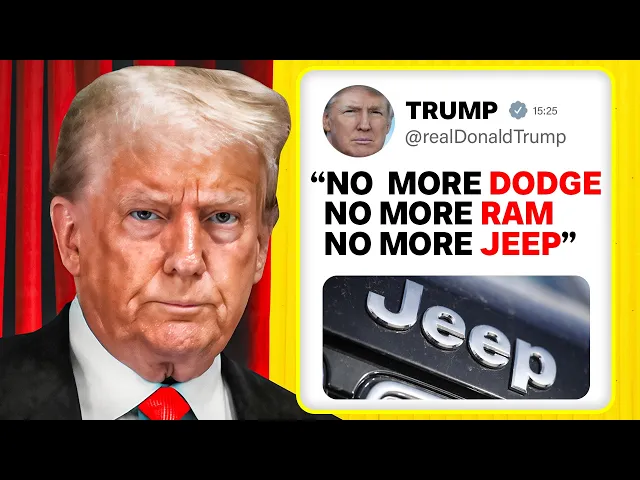
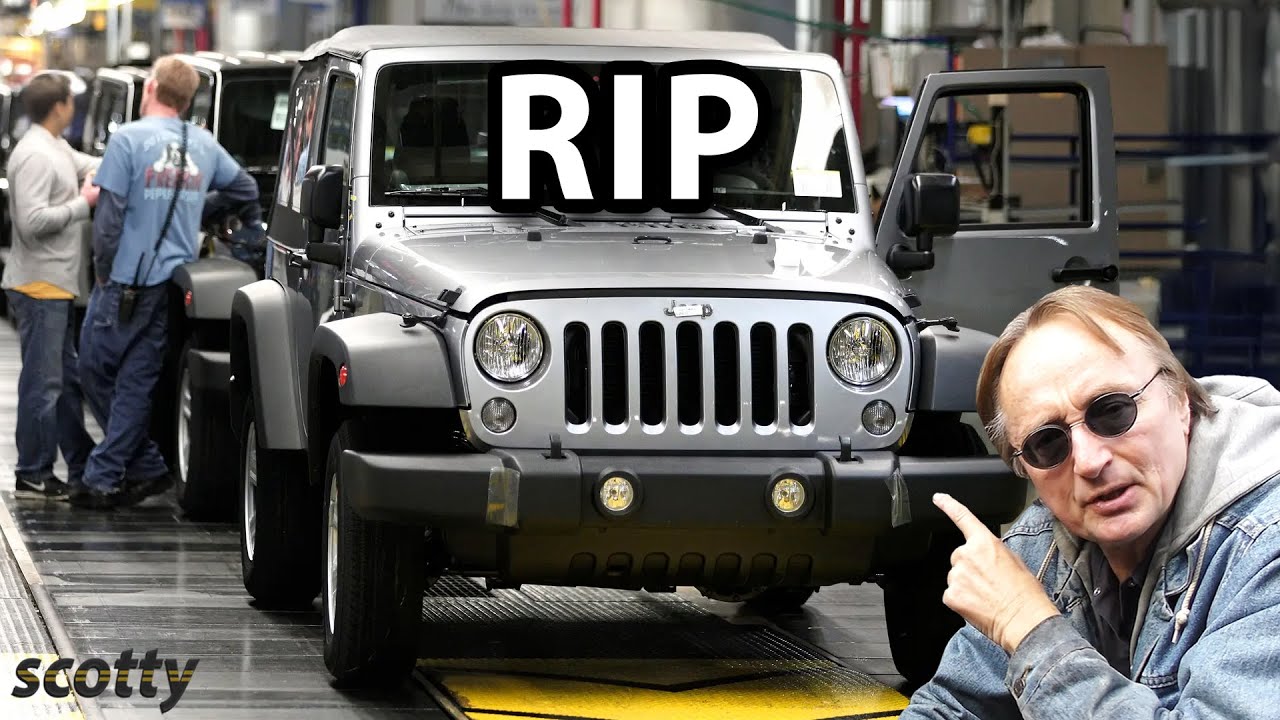
United Auto Workers union strikes are coming back, and Jeep, Dodge, and RAM are to be shut down. We all know that Trump said there would be a bloodbath for the auto industry, and it seems like he wasn't lying. These automakers are making some bold and often very controversial decisions that will have the whole industry in a chokehold.
Let me explain what is happening. Ever since the merger of Fiat Chrysler Automobiles and Peugeot SA to form Stellantis in January 2021, the American brands under its umbrella—Jeep, Dodge, and RAM—have faced significant challenges, leading to declining sales and market share. They have a plan to turn things around, but their response is upsetting a lot of people, including none other than Donald Trump, who has expressed solidarity with the United Auto Workers.
But you need to ask why. I know that some of you might see this as Trump playing the political game with a golden opportunity to rally support among auto workers and their families, particularly in critical battleground states like Michigan and Ohio. But is that the case?
Well, let's leave that to you. When you start digging a little deeper, you will realize that there is a lot more to it than what you see on the surface. There is a reason Trump is involved, and the United Auto Workers union is screaming for attention and demanding a change.
But why should you care, and how big of an issue is this really? Well, the numbers reveal the truth. Remember when they were the shining stars of the automotive world back in the day?
Fast forward to 2023, and even Dodge is struggling. Their numbers have plummeted like a rock off a cliff, dropping a jaw-dropping 67%. Last year, they managed to sell only 199,550 vehicles; that's the weakest point we've seen since way back in '96.
I mean, ouch—that's what we call a serious rough patch. RAM isn't escaping unscathed, either; they are also feeling the pinch with a 26% sales decline in the second quarter of 2024 compared to the same time frame last year. If you zoom out and look at Stellantis as a whole, which includes RAM, Jeep, Dodge, and Chrysler, the sales figures drop like a freefall, reflecting a steep 21% year-over-year decline.
That's a huge red flag, folks, and it's waving high and proud over the entire operation. Let’s not forget about Jeep. Since peaking back in 2018, they faced a major hit, with a hefty 44% drop in sales, only managing to move 64,924 vehicles in 2023.
That's the lowest number we've seen in over a decade. And hold on to your hats, because the inventory situation is just as wild. They have enough new Jeeps sitting in stock to satisfy 195 days' worth of sales.
Talk about overstocked; we're talking 188,189! But is it worth splashing a dime, even with all the discounts? To answer that, you need to know why this is happening in the first place.
What's the reason? Well, to put it simply, Stellantis seems to be missing the mark when it comes to understanding what drivers really want these days. Dealers are speaking out, expressing frustration about the pricing and product mix they're forced to sell.
They're saying loud and clear that what they've got doesn't resonate with today's American buyers. And Stellantis? Well, they don't want you to know this, so they keep fiddling with their prices and tossing out new incentive programs.
Cashback offers are popping up, trying to sweeten the pot for buyers looking at various models. But let's talk about that for a sec. It's like Jeep and Dodge have miraculously found a way to turn themselves into roadblocks for potential buyers.
The pricing strategies these brands have rolled out are turning into an obstacle course for anyone looking to snag a new ride. It's tough out there, with living costs on the rise like a hot air balloon. Younger buyers, in particular, are really feeling the squeeze.
Let’s say you're eyeing a Jeep Wrangler, a classic choice for adventure seekers, but the base model isn't just a little pricier; it's skyrocketed to numbers that often scream luxury. Right now, the average transaction price for a Jeep is around $49,913; that's a far cry from the sub-$40,000 prices that used to be the norm. What gives?
To be honest, it feels like we're all running on a hamster wheel, just trying to keep up. Most consumers are facing an avalanche of financial responsibilities. It's no wonder everyone is hesitant to plunk down cash on a vehicle with a price tag that seems to keep climbing and climbing.
Imagine looking at a Jeep Grand Wagoneer that kicks off at over $60,000; many of its models zoom past the $77,000 mark, which is the kind of cash that can make a person's head spin. That's pricing that's completely out of reach for a significant chunk of the market; the market can't handle it anymore, and this is nothing like them. This brings me to the next reason why they are struggling: brand identity and market dynamics.
Now let's get into the heart of the matter. Jeep's brand identity—once the rugged darling of the automotive world, beloved for its unique style—has started to feel a bit shaky. It seems like Jeep is struggling to stand out amid a sea of competitors, all offering vehicles that not only match Jeep's off-road capabilities but often do it at friendlier price points with more enticing features that fit the market perfectly.
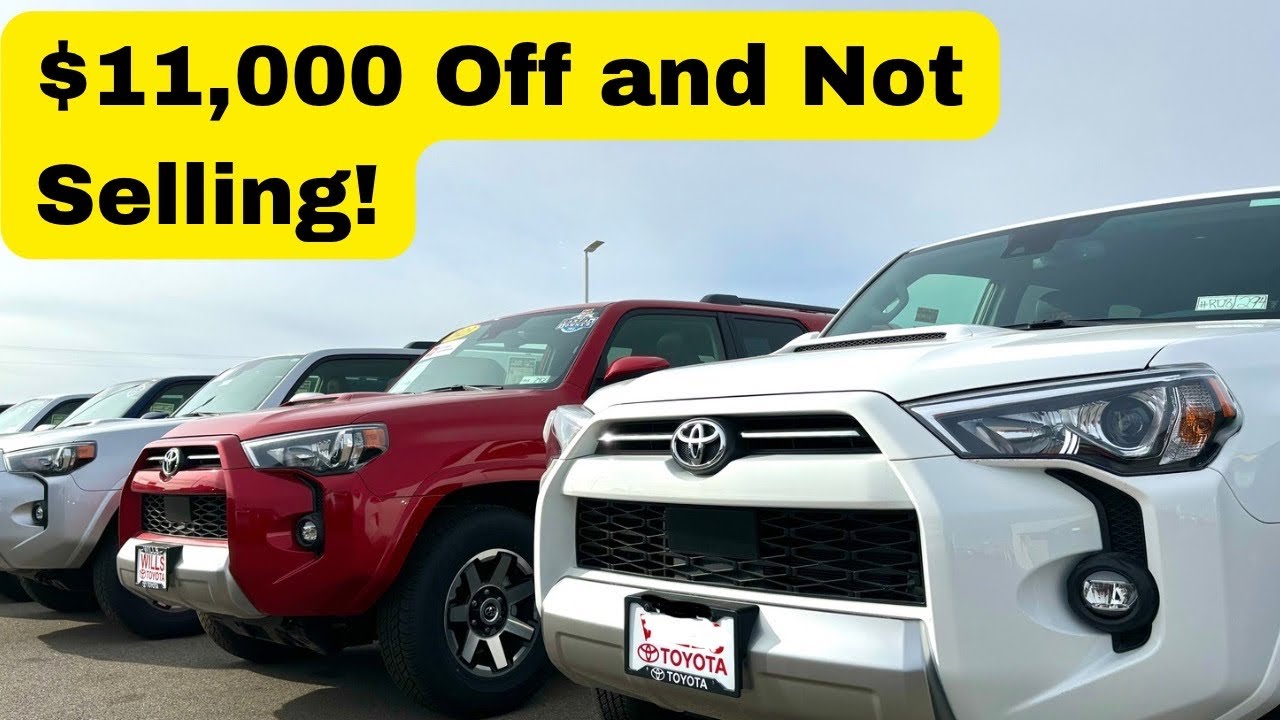
You see, brands like Ford and Toyota have rolled out models that don't just rival Jeep's renowned off-road capability; they're better priced and loaded with features that get the attention of potential buyers. This dilution of what made Jeep special has sent sales into a tailspin. Figures are plummeting; consumers are now on the lookout for brands that offer a more compelling value proposition, which Jeep is failing to deliver.
To pile onto the chaos, dealers have been voicing their frustrations about Stellantis' pricing strategies and product offerings, and they aren't holding back. But it doesn't stop there; the customer service experience at dealerships is raising eyebrows too. Reports are coming in about high-pressure sales tactics that leave buyers feeling uneasy and even somewhat cheated.
You know that gut feeling you get when you sense someone's trying too hard to push you into a deal? Yep, that's what's happening. And let's not forget about the sneaky added fees on top of inflated prices—talk about a real mood killer.
Consumers are walking away feeling disillusioned, and that's not a great foundation for building long-term relationships. Now, let’s dive into the product side of things. Have you noticed that some beloved models have just disappeared, like a magician's rabbit?
Take the Jeep Cherokee, for instance; its abrupt discontinuation without a solid replacement has left a significant gap in Jeep's lineup. Buyers are now left scratching their heads, searching for alternatives that often aren't available within the brand. This is a big deal because today's market craves variety; people want options that cater to their tastes and needs, or they will turn to your rivals.
Dodge is feeling the heat too. Their focus on a handful of high-performance vehicles is like bringing a butter knife to a gunfight in a world that's increasingly leaning toward versatile and practical vehicles. We need options that meet the changing desires of the modern driver.
The lack of fresh, exciting models to entice buyers has resulted in a bit of a snoozefest. But that is not all. You've got the issue of aging inventory; it's like when leftovers sit in the fridge a little too long—they start to lose their appeal.
Dealerships are feeling the squeeze, putting pressure on manufacturers to buy back those unsold rides. Now you might be asking, "So what? Why should you care?
" Well, when vehicles linger unsold for too long, they can start to degrade, negatively impacting essential components and long-term reliability. The answer to the first question is a hard no. It is not worth spending a penny on these cars.
If you just follow these price cuts and discounts, you will regret it because people have already fallen for it, and they are regretting big time. No one wants to buy a car that's been sitting around; it casts a shadow over Stellantis' brand reputation, and the last thing Stellantis needs is to lose customer trust. Financially, it's like a perfect storm brewing.
Keeping all those unsold vehicles during a downturn is like carrying around an enormous backpack full of rocks up a hill—it’s already hard for them as it is. So Stellantis and its dealers are staring at a situation where they may have to sell these vehicles at a loss just to clear the lots. So what's Stellantis doing about it?
Well, they're not just sitting back and hoping for the best; they've rolled out a plan, implementing various strategies to tackle these challenges head-on. We have already told you about the price cuts, but there's more on the horizon. Stellantis is gearing up for the launch of new battery electric vehicles and mid-cycle updates to their existing models.
This is all about reinvigorating their lineup to attract buyers who are constantly looking for the latest and greatest. It’s a strategic pivot designed to capture the evolving preferences of consumers who want innovation alongside practicality. But despite these promising moves, the ongoing turmoil in inventory management and sales performance presents real risks for Stellantis—and for us too.
You see, these plans come with some devastating side effects. Stellantis is currently navigating through some pretty turbulent waters, shaking things up on the inside with major layoffs and plant shutdowns. All of this is happening as a direct response to some concerning trends in declining sales and inventory challenges that just won't quit.
At the Warren Truck Assembly plant in Michigan, Stellantis has laid down the law with plans to cut up to 2,450 jobs. This isn't just a random decision; it follows the discontinuation of the older Ram 1500 pickup model, which means there's a need to adapt production to match the drop in demand. Starting October 8th, 2024, the plant will shift down from two shifts to just one.
That’s a tough pill to swallow for a lot of workers who are hoping for a stable work environment. But that’s not all. Earlier in July 2024, Stellantis implemented temporary layoffs impacting over 4,000 workers across multiple plants.
This includes not just the Warren Truck Assembly, but also the Toledo Assembly Complex. The reason? A dire reduction in production, thanks to sagging sales and a mountain of excess inventory.
It’s clear that when sales dip, the workforce takes a hit too, and that’s a tough cycle to break. Stellantis is on a broader mission to streamline its workforce through voluntary buyouts and layoffs. After seeing disappointing sales results in the first half of 2024, they hinted that if the buyout offers didn’t bring in enough participation, they’d have no choice but to resort to involuntary layoffs.
It’s like a tightrope walk, where one misstep could send the entire structure crashing down. And let’s talk about the shutdown saga, which is closely tied to these layoffs. Stellantis is making some significant production adjustments at various plants to respond to these declining sales numbers.
For instance, the Toledo Assembly Complex shut down Gladiator production entirely for several weeks, reallocating workers to other models. There’s a looming cloud of uncertainty regarding the future of the Warren truck plant. I mean, we all know the rumors are real, but the thing is, if production gets moved to facilities in Mexico, you can.
. . Bet that's going to stir up some serious concern among workers and union representatives.
The implications for U. S. jobs are significant and can send shockwaves through the community.
Plus, with ongoing contract negotiations with the union, any mention of relocating production sends everyone into a frenzy. And to be honest, they have every reason to be worried about job security and future stability. I don't blame them, and here is why: devastating impacts.
You need to be asking yourself how the layoffs are affecting the local communities in Michigan and Ohio, because the recent wave of layoffs at Stellantis is sending shockwaves through local communities there. And believe me, it's more than just a numbers game; it's a human story playing out on the streets of these towns. Look, this isn't happening in a vacuum.
It's coming at a time when local economies are already reeling from previous layoffs and economic downturns. Families and communities that depend on these jobs are left scrambling, and the uncertainty is like a dark cloud looming over them. Now, think about the ripple effect from these layoffs.
It's what economists call the multiplier effect, and it can really shake things up in a small town. These cuts don't just impact the employees; they also hit local businesses and services that rely on the income of those laid off. According to the Upjohn Institute, when factory workers lose their jobs, it's not just them feeling the pinch.
Retailers, healthcare providers, and various local services may soon find themselves grappling with indirect job losses and shrinking revenues. This could lead to a significant downturn in consumer spending, further amplifying the economic challenges in the region. It's a vicious cycle, and communities are bracing for the fallout.
And what about social services? With rising unemployment, local social programs could be stretched to their limits. We're talking about unemployment assistance, food banks, and other critical community resources—all of which might get overwhelmed as more families seek help due to lost wages.
It is like a rubber band being pulled too tight; communities risk a snap if they can't provide the necessary support to their own. So, it is no wonder that worker sentiment is running high. Frustration and anxiety are bubbling just beneath the surface among those affected and their families.
It's like a punch in the gut, especially because many workers had recently negotiated wage increases in labor talks. The timing of these layoffs feels like a betrayal to them, as if their sacrifices during the recent workers' union strike were brushed aside. It's a tough moment, and emotions are running wild.
And you know who entered this mess? Politicians and officials, which is a good thing because they have the power to change things easily. So, let's talk about that in detail for a sec—the politics behind it all.
On the political front, local leaders are stepping up to voice their concerns loud and clear. Take, for example, Abraham Aash, the Democratic State House Majority Floor Leader. He's not holding back, criticizing these cuts by saying they harm dedicated workers and reflect poorly on the company's commitment to its employees.
It's a standing ovation for loyalty versus corporate decisions, and the mood is one of unity against perceived injustices. You see, the recent layoffs at Stellantis, especially those hitting hard in the plants of Michigan and Ohio, are making waves not just in the factories but also in the political arena. And this is where the former President Donald Trump comes in.
His interest is deeply linked to the bigger picture of American manufacturing, the dynamics of labor relations, and the economic policies that govern these sectors. But let's talk about that for a sec. Trump's long-standing advocacy for American jobs throughout his presidency—and even now—he's carved out a niche for himself as the undeniable champion of American manufacturing jobs.
He's been quite vocal in his criticism of companies that ship jobs overseas or opt to downsize their domestic workforce. According to Trump, these moves aren't just bad business decisions; they undermine the American workforce and the very fabric of local economies. And guess what?
The recent Stellantis layoffs fit right into this narrative. They underscore Trump's warning about how corporate decisions often prioritize cost savings over the welfare of the very workers who helped create those profits. Now, it's not just a simple narrative for Trump; he's taken the opportunity to critique policies surrounding the auto industry, especially when it comes to electric vehicle production and compliance regulations.
For Trump, the Stellantis layoffs serve as a glaring example of how regulatory burdens can negatively impact American workers. It's a pretty compelling argument when you think about it. The Stellantis layoffs aren't merely a business decision; they've ignited a broader conversation about the future of American manufacturing and the roles of jobs in these communities.
But what about the union? Well, not a shocker, but many members feel that the union has dropped the ball on defending their interests, which has sparked some serious conversations about whether a change in leadership and strategies is necessary. The recent contract negotiations that led to wage increases now seem overshadowed by those painful job cuts.
It's no wonder they're expressing a sense of betrayal—after all, they believe they were moving in the right direction, only to see the rug pulled out from under them. But now, here's where things get spicy. There's chatter about a potential rebellion brewing among the rank-and-file members of the United Auto Workers union.
Workers are starting to seriously question whether their leadership is really cutting it when it comes to job protection and advocating for their rights. And what does that mean for the union's future? We might be on the verge of demands for a new election to replace what some workers are calling "sellout bureaucrats" who they feel have abandoned their duty.
This could be the setup for a major transformation. Transformation within the union and possibly a wake-up call that shakes things up significantly. But amidst all this unrest, the workers' union isn't sitting idly by; they're actively responding to the layoffs at Stellantis.
And let's just say it's generating a lot of buzz among workers. United Auto Workers Union President Sha Fain has come out swinging, publicly criticizing Stellantis for its decision to lay off thousands of hardworking employees. He didn't hold back, labeling CEO Carlos Tavares as a disgrace and an embarrassment.
Talk about calling someone out! But the workers' union isn't just ranting and raving without action. Fain has rallied the troops, encouraging union leadership to fight like hell against these layoffs.
He's making it crystal clear that they're not going to back down easily. In fact, he's committed to holding Stellantis accountable for its moves, especially since the company seems to be prioritizing cost-cutting over the livelihoods of its workers. Fain highlighted that while Stellantis is busy trimming the workforce, executive compensation has reportedly shot up by a whopping 56%.
You can imagine how that news has landed with the workers. So, where do we go from here? Well, the United Auto Workers is stepping up to the plate, making some serious noise in response to the recent layoffs at Stellantis, with a set of demands aimed at securing job stability and fair treatment for everyone involved.
So, what are they asking for? First and foremost, let's talk about job security. The United Auto Workers President Sha Fain is on a mission to call out Stellantis for what he sees as their misaligned priorities.
He's emphatic that the company should be focusing on retaining jobs instead of padding the pockets of executives and shareholders. Fain argues that while Stellantis executives are cashing in, it's time for them to invest in their most valuable asset: their workforce. They are not just demanding a pat on the back; they want Stellantis to genuinely invest in their people.
Fain drives home the point that the American taxpayer, consumers, and the workers themselves have all contributed significantly to Stellantis's bottom line. In his own words, "It's time for Stellantis to invest in us. " He believes that Stellantis absolutely has the means to offer a pathway to full-time, good auto jobs for employees, especially when so many are facing layoffs, whether they're temporary workers or full-timers.
The United Auto Workers Union had previously negotiated terms allowing for the conversion of temporary workers to full-time roles— a move that should have cemented job security for those dedicated employees. However, with recent layoffs wiping out supplemental workers, concerns are mounting about whether those commitments can be upheld. The workers' union is resolutely advocating for the transition of these temporary roles to full-time positions instead of layoffs.
It's all part of a larger strategy to ensure that job security doesn't just become a buzzword but a reality for all involved. But that's not all; restoration of benefits is another critical point on the UAW's agenda. Amid ongoing negotiations, they're making it clear that they want previously compromised benefits back on the table.
This isn't just about getting perks; it's about improving pay and working conditions for everyone, particularly new hires who often find themselves starting at much lower wage scales. By pushing for these restorations, the union is advocating for a more equitable workplace where every worker feels valued and supported. And last but definitely not least is their call for accountability when it comes to executive compensation.
It's hard to ignore the stark contrast between the fortunes of Stellantis CEO Carlos Tavares, who has reportedly enjoyed a hefty pay increase, and the thousands of workers facing layoffs. Fain doesn't hold back in expressing his outrage, characterizing this pay disparity as pathetic and a reflection of serious flaws in the company's leadership priorities. He's challenging the narrative that suggests executives should thrive while the backbone of the workforce struggles.
But what happens if Stellantis doesn't play ball with the United Auto Workers? Well, war, basically. And the crazy part?
It might have already started. UAW versus Stellantis—the union has made it clear that they're ready to file formal grievances, and if their demands aren't met soon, particularly regarding the reopening of the Belvidere, Illinois factory, sticking to commitments that were made in the past is crucial. But that is not all; the workers' union is dead serious about their threats to take it to the next level with a full-blown organized strike against Stellantis.
We're not just talking about a few folks taking a lunch break; we're looking at a massive walk-out that could bring production and operations to a grinding halt across Stellantis facilities. But here's where it gets tricky: Stellantis is firing back, arguing that any strike on this basis could actually be illegal. They're pointing to the fine print where the union supposedly agreed to let the company make changes based on market conditions, which could include adjusting product investments and even job levels.
So while the UAW sees a clear case for action, Stellantis is digging in its heels, claiming they're well within their rights. But what's your take on this? Let us know in the comments.
Thanks for watching, and see you in the next video!