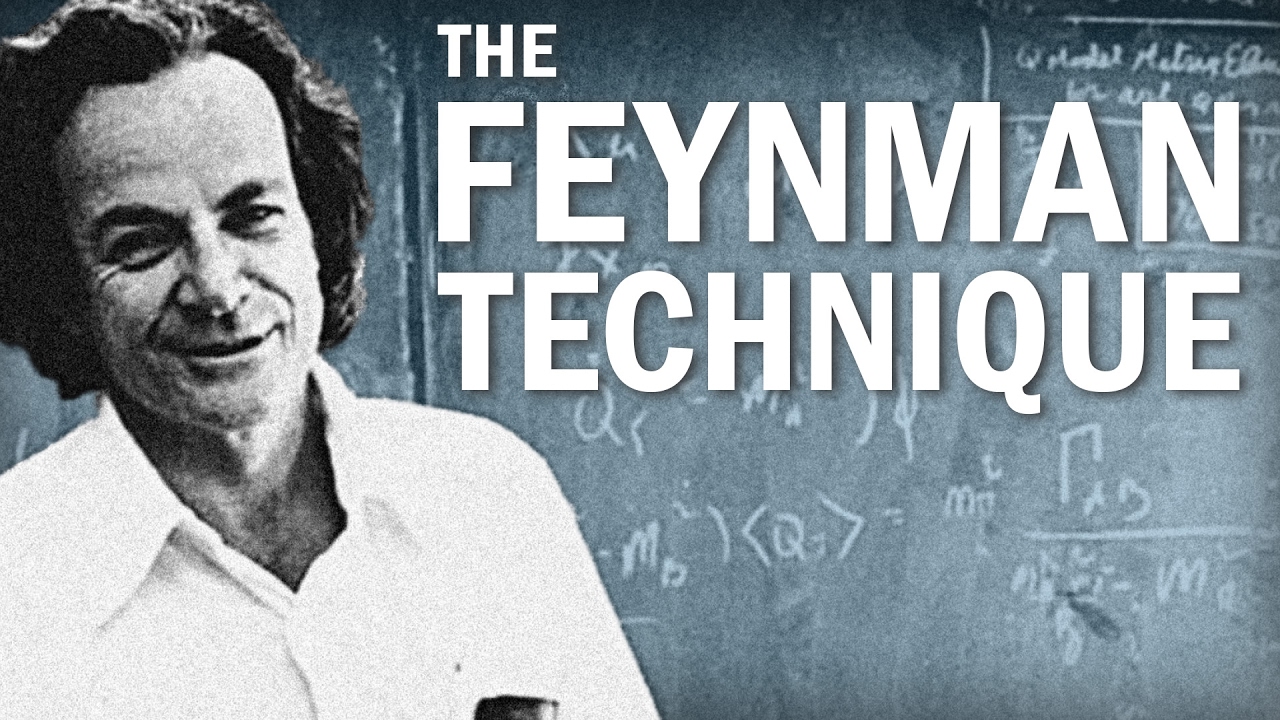
You ask me of an ordinary person, by studying hard, would get to be able to imagine these things like I imagine. Of course, I was an ordinary person who studied hard. Everyone wanted to know the secrets behind how Richard Feynman, the Nobel Prize-winning quantum physicist, was able to move in the right direction, find all the information he needed in order to make big discoveries about the mysteries of life.
We might think he's just a genius, but actually, Feynman says this is his secret: "You have to keep a dozen of your favorite problems constantly present in your mind. Although, by and large, they will lay in a dormant state, every time you hear a new trick or a new result, test it against each of your 12 problems to see whether it helps. Every once in a while, there will be a hit, and people will say, 'How did he do it?
He must be a genius! '" We have to keep a dozen of our favorite problems, and that's the difference. On my channel, I love talking about connecting ideas, but this really brings it home that it's not just about learning everything there is out there in order to make connections; it's about really finding things and seeing if they have a connection to the things that we're deeply curious about.
All we need are some guiding posts—12 guiding posts. I tried figuring out my 12 problems. To be specific, the second I heard this, of course, I took out a piece of paper and a pen and jotted down some of the questions I kept asking about life.
What are some of the questions I always come back to? And this is what I found: What is the role of a specialized generalist, a third-culture adult, a profession-turned-creative in this world? How can I tell what's noise and what's signal?
What's the real question? What's more important: serendipity or intention? What's more important: perception or truth?
How do we develop our taste in music, food, people? Who are my people? Why do I feel a deep sense of calm and sadness when I watch wildlife and space documentaries?
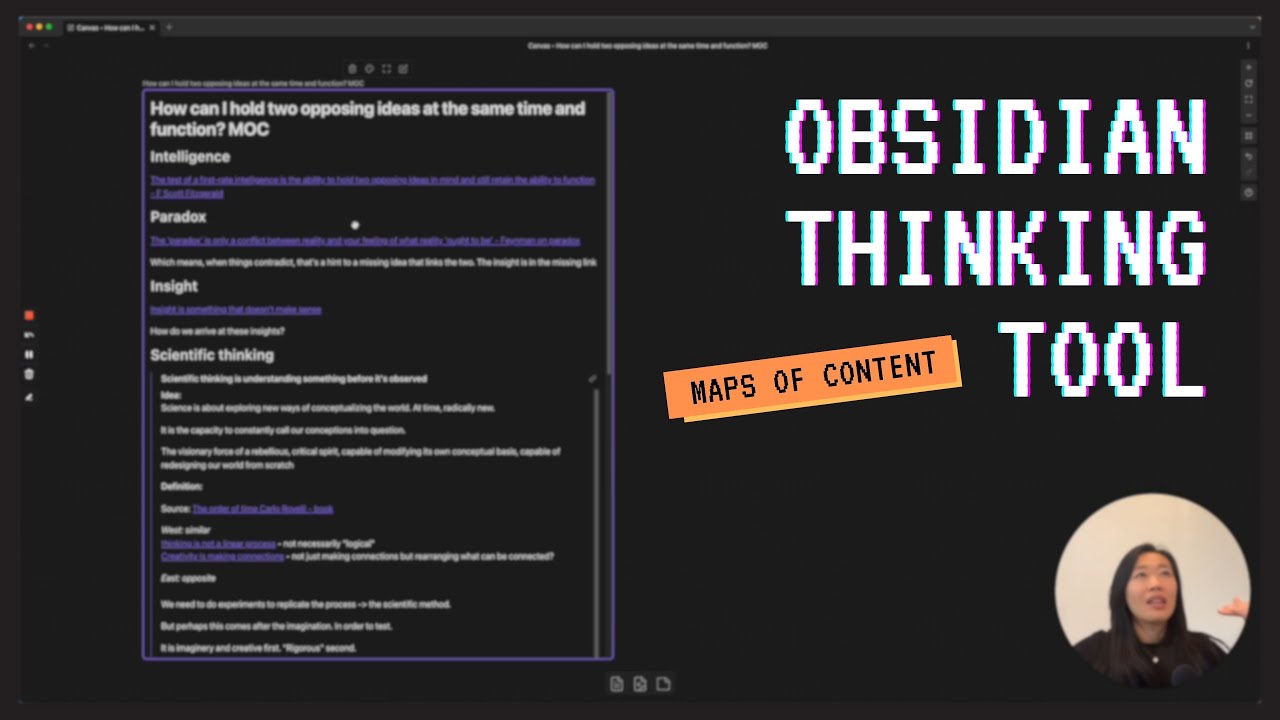
How can I hold two opposing ideas at the same time and function? How to shape an idea so it's ready to be received? How can I stop my hangry self from getting grumpy?
When should I push forward and when should I pull back? That's step one: writing down your twelve problems. So, take a minute and pause this video.
Do this now. Ask yourself, what are the questions I come back to? Step two is where it gets interesting.
The 12 problems came out, but now it's time to look for similarities, because I realize if these 12 problems are the symptoms, then actually, the similarities are the cause. These 12 problems wouldn't leave me alone, and there's a reason for that. If you look at my problems, the similarity is quite obvious.
I'm interested in a lot of duality management. I'm interested in polarity. How do I bring different things together?
That's my thing. That's why I write about intersectional thinking; it's all about connection. That's why I care about input and output, how I bring one to the other.
That's why I care about communication, how I can share an idea that someone else might not be open to, and vice versa. And it all boils down to my identity, which I mentioned in my first question: how can I be a specialized generalist? Does that make sense to me?
It does. Am I a Chinese-Canadian, Japanese-French? I don't know.
It all comes down to being multiple things at the same time, and that really is who I am. If you've ever had trouble coming up with your unique perspective, your unique point of view, these 12 questions will help you get to why you are unique, what's different about you, because the things you're curious about come from your experience in life. If you don't believe it, just compare your questions with mine, and share your 12 questions in the comments so other people can also see what are the interesting things that you are curious about and how they see it as well.
And then there's step three, which is what Feynman said: now, every time you learn something new, put it against your 12 questions and see if there are connections there, because chances are you picked up on something new because you're curious about it; it's connected to your 12 questions in some sort of way. Watch those ideas grow with you as time accumulates. Use some sort of note-taking system.
On this channel, I talk about Obsidian together with the Zettelkasten method, but you can use anything you like—just Apple Notes or pen and paper, it doesn't matter. Just track it over time and see the magic that will come from these 12 questions. Please let your 12 questions change your life, and check out this video here to set up your atomic notes, and I'll see you in the next video.
Bye!