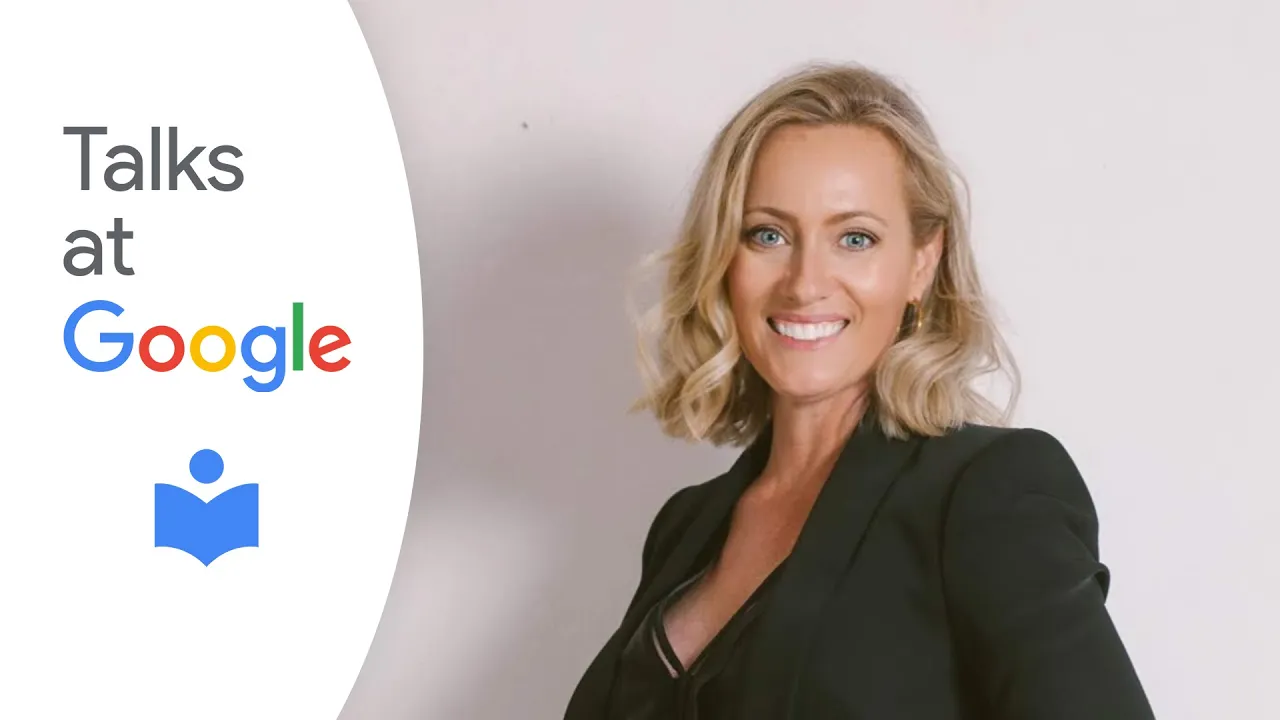
[Music] hello everyone and welcome to talks at Google I am simply Beyond delighted to welcome back to Google our very own an Hyatt many of you know her personally and many more of you have heard of her by reputation um but I think there's a great deal in her biography that uh many of you probably don't yet know um so just a quick introduction to many of her many achievements and accolades over the years uh an was executive business partner to three Titans of Technology Jeff Bezos Marissa Meyer and Eric Schmidt uh she is now
a leadership and growth strategist and founder and CEO of her own consulting firm she has spoken at hundreds of large-scale events around the world she has guest lectured at Harvard Business School worked with executive teams at Netflix Starbucks credential loed Martin just to name a few she has recently authored this eye openening book bet on yourself which is one of the most useful books that I've ever read and it draws upon her Decades of experience supporting these Executives and foremost Tech Founders to draw a road map with which all of us can learn to recognize
own and realize break through opportunities in our own lives and careers I had the personal privilege of working for an in Eric's office alongside our dear friend Kim Cooper in support of Eric who is CEO and then chairman of alphabet and Google and when we asked Eric to describe an he said she is Excellence without ego and a force multiplier for those around her and I couldn't agree more an welcome back to Google Brian thanks for having me I'm beyond thrilled blessed to be back with you I can't believe this is happening it's it's been
too long and you're lucky it's on video or else we might have conspired to to keep you here permanently so so glad to have you back oh it's a thrill thanks Brian and thanks for that generous introduction and before we get started I just want to remind everyone that will be taking a break later on in the chat for audience Q&A so please feel free to add your questions at the right um and among your many many achievements over 12 years at Google I think you actually had something to do with this Fair program at
its beginning uh the talks at Google program yeah this is a a thrilling full circle moment for me for many reasons um but yes I was on a team of just five people that back in the day was called authors at Google where we hosted Incredible Minds to come in and share their experiences and their expertise and knowledge with googlers Worldwide it was founded by Josh Mendelson and it was just a small strapping team of 20% volunteers when I joined and the five of us were very much more makeshift than this beautiful operation is today
but I never imagined back when I joined that team of just five people that it would become this incredible source of information and democratizing success for so many people so I'm thrilled by the invitation and you personally hosted several very high-profile names even when it was early Scrappy days who are some of your favorites my very first ever was Gloria steinm that was very intimidating she and Jane Fonda came as part of the women at Google Talk series and then I personally invited one of my heroes Tina Fay because she had a book at the
time called bossy pants so I hosted her and then I had the great privilege of helping with the campaigns of the 2008 so we hosted Hillary Clinton Barack Obama John McCain to all come and talk to googlers about that very very important 2008 election and I I think that was one of the greatest Thrills of my life honestly so yeah I've hosted all and you know Stephen coar um everyone in between we really met some incredible thinkers well it's right and fitting that you're back and in the guest this time so welcome um before we
we launch into this incredibly interesting biography and and the unique seats that you've occupied over the years I want to rewind to the beginning if if we can to kind of just get a handle on some of the early influences on the entrepreneur that we see before us today um you you didn't exactly come from a a family that was deeply rooted in technology quite the opposite yeah both of my parents were children of potato farmers and I'm literally the first generation non-farmer in the history of my family so the fact that I've worked where
I have is just like Beyond improbable but but the big dreams they started ear because because your father was dreaming much bigger than potatoes true when he was a young boy waking up before the crack of dawn to milk cows his his big dream for himself was to become a pilot and not only a pilot but a fighter pilot and that is a dream that he made come true and and do I understand correctly that that there's a certain movie starring Tom Cruz that that's actually partly based on your father's experience as a fighter jet
pilot yeah it might be overstating it a bit but yes when were writing when the screenwriters were writing the film that became Top Gun they wanted to hear cockpit recordings so they would understand how Pilots talk to each other the lingo you know the vocabulary that is a fighter pilots and they got permission to listen to my dad's Squadron the Hornets and they adopted the flight names the call signs of the pilots that they heard on those recordings and my dad's call sign was goose and my whole childhood was uh playing with the children of
Maverick and Iceman and all these others who now have a claim to fame because of that movie the real the real life Goose so he he must have taken the entire family to go see the movie when it when it came out funny enough I didn't see it until I was in college because there were a couple things my dad did not like about the film originally um first was that it would they were called Navy Pilots instead of Air Force because Air Force actually got nervous about the way the pilots are being portrayed so
they withdrew their permission to call them Air Force the Navy had no such hesitations so he didn't like it was Navy he didn't like that they made gusa a navigator instead of the pilot he was the pilot and third he didn't love that they killed him off however he did love that they made the character a good family man which he is but yeah I didn't see it until College amazing amazing well I think you're you're probably walking in his footsteps with your big dreams and the way you've realized so so so much um when
you talk in the book um about how the family moved from Florida to Alaska so that your father could control the skies between Alaska and Russia and one of the most heartwarming images was your mom she she takes all of your children out to to go berry picking in the Wilds of Alaska yeah my mom decided that if she was going to be dragged all across the world in this military life she was going to create her own Adventures not just my dad got to have his biggest dreams come true but she was gonna have
her own and so yeah she would take us out we would go salmon fishing we would go berry picking but this is Alaska Wilderness we lived on base but very quickly you were in the wilderness and so she would TI little bells on our shoes so that we wouldn't startle any bears they would definitely hear us coming so that was the rough terrain and the incredi rich like childhood experience that I had in that Bas in Anchorage I feel like there's a metaphor there of tying bells to your shoes and and eventually Walking The Halls
of giant Tech multinationals and not not surprising any bears walk around I've never thought of that but I think you're probably right um but but your father didn't stay a Jet Pilot he he he he made a big sacrifice kind of early on and and what brought that on he did yeah he we were three daughters with the fourth on the way and my dad had missed every single Christmas of my childhood to that date he would go on flight for three months at a time we at the time didn't know where he was because
it was top secret the missions that he was on it was the height of the dilatant period of of the Cold War and so he was absent for a lot of my childhood and there just came a point where he thought there was a different balance that he wanted to have for our family and so he reinvented himself again and he yeah left the Air Force to his great heartache and uh went to law school and his been a very very successful lawyer after that and and he didn't just go to law school he he's
having to provide for the family simultaneously and so he he takes part-time janitorial work in order to pay the bills while he's in law school at after having been a Top Gun pilot it's true it when my father walked into a room in my childhood everyone stood up and saluted and to it was a very drastic turn of events when he was you know studying full-time working as a part-time janitor working to be on law review it's um a great example of humility and being willing to really make some sacrifices for for Big Dreams for
for the life really purposely creating the life that you really want for yourself we can put a pin in that I the idea of sacrifices growth was really interesting to me throughout your book and and I think that will come up several times so we we can come back but I want to zero in you at this point you're four kids but the family's goingon to grow and ultimately they'll be how many of you seven seven of us and where are you in the birth order I'm the oldest the oldest and and did that play
a role and and who you became did it influence your personality I think it really did um I am a natural peace keeper I am kind of that Switzerland of the family if any sibling has a problem with the other one I'm usually the one uh helping to resolve it I also am naturally very organized and self-sufficient I'm also very persuasive I had to campaign to get people on my side if we wanted things done so yeah I think being the oldest and being a Libra you know I'm a balancer I'm I'm kind of keeping
the peace even when things were changing very very constantly in in our young family yeah I think that influenced the way I approach the world and my work in the book we we start to see really early indications of these personality traits and your work ethic generally and I remember you mentioned that your your mom set an alarm at at 1:00 am when you were a student I think in high school and what was what was the purpose of that it's probably the opposite of what most parents are doing so my mom would set an
alarm for 1 o'clock in the morning not to see if I'd snuck out with friends but to make sure I had put the books away and actually gone to bed because I was a very serious kid and um I set much higher standards for myself than my parents ever needed to I have always just had that drive for the exceptional and um yeah hard work usually is how I dealt with that drive what what do you think was motivating that that level of effort that's a really good question I think it's just one it's kind
of my part of my personality it just is something I haven't been able to turn off and of now in my adult life learn to channel even more effectively but um yeah it wasn't my parent pressure or anything like that but I think I saw hard work and Big Dreams modeled in both of their lives they're both people who are passionate about the effect they have on the world and wanting to show up in a really meaningful way and so I think it was just their example that that kind of led me to have that
desire in the first place and I kind of approached it in my own nerdy way as a high school kid I I was impressed in the book about how you you talk kind of in the early years there was maybe some insecurity that drove the effort but later that very much evolved and and you found much more constructive positive reasons to to exert the same level of effort was there kind of like an early influence in in your schooling years that that brought about that shift and and mentality and perspective yeah I was very paralyzed
with this perfectionist paralysis that I think a lot of people experienc especially as teenagers and I've had a series of teachers who really helped open my eyes to the fact that I don't have to worry so much about impostor syndrome and and how normal these feelings are but the first was probably Ron Mayan he was my choir conductor in junior high and um I remember at the end of my eth grade year which I think for most people but definitely for me was particularly traumatic it's just a weird time in life and I asked him
to sign my yearbook at the end of the school year and he instead went to his Dash drawer and pulled out a pre-written card that just encouraged me not to approach challenges with a fear or preconceived idea of failure but to really approach it with confidence in myself and that even if it's not perfect that iteratively I am always progressing and getting better so to be very very proud of that process not just waiting for Perfection to be proud of myself being proud of myself for each iterative step along the way and that was among
many sliding door moments in my life that kind of woke me up to a new way of approaching my my bigger goals and the way I wanted to show up in the world so forever grateful to him it's one of my favorite themes that comes out of the book is this reminder that to not focus on the fear of learning but to realize the positive outcomes that will come from it and to learn to to convert that fear into excitement and that's easier said than done yeah for sure needs constant reminding I'm sure throughout but
um so it's fast forward out of out of school and did did you seek to become Jeff bezos's executive business partner first thing out of college like was that was that the goal definitely not that was not a dream that had ever crossed my mind even though Jeff was kind of a local celebrity Seattle's kind of a small Big Town the economy is huge and its Global influence is huge it's actually very small um and Jeff had been Time magazine's person of the year in 1999 so I definitely knew who he was but no it
was at the suggestion of U my my boss um when I was finishing undergrad I studied the University of Washington and graduated in 2002 with a bachelor's degree in international studies and a bachelor's degree in Swedish uh my plan a had been to be a professor but because the.com bust had just happened the economy was really devastated and I had applied at quite literally like a hundred places and not got a single call for even like a phone interview and he's the one who said hey hey have you ever thought of applying at Amazon because
his wife worked in recruiting there and that's literally the only reason I even threw my hat into the ring never expecting what was gonna happen next so so you're entering into the recruiting process at Amazon and did did you even realize that Jeff was on the radar in any way oh no no one even no one ever said that out loud until I sat down for my third round interview with him I it took me nine months to get this job um but I had gone through two earlier review process cesses with um all the
admins in the company I think there were about a dozen or so at the time then three months later I got brought in for a second round with all the svps in the company that should have been a clue that something big was going on behind the scenes because I remember thinking this is a giant waste of their time I am going I'm surely the junior most person um being considered to work at Amazon but it was because I was being considered for a newly opened role in Jeff bezos's office so they were there to
stress test me and then yeah the last round was with Jeff Bezos himself wow so so he enters the room and what do you think I honestly I thought either he or I were in the wrong room because I I just had it didn't no one had told me in advance the recruiter when she brought me in for that thir around did not say it would be with Jeff Bezos himself so yeah I thought one of us was confused okay so you recovered from your surprise and and you must have knocked it out of the
park because he offers you the job on on the spot he did that's that's the headline of it but um he he did have like 23 or so data points on me like previous rounds of interviews but it's true he people love to remember the fact that he only asked me two questions and hired me on the spot um the first question was a brain teaser just to see how my brain worked which was to estimate the number of panes of glass in the city of Seattle and the second was really about passion alignment he
wanted to know how working at Amazon would fit into my larger career strategy what did I want to learn there what expertise did I want to develop why was this part of my journey and at the end of that conversation he did he hired me on the spot and he showed me to my desk which was physically closest to his in the entire company you're three away three feet away from from J yeah and quite literally and he actually built your desk he did I have a feeling this desk is going to be in a
museum someday if it's not already um it was one of the famous three original door desks um so when Jeff started Amazon in his garage in Belleview he was packing boxes and his knees were getting sore because he was leaning on his cool garage floor he went to buy some desks or packing tables and um thought they were ridiculously expensive for the purpose but he saw at Home Depot that there were these doors on sale so he decided to craft them through his own hands and so I sat one of those original door desks that
Jeff made in his garage in Belle yeah we're definitely gonna see that in the Smithsonian someday I wish I'd carved my name into it back then I should have just to Circle back to to the earlier them we mentioned about your father glad sacrifice and abandoning a career as a fighter jet pilot to go to law school taking on janitorial duties to to feed the family Jeff Bezos himself incurred some pretty significant sacrifice when he founded Amazon is that right that's right um I think a lot of people don't think about this Amazon now sounds
so obvious and it's so allc consuming and pervasive in our lives people forget that at the time it sounded nuts so Jeff had this very lucrative career he was a hedge fund manager at DEA he was very successful he was the junior most senior executive ever promoted to his level he had the life he had everything you would ever want to brag about he had a very good paycheck he had it made very early in in his career but he had this crazy idea um of this bookstore that he could start on the internet and
he even pitched it to his boss David Shaw at the time who famously passed that was a billion dooll mistake and he took a huge bet on himself he he let go of all of that Grandeur his corner office and all this acclimate and you know easy P quotequote easy he worked very hard for it but this predictable paycheck and he risked it all to move to the other side of the country where he knew no one and started this company in his garage in Bel wow wow very similar you're right yeah maybe that's why
I really dve with him easily because it was so similar to the behaviors that I've seen in my parents yeah yeah yeah I love the consistency of that theme throughout yeah if I can just read from your book just just a little bit you mentioned how sacrifice and growth are inseparably linked joy and opportunity diminish if you hang on to Old Laurels too long your kinetic energy is drained when you are stagnant that really resonates so you just you might have something great in hand but you have to let go of it in order to
realize something better there's actually a name for that that the monkey trap is that oh yeah so there's this great anecdote um that I describe in the book where where there scientists were trying to collect these monkeys who were actually extremely delicate so the the way that they would collect them to study them because they were um going extinct is they would set out these coconuts chained to the ground with a little hole just big enough for the little monkey this delicate little wrist to get in and they would grab a handful of rice but
their fist was actually once they had the handful of rice too big to fit back out that same hole and so they were effectively trapped because they were unwilling to let go of that handful of rice that they couldn't even enjoy anyway and that's how the scientists collected them and I think that's so analogous of so many moments in our life where we have something that we're so afraid to let go of but in doing so it's actually holding us back I I I think it's a great I honestly have to learn this lesson over
and over again it's not something you learn once and done but that's something I reflect on often when I'm feeling that sense of like itching for more that I may be ready for a new challenge I try and remind myself to let go of that Rice so that I can have my freedom in exchange yeah you exhibit that well um so first job after college you're just a few months in you're seated next to Jeff and and you're very quickly put to the test in a way that most people can't imagine can you can you
talk about what happened like yes the full story you'll have to read in the book but I yeah was um tasked it was I think quite literally the first task that Jeff had come to my desk and specifically gave it just to me but he uh needed to go visit some properties in West Texas I and nobody else knew what he was doing there uh quite yet but I hired my very first helicopter again I'm 22 years old like I don't have a helicopter in my rodex I don't know how to do most of what's
just been assigned to me but off he goes on this trip and um the short version of the story is he crashed that helicopter that I hired for him crashed with him inside and um that was more than just the risk of almost killing my boss potentially of killing my boss boss but also we have to remember that in 2002 2003 Amazon was not yet profitable it was still in the red and every single bit of shareholder value was based in faith and Jeff Bezos who I quite literally thought I had killed that day it
was a agonizing couple of hours until I found out what had happened he did he he crashed in the helicopter I had hired so so during those hours you're you're having to assume the worst and and you call an em emergency meeting of the board of directors you're working with the communications team for every contingency and did did Jeff acknowledge kind of what went down and and how you performed in that moment it's probably one of the memories of my life that is permanently burned into my brain because yeah I had called this emergency board
meeting I was nobody I'd only been at the company for a couple of months the board directors didn't even know who I was I uh it was actually the first day of work for our new Communications officer it was actually Andy jass's sister at the time who's now C CE of of Amazon and uh yeah once I finally found Jeff uh in the hospital where he had been taken and patched him into the board of directors he has to talk to me and he said he in that phone call he said what I think is
the nicest thing anyone's ever said to me professionally or he said an I hear you're really good Under Pressure now he probably said more than that I think I blacked out I was just so relieved he was alive and he wasn't mad at me but that was an important moment for two reasons one he no longer saw me is this junior 20-year-old who had no business having this job which was probably accurate but most importantly it changed the way I also saw myself and so from that moment forward he gave me huge tasks that in
no way resembled anything someone in my job description should be doing and we really were an amazing partnership because I realized that even if something went wrong a it would never be as bad as a helicopter crash again and B I could trust myself to repeat that pattern of gathering the right experts around me pulling together contingency plans making educated recommendations and keeping my cool and trusting myself that I was going to figure it out even if I'd never faced a challenge like this before and I think everything that's happened since in my career is
a ripple effect of that moment so while I pray that I never have another day like that again I'm really glad it happened and I'm glad it happened at the very beginning of my career because it really changed everything that followed after I think you mentioned your Mantra be be the calm in the storm and if I'm working with you I know you exhibited that perfect L there could be huge amounts of chaos at Google and Eric's office and that you were you were a rock and we were for it oh so so you're at
Google at at the beginning and it's it's just after some time tur starting to turn a corner from losing money to maybe being profitable so surely you must have stuck around to cash in your lottery this is one of the most frequent asked questions I get especially when I'm speaking at universities they're like why would you leave Amazon just as it's becoming profitable so yeah after three years I left um because I kind of went back to plan A and I wanted to be a professor and I got into my dream program at Berkeley and
I thought it was going to take a couple years but I actually got in on my on my first application and Jeff was really proud he was he knew that that had been my plan we talked about it in that very first interview and he was really supportive of anybody seeking out you know something bigger than them so off I went and that looking back I mean it's was probably like a billion dollar mistake but um but yeah I left after three years I I actually don't see it as a mistake I think really important
things happened after that but um yeah was total goodbye to Amazon not really so it's funny I think the very last email I ever sent from my Amazon work email account was to udy mber udy was a vice president who had been tasked with being the CEO of Amazon's search company called A9 based in paloalto and that was just an hour from where I was moving to in Berkeley California and so I emailed udy and said hey I'm coming down I'm gonna be in your neighborhood if you ever need a Jeff Whisperer which is what
I became known for being um I'm around and he emailed back immediately and he said when you're in California come see me and I ended up working for him every Friday going forward and doing special projects for the CEO of A9 are you even supposed to do that in graduate school no I was literally like prohibited from taking in on on any work while in my PhD study so yeah I just I anticipated that I would miss it that I would miss the pace of tech and I just kind of wanted to keep my toe
in the water even though it didn't really make sense for my plan and I had no idea how in doing so that would kind of set off another set of dominoes I had not expected I've seeing another theme start to take shape here which is where you're taking on extra projects above and beyond your core role in order to expand your identity and your opportunity and uh and you put it really well if I if I may again quote from the book annotated um it's still so funny when someone quotes me back to me but
I kind of love it I thought this was interesting because because literally you the sentence starts the secret to happiness and it's on page one of the first chapter so if you have the secret to happiness you don't really need to read the rest of the book but but there's a lot else that's of a good of wisdom here in the book too but so don't stop here but it says the secret to happiness is learning to find joy in the process of doing hard things and I thought that that was fascinating and it comes
up time and time again that we hear about what's on your plate supporting these Executives it sounds incredibly daunting and you're asking for more and and you must be digging deep and and getting something out of it more than just sweat and sleepless nights I think that's the most important part of it is that it's an oversimplification that sentence but that that's why the whole book follows that sentence that opening sentence of chapter one which is the joy in the process of do of doing hard things and it's not waiting till that final finish line
to feel satisfied or proud of yourself or like the effort is worth it and I think um that's something I'm really lucky that I saw exhibit from every level of people around me it's the greatest gift that Tech the tech culture actually gave me was because I'm naturally very timid I hate making mistakes I hate this kind of messy middle part where you're figuring it out and kind of letting people whose opinions I really care about see my process but because it was exhibited by every layer of person in the organizations both at Amazon and
at Google it gave me that psychological safety to participate and kind of show up in the same way they did so it was a little bit of my nature being nurtured into new behaviors I'm not this big bold risk-taking like follow me off a cliff kind of person I'm much more iterative and um that's really what early Tech taught me to be and in fact you mentioned at one point that you you don't have a tattoo but that if you did you know exactly what it would be can you sh what that would be yeah
so this is something I stated in the conclusion um where I say yes if I was to get a tattoo I think it would say grm F fitar which hopefully I don't know if I'm pronouncing that properly but Latin isn't a spoken language it's just a written language so I can say it however I want I guess but grattin prer is actually the mission statement of Jeff bezos's Space tourism company blue origin that's not why I would get it but it's because of the meaning so gratum feros means step by step ferociously and I just
think that's the perfect description of the way I now approach my life and career I'm not this like big moonshot thinker I love working for people like that but that's not my personality I love to be step-by-step methodical but do so fearlessly and ferociously and showing up in a big way and I think that's honestly made all the difference brilliant so we we've gone off on a number of tangents I'm I'm sure so so we're running short on time so I want to fast forward just a little bit to you're you're you seem to be
sort of circling Google here geographically and Berkeley you're taking on part-time work in Palo outto you're right on the cusp of Mountain View so so Google must be coming to the four at last they did they did that wasn't part of my grand plan but yeah as soon as I moved to California people heard that I came down there because not many people have work directly for Jeff Bezos so recruiter started calling and I was very happy in my PhD I had thoroughly enjoyed my time at Amazon but I didn't think that that was the
next chapter of my career but after a year or so quite literally of Google recruiters trying to talk me into it uh finally a recruiter was very clever uh Jeff was his name and Jeff invited me to come to campus and just do a tour he said don't you want to see what it looks like you know I'd heard about the free food and you can bring your dogs to work and all those famous perks of early Google and the second I step foot on campus I knew that this was my tribe of people and
that this was going to be my future I did not expect that it would be for the next 12 years but I knew I kind of found enough natural home who were when you when you went on that tour and and you sat down for lunch who were you seated between very memorably it was between I don't know if this is by accident or by very clever design by Jeff my recruiter but I literally had lunch between a former astronaut who had been to space um a former professional cyclist who had um done the tour
to France with Lance Armstrong in the hype of his Fame early fame um let's see and Vince surf the original architect of the intern internet that is who happened to be at my lunch table wow and I have to again those of us who who work at Google now it it it often it's good to remember these early days and just these early first impressions of Google and you say that the employees were unconventional and irreverent in their personal and thinking style they were datadriven in their decision making and goal setting the Unapologetic Pace the
audacious goals of the company being a major player and inventing the future of technology it was all intoxicating yeah so you you felt like You' found your home I loved every single bit of it honestly it was just people who were unapologetically dreaming and making a lot of stakes mistakes along the way but something really special about that combination of insatiable curiosity incredible Drive passion driven work and just being surrounded by like the smartest people in the world it was really really yeah intoxicating like I said and you mentioned passion driven work um you talk
about in the book The mentalities of work and there are different ways that you can approach what you do can can you elaborate on on what those different types are and and where you fit we could talk about this for hours this is among my favorite things to you know you you mentioned that I do a lot of Consulting with high performing organizations and leaders ship teams and this is really what we talk about is I think the the greatest framework it wasn't purposeful this way when I was doing it or or in my early
career but now looking back there were some patterns of behavior that I think helped me create my own luck engineer my own Serendipity and there's a structure now that I can see quite clearly in retrospect that wasn't quite clear in the moment that I now call the win-win-win and this is something I encourage everyone of regardless of your seniority or industry to really do this thought proc process because for me it's been life-changing the first part of the win is asking yourself what do I want out of this next next stage of my career what
are the expertise I want to develop what's the uh skill set that I want to be known for what's the reputation or network that I'm building and then have a conversation with the stakeholders in your life your manager even your life partner people who really need to be invested and get on the same page with this plan that's the second win when I am as an individual contributor and my ambition can solve a problem for my manager um that allows her or him to delegate more freely to me because that will free them up to
contribute to the third win which is how the organization needs that manager to be showing up so when I'm purposeful in what I want to learn allowing them to delegate something to me so they can show up in a bigger and more meaningful way towards what the organization needs for us to win as a whole that's actually how you get a yes to seemingly crazy ideas I have proposed things that are far outside my job description that are far far senior to to my expertise but when I frame it within the win-win-win that's when I
get at least a trial often if I get a first no I say what do you think if we do an experiment within the next month or so let's try X Behavior here's the success indicators we should look for if we see this this and this happening maybe that's something we can continue and um that's a very data head way of presenting it but it's worked every time honestly yeah I I love that and I thought it was particularly interesting it personally I find it a challenge to get Beyond on the the nitty-gritty of my
job you know a long Tas list of seemingly minor small things that is just and there's so much there that it's hard to really turn my attention and focus on the big stuff and and I thought it was interesting how you said that by by Framing it by aligning your goals personally as an individual contributor with the goals of your team and your company you you create for yourself mental permission to focus on big things yeah in the book I share an anoun ology about rocks Pebbles and sand that was popular popularized in the book
Seven Habits of Highly Effective People and um to your point about like the never- ending to-do list so once we have this win-win-win conversation that's not the end of the story there's always more that we could could be doing need to be doing and we need to sort through and prioritize especially in Tech constantly rotating that priority list so RS Pebbles and sand is a nice analogy where it says your time is like a glass jar and you have to put in these RS PS and sand but the order of operations is really important it's
really important to identify First for yourself confirm with your manager and for the needs of the organization what the rocks are if I can only do three things today what should those be because if you put the rocks in the glass jar first then the Pebbles will fill in the Extra Spaces and the sand if applied last will fill in all those crevices however I found and especially um now that we're working remotely from each other it's really tempting to touch a lot of sand every day because you're like look manager look how many times
my name's in your inbox email email email email but that might not actually be what they need from you most it might be heads down serious thoughtful work and you're you're working on one Rock today which when you're remote can feel really like do they know how hard I'm working you feel a little bit invisible but if you have this really proactive conversation with them of seeing like I think this is the way I can contribute most to Our Success then that's a great way to be promoted that's a great way to be seen as
a true Problem Solver um but it's a conversation needs to happen often and you talk specifically in the book about how to be recognized for your contributions and how to set yourself up for promotion and and it sound like you learned the hard way yeah in your experience you talk about how you did it the first time and how that went and then how you actually Tim learned through it yeah the first time I asked for a raise was about a year after I started at Amazon to be fair uh it was a very low
salary because it was my first job out of school I was definitely being underpaid so it wasn't ridiculous that I was looking for an increase I'd performed very very well and far outside of the um job description that had originally been hired for there was a case to be made however I did not make it I just basically I had been um through no proactiveness of my own been recruited by Microsoft and they were trying to steal me away so I just came to jeoff and I was like look I have no interest in working
at Microsoft but I have this competing offer they want to give me X number more dollars will you match that and I'd love to stay that's the case I made that was not well received to say the least Jeff was not impressed with that and while it wasn't wrong it wasn't compelling I didn't actually make the case of like here's what you hired me to do I'm doing actually this which is this job description which competitively in the market is this and here's how that has freed you up to do X Y and Z I
just didn't make the case lesson learned I never did that again it was truly I mean he could it was one of the times when he was so angry he just didn't engage he was just like fine he just and and that's kind of the horror I mean I'd much rather Jeff yell at me than give me that kind of like non plus so it never happened again but then when I was at Google I thought okay I'm gonna apply I'm G to do this very very differently and I decided since Google's a very data
driven company I had a spreadsheet that I used in fact this is how I got you hired onto my team this is how I make a case when I need something is I um I first went when Eric became executive chairman we had to completely reinvent the way he showed up for the organization for the tech Community for our users at large which is basically the entire world and so I needed to really reinvent myself and create a role that had never existed at Google before which became Chief of Staff um in doing so I
really had to make a case to Eric about what that should look like how many people need to be on our team what expertise we needed to be developing how we're going to show up in a completely new and unexpected way and so when I was trying to expand our team because we were absolutely drowning just Kim and I um I did it through a spreadsheet where I said here's what we're contributing right now here's what the organization needs from us which is much more than what fits in column A here's column B which we're
doing by working 15 hour days and we cannot do this forever and then there was a third column these are the shiny objects that I knew Eric would want and I said if we had a third person on this team here's all the gamechanging 10 Xing opportunities that we could do that I think is actually directly tied again this is the winwin win directly tied to how Google and our users globally need you to show up he said yes at first it was a trial and then I got to hire you full-time but um I
think that format is really really compelling love it I'm glad to be one of the wins you you are definitely one of the biggest wins ever I could go on reading about the book and and talking through your life story for for hours um I'd like to take a break and and let the audience uh join us we we have a Live question uh from mallerie Rothstein uh one of our own googlers who in addition to being an executive business partner is the founder of Beyond and admin uh a a group that's dedicated to expanding
the the identity of of the admin role at Google uh so welcome mallerie hi and thanks so much for joining us today my question is what has been the greatest blessing and the greatest challenge for you since transitioning from being an executive business partner and chief of staff to a leadership strategist there's so many layers to that question mallerie I think it's a really smart one um it's been hard you know I find that I've made a lot of mistakes but I had to remind myself that that's part of success and um honestly what I
miss most is my team like Brian especially included but I think um I had to kind of go back to my original methodology for Reinventing myself and ask myself those hard questions like look I left Google in September of 2018 moved to the other side of the planet I'm actually based in Europe normally based in Spain and I was really inv inventing myself from the ground up again and I went back to that original conversation of what expertise do I want to be known for what are the tribe of people I need around me in
order to be successful really Gathering those experts and I thought there were three things that I needed to be successful which I think in general are true especially when we're leveling up in our careers the first first category is a mentor somebody who knows my work sees me kind of on a regular basis is able to give me that iterative feedback the second is a sponsor a sponsor is somebody just a step or two ahead of you who can open the doors that you can't yet open for yourself and it's really important that that person's
only a step or two in advance the biggest mistake I see is people going and looking for a sponsor that's like 10 years ahead of you and that doesn't really work because one a lot of times they don't remember how they got through that door in the first place or the cont s or context in which they got there themselves is no longer relevant um so really look for somebody who's just a step or two ahead of you and then third is actually my favorite category which is an avatar mentor and it's my favorite because
these people don't need to know you exist these are the people who are 10 years plus ahead of where you want to be they're on the stages you want to be on writing the books you want to write leading the teams or working on the problems that you want to be leading and thanks to the internet we can kind of reverse engineer how they got there I can kind of follow their path of how stepbystep iteratively they qualified themselves to sit at those tables stand on that stage Etc and so a couple of mine are
um Adam Grant or um bernee brown or Sarah Blakeley these are leaders that are self-made they did everything kind of the wrong way they did did it the non-traditional way and I find that wildly inspiring so those three categories and being really purposeful in in creating this tribe the support system around me that keeps me really accountable to my big goals I think has been really really helpful and helps me in those moments of Terror um there's this great book called the hard thing about hard things and um my favorite line in that book is
as an entrepreneur there are only two emotions Terror and Euphoria which is so true because every day I swing wildly between the two um but I think it really helps me in those moments of self-doubt um to remember that that's just what success feels like so that's how I've tried to take those principles those building blocks um that I learned in being a an assistant and EBP and a a chief of staff into now founding my own organization but I've made a lot of mistakes and that's just part of the process awesome thank you so
much you I think we have time for just one more question from the audience uh Stephen W gravitz asks what advice do you have for aspiring authors like you can you tell us about your mindset goals process of translating all your hands-on experience into a book Stephen we should take this as like a separate full hour discussion honestly it's it was super hard so I'd never written a book before I thought it would be more like you know projects I've worked on really complex projects I've worked on I'd written articles I thought that that formula
would translate into my creative process you did not so the first thing my first advice to anyone aspiring to be an author is give yourself some Grace to figure out your creative process unfortunately this is something you probably cannot learn or adopt from anyone else because it's so specific to the way that you're individually creative and I actually hearkened back to some of my experiences at Amazon and Google to learn my creative process so when I was at Amazon Jeff Bezos um dated quarterly thinking Retreats where he would take himself outside of his conference room
and just clear his mind of all the Clutter and um free himself up as much as possible and he came back with notebooks full of new ideas so for him it really took a couple days of getting out of his routines in order to let inspiration come to to the Forefront then when I you when we Brian and I were working uh for Eric he did that in a totally different way he did that through um you know whenever he was in a new city he would gather a table full of the smartest people in
the world who had expertise different from his and that would that would invite his brain to spark new ideas and make new connections he never would have otherwise if he was just in his usual circles where he was the smartest person at the table um Bill Gates famously goes to his boat house with bags full of books and pulls inspiration from that so everyone has their own creative process for me after through a lot of trial and error I realized I needed four-hour chunks of time if I gave myself an entire day I didn't get
anything done if it was two hours I was still in the mindset of what I'd just done or being worried about what was coming next so it was really sweet spot of about four hour chunks when I could be creative honestly the hardest part of writing this book was being taking 15 years of experience from some of the greatest minds and most amazing moments in Tech History and getting it down into a single draft there's um 70% of the original book that I wrote that is on The Cutting Room floor so stay tuned for books
two and three but um yeah that was really that was really the hardest part but I think my biggest advice to aspiring authors is to really spend some time figuring out your creative process structure what time of day number of hours Etc what inspires you I literally had this candle on my desk of a scent called Magic wood that I would have to light every time I wrote because that smell the guy got me into the creative zone so yeah discovering what works for you but to be continued I think that's a really good question
I I watch my uh website I'm going to post something on that and give you a couple more tips beyond that but that's where I would start and thank you so much we're much to my dismay at time but I couldn't be more grateful for you taking the time to join us again and to share so much wisdom in this book uh just a reminder to everyone to run out there's also a link in the YouTube description if you'd like to buy it and um yeah it's wonderful to see you thank you to everyone for
joining us today and uh we'll see you at the next toxic Google [Music] event




![5 Pieces by Hans Zimmer \\ Iconic Soundtracks \\ Relaxing Piano [20min]](https://img.youtube.com/vi/Os47nMrjw_Y/maxresdefault.jpg)