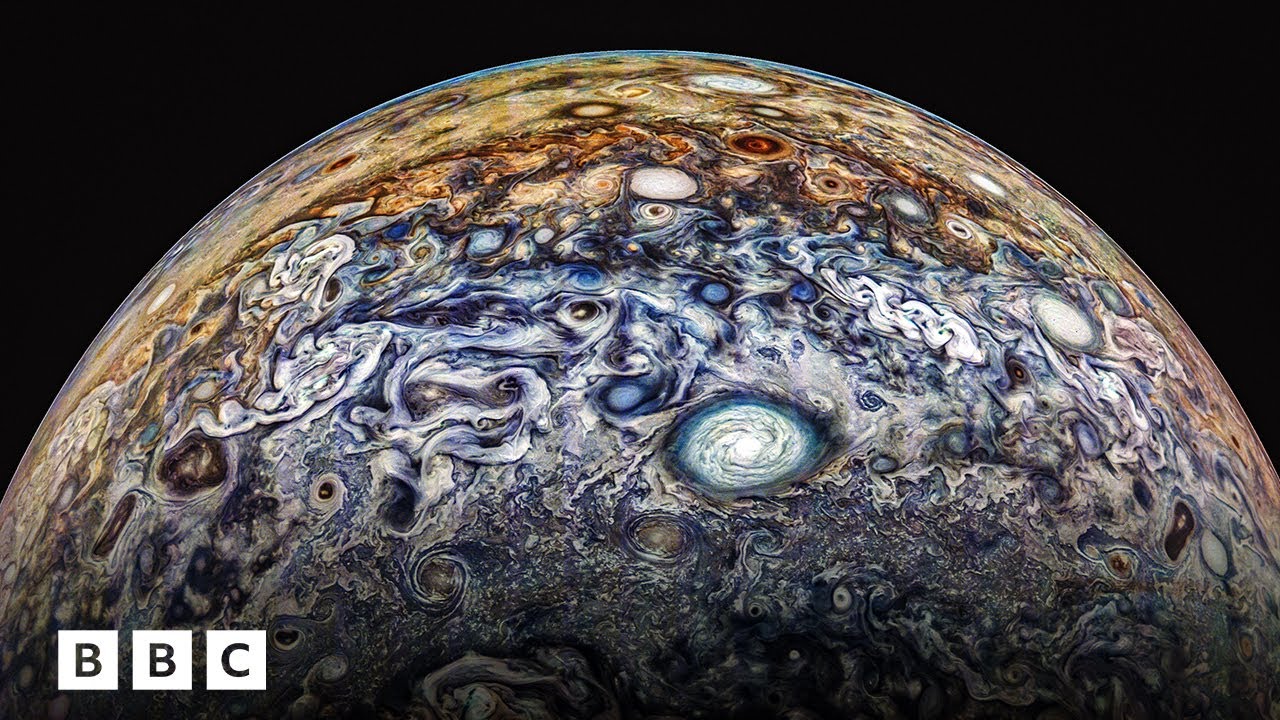
the Clouds Of Jupiter a magnificent canvas of gas swirling shifting and morphing hiding the secrets that lurk below this turbulent atmosphere envelopes the entire planet obscuring Jupiter's true form a chaotic World liquid metallic hydrogen [Music] over the years many spacecraft have explored the gas giant capturing incredible photos from afar as they passed by or entered into an orbit but only one has purposely dived into the planet on a mission to discover what is truly happening deep within the Clouds Of Jupiter so what did it discover and what happened as it fell into the unknown you're
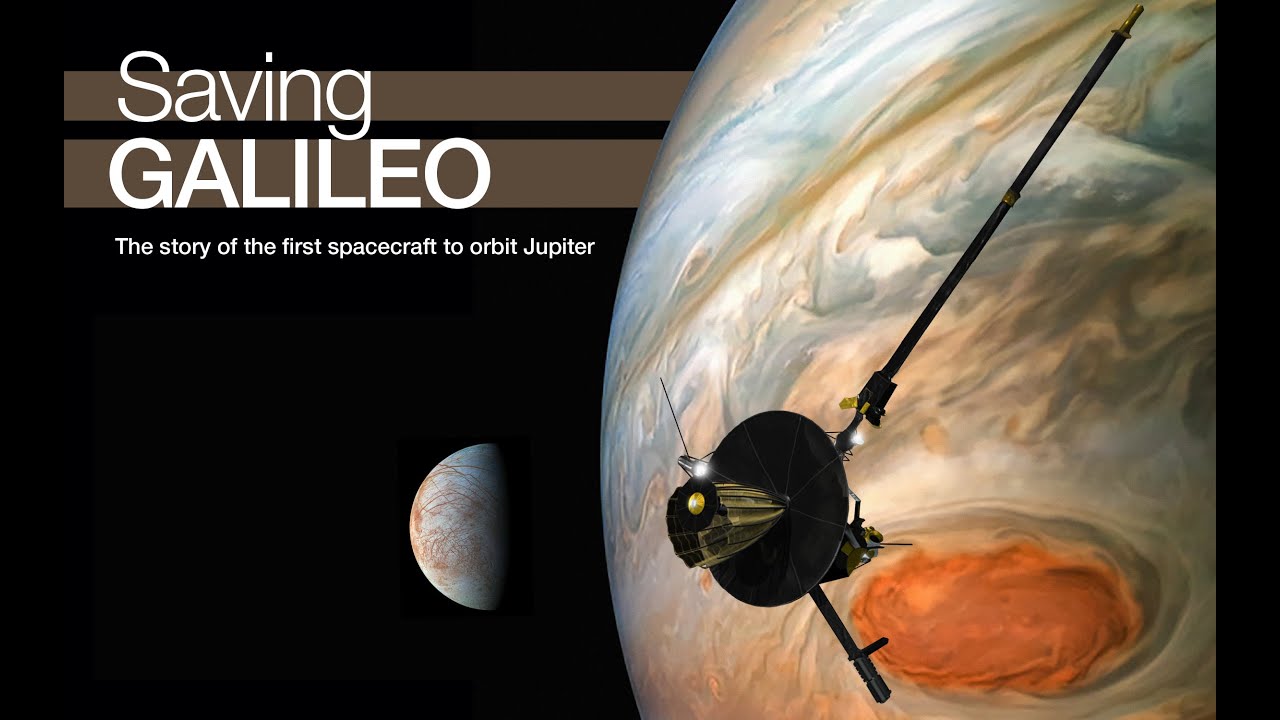
watching v101 space my name's Rob and if you enjoy my videos make sure to subscribe and tap the notification Bell to never miss an upload named the Galileo atmospheric probe it was an independent craft that hitched a ride with the main Galileo spacecraft a NASA mission that launched in 1989 to explore the planet Jupiter and its many moons the atmospheric probe was designed to descend through Jupiter's thick atmosphere and collect data about its mysterious Cloud layers still to this day it is the only probe designed to purposely enter a gas giant planet and Incredibly despite
Jupiter's intense conditions it succeeded sending back unprecedented data for around one hour on December 7th 1995 the atmospheric probe was released from the Galileo spacecraft and began its lonely descent towards Jupiter the small probe hurtled through the inky black void for around six hours detecting nothing but the deafening Silence of space contrasting sharply with the turbulent storms that awaited it it entered the Jovian atmosphere at an incredible speed of over 170 000 kilometers per hour fast enough to jet from Los Angeles to New York in just 90 seconds it endured extreme heat as it slammed
into Jupiter as friction ignited upon its sturdy heat shield the incandescent Shockwave ahead of the probe was as bright as the sun reaching searing temperatures of above 15 000 degrees Celsius then just a few minutes into its descent the parachute deployed drastically reducing its speed with the billowing fabric slowing it down at maximum deceleration the craft went from above 170 000 kilometers per hour to just 160 kilometers per hour experiencing a force 350 times Earth's gravity eventually the Galileo probe was slowed down enough to begin studying Jupiter's atmosphere and local weather sending valuable data back
to the Galileo Orbiter which then relayed the information to Earth the probe's instrument measured the temperature pressure density and composition of the atmosphere as it descended through different layers for about an hour it saw lightning thunderstorms and ferocious winds all crackling and blowing through enormous Cloud structures the environment this probe experienced was unlike anywhere ever explored before a world of true chaos after about 61 minutes of falling over 160 kilometers into Jupiter the Galileo probe vanished its signal was lost at this point it would have likely been battered and worn as it experienced ever increasing
crushing pressures the deeper it descended for hours it would have silently fallen into the darkest depths of the gas giant until the heat and pressure became too much and the probe melted and vaporized forever becoming a part of Jupiter completing one of the greatest journeys of all time the Galileo atmospheric probe significantly contributed to our understanding of Jupiter's complex atmosphere when it entered Jupiter's atmosphere for example it was found to be much denser and hotter than expected Jupiter was also found to have only half the amount of helium expected and the presence of large amounts
of argon Krypton and Xenon were discovered for these to form Jupiter would need to be much colder suggesting it once orbited far further from the Sun than it does today one of the probe's most astonishing discoveries was the presence of lightning storms that dwarfed anything ever witnessed on Earth it recorded radio signals characteristic of lightening discharges providing the first ever direct confirmation of electrical storms on a gas giant it was found that the atmosphere was also far more turbulent than expected powerful winds reaching speeds of above 600 kilometers per hour were consistently detected lower down
in the cloud layers and it found evidence of aerosols or particles within the clouds that are believed to be made up of complex organic compounds the presence of these aerosols is thought to contribute to the coloring and opacity of Jupiter's magnificent appearance the Galileo atmospheric probe was just one small part of an already ambitious Mission but as it fell into the abyss of this distant chaotic World successfully transmitting groundbreaking data as it descended it provided a legacy of knowledge of Discovery and a better understanding of a planet shrouded in mystery although the probe's ultimate fate
was to be vaporized into trillions of pieces forever becoming a part of the gas giant it was later joined by another its original partner the orbiting Galileo spacecraft eight years after releasing the atmospheric probe it too flew into Jupiter burning up after completing its Mission and successfully preventing any accidental contamination of Jupiter's moons just like the atmospheric probe before it it too became a part of the gas giant unfortunately there aren't any new missions planned to drop a modern probe into Jupiter the main focus at the moment for this planet seems to be the icy
ocean moons orbiting it but we may one day see new data from the atmosphere of another distant World possibly either Uranus or Neptune the Solar System's ice giants Neptune seems to be the preferred destination due to its mysterious dwarf planets like Moon Triton if the mission does go ahead then it would launch in 2031 get a gravity assist from Jupiter and arrive at Neptune in 2043 after a 12-year Cruise when it finally arrived it would orbit Neptune but also release an atmospheric entry probe much like the Galileo probe the spacecraft orbiting above would be equipped
with a camera to capture video of the probe Falling Away into Neptune's atmosphere providing us with new views of the blue giant never seen before during the four-year Mission the orbiting spacecraft would also study the planet its rings Aurora small moons and space environment and fly by Triton multiple times eventually just like the Galileo spacecraft it would also plunge into Neptune's atmosphere completing its mission exciting times may be ahead but as it stands the Galileo atmospheric probe is still the only probe to be purposely sent on a mission to study the inside of a gas
giant planet a forgotten story in the history of human space exploration [Music] I hope you enjoyed this video if you did then remember to like And subscribe if you want to explore the universe even further why not click on this video thanks for watching and I'll see you next time [Music] foreign [Music]












![Voyager 2's Discoveries On Neptune and Uranus [4K] | Zenith | Spark](https://img.youtube.com/vi/W0ly_BOLK48/maxresdefault.jpg)