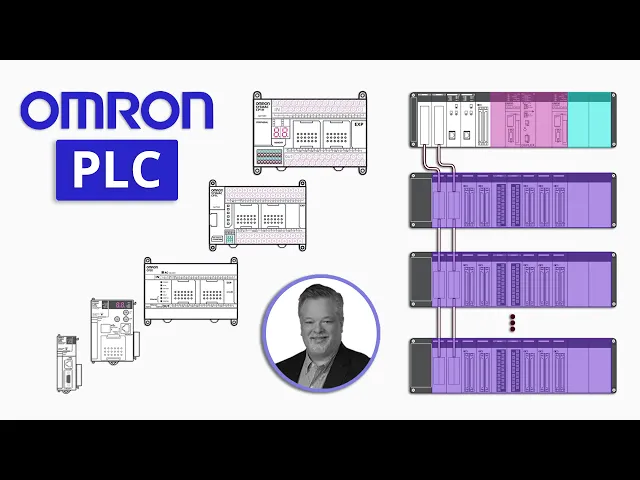
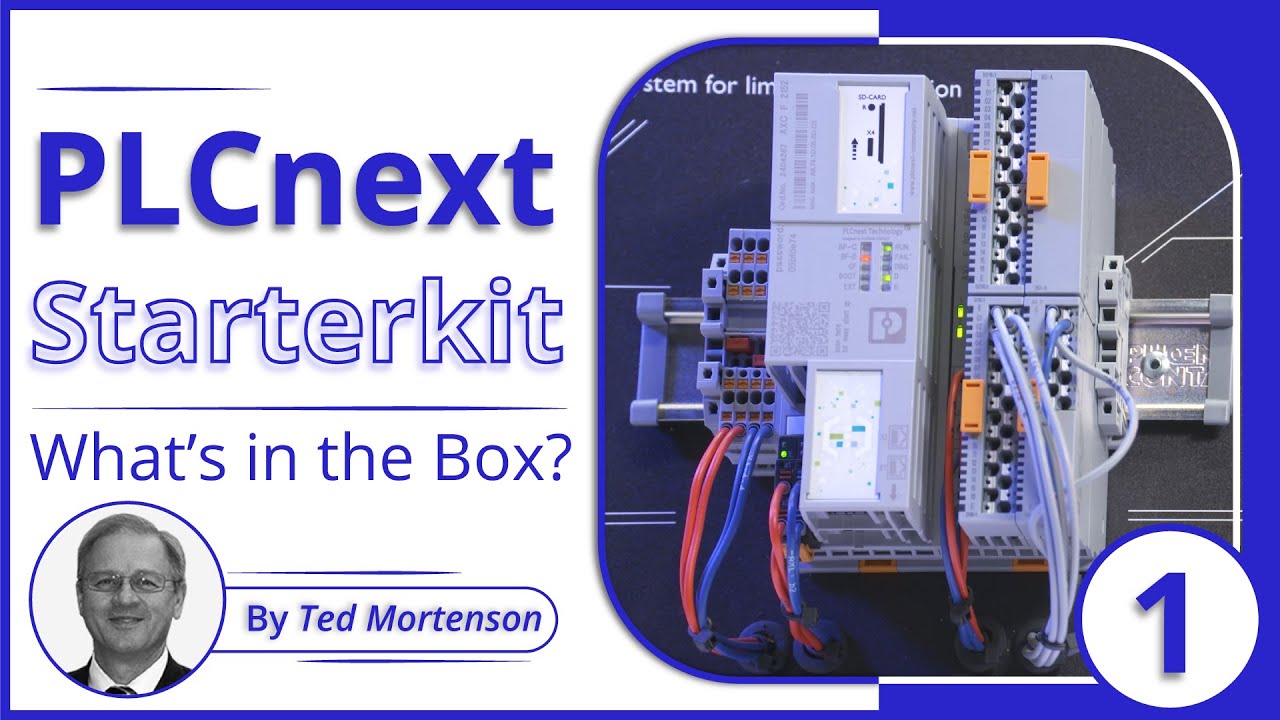
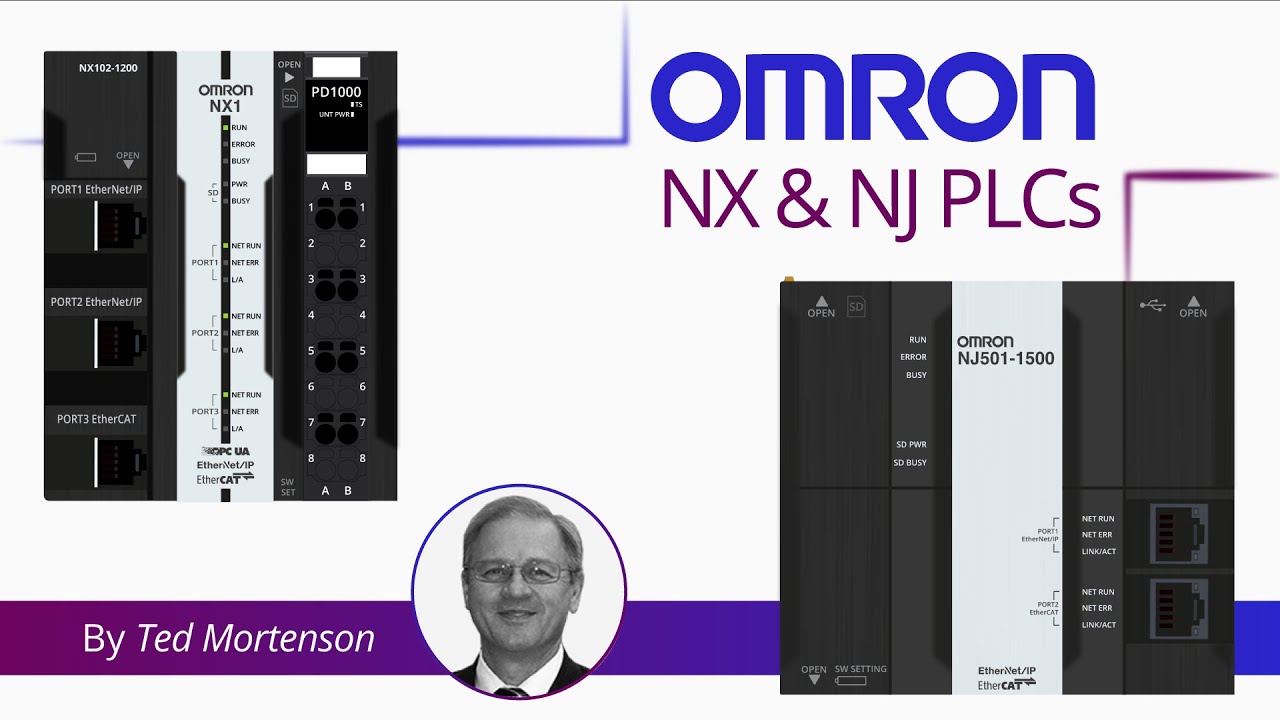
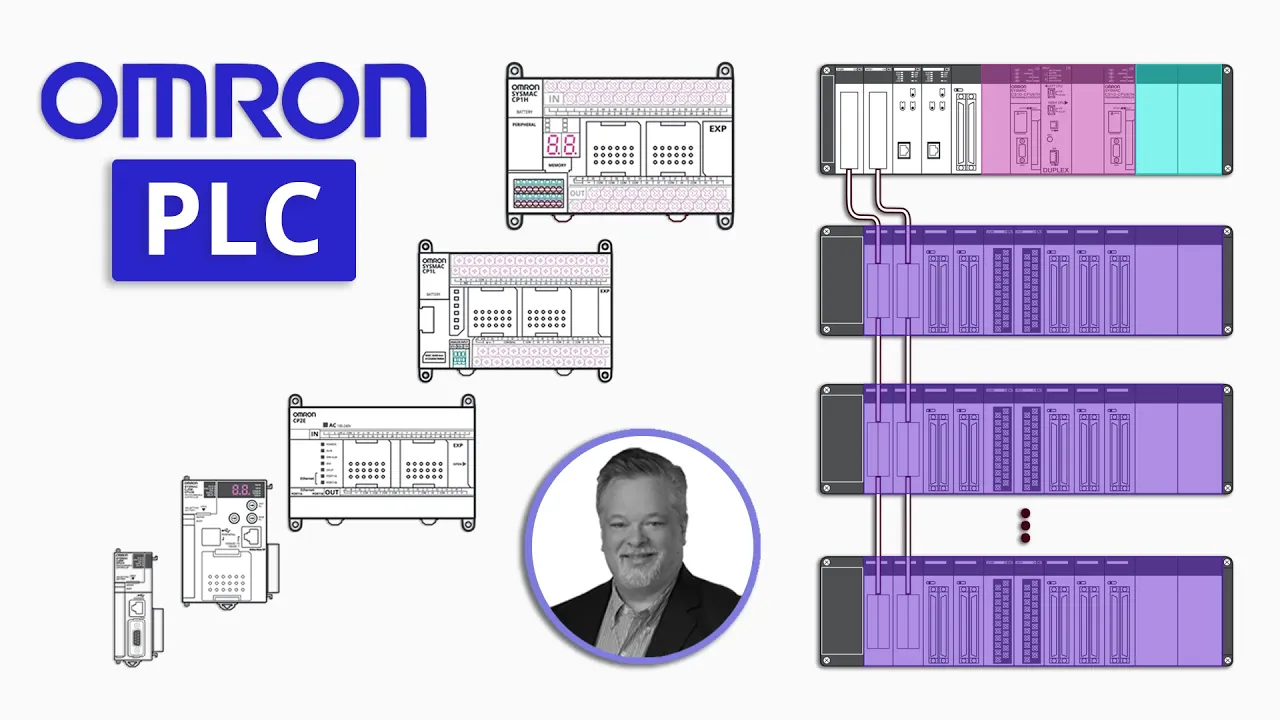
There are dozens of manufacturers of Programmable Logic Controllers that are used in the automation industry. One of the leading makers of compact PLCs for machine automation is Omron. Omron offers a flexible line of scalable industrial PLC controllers for use in single machines or as part of larger machine control installation.
Omron offers several models of PLC hardware that provide several processing and I/O options for small to large machine automation systems. The CJ2M line of PLC processors and I/O have a modular design and support more than 2500 digital and pulse input and output I/O points wired to I/O cards in local and remote racks. Every CJ2M CPU model supports a large number of steps of programming logic.
The 10 separate CJ2M models support from 5000 to 60000 program steps of programming logic. For smaller, single machine installations, the CP2E series of micro PLCs is a good choice, with up to 60 points of onboard I/O. I/O expansion models can extend its I/O capabilities, including analog and temperature inputs.
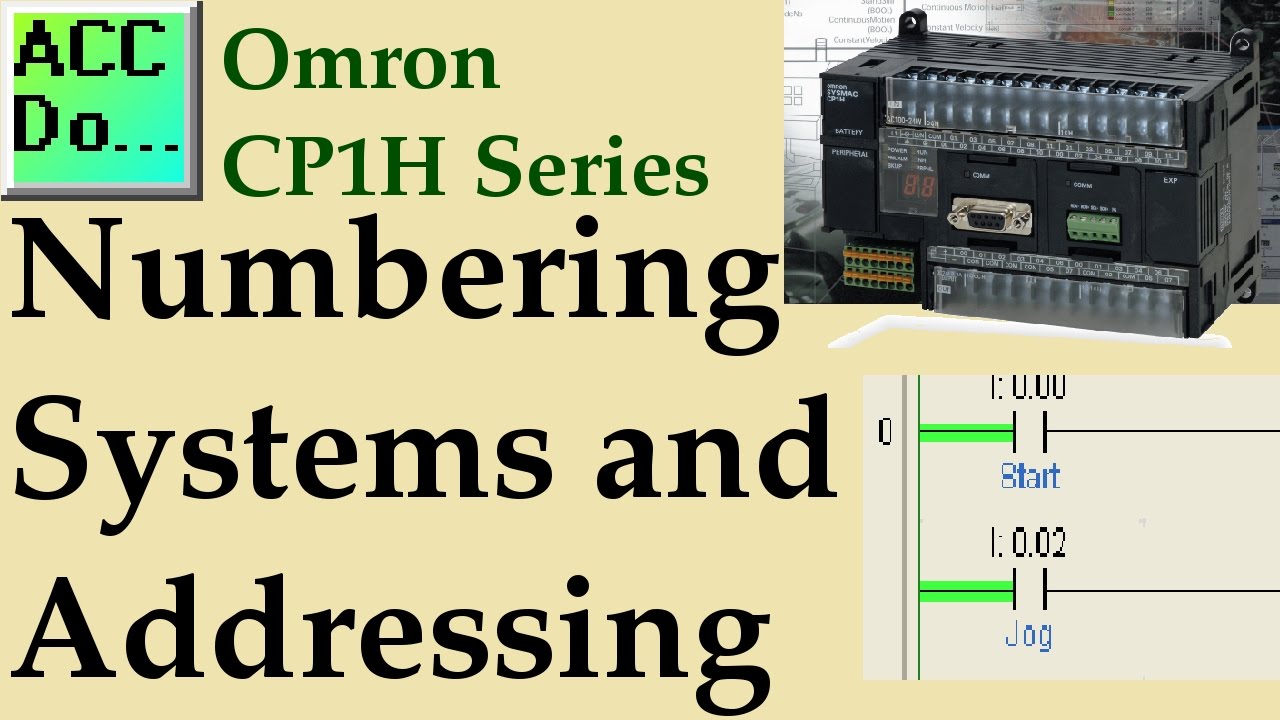
As with the CJ2M CPU, the CP2E PLC can support large logic programs. The CP1H and CP1L micro PLCs are designed for compact machines, such as case packers and stretch wrappers. These CPUs have the capability of high speed counters and pulse outputs which allow this PLC model to perform multiaxis positioning control.
Both models come with onboard and add-on I/O, including digital, analog, and temperature sensor units. For larger systems, the CS1 CPU has a maximum capacity of over 5000 digital I/O points over seven expansion racks. Any combination of up to 80 I/O modules and communication modules can be mounted in any position in the I/O racks.
The CS1 allows the use of IEC standard Structured Text and ladder language, which allows flexibility in how programs are written. Other important capabilities of a CS1-based system is its support for position and motion control modules, analog input and output modules, loop control modules, and interrupt and safety relays. The CS1D variant provides several dual redundancy options.
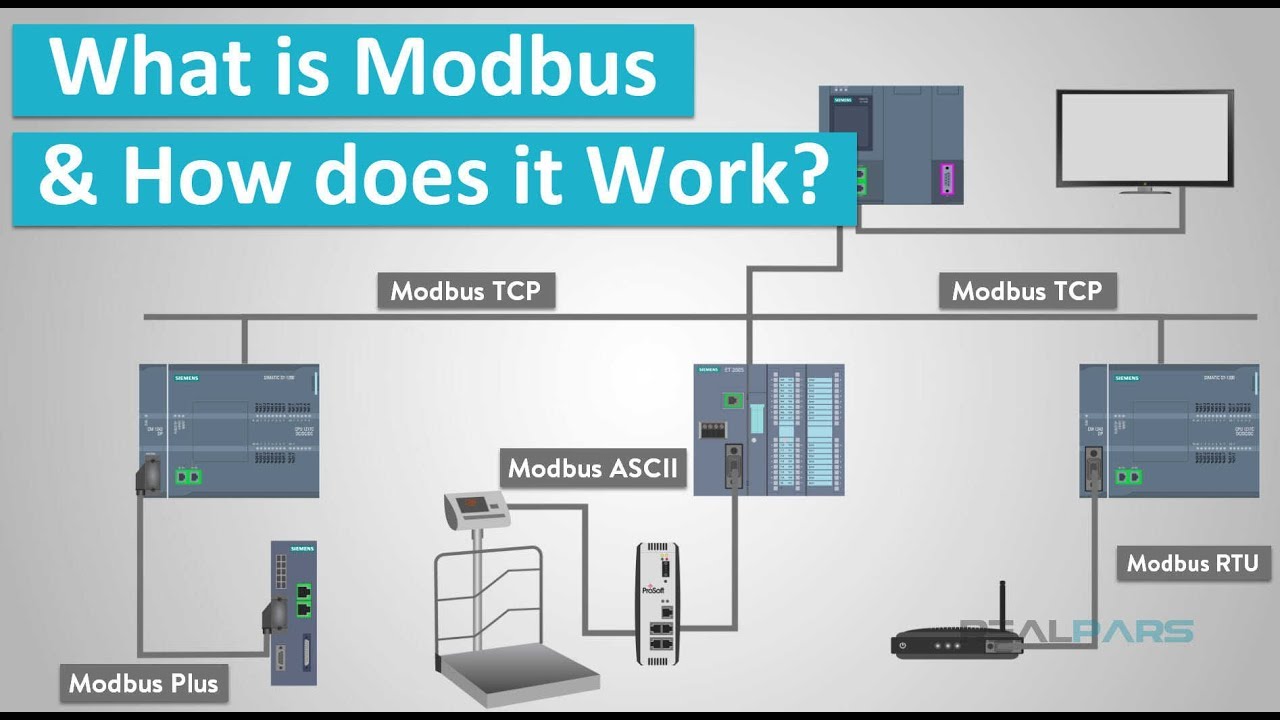
CS1 models allow for hot swapping of CPUs, power supplies, and I/O units to minimize downtime. Each of these PLC families has specific models that can have one or more Ethernet interfaces with the Ethernet/IP data link function. Ethernet/IP is an Industrial Ethernet communication protocol widely used by Rockwell and other automation PLC and device manufacturers that allows for structured, tag-based communication.
All PLC models support serial RS-232, RS-422, and RS-485 communication through the addition of option boards. This allows for additional device types, such as motion controllers, to be interfaced directly to the PLC. In addition, the CP1E, CP1L, CP1H, and CS1 CPUs support Omron’s proprietary CompoBus/S I/O subsystem, which allow for high speed, long distance remote I/O connections.
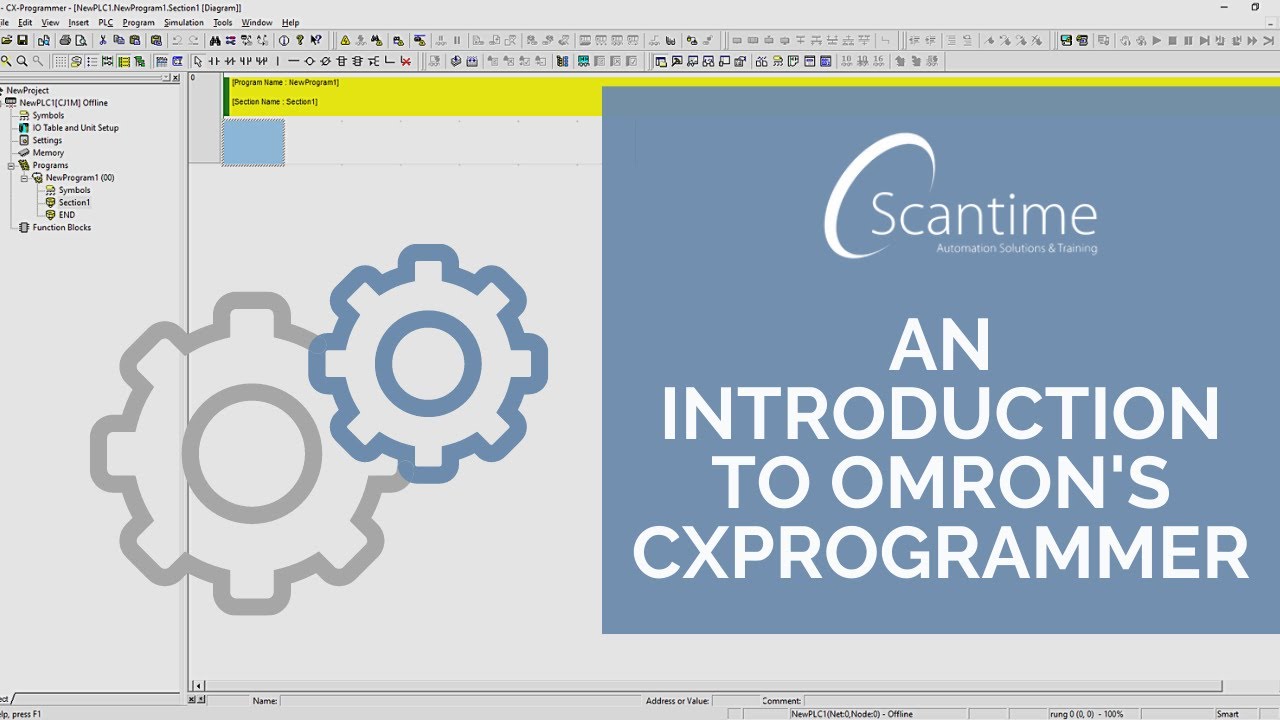
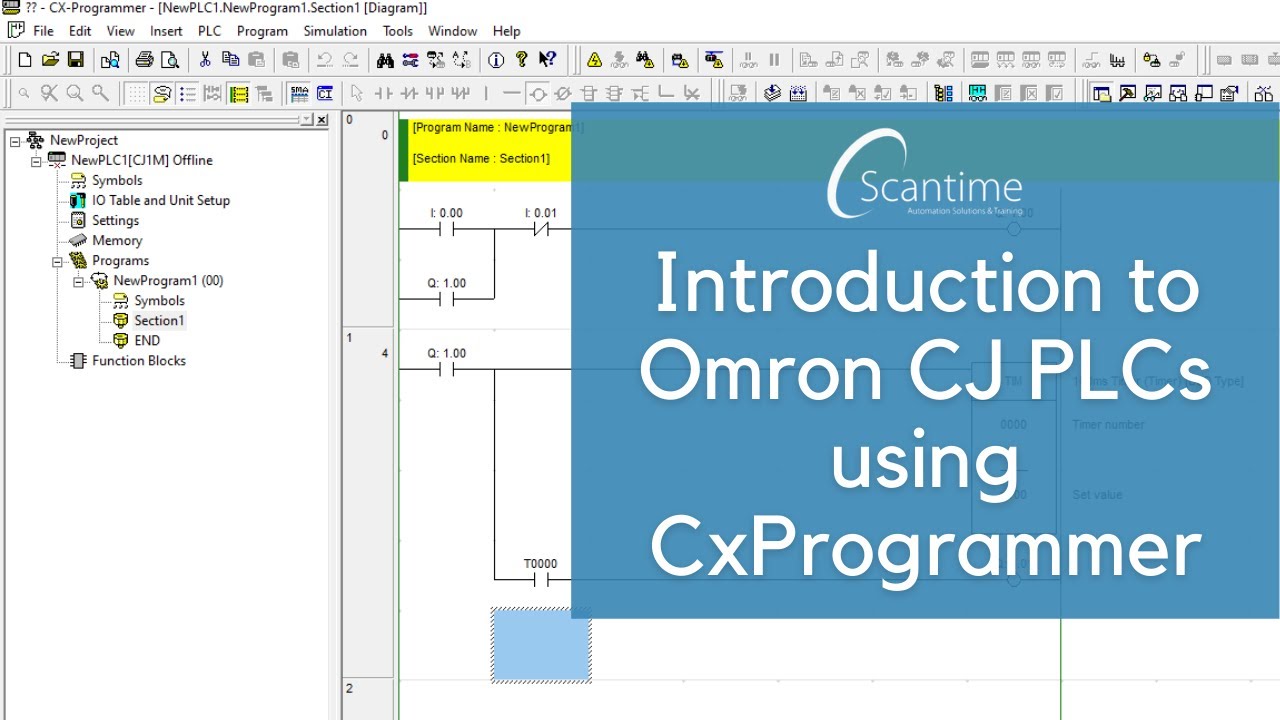
DeviceNet and Profibus-DP are supported by the CS1 CPUs so that additional device types, such as weigh scales and motor drives, can be connected to the PLC network. The CX-One software suite allows users to build, configure, and program Omron PLCs, HMIs, motion control systems, and networks using only one software package. Additional software packages can be purchased to provide functionality for supervisory machine visualization and control, communication drivers and interfaces to 3rd party HMI’s, OPC server capability, and development software for Omron’s LD, HD, and mobile robots.
CX-One software can be installed on Windows 7 Service Pack 1, Windows 8. 1, and Windows 10. As an example, I will configure a small PLC system to control a series of conveyors, motors, and sensors used for transporting boxes from a case packer to a palletizer.
For this example, the conveyors and associated equipment have a total of 50 digital inputs and 25 digital outputs. To simplify programming, troubleshooting, and maintenance, I want the process to be controlled by a single CPU. I will locate the PLC and I/O cards in a single panel.
Remotely located I/O is not required for this simple process. I will choose the CP1L-EM30DR-D CPU which features relay outputs and an Ethernet port for networking connections. To service the bulk of the I/O, I will choose a variety of CP1W 24VDC input, output, and mixed I/O modules.
All outputs will be relay outputs. Each of the expansion modules will require an I/O Connecting Cable. To complete the network, I add a 5 port network switch with failure detection, a small HMI panel with an Ethernet port, and a 20A DC power supply.
This provides the functionality I need in a compact, easily installed, and configured package. This video has provided a basic understanding of the features and capabilities of the Omron family of PLCs and hardware. Once you understand the requirements for your process, choosing the right CPU, communication interfaces, and I/O modules should be easy to do.
Want to learn PLC programming in an easy to understand format and take your career to the next level? Head on over to realpars.