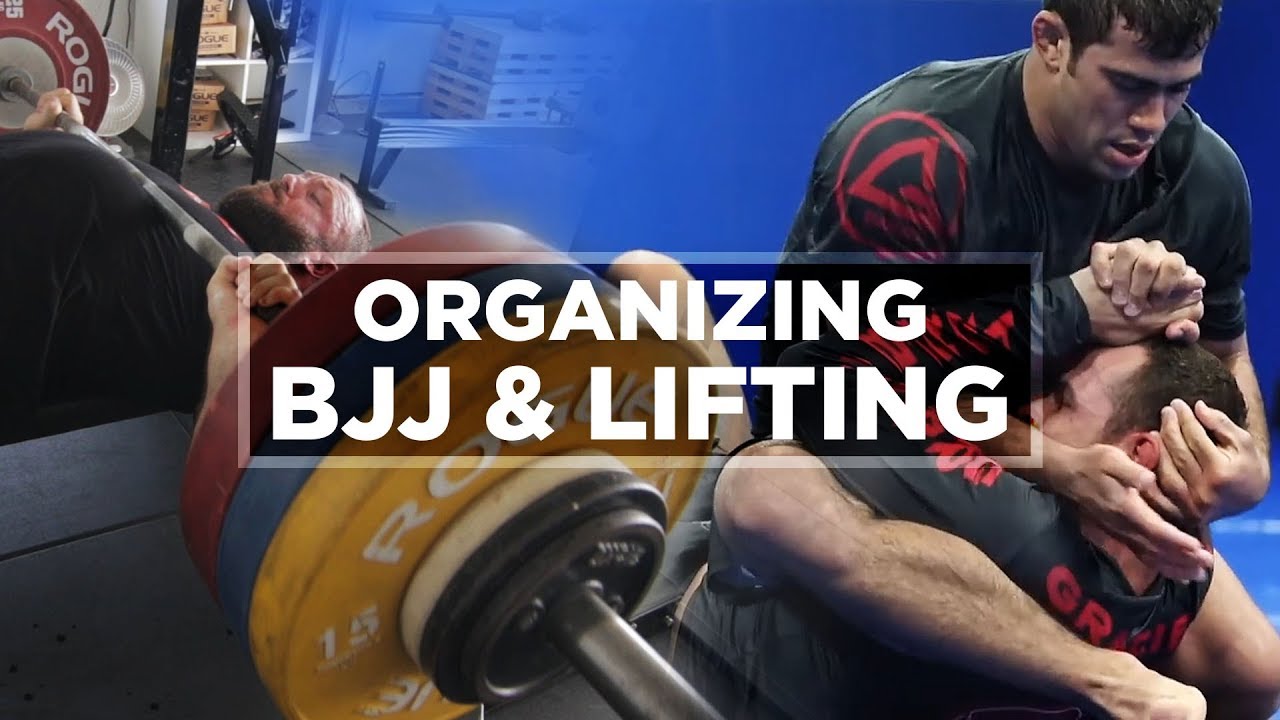
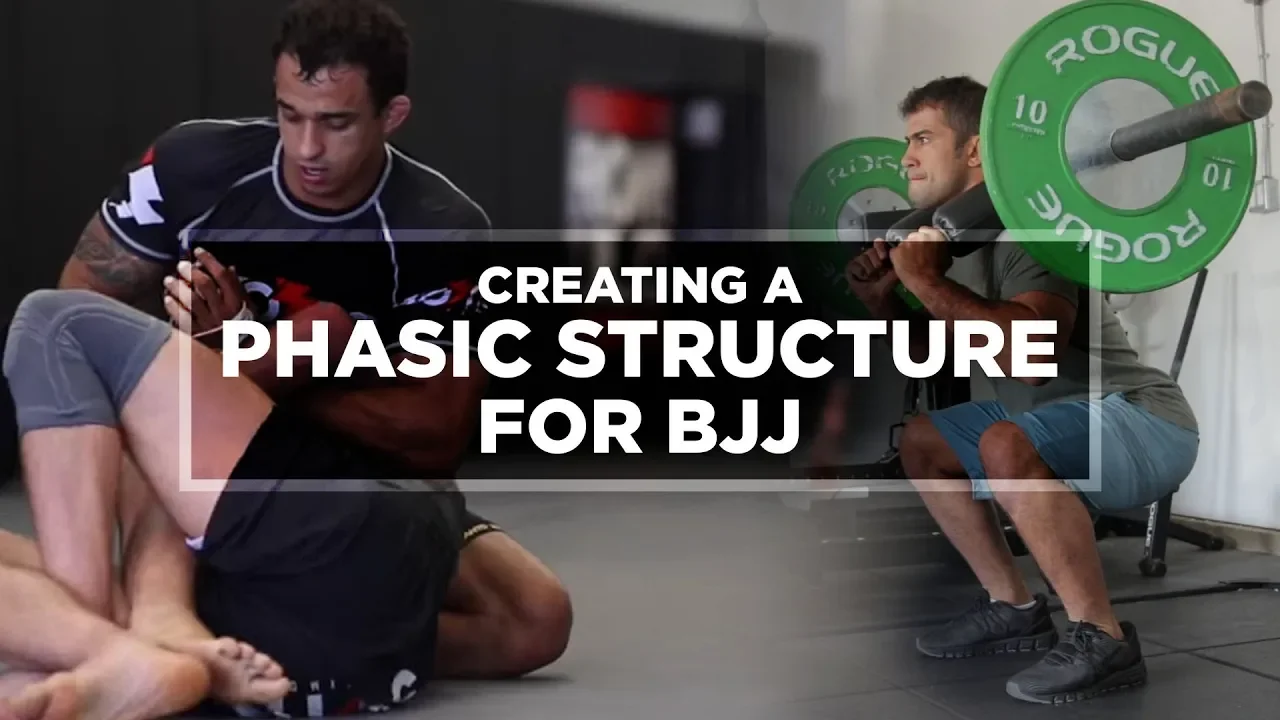
everybody Chad will say Smith here for juggernaut training systems be continuing our series of content about strength training for jujitsu strengthen performance training for Jitsu make sure that you subscribe to the channel like this video so more people can find it today we're going to be talking about creating a basic structure for our jutsu performance training so by a phasic structure I mean applying the principle of phase potentiation which is having a dedicatory name a time period of training dedicated to improving a specific quality above all others that still have some yeah omnipresence of all
the all the components but so that we can raise that specific quality as high as possible and improve the potential hence the potentiation part of phase penci ation improve the potential of the subsequent phase of training so the way that we're gonna want to sequence these phases for jujitsu is by energy system if you're familiar with our work for powerlifting you know that we go from you know hypertrophy training to general strength training to peaking the same idea is gonna be applied but but peaking for jiu-jitsu doesn't mean being able to squat bench and deadlift
as much as you possibly can it means being the most ready have the highest specific fitness levels for jiu-jitsu as possible right before the competition so this is going to be something you can do if you want to sort of set up a training camp type of organization to prepare for a really big tournament you could work through sequence of phases like this moving from less to more specific so as we focus on our energy systems what we need to be successful for jiu-jitsu are gonna be of course the aerobic energy system is gonna be
omnipresent in the in the training then our electic power how strong how fast you know how powerful can you be for one given instance and then almost more important than that is our a lactic capacity how well can you repeat those high output efforts you know if being able the just to give a simple example being able to power clean 300 pounds is great but over the course of a you know eight or ten minutes you match and maybe four or five six seven matches throughout the course of a tournament if you can only power
clean 300 pounds once you're probably not going to be as successful as someone who could power clean 250 pounds you know every ten seconds for you know thirty reps or something something like that again a bit of a non specific example but just so you understand the concept of a lactic capacity but before you have capacity we've got to have power because that person who can power clean three hundred pounds one time again I'm just not saying that the power clean the Sun be all end all exercise for our jutsu it's just a simple more
simple concept to understand that person who can power clean three hundred three hundred pounds at one time well if they use all that power and get a huge take down you and finish you right away you know it doesn't matter how many times you could do two hundred pounds because you never got the opportunity to express that so you have to be able to develop the power before you have the you have to have something to create a capacity of you have to have the power and then create capacity of that power and then finally
our lactic capacity is going to be the most specific to you to your ability to sustain relatively high level effort for longer durations whether that's you know long squeezes or longer scramble sequences but being able to stay at those those high heart rate thresholds and keep up high level effort for a sustained period of time to make this the most effective we want to strategically pair our strength training with our energy system work so the first phase where we focus on a lactic power so maximizing speed and power through sprinting jumping throwing explosive exercise in
the weight room like Olympic lifts we're gonna complement that with more general strength work to develop work capacity to create you know the potential for us to do more quality work in subsequent phases then as we move on to a lactate capacity which is going to be those repeated high-level efforts with minimal rest periods between them we are going to complement that with our maximal strength work in the weight room and then finally as we develop our lactic capacity our ability to sustain relatively high level efforts for 20 30 40 seconds at a time we're
going to complement that with more strength speed in the weight room so lighter weights moving very explosively right before this that's gonna be the phase right before competition aerobic work is going to be omnipresent throughout all of those phases so phase one as as we focus on general strength work capacity in the weight room and a lactic power developing a lactic power as well so that that one all-out effort how high can you jump how fast can you sprint how far can you throw how much can you lift that's going to be we're gonna do
this through more frequent less intense training sessions in the weight room and complement that as well on the mats with a more drilling less live training if you go back to our video on organizing the week a lot more low and medium intensity days rather than the high intensity days which we'll need as we get closer to competition so submaximal weights jujitsu training that's biased towards more drilling specific training at controlled intensities in the weight room this is going to be doing a lot of a lot of work with weights in the 55 to 80%
of your one rep max range for sets of four to eight reps now how much volume is gonna differ based on a lot of factors but you're probably in the fall between about 24 total reps to a hundred total reps weekly for each primary movement and primary movements we're talking about squat variation upper body pressing upper body pulling hip hinge hip extension and probably dividing those those reps over one to three sessions each week you know what the difference is in volume and intensity are going to be based is of course you know how many
reps you're doing what exercise you're doing and then some individual differences for you of of age strength height weight experience level in the weight room so some general guidelines are gonna be that upper body lifts can generally handle more volume at relatively higher intensities than the lower body lifts your injury history is gonna influence this as well so I understand that your injury history may cause you to not be able to tolerate quite as much volume as if you were totally healthy the stronger and more experienced lifter you are it can be able to tend
towards the lower end of that percentage range because you know you're actually lifting that closer to like what we call that your career peak the absolute most weight you could ever lift because you're more experienced here you're recruiting muscle fibers better you're more efficient in your neural lining is more efficient to allow you to lift more weight and each rep that you do is more going to be more stimulating and more a little bit more fatiguing than someone who is less experienced implementing controlled rest periods in the weight room during this phase is going to
be a simple way for you to build up some capacity as well one of the primary goals of this phase of training and then we're gonna want to keep our accessory work mostly in the 12 to 20 repre p joint health and local muscular endurance which is going to be very significant to success in jiu-jitsu that muscular endurance in the hands forearms shoulders as well as as the legs hamstrings low back the other component of this phase is developing a lactic power electric power is again you know how high of an output can you create
how fast can you move for one single effort and some of the most explosive exercises we can do to develop that that also don't require much if any equipment or a lot of special technical training because you're trying to be the best Jiu Jitsu competitor you can be not you know the best weight lifter that you can be hearing these jumping and throwing so Sprint's fifty to a hundred meters of total volumes spread over one to two sessions a week will be sufficient for you I understand sprinting is not really a component of jiu-jitsu so
we don't need to do very much volume there compared to what like a football player or a soccer player would do and then for every 30 second all right sorry for every 10 meters of sprinting you do you want to rest for about 30 seconds so you do a 20 meter sprint you're gonna rest one minute before you do the next sprint because this a lactic power training is all about quality of work also going to be a good option for you to maybe do your sprinting either dragging a sled or running uphill or up
stairs that's gonna mitigate the risk of soft-tissue injury to the hamstring or quads especially if you're someone who hasn't yeah it doesn't have any formal sprint training a I've worked again with some of the best jiu-jitsu competitors in the world and seen them sprint and they were definitely not people who had very much formal sprint training and that kind of bad sprinting technique increases the risk of a pulled hamstring or something like that but running with a sled or running uphill will will help mitigate that risk jumps these are gonna be a really good option
simple to learn you know there's no way that you can jump slow so it's gonna help you develop speed explosive power improve your takedowns all of that twenty to sixty contacts per week spread over two to three sessions that can be jumping up onto a box or upstairs the both of those options are gonna reduce the force of the landing on your joints rather than just jumping straight up into the air because let's say you jump two feet straight up in the air you have two feet to fall back to the ground that's going to
increase the force on your ankles and knees where if you jump up onto a two foot high box you don't really fall onto the top of that box it also the forces of the the landing are much less impactful and jumps for distance going out as far as you can will have a little bit higher transference to your ability to shoot in for takedowns finally throws like throwing a medicine ball or you know any kind of like a shotput or something just throwing a weight zoomy great for building power in multiple directions very low stress
on the joints they're easy to learn doing fifty to a hundred total throws per week spread over one to two sessions will be sufficient for you and make sure that the speed of the throw is what is emphasized so throwing throwing whatever you're throwing let's say I met it medicine ball throwing it as far as possible with a little bit lighter ball like a 3 to 5 kilo ball it's going to be more important in this phase than trying to use as heavy of a ball as possible even not really being an explosive fast movement
anymore so now we're moving on to the second phase of our training this is where we're gonna focus on a lactic capacity so the ability to repeat those high-level efforts that we developed in phase one or doing our elastic power training now we're going to be focusing on repeating them over and over trying to keep them as high level as possible without degradation of speed and quality of movement and then focusing a little bit more and jet on maximal strength in the weight room after we built up you know a little bit of hypertrophy and
general strength in our in our first phase this is gonna mean that we're gonna have to undulate our sessions throughout the week a bit more so in phase one we had mostly medium to low intensity sessions with really high frequency now we're going to be introducing some high-intensity sessions to allow you know for more weight to be lifted and also a more recovery to be built in to the structure of the week make sure you refer back to our organizing the BJJ training week video for more information about that your work on the mats is
going to be intensifying as well introducing a little bit more live training a little bit more specific training so having a couple days of the week that are high-intensity sessions on the mat and consolidating our stressors to those same days so more pairing high intensity weight room work and high intensity jujitsu work to the same days to facilitate more recovery throughout the lower intensity days of the week in the weight room now gonna be focusing on our primary arch size is being done at 70 to 90 percent intensity for sets of two to Reps looking
at doing 12 to 48 reps weekly for each primary movement spread over one to two sessions and the same ideas from the first phase are gonna apply that upper-body lifts can tolerate a little bit higher volume and lower body lifts so for your primary pressing and pulling exercises you're maybe gonna be more in the thirty six to forty eight reps weekly while you're squatting and hip Hinch if extension exercises are going to be more down in those 12 to 24 reps weekly again the the intensity that you use will be considered as well if you're
at the top end of that intensity range of 85 90 percent you're not gonna do you know forty eight reps in a week with 85 to 90 percent of your squat max when you're up at those high intensity ranges that's when you're gonna get down to the low and that the volume range one you know 12 to 18 total reps throughout the week how strong you are is also going to dictate that age injury history time a lot of factors to consider there and now we're going to move your accessory work so smaller single joint
type of movements down to the 8 to 12 rep range and that's still going to support hypertrophy we of course don't want to be losing muscle as we go into a tournament and doing some of that that that smaller single joint movement is going to help support joint health making sure that we're getting you know blood pumping through elbows shoulders through full ranges of motion keeping you healthy for our energy system based work we're now focused on a lactic capacity so in phase one we developed a lactic power so you know single all-out efforts sprint
with full recovery now we want to create capacity of that so now we're going to be doing multiple sprints within complete recovery and trying to keep them all as a high level high effort level as possible this is when we can begin to implement special strength exercises so these are movements that mimic the direct the direction duration and velocity of the sporting movement that they use the same muscles with the same energy systems as you would use in jiu-jitsu but we're overloading them in some way movements that I like to include for a lactic capacity
work are jumping variations throwing variations twisting exercises explosive pulling movements and then a really important component of jujitsu strength like being a strong jutsu competitor is isometric strength this you know big components of isometric strength on display in a typical jutsu match we're holding that that position squeezing for as long as you can and you're not really moving so it's not concentric or eccentric strength but it's it's holding that static position as well as you can so some examples that I like of these four jumps kettlebell squat jump and when I say jumps I'm referring
to both lower body and upper body and jumping upper body jumping would be something like clapping push-up jumping you know doing a explosive push-up where you land on boxes or even something like a med ball chest pass where you're rebounding it against the wall throws could be a med ball slams med ball rocket throat just throwing as high as you can or scoop throw throwing it as far as you can or into against a wall from an underhand throw something to consider with these exercises too as we want to we need to be able to
get several reps in in a short time period focusing on that three to six seconds of work doing as much explosive work as we can in that short time period and then following that up with a small rest period twisting exercises your so your rotational strength is going to be very significant in your good soo especially on the feet to execute judo throws so the barbell twist med ball side to side slams band resisted judo throws are all good options there explosive pulling strength is with me big for for guard passing for controlling your opponent's
posture so kettlebell or dumbbell drop rows one-arm row pros clapping pull-ups all good options there for the isometric strength I could deadlift isometric or a benchpress I where you're pulling or pressing the bar against the rack with maximal force and then some other exercises that you can fit in here kettlebell or dumbbell snatches band or resistive kettlebell swings as that's gonna increase the the speed of the movement allow you to get more reps in that short timeframe sandbag shouldering can be in action I do that size but really what we're looking for are three to
six seconds of maximal effort with 10 to 20 seconds of rest and you're gonna perform 4 to 12 sets per exercise by 4 to 8 exercises total and the number of sets you're performing the number of total exercises you're performing should be influenced by your fitness levels of course but also how long of matches you need to be ready for if you're getting ready for a 5 minute match you probably don't need to do as much a elect capacity as someone who's getting ready for 10-minute matches and then to time these you can just ya
get an interval timer app on your phone or your computer the way that I set that up is I'll usually set a short interval for 6 seconds and then the long interval for you know maybe 10 or 12 seconds and say I'm going to do 6 sets of kettlebell squat jumps that 18-second just keeps running over and over or you can just set you know a 15-second timer and do a set amount of reps so I'm going to do three reps as fast as I can and then I rest the remainder of the 15 seconds
the bell rings again I go again and I perform my number of sets there rest 1 to 2 minutes before moving on to the next exercise in phase 3 this is gonna be our final phase before competition so it's gonna be our most specific work now in the weight room we're focused on developing strength speed so moving submaximal weights as fast and explosively as possible and that our energy system work is going to be a lactic lactic threshold training so how well can we sustain a relatively high effort for extended durations of time so these
sessions are going to be very taxing so they're going to be less frequent and because you're closest to competition now is when we have to prioritize the most live training in your jutsu training which is also the highest intense stressors and you can't do that all you know every day at a really high intensity so this is where we're gonna be consolidating there may be you know three possibly four very high intensity days throughout the week and the other days dedicated to recovery work some more you know drilling jiu-jitsu low intensity aerobic work small accessory
weights but employing this high load concept consolidation of stressors putting our highest intensity stressors on the same days in the weight room we're gonna be focused on training with weights 60 to 85 percent of our 1 rep max 4 sets of one to three reps and 6 to 30 reps total of our primary movements so again lower body movements squat and deadlift variations Olympic lifting variations are gonna fall to the lower end of those rep ranges upper body movements to the higher end of the rep ranges and as you get to the higher percentage ranges
the total number of reps you perform will be lower and it's well I can be done over 1 or 2 weekly sessions in the weight room our accessory work is going to be kept to 6 to 10 reps per per set and that's just going to be to maintain your muscle maintain your hypertrophy as you go into competition now our lactic capacity training this is gonna be our most specific energy system work is going to be using similar special strength exercises as we used in a lactic capacity but now instead of doing them for 3
to 6 second efforts with 10 to 20 seconds of rest now we're gonna be meaning to take them out to 20 to 40 seconds of continuous effort you know keeping this high-level as possible and then following that up with 20 to 40 seconds of rest and that could end up being active rest depending on how fit you are when choosing exercises for lactic capacity training it's important that they are efforts are exercises that lend themself to more of a cyclical effort it's tough to do you know while you can use a medicine ball throw or
like a medicine ball throw for height or distance during your a lactic power phase and the capacity phase if you have to throw and then run after the the ball and you can only get five or six throws done in 30 seconds because they're always just chasing after the ball that's not a very good exercise for lactic capacity or we want continuous sustained effort so things like box jumps barbell twists are good are good options the isometrics can be can be good options in general it's going to be a little bit lower intensity efforts because
you're having to sustain them for so much longer when organizing your lack of capacity work I would let your competition length so how long are your matches in a tournament dictate how that gets set up so if you're doing if you have six minute match --iz you're at blue belt adult division you have a six minute match I'd probably choose six exercises and do them for ya maybe the first week 20 seconds on 40 seconds off next week 30 on 30 off third week 40 on 20 off and that's gonna be a six minute circuit
and then rest for probably six to ten minutes these are gonna be very very challenging and repeat two three maybe four times at most the last piece of creating this phasic structure for jujitsu training is going to be determining the phase length the first thing that you need to do to determine how long any of these phases are gonna last is look at the competition calendar now if you have six weeks before competition that's gonna be much different you know you're probably not gonna do much of that first phase because it's the most general phase
so you might maybe a one week phase one and then two or three weeks of Phase two and two or three weeks of Phase three versus someone who has 12 or 15 weeks to get ready for competition the next thing to consider is going to be the athletes means if you have someone who's already you know very strong or very muscular you could manipulate those first two phases based on that or someone who has great endurance and lacked capacity already they might not need a very long Phase three general these phases should last between one
and four weeks and you can deal owed after a two to four week phase and that D load is going to be about 60 to 70 percent of the volume of work you did in the previous week about 80 to 90 percent intensity so let me know what questions you have in the comments hopefully this is giving you an idea of how to better you know strategically organize both your jiu-jitsu and strengthen auditioning training to maximize your performance in tournaments the place where you want your jiu-jitsu to be the best where you want to be
your strongest fastest most endurance in your best shape ready to go win gold thanks for watching make sure to subscribe to the channel and like the video see you next time you