humans have always seriously messed up their lives but the way in which failure has been viewed has a long and fascinating history that it may help us to know about Athens 49 BC it's the premiere of a tragedy called heed of us the king written by the great playwright Sophocles it's the story of an honorable capable and highly resourceful man who nevertheless messes up his life in a catastrophic way but the audience doesn't leave the theater thinking of Oedipus as a loser Greek tragedy was designed to show audiences that terrible things can and very often
do happen to good people and therefore we must remain sympathetic and kind in the face of failure the Greeks forced this message upon themselves again and again at prestigious annual festivals the Greeks also loved the story of the Spartan army at Thermopylae where a small contingent of warriors held out to the last man against a vastly larger Persian force the Spartans were utterly defeated but their failure was seen as profoundly noble you can lose and be good that was the moral Rome 46 AD Julius Caesar celebrates yet another triumph over the enemies of Rome the
Romans worship success they believe that success in the here and now is all that counts and that success means three things money fame and military glory which creates a lot of anxiety around failure Germany 9 AD the Roman general virus kills himself after losing a battle in the Teutoburg forest not far from modern-day Hanover in the north of Germany he's made some major strategic errors in deploying his troops his suicide is an expected consequence failure is so humiliating and shameful that it shows one doesn't deserve to go on living the Romans represent a society where
failure is thought of as naturally accompanied by shame when big things go wrong you just kill yourself no excuse a small hill overlooking the Sea of Galilee 30 ad a former carpenter and itinerant preacher delivers a tender speech which has since become known as the Sermon on the Mount Jesus Christ tells his followers blessed are the meek for they shall inherit the earth in other words the unsuccessful are in a way more successful than the successful in the eyes of God because their failures erode arrogance and invite dependence on the divine for hundreds of years
Christianity lends glamour and prestige to failure and challenges the worldly values of Rome privileged in poverty obscurity and weakness over wealth Fame and strength not simply a you not meant to commit suicide when you fail failing is a sign of being blessed eastern India sometime in the fifth century BC a wealthy young Indian Prince Siddhartha Gautama later known as the Buddha the enlightened one comes to a key realization about human beings all of us are deeply maladjusted unhappy creatures worldly success power riches love can mean nothing and will never satisfy us we must learn to
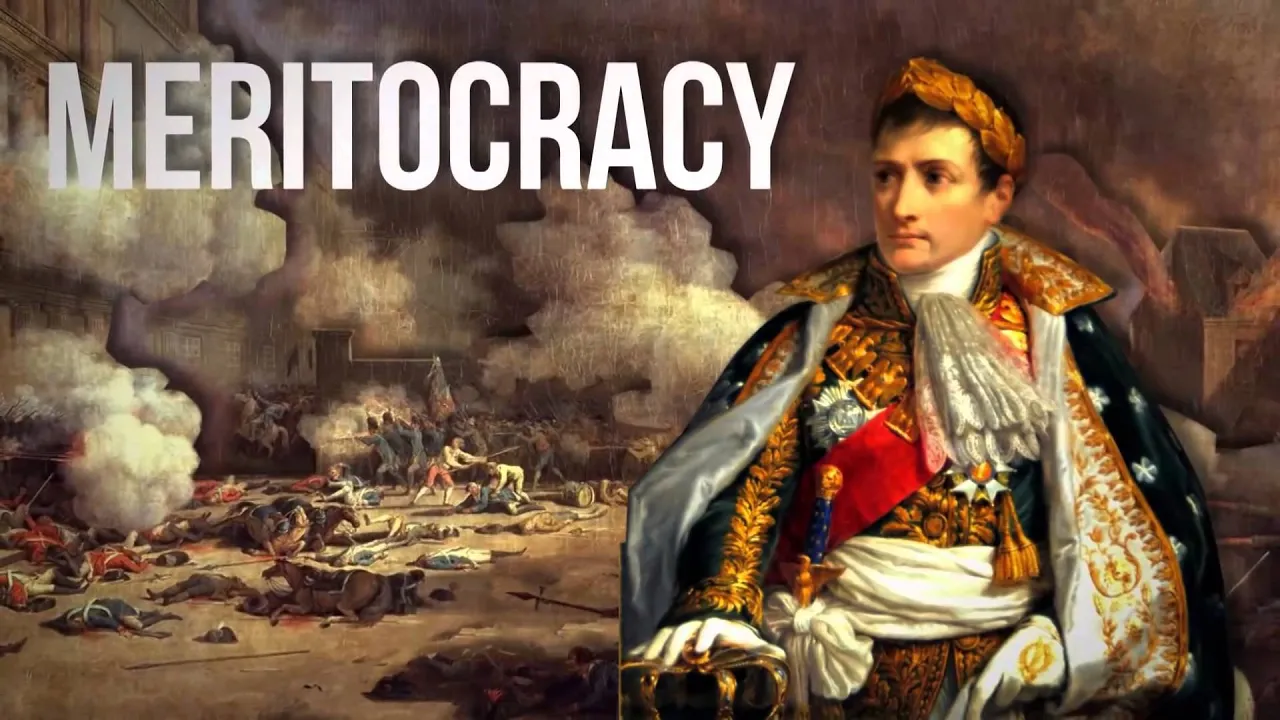
renounce our desires and escape from constant cycles of craving and wanting in Buddhist eyes true success means utter failure in the eyes of a Roman soldier or a modern American it means living under a fruit tree owning nothing but a loin cloth and begging from passers-by Paris 1799 Napoleon Bonaparte inaugurates a new social order which will begin to be known as a meritocracy no longer will success go only to members of the old corrupt aristocracy he wants to launch a meritocracy marked by what he terms a career over toward a long careers opened to the
talented rather than just the privileged France acquires a new honor system based on merit the legend honor which is given to people of all classes who had judged not by ancestry or wealth but by military scientific or artistic prowess suddenly success comes to seem a lot more fair and deserved which is very advantageous in many ways but it also means that failure starts to be recategorize as not merely accidental or morally neutral as the Christian ideal had implied but also in some ways deserved Paris 1863 the French government sponsors its annual artistic salon where the
most successful painters are exhibited and celebrated the jury headed by the court to Navarre kakaka the head of the Academy of Fine Arts is that yet extremely conservative and rejects 2/3 of the paintings presented including those of corbeil Edwin MANET cami Pizarro and Whistler the rejected artists and their friends are outraged and protest the Emperor Napoleon the third eventually relents and allows the rejected artists to set up their own rival exhibition gradually the public and critics recognized that the officially successful artists people like Alexander cabañal and France vinta halter are terrible painters and that the
unsuccessful ones are in fact the true geniuses but this will be a theme throughout the history of 19th and 20th century art and society more broadly the genius is at first rejected by a stupid blinkered world but eventually comes to be accepted and celebrated this is what happens to among others John Keats Vincent van Gogh muscle Proust Janis Joplin and Steve Jobs real successes aren't successes immediately goes the story they might need to wait for a long time perhaps until after they're dead a consoling story with echoes of the Christian idea of redemption New York
October the 5th 1987 the right wing economics magazine Forbes publishes its first list of the richest people on the planet the richest man is your hockey Tsutsumi who is at that point worth 20 billion dollars the tone of the magazine is celebratory and unknownst reflecting an uncritical acceptance of the idea of the American dream he who is richest finishes first it a small irony there for the two weeks later on October the 19th the world stock markets collapse destroying wealth on an enormous scale and shaking everyone's confidence in the merit and sanity of the economic
system New York September 2011 following yet another global economic meltdown a group of protesters occupies Zuccotti Park in the financial district of Manhattan that protest is in a narrow sense about the corruption and blindness of America's financial institutions but more broadly the protesters are arguing that a narrow elite the 1% as they call them have twisted our ideas of success in a good life the so called heroes people like Jamie Dimon the head of JP Morgan who's paid around 20 million dollars a year are in fact the villains being a decent person doesn't necessarily mean
making a lot of money it means acting wisely and kindly towards others and the planet the protesters have a good few months in which to make their case which sounds remarkably like that made by Jesus in a Sermon on the Mount before the forces of contemporary capitalism hose them down and shut them up slowly the economy recovers which also means that the battered American Dream ik waiting nobility with financial success becomes dominant once more most of us are going to enjoy horrific failures in some area or other of our lives were an extremely successful and
defined success by some very narrow normally financial criteria there's endless talk about opportunity and well-meaning efforts to make sure that everyone can have a chance but there is a deep silence about what happens when you fail to weaken the power of the narratives of success we used to have religion and we used to have art we have less of that now the very idea that failure could be Noble has entirely disappeared we need to go back in history and fetch some ideas that could stop us from being fatally hard on ourselves when we mess up
in the eyes of Forbes magazine and the American Dream in general you