to our second part of the ancient mediterranean unit um this next series of lectures will be on ancient egypt so we cover typically two periods within ancient egyptian history for the ap curriculum that's the old kingdom and the new kingdom there is a middle kingdom yes but we don't really talk about it because it's relatively short and none of our ap artworks come from that period so as we saw with uh ancient mesopotamia these ancient civilizations are super relying on these massive waterways for a lot of the vitality and the well-being of these emerging nations
and cities and states so the nile river is the basically the backbone almost literally of ancient egyptian civilization um water from lake victoria which is kind of in um central africa and is supplied by melting snow flows northward down the nile river and then into the mediterranean sea so um this is sometimes a little bit difficult for students to understand um the northern part of egypt is called lower egypt and the southern part of egypt is called upper egypt so a lot of students are confused by this it's because this is the direction that the
nile is flowing it flows from south to north into the mediterranean sea so like even like the regional designations of this of this nation are defined based on the flow of the nile so that's something to keep in mind so one of the reasons that the nile is is such a vital part of ancient egypt is the is the annual flooding of the nile delta as well as the surrounding lands so this is a great diagram right here that kind of illustrates like everything that's within a close proximity to the nile river is fertile these
are the kemet or black lands and they're called black lands because of the nutrient-rich silt that is being brought down the nile so this the stuff that is fertilizing all the plants and providing this this nutrient-rich basis for this river ecosystem and pretty much anything that's not in direct contact of the nile river is the red lands or the desert so this is basically the only reason that civilization can be here is because of the nile river and the resources that it provides there's also lots of travel that's happening um down the nile as well
that is facilitating travel and trade and so on we'll get more into that a little bit so the ancient egypt as we know it as this kind of like monolithic civilization lasted for about 3 000 years so it's it's kind of difficult to describe how much time that is um so one of the things that i do is i say this is 15 1 5 15 times longer than the united states has been around as a country so and the thing that's remarkable about ancient egypt is that like throughout these 3 000 years egypt was
relatively stable we saw in the ancient mesopotamia lecture that these lands were changing hands and names um constantly because there were so many squabbles over them whereas ancient egypt has its periods of discord and chaos but relatively speaking it remains quite stable um and it wasn't regularly conquered by foreign powers until around a thousand bce that's when we start seeing the assyrians and the persians and the the romans coming in so another thing that a lot of people kind of forget about ancient egypt is its influence on artwork that is happening in the northern part
of the mediterranean so a lot of people tend to assume that ancient greece and ancient rome are like the the birthplaces of modern western art um this is not consistent with the evidence that we have coming down through art history um so an example of this are um basically the conventions of human figures so the ancient egyptians produced these these quite canonized human figures in these very rigid positions where you have one foot in front of the other and the arms bound to the side it's very upward posture this is typically called a pharaoh pose
and some of the earlier artwork that we're seeing out of ancient greece is almost exactly the same as these kinds of sculptures so we're seeing a clear influence here and based off of the time periods we have to assume that the greeks are being influenced by the egyptians here so another thing that's really remarkable about egyptian art is that it reminds it remains remarkably consistent throughout its history so these are two pieces right here of a pharaoh in a smiting pose basically holding a mace or a club about to strike an enemy's head and these
were created 2 000 years apart 2 000 years apart and they look remarkably similar this is a sunken release and this is a raised relief but the image is virtually the same so that's one of the things that is is very it's one of the reasons that ancient egyptian artwork is so recognizable is that it's very canonized um the ancient egyptians also had a writing system um you've probably seen them before they're called hieroglyphs you can see a couple of them in the top right of this image right here they're basically these pictographic symbols that
correspond to sounds you string some of those sounds together and then you end up with complete words so it kind of works like katakana in japanese um the seat of power in ancient egypt were the pharaohs or kings they are seen as sacred and godlike um descended from these um these day these lines of deities and gods they were oftentimes seen as like gods on earth and they were treated accordingly so um one thing that's also important to remember about ancient egypt is that they probably produced a lot of art that does not survive currently
because it was lost in some way shape or form so most of the artwork that comes down to us that we know of has been found in tombs and burial sites um and it has been preserved and sealed away from the elements which is why we happen to have it now so there is a clear bias here in terms of the artworks that are being made so that's just something to keep in mind so most of the artworks i believe all of them that we're seeing in this unit are really emphasizing these themes of death
rebirth and the afterlife so in terms of materials and resources ancient egypt is a pretty different from ancient mesopotamia for one thing um the ancient egyptians have lots of different kinds of stone available to them which is allowing them to create those gigantic pyramids they also have some access to wood they're still importing wood from other places such as syria but there's a lot of local species that are perfect for building things like coffins and statues so um stone was primarily shaped using tools and then you could sand it down with literal sand um the
ancient egyptians were also pretty well known for their metal work and jewelry a lot of ancient pharaohs and pharaoh's wives were buried with their finest jewelry um oftentimes using gold and silver alloys um there's also this material called feyens which is this uh turquoise blue substance that is made out of quartz and then it could actually be cast in molds like glass so there's several different colors of fans another thing that's important to note is that like a lot of the the stuff that is coming down through ancient egypt is thousands of years old and
remarkably we have some objects that are made of wood from this time period um there is again a sort of bias for wood because in that in discoveries because this is a very dry climate so there's there's not going to be as much bacterial activity that's going to be degrading the wood so we do tend to see a lot more wood artifacts in these environments where there's not going to be conditions that are degrading the wood so um unfortunately i had to break down this diagram into two pieces but it's a really good visual illustration
of basically who's having control over um ancient egypt as we know it and basically like the how the power is rising um throughout the dynastic period reaching the zenith in the new kingdom and then we have these excuse me these um foreign influences that are coming in and taking over the land and then eventually diminishing the influence and power of ancient egypt as we know it so um the period that we talk about um in the ap curriculum is the early dynastic period all the way through to the new kingdom so we're only really talking
about this period right here so before this um ancient egypt consists of a lot of more kind of like individual prehistoric settlements um these that are more independent there's not really like a unified power that doesn't really happen until um king narmer in the um early dynastic period and then after the fall of the new kingdom we have these foreign powers that are controlling most of ancient egypt so this is our first artwork and this is king narmer who was the first sort of pharaoh of egypt as a nation so this is actually intended to
be a larger commemorative version of a makeup palette so um you've probably seen images of ancient egyptians or reconstructions where they have this um black eyeliner over their eyes so um this is very similar to the function this of the black lines underneath the eyes of football players and other sports people to basically prevent the glare from blinding them so that it served a similar function in ancient egypt as well so there was actually a recess on the back of this palette that is round where you would basically grind up the the powder that was
used for the eye makeup um that you could then um kind of like have in in the recess and then use for eye makeup so this is a much larger version of that relatively small kind of like makeup mirror sized tool so there is a narrative that is being shown here we have king narmer who you'll notice is the largest figure and tallest figure by far in this composition he's holding a mace um in his right hand and in his left hand there is a fallen enemy who he is about to murder there is also
a little dude over here on his own separate platform this is a sandal bearer so this is basically the guy that carries all of narmer's stuff around including his shoes and then there's also some figures down here that might be conquered enemies so i'm going to go through a couple of the other symbols and motifs in the following slides so this is an example of a narrative particularly the narrative of the creation of dynastic egypt so um before egypt was unified under these dynastic rules they were separated into upper egypt and lower egypt which we
saw on these slides here and this unification effort was facilitated over this span of what was likely several decades particularly by king armor so these are events that are happening over a long period of time but based on what we're seeing in this narrative it seems like things are happening kind of simultaneously so again we have this hierarchy of scale these the figures that are the largest are typically the most important um there's also some hieroglyphs on this piece there's some right here as well as some right here we're not quite sure what this means
but we know that this symbol up here of a catfish and a chisel means an armor so um what you also notice too is that there are registers so you remember the standard over from our previous lecture where there are these narrative bands that are basically ground lines for figures to stand on we're seeing one of them right here for an armor and the enemy and then another one for his sandal bearer right here so this is the front of the palace right here um so we're seeing the same motif of this horned goddess figure
on both sides of the palette uh we're not entirely sure if she's bot or hawthor there is the we also have this motif of narmer's name right here in this particular narrative again we're seeing narmer who is the largest figure on this register his sandal bear as well as a priest and then they're bearing these standards so these are basically like ritual items that are carried in a procession there's also this particularly grisly image on the right here of decapitated and castrated enemies that have been lined up there's also another interesting motif on this bottom
register right here of a bull and a man um and it looks like they're um infiltrating the walls of a city so there might be this um this comparison of narmer has a strength of of a bull and that he is going in and like knocking down the walls of this city these two creatures right here with the long necks are referred to as serpa birds um serpent leopards um and they are intertwining their necks to create the recess in this makeup palette so again here's the front um with all of the important things helpfully
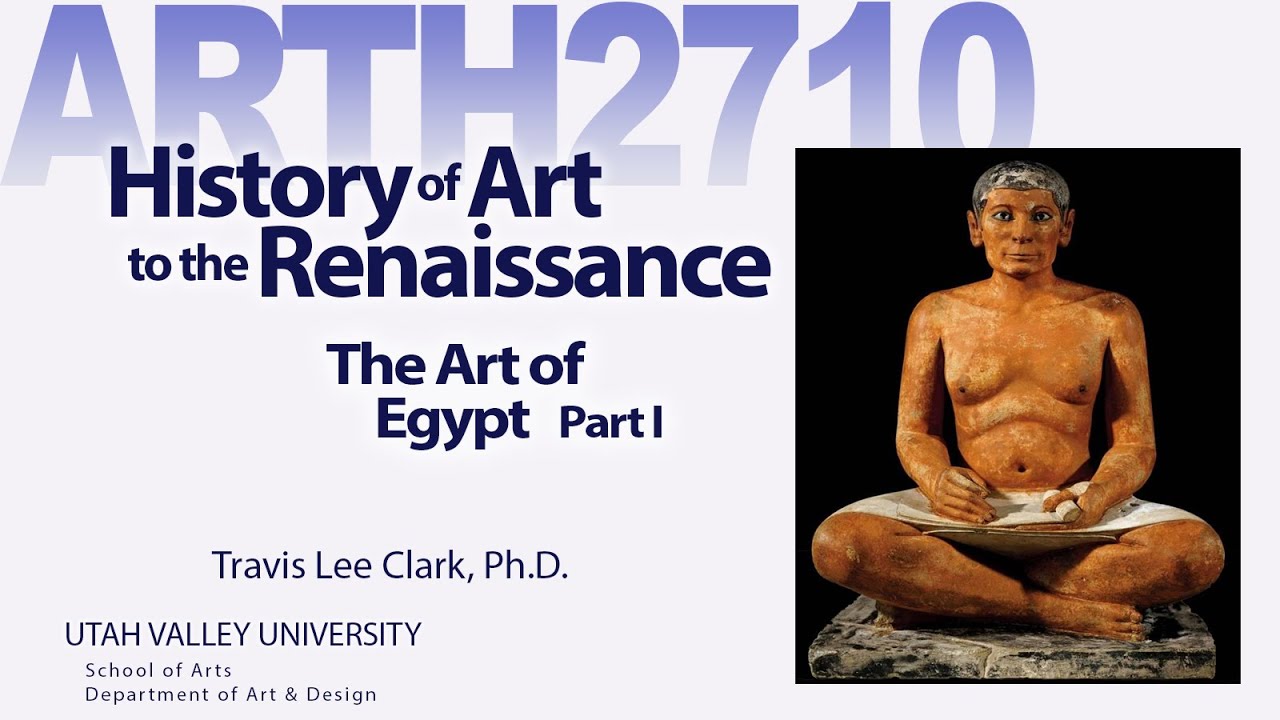
labeled this figure over here too like falcons um feature pretty prominently in ancient egyptian mythology they represent the god horus who appears pretty frequently and usually represents the sun this is our next piece the seated scribe so this statuette is around a foot and a half tall and it was buried in a tomb in saqqara in lower egypt so you'll notice that is it a that it is a painted sculpture which is quite remarkable given that it's at least 4 500 years old um you saw in our previous lectures that we have a lot of
um statues from classical antiquity that are around 2000 years old or 2 500 years old and their paint has been completely worn away so this statue was around 2000 years older than that and still has the paint on it so it was um this was primarily because it was preserved in a tomb it was sealed away from the elements so it's in remarkable condition so statuettes like this um were usually referred to as shakti and they were created to accompany a high-ranking individual in death so in a lot of cultures um essentially when a rich
person died they would have some sort of uh there was usually this overarching belief that they would go into the next world and live a pretty similar life that they did previously um and that they would need stuff in order to carry on their lifestyle and one of those things of course is servants so in some cultures they would just kill a couple of dozen people and like bury them with the important person and that would be kind of like the way of them carrying their servants into the afterlife in some situations there's a bit
more of a more merciful way of doing that and that was by burying these figures that were intended to represent servants so a scribe was something that was particularly important in ancient egypt this is basically a dude that is writing down all the cool things you did so that you have a legacy so what you'll notice too in this figure is that he he's not in peak physical condition when you look at statues of other like um figures particularly pharaohs they have almost this dorito-shaped body um they are in peak physical condition they're very fit
looking their faces are very symmetrical um they don't really have any body fat from what we can see but when we look at this figure he's he's he's quite lifelike he has these kind of like this sagging chest he's not particularly toned he's a scribe he's kind of like a nerd so the image is not a portrait either this is not representing any one person but rather an idealized scribe like if you want if you are having a scribe in the afterlife this is what you want him to look like he is the perfect scribe
he's ready to go his eyes are open and attentive his back is straight he has a stylus in his hand he's ready to go he also has a slab of papyrus right here in his hand so papyrus is this um it's this material that is made out of the papyrus plant um you basically cut it into sheets and then you can hammer it you weave it together and then you hammer it flat and let it dry and this is basically ancient paper and a lot of records were written on papyrus so there was a stylus
in his hand as well that he was using to write it has since been lost our next piece is the great pyramids and great sphinx of giza so um these were massive monuments and tombs dedicated to deceased pharaoh so there were three um pharaohs that basically commissioned these massive pyramids and what's super funny to me is that menkaure was the first one he probably thought when he had this pyramid built like this thing is super great like nobody's ever going to be able to top this and then his descendant um ka frey was like you
know what i'm gonna make an even bigger pyramid so i can show up my ancestor to show how important i am and then kufu was like you know what my pyramid is gonna be even bigger and even taller so there's this kind of like pettiness that we're seeing um in terms of like everybody wants to be bigger and greater than the person before them so um what's interesting about the pyramids is that they actually look a lot different today than they did at the time that they were constructed this is a a reconstruction of what
the pyramids actually looked like they were covered in this um white white limestone facing that was actually polished so that it was shiny so you can imagine you're in the middle of the desert um and you you look up and you see this super shiny almost blindingly white 480 foot tall structure that is topped with gold this is going to be something that is absolutely like jaw-slackingly inspiring and like you look at this thing and you're like oh my gosh like i believe in the power of the gods and of the might of the pharaoh
so um unfortunately a lot of the stone facing fell off over several subsequent earthquakes and then a lot of people came and collected the stones and then used them in their own buildings so the pyramids um are likely bottled off of this shape called the ben ben which was the symbol of the cult of raw so ra is the egyptian god of the sun you can imagine that the sun has a pretty uh has a as a place of significance within ancient egyptian mythology um as we saw with the ancient mesopotamians so each pyramid has
an accompanying causeway so basically like a catwalk and a mortuary temple at the very end so basically what happened when a pharaoh died was that he would be there there was this very systematic process of embalming him and preparing him for the afterlife so all like a lot of his major organs would be preserved um his body would be dipped in natron salt for 40 days like it was this whole thing and then there were these there was this massive procession that took him from the place where he was embalmed to his final resting place
which was in one of these pyramid tombs so it was this big thing like um pharaohs uh like the people that were organizing these funerals would hire mourners that would like scream and tear out their hair it was basically like a party um to celebrate the passage to the next world and there was this massive procession um and these are what these structures were built for was this funeral a couple of these um pyramids also have smaller pyramids um in one case too there's mastabas which are basically like stepped pyramids next to them these are
usually for the queens whoops so um the mortuary temples and pyramid entrances were always directed east so this is the direction of the sunrise so this is really important we have like the sunrise and then the sun setting in the west again the sun is up is operating as a pretty significant role in ancient egyptian mythology so you can imagine that the great pyramids and the great sphinx are requiring an extraordinary amount of labor and effort to create so each of the limestone blocks used excuse me in the construction of the great pyramids weighed about
5 000 pounds or more and there were hundreds of thousands of blocks that were used to construct each pyramid so there's actually been some archaeological evidence found of building foundations near the pyramids where up to 4 000 skilled laborers would have worked and lived for several years during the construction of the pyramids there's also evidence of these man-made canals that were built to basically connect the main body of the nile to this location and these canals were built so that they could get these stone blocks from a quarry several miles away down the river and
used to construct the pyramids so there were all of these innovations that were that were made to construct these pyramids so you can imagine how like important these were to these people that they're going through all this trouble to build this massive towering structure in the middle of the desert so the toss of the pyramids um the khufu pyramid is about 480 feet high so we wouldn't see a taller man-made structure until the medieval era around 3 800 years later so this is an extremely significant development in human history um the sphinx is another addition
to this particular collection of buildings um this was carved on site from a massive piece of limestone in c2 and it represents this composite human and animal figure we have the body of a lion or a cat and then the head of a man so cats were seen as sacred in egypt you could actually be put to death if you accidentally killed one people shaved off their eyebrows in mourning when their cats died there were several gods including the goddess bastet that were associated with cats so they occupied this position of power um and significance
in ancient egyptian mythology so you'll notice that the um the sphinx has portions of its face and nose missing there's some evidence that they were deliberately removed so this might have been an ancient example of iconoclasm so the um great sphinx was actually once covered in red pit red pigment to stand out against the desert so we had these towering white pyramids topped with gold and this rust red sphinx kind of standing and guarding them right here this is our final piece for the day this is a um a gray wack portrait of king men
coware and a female figure that might be a queen or a goddess we're not entirely sure so this is a high relief sculpture it's nega it was um a subtractive sculpture so it was once one large piece of gray whack and then portions were removed um it was designed in a way that the negative space could be relatively conserved so that there was no hollowing out of the space between the figures or the figures legs and arms so the male figure has been identified as menkaure who is the first dude to build a pyramid in
this arrangement here the female figure could be either one of his queens or a goddess we're not entirely sure what's interesting is that she has this affectionate gesture she has one arm on his bicep and the other curled around his waist so it's a gesture of affection there's physical contact but their faces are still relatively blank and placid and they're not looking at each other but rather straight ahead so there's this there's this kind of like strange to us relationship of physical intimacy and affection that is being implied here um what's also interesting is that
the figures are a similar height so we know from other art art examples from um ancient egypt that height and and scale are pretty important so this um relatively similar height might might suggest a a similar like a sharing of power or this notion that the figures are of equal status so you'll also notice that the male figure is quite idealized his face is ageless he's lean and muscular as i mentioned previously he's got a bit of a dorito body going uh and he's standing in this canonized pharaoh pose with the hands clenched in fists
at the waist and one foot placed in front of the other with their backs straight and they're very stout and rigid so this particular statue might have served as a vessel for the kaw or spirit after the pharaoh died so basically the the mythos is that when when a person dies then their cow or their spirit goes on a journey and kind of gets lost and then upon mummification the cabin recognizes the spirit again and inhabits the body and that's what facilitates the movement to the afterlife so this is something that is intended to be
timeless and eternal so this statue was probably originally painted um based off of evidence that we have and that the intent was that the paint would wear away over time to reveal the gray whack this this dark black stone underneath so the color black particularly for skin was significant to the ancient egyptians the god osiris um who is basically like the king of the gods um is oftentimes depicted with this um dark green or black skin like the and it's there's a lot of references to like the color of the nile silt so there's this
notion that there's this um this emulation of osiris who is the king of the gods and also one of the reigning figures of the underworld in this particular work