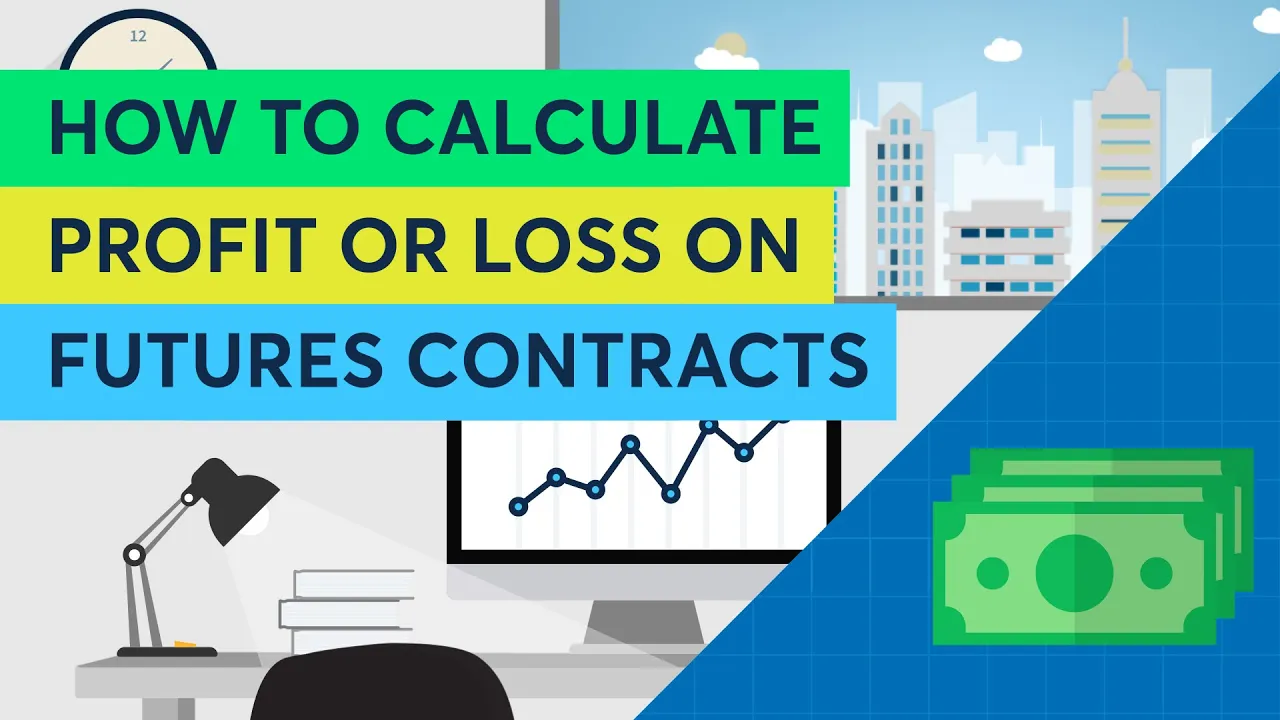
market participants trade in the futures market to make a profit or hedge against losses each market calculates movement of price and size differently as a trader you will want to be aware of how the market your trading calculates profit and loss to determine the profit and loss for each contract you will need to be aware of the contract size the tick size the current price being traded and what you've bought or sold the contract for let's look at the WTI crude oil futures contract this contract represents the expected value of 1,000 barrels of oil the
price of a WTI futures contract is quoted in dollars per barrel the minimum tech size is 1 cent the dollar value of a one tick move is calculated by multiplying the tick size by the size of the contract for example the dollar value of a one tick move in WTI is 1 cent times 1,000 barrels of oil which equals 10 dollars calculating profit and loss on a trade is done by multiplying the dollar value of a 1 tick move by the number of ticks the futures contract has moved since you purchased the contract this calculation
gives you profit or loss per contract you need to multiply this number by the number of contracts you own to get the total profit or loss for your position for example a trader buys 1 WTI contract at 50 360 if the price of WTI increases to $54 the price move would then be $54 minus 50 360 which would be 40 cents remember WTI has a tick size of 1 cent the price moved 40 cents therefore this price move was 40 ticks a one tick move is equal to $10 so a gain of 40 ticks would
equal a profit of $400 losses are calculated in exactly the same manner as gains the size of the contract can have a considerable multiplying effect on a traders profit or loss before entering a position in the futures market it's critical that a trader understand how any price fluctuation can impact their bottom line in addition to contract size it is also important to understand the relationship between the size of the contract and the contracts average daily move these two numbers can help you determine the potential profit and loss range that could be expected over one trading
day you