Some of the most powerful lessons photographers can learn in 2026 might actually come from cinema. Cinema teaches us photographers to see how to frame emotion, control and use lighting purposefully, build an atmosphere, and essentially how to tell stories visually. From intimate human encounters to bold experiments in color, movement, and silence, we're going to be looking at movies that achieved all of this whilst exploring how they can inspire the way we approach our own photography moving forward.
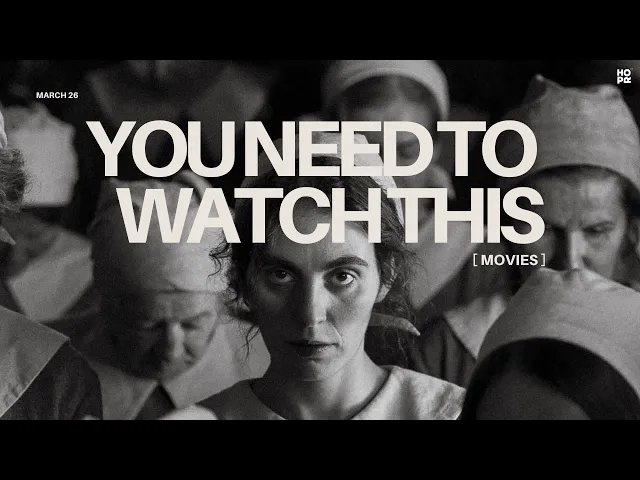
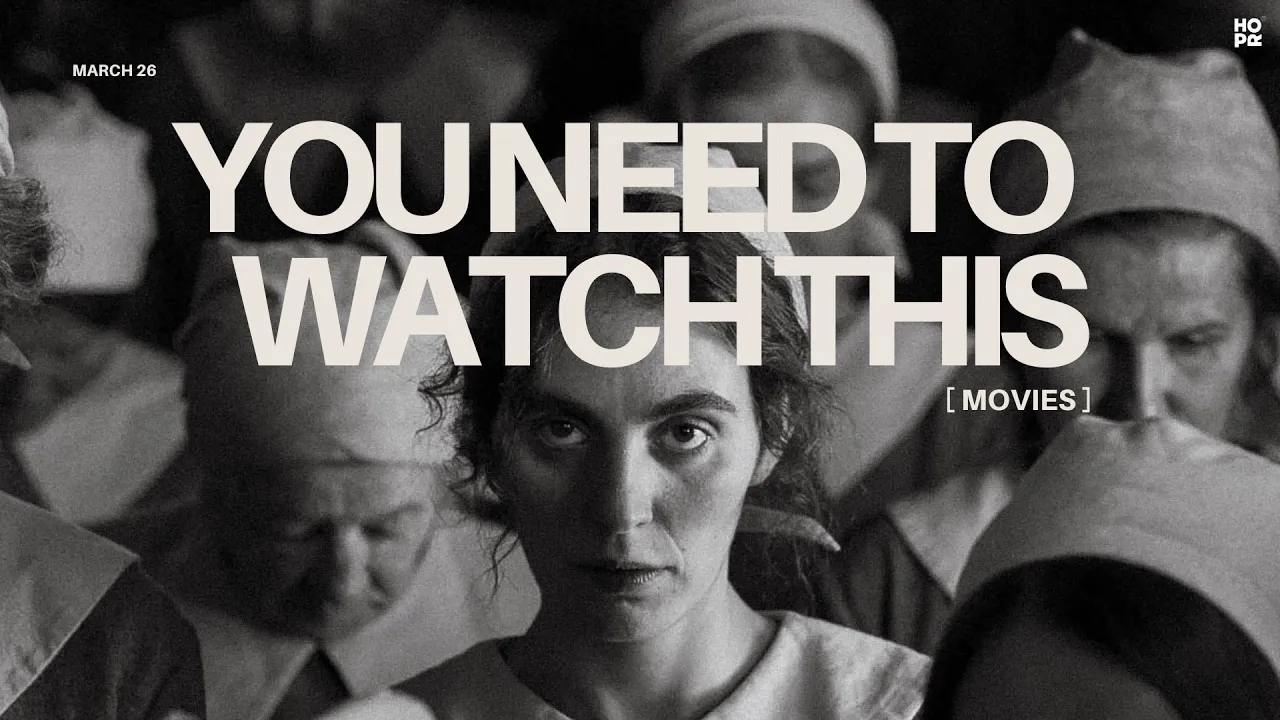
Or so I hope so. Grab a drink, make yourself comfortable, and let's go straight to another video. Magnus Von Horn's The Girl with a Needle is honestly a masterclass in cinematography and atmosphere.
Set in postw World War I Copenhagen, the film follows Kaholene, a young factory worker struggling with poverty, abandonment, and an unwanted pregnancy in the aftermath of the war. This story really explores though themes of ambiguity, desperation, and survival against a very bleak historical setting, and it's loosely actually inspired by a real life Danish case. The film itself doesn't rely on dramatic or flashy kind of styles to grip us.
Instead, what it does, it's using very cleverly a slow burn, deeply mysterious storytelling style that goes handinhand with a gorgeous, deeply contrasted visual style. Together, this creates a psychological tension that almost lingers after each frame. And when we look at it, the darkness of its tone, the details in texture, and the subtle gestures really carry a lot of the weight of this story, which for photographers is a plus.
There's no doubt because not only it teaches you to looking at lighting with a purpose, but how to also use lighting to communicate a mood, emphasize tension, and how it helps hinting at ideas beyond the frame. This film is a clear reminder that atmosphere alone can hold a key to effective storytelling. Of course, in my opinion, honestly, when I first watched this film, I was completely blown away um because it's such a deep story yet told so simply.
The film follows two pre-teen boys navigating the complexities of their relationship, so elements of closeness, trust, and social expectations will be evident. therefore capturing the emotional weight of small but fleeting moments that most of us take for granted. It is therefore a delicate and intimate exploration of ideas such as vulnerability, change, and the very fragility of human connection.
What stands out is exactly how this is communicated to an audience through silent close-ups, small gestures, and the focus on glances as well as body language being these the elements that carry the narrative forward. Light in this context is of course also used very purposefully and overall it's a very soft naturalistic kind of light at times isolating the subject in a way that it creates intimacy without being too much. This film in my opinion is about seeing as well the nuance of life acknowledging timing in a frame and letting that be the center of the storytelling.
Quick note though, if you have children around this age, I would recommend maybe reading a little bit more about this film before watching it because some viewers have considered it very upsetting if or rather because they had children of this age. But moving on and what can I say about Licorice Pizza? Paul Thomas Anderson is one of my favorite contemporary American filmmakers because he creates movies that are complex, confusing.
They have a lot of people talking at the same time. They have these morally dubious sometimes characters that we have to follow and they're very much like real life. They're nuanced and complex and it's not black and white as the general saying goes.
And so I wanted to kind of maybe recommend a movie that is simultaneously a love poem to the 70s, but also that it can be an easier uh sort of introduction to Paul Thomas Anderson because it's really worth watching his movies. And as I said, this film is a love letter to 1970s California, which you might love if you love the work of Mimi Plum because just like her photography work, this film captures the messiness and unpredictability of youth. The film follows Alana and Gary as they navigate adolescence, love, and the chaotic world around them.
Its visual style leans more into ideas of naturalism because it's based a lot on handheld camera work, spontaneous compositions, and moments that feel and are unscripted. And I love this because it just approximates it to photography and how many documentary photographers work in the moment. And so for photographers working in a similar style, the lesson here is very clear.
Imperfect images can feel more honest and alive. And Anderson is a direct that embraces ideas of movement and small accidents of life, letting the energy of the moment really shape his stories and frames. I believe Licorice Pizza can encourage you to have a more looser, more intuitive approach and workflow when capturing life and those around you.
Now, Khloe Xiao's The Rider really is a film that stayed with me. I mean, it really lingered even after I watched it for a really long time. I sometimes find myself thinking about it because I think its style it's almost like something between a documentary and an extremely realistic film.
The film is what I can call an intimate exploration of life on the American plains and it follows Brady, a young rodeo rider recovering from a near fatal accident, which essentially causes him to re-evaluate his life whilst navigating ideas of identity and purpose. What's special about this film? It really is how Khloe Xiao's style before she went very mainstream treated each subject because she really blurs the line between documentary and fiction by casting people with no acting experience like real life cowboys, the players themselves in the rider and by also capturing moments that feel deeply honest and raw.
And her movies also have this incredible quality in which they give you immense food for thought, but not about intellectual stuff or in an intellectual way. More so just about life itself, purpose, love, why you do the things you do. And so her films encourage self-examination and discovery or rediscovery of parts of yourself.
She also uses natural light, authentic settings, and a approach very much based in patient observation to allow subjects to exist in their environment. And in doing so, she lets the environment and the moment do much of the storytelling. It's a reminder to be patient, humble, and honest about one's work.
Now, Barry Jenkins's Moonlight is a deeply intimate coming of age story told across three chapters of one man's life. Each exploring the same ideas of identity, masculinity, vulnerability, and an idea of belonging somewhere or with something or someone. However, they're all differently represented due to the aging trauma in lived experience of this man.
And what's beautiful in this film from a visual standpoint is how color shapes each scene. How color shapes a mood, an idea that words cannot express. So color here is used as a tool in achieving an emotional depth and language, if you will.
Skin tones, blues, neons, and soft shadows are elements that carry meaning, the weight of a painful memory or even a candid one. and that therefore bring forward a psychological depth to this narrative. Every frame is very much intentional yet never rigid or controlled.
In fact, it's in the free flow of the camera movement that I believe Jenkins expresses his intention of showcasing two contrasting elements but that very much truthfully represent life, complexity and tenderness. The film therefore carries a great lesson to all of us. And that is that visual storytelling isn't only about capturing what's visible, but also about revealing inner states or work on expressing ideas beyond the frame.
And now we're traveling back to talk about Abbas Kerostami's Taste of Cherry, which is a quiet and rather meditative film that follows a middle-aged man driving through the outskirts of Tehran in search of someone willing to bury him after his planned death. But what makes the film extraordinary isn't the plot, even though in my opinion it is quite original. It's the way Kostami uses distance, repetition, and very importantly silence in the way he tells this story.
And for photographers, I think that it can be interesting to look at this movie in a way of perceiving how absence and silence can build a lot of meaning in images. During the film, Kanostami's frames often feel unresolved, ambiguous, emotionally restrained or completely dominated by silence at times, which in a way invites us viewers to really project our own thoughts and interpretations onto each scene. Meaning, it's a film that you watch and you think of deeply at the same time.
And with this, the director allows therefore long pauses, empty roads to fill the frame and with it signal the importance of using space meaningfully as well in visual storytelling. With this emphasis on ambiguity and silence, I guess another lesson could be that an image doesn't always have to offer explanations or have a finality to it. Sometimes leaving room for ambiguity, silence or unanswered ideas or questions like certain photographers like Todd Hido have done, it can perhaps result in a more lasting impression for viewers uh when they see a photograph.
And last but not least, we shall finish our voyage in time and through cinema with a film called Wanda from 1970 directed by Barbara Loden. The film follows a woman drifting through workingclass America and essentially she moves from one situation to another whilst quietly fighting against this numbness, this sense of resignation for the way people see her and treat her, especially men. The film is shot with a documentary like realism and feels less like a traditional movie and more like almost if we're seeing fragments of a real life or even a documentary I'd say.
And the lesson the film offers to photographers and creatives lies in the power of paying attention to what is ordinary, overlooked, and frequently taken for granted. Because when we challenge what we assume is unremarkable, what we might uncover is a story or stories with real emotional weight. Stories that will feel deeply relatable and honest to an audience or viewer.
In Wanda, Loen, the director and also plays the title character, anchors the film in this loose, imperfect framing and timing, which allows for scenes and moments to unfold more naturally to us viewers, almost as if the actors are improvising in real time instead of following a script that requires an imposed amount of drama and resolution. Her approach show us how powerful it can truly be for photographers and creatives to let subjects simply exist on their own terms. A bit similar to the approach of Justine Kurland in particularly when she photographed ideas of girlhood and freedom.
And I think that when I look at Kurland's work and Barbara Loden's film, I guess that I'm reminded that sometimes the emotional core of an image or sequence of images can be found in precisely what's unresolved, the common and what has been quietly overlooked. And before finishing this video, I want to thank Pdrop for sponsoring this episode. Big Drp is a platform that both me and actually several of you have been using over the past year or so to share photographs more professionally with clients and collaborators.
What I personally like about it is that it really simplifies what can otherwise be a quite fragmented and complex process. With Pdrop, you can create clean private galleries, share your selected images, receive feedback, and deliver final files all in one place without distractions. compression issues or the unnecessary emails back and forth.
Presentation matters and that's why Pickrop exists. The way your work is seen, experienced, and received is part of the storytelling in photography. And Pickrop allows that experience to feel even more intentional and professional if you were to ask me.
And together with Pdrop, we also just gave away a full year subscription to one of you watching this channel and commented on this Instagram post, which I think it's a really nice way of supporting photographers who are actively creating and sharing their stories. If you'd like to try Picrop for yourself, you can find the link and more information in the description below. Um, if you've watched any of these films, let me know down below if you like them, what was the ideas I took from them, and I'll be reading as always and answering.
and I'll see you in the next video. Peace.