[Music] [Music] hey guys and welcome back to mike and his whiteboard my name is mike this is my whiteboard i hope you had a great holiday weekend we are back for number of occurrences today now if you're new to the show basically this is a show where we construct concepts visually so if you're having a hard time understanding things like extrinsic value intrinsic value volatility anything at all shoot me an email at support dough.com and i'll try and construct that visually if we have covered it before you can check it out on find shows so
click on find shows at the top of you can scroll down to mike and his whiteboard and all of the shows are archived there so today we're going to get into a number of occurrences and this is probably one of the most crucial concepts in my opinion for sustainable success and that's because we always want to make sure that we're getting our number of occurrences high to realize our expected probabilities here so i always like to think about this as like bankroll management so when before i started learning how to trade i knew how to
play poker and i used to play poker a ton and i understood the concept of bankroll management which is basically keeping your size small so not going to the table with all of your money at once and basically picking your spots picking high probability spots but not being sure not to go all in at once in any particular situation so this is basically what number of occurrences is for trading so when we say trade small trade often we're talking about keeping number of occurrences high and keeping percentage of portfolio low so we like to keep
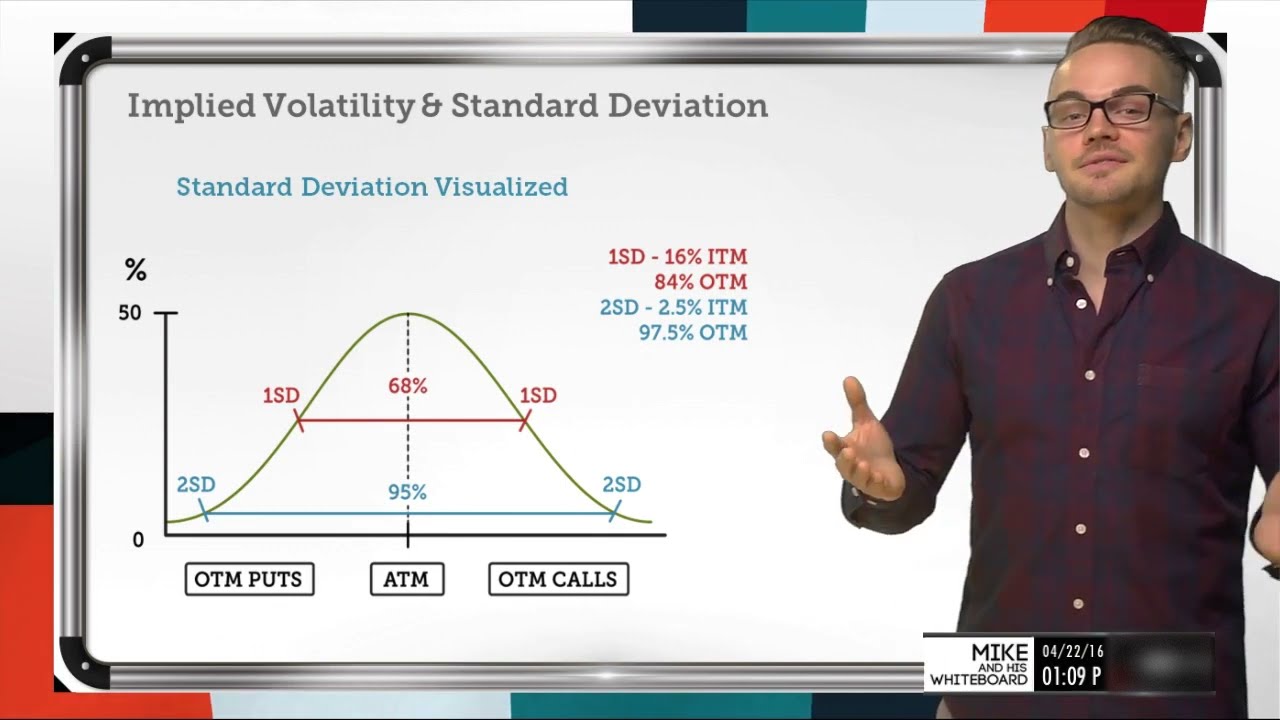
it around five percent or less that kind of gives us the the good range of of variance so if there's if we have a bad week or a bad month then if we're trading small enough to withstand that then we'll be okay in the long run so let's look at number of occurrences and we'll kind of plot this out with some some plot graphs so we always talk about standard deviation how it looks kind of like a bell curve what i like to imagine is basically putting a ton of plots thousands of different plots on
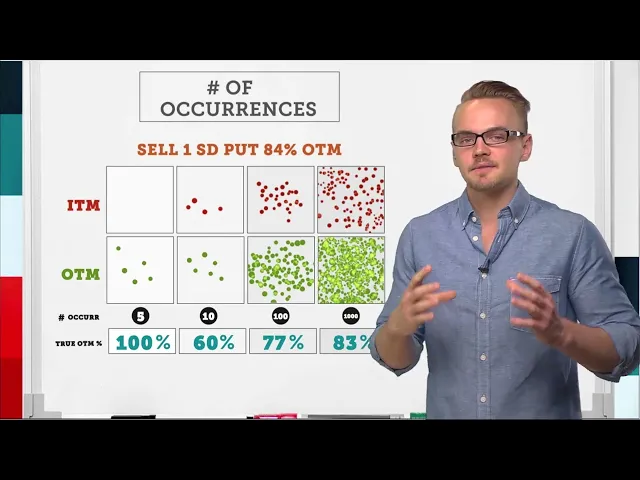
a graph and based on standard deviation and probabilities you're going to see that it kind of curls out over to a bell curve so we're going to look at it like that but in a different way here so let's take a look at selling a one standard deviation put which is basically 84 out of the money so we covered this on an ask youtube but when you're looking at standard deviation if you are looking at out of the money options if you have a 16 probability of being in the money then you have an 84
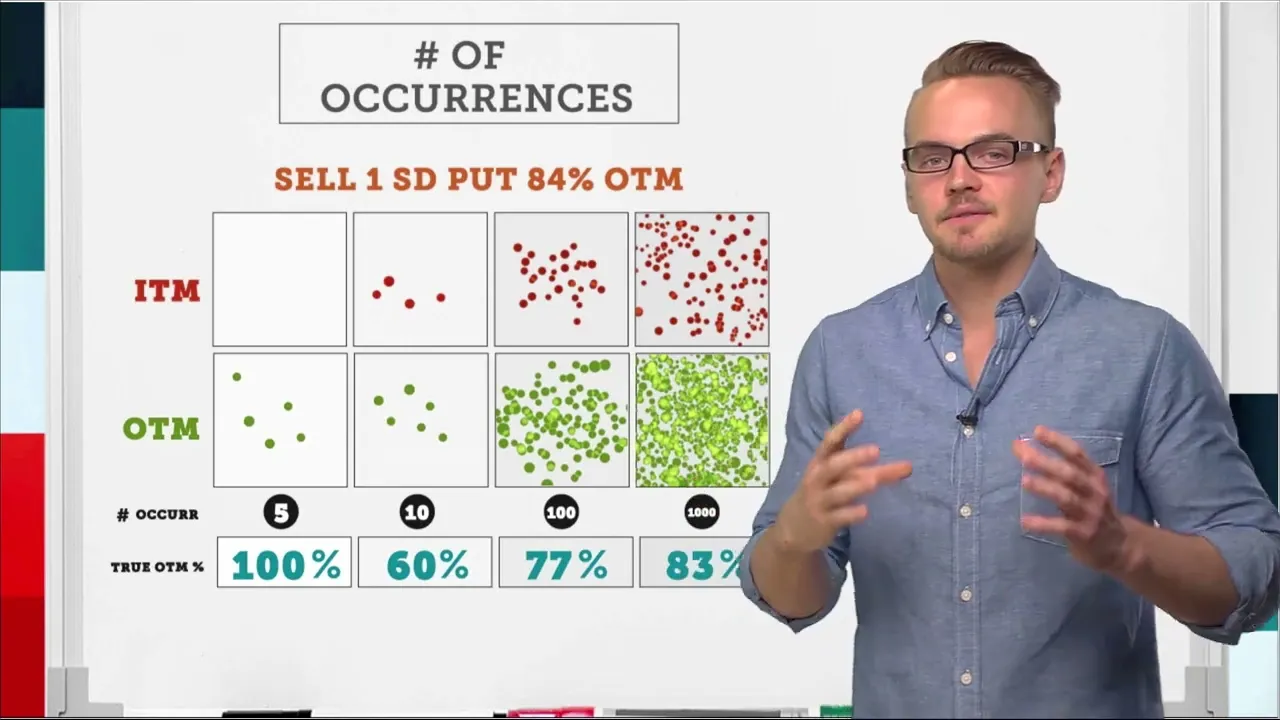
probability of being out of the money and basically you can always calculate that if you just take 100 and subtract any in the money percentage you'll get the out of the money percentage and vice versa so if i have 84 out of the money i know that i've got a 16 in the money percentage here so let's take a look at number of occurrences and we're gonna throw on five occurrences so let's say over the course of five months i sold a one standard deviation put 84 of the money and i let it expire so
i didn't manage it at all this is just looking at expiration so out of these five occurrences i've got five that expired out of the money so right now i'm at a win rate of 100 now why is this important this is important because we've only got five occurrences and since we're playing a probability game and this is a pretty high probability trade it's very possible that it could go either way completely so in this case we've got five trades that are completely out of the money so they were all winners but it could have
very well had five in the money options or five losers right away which is why it's really important to keep our size small because if i'm using 25 of my whole portfolio and i've got in the money trades that are going against me then i might be wiped out and that's not what i want so again when i've got these occurrences low we can see the variance in the probabilities that are the true out of the money percentages now let's see what happens when we get some more currencies on the board so i had five
good months of selling puts but now let's say i went one for five in the next five occurrences so now i've got ten occurrences here i've got six that expired out of the money and four that were in the money so basically i just went one for four in that scenario so i won one lost four so again if i'm trading too large for my particular account then this could have been very bad for me in the long run so again we're always wanting to stay small and trade less than five percent of our total
portfolio so just to give you an example if i've got a hundred thousand dollar account when i'm looking at the buying power reduction for the initial trade i'm looking for that to be less than five thousand dollars so we've got ten occurrences here you can see that the very first five occurrences we were perfect winners we got 100 all of those were out of the money but now we started to have a little bit of a bad few months so now we're basically six and four which gives us a true out of the money percentage
of 60 now let's see what happens when we jack this up even more so we've got a hundred occurrences now and we're getting closer to our realized percentage so basically when we're talking about probabilities the more the more occurrences we have or the more dots we have on this screen theoretically the closer i'm going to get to that 84 percent which is what i should be expecting so you can see now i've jumped from 60 percent to 77 and this is all arbitrary this is just an arbitrary number but i wanted to show you that
the more occurrences that we have the closer we may get to realizing that expected probability so now we've got a ton of winners we still had some losers and that were in the money but overall if i'm trading small i'm going to probably see a steep curve that's just gradually grinding up instead of something very volatile if i'm using a lot of a lot of basically the percentage of my portfolio so last but not least let's get a thousand occurrences on here and this is really where the true meaning of number for currencies can shine
through so now we've got 83 percent true probability of being out of the money so we're very very close to what we should be expecting and you can see based on just the density of those winners if i'm trading small and just doing this over and over and over again i'm going to realize that probability of profit or probability of being out of the money and that's going to be a good thing for my account now let's say we went all the way back to the beginning and i realized half of these right away so
i had a terrible year or terrible few months if i'm not managing the size of my portfolio i probably would have blown out the account which is terrible i don't want that so what i want to do is just make sure that i'm trading very small trading often just to make sure that i can withstand this variance or basically anything that might go wrong when we're dealing with probabilities here but as you can see if i've got a huge number of occurrences trading small and trading often i'm going to see a ton of out of
the money trades which are going to be winners now what's very interesting about this is that you can see that these true out of the money percentages vary quite a bit what happens if i were to manage my trades at 50 winners basically you're going to see all of these go up and that's because if i'm not holding a trade until expiration if i reach 50 probability of profit which you might hear on the chase trade network all the time and i'm taking that trade off basically i'm removing the risk from the trade so let's
say i was risking one to make one if i'm risking one to make one and i reach 50 of profit now basically i only have 0.5 left to make and 1.5 left to lose so if i'm risking one to make one and i've got half of that profit again if i have one and one and i make half of one that i'm trying to make i only have half of that now that i can be profitable in the future and i'm risking the gain that i've made and that now goes into the loss column so
when i'm taking off the trade and capturing that profit my probability of being out of the money or being profitable in whatever situation i'm trying to play is going to be much higher so let's look at some takeaways here so the first takeaway is that obtaining a large number of occurrences is crucial to realizing expected probabilities now we saw this with the first few examples the first five occurrences i was five for five which is perfect but it could have gone the other way just as equally and in the second occurrence we we just kind
of took a downturn we had a bad few months and we were 60 40. so you can see that when you're just starting out or we have a few occurrences and we're not maximizing our occurrences the probabilities can be skewed in either direction pretty drastically the second takeaway is too few recurrences can result in very skewed results so again when i don't have enough occurrences to help me realize my expected probabilities i could be skewed in a positive way or a negative way it really all depends on the situation it's going to be very random
so we always want to just trade small make sure that we're not getting in over our heads and putting ourselves in bad situations and just making sure we're getting as many non-correlated occurrences as we can and appropriate position sizing is paramount and i reference bankroll management here because i always like to think about it from a poker perspective because that's what i knew before i even started trading i knew how to manage a bankroll playing poker so this is how i think about it in the same way so as long as i'm not trading too
much of my account or taking all my money to that one table and risking it all i know that if i keep my size small even if something major happens then if my size is small enough it shouldn't affect me and last but not least no more than five percent of portfolio per position with high probability trades so this is kind of the trade small trade often mantra so when i have two of these things working for me so if i've got my number of occurrences up and i'm trading small relative to my portfolio when
i combine these two things i've got synergy in trading and i've got both of these things working for me and basically i've got non-correlated occurrences i'm realizing my expected probabilities quicker and if i'm managing my positions i'm even realizing a higher probability of profit so i'm increasing that number and i'm doing everything that i need to do to be successful in trading so this has been number of occurrences if you've got any feedback at all shoot us an email at some support or you can tweet us at mike thanks so much for watching and be
sure to tune in tomorrow we're going to start getting into greeks so tomorrow we're talking about delta then we're going to talk about gamma and theta so if you have any hard time understanding those three things we're going to break it out and just break them down completely for you and hopefully you'll like it so thanks again for tuning in my name is mike and this has been mike and his whiteboard what's up youtube thanks for watching our video if you like this video give it a thumbs up click below to watch more videos subscribe
to our channel or go live to that sorry [Music]