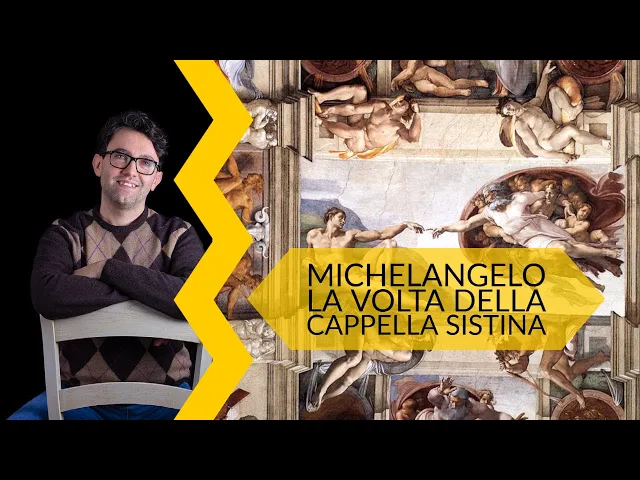
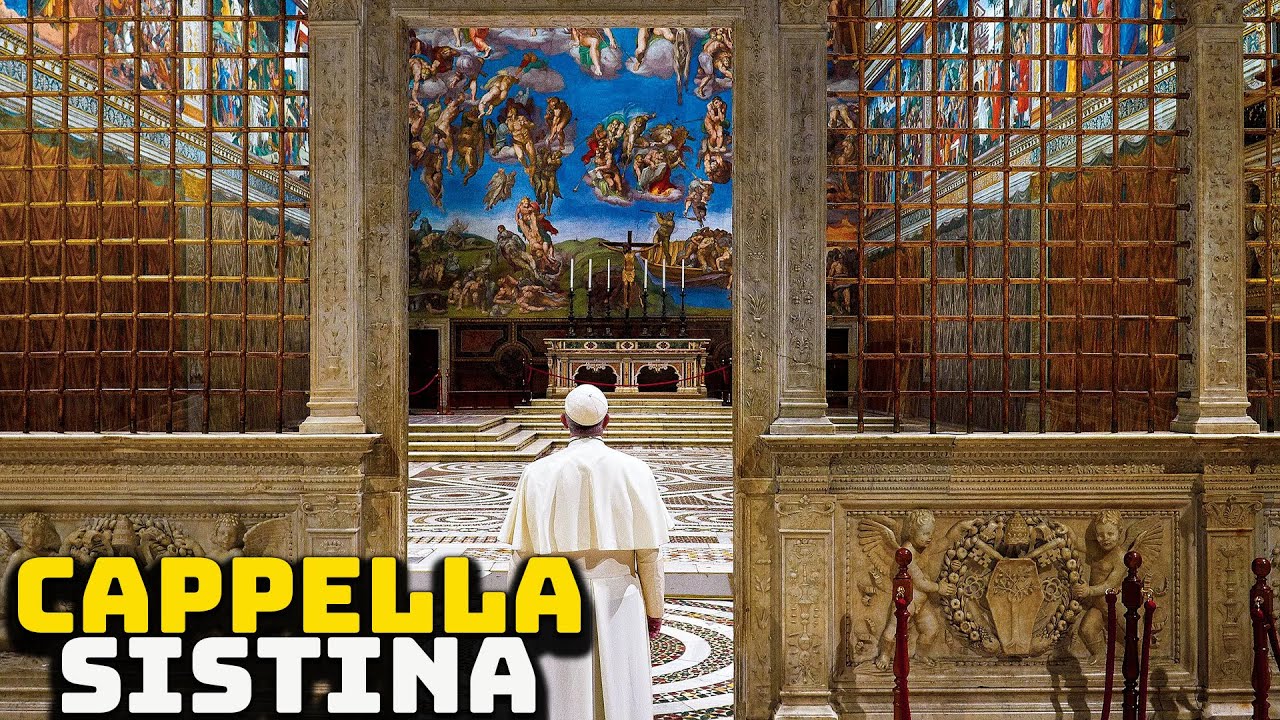
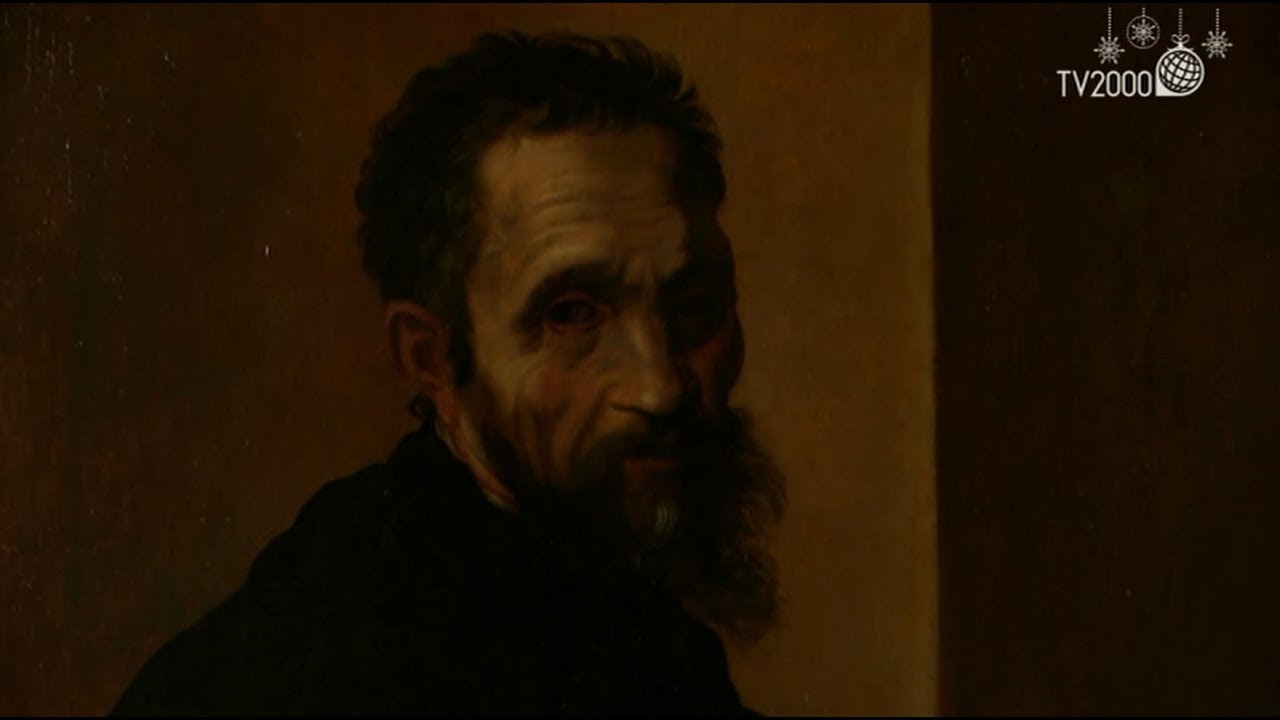
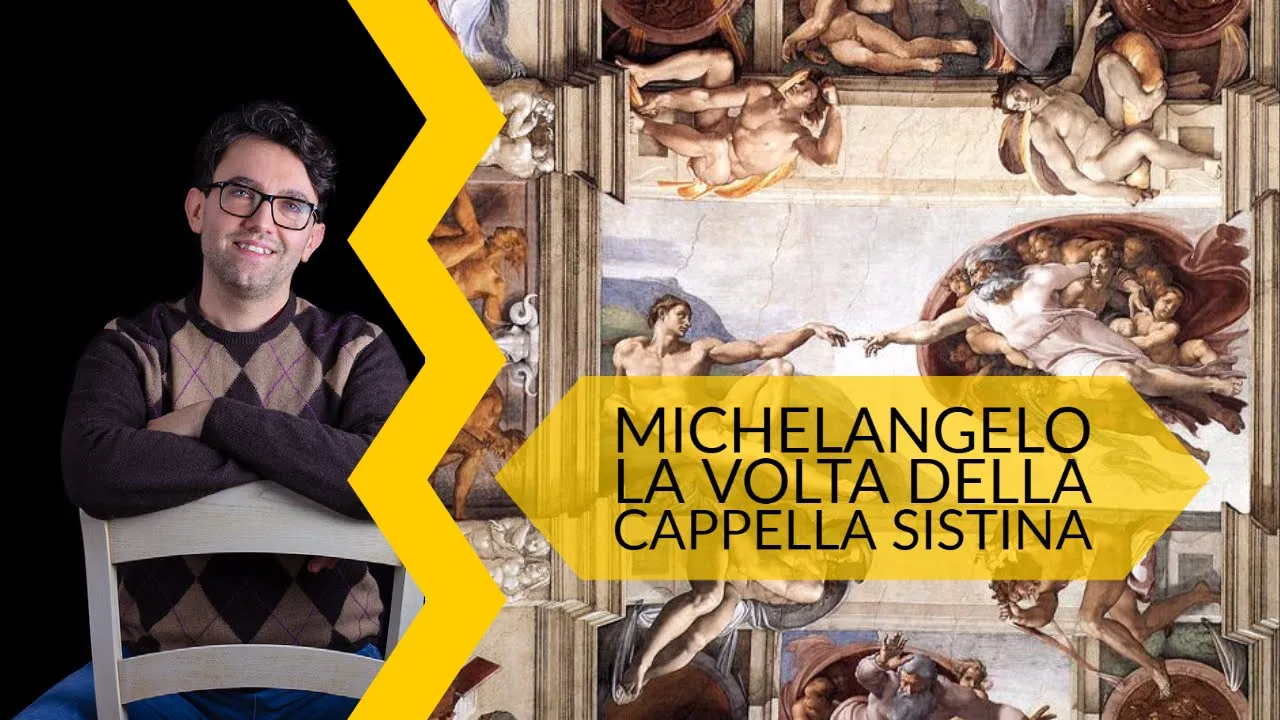
In 1508 Pope Julius II decided to give a new aspect to the Sistine Chapel and with this idea he entrusted the genius of Michelangelo with the task of creating a new decoration on the surface of the vault. After a first simplified project, the master proposed a very complex cycle. The artist took into account the fifteenth-century frescoes on the walls and decided to add the episodes of biblical Genesis that were integrated with them.
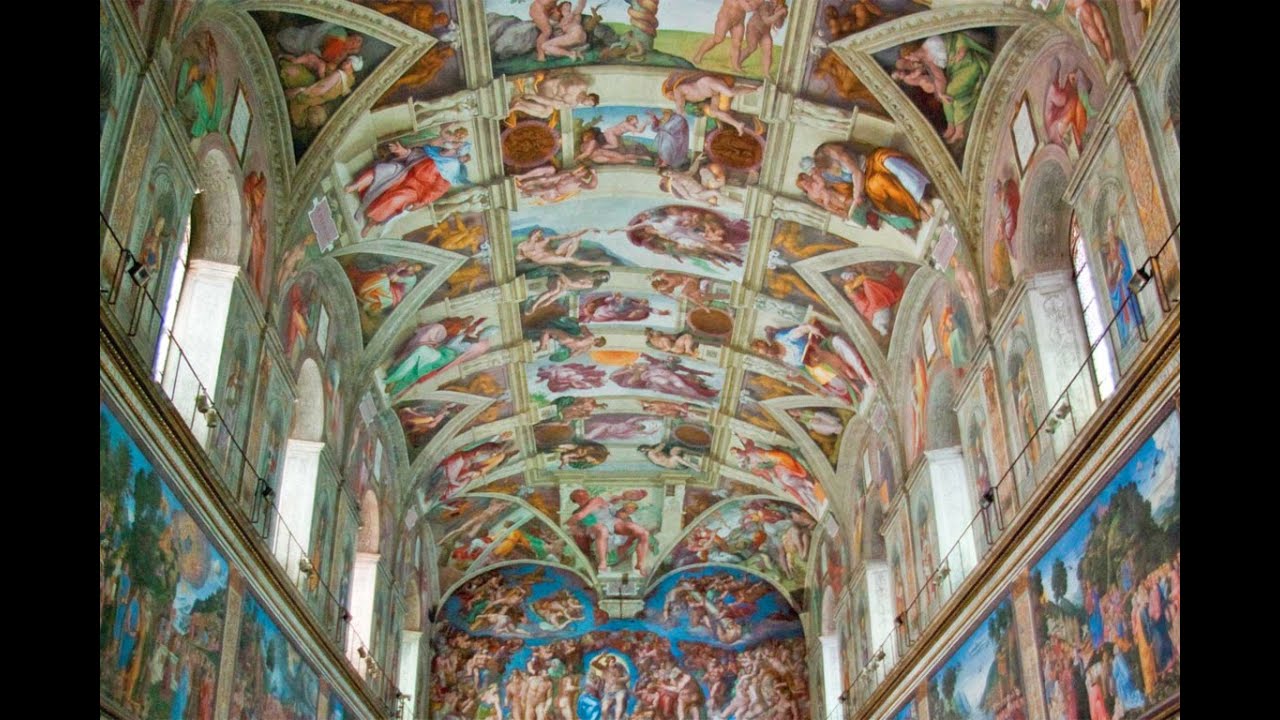
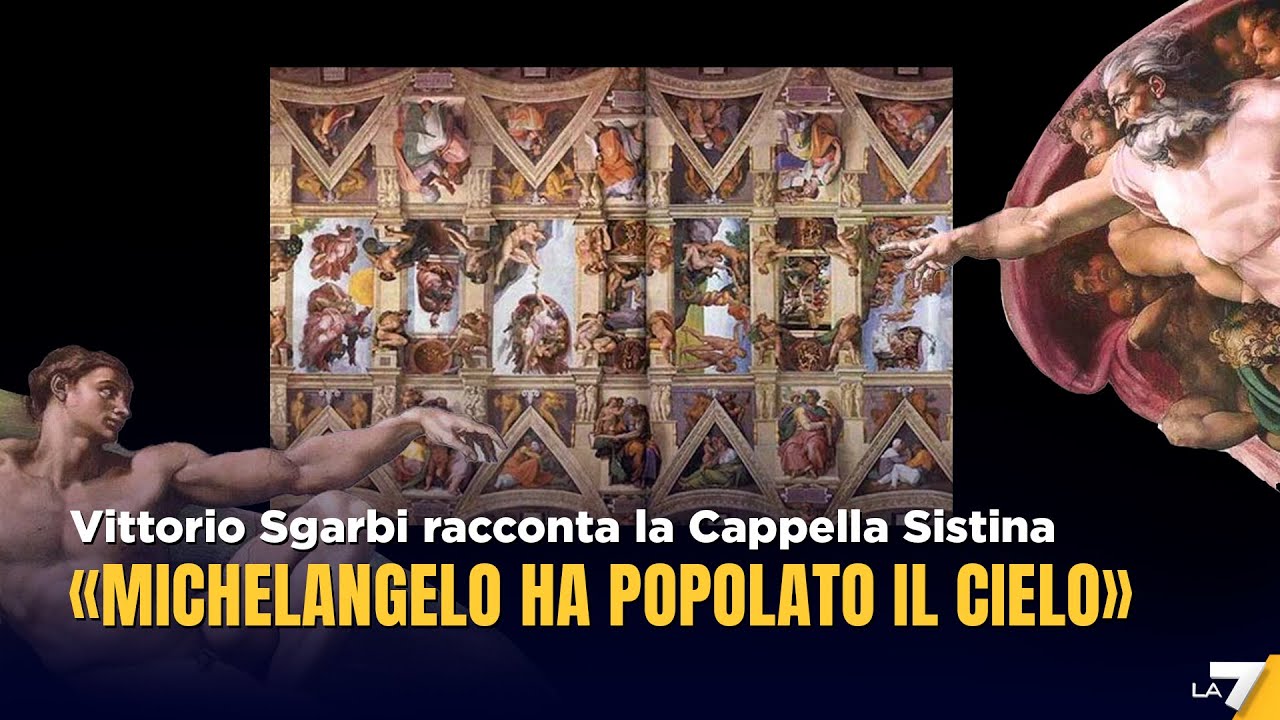
Michelangelo painted an imposing architectural structure that overlapped the real vault , framing the scenes. It is an architectural grid that creates an illusion of upward thrust and breakthrough. Not only that, it also serves to enclose the subjects in the various bands.
It was probably Julius II himself who suggested the depiction of human figures within an organic architectural structure. However, Michelangelo raised several perplexities about this original figurative program . Then the pope gave carte blanche to the artist who thus developed an original and colossal work.
An enormous fresco, the result of Michelangelo 's effort and unparalleled compositional skill. The vault of the Sistine Chapel earned the artist the esteem of his contemporaries including Raphael and the pope himself. But let's see how this complex figurative and spiritual path unfolds before us and brings us close to the divine sphere.
The vast painted architecture divides the vault into 3 concentric bands. In the central band the images of Genesis come to life and couples of Ignudi supporting figured medallions. In the intermediate order or second tier, we have imposing thrones flanked by pillars on which Prophets and Sibyls sit.
The third band is the outermost one and adjoins the paintings on the walls. In the lunettes and sails on top of the walls the Ancestors of Christ are depicted, while in the four corners episodes of the salvation of the people of Israel are illustrated. The painted figures , exactly as it happened for Michelangelo's sculptures, seem to want to free themselves from the same pictorial material by expressing a dramatic plasticity.
The isolation of the figures is enhanced by a convulsive motion made of muscular twists. They are idealized, taking on universal spiritual significance. Another striking aspect is the colors.
The restoration carried out between 1980 and 1989 brought to light all the intensity and chromatic richness of the original painting. The colors are bright, pure, almost metallic, spread over the plaster of the vault with decisive brushstrokes superimposed in a kind of gigantic hatching. Michelangelo went through great difficulties in creating the frescoes on the vault, because he faced all this amount of work with little help, in a daily confrontation between the genius of the artist and the physical limits of man.
The inauguration took place on November 1, 1512 in the presence of Julius II who from that moment deeply loved the Sistine Chapel and the artist who had completely changed its appearance.