[Music] to seek out new life and new civilizations. To boldly go where no man has gone before, it's captured the world's imagination for time immemorial. From Star Trek and Star Wars to Independence Day and ET phone home, it's long been fictionalized in pop culture, not just questioning whether alien life exists, but what that might look like.
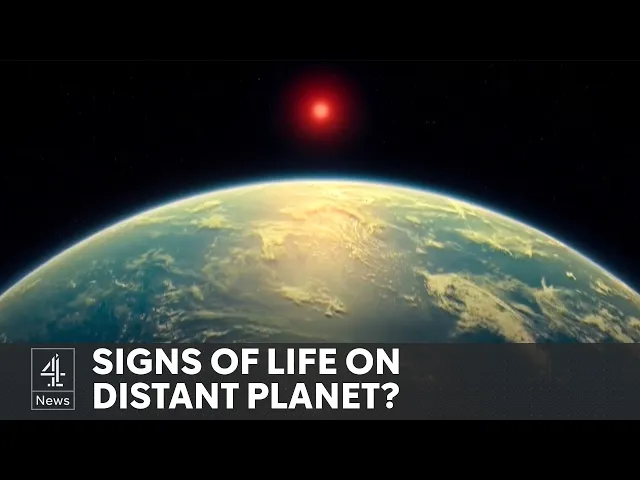
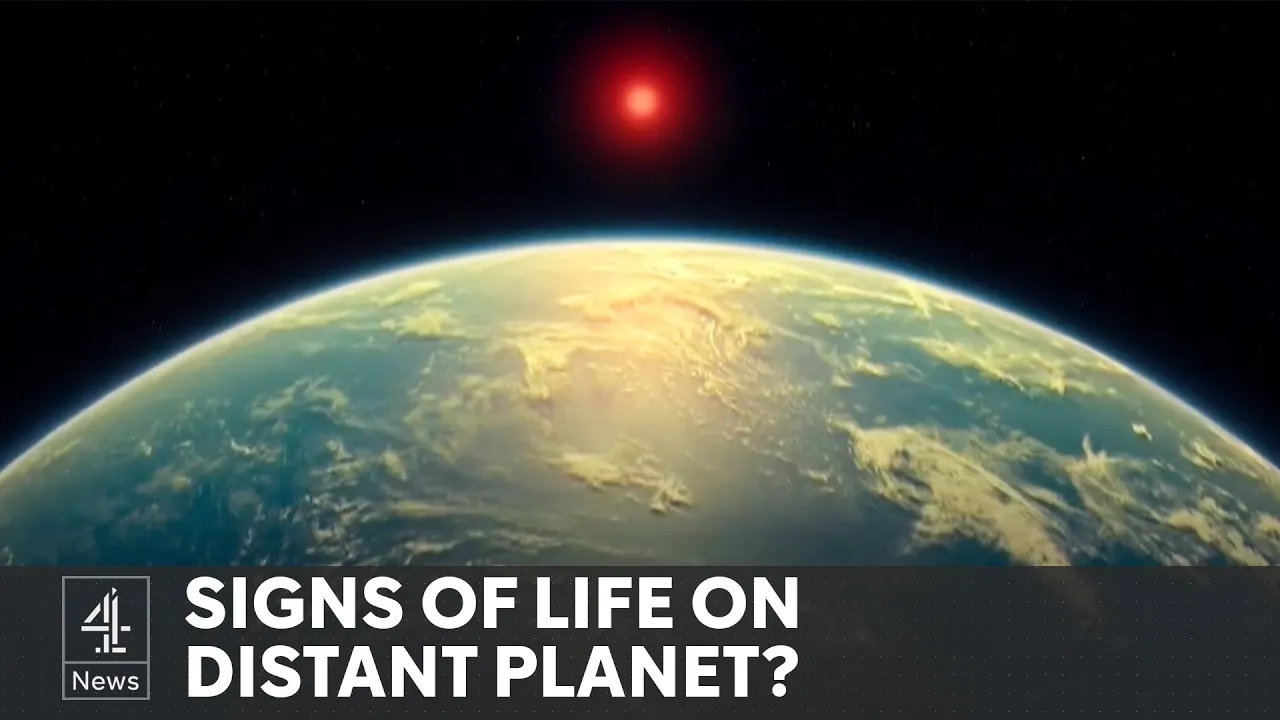
But the discovery of a planet 700 trillion miles away with signs of a gas which on Earth is produced by simple marine organisms has inched us a bit closer to answering those questions. Less giant predator then more small plankton. The scientist from Cambridge University leading the discovery says confirmation that we're not alone in the universe is the closest it's ever been.
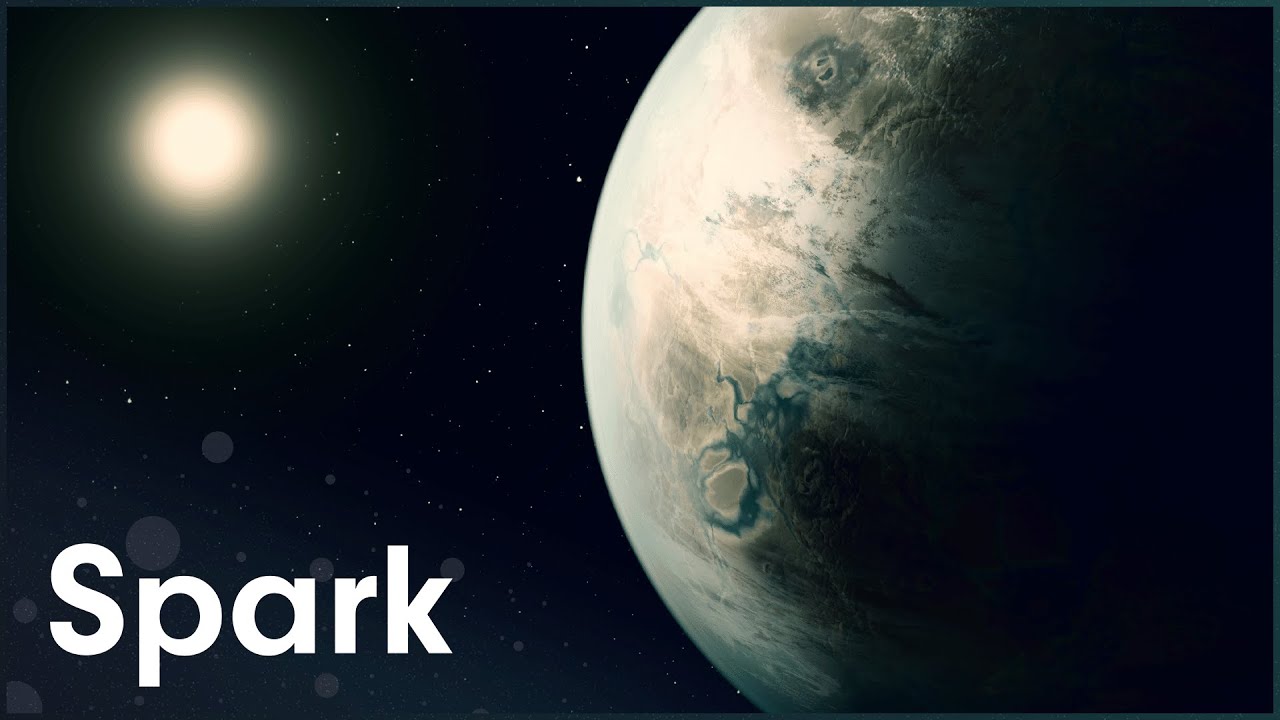
For the first time in the history of our species, we may actually be seeing signs of life elsewhere. This is, in my view, a transformational moment, not just for planetary science, not just for astronomy, but for finding our place in the universe as a species. The planet named K218b is 2 and a half times the size of Earth.
Using NASA's James Webb Space Telescope, the most powerful ever built, scientists were able to capture the tiny amount of starlight glancing through the atmosphere of this far away world and through minute changes in color inferred there were molecules associated with life in the atmosphere. The Cambridge team are 99. 7% sure their results are accurate, but there's still more work to be done to check that this gas can only be produced by living organisms.
Let's go. While they haven't discovered a real life Pandora yet, it could turn out to be one of the biggest discoveries in our lifetime. But it will perhaps be years before we truly know.
I'm sure it just looks just like that in Avatar. Well, with me now is Niku Madu Sudan, who's the professor of astrophysics and ex eco exoplanetary science, excuse me, at the University of Cambridge, who led this study. Professor, thank you very much for coming on the program.
Tell us about how you actually thanks for discovered this how you discovered this planet and the evidence of life on it without actually seeing it. Yeah. Yeah.
So the the method we use to discover the atmospheric to detect the atmospheric composition is called the transit technique where you're seeing the star as the planet goes in front of it. So some of the starlight passes through the atmosphere of the planet before reaching the telescope and imprinted on that star light is absorption features from molecules in the planet's atmosphere and we can we can estimate what that absorption is and from that we can estimate what the molecules in the planets are and from what I've read the evidence of life is overwhelming and there's an awful lot of life on that planet according to what you discovered. So, so we we we are not saying that we have actually detected life.
What we are saying is that we have detected molecules that could potentially indicate the presence of life. And there is a difference and we have a lot more work to do before establishing two things. One that the molecules we are detecting are indeed robustly detected at a much much higher confidence and that they can be uniquely associated to life on this planet.
Now the the optimism is that these molecules are known to be uniquely produced by life here on Earth and have been predicted for ocean worlds and hyish worlds as well like like this planet K28B. However, we want to still remain open to other unknown processes that we may discover in the future that may explain what we are seeing without the need for life. So it could be that they could have been produced by something other than life you're saying.
But you don't know. Certainly. Yeah.
I mean we don't know those process as far as we know uh in order to make these molecules at the abundance as we are saying you need uh life and a lot of life microbial life we're talking about but we want to remain open we want to do a lot more theoretical studies and experimental studies to robustly establish that that is indeed the case and do we have any idea what form of life might be behind these molecules yeah so the simple assumption that we're making here is that these molecules are DMS dimethyl sulfide DM DMDS dimethyl dulfide or both we are detecting at least one of the two molecules at the significance we are seeing right now. Now both those molecules are produced primarily by microorganisms uh in the earth and DMS especially a lot of it is produced by microorganisms like phytolanton in the earth's oceans. So that is our baseline assumption that it could be simple microbial life on oceans on this planet that could be producing these molecules but beyond that we can't we can't comment obviously.
So we're not alone and we might be quite crowded albeit at a very long distance. Yeah, I mean it depends uh you know if we can confirm uh this uh this discovery then the universe the the general assessment would be that the universe the life would be common in the universe even if microbial life but still that distances are are very far from from here and how will you try and kind of improve on the knowledge that you've you know acquired so far and how long will that take before you get a slightly clearer idea of what we're dealing with? Yeah.
Yeah. Yeah, we we want to do two things, right? First, we want to improve on the detection significance itself.
Are we really sure that these are the molecules we are seeing? This is a very important first step and this is the strongest hints we have ever seen like in the history of science for such molecules outside the solar system. But but that is not enough.
We want to be even more robust to the point that it should be less than one mean a million chance that it's a fluke, right? So, we want to be that robust meaning that we want to make more observations. Second thing, we want to do more theoretical studies as well to associate it with life.
Finally, and very briefly, how big a moment is this? I think this is as big a moment as it gets in the search for life. This is the strongest uh evidence we have seen so far.
Even if it doesn't match our highest criterion, it is still like the first step and a very big first step. And I frankly see it as a transformational moment uh in in the history of the search for life.