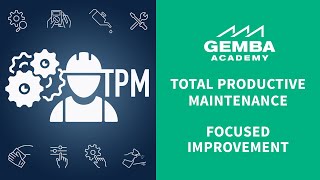
hi there and welcome certain types of businesses rely heavily on equipment to add value and to serve their customers these include machine shops as well as continuous process industries such as breweries bottlers refineries paper mills pharmaceuticals and so forth when there are problems with production equipment this leads to late deliveries quality problems financial losses and low morale fortunately there's a set of practices methods and tools that empowers organizations to reduce equipment losses while maximizing the effectiveness of production systems tpm or total productive maintenance is a set of practices methods and tools that enables organizations to
do this tpm was formalized by the japan institute of plant maintenance or jipm based on the experience of several companies in the application of maintenance best practices in the latter half of the 20th century in the tpm philosophy this is made more specific in the form of an ambitious goal of zero breakdowns of equipment just as it may not be possible to ever eliminate 100 of waste from every process achieving a manufacturing operation that never has any equipment breakdowns is nearly impossible however the zero breakdown philosophy and the various tpm activities are designed to identify
and eliminate the causes of breakdowns it's also designed to help us develop a mindset that refuses to accept that equipment breakdowns are unavoidable many tpm activities are shop floor focused but tpm aims to engage everyone in the organization and activities to minimize every type of equipment loss these include but are not limited to breakdowns accidents defects idling failures energy and environmental pollution tpm activities are designed to help us to detect expose and eliminate all minor flaws in our equipment establish and maintain basic equipment conditions identify and set optimal operating conditions and correct every deficiency identified
no matter how small tpm is structured around a set of activities that span the entire organization they are known as the eight tpm pillars they are focused improvement autonomous maintenance planned maintenance education and training early equipment management quality maintenance office tpm and safety and environment management there are many benefits of practicing tpm first there are the financial benefits of having more reliable equipment it's common for organizations to improve their equipment capacity by thirty percent fifty percent or even one hundred percent through persistent loss reduction activities of tpm the ability to produce more without adding more
equipment cost translates directly to increased profit second tpm places a strong focus on people development specifically developing the knowledge skill autonomy and motivation of the equipment operators the long-term pursuit of tpm develops the zero loss mindset and awareness in every person in the organization people drive tpm improvement and make it sustainable the education training and autonomy given to the machine operators make the human factor more predictable and reliable a lean transformation cannot be sustained without this type of stability while there are many specific continuous improvement methods for achieving stability related to labor quality material variability
etc tpm is the best suited approach for businesses that are heavily equipment dependent last but not least tpm creates basic stability by making equipment reliable in terms of availability and production output tpm reduces contamination and reverses deterioration making equipment more reliable in terms of product quality organizations generally practice tpm in one of two ways some approach tpm as a comprehensive program while others may choose to practice only a few tpm techniques in either case there is a logical step-by-step multi-phase sequence to how tpm is rolled out in the first approach an organization pursues a comprehensive
tpm program this often means making a plan to establish the eight pillars one by one through their activities their component practices and tools if an organization has committed to the entire scope of tpm but still needs to formulate a plan there is a 12-step process to implementing a tpm program in process industries and continuous process operations tpm is often rolled out as a complete manufacturing improvement system these businesses rely mainly on equipment to add value in production and the benefits of tpm can be felt most directly in the second approach an organization selectively adopts some
but not all of the tpm pillars as part of their manufacturing management system often they start with the focused improvement and autonomous maintenance pillars because these address common production problems tpm fits very well into an overall operational excellence program for discrete manufacturing organizations or any company that uses equipment that can break down many organizations find it very useful to adopt tpm practices selectively to improve overall equipment effectiveness engage their workforce in safety and production efforts or simply to strengthen their overall maintenance system that wraps up our overview of tpm or total productive maintenance thanks for
watching we'll see you next time