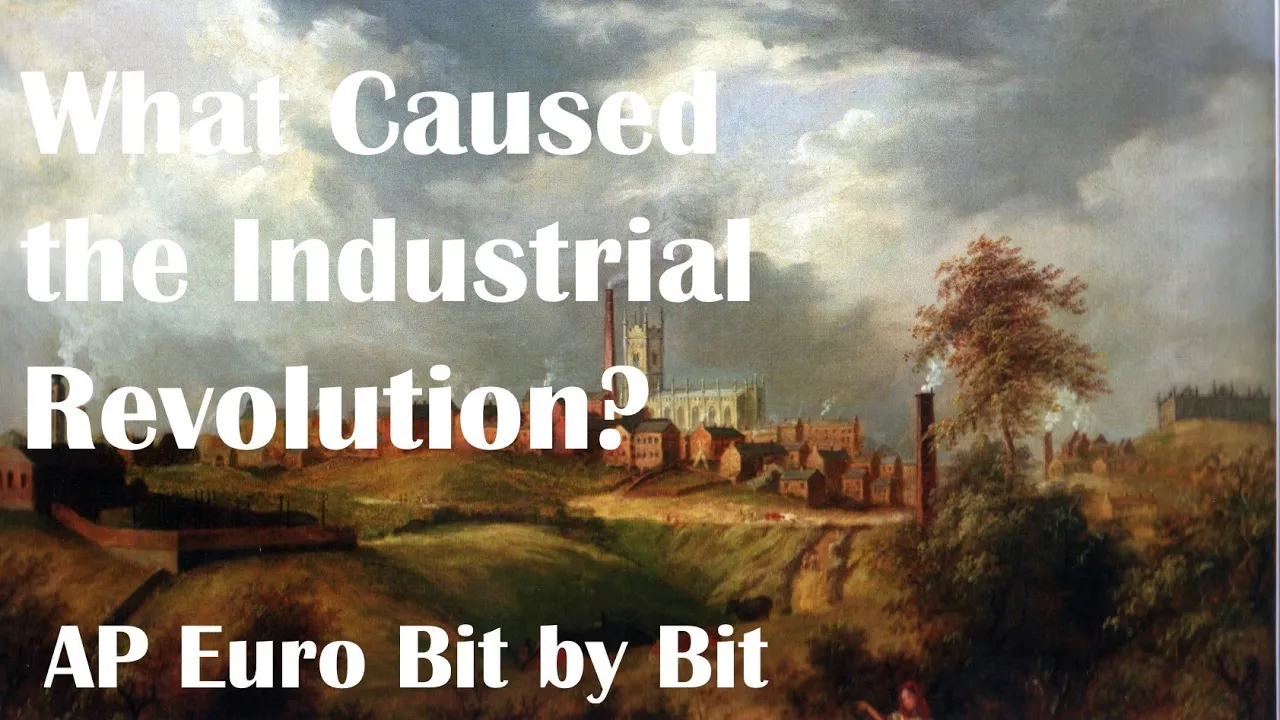
hi my name is Paul sergeant and welcome once again to AP Euro bit by bit the series in which I'm trying to break down modern European history into small bite-sized pieces so you can better understand it and today we're going to get into yet another Revolution I mean revolutions happen all the time and historians love using the term Revolution but this one is perhaps the most important revolution in all of modern European and modern world history it's the industrial Revolution and before we get into it let me just show you it gave us things that
surround us now today everything from prefabricated clothes to uh the technology that allows me to to video this and for you to watch this to very cheap Americana so indulge me if you will for one moment because this is the ultimate end of industrialization ladies and gentlemen Mount Rush and Americana I thank my lucky stars to be living here to cuz the flag still stands for freedom and they can't take that away and I'm to be an American wherein know I'm free and I won't forget the men who die Who that right to me and
I gladly stand up to you ladies and gentlemen the Industrial Revolution gives us cheap Americana made in China so [Music] CU well the Industrial Revolution very simply was a period of time from about 1750 to about 1900 we're going to make some nice round dates here in which the method of manufacturing changed from a labor powerered manufacturing system built upon the backs of animals and people into a mechanized machine driven production system that was powered by initially coal Steam and the railroads and eventually by Steel and chemicals and the automobile today we're going to look
at the causes of British industrialization why were they the ones to start the whole process well there are a few factors that Great Britain had which allowed it to become the first nation to industrialize first of all to industrialize you have to have access to raw materials and Britain had large supplies of coal iron and they had Rivers which would allow for not only powering these machines but also for uh easy transportation of the coal and the iron and the finished products so that helped them get the whole thing going second of all the Agricultural
Revolution had created a surplus of food with new foods from the uh Americas with improved farming techniques more people were able to feed themselves Food Supplies increased population increased and therefore the the degree of famines and all of that was greatly greatly reduced but as the farming became more more mechanized and as the population grew there was less need for people in the countryside so those people came to towns and cities and boy where were we going to set up the factories towns and cities now we've got the labor there's also a lot of capital
in in England England had been for a long time a trading economy and so there was a lot of cash that was not only in the upper class but it was also in the Bourgeois the middle class who were increasingly looking for things to buy and invest in and even those farmers who were involved in cottage industry had cash to buy extra things Britain had also set up a system of banking and credit which allowed people to invest in large projects to IND industrialized things so the economic side was there the British entrepreneurial Spirit was
thriving and there were people who wanted to make money and were willing to invest in order to make that happen so they invested in factories of course other raw materials were needed Britain had a huge Colonial Empire and that Colonial Empire allowed them access to many other materials which would help in the process of not only making machines but also in the the process of making the cloth and other things that are going to come out of the machines and finally Britain had a government which was sympathetic to business keep in mind that the British
after 1688 in the Glorious Revolution had created a constitutional monarchy and so the power of the Monarch was greatly reduced and the large power in Great Britain at this point was in Parliament the House of Commons in Parliament was largely run by the bourgeois the middle class and so you had business people and entrepreneurs who are making laws which big surprise are going to help out business people and entrepreneurs so all of these factors were in place in Britain and provided the environment which could allow them to industrialize so in a nutshell why did Britain
industrialize first well they had a system set up of Proto industrialization the putting out system or the cottage indust industry they had a number of inventions which improved that process and gradually created the need to bring that process into one place the factory and they had lots of advantages in terms of raw materials in terms of Labor in terms of capital in terms of Entrepreneurship and government support which allowed the the Industrial Revolution to really take take off these things were largely absent in the rest of Europe and so Britain became the first ones to
industrialize so that's about it and I hope that wasn't too detailed of an explanation here but yeah first Industrial Revolution Great Britain it's going to take over all of Europe it's going to take over the United States it's going to take over the entire world but that is for another time in fact if you're interested in finding out more about the Second Industrial Revolution just click on the link right here and I'll take you to a video that I made a while ago about guess what the Second Industrial Revolution but until then hey and until
next time this is AP Euro bit bybit I hope you take the time to subscribe to the to this channel because you'll be notified every time I put up a new video I hope these videos are helping uh as always from me Paul sergeant and from our founding fathers let me just say thank thanks for watching and have a wonderful day

![Europe's INDUSTRIAL REVOLUTION [AP Euro Review, Unit 6 Topic 2]](https://img.youtube.com/vi/vffI7U8ZSto/maxresdefault.jpg)