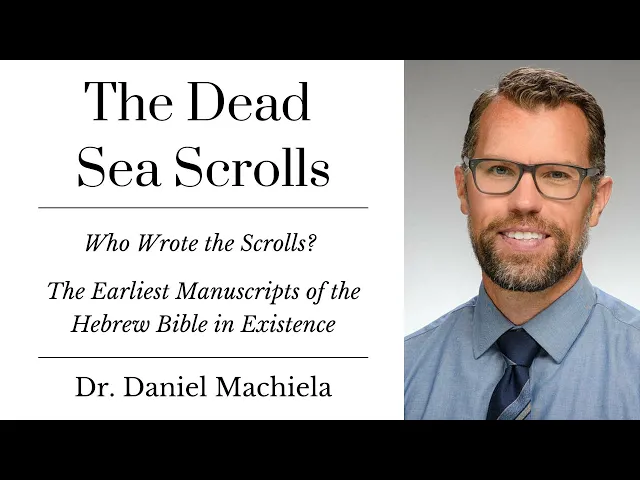
Professor Dan Michila, why are the Dead Sea Scrolls so important to our understanding of the Bible? Well, there are a few different ways you could answer that, but I think um you know, the first thing I could say is that the Dead Sea Scrolls are much much older than the oldest biblical manuscripts that than we had previously had. So um it just gives us a much earlier window onto the biblical text than we had before that time.
You know, our earliest manuscripts prior to the Dead Sea Scrolls were roughly the 10th century um AD CE um before we found the scrolls. And now now that we found the scrolls, um we're talking it depends on how you date paleographically date the manuscripts, but probably 2nd century BC BCE. Um maybe third for certain manuscripts, very few of those.
Most of the manuscripts date to the first century BCE or 1st century CE. So we just have a much much earlier window onto the biblical text. Um, and once we realized that, of course, then the the the questions were, um, so what do we see?
What do we have there? Um, and I could talk more about that later if you like, but that was one big thing. I think the other thing I would say is that it opened up several new windows onto ancient Judaism um, because of the what are called the sectarian writings found among the Dead Sea Scrolls.
Those are those are non-biblical writings. And it just gave us a lot of information on Judaism during that time. So um that has implications of course for just Judaism itself and our understanding of rabbitic Judaism, early rabbitic Judaism, but also early Christianity because um you know we're talking about essentially the same time frame as the events of the New Testament are taking place.
So that's a big deal. You know, that's a really big deal. I mean given the fact that the New Testament is really talking about um virtually all Jews in a Jewish context, here we have another group of writings um from Jews in a Jewish context or which really overlap uh chronologically with the writings of the New Testament.
So I I think those are probably the two biggest things that that come to my mind at least. They're really really big. Yeah.
I mean friends, the Dead Sea Scrolls, uh, as you just heard, are incredibly important for our understanding of the biblical text, but also for the history of Judaism in this period of time and for uh, Christian origins, emergence of Christianity. So, this is a super important episode of exploring the Quran and the Bible. Thank you uh, for being here.
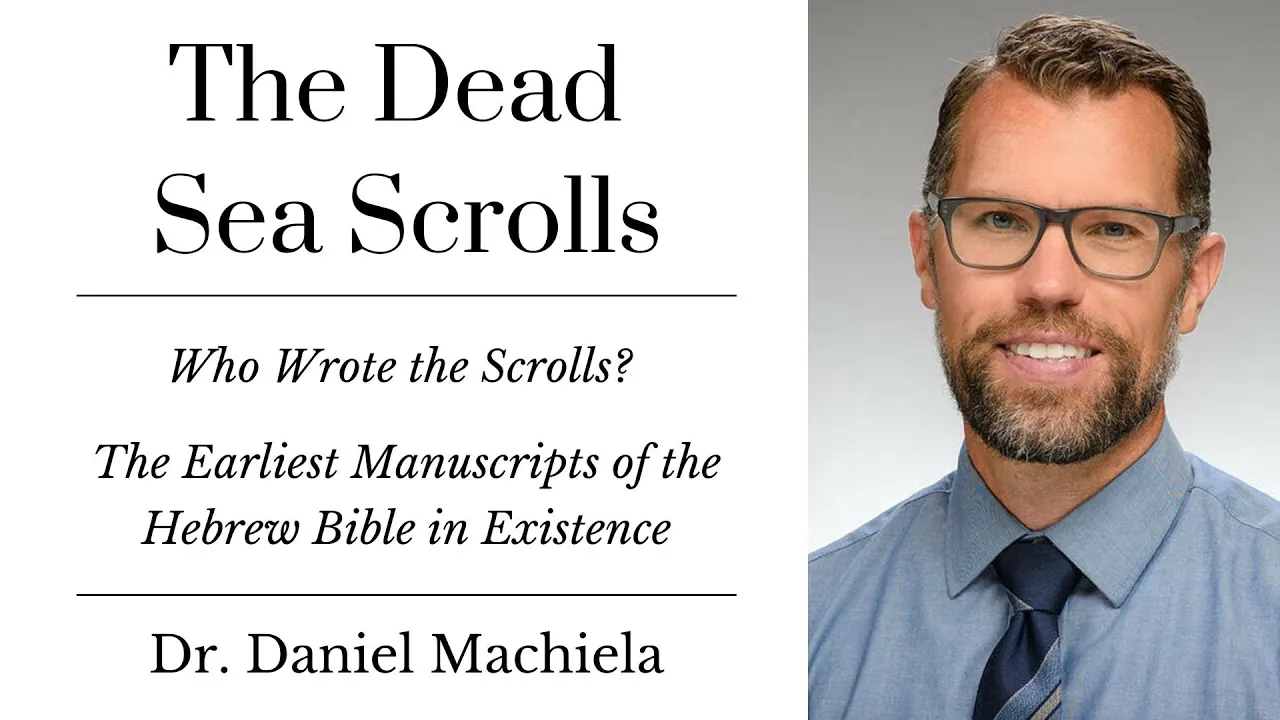
Take a moment, please, to um, subscribe to the channel and tell um, everyone you know about it. Like this video as well. I'm really happy to be joined by a friend and colleague uh Daniel Mashila who's an associate professor of Old Testament and Hebrew Bible um at the best university in the world the University of Notre Dame.
Uh he was previously north of the border for 14 years teaching at McMaster University in Hamilton Ontario. Uh he works on all of the uh literature and culture of Judaism in the second temple uh period. So, you know, uh to date this sort of within the biblical chronology, more or less the return of the exiles from from Babylon, uh we're not going to speak too much about that.
I think it's probably another conversation. So, somewhere around 500 BCE when at least in principle, the second temple uh is built um up to its destruction in AD70 or 70 CE. But his particular work is on the Dead Sea Scrolls and even more particular uh the those scrolls which are written not in the Hebrew language which most of the Old Testament is written in but in another language of the same linguistic family the Semitic uh linguistic family Aramaic uh language of Jesus and we might have some back and forth about uh the nature of the Aramaic language in the scrolls as well.
uh he published in 2023 a book with uh Brill entitled a handbook of the Aramaic scrolls from the Kumran caves manuscripts language and scribal practices. It is the standard resource now for having a clear wellorganized introduction to these scrolls uh which um they're the uh minority part of the total scrolls that were found in this area. uh and yet they're critically important because they have certain attributes that are distinct from the Hebrew scrolls when we speaking all about that sort of thing.
Uh that book will be linked to the description down below. So be sure uh be sure to check it out and all of the writings of Professor Mashila. Let's start with the finding of the Dead Sea Scrolls.
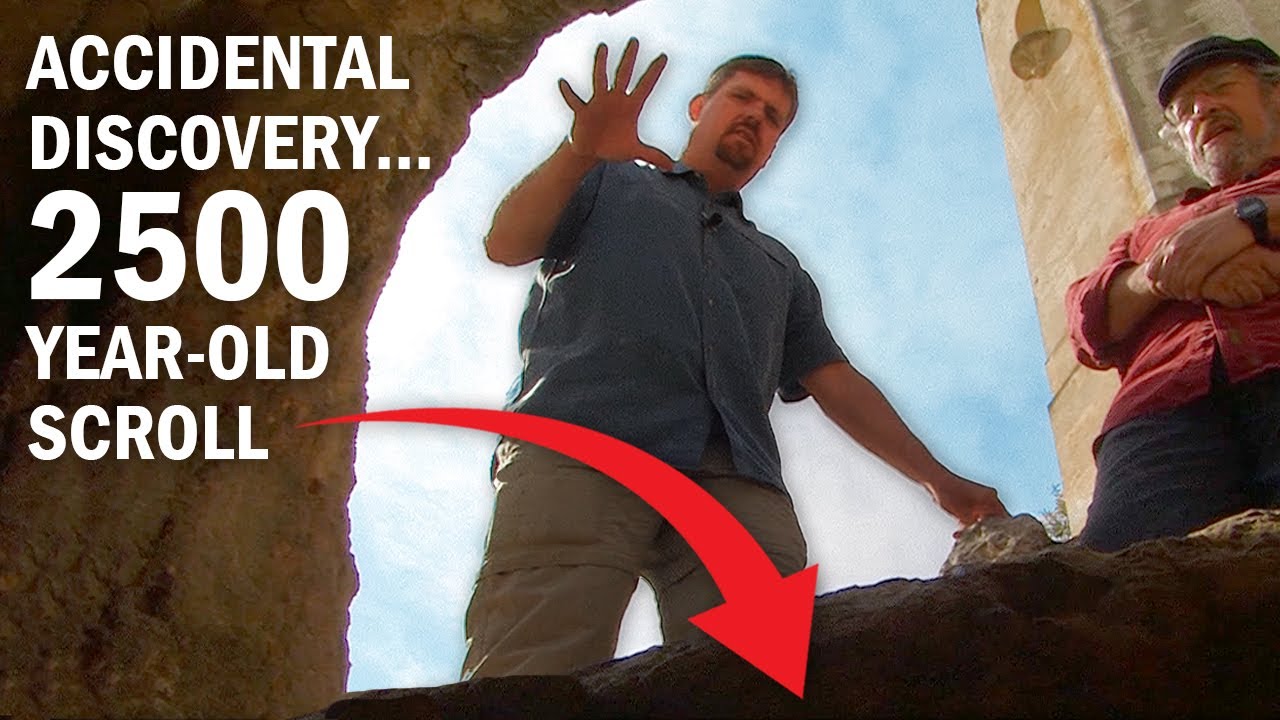
I mean most of our conversation might be about what the scrolls say, but how were they found? Yeah. So, they were they were found accidentally in the late 1940s, 1947.
Uh, the timeline is a little bit muddled because it's based on firsthand testimony and it was uh reconstructed basically a couple of years after the discoveries were made. Um, so the traditional story goes that um the initial discovery was made by a Bedawin shepherd um in the the wilderness area along the northwest corner of the Dead Sea who was throwing rocks uh while tending flocks out in in the wilderness area there. and uh when throwing a rock into a cave heard something clink, something break and uh actually left it there for several days.
But when he came back to the area, this is a fellow named Muhammad Adib. Um he decided to go into the cave and what he found when he went into the cave were jars and scrolls. Well, um that became began a process of slowly over the next year uh months to year figuring out what those actually were.
He brought them to Bethlehem uh to an antiquities dealer uh or someone who would become especially a major antiquities dealer in Bethlehem and Jerusalem, guy nicknamed Condo. Um and um once people started to clue in on what these were, they became a very big deal. They were announced around the world and all the major newspapers and news outlets.
And um then the hunt was on for new scrolls. So uh they were found in 11 caves. Uh a little over a year ago there was an announcement of potentially a 12th cave.
Um that cave uh actually didn't have any scrolls in it but they found a few scraps of blank uh uh leather blank skin which had belonged to manuscripts but anyway there are 11 scroll caves that was the first cave found in 1947 and then into uh the remainder of the 1940s and the early 1950s the remaining 10 caves were found. Um, and it was it's a very interesting story of basically then a race between the Bedawin who uh, you know, had realized that these were worth something and it would be good if they found some more of them and were able to sell them in uh, in Bethlehem and Jerusalem and archaeologists uh, mainly from the Kobe at Darkoshik France in Jerusalem uh, who were then making expeditions out into uh, the wilderness and looking for caves and trying to find um more scrolls. So between the two groups, they did find a lot more scrolls.
Uh now I think the count of manuscripts is over a thousand uh discrete manuscripts found in those 11 caves. And there were some other caves in in various other parts of the the Judeian desert as well that they found eventually. And the these manuscripts are uh generally scrolls.
So they're you know roll rolled up uh parchment I assume. So animal animal skin and um uh not all of them are you know in good enough condition to actually be uh read or um I don't know they might be destroyed in the process of enrolling them. I'm sure there are good technical ways of doing uh all of that but I the I mean it's it's astounding just I mean the story which one almost thinks like could that could that really be true like throwing a rock and all of that.
uh and but then the the importance and of course I don't think we'll probably have time to speak about this but the historical context with um you know the establishment of the state of Israel in 48 the subsequent war uh this territory you know to the west of the dead sea it's administered after 48 I think um up to 67 by Jordan so there all sorts of kind of geopolitical dimensions that were maybe maybe set aside but I do want to comment on one thing just in regard to the site where they were found. Uh there's close to the caves are other archaeological remains which are uh connected with a Jewish community around this time when I I shouldn't just say around this time uh that presumably was active uh around the time that the scrolls were written and consequently around the time of Jesus um known as the Essenes. And I think today if you go and visit it, you kind of see both at once.
You kind of look at the caves and you see the archaeological remains of the Essen. For a lot of people, at least for me, I've always assumed that uh the Essen were the guys who who wrote the scrolls. Anyway, could you uh introduce us very briefly to the Essen and the possible connection between them in the scrolls that were found?
Sure. Yeah. No, the site of Kumran um is very nearby the caves.
Um, it's within sight of cave 1, uh, where the first scrolls were discovered. It's very close to caves 2, three, and four. In fact, four, you can really see right just from the site, is almost just below the site.
And so, it's kind of astounding that it took as long as it did in the 1950s to find cave 4. It's because it was in a different sort of rock, and they didn't expect it to be in that kind of uh rock at first. But, so we we have this site.
It was inhabited from around the 2n century uh BCE up until the destruction of the site by the Romans um around 70 AD70. And so during that time it was clearly occupied. It was clearly um a Jewish community that occupied it.
We know this because of ritual immersion pools and various other things dishes they were keeping. And there uh eventually uh Roland Dvau the guy who from the Akoblique who who excavated the site realized that there were a number of connections between the site and the caves. So for example the type of jar that the scrolls were kept in in the caves.
It's a very distinctive sort of jar archaeologically um it's not very well attested. Um those same jars were found at the site of Kuman. So, whoever was at Kuman was using the same sorts of uh strange jars that were found holding scrolls in the caves.
Um, there are Roman era paths that go between the caves and the site on those paths. Archaeologists found a lot of sandal nails from the second temple period. So, we were able to see that a lot of people were using those paths and walking on those paths uh in antiquity.
So um so then basically to figure out who's at that site, archaeologists and textual scholars used a combination of what was found in the scrolls um uh the m the contents of the scrolls and the site to piece together the idea that this site was occupied by a group called the Essenes. The Essenes are written about um by Josephus and Pho uh ancient Jews who wrote in Greek. Um also some other Greco Roman period authors um who weren't Jewish refer to the Essenes and to the site of Kuman.
The contents of some of the scrolls really line up with the way that Pho and Josephus describe this group. Yes. Describe this group.
So that that has been debated. There have been some scholars um who have disagreed with that identification and said no this is Essen it's not clear enough that this group uh was Essen. It really depends on how much you expect to need you know um in order to make that identification but I think the large majority of scholars would consider that group to be Essenes.
So um a Jewish group that sort of went alongside the um the the Pharisees and the Sadducees. Right. Right.
And uh I mean all sorts of speculation could be made and I bet it has been made about the um the nature of the Essins and possible connections with the origins of Christianity, the relationship I guess to the temple and the priest of the temple. uh apocalypticism, all all sorts of things was John the Baptist and Essen. Um I've heard that just spoken about casually.
I've never written read an academic article about that. Um maybe maybe for uh our second our second discussion on this um channel. I' I'd like to circle back before we get to the Aramaic language.
Really important, not just because it was the principal language of Jesus, but for that among other reasons. But before we get to that, I want to just circle back on uh to the question of the Bible and the Dead Sea Scrolls. So, you gave us this very dramatic sort of um introduction to the way in which the Dead Sea Scrolls pushed back by about a thousand years our earliest manuscript evidence for those sections of the Old Testament that are included in the Dead Sea Scrolls.
Uh but then the next obvious question is uh so what like what do we actually find uh are there certain books where we have whole new readings understandings of um you know what the say the primitive text uh was um yeah maybe just start there and if there's time we could speak about maybe theological connection. Sure. Yeah.
Well there are a number of things that one could say on that score. A few things. One is that uh it's interesting that we did find virtually all of the books of the Hebrew Bible, the Jewish scriptures for uh the Christian Old Testament at Kuban.
Um the only one we didn't find for sure is uh the book of Esther. Um a lot of people have wondered why that might be the case. It could be historical accident.
We aren't really sure. We certainly don't have everything preserved. And as you mentioned earlier, a lot of these scrolls are very very fragmentaryary.
Um, and it's taken a lot of work to reconstruct them and try to figure out even just what they say. Um, but so that's one thing in terms of the biblical text. I think the biggest takeaway would be that we do find manuscripts at Kuman which reflect a biblical text that is virtually identical or at least very similar to what later would become known as the Maseretic text or the Bible um on which many of our modern Bibles are based now.
Yeah. and what the English translations or other modern languages that that we would read, right? Yeah.
So, if you if you pick up the Oxford study Bible or something like that, it's going to be based on the Maseretic text. Um, and uh what scholars wondered when we found these manuscripts is what will we see in these much older manuscripts? Will we have a text that looks like what we know or will it be significantly different from what we know?
Was there a lot of change in those intervening centuries or not? So one thing that was discovered is that in a subset of the Kuman manuscripts um they do look very very similar to the maseretic text which was received which shows that there was very very little change between um in in those intervening 10 centuries or what have you. Mhm.
The other thing though alongside that is that um we have those manuscripts and then right alongside them in the same library in the same caves we have other manuscripts often of the very same books which have uh a different what's often called in the field text type or or a version. Mhm. So, uh, people might be familiar with the the word Septu, the Septuagent, the Greek, ancient Greek translation, the Hebrew Bible, um, became the basis for Christian scriptures for many centuries.
Um, that often is somewhat different than the Maseretic or rabbitic text. Um, before the discovery of the Dead Sea Scrolls, what was always assumed was whoever did that translating, the Greek translators, sort of, you know, messed with the text a little bit or changed it or or updated it or harmonized it or did various things to the Hebrew text. One surprising thing was that when we uh looked at some of the Hebrew manuscripts in the Dead Sea Scrolls, we found that they matched almost exactly the Greek translations that we had, which showed us that in fact those Greek translators had been faithful to their Hebrew text.
It was simply a different Hebrew text that they were working with than what came to be known as the maseretic text. So we both have manuscripts that so we can't sorry just on that point forgive me Dan for jumping. Yeah.
So we can't attribute this or that um articulation in the Greek translation of the Old Testament to someone thinking in a Greek way. Yes. About such a thing as right at least not automatically like used to be done.
So could be Yeah. Maybe it's not right. So it taught us that we need to be more discerning and it also showed us that um in one in the same place in the same cave with the same community using these scrolls they had um what's sometimes called a pluroform text tradition.
So they they would have two scrolls of Isaiah let's say sitting next to each other and they weren't they weren't identical. Um they were close very similar. Um, it wasn't like they were wildly different or anything, but they would have different formulations of different verses and different words in them, which I think is interesting theologically because it it then um prompts us to ask the question about what did they think of when they were thinking about scripture.
It seemed like God's word. Yes. Yeah.
They weren't looking to sort of weed out manuscripts that weren't exactly like the prototype of the Maseretic text. Very interesting. they were comfortable with some limited I think pluroformity among the different texts that they read.
Very interesting. They're very interesting uh parallels uh probably coincidental in the uh reception of the Quran and debates over variant readings in the Quran. Yeah.
So um is it okay if I turn now to to the question of Aramaic and Aramaic scrolls or did you want to complete a thought and I um no. Oh, the one other thing that I was going to just mention about the the biblical scrolls is that so we see the pluroiformity within the the books that we would know from the Bible or the Old Testament. But there are also it's clear that the the boundaries were construed somewhat what differently in antiquity for what is canon of what is sort of authentic or authoritative scripture.
So what what is the the considered to be canonical? Um that has been challenged by the group of scrolls that were kept at Kuman because um they had uh things like the the books of first Enoch or what came to be known as Ethiopic or first Enoch um canonical in the Ethiopian Orthodox Church. um or the book of Jubilees, which is a rewriting of an ancient rewriting of the book of Genesis, first chapters of Exodus, also canonical in the Ethi Ethiopian Orthodox Church.
Um those books were found alongside all of the biblical books and seem to have been considered in some sense at least authoritative. They're not uh labeled like, you know, uh minor league or something, right? Right.
This is scrolls. It's hard to know. I assume it's hard to know with scrolls because you don't have a codeex where the canonical books are bound together and the other are just shoved in shoved in a corner.
But uh in any case, as much as you could discern, it seems like they're they were stored at least or uh maybe even composed in a similar technical way. Yes. So for example a book like first Enoch we have oh I don't know a dozen copies or something of that whereas yeah book of chronicles which made it into the old testament we have very few two maybe copies of that I forget just how many um far outweighs in terms of its number and and one would imagine it usage there than than uh what would for us be a biblical book.
I'm tempted to ask some theological questions about that. Like what would a believer today Christian or Jewish do like make with make out of that? What do you do?
Like does that make you change your idea of can but if it's okay set that in the pile of second uh second episode with Michila. Uh we'll leave that there for a moment. uh just in interest of of time because I really want to speak about your 2023 book uh with Brill Handbook of the Aramaic Scrolls from the Kuman caves.
Just as a reminder, you actually said it, I should have said it, but you know, Kuman is the location, right? The physical location was called geographically Kuman. Is that right?
It's not the community. Yes, that's correct. And it's a spot today uh you can visit right right next to the Dead Sea that has on the one hand I guess kind of lower down the archaeological remains of some community probably Athens and then in the hills all around or maybe some spots even a little below uh the caves where these um jars and uh with scrolls were um were found.
Now, as you mentioned, there's about a thousand maybe a little bit more discreet texts. Um, I guess almost all scrolls that have been discovered. Um, and uh, of these uh, by the way, is that the total number including redundancy or Yeah, it must be.
Yes. So, if you you would first Enoch would get like 15 in that count or something. Yes.
And Isaiah. Yeah. Yeah.
The other thing interestingly is in terms of the the makeup of the corpus for the uh our our books of the Hebrew Bible or Old Testament um the most copies were of the books of um uh Deuteronomy. Psalms and Isaiah. Um, and it's interesting that when you go to the the New Testament, if we jump over to the New Testament, the most quoted books in the New Testament are Deuteronomy, Psalms, Isaiah.
So, uh, there's just one small instance where you see something like that, that window I was talking about onto to early Jewish communities that you get with the Dead Sea Scrolls. Um, there we see a real affinity of of those three books playing really Man, that's amazing. That's just never knew that.
And uh it's just yeah blows my mind. So interesting. And yeah, obviously it doesn't mean that the authors of Matthew, Mark, Luke, and John were there, right?
Um you know, if the background, right? Kind of a Jewish sort of interesting. Yeah.
Now, um, out of the 10,00 texts discovered among the Dead Sea Scrolls, uh, some are around 13, 14, 15%. Um, I think maybe the number in your book you identify, 130 of those are not in Hebrew, but are in uh, Aramaic. Correct.
Um, if it's okay, um, before we get to that corpus or subcorpus, just a word or two about the, uh, Aramaic uh, language. So I mentioned in towards the beginning of our chat um that you know there's this language family Smitic named after one of the kids of Noah who gets off the ark and you know some linguists you know decided that this whole language family is connected to this guy Shem and his descendants. Yeah.
Uh anyway, uh leaving that aside. Um so we had the Semitic language family and then one branch of it used to be called, I don't know if it still is, Northwest Semitic. And you have related languages, but they're independent languages.
I don't actually know how people classify a language versus dialect. So, but maybe let's not talk about that either. Uh so you have um Hebrew as a discrete language which almost all of the Old Testament is written in.
And then you have another language Aramaic which we've mentioned is uh the principal language of Jesus. Uh you even have bits in the Greek manuscripts of the New Testament where in Greek letters Aramaic words are found and these sorts of things etc. So language this is the language is is around.
Um but could you tell us a little bit more? I I understand from reading your book and some other things that there was this one problem for example you might comment on that uh we had a fair bit of Aramaic stuff from an earlier period when actually the Persian Empire had used Aramaic in an official manner and then you have later Aramaic stuff because the Hebrew Bible later translated right uh into Aramaic but that's after you know 70 AD uh so um so the Dead Sea Scrolls it's Aramaic material is kind of a new linguistically is kind of a new or different kind of Aramaic. Anyway, I went on too long.
Could you address a little bit to the Aramaic language and the Aramaic of the Dead Sea Scrolls? Sure. Yeah.
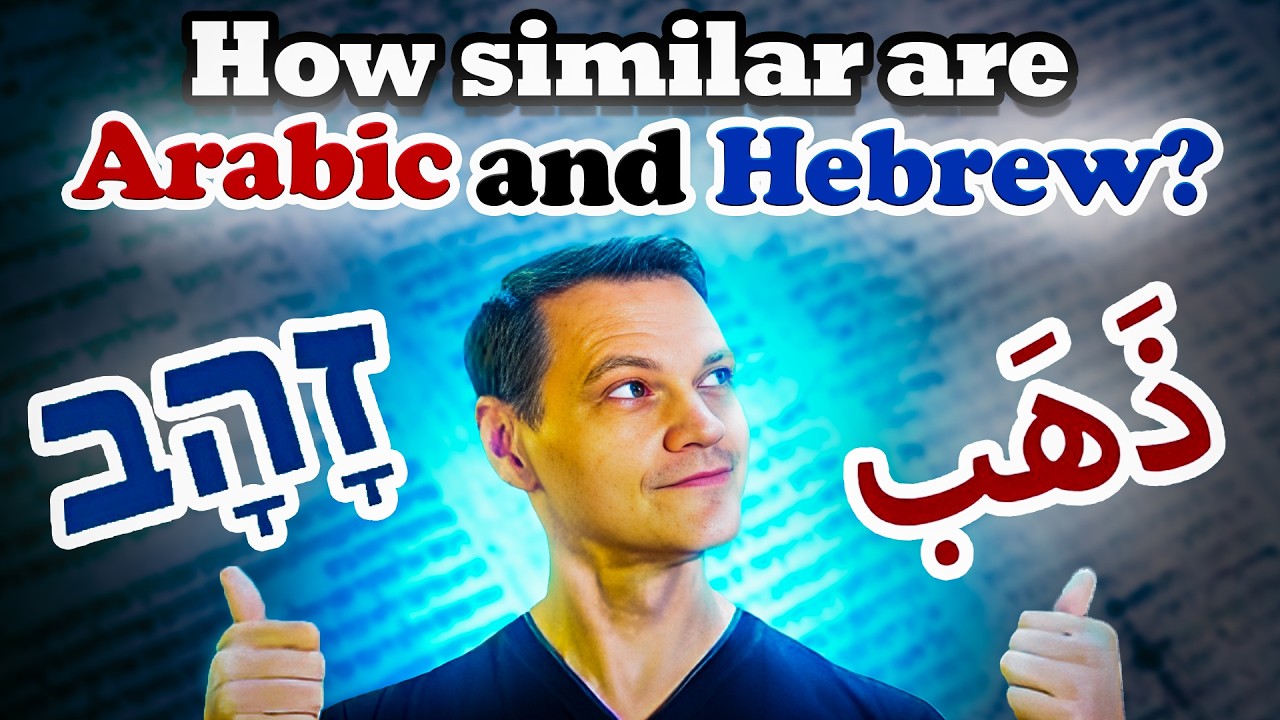
No, so I think you had a very nice introduction to Aramaic. They're very closely related to Hebrew. Uh many many uh cognates and synonyms between those languages.
Um, if you can read Hebrew, the same alphabet as you. So, if you can read Hebrew, uh, in fact, the the Hebrew letters that we see today, say for example, in the Hebrew Bible, if we're not reading modern Hebrew script, if we're reading sort of formal Hebrew script, that is actually an Aramaic script. Um, there before the Aramaic script was adopted by Judaism for writing Hebrew, there was something called a a protoheebrew script.
um which was um more complicated. You could say the Aramaic brought along a simpler um version of the script which was easier to write and read and so it was adopted by Judaism for writing both Hebrew and Aramaic eventually. Uh so they share um a script and they share a lot of other things.
Now uh you mentioned that most of the Bible is the Hebrew Bible or Old Testament is written in Hebrew. True. And um there are a few sections that are also written in Aramaic.
So part of the book of Daniel uh Daniel chapters 2-7 are written in Aramaic. Um also there is one verse in Jeremiah Jeremiah 10:1 which is written in in Aramaic strangely. And there are a couple of words in the book of Genesis which are are an Aramaic um said by Laban who is from Aram.
He's an Aramean in Genesis so he speaks Aramaic when Amazing. I never knew that. Okay.
Yeah. Um so uh yes. So then we discovered at among the Dead Sea Scrolls um a fairly large corpus of Aramaic texts which were mostly left to the side initially partly because of all of the excitement around the things that we talked about.
the biblical text on the one hand entirely in Hebrew and um these new writings from this Jewish group, the Essenes presumably and so everybody flew to those texts immediately and were all excited about those texts and and uh in the meantime the Aramaic texts sort of sat off to the side. So the reason that I started dealing with those Aramaic texts was because they had sat there on the side for so long and seemed deserving of some dedicated study of their own. One of the questions about the Aramaic was um what kind of Aramaic is it?
You mentioned that there's a later um set of translations of the Hebrew Bible into Aramaic. Those are called the Targum or um that is a slightly later dialect of Aramaic than what we have in the scrolls, the Dead Sea Scrolls. And so as it turned out um the the thing that we found was closest to the Aramaic of the Dead Sea Scrolls was um the Aramaic of Daniel.
Oh, I forgot to mention Ezra. The book of Ezra also has some Aramaic letters from the Persian king in it. Art Xerxes.
Um so closest to the Aramaic of Daniel and Ezra and other Persian period Aramaic writings um that we knew about from outside of the Bible. So Aramaic was the lingual frana of the Persian Empire. It was used all the way from Iran down to Egypt um across the empire for uh communication.
And this is part of why it eventually became popular in Judaism as well because it was just it was it was sort of like English would be in many parts of the world today. It was uh it was a language that was widely used and allowed for communication across other language boundaries and things like that. So um you know that's the kind of Aramaic that we found in in those texts.
So they seem chronologically at least stated by uh their their linguistic profile to be closer to biblical Aramaic quite close to biblical Aramaic the Aramaic of Daniel especially than they are to that later Aramaic of the Targums which would date probably to the second to fourth centuries um CE. So that helped us to date these scrolls a little bit. Not definitively, but it helped put them in a ballpark.
And then there are lots of questions that follow on from that, like why Aramaic and not Hebrew. And yeah, so I actually want to turn turn to that question. Um, you number I don't know if there's a a new count, but in any case, it's not super important.
Uh, you number about 130 of the thousand more or less uh Dead Sea Scrolls are in Aramaic. And um I guess you know in your um 2023 book a handbook of the Aramaic scrolls from the Kuman caves you study 89 of them uh those that could actually be be read and you classify them you classify them according to principally a sort of biblical chronology. So following the narrative of the Bible.
Um but yeah that that's the first question I had in realizing that not all the Dead Sea Scrolls are in Hebrew because you know uh one suspects as we're speaking about that you know it's one community that produced this corpus of works. So why write some in Aramaic when the rest are in Hebrew? Yes.
Yes. That's a a great question and one I've been asking uh myself for a long time now. So my answer which I've slowly been formulating um and and I can talk about further as much as you like is that generally speaking they are earlier than the other Hebrew um Dead Sea Scrolls attributable to the Essins.
Or another way to say it is that they basically chronologically fall between the early Hebrew writings of the Hebrew Bible Old Testament and the later Essene Hebrew writings that we find at Kuman. So which are not sorry just to clarify that are not found in the Bible today those later Hebrew writings. Okay.
Yes. So yeah, we haven't really touched much upon this, but we've got uh a big group of texts written in Hebrew, which are um fairly old uh belong probably to the Persian period or earlier, maybe the Iron Age, um in terms at least of their their original composition. These are later copies, but their original composition based on character of their Hebrew, the fact that they're in the Hebrew Bible, all of that sort of thing places those earlier.
And then we have a significantly later group of writings also in Hebrew but very clearly um sort of a a slightly later dialect of Hebrew which are generally at least part of those are attributable to the Essenes during the second temple period. So we kind of have two big groups of of Hebrew writings at least two big groups. It's more complicated even than that but let's just say two big groups.
We have the older Hebrew texts, the Hebrew Bible, and then we have um more recent later Hebrew texts which were written by the uh Kuman community, probably the Essenes themselves. And chronologically, I would say that the Aramaic texts belong in between those two groups. A lot could be said about why switch back to Hebrew later then for the for the sectarian text.
We can talk about that if you want to. I think I have a preliminary answer at least for that. But um so part of the answer is just chronological.
They fall between these two Hebrew groupings. Um I think that the reason for Aramaic is at least partly due to the fact that it had simply become a common Jewish literary language by the by the late Persian period, the Henistic period. And um writing in Aramaic had some advantages at that time at least.
Uh one being that it was much more accessible to Jews living in the Jewish diaspora um than Hebrew might have been because we do have some evidence that Hebrew was used a bit in uh the land of Israel um Greo Roman Palestine at that time. But out, yeah, out in the DS in Eastern Mediterranean, Jews would need Aramaic for everyday living, buying uh, you know, whatever tomatoes. I don't know if there were tomatoes then, but let's say there were, whatever.
Yeah, exactly. So, there are lots of Jewish communities in um, you know, all the way into modern day Iran, um, especially Iraq, uh, Syria, down into Egypt, up in Asia Minor. And, um, it's clear that for many of those communities, Hebrew is not their first language.
they probably couldn't even speak really any Hebrew, but Aramaic was a language that a lot of people would have known um before Greek really came onto the scene in a major way with Alexander the Great. And so can just can you comment on that point because I I wanted to ask well why not write in Greek then because Alexander's late 4th century BC I think you know uh brings Greek all the way to you know what is now Afghanistan I guess and so uh yeah why why Aramaic if the critical factor is uh you know this is an international language of uh communication why Aramaic not Greek? Yeah.
Well, I think at least part of the answer is that it took a while for Greek to take over for Aramaic. I think Aramaic was pretty well entrenched and that that process probably took at least a century to kind of like sort of turn over to Greek. Um, so I think part of it was just a question of timing.
It may have been somewhat geographic as well. Um, you know, Greeks seem to first catch on at sort of like the higher levels of government. Um especially in Egypt it depended uh you know after the the kingdom fragmented after Alexander died uh among his generals.
Um the Talmies for example in Egypt seemed to take a much more sort of Greek first approach and Greeks seemed to become prominent more quickly there than the Seucids who who ruled in Syria and seemed to sort of like take on the apparatus of of um the the former Persians. So they kept um they kept Aramaic around. So um it it probably the answer is somewhat uh chronological and geographic some combination of those two.
But we do know that um Aramaic stayed you know uh strong and in fact was a very prominent Jewish language all the way up into those um translations of the Bible in the second century or later. So it was Greek was sort of like on the ascendant but at the same time Aramaic I think was still very strong and prominent Jewish language. So now you you gave us one possible way of understanding why some of the scrolls, the Dead Sea Scrolls were written in uh Aramaic, which is, you know, kind of chronologically they fall into this gap between the return uh of he or before the return of Hebrew for the new original compositions of this community, presumably the Essins.
But I felt like you were going to say there might be another way, maybe based on the content of what is written in Aramaic. Yeah. So I think one other factor in my mind right now that I'm playing around with is that uh the Aramaic language also um it it sent a message a couple of other messages.
One was it was the prestige language of uh sort of the Persian Empire at that time. So um it showed that sort of we can write literature on your terms. uh you know uh I think this this literature which was being written in Aramaic is really as um sophisticated and um um good as other Persian period Aramaic writings.
So this was really um it was really just excellent literature in Aramaic. So I think there was sort of a a social or cultural um angle to it potentially. But also um you know before the advent of the Hasminians or the Mcabes in the second century um you know Judaism had really become a a diaspora sort of community and was living all around the the eastern Mediterranean even towards the western Mediterranean at that at that point.
And so I think there was a lot of thinking about like what is Judaism now? like are we are we eventually all going back to the land of Israel to the homeland? Are we just living indefinitely out in exile?
And so I think it my thinking is that this was to a certain extent a literature for Israel in exile for the long term and that the choice of language might have had something at least I understand from your book as well professor Michila that there are certain so the the Aramaic Deadi scrolls um they include both uh what we would call today canonical biblical books so certain books which are in the Bible and and other things which are not and um uh in the district. So there are there are certain um in both sort of types of literature there are certain uh things which are disproportionately or especially represented in the Aramaic uh purpose. Um so I think you mentioned for example there's a lot of interest in those who wrote in Aramaic uh in sort of the early characters of uh the biblical story.
Yeah. So you know uh Noah what's called anti-dolivian. So before the flood and uh I think the character of Noah himself actually maybe we could speak a little bit about Noah because I think it's some of the non-cononical texts maybe the Genesis Apocryphon.
Yeah. you know, Noah gets like a little bit more attention than he does in the book of Genesis. So, um yeah, I mean, is there anything there as well?
Uh this interest for some reason in kind of the early stuff in the biblical story? Yeah. Yeah.
Yeah. No, absolutely. So, this is partly what put me on to the the idea of Aramaic um as especially kind of connected to the um exilic audience, you might say.
So the literary profile of the corpus of Aramaic texts is very interesting because as you mentioned earlier in in that book I basically arranged them according to kind of a biblical chronological timeline and the only reason you could do that I mean it sort of is self-presenting when you look at the texts is because so many of them have to do with um stuff that's already in the Hebrew Bible or Old Testament. um or related to it. And so it's very closely affiliated with stories and figures from what we already knew of the the Hebrew Bible or Old Testament.
And when you look at that, there was there's a scholar in Luven uh named Ibertalar who first noticed that um this Aramaic literature clumps kind of into two um diiacronic areas sort of clusters. First one is what we could maybe call the patriarchal matriarchal period um of of the ancient ancestors. You know, this is basically the books of Genesis and Exodus, right?
In in the Bible. So, figures like Noah, um Abram, Abram and Sarah, um Enoch, figures who basically come before the election, if that's the right term. I don't know if it's actually a biblical term, of of the Israelites, the descendants of Jacob.
Uh so, in this period where God is sort of working with the entire world directly and Right. Right. And I would say especially up to the events of Sinai in Exodus.
So we've got a lot of figures from sort of Sinai like Moses or earlier you could say. Um and then the other group is all around the time of the Babylonian Assyrian Babylonian and Persian exile. So you can think of so um like the book of Tobot which is canonical to Yeah.
Tobitt's there in in Aramaic. Yeah. Yes, in a number of manuscripts in Aramaic and really interestingly in one manuscript uh in Hebrew.
So then the question becomes with Tobot, what do you do with that one Hebrew manuscript and how do you how do you figure out the original language and all of that? But um my own opinion and I think the consensus opinion is that it was composed in Aramaic, translated later into Hebrew. But you you've got Tobat, you've got all of those tales of Daniel which are in the Bible and also show up at Kuman written in in Aramaic.
And then you've got a whole bunch of other Aramaic literature which kind of clusters around that same time period but which which we had no idea of before we discovered the Dead Sea Scrolls. So a whole bunch of new texts uh some of them have been named pseudo Daniel because they have Daniel as their protagonist. the same Daniel as we find in the biblical book of Daniel, but stories that we had never known of before we discovered the Deadly Scrolls.
Um, and then some other texts beside those. So, um, we have new texts and the same thing happens back with the patriarchal period. So, for example, we have something called, um, the visions of Omram.
Well, Omram is Moses' father in the Bible. uh mentioned really only in genealogies just in passing. Maybe maybe he makes it into the Quran, by the way, but that's another topic.
Yeah, I'd be interested to see whether he makes it into the Quran because um he he has an entire book dedicated to him among these Aramaic scrolls. And as with many of the Aramaic scrolls, he's um telling his story in the first person voice. So I am Omram you know went and I did this and I went that and and I had a vision and I you know came back to my children.
It's just totally different from the penitent like all the first five books of the Bible the way the nar I guess narrative device works or yes the narrative style is completely different but you've got a focus on the same characters. So um what what I noticed when I read uh Tiklar's article on that was that those are the two those are two important eras in Israel's past when they didn't have political autonomy. So they weren't living in the land.
So if you think about the period in between those is basically the monarchic period where David and Solomon and judges and all these guys they have political autonomy. And so to me that may speak to, you know, um an interest in the exilic settings of those two periods and that those two periods kind of can speak especially to Jews during the Persian and Henistic periods where there is no homeland really to speak of because um they aren't in charge there and they're scattered all over the place. And so that that is the time of the authors themselves who are in Kuman presumably writing these things.
We're composing these stories in the voices of these ancient characters um in a way to speak to their own time but through the voices of of these ancient characters who were much venerated of course. Um so you've got all sorts of rewritings, expansions uh you've got the thing like with Omram there. You've got another one called the Aramaic Levi document which very interestingly was also found in the Chairoinesa in a medieval manuscript uh kept in Cambridge now um where Levi is speaking in the first person about visions that he had how he was given the priesthood um you know in heaven um and and came down to earth was instructed by Isaac his grandfather in how to do sacrifices all sorts of amazing stuff in these texts.
Incredible. Um but but also a lot of attention to um living not in the land of Israel. Israel.
Uh there's there's about a million things I want to ask you, but I think we'll probably have to wrap things up. I mean, I hope we can speak again. Uh I'd like to ask more about the Essen and ideas floating around there about their particular understanding of the world or maybe the end of the world, darkness and light, their ideas of the temple, but then also the question of canon.
would love to speak more about. Yeah. So what does this mean for our understanding of what is the Bible?
What is the Bible after all which I think is a question among biblical in the guild of uh biblical studies uh even today. So yeah, Professor uh Michila, thank you so much Rean um exploring the Quran and the Bible. It's a reminder that we'll have links to the book, the 2023 book, a handbook of the Aramaic Scrolls from the Homeran Caves and uh more resources uh there.
And um yeah, uh thanks everyone for for being here. Please again subscribe, like and share. And Dan, I really enjoyed our conversation.
Thanks so much for the invitation.