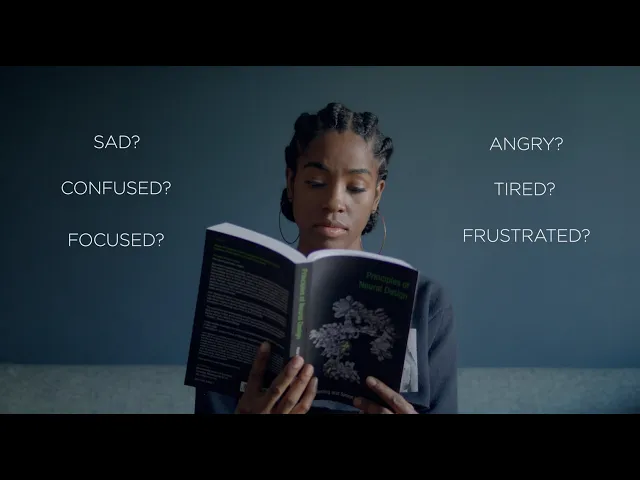
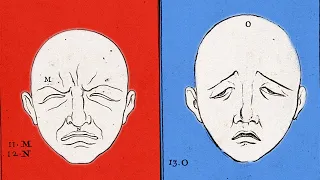
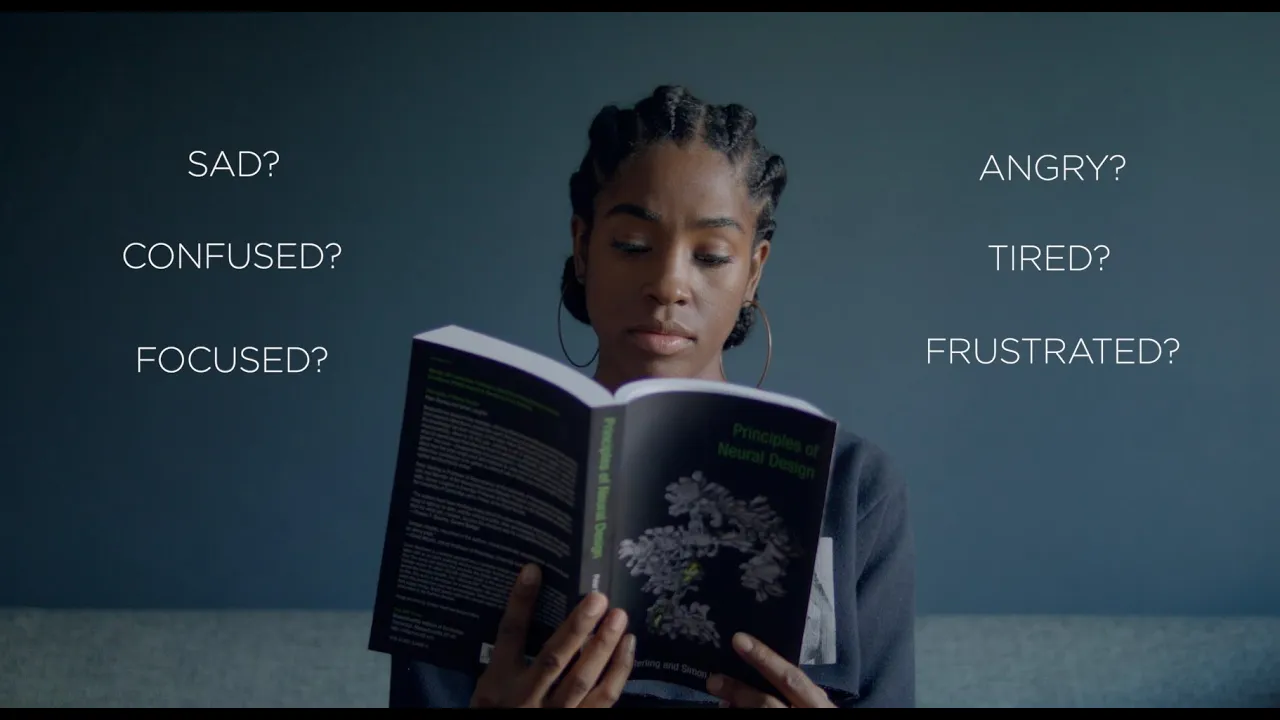
how good do you think you are at detecting emotion one challenge comes from the fact that the same exact face can be used in different emotions we might be screaming and disgust screaming in fear screaming in celebration screaming from happiness or screaming from frustration same face different emotions another challenge is that the same emotion can have many faces when we're happy we laugh cry smile scream have all kinds of facial expressions have you ever struggled over which emoji best matches your emotion have you ever had the feeling that none of them are just right have
you ever received an emoji on its own and have had no idea what it actually means if so you're facing exactly the same problem neuroscientists have faced for the last 25 years when studying emotion the emotions we think we detect in others are just our brains guessing automatically and naturally we see a person's face her body the situation she's in and our brains try to guess what she's experiencing sometimes our brains guessed right meaning our guests matches the brain state that she's in but sometimes our brains guessed wrong the truth is that no one detects
emotion in anyone else not you not me not judges or juries not AI algorithms not polygraph machines as a scientist I have to tell you emotions are not what we think they are [Music] why is understanding the true nature of emotion so important and why is it important to distinguish it from emotion perception if the cameras at an airport are trying to detect your emotions using algorithms for your face you might be suspected of being a terrorist because you have the wrong kind of smile women over the age of 65 die more frequently from heart
attacks when compared to men because when they go to the hospital with pain in their chest they and the emergency room physicians are more likely to interpret that pain as evidence of an anxiety attack and so women are sent home and subsequently have a heart attack and die harrowing evidence against televangelist Nigerian pasta Timothy o moto so as aandhi told the courts that Walmart also sexually groomed her for years the defense cross-examined her on her demeanor saying that she'd look fearful zone D says she concealed her fear she was 14 years old other studies show
that in a rape trial if the judge and the jurors believe that a woman is angry instead of grieving or feeling shame then the defendant is more likely to receive a lighter sentence if he's found guilty at all every scientific journey begins with the felt experience of a human we used to believe that illness was caused by spirits or curses worth miasma in the air until we engineered tools that allowed us to see microscopic viruses and bacteria invisible to the naked eye even then we miss the truth believing that these tiny creatures were the sole
cause of illness in fact the true nature of disease emerges from a complex relationship between microbes and our own immune systems which are normally hidden from our experience in the same way the science of emotion started with human experience it feels like emotions happen to you that you react to something that something in the world triggers a little circuit inside your brain but the true nature and complexity of emotion is much more fascinating than our own experience lets on under the hood emotions are not built into your brain from birth they are built by your
brain in specific situations from a set of basic ingredients you have a predicting brain a body that causes you to feel affect and a set of shared concepts that are absorbed into your brain as it develops throughout your lifetime when you see this pounding and clapping your brain is filling in the gaps there's no sound here and if you're a fan of the rock group queen your brain might even start predicting this filling in of gaps is prediction and it's how your brain works all the time have a look at this right now your brain
is working like crazy searching through a lifetime of experience making thousands of guesses at once weighing the probabilities to try and figure out what this is most like not what is this but what is this most like from your past experience if you still see black and white blobs then you are in a state that scientists call experiential blindness want to be cured of your blindness so now many of you see food on a table cherries at the bottom lemons and oranges at the top and to the right lettuce on the left and a little
bit of ginger peeking out from the bottom left why do you see these black and white blobs differently than you did a moment ago what you see is a combination of what is on the screen and what is in your head your brain is doing something really remarkable it's changing the firing of its own neurons so you experience cherries and lemons and lettuce when all that's there is a bunch of blobs so believe it or not this is not a trick this is a special example that we built to reveal to you how your brain
actually works under the hood every waking moment of your life your brain is using past experiences to predict and create your current experiences prediction is why some people see a dress that's black and blue while others see a dress that's gold and white it all depends on whether your brain is predicting that you're seeing the dress in the morning or in the evening you're predicting brain is why you daydream it's how you imagine all the ways you might save the day or win an argument you've yet to have with someone in every waking moment your
brain is doing its best to guess what will happen next if your brain didn't predict then sports couldn't exist a soccer ball can be kicked faster than a hundred km/h but our eyes have a delay up to a hundred and ninety milliseconds or even longer in the space of that delay the ball has moved five point three meters think of how much faster a baseball or a hockey puck goes [Music] many predictions are at a micro level you're predicting brain is guessing how much water and salt and glucose your body needs to stay alive and
healthy predicting the meaning of bits of light it's guessing whether the rustling in the grass is a wild animal or just the wind every time you hear speech like right now your brain breaks up the continuous stream of sounds into phonemes syllables words and ideas all by using prediction other predictions are at the macro level you're interacting with a friend and based on context your brain predicts that the two of you will smile at each other so you smile first in anticipation of her smile your movement then causes her brain to issue new predictions and
guide new actions back and forth in a dance of prediction and movement predictions are automatic effortless and you have no sense that you're doing them yet they make sense of the world in a quick and efficient way without them we'd be deaf and blind for many years scientists believe that your neurons spend most of their time asleep and wake up only when stimulated by something in the world now we know that all your neurons are firing constantly nudging one another at various rates this is called intrinsic brain activity and it's one of the great discoveries
of modern neuroscience even more compelling is that this intrinsic brain activity represents millions of predictions of what you will experience next based on all the experience of your past these predictions all combined into a simulation of the outside world prediction turns shapes and sounds into trees and grass and runners your brain predicts a hunk is from a car or a hunk is from a goose there's no sound here what you're experiencing is a consequence of your brain simulating the world scientists sometimes call this perceptual inference because these predictions are filling in gaps of information that
are missing you in fact seeing something can cause your brain to predict what it will taste like you what it will smell like you what it will feel like you your brain is predicting all the time effortlessly automatically because predictions are more efficient than reactions combining past experiences to create your simulations of the world and these simulations are the basis for all your experiences and all your actions this is your predicting brain in action [Music] so why is it important that you understand that your brain is predicting instead of reacting the answer is pretty simple
if you understand how something works you'll be able to go in and tinker with it prediction is the key ingredient that your brain is using to process two other ingredients that are necessary for your brain to make motions [Music] [Music] [Music] you when you wake up in the morning how do you feel you feel good energetic or do you feel crappy like you want to get back into bed it might sound crazy but how you're feeling your mood influences what you see and what you hear your brain is wired in this way in fact every
sense that you have in every waking moment of your life is colored by how you feel and it has very powerful consequences scientists have a name for this ingredient in our lives effect now effect is not emotion it's more basic than emotion an effect exists because one of your brains most important jobs is running a budget for your body it's keeping track of your glucose and oxygen water salt hormones immune system and all the other stuff to keep you alive and well this body budgeting is transformed into a fuzzy mental feeling called effect or what
we sometimes call mood effect is with you every waking moment of your life this chart is a good visualization of it's two aspects valence is how pleasant or unpleasant you feel are you watching one of your favorite shows are you feeling just neutral or are your muscles sore or does it feel like you're coming down with a cold good bad great crappy a razzle is like your energy level maybe you're just sitting there and calmly maybe you just woke up from a deep sleep maybe you're at a bumping party no matter where you are or
what you're doing you are experiencing effect it's a simple barometer of your body budget without a lot of detail so if you came to our lab we could make you feel pleasant or unpleasant without your awareness we could change your effect I can't tell you how we do it that's kind of a scientific trade secret but if we made you feel more pleasant and then we showed you neutral faces you would experience those people as more trustworthy more likeable more attractive and if we made you feel unpleasant without your awareness you would look at those
exact same people and experience them as less trustworthy less dependable less likeable less attractive why do you see what you feel because your brain is using predictions which become what you see to make sense of your affic if you have a funny feeling in the pit of your stomach and you feel uncomfortable and it's about noontime your brain might predict that hunger is the cause of your effect and so you will feel hungry that same funny uncomfortable feeling right before a big speech might lead your brain to that you're nervous and if you're on a
date your brain might predict that you're really into this person feeling hot and bothered losing yourself in their eyes or you could just be coming down with the flu and if you're a jury member in a courtroom that unpleasant ache well it might lead your brain to create a gut feeling that a defendant is guilty and remember effect isn't just an ingredient in your brain every person on this planet is always feeling some sort of affect a certain level of energy and a certain amount of pleasantness or unpleasantness every single moment of their lives because
of what they ate for breakfast because of how little they slept the night before the state of your body which you experience as affect is another important ingredient that your brain is using to construct emotions and really to construct every waking moment of your life so the next screen that you run into someone and you find them particularly irritating or annoying or you meet someone for the first time and you think wow I love this person remember that you are experiencing the world through effect color glasses [Music] when the Sun comes out after it rains
we sometimes see a rainbow rainbows are beautiful and mysterious when we draw a rainbow in a simple way we use stripes of color red orange yellow green blue purple in reality a rainbow has no stripes it's a continuum of light uninterrupted without borders there are no lines the human brain draws these lines creating the concept of red of orange and so on these concepts allow us to easily communicate with each other and people in different cultures draw the lines of a rainbow in different places people who speak Russian draw a line between dark blue and
light blue these colors exist for some people but not for others that's because your brain my brain and the brains of people all around the world carve the same rainbow into different colors brains automatically construct color concepts all we have to do to make them real is to share them with each other these concept boundaries determine what you experience as similar and what you experience as different we don't just draw lines for colors in our everyday lives we consider these as fruits and these as vegetables you might have heard that a tomato is actually a
fruit and that's because to a botanist a scientist who studies plants fruits are the edible parts of a plant that carry the seeds all of these foods are actually fruits when a botanist is talking to another botanist she'll refer to all of these as fruits but when she's cooking dinner for her friends they become vegetables even the concept of food itself is constructed by a culture of course there are limits human agreement can't make glass edible even if you put ketchup on it but how about grubs I would call an exterminator if I saw this
on my plate in Boston but if I were in Iquitos Peru this might be my lunch a human brain in the context of other human brains creates different concepts in different cultures words play an essential role in efficiently constructing concepts they're like a cheat sheet they allow us to communicate and share our concepts with each other with little effort if I say the word flour and you know some English your brain will spontaneously and automatically start using your past experience with flowers to predict what to do with this plant when we were young the people
in our lives might have first taught us that this is a flower we learn rules for when it's appropriate and inappropriate to see a plant as a flower you put a flower in a vaz you share a flower with someone you like to make them smile you give a flower to someone who's sad at the loss of loved one a flower is a magical part of nature a weed is a menace it invades your garden it ruins your lawn weeds are not to be cultivated they are to be yanked out from the ground by their
roots one person's weed is another person's salad the same plant can be a flower a weed or a salad all depending on the predictions that your brain creates in different situations it's a continuum of plant uninterrupted without borders when your brain sees a dandelion it asks itself what is this most similar to in my past experience in this sort of a situation as your brain is automatically making a slew of predictions about what this might be similar to what it might be like it's creating a concept [Music] [Music] [Music] my parents are immigrants they are
from the Dominican Republic originally and I've always kind of lived in a Latino centric community Florida when I came to Italy I was working in one bar as a waitress and my face was still Russian hmm so they asked they told me oh this face you live at home no no no here you have to smile so I start smiling force I will forcing myself to smile even like when we smile you know like this it's like a natural like way to connect with everyone with any different language for me what it is to be
Russian or Ukrainian is it it means to be very close face should be mm-hmm because if you if you smile in Russian maybe you stupid just smile at someone yeah like most likely we're gonna smile back at you and it's like the most simple thing to do because language is based off of not just a need for people to communicate with each other but a common ground ages in Chinese culture we tend to we're not so expressive but we we all express it but there's lots of like suppressed feelings right especially among families and this
expectations and the showing love and we don't really say I love you dad I love you always so it there's like way to show it I'm already half an Italian because all Italian emotions I mean so and all and they push away the Ukrainian Russians emotions the way because it's it's there obviously I could love each other but we don't express it and we feel it's very cheap like cheesy to say all the time and then feel will always feel like a doing is more practical than saying it yeah say like just talking about is
cheap so an emotion is built with a concept a concept that your brain creates the way it creates any other concept using its predictive powers on the basis of past experience it makes a concept that allows you to make sense of what's going on inside your own body in relation to what's going on around you outside in the world some people routinely construct a few simple concepts good bad great crappy words are a shortcut your brain can make many more concepts than you have words for but words make it easy with a few more words
our emotions become a little more precise add some more and you get a tapestry of precise emotions that are tailored like a perfectly fitting dress to a specific situation carving effect into emotion concepts is like drawing lines on the rainbow we're creating concepts that help us make sense of the world and share that meaning with each other the ability to create and share concepts is a uniquely human superpower you didn't know that you had a superpower did you and this superpower is what you use to create emotions we can construct new concepts about the world
anytime we like all we have to do to make them real is share them with each other larger vocabulary larger toolbox of concepts more expertise in making emotions the word for love is the amo the quiero is something between I like you and I love you it means that you know I need your presence here at this very moment and I yearn for it because we get along so well because we we vibe and that is something that you know boyfriend's say to girlfriends or girlfriends say to vice versa anyway something that husbands say to
wives it's something that fathers say to sons and mothers say two daughters just what you had change on doesn't change on that can't you but like I said there's so many things behind it I don't know did you say like like how are you like I feel loaded right like i i yeah i feel loaded i'm heavy piece this is a sadness mmm I don't I feel like Chris this is more deep sadness sorry Americans and English speakers [Music] so one implication of this way of understanding how brains work in in bodies in the context
of other human brains and bodies is that we are social animals we regulate each others body budgets we influence each other's affect in ways that we are really unaware of you know the best thing for your nervous system is another human and the worst thing for your nervous system is another human you may not realize it but what's going on around you in the outside world prompts your brain to create certain predictions so the next time that you're feeling a little crappy overwhelmed by the situation just feeling a little tired a simple way to change
your emotions is to change your context you can get up go for a walk you can call a friend you can turn off your phone you can pay attention to things around you in the world that a moment ago you weren't noticing all of these things change your environment and that will change your predictions so when I started to do work on this topic I used to get this question a lot and at first the question kind of irritated me as a scientist I thought well why should anybody care that people are using the wrong
understanding of emotion well because you should be curious about how things work right we don't ask physicists why they study the universe we don't say why is it important for human life that we know that the Higgs boson exists I felt like a little defensive honestly like well I'm a scientist science is interesting just be interested by the science but then when I actually sat down and thought about it for a few minutes I realized if people are using the wrong understanding of emotion they can get hurt and other people can get hurt too and
I think the best example of this to me is in the law in the legal system in the United States as in many other countries a person will only get a fair trial if the jurors and the judge can know the heart and mind the intention of the defendant that means the jurors have to look at a defendant and basically make guesses about what that defendant is thinking and feeling so defendants move their faces they move their bodies they say words and jurors are not reading emotion they're not detecting emotion they are inferring emotion and
if they infer incorrectly the defendant may not get a fair trial so sometimes this means that guilty people go free and other times it means that innocent people go to prison and sometimes they lose their lives so in my house a couple of neuroscience concepts have been really important people have just adopted them in the lab - I would say one is the idea of prediction error you know your brain is always predicting so your brain is always guessing right it's always perceiving and it's always inferring what the sights and sounds and smells and so
on around you mean so often times we have prediction errors our brains make a prediction and something doesn't materialize when we expect it to or it does when we don't expect it and so we talk to each other about prediction errors and that's a way of indicating that you've made a mistake but that it wasn't intentional another concept that's useful that comes from science actually comes from Bayesian statistics is the notion of priors so if your brain is using your past experience to make predictions about your current experience it's using prior experiences your priors so
your priors are like the expectations that you come with really it refers to the predictions that your brain is making that are really like your brains hypothesis for what is about to happen your brains expectations and it's just a way of saying I'm it's a way of acknowledging that I'm coming to a situation with a set of expectations I'm not a blank slate everything I hear everything I see everything you say I am processing through a set of priors I try not to assert that what someone else is feeling or thinking as if I'm recognizing
how they feel or what is on in their minds because my brain doesn't recognize my brain perceives your brain doesn't recognize it perceives and it's really more respectful to someone else to use the language of perception as opposed to making clear strong statements as if you know how someone else feels so many of us you know have a sense of confidence that we know how other people feel that we know what they're thinking that sense of confidence is just a feeling it's not actually evidence that you're right so I try not to say you're angry
I might say are you angry or you look as if you're angry or you sound as if you're angry when I when I'm angry I try not to communicate to someone that I know they're a certain way you know I don't say to my husband you're an I might say I'm experiencing you as an or I might say I'm feeling angry at you right now and I think this works most of the time I think the only time it really doesn't work is when I'm on the highway and someone cuts me off and then I'm
absolutely sure that a person who cut me off is a complete but even then I try to remind myself well maybe that person has it really has to be somewhere really maybe that person has to be somewhere really urgently maybe that person has a sick parent or a sick mother maybe that person was listening to the radio and actually didn't see me right it isn't really the case that just because you feel as if someone has harmed you that their intent was to harm you [Music] [Music]