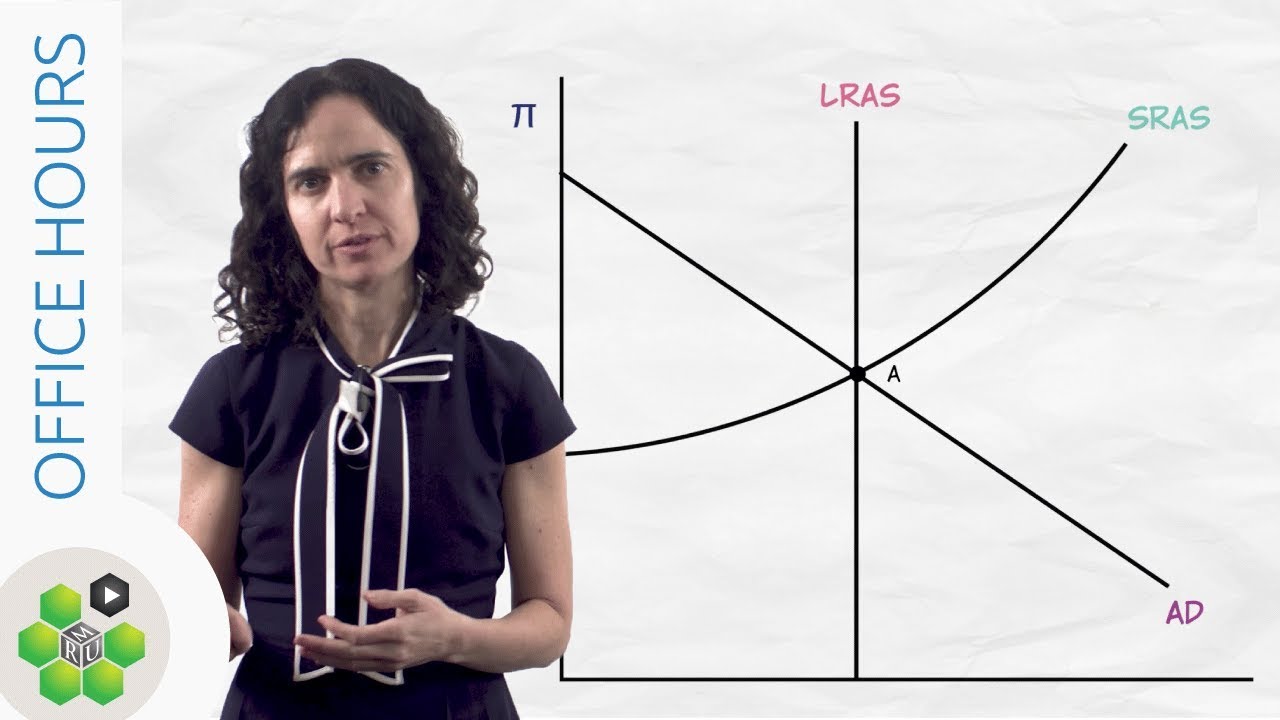
in our last video we talked about the states of short-run equilibrium that a country's economy could experience we showed in a das graphs what positive output gaps and what negative output gaps look like in this video we're going to actually step back a little bit and talk about the factors that could cause positive and negative output gaps to occur in a country the term we're going to be talking about in this video is shocks to aggregate demand and aggregate supply we're gonna use some graphs to illustrate both positive and negative demand and supply shocks and
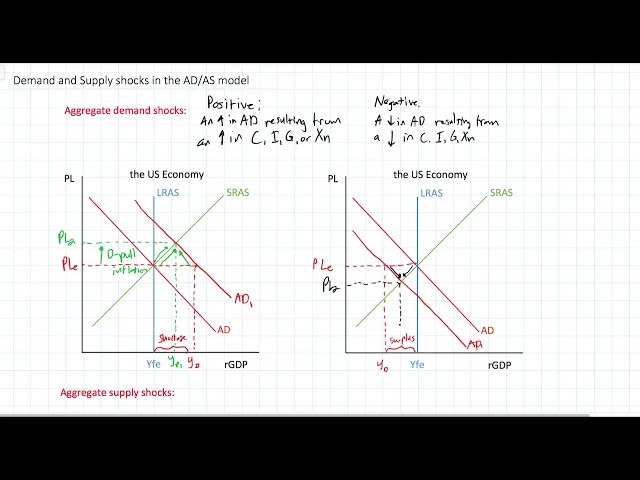
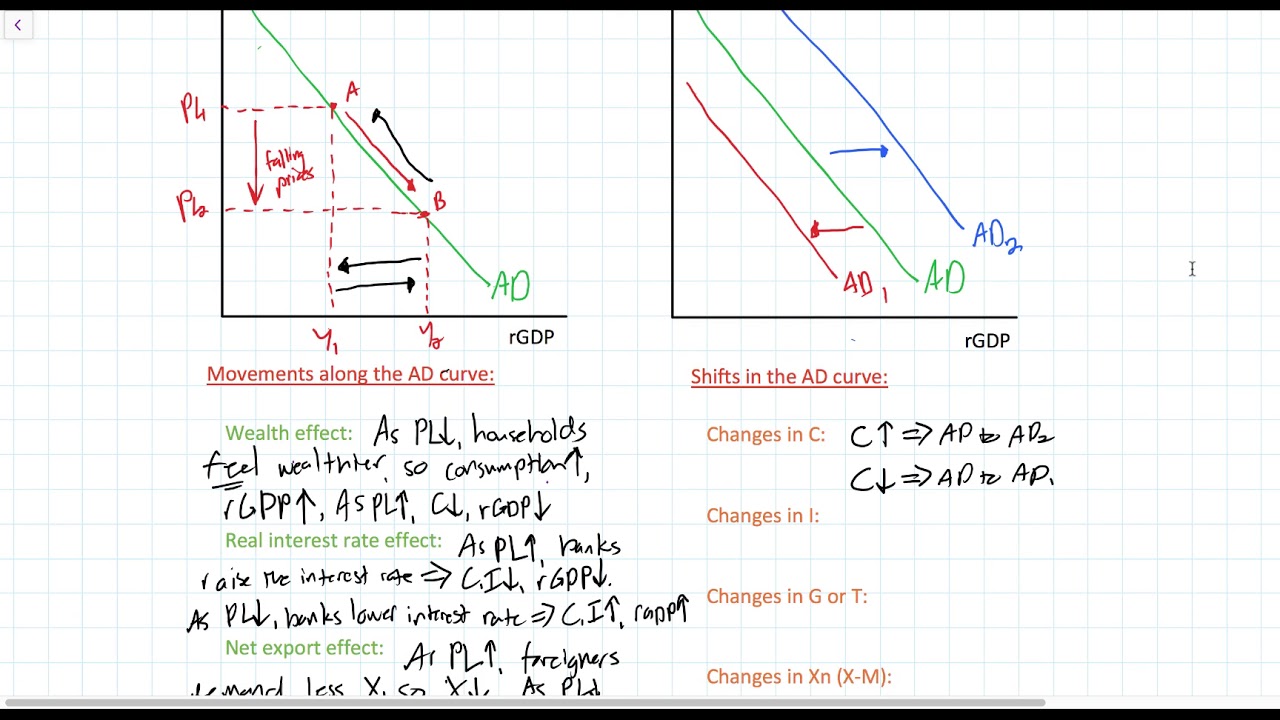
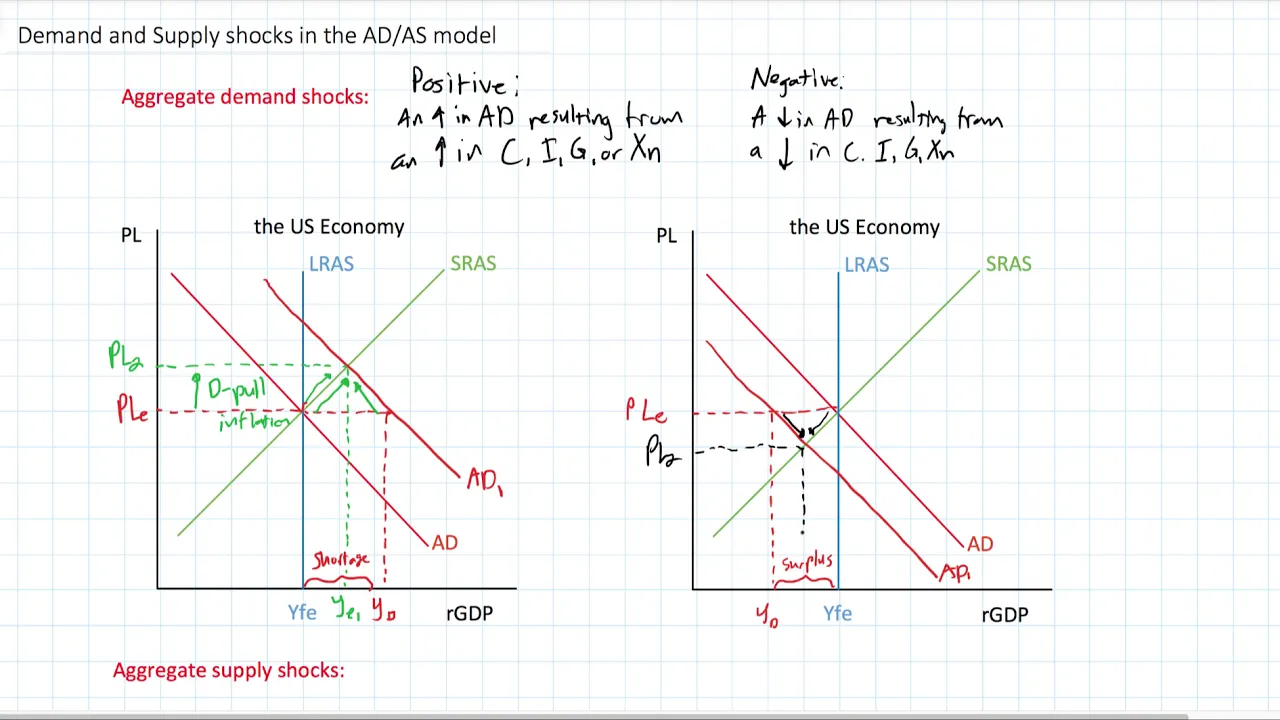
talk about how a country's economy will adjust in the short run to a new equilibrium following a shock to either a D or a s let's start with the definition of demand shocks will actually define positive demand shocks first and then we'll show the effect that that positive demand shock would have on a country's economy a positive demand shock occurs anytime there is an increase in AD resulting from an increase in either consumption investment government spending or net exports if aggregate demand increases due to an increase in one of the different national expenditures we can
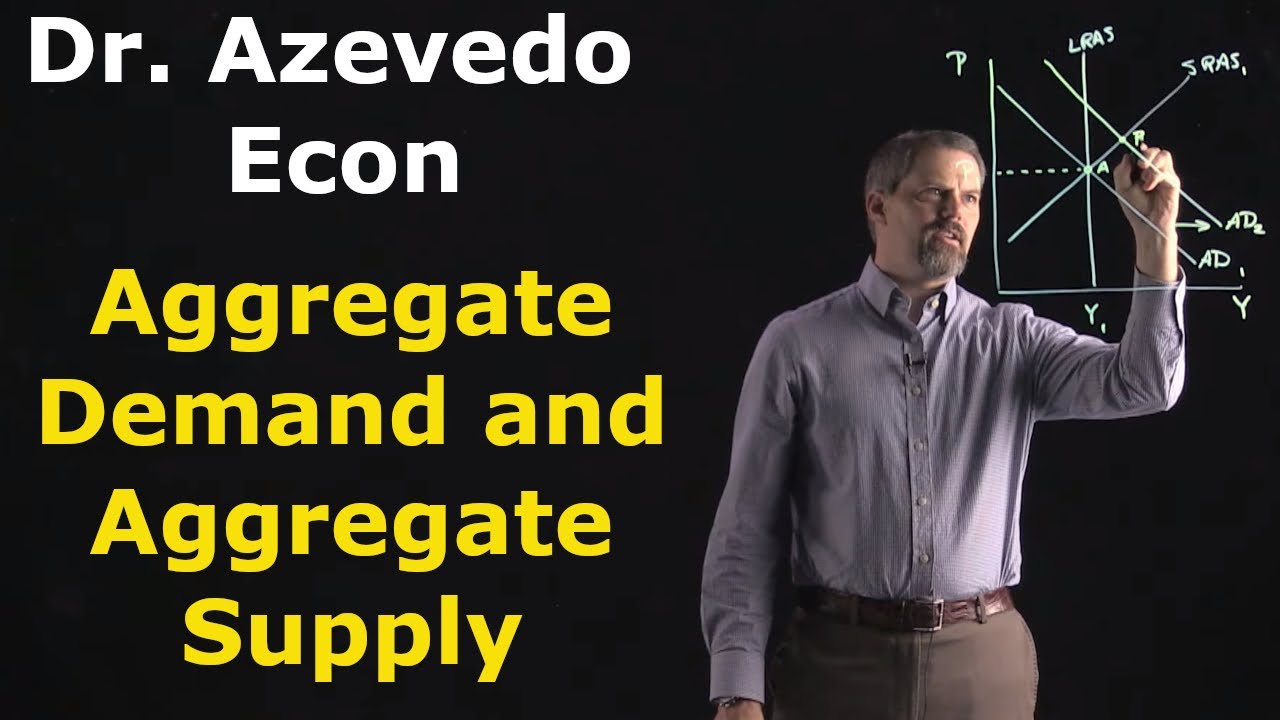
show the effect of this will have in the short run in our a das graph so let's assume that due to an increase in household wealth as a result of rising home prices households decide to consume more goods and services at every price level this causes an increase in aggregate demand to a d1 now let's look at the effect that this would have on the nation's economy assuming there is no change in the price level and then assuming the price level adjusts to the new level of aggregate demand this will look quite familiar to any
student who has already studied microeconomics and knows that if demand for a particular good increases and there is no corresponding increase in the price of that good then we will have what's called a disequilibrium in the short-run and the same is true in a macroeconomic level if aggregate demand due to increased household wealth and consumption and there is no increase in prices there will be a quantity of output demanded that is greater than the quantity of output supplied so here we have a disequilibrium there will be a shortage this would be a shortage of goods
and services in the United States if aggregate demand increases and there is no corresponding increase in the price level so just like in microeconomics if there is a disequilibrium in a market that market must adjust in this case so demand Paul inflation will result from a positive demand shock demand pull inflation is a rise in the price level resulting from an increase in aggregate demand here we can see that here we have a new equilibrium price level of pl - the higher price level of goods and services incentivizes businesses to increase the quantity of output
that they produce and it reduces the quantity of output demanded by households who previously had increased the amount of output they demanded due to rising wealth and we achieve a new equilibrium I'll call this ye1 a new equilibrium at the intersection of srs and aggregate demand in the short-run an increase in aggregate demand will cause an increase in output beyond full employment and an increase in the average price level this is called demand pull inflation and an increase in the quantity of output demanded and supplied in the economy a positive demand shock occurs when a
greedy demand increases that of course means that a negative demand Katoch when there is a decrease in ad resulting from a decrease in consumption investment government spending or net exports let's assume for example that interest rates rise in the economy leading firms to demand less new capital equipment and technology causing a decrease in private sector investment falling investment means that at every price level there will be a smaller quantity of goods and services demanded by the nation's firms and households so what happens if the price level remains at the original price level of PL II
well there would be once again a disequilibrium the quantity of output demanded we'll call that Y D would be less than the quantity of output supplied resulting in a surplus of goods and services produced in this country to restore equilibrium the equilibrium price level must fall leading to an increase in the quantity of output demanded by households and firms in the government and foreigners and a decrease in the quantity of output supplied by the nation's producers as the price level Falls we're going to see a new equilibrium at pl2 and a new equilibrium level of
output at Y E 1 a negative demand shock causes what we call deflation this is a fall in the average price level or depending on the level of inflation at full employment this might just be a fall on the inflation rate which is known as dis inflation in other words if inflation is still positive but it's just lower than it was while the economy is at full employment then we don't see prices actually fall we just see lower rates of inflation a negative demand shock causes a decrease in output a decrease in the price level
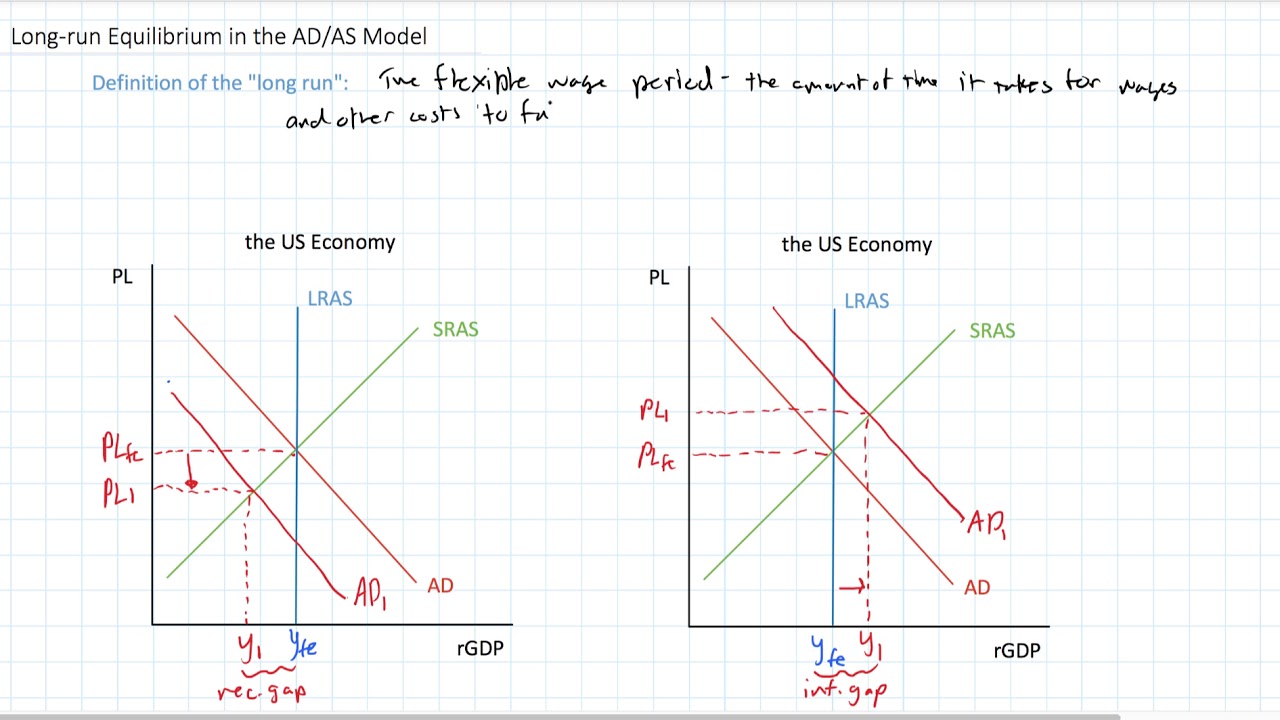
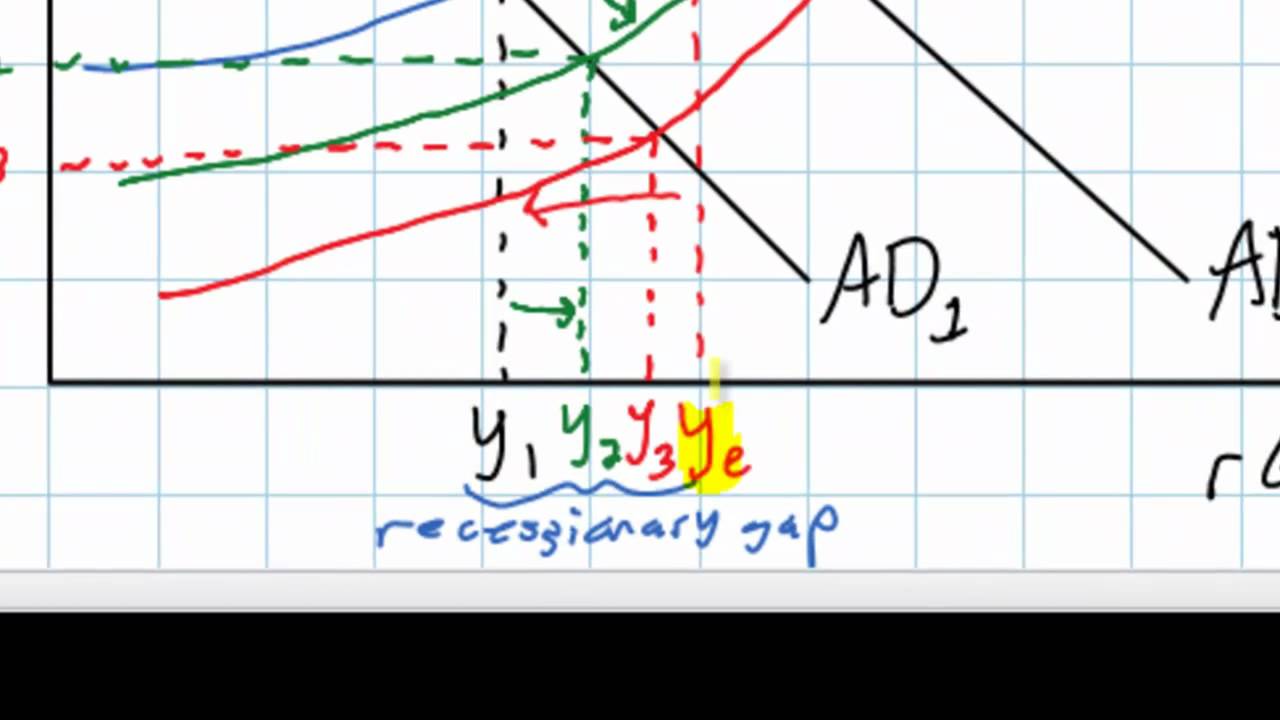
and a new equilibrium level of national output below the original equilibrium and of course this economy now has a recessionary gap we talked about recessionary gaps in the previous video so recessionary gaps can be caused by negative demand shock inflationary gaps can be caused by a positive demand shock all right let's move on and talk about aggregate supply shocks this time we're going to start with negative aggregate supply shocks a negative aggregate supply shock occurs whenever there is an increase in the costs of production in a country which causes a decrease in short-run aggregate supply
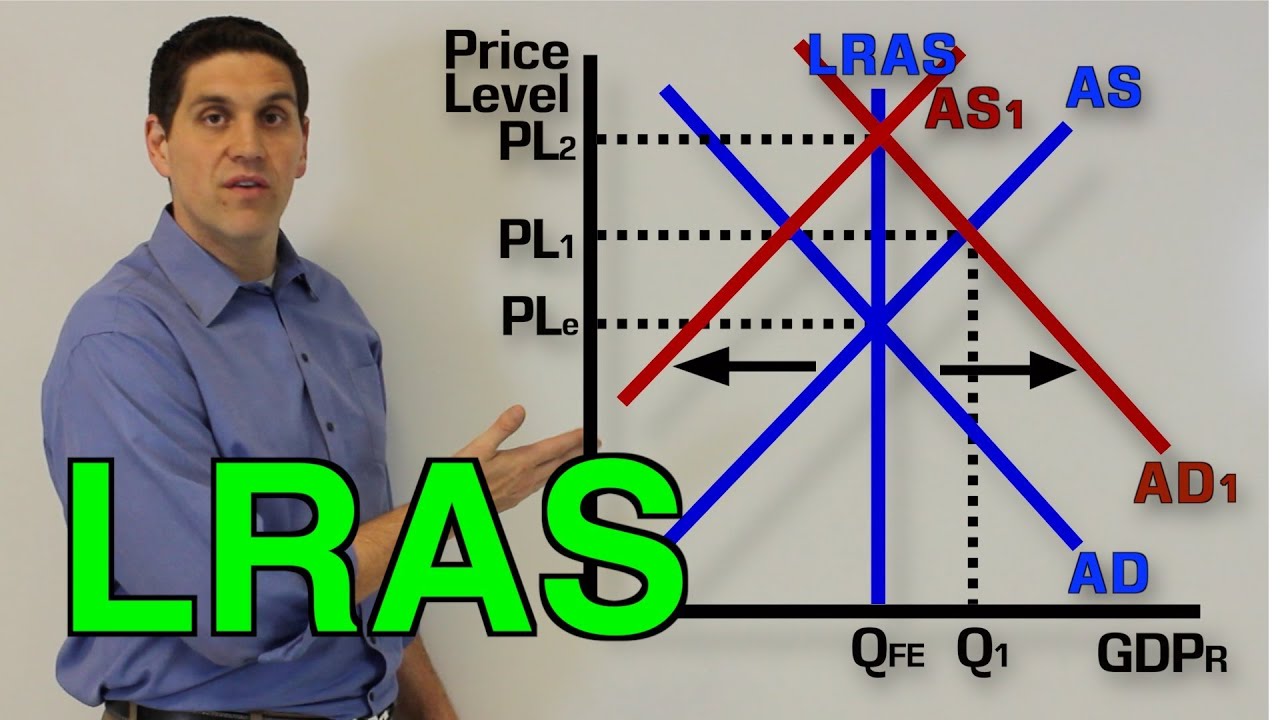
so assume for example there's an unexpected increase in energy prices all businesses no matter what they're producing depend on electricity so if electricity prices go up we would expect to see an inward shift of the short-run aggregate supply curve as it costs more to produce all goods and services now if the price level were to remain the same at PL e there would be shortages of goods and services in this country as the quantity of output supplied I'll call that ys is less than the quantity of output demanded this would represent a shortage of goods
and services however the economy should adjust to a new equilibrium price level and level of national output and it does so by prices rising we should see a new equilibrium price level which causes an increase in the quantity supplied from what would occur at the original price level of ple and a decrease in quantity of output demanded and we achieve a new equilibrium at a higher price level this is inflation just like we saw in the positive demand shock section of this video however this is not demand-pull inflation this type of inflation is what we
call cost-push inflation cost-push inflation results from an increase in the costs of production in a country and a decrease in aggregate supply this cost push inflation causes a decrease in national output we have a new equilibrium at ye1 now we do have a recessionary gap here as well however this recessionary gap is not caused by decreasing demand for goods and services rather decreasing supply now of course there can be positive supply shocks positive supply shock this would be when aggregate supply increases due to falling costs of production assume for example that the government enacts a
massive policy of deregulation in the United States firms can now produce in the cheapest most environmentally harmful manner imaginable and as a result at every price level firms in the United States wish to produce a greater quantity of output so we see an increase in short-run aggregate supply to SR as1 assume once again that the price level remains at its original level of PL e if the price level did not fall following the increase in aggregate supply we would have a quantity of output supplied that's why s that is greater than the quantity of output
demanded we would have surplus output just like in microeconomics if there is a surplus of goods being produced the price must fall in macro the price level must fall and as it does households firms the government in foreigners will demand a greater quantity of output and will achieve a new equilibrium so this is the new equilibrium call that PL - here we see once again prices falling this could be deflation or depending on the rate of inflation before the positive supply shock it could be disinflation a lower inflation rate and as price levels fall we
achieve a new equilibrium level of the national output at ye1 alright we've just walked through four different scenarios we talked about a positive demand shock which causes an increase in aggregate demand leading to demand pull inflation and an increase in the equilibrium level of output we also talked about a negative demand shock which causes disinflation or deflation and a decrease in national output resulting in a recessionary gap next we moved on to supply shocks a negative supply shock caused by an unexpected increase in costs of production in the country causes cost-push inflation that's higher prices
and a recessionary gap as the equilibrium output Falls in a country a positive supply shock caused by something like deregulation or any other thing that causes the costs of production in the country to fall causes deflation or disinflation and an increase in the equilibrium level of national output so an increase in shortened aggregate supply is the best of the four scenarios we outlined in this video for a country it actually means that the country is experiencing economic growth increased output and price level stability in the next video we're going to talk about long-run adjustments to
a country's aggregate output in the a das model [Music]