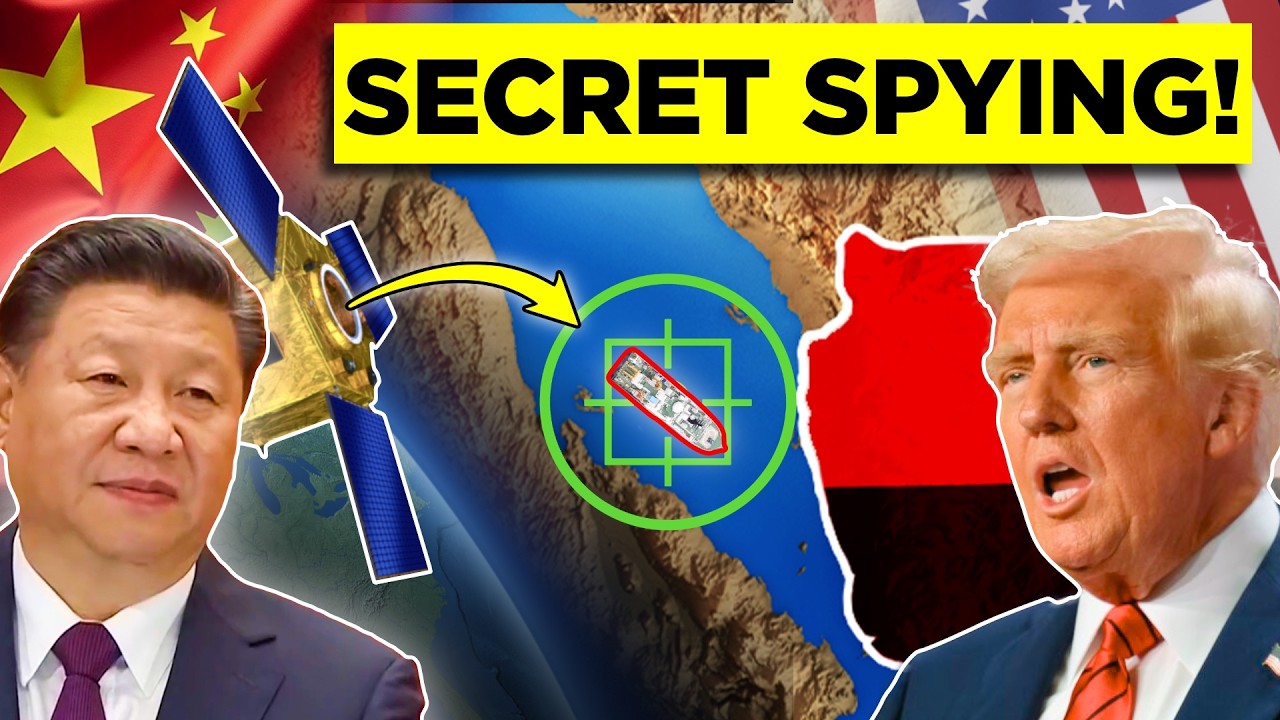
Rebels claim they shot down yet another American MQ9 drone over Yemen's central province of Merit. The strikes were ordered by US President Donald Trump 3 weeks after the Houthis fired surfaceto-air missiles that a US F-16 fighter jet. Moreover, we can confirm the reporting that Chang Guang satellite technology company limited is directly supporting Iranbacked Houthi terrorist attacks on US interests.
Their actions and Beijing's support of the company even after our private engagements with them is yet another example of China's empty claims to support peace. We urge our partners to judge the Chinese Communist Party and Chinese companies on their actions, not their empty words. One of the world's most important trade routes, the Red Sea, has turned into a war zone with constant attacks on cargo ships, some resulting in deaths and oil slicks.
The militant Houthy group that's responsible for these attacks in the region isn't showing signs of slowing down. And the hidden force responsible for their sustained drive to disrupt trade, China. US intelligence made the explosive revelation linking Chinese-made weapons to Houthi attacks.
In return, Beijing gets a priceless favor, safe passage for Chinese ships through the Red Sea. In response to the growing threat, the US military, alongside its allies, has launched a series of air strikes targeting Houthi infrastructure. These are meant to disrupt and degrade Houthi operations.
Yet, despite months of ongoing air strikes, China's quietly stepped in as the Houthi's hidden backer, arming them with advanced missile technology. As a result, the Houthis are now more dangerous than ever, their reach extending further and their strikes becoming more precise. At the center of this unholy alliance are the Houthis.
You may have heard of them in passing or seen them in the news, attacking ships in the Red Sea. But who are the Houthi? And Sar Allah, internationally known as the Houthis, is a Yemeni movement.
They began in the 1990s. They opposed the government for its close ties to the West. Over time, they transformed into a well-armed militant force.
In 2014, they shocked the world by seizing Yemen's capital, SA, sparking a devastating civil war that drew regional and global powers. The Houthi's biggest backer is Iran, specifically the Islamic Revolutionary Guard Corps. Iran provides them with weapons, training, funding, and intelligence.
It uses them to challenge Saudi Arabia and disrupt Western influence. And where Iran is involved, Russia and China are never far behind. And this time, it's China helping the Houthies make a comeback.
So why is Beijing taking such a massive gamble? The answer is cold, calculated money and power. China is Iran's biggest oil buyer.
In return, Iran bankrolls its militant proxies, Hezbollah, Hamas, and of course, the Houthis. This underground trade network built on dodging sanctions is fueling conflicts across the Middle East. It's also keeping China's economy roaring.
But the US isn't looking the other way. Slapping sanctions on Chinese companies for supplying missile components to the Houthis. The growing collaboration between China and the Houthis shows a deeper strategic alignment.
It serves both parties wider geopolitical and economic goals. At the core of this arrangement is China's dependence on Iranian oil. China, the largest buyer of Iranian crude, buys over 90% of Iran's oil exports.
The shipments pass through Houthy controlled waters, and the revenue from these oil sales fund Iran's Islamic Revolutionary Guard Corps, the IRGC, which in turn supplies the Houthis with weapons and military equipment. Yemen's strategic location at the entrance of the Red Sea makes it a vital choke point for global maritime trade. About 15% of global trade moves through the Suez Canal.
Recently, the Houthis have increased attacks on international shipping, causing major disruptions and raising shipping costs. The mutually beneficial arrangement between China and the Houthis not only keeps China's economy afloat, but also empowers the Houthis militarily, as evidenced by their growing technological capabilities. Reports suggest the Houthis have been targeting Chinese vessels.
This strategic move highlights their dependence on China for advanced weapon parts. This agreement ensures that China's oil shipments are safe. It allows the Houthis to keep getting support for their operations.
For China, this secret deal guarantees the uninterrupted flow of energy resources while at the same time destabilizing Western trade routes. It gives the Houthis a steady supply of advanced weapons. This lets them strengthen their military.
In addition to buying oil, which funds them, China supplying the Houthis with key military parts. Intelligence reports show that Chinese companies exported missile and drone tech to the Houthis. This has greatly boosted the Houthi's military power.
Companies such as Shenzen Rion Technology Co. and Shenzen Jinghan Electronics have been implicated in supplying the Houthis with crucial missile guidance systems and drone components. These technologies have made Houthy attacks more precise and effective.
They can now hit ships, infrastructure, and military sites with greater accuracy. US intelligence sources confirmed that hundreds of these components have been shipped to Yemen. They directly bolstered the Houthi's offensive capabilities.
The Houthi's acquisition of cruise missile parts from Chinese suppliers has extended their range. They can now target enemies far beyond Yemen. While the Houthi's growing military capabilities have significantly impacted regional security, their ability to disrupt global shipping routes has drawn international attention.
The Houthis can destabilize a key maritime route, the Red Sea. They've done this by attacking commercial and military vessels in the Bob Elande strain. This strategic choke point connects the Red Sea to the Gulf of Aden and by extension to the Mediterranean Sea via the Suez Canal, making it one of the most significant shipping routes in the world.
However, a more concerning aspect of this disruption is Beijing's covert role in shaping this crisis to its advantage. While the Houthi's actions have directly threatened maritime security, the ripple effects of their disruptions are now being felt across the global economy as major shipping companies such as AP Muller Mars are forced to reroute their vessels to avoid the unstable region. This has strained global trade.
The Red Sea and Suez Canal typically handle around 40% of trade between Asia and Europe, amounting to around $200 billion in goods annually. By steering clear of this route, ships must take a much longer detour around the Horde of Africa. This alternative path adds up to $1 million in extra fuel costs for each round trip.
Since November 2024, over 150 commercial ships have chosen this longer, costlier route. Also, insurance premiums for ships passing through the Red Sea have surged nearly 10fold. This has made shipping much more expensive.
This disruption raises global shipping costs. It leads to higher prices for goods and slower delivery times for consumers. The average consumer may feel the impact as products become more expensive and less readily available due to the increased costs and delay in the global supply chain.
As the Houthi disruptions reshape global trade dynamics, their selective targeting of vessels reveals a deeper geopolitical dimension, particularly in their relationship with China. One of the most striking indicators of China's involvement is the Houthi's apparent reluctance to attack Chinese vessels. However, there have been some incidents like a missile strike on a Chinese owned tanker in early 2024.
These seem to be anomalies, not a pattern. In contrast, Western affiliated ships and those linked to US allies have borne the brunt of Houthi aggression. This targeting suggests an informal deal between the Houthis and Beijing.
It keeps Chinese maritime interests safe while disrupting Western trade. While the Houthi selective targeting of vessels highlights their strategic alignment with China, Beijing's motivations for supporting these actions reveal a broader geopolitical agenda. China's support for the Houthis is due to economic and strategic interests.
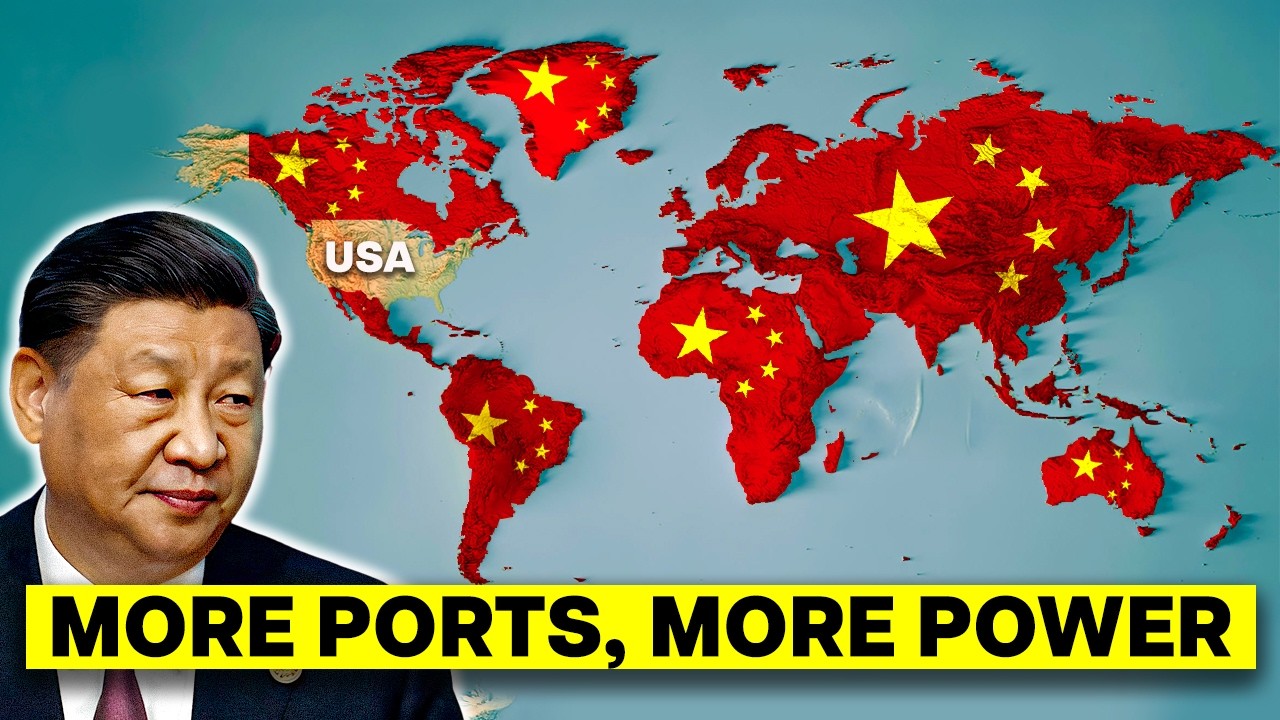
The Red Sea disruptions hurt Western economies. They also create chances for Beijing to expand its influence via the belt and road by subtly worsening instability in the Red Sea. China could benefit.
It would increase reliance on its land-based trade routes and alternate maritime routes that Beijing can better control. Also, China's used infrastructure investment to boost its economy in Yemen and nearby regions. By expanding its key maritime areas, Beijing has gained leverage over critical shipping lanes.
If the Houthi threat continues, China could move towards providing security in the region. This would boost its influence as Western coalition struggle to contain the crisis. Houthi attacks from missile strikes to drone assaults challenge global security efforts.
Their asymmetric nature makes them hard to counter. Western naval patrols have tried to counter the growing threat. However, the Houthi's ability to adapt suggests outside support beyond just Iran.
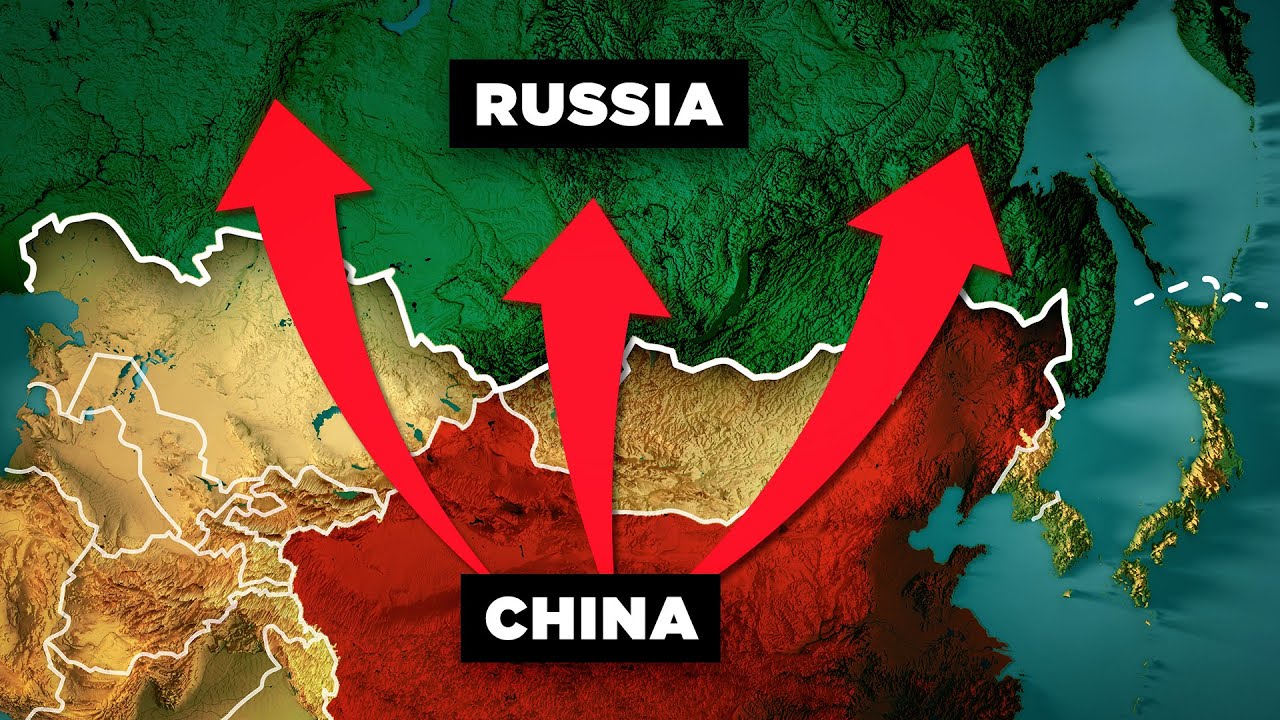
China's covert involvement complicates efforts to stabilize the Red Sea. The increasing cooperation between Russia, China, and Iran has formed a new alliance. It's working to weaken US and Western influence in the Middle East and beyond.
This trilateral alliance has extended its reach to Yemen. It's supporting the Houthi rebels as a proxy against Western aligned interests. Iran has long been the Houthi's most critical supporter.
Iranian military advisers embedded with the Houthis train them in asymmetric warfare and drone and missile use. Iran also provides the Houthis with military support. It gives them intelligence and strategic guidance.
Iranian operatives reportedly exert direct influence over Houthi decision-making, particularly concerning target selection for their attacks. Iran has instructed the Houthis to avoid hitting Chinese vessels. This protects China's maritime trade and its economic interests in the region.
While Iran remains the Houthi's primary backer, Russia has increasingly stepped into the fray, providing critical support that amplifies the group's capabilities and further complicates the geopolitical landscape. Moscow's ties with the Houthis aim to challenge US dominance in the Middle East and gain leverage over the West. One of the most critical contributions from Russia has been satellite intelligence.
Reports say Moscow gives the Houthis targeting data for their attacks on vessels. This satellite intelligence significantly enhances the Houthi's ability to strike targets with precision, posing a substantial threat to global shipping routes. The Bob Mandeb strait is vital for international trade.
It's become the focus of these operations who the attacks have disrupted western aligned shipping but spared Chinese vessels. Beyond intelligence support, Russia's engaged in direct and indirect arms deals with the Houthies. Victor Bout, the infamous Russian arms dealer, has reportedly negotiated a $10 million arm sale with the Houthies.
This deal, likely approved by Moscow, shows Russia's will to arm the group despite global worries. Also, Western intelligence sources say Russia may supply the Houthis with the Yakant supersonic anti-ship missiles. This could greatly increase the threat to Western and allied naval forces in the region.
Russia has strengthened its ties with the Houthis. It wants to be seen as a global advocate for their legitimacy. Russian officials have met multiple times with Houthi reps in Oman.
They discussed recognizing the Houthis as Yemen's legitimate governments. Such recognition would boost the Houthi's diplomatic standing. It would also entrench Russian influence in Yemen.
In 2024, at least two Houthi delegations went to Moscow to meet with high-ranking Russian officials, highlighting their growing alignment. While Russia's actively armed and legitimized the Houthis, China's involvement in the alliance has been more strategically calculated, focusing on safeguarding its economic and geopolitical interests in the region. China's early involvement in the Russia Iran Houthi alliance aimed to protect its economic and strategic interests in the Middle East.
These interests include its trade routes and energy supplies. These are essential to China's economic growth and stability. To protect its interests, China has acted diplomatically.
It seeks to shield its alliance, especially through its influence in organizations like the UN. A key part of China's strategy is its partnership with Russia and the UN Security Council. They've worked together to block resolutions that could increase pressure on the Houthis.
By aligning with Russia, China's blocked efforts to sanction the Houthis or to authorize military action against them. It helps China avoid trade and energy disruptions. China's strategy in the Middle East drives its approach to the Houthis.
It seeks to counter the West by partnering with key players like Iran and Russia. These relationships provide China with a means to influence the region without confrontation. By ensuring the Houthies don't disrupt Chinese shipping, China gains a strategic advantage.
It can access critical resources without direct military conflict. China's ties with the Russia Iran Houthi access are part of a bigger plan. It seeks to use diplomacy, economic interests, and regional partnerships to protect its core Middle Eastern interests.
But the big question is why is China risking itself by supporting the Houthies? The answer lies in economics and China's economy is in its worst downturn in decades. Multiple crises have created uncertainty and instability.
The once thriving real estate market, a pillar of growth, is in freefall. Declining property prices and stalled construction projects are shaking consumer confidence. The broader economic slowdown has led to weak domestic spending with citizens growing wary of job security and prospects.
Compounding this issue, local governments are drowning in debt. This limits their ability to boost the economy through infrastructure projects. Foreign investors once keen to enter China's vast market are now retreating.
They face rising regulatory challenges and geopolitical risks. The private sectors also facing state interference and policy shifts. This is a stifling investment.
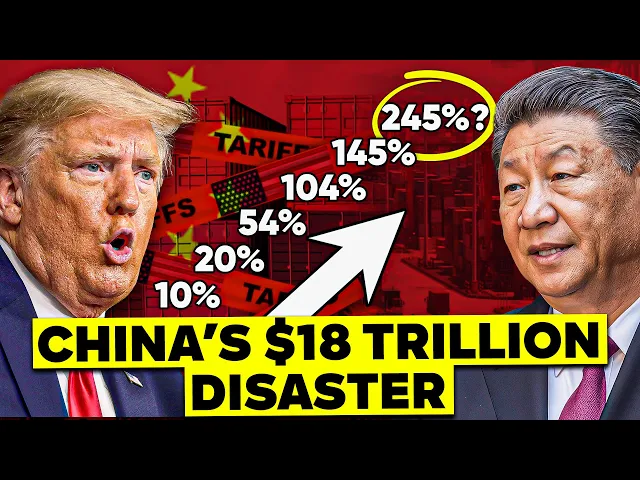
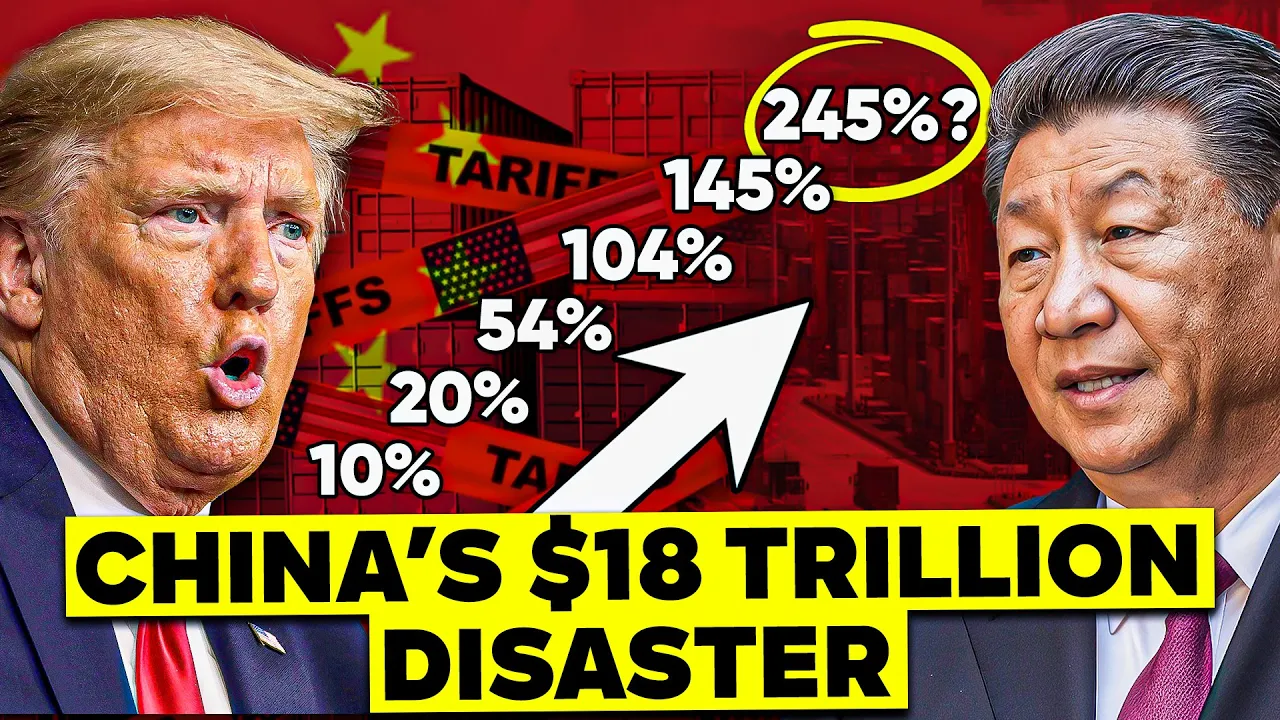
As China grapples with internal economic challenges and the fallout from the US China trade wars, its leadership is increasingly turning to external strategies to safeguard its interests and maintain global influence. The US China trade wars have hurt China's key exports. They add to the strain on its already struggling economy.
As tariffs on Chinese goods rose, research indicated a direct negative impact on China's export sector. Specifically, a 1% increase in tariff-incclusive export prices resulted in a 0. 35% reduction in the profit margins of Chinese exporters, leading to a 4.
16% decline in exports to the United States. While exports to other nations saw a slight increase, the overall effect was a net drop in total export volume. This decline in exports further worsened China's economic troubles, prompting its leadership to focus on projecting an image of stability and control.
The Chinese government facing financial issues is shifting its focus. It aims to protect its economic interests through external actions. This shift in strategy includes a growing concern over energy security.
As China heavily relies on imported energy resources to fuel its industries and economic growth amid economic troubles, Beijing seeks to secure its energy supply. It wants to reduce vulnerabilities and offset trade war impacts. It aims to maintain its global dominance.
This shift in strategy includes a growing concern over energy security. As China heavily relies on imported energy resources to fuel its industries and economic growth. Amid economic troubles, Beijing seeks to secure its energy supply.
It wants to reduce vulnerabilities and offset trade war impacts. It aims to maintain its global dominance. China's reliance on imported oil is a critical weakness.
Its economy is dependent on energyintensive industries. A significant portion of this oil comes from Iran, a nation that's been increasingly isolated due to Western sanctions. In return, Iran uses these funds to sustain its network of militant proxies across the Middle East, particularly the Houthis in Yemen.
This relationship has made the Houthis a powerful regional actor. They can disrupt vital shipping lanes like the Bob El Mandeb strain. A large portion of global trade, including oil shipments to China, must pass through here.
YouTube just dropped a mind-boggling announcement. It's paying creators $64 million per day. Why?
Well, because YouTube doesn't have enough creators. That's why you see videos on your homepage that have less than a,000 views like this one. Now, of course, that doesn't mean everyone should start a channel.
But if you've ever wondered about starting a YouTube channel or faceless channel, now's a perfect time. YouTube's paying creators millions every day, and it's pushing newer, smaller channels now more than ever. But I'm sure you have many questions on how to start and grow a channel.
We get questions in our email all the time from some of you guys. That's why we've decided to put all of our YouTube advice into one training boot camp for completely free. So, if you're someone interested in starting your own YouTube channel, you can sign up for this boot camp by clicking the link in the description or on the screen.
So sign up now because unfortunately unlike YouTube videos, the boot camp's like a Zoom call. So it's limited to just 100 people. Now back to the video.
China, aware of the risk in the Red Sea, has sought to secure its energy imports by secretly dealing with the Houthies. While Beijing officially maintains a stance of neutrality, its actions suggest a different agenda. By supporting the Houthis with money, logistics, and tech, China protects its oil tankers.
It gains leverage over major maritime routes. And this gives Beijing a vital economic edge. A key factor in China's strategy lies in its dependence on imported oil, a critical vulnerability that influences its global approach.
With domestic oil production failing to meet its rising demand, which is needed by the Chinese economy, Beijing is set to import an estimated 11. 3 million barrels per day of crude oil in 2023. This makes it vulnerable to global energy price swings and geopolitical instability.
The Houthi's growing aggression forced nearly 90% of cargo ships to avoid the Suez Canal and instead rerooed around Africa. This shift has greatly raised shipping costs and delayed deliveries to the west. It's let China benefit from a nearly uninterrupted supply chain which allows its economy to keep level.
China's role in the Red Sea conflict remains deliberately ambiguous. At the same time, China claims to be neutral. It seeks to be a mediator, not an instigator.
Unlike Western nations, China's chosen to remain on the sidelines, choosing not to participate in Operation Prosperity Guardian, China's been silent on the Houthi's actions. It's using its diplomatic ties with Iran to deny any involvement. This dual approach lets China protect its energy imports.
It also pressures its global rivals. It helps President Xi Jinping appear as a strong leader. As Beijing strengthens its hold on Middle Eastern trade, its goal becomes clear.
It wants a steady energy supply to fuel its economy. China's crafted a careful response to the Red Sea crisis. It seeks to benefit from the situation without direct blame.
Beijing has neither condemned the attacks nor joined the coalition to defend maritime traffic. This stance lets China be seen as neutral and sympathetic to the Arab world and distrustful of the West. By avoiding direct military involvement, Beijing keeps key players like Iran and the Gulf States on its side.
Furthermore, China's inaction highlights a deeper geopolitical strategy. The erosion of US influence in the region by being a mediator, not a military actor. China boosts its image as the leader of the global south, an alternative to Western Hijgemony.
The growing tension in the Middle East is not only a regional concern, but also a part of China's broader geopolitical strategy. For Beijing, the conflicts in the Middle East are more than just regional crises. They're part of a larger global shift.
Every major conflict that entangles the United States, whether in Gaza, Ukraine, or the Red Sea, presents an opportunity for China to expand its influence. The longer Washington remains bogged down in these conflicts, the more China can assert itself elsewhere. This strategy is reminiscent of the early 2000s when the US was preoccupied with the war on terror.
During that period, China and Russia grew stronger in their spheres of influence. They took advantage of America's diverted attention. Beijing seized the current situation in a similar light.
The more the US focuses on the Middle East, the more China can consolidate power in Asia and beyond. US intelligence reports expose the connections between China and Iranbacked Houthi militants. After high-ranking Houdi officials visited China in 2023 and 2024, they gained access to advanced missile technology, enabling them to produce hundreds of cruise missiles capable of targeting key nations in the Persian Gulf.
This development raises serious concerns about regional security, as the risks extend far beyond the ongoing war in Yemen. Intelligence sources indicate that the US has been working closely with Beijing since September, providing detailed information on Chinese firms involved in supplying weapons to the Houthis. However, China's failure to act on this intelligence has alarmed Washington.
In response, the US is considering counter measures, including coordination with Israel to curb the spread of these dangerous weapons and protect regional peace. These may include coordinating with Israel to protect peace and prevent the spread of dangerous weapons. China's work with the Houthis, despite warnings, suggests a deeper involvement.
This has raised tensions with Washington. Diplomatic sources confirmed that Hoodi representatives visited China several times last summer and fall likely meeting with senior Chinese officials. These visits are seen as part of a broader pattern of growing support from Beijing for the Houthies.
As evidence of this indirect support mounts, the US has grown concerned. It's now threatening economic and financial consequences for China. The US government is considering punitive actions.
They could disrupt Chinese trade networks linked to the Houthi supply chain. This might remove them from the global financial system. If these measures are implemented, they could have far-reaching implications for China's economic ties and strategic influence in the Middle East.
The fallout could create tension between the US and China. It would further complicate their already fragile relationship. The economic consequences of these rising tensions are already being felt in global trade as China is upsetting the balance.
Since December 15th, the Shanghai containerized freight index has surged by 161%. This reflects the disruption from heightened insecurity in the Red Sea. Shipping companies are struggling with big losses.
They now reroute their vessels around the Cape of Good Hope to avoid who the attacks. This change leads to longer journeys and higher costs. China's raised concerns about instability in the region at the UN Security Council.
Still, it distances itself from the US narrative, which focuses on threats to navigation freedom. Instead, Beijing blames the escalation on the Israel Gaza conflict. They caution that a US-led military response could increase tensions in Yemen and nearby areas.
In March 2024, a Chinese affiliated oil tanker was attacked, but many believe it was an accident. Since then, the Houthies have mostly stayed away from Chinese maritime interests. Amid these challenges, China's stake in the Red Sea trade shows its resolve to navigate the risks.
China's economic interests in the Red Sea are vast. With trade worth hundreds of billions of dollars flowing through this critical region each year, about $120 billion in Chinese imports and $ 160 billion in exports pass through the Bell Elond strain. Ensuring safe passage through this waterway is a top priority for China.
Many global shipping companies are seeking alternative routes due to the rising security concerns. However, Chinese affiliated vessels continue to navigate the Red Sea. Data from Lloyd's List shows a steady increase in their activity.
In August 2024, there were 257 voyages, up from 226 in July. This marks 2 months of growth. Experts believe this trend reflects China's strategic risk management.
Kais McKllo, a risk intelligence meta analyst, says the Chinese shipping industry is confident. They believe their vessels won't be targeted by the Houthies. This confidence stems from previous indications from the group.
China has weighed the risks and decided that maintaining its presence in the region is a necessary choice. Chinese affiliated ships mostly avoid attacks. Russian linked vessels seem safe from the Houthies too.
This trend highlights wider geopolitical factors. Both China and Russia seek to protect their interests in the conflict. Simultaneously, they express criticism of US actions in the area, indicating a complex interplay of international relations.
However, if tensions continue to rise, China's careful approach may become more difficult to maintain. The instability could threaten its long-term goals in the Middle East, especially in trade and diplomacy. This makes its position more fragile.
China's indirect involvement has forced the US to take decisive measures against Chinese companies due to their undisclosed connections with the Houthi rebels. In October 2024, Washington imposed sanctions on two specific firms, Shenzen Rion Technology Co. Limited and Shenzhen Jenghan Electronics Limited.
These companies were found to be supplying critical missile components that empower the Houthis. Dualuse components are items with both civilian and military uses. They allow the Houthis to develop advanced missiles and drones.
This support has significantly increased tensions in the Red Sea region where conflicts have intensified. In response, the US Treasury Department expanded its sanctions to disrupt the supply chain further. Their action specifically targeted one company based in Hong Kong and three additional firms located in mainland China.
All of which engaged in trade relations with the Houthies. These measures send a strong message to Beijing. The US is resolute and will not tolerate any support for Houthi aggression.