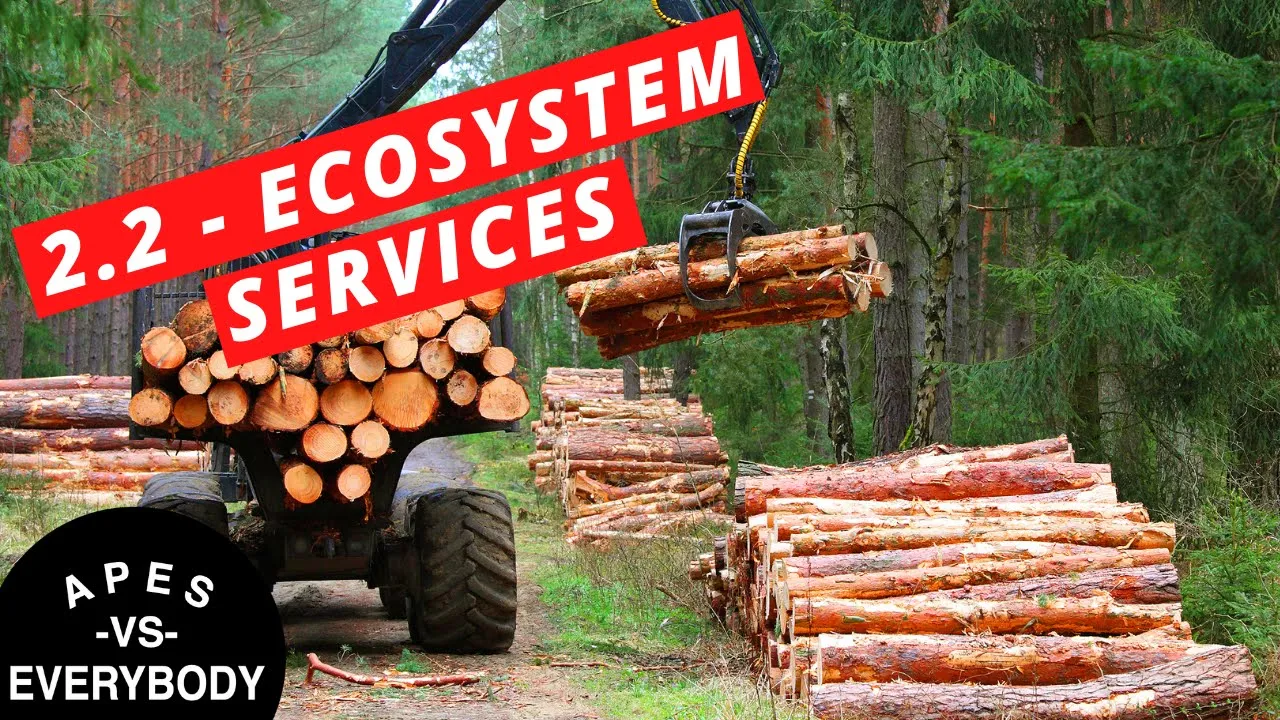
hey everybody it's mr smeeds and today we'll be covering topic 2.2 which is on ecosystem services our objective for the day is to be able to describe ecosystem services but also how humans can degrade or disrupt these ecosystem services the skill that we're going to practice at the end of today's video will be explaining an environmental concept or process so ecosystem services are either goods that are taken from natural resources or services or functions that ecosystems do which have some sort of measurable economic or financial value to humans so we can actually quantify them in
terms of dollars and we'll talk about the four categories of ecosystems next the first category is the easiest to remember and that's provisioning so these are goods taken directly from ecosystems or products that are made using natural resources apples fish or animals that you hunt from a forest wood paper these are all great examples of provisioning ecosystem services then we have regulating ecosystem services we can think of this as money saved due to things like decreased storm damage from climate change or decreased health care costs due to the fact that trees regulate climate by taking
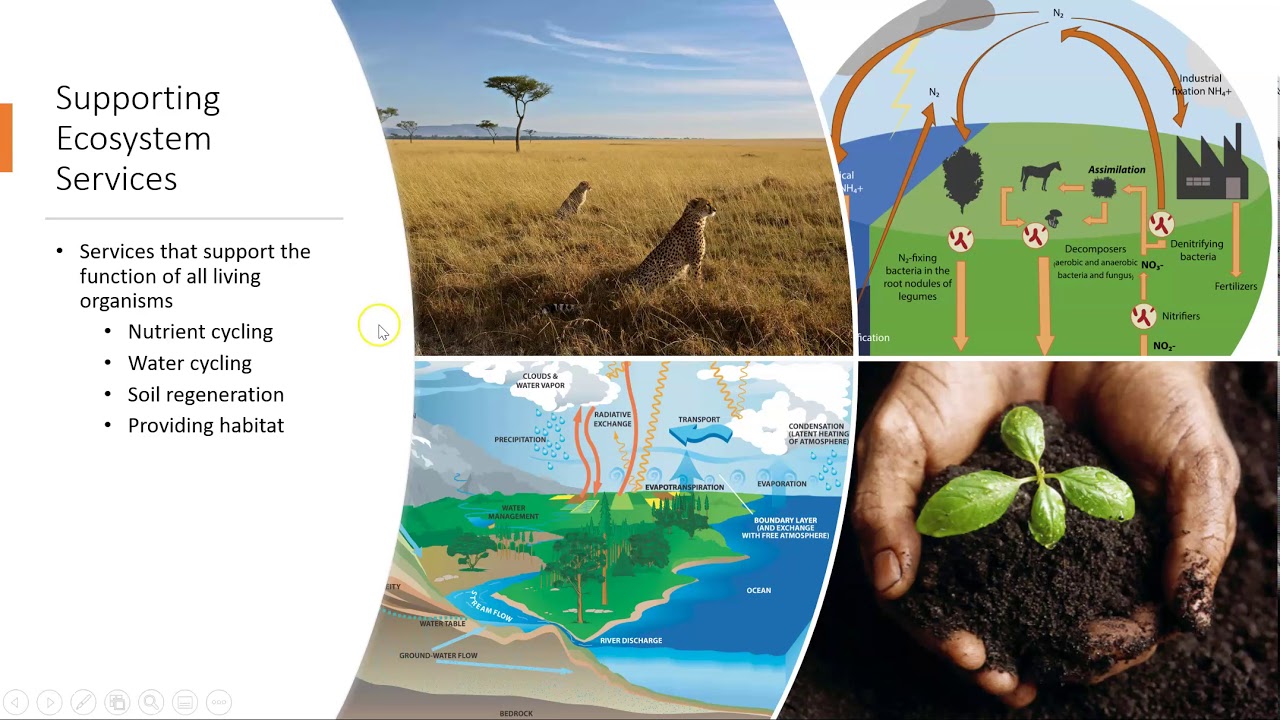
in co2 reducing the amount of co2 in the atmosphere and also filtering pollutants then we have supporting services these are processes done by natural ecosystems that enable us to do processes that we already do more efficiently and at a lower cost so these are things such as pollinators that support our agriculture then finally we have cultural ecosystem services cultural ecosystem services are things like the money that's generated by recreation so this could be people people paying park fees to get into a national park or tourism spending money at local restaurants or hotels when they go
to visit an area but it's also scientific knowledge that leads to profits in other industries another important point to understand is that humans can disrupt ecosystem services so when we perform actions such as logging or overfishing we ultimately decrease the value of ecosystem services this has both ecological consequences so it has consequences for the organisms that live in these ecosystems but it also has economic consequences such as lost jobs or lost revenue from tourism so let's look at some examples first we have the clearing of land for agriculture or for the building of cities so
when we cut down trees we decrease the amount of carbon dioxide that's stored in those trees which increases the amount of carbon dioxide stored in the atmosphere that leads to an increased rate of climate change and that's going to lead to more storm damage from more intense storms and crop failure due to drought so those are economic consequences to clear cutting or to deforestation then we have overfishing so overfishing might increase our short-term profits but it's going to lead to a collapse in fish populations it's going to lead to lost fishing jobs and lost fish
revenue in the future so as a reminder provisioning ecosystem services are goods that are directly provided to humans for sale or for use so these are things like fishing or hunting for wild animals that can be used as food taking lumber directly from a forest or even wild foods that grow naturally that can be harvested it's also goods that are made from natural resources though so these are things that ecosystems provide that we take from them and then convert into different goods that can be sold so we could have paper as an example which obviously
comes from lumber we have medicines which can be taken directly from plants or can be created from compounds identified in plants and then also rubber these are all examples of products that are not directly taken from nature but are created with resources taken from ecosystems it's important to think about how humans disrupt each of these different categories of ecosystem services so humans can disrupt provisioning resources by over harvesting them so we can fish faster than the fish can naturally replace their populations that would degrade the provisioning service they provide we can pollute our waters which
leads to fish not being able to survive there we can clear land for agriculture and urbanization but that decreases the ecosystem services that we get from things like lumber or from finding food or animals in those forests that can provide a food source for humans regulating ecosystem services are benefits provided by ecosystems as they relate to regulating conditions such as climate or air quality so the big example here the really important one is that trees in a forest sequester or take in carbon dioxide from the atmosphere and they do that via photosynthesis and then they
store that carbon dioxide in their tissues and what that results in is a decreased amount of carbon dioxide in the atmosphere so less climate change happening and with less climate change happening we decrease the amount of money that we pay to repair storm damage we decrease the amount of property that's lost along the coastline as sea level rises and we reduce the impact on farmers who suffer crop failure due to droughts which are worsened with a warming climate so we have this little diagram here just to help visualize that carbon dioxide is taken out of
the atmosphere by trees and that regulates the climate and keeps it more stable we have a second example here which is trees regulating air quality so trees can trap different air pollutants in their leaves and that can actually increase air quality so that can decrease the amount of money that we need to pay for health care as it relates to respiratory diseases like asthma or bronchitis and then finally we should think about how these ecosystem services are disrupted and the main way is deforestation so whether that's deforestation for logging so that we can build things
out of wood or whether it's clearing land for agriculture or for cities urbanization we call that these actions are going to decrease the regulating service that we get from intact forest ecosystems so next we'll talk about supporting ecosystems so natural ecosystems do processes that we do ourselves but they make those processes for us less costly and they make them easier for us meaning that we pay less to actually do these processes so let's look at an example wetlands have really dense plant root structures in them and these roots can actually trap pollutants so as the
water seeps into the soil we get cleaner water recharging our groundwater sources and our surface water sources that means that we have to pay less money to purify water by building water treatment plants so again those wetlands are essentially performing the service of filtering water for us bees or other insects that pollinate crops are another great supporting ecosystem service we plant crops for agriculture for farming so that farmers can make revenue and so that humans can have food to eat but the insects go out and pollinate many of those crops which increases their productivity leads
to higher yields for farmers so they make more money and we have lower prices at grocery stores due to the extra production that comes from this important service so we have a little image here of these bees buzzing around crops and then the wheelbarrow there full of food to just remind us that insects and pollinators are very important to food production we disrupt this ecosystem service by destroying habitats that pollinators rely on so these could be things like prairie ecosystems that have a lot of wildflowers that the pollinators depend on we also fill in wetlands
for other land use purposes such as building cities or using them for agriculture when we do that though we decrease that water filtration service that the wetlands were providing and we ultimately are going to have to pay more money to purify water in the future and finally we have cultural services so this is the revenue from recreational activities such as hunting or fishing licenses entrance fees at national parks or just the tourism money that flows into local economies when tourists come and stay in hotels and buy food at restaurants but it can also be profits
that are generated by scientific discoveries in natural spaces so these could be things that advance scientific knowledge lead to new treatments for diseases or lead to new agricultural techniques that benefit farmers so we have some examples here one example is the fact that if a landscape is intact it's a healthy natural ecosystem that will oftentimes draw tourists who are going to again pay to enter parks or spend money in the local economy so if we look down at the diagram we'll see a hiker here and a tent just to remind ourselves that tourism and people
coming to hike and stay in national parks generates money for those areas then we have fishermen who are willing to pay money for fishing licenses but again only if those waters are clean and providing healthy fish that they can actually eat and use so that's a key stipulation here and then finally we have scientific knowledge so scientists can go into natural ecosystems they can learn about naturally occurring compounds in the plants that can fuel medical discoveries and that generates revenue for those companies and it helps with health care as well we need to think about
how these activities are disrupted though deforestation is another big way that we disrupt cultural services so people don't pay to come and see a bunch of stumps if the forest is cut down you can't hike in it you can't camp in it and that area is going to suffer from a tourism standpoint we also decrease these services through pollution people don't come to pay and fish in polluted waters people don't come to canoe in polluted waters and so that's another way that we degrade cultural services and then finally urbanization so the act of building more
cities clearing natural spaces decreases people's willingness to come and spend time there and to spend money in the local economy if they're looking for natural landscapes our practice frq for topic 2.2 today is going to involve the skill of explaining an environmental concept or process so first i want you to describe an ecosystem service that intact forest ecosystems provide but then identify a human activity that could degrade this ecosystem service or devalue it and explain how that activity actually decreases the value of that ecosystem service all right everybody thanks for tuning in today don't forget
to like this video if it was helpful subscribe for future apes video updates and check out other notes over here to the side and as always think like a mountain write like a scholar