First of all, sweetheart, making a career as an artist is impossible almost everywhere. But here's the good news. Ok.
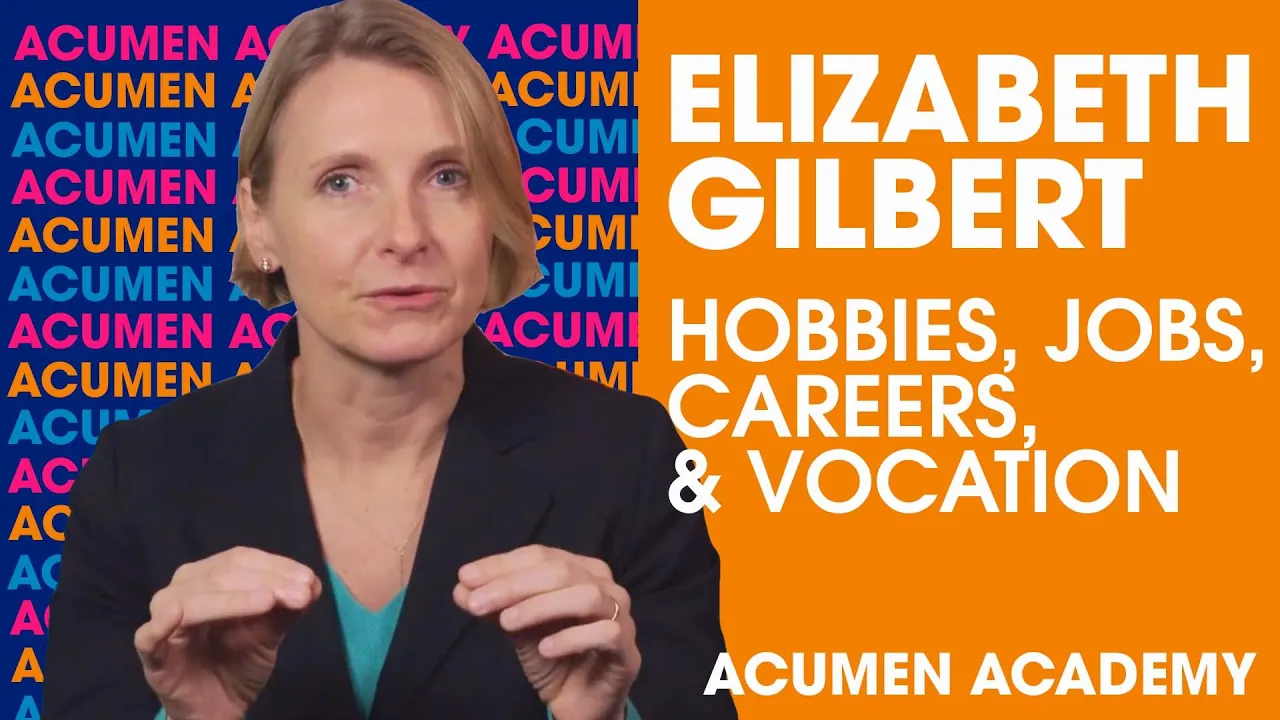
Let me break this down for you. I'm going to define four words that I think people can confuse and sometimes interchange. And I think it's really essential to recognize the difference between these four words.
All right. Ready? Stay with me on this one.
Hobby, two, job, three, career, four vocation. Write these words down. Ready?
Hobby, job. Career. Vocation.
These are four different words because they are four different things, all right? They totally mean different things. And I'm going to just give you a little overview, and I hope that this will help you to maybe find a way that you can be in the world and be happier.
First, a hobby. A hobby is something that you do purely for pleasure. A hobby is something that you do to prove that you're not just an automaton robot working in the machine, you know, producing, consuming, and as I always say, paying bills and waiting to die.
Here's the wonderful thing about a hobby. The stakes are zero. The stakes are nothing.
The stakes don't matter at all. You don't have to make money from your hobby. You don't have to get famous from your hobby.
Nobody has to know anything about your hobby. Your hobby just brings you pleasure and makes you feel like you're more than just a cog in the machine. So here's something you could do.
You could start doing art and creativity as a hobby, right. For all the time people have had hobbies and enjoyed hobbies. You can do that anytime.
That's on your own time. No one needs to see it. Just do it because it's fun.
Do it because it's enjoyable. That's great. You do not have to have a hobby.
It is not required. But it's a nice thing to have. It makes you feel like your life is just not about the grind.
Right? So think about that number two job. Here's what you do have to have.
You have to have a job out of that list. Hobby, job, career, vocation. The only thing that you actually do have to have is a job.
You have to pay the bills. We live in a material world. How many jobs I've had in my life, even as I was making art all through my 20s, I usually had three jobs at a time, two to three day jobs at a time.
And I never resented it because I understand the contract. The contract is there's material world, and then there's, like, spiritual, artistic world. They don't always intersect.
That's fine. I loved having a job. I never resented having a job because having a job was the way that I kept the contract of taking care of myself as a mature adult in the world, being reasonable, being rational, being able to pay my bills, being able to not be a burden on other people, not waiting for someone to come along and save me.
Not waiting for a sugar Daddy, not waiting for an art patron. Not waiting for somebody to give me a grant. Not waiting for somebody to publish anything that I was doing.
Just taking care of myself, providing for myself. And guess who else has had a job? Almost every artist who has ever lived has had a job.
Most of the things of beauty and value that were made in this world were made by people who were not landed Gentry. Right. Who were people who had to get by other ways.
They were farmers. They were businessmen. They were Melville.
When he was writing, Moby Dick was working in the customs office. He had a job his whole entire life. He was never able to just be a novelist.
Hardly anybody is ever able to just be a novelist, to just be an actor, to just be a poet, to just be a musician. Precious few people ever get to do that. But if you love it, you can do it on the side, right?
But yeah, you need a job. And here's the great thing about a job. It doesn't have to be awesome.
It doesn't have to fulfill you. It doesn't have to be joyful. It just has to pay.
That's it. I've had so many jobs that I didn't love. I've had so many jobs that I didn't like.
Whatever you go and do it, you give them the thing that you're giving them and you take the money in return. That's the exchange. That's fine.
Now, look, if it's killing you, if it's toxic, if you're being abused and manipulated, if it's terrible, if you can get out of it, and if you get a better job, do it. Right. But just recognize your job doesn't have to be your whole life.
Your life can be outside of that. Right? But yeah, guess what?
You have to have a job. Number three. Career.
Here's another thing you do not have to have, right? A career is a job that you are passionate about and that you love right now. A career is something where you're willing to make sacrifices.
You're willing to work extra hours. You're willing to put your life on the line for this thing because you believe in the mission of what your career is. If you're in a career right now that you hate, that's terrible, right?
If you're in a job that you hate, that's okay. It doesn't matter. And if you're in a career that you can't stand, my suggestion is that you quit that career and just go get a job.
Just go get a regular job to pay the bill so you can do other things. You should love your career. You should love your career or not have one.
That's completely how I feel about careers. Not necessary. But if you have one, make sure you love it.
Otherwise, there's no point. You're just grinding yourself out for nothing. Number four, the holiest, most sacred, most amazing and mystical pursuit of all vocation.
A vocation is a calling. A vocation is a divine invitation. A vocation is the voice of the universe in your ear saying, I want you to do this thing.
I want to use your talents and gifts to make this thing. I want you to participate in the story of creation in this way. Right?
We're living within creation. We are participants within creation. This is your piece of it.
That's your vocation. It comes from the Latin a calling to be called. Right?
A vocation is the highest possible pursuit that you can do. Here's the amazing thing about having a vocation. Nobody can take it from you.
Nobody can give it to you, and nobody can take it from you. Somebody can take your job away from you. Somebody can take your career away from you.
Nobody can take your vocation away from you. Writing was my vocation for about seven to ten years before it became my job, right? Long before anybody was interested in what I was writing, long before anybody cared about me at all.
Writing was my sacred vocation. I wrote every day because it was a Holy calling, because I needed to put something into the world, because I needed to put my hand print on the wall of my life and say that I was here and I had a commitment to my vocation that said, I will do this for as long as I breathe, regardless of whether anything ever comes of it. And in the meantime, I will have a job.
And what I will not have is a career, because I know that if I commit myself to a career, I will not have time for my vocation. So I'm just going to have a job. In fact, I'm going to have a bunch of jobs.
I'm going to be a bartender. I'm going to be a waitress. I'm going to work in bookstores.
I'm going to be an au pair. I'm going to be a Cook. I'm going to be a babysitter.
Like, everything that you can do that doesn't overtake your life like a career. I'm just going to have menial jobs and my vocation, my calling, my purpose is to be a writer, and it doesn't matter whatever comes with this. Now, here's the interesting thing.
First, writing, the one thing that writing never was for me, was a hobby. But I have other hobbies. Karaoke is a hobby.
Gardening is a hobby. Writing poetry as a hobby. Making art is a hobby.
I'm not terrific in any of that stuff. I just do it because it's fun. Cooking can be a hobby for me.
But my vocation, since I was a teenager, was writing. So for a long time, it was a private vocation. And then it became a job because I got some jobs working on magazines, doing journalism.
And then it became a career, which is what it is for me now because I put all my life into developing it and growing it and as a career I have to be aware of what my audience thinks of me. I have to be aware of what my relationships are with my publishers. I have to be aware of what I say on social media and how it benefits my sales of my books.
I have to look at all that stuff because it's my career here's the thing my career as a writer might end someday. The publishing industry might end someday. Industries are being born and dying all the time.
People might decide they don't care about my books anymore and my career as a writer will end. My vocation will not my vocation is a fire that I will keep going. So if my career as a writer ends, guess what I'm going to do next?
I'm going to get a job. I'm going to get a job and I'm going to keep writing in my bedroom like I did before anybody cared and I'll keep doing that after people care. So what I'm saying to you is that if you've confused your job or your career with what it means to be creative and have an artist and you think because you have a job or a career you're not allowed to pursue your passion, your fascinations with color and texture, your fascinations with theater you are wrong.
You are wrong and you're actually being I'm going to call you out on this a little bit lazy, a little bit lazy and a little lacking in self accountability. You do not have to disappoint your family and throw away your job and your career in order to make art and you have time and you have other time that you can use. If you have a hobby or if you have a vocation then you can live a creative life at the same time as living in the material world.
In fact, that is the only way it has ever been done. So that's your assignment think about those words hobby, job, career, vocation. Decide where you stand on all of them and don't let go of this incredibly fierce self accountability that it takes for you to recognize that you're in control of all of those things.