BRANDON: Let’s talk about my philosophy on teaching writing. All right? So here’s the thing.
I can’t teach you how to be a writer. I just can’t. Writing is a skill that you have to practice on your own.
And I can generally give you some nudges, some tips, some hints, and some tools. And that is my focus in this class. It’s a focus on giving you as many tools as you can possibly hold, as many as I can give you, so that when you are doing your own writing you have them in hand and can try different things out.
The longer I’ve been a professional novelist, the more I’ve realized that these sorts of tools are really handy for troubleshooting, even for me in my career right now. If I have a problem in a book, I go back to these sorts of fundamentals that I talk about in the class. And I try to say, OK, people are having this reaction to my book.
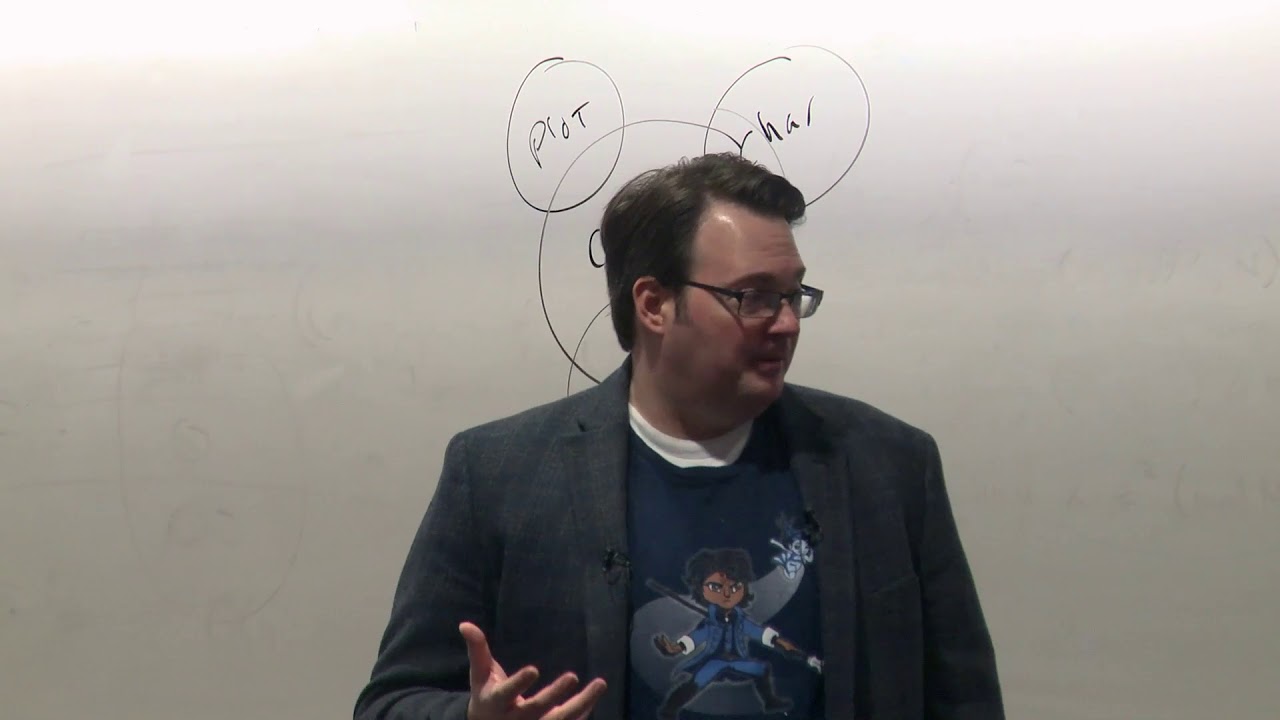
My editor and my alpha readers are feeling lost at this point. What’s the problem? Can I diagnose it using these kind of basic structural tools that we’ll talk about in the plotting lectures?
These are not things that I do often anymore when I’m sitting down and actually writing. They’re kind of in the back of my head. I use them a lot in outlining, and I use them a lot in diagnosing.
Early in my career, these sorts of tools were really handy to just try a tool out to see how it worked for me. And I’ll explain what I mean by tools a little bit later in this lecture. But for right now, the main thing I want you to take away is, you will probably get almost nothing from this class unless you are currently working on your writing.