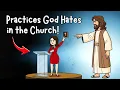
Did you know there are practices within many churches and ministries that God disapproves of? I'm not just talking about personal bad attitudes, but teachings that are leading thousands astray and that in the light of the Bible are completely unacceptable. Today, I'm going to be uncomfortable and completely clear.
We're going to confront seven practices in modern Christianity that God does not approve of. Get ready because this message isn't meant to please you. It's meant to confront you with the truth.
Practice number one, believing that only professionals should serve in the church. Today, in many churches, ministries seem reserved for those with degrees, studies, or social recognition. The eloquent, the talented, and those with good presence are sought after, while those who don't fit the qualified mold are left aside.
But God never chose those the world considered capable. He chose those with willing hearts. In 1 Corinthians 1:25, it is written that he took what is low and despised to shame the wise, making it clear that his work does not depend on anyone's resume.
The problem is that the modern church has confused preparation with anointing. Leaders trained in theology may have knowledge, but without humility, they lack spiritual power. Jeremiah 17:10 says that God examines the mind and tests the heart to give to each according to their way, not according to their title.
In God's kingdom, there is no room for spiritual elitism. There is space for those who, even without studies, have a heart surrendered to the Lord. True preparation to serve is not obtained in classrooms, but in the presence of God.
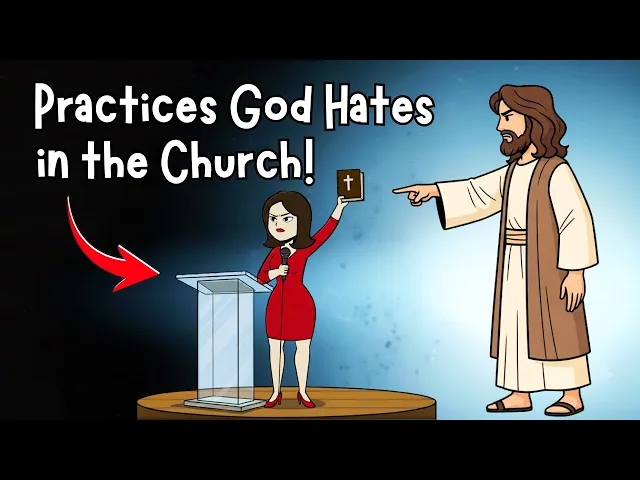
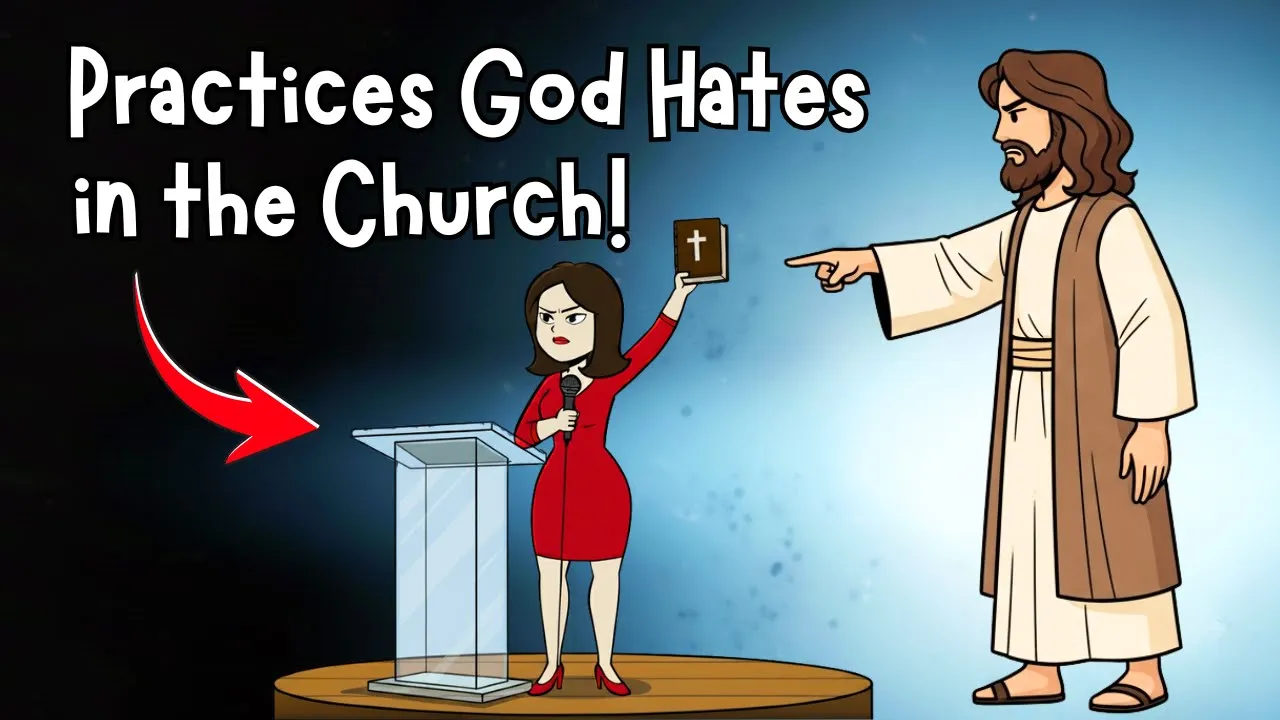
Practice number two, allowing anyone to go up to the altar. Today, the altar has become a stage for showing off, not a place of consecration. Anyone can sing, preach, or play without seeking holiness or true anointing.
Female preachers with short skirts and heavy makeup, guests whose testimonies are unknown, and even politicians who go up and down the altar-making campaign proposals have lost respect for the sacred. But God made it clear from the times of Leviticus that whoever touches the sacred without respect, without consecration, will be consumed in his presence. Leviticus 10:1 and2 reminds us that the altar is a place of holy fire, not human display.
The problem is that the modern church confuses talent with holiness. A tuned voice or striking presence does not replace a broken heart or a life dedicated to God. Jesus himself taught that the Pharisees worshiped with their lips, but their hearts were far from him.
In God's kingdom, respect for the holy is not optional. It is a command. The altar is not for showing off abilities, but for encountering God's glory and offering genuine worship from a transformed life.
If you've made it this far, God is already touching your heart. Please subscribe to the channel Faith Unmasked and in the comments write the phrase, "I choose to follow what honors God, not men. " Practice number three, turning tithes and first fruits into an obligation or business.
Today, we see churches where tithes and first fruits have become a business. Believers are expected to know the payment dates. Personalized boxes are created for depositing money.
And it is taught that if you don't give, you won't be blessed. This is a manipulation of faith, using the Bible as a tool of pressure. God never intended for his people to be forced or deceived into giving.
Tithing is biblical and voluntary. He blesses those who give joyfully because he sees the heart, not the amount. 2 Corinthians 9:7 reminds us that each person should give as they have decided in their heart, not under compulsion.
The problem is that the focus is often lost. Teaching people to give money becomes more important than teaching them to give their lives to God. The true offering is not measured in bills, but in surrender, obedience, and sincere love.
Turning tithing into an obligation creates manipulated and religious believers, not transformed ones. God loves a cheerful giver, not one who gives out of fear or pressure. A church that prioritizes the leader's prosperity over the faithfulness and freedom of its members is teaching something God disapproves of and corrupting the purpose of the offering.
Practice number four, preaching only the doctrine of prosperity and not repentance. Today we see churches where the only thing preached is prosperity, money, possessions, and material success with the subtle expectation that congregants will give more and more to the pastor. The more they give supposedly, the more blessings they will receive.
God is not against prosperity. There were men in the Bible like Abraham and Job who were prospered. But when teaching focuses solely on obtaining wealth, it becomes spiritual manipulation.
The modern church promises abundance but avoids speaking about the cross, sin, and judgment. 2 Timothy 4 3 warns that times will come when people will not endure sound doctrine but will follow teachers who say what they want to hear. The problem is that this doctrine diverts attention from what is truly important.
Dying to sin and following Christ with a surrendered heart. Prosperity is not the goal of faith. It is the consequence of living according to God's will.
True blessing is not measured in bank accounts or possessions, but in character, holiness, and faithfulness to him. When the church preaches only abundance and omits the need for surrender, it is teaching a gospel God does not approve of and leaving believers spiritually empty. Practice number five, teaching that one must obey the pastor above all else.
Today, many churches teach that the pastor has absolute authority and that everything he says must be followed without question. Respect has been confused with idolatry. Some leaders demand blind obedience.
But the Bible makes it clear that true spiritual authority must align with God's word. When the voice of man replaces the voice of God, what results is not obedience, but manipulation. Acts 5:29 reminds us that there are times when we must obey God rather than men.
The mature believer knows how to discern, take what is good, and reject what contradicts scripture. The danger is that this teaching creates churches full of fear and control where people follow orders without questioning and stray from the true purpose of serving God. Jesus never sought for human leaders to be worshiped.
He warned against the Pharisees who imposed heavy burdens and lived off the obedience of others while their hearts were far from God. Respecting the pastor is correct, but idolizing him is dangerous. True submission comes from discernment, humility, and surrender to the Lord, not from religious fear imposed by men.
Practice number six, preaching that salvation cannot be lost no matter how you live. Today, many churches teach that salvation is an eternal gift, regardless of how you live or the choices you make. They claim that even if you sin, God will always find a way to save you because you were sealed for eternal life.
This is a comfortable doctrine that extinguishes holy fear and deceives believers. Jesus was clear, "He who perseveres to the end will be saved. " Believing that grace removes personal responsibility is a serious error because true faith produces transformation and obedience, not a license to live in sin.
The danger of this teaching is that it turns the believer into someone complacent and disobedient, thinking they can do whatever they want without spiritual consequences. Grace is not an excuse for lentiousness or for ignoring the holiness God requires. Salvation is a gift, yes, but it requires perseverance, repentance, and daily faithfulness.
Ignoring this not only distorts the word, but leads thousands to live under deception, believing their heart can remain unchanged while they await eternal blessing. Practice number seven, believing that wearing decent clothes makes you holy. Today, many churches teach that holiness is measured by clothing.
It is preached that if a woman wears a long skirt, a closed shirt, or no makeup, she is automatically holy. This has led many to believe that outward appearance reflects their spirituality, while their heart may be full of pride, criticism, or lack of love. God has never been impressed by clothes or makeup.
What he seeks is a surrendered and obedient heart. And when it comes to clothing, it should be modest. 1 Samuel 16:7 reminds us that the Lord does not look at what man looks at, but searches the heart.
Holiness is the fruit of inner transformation, not textiles or fashion. The truth is that dressing decently is important and reflects prudence and respect, but it does not make anyone holy by itself. The believer's identity must be in Christ, not in how they appear to others.
It is not about imitating the world with vanities nor dressing like beggars. It is about living with moderation, decorum, and awareness of God. A church that centers holiness on clothing is teaching a dangerous lie, diverting attention from what truly matters, purity of heart and obedience to the word.
These are the practices in the church that confuse many believers. And instead of drawing them closer to God, they can become stumbling blocks. Scripture warns, "Woe to those who are a stumbling block.
" It is not about stopping attending church, but about opening your eyes and discerning what honors God and what leads away from him. My advice is in the light of the word, take what is good and discard what is bad. If the situation is so serious that your faith is constantly affected, it may be better to find a church where you can grow without carrying stumbling blocks, but never stop gathering with believers.
The perfect church does not exist. But we can keep our gaze fixed on Jesus, the only mediator between God and men, the way, the truth, and the life. If this message confronted you, share it.
Surely many need to hear it. And if you haven't already, subscribe to Faith Unmasked to keep receiving more videos that challenge you and draw you closer to the truth.