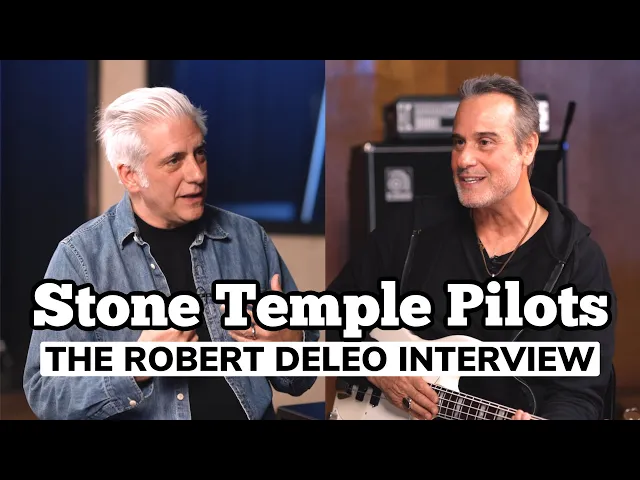
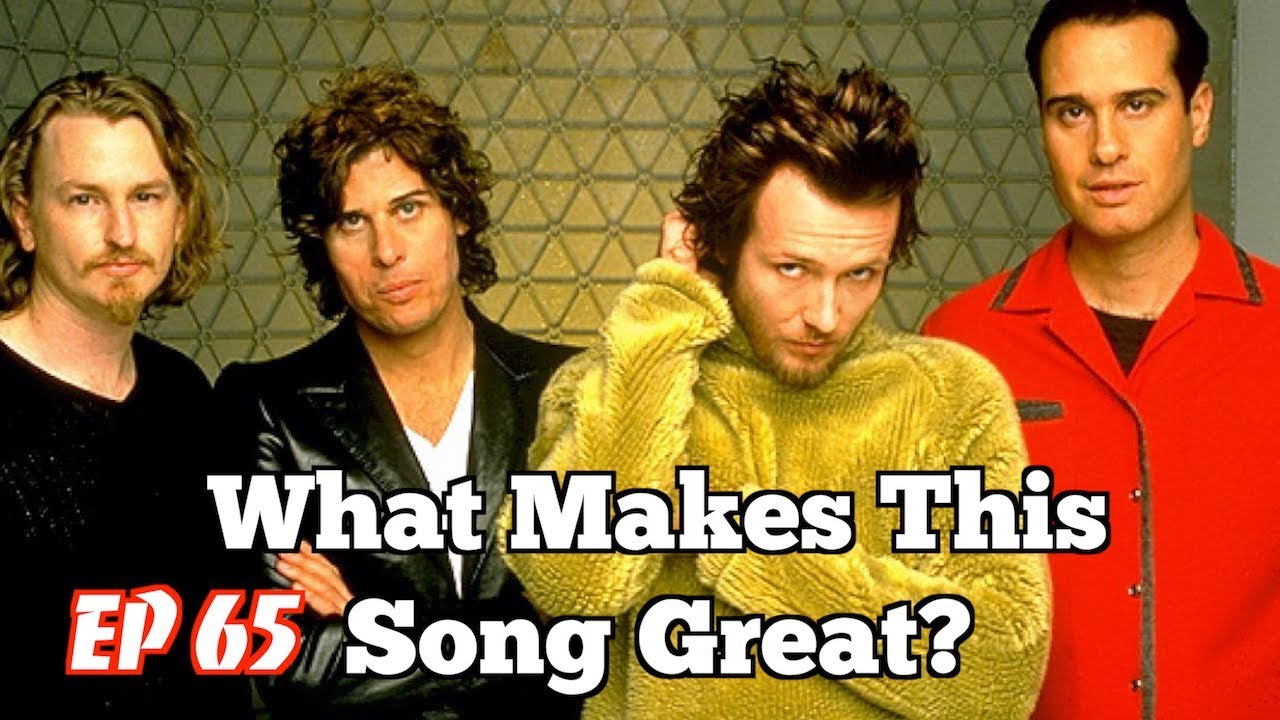
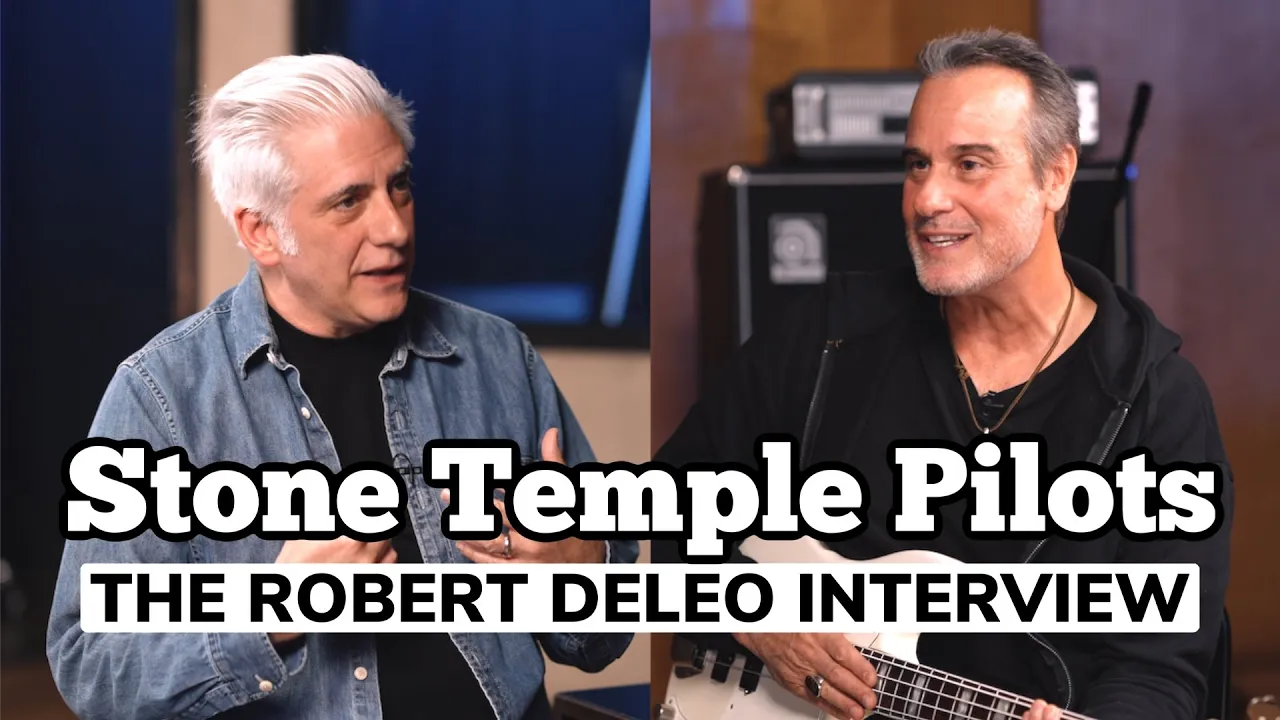
Robert DeLeo is an accomplished musician and songwriter best known for his work as the bassist and co-founder of the iconic rock band Stone Temple Pilots with this distinctive style and impeccable technique DeLeo helped Define the sound of STP one of the most influential bands of the 1990s he is widely regarded as one of the most talented bassists of his generation and his contributions to the band's success Are a testament to his musical prowess and creativity I got a chance to interview him when I was in Los Angeles here's my interview Robert welcome Rick thank you
I want to go back to the beginning and talk about your history you personally and then talk about the band sure about how Stone Temple Pilots formed you have a very unique background while we were sitting here you were playing Joe beam porkavado and that's not surprising to me because the songs That you write have really interesting chord progressions and things like that and they're really complex yeah and they I can see that coming from learning songs like that and having some jazz influences in your playing and bringing them into rock music is is kind
of part of the sound of STP but how did you get started in playing uh you know it was it was mainly just listening at first and uh it was a lot of a lot of rock music but I was I was Kind of listening to rock music but reaching for jazz if that makes any sense and uh I'm the youngest out of a large family I um was pulling out all kinds of Records I was going down to the basement I'd pull out 78s and and uh 45s and you know I think at the
time we were all fortunate enough to grow up on such great music from the beginning of the 20th century yeah and my interest in listening to Henry Mancini records Jobim records Gershwin records Cole Porter songs all those songs kind of wove into what I wanted to accomplish Rock wise what were the rock bands that you were interested in that you did you loved oh I mean everything at the time was you know Hendrix and and and Zeppelin and Aerosmith and you know it was such a great healthy time for guitar oriented music right and uh
it it it hooked me in it hooked me in there's Different so many different emotions that I felt from from listening to an Aerosmith record it was a different emotion listening to say a Anella Fitzgerald song sure you know and um but the journey was just as satisfying did you start taking lessons did you take lessons at all or do all by ear no all by ear and what would happen was Dean started out on guitar okay when he would go out with his friends I would sneak under us and I would grab his guitar
and Kind of you know it was that challenge of trying to get in as much as I could before he came home right closing would you guys get in fights if he caught you playing his guitar I think he probably wasn't very happy about it but yeah you taught yourself though or would you teach yourself from watching him I I taught myself from listening to a m AM radio Okay AM radio was huge back then yep and uh like I said the the variety of music that was on the radio back then That was unbelievable
I mean what was in the top ten if you look at 1971 top ten it's it's a it's a plethora of great music from different genres and everything when did you first start playing in Bands then in high school Dean's uh five years older than me so uh he had a band and uh they needed a bass player and just like any bass player it's like here you play bass right so uh I got the uh I never picked up a base okay I was 16 at the time and I never Picked up a base
and all of a sudden uh they're like we have a we have a we have a show in two weeks and we're gonna do rush and yes and and Genesis she is recover band cover band yeah and throwing in some originals but that's what was appealing on the East Coast yeah in in the you know late 70s early 80s you had to get gigs by playing covers but it's it's it's one of those things that that's how I learned how to play Um is is playing covers and what was your first rig that you were
playing on back then ah I had a set I borrowed it from the the singer who was the bass player he came out to sing he graduated to singer okay so it was a 78 uh black uh P bass okay and it was a sun uh 115 was it the beta the the beta 50 yeah yeah beta 15. yeah so that's that's what I started on okay and you're you're learning Tunes where you're playing gigs playing borrowers playing playing bars Okay playing bars and uh having uh women in the 20s come on to me and
I was 16. I wasn't even supposed to be in there and I was like it's you know it was it was it was an experience but I I went to high school and then after school I was a janitor at the high school okay so I would get out at 2 30 go home and eat go back at three and then I would you were janer at your high school I was graduated I was I was wow and that was where out here oh that Was in New Jersey Jersey so I would go back from
three to seven and then get back from there eat again and then play from ten to two Okay so you're a janitor at the school and then you finish your shift and immediately go play gig yes my middle name was tardy okay every day every day yeah but we played you know we played weekends and uh mostly weekends and uh that was a great experience that's kind of how it all it all started I have some Recordings that a friend of mine from New Jersey uh digitized and sent out to me and um there's some
pretty cool versions of uh you know Tom Sawyer and Free Will and Song Remains the Same and you know I look back and great memories great memories well also playing those songs on bass you're playing get Ali bass lines you're moving around a lot yes yes that's a great uh great learning experience yes yes now how did you get from the east Coast to the West Coast and why I graduated high school in 84 and uh um my sister and my brother-in-law were living out here uh and uh they just made a suggestion to my
mom um you know what do you think about him coming out and there was really nothing there I mean it was either um you know landscape yep or uh you know pose the question to do you want fries with that shake right you know we're Working fast food so I thought you know California is such a a dream and it feels like it's you know Mars yeah it never really had been on a plane and you know a small town New Jersey so I I graduated high school in 84 and I I moved out and
I lived with my sister for a while and and that was here in LA or in San Diego it was in Orange County okay and uh I eventually got kicked out and uh was on my own and uh I came out with twelve hundred dollars okay and at The time uh I didn't have a car I was 18 and I uh wound up getting a 650 dollar 1976 Volkswagen Rabbit okay and a very lovely like that color you couldn't tell whether it was yellow or green kind of in between the into green I got that
for 650 okay and there was a paper at the time called the recycler and I got a uh uh 78 Music Man Stingray base out of the recycler for 250 dollars wow and the reason I picked that base is because I I was really into uh Lewis Johnson at the time and and what he was doing on that base and that just blew me away when I saw him did you start playing in bands and how did you meet people when did your brother come out how did all that happen uh Dean came out a
year later okay and in 85 and at the time he had a job that took him down to San Diego okay I was 18 so I was just you know I was doing the Magical Mystery Tour through LA and I I Didn't know what I was doing you know I thought I was going to go to art school and I thought I was going to do this and do that but when you're 18 yeah you know you want to enjoy everything you can so I did but I crawled around La eventually got a job working
at a Mesa Boogie okay and uh I was really blessed with having some really really amazing guitar players that I worked with those guys I Kind of saw what they were you talking about about uh other musicians or people that were Mesa artists Sean Tubbs okay was a employee of Mesa Boogie that I worked with and an amazing amazing talent yeah person uh Rich mazzetta Glenn Pierce a lot of guys that were you know I got turned on to a lot of what they were doing um and just I had to you know I had
to sell gear so it was the kind of thing where you know I had to get on a base And I had to you know I had to be able to demo stuff I had to do it all yeah you know what I mean so I had to sell gear so that's how I learned I had to get on guitar and do certain things on guitar and do certain things on bass and so that that was a learning experience too doing that okay so Mesa Boogie you're working how did you start a band you know
around 86 87 I was uh on my own and uh eventually got an apartment I wasn't Living in my car anymore and uh uh I went to a club that was in uh Newport Beach at the time okay and um Scott's band was playing there and uh we kind of hit it off and started talking and uh I went up and started playing with those guys and um then we ran into each other again I I moved along with Scott was it a cover band or Scott original they were original band they were original bands
right um and then I ran into Scott later On and we uh met at a uh again at a place in Long Beach um and uh I I forget what show it was but we talked and we figured out we were dating the same girl at the time okay and and uh so we had something in common but we started uh writing at the time I I was in Long Beach I had a little portable studio and I was kind of getting my hole bearings together for uh you know learning how to record And he
came up and uh with his band at the time and said uh can you record us and that turned into can you play bass on it and that turned into will you join the band and at the time I I uh I wasn't necessarily into what they were doing it was more of a an 80s kind of thing and I had I had long hair and you know I was still holding on to my T-Rex and Led Zeppelin and they they say dude you're so 70s man And I was I was I was wearing as
a compliment I did I I mean I think they were mocking me out but I took it I was wearing it proudly that's how we kind of got together uh you know we put an ad in the paper for Eric okay and and Eric uh answered and he showed up at my apartment and we looked down and he pulled up in this old 70s blue with the white skunk stripe El Camino fresh from San Jose okay and uh he came out he brought this videotape with him And it was uh him kind of doing and
he had his uh his Vista light kit nice so we're like the bottom thing yeah it's always the bottom thing he he was he was the person he was so he just randomly met him through an ad yes it turns out that him and Scott were both born in San Jose okay same hospital and then we kind of went on uh with Scott Eric and and myself with two other members that it just kind of dissolved it wasn't musically what I was wanting To do I said to Scott I remember the call I said uh
I want to continue and if you want to continue then let's do this and uh he told one of the members we're not doing it anymore and I got to tell the other member we're not doing any more Dean at the time was getting back into guitar okay he put it down for a while to get this job in San Diego and working at Mesa Boogie I got Him some gear which got him back into his playing and it was the kind of thing when the four of us got together it just was like you
know it all kind of came together so you guys get together you start writing songs as a band I mean you wrote songs separately or together you know as we'll talk about how do you get a record deal from that where were you playing how did that evolve oh you guys got signed to Atlantic Records right yeah we were we Were playing uh one of these clubs in in La a bar and um Tom Carroll and happened to come out from Atlantic Records and um did you know he was coming out no okay no so
we we just did our thing and um did you have a decent local following at the time we did we did we were just kind of you know um we were really just trying to feel ourselves out as far as a band Dean and I had played together so That thing was there and yeah we were just kind of kind of make it all start to happen and kind of glue it together and it was it was you know we got signed and um did you have any of the songs that were on the first
record at the time yes okay so which which ones would you have had I think we had uh we had um we had Vaseline okay uh kind of the beginning of Vaseline so we had we had the uh you know We had that I think we might have had sin uh Wicked Garden yep we had that um so we had we had those songs together um and when we went into when we got signed to Atlantic I brought my home studio I had the fostex 8-track and fostex board and we brought that into the uh
the pre-production place okay and uh Atlantic Records were like these demos sound great Let's use these as the record and I thought you know we had bigger aspirations to go into the studio that's actually kind of unusual for that time period for them to say that too I know they must have been good demos then well they were they were they were fun to do and we were putting in our time you know we were putting in our time uh writing those songs and uh everything was kind of you know Coming together as as we
hoped it would so how did you get connected with Brendan O'Brien so before Brennan came in Atlantic Records suggested Eddie offered of yes fam yep and Dean and Eric and I were huge fans of yes growing up not necessarily Scott a little before his time but we uh were excited so excited and Eddie came down and uh It was that Chris Farley moment where we were kind of going through songs and Eddie was so soft-spoken and so kind and nice and he came in he said let's go over this part again and we'd stop and
go Eddie how did you get that uh bass sound on on you know on on relayer you know or something like that so it it was like a learning session uh with Eddie a friend of mine was working at guitars R Us uh great record or a great guitar store and Uh Michael Lockwood okay Michael Lockwood uh was was the one who suggested Brendan we listened to Brendan and I think the the most appealing thing about what Brendan was doing at the time was he was just recording the band it was no producing with your
ego or producing with color or producing it was just producing the band that's what we were really interested in is just having the sound of the band And because we were doing these demos and kind of they were guiding sonically we knew where we wanted to go you're going to find somebody that could capture what you did yes and Brendan is an excellent engineer producer mixer everything yes so he was he was the person and we got along just great you know we went in there and you know all I can remember doing with him
is just laughing and having a great time and it went you know we did core in Three weeks and where did you do that record we did that at uh the Captain and Tennille Studio okay Rumbo okay in the valley okay yeah which was named after their pet elephant I believe okay and the Catherine came in uh and Daryl Tony came in yeah Tony it's just sweet sweet woman um but we were there and uh we did that record I think in two and a half three weeks so what would you do would you Track
did it all on tape back then right yes would you track the everything live and then kind of take the bass in drums or would you redo your bass and and how would you typically do records back then you know if there was something that I wasn't feeling good about I would go back and retract it okay or I would just want to just to kind of you know you're in a live situation and there's a lot going on and you're thinking too much and you know But Brendan likes to work fast he likes to
work fast yeah and there wasn't there wasn't much room for that right to sit there and Ponder on stuff what do you kind of say okay let's let's go oh yeah all right let's go you know let's talk about some of the songs off the first record [Music] [Applause] [Music] okay everybody knows this song okay this Is this is one of the many hits on this first record let's talk about the guitar part now this is something that you came up with here it is and when I heard this this wasn't the first song that
I heard but when I heard this song I thought oh these guys know what they're doing here this is really I mean that's this is a really sophisticated song Tell me about that guitar riff here well it's it's it's kind of Ragtime guitar You know it's [Music] laughs [Music] yeah it's kind of that but I just took it down to here and put a different route on it I have that but having that chromatic Lick in there too is so weird so that's that's the Blues yeah but you didn't hear it in rock songs no
really that's what with Distortion yeah well that's what all those records from my childhood did yeah you know you heard stuff like that in Zeppelin really Jimmy Page would play would do this he was one of the few guys that would do these sophisticated dissonant chord progressions and things like that I got a lot from Jimmy Jimmy uh is is brilliant at doing that and that was a big influence there was a lot of Mystique there with those chords and I Think trying to you know create some Mystique as well as music was uh was
was important for me okay but you have that intro part but then when it goes to the verse the verse is really unusual [Music] right having this this movement like that right that's really kind of Base oriented you're thinking like a bass player with the inverted chords and stuff and you have this descending line but going to that E flat major 7 chord Is like wow well there's always you know you've got to make room so I wanted the bass to speak there so it's it's very simple yeah it's almost like a country song yeah
and then uh the Jazz you have to have that [Music] and then why not go back to it right [Music] So yeah just uh and then the [Music] see all those inversions why are those inversions so good I listened well to the records I listened to you know I I knew it it had to do something there it's like perfect voice leading and it and it makes the melody more interesting too yes because when the bass lines are doing different things and then the melody are yes it makes it uh it makes it more melodic
and I have to really Credit Scott for that because he did understand Melody very well um and he was in choir when he was younger he was a huge fan of the Carpenters um and I always thought when he sang a mellow song he was like a male Karen Carpenter with his voice he can make it do that and uh he he knew that he had that that background when you would be working on a song like that he would write lyrics or uh and then Would you guys work on the melody together or would
he say oh I've got a melody for this and yeah it just depended usually uh some well most of the time I would write a song A Melody would come yeah um and if he liked it great you know it's it's he's the one who's singing it so he has to be totally comfortable with yeah with that Melody that was a Melody that he came up with okay and uh Eric actually wrote some of the lyrics on on that uh song But yeah that's that's kind of how it started I was actually I was actually
tracking some guitar for a friend of mine for his demo and I started kind of coming up with these things I'm like did you say I'm going to use wait I'm gonna use this for my eyes yeah I said uh I better say that I'm Gonna Save that one yeah yeah I better save that one so let me let me play a couple other things here [Music] This is one of my favorite songs on the record [Music] s [Music] [Music] got no need [Music] to take time [Music] to take time [Music] With a woman [Music]
you never know [Music] [Applause] [Music] when I was a guitar teacher back in Atlanta in the 90s I talk guitar lessons at a local music store I taught 50 students a week and what would I would I teach taught songs like that yeah I talked Songs off your records yeah these were the most fun songs to teach really you have to teach me how to play these you're holding on there right thing what comes next here yeah yeah the chromatic lines in it but that the uh just even the Riff in the chorus the walk
up yeah and that to me is like a kind of aerosmithy or something yeah you know yeah that was real guitar music your band had was real guitar music and then with the intricate Bass parts and stuff and the weird base fills that you played you had so many weird fills yeah well that song I mean this song that was uh that one is uh let's well actually we're almost to it right [Music] that fill so we talked about that before we started today that is such a strange man I had base students too right
I would teach them all your bass Parts yeah that's the they wanted to learn all The songs that were the big hit songs in the radio yeah you had all these hit songs on the radio and they these were like oh this is great I can teach them right right that's the that's the sad clown face and I asked you if Brendan thought that's kind of a weird lick to play but he didn't right no he didn't you know it was and and uh would he ever come on but that's so no no no no
no no no no no no no no no What was that that's what I was saying like that's amazing why did you play that though yeah well I it was it was from a a song from my youth uh that Nat King Cole made Popular by a 1940s hippie I forget his name but he wrote a song called Nature Boy and that was part of the melody so that that [Music] but what would make you think of playing that fill right there there's of course there's a lot of open space there it's Perfect for a
base fill I know but I wasn't gonna you know [Music] it's kind of a uh kind of a mood change to get you back into the yes Vibe of this yes it was about mood and space about mood and space space is important these are really hard tempos to play to these mid-tempo yeah acoustic yeah songs that go into rock songs and kind of keeping the tempo together would you guys play with click tracks back then uh No okay but Eric was so Eric is so he's he's so good at laying it back and and
that's that's what I love about him a lot of my playing is the way it is because I can play with a drummer who knows how to lay it back and it's funny because a lot of the older you know when we were little you always thought who's a better drummer Neil pert or Ringo Starr and you're always like Neil both right but it took a while to appreciate Rango because he Wasn't playing as much both great brilliant drummers in their own right but I I it took me a while to acquire that Ringo uh
thing and that's that's how I look at Eric he's just got this thing that's very in the pocket and very tasteful and very musical with his his his playing and that's really what sets the tone for songs like this was the arrangement really locked down what would Brendan do as a producer when you did Pre-production is there anything that would change in the songs well I started that song out there's a demo around somewhere of it where I started with a fretless because I thought it would be a good fretless song but it turned out
it wasn't and the fretless I had was this it was nailed together it was bad so uh I I didn't go there Brandon was just always into getting the feel together getting the tempos together we'd get a click going and then we started in Click Would go off go on a tape you know that's what we dreamed we dreamed of that we dreamed of going into a studio and you know you go into a studio and you get signed the first time and you're you're it's like a church you're going to church and you're like
oh my God you know and and then it's got back round history of you know Captain and Tennille and we all grew up on them and you know so you've got this Mystique that's already there for you when you guys did Your acoustic songs would you track the acoustic live in an ISO Booth typically and then have a have the vocals scratch vocal done in an ISO Booth oh we would do everything in one room okay and and I'm going ahead when uh when when Scott passed we Dean and Eric and I we were trying
to get a guitar and vocal version of Atlanta yeah that we that's on the fourth record yes yes that we actually tracked here right here in NRG yes funny story I'll just break away that I was in Here working on a record at the same time you guys were in here uh I was in Small you guys were in Studio A and I was in Studio B just randomly 99 1999 yeah so you went and you were trying to get what did you notice that you had bleed oh there was because the acoustic was recorded
in the same room as the drums we were all in the same room together yeah so we couldn't really do an acoustic slash vocal version because there was too much believe the room so Everything was tracked right there and you know once once bleed was a part of going to a studio that's right you know you wanted that you wanted that bleed would the things sound when Brendan would put up the the mix in the studio it would pretty much sound just a rough thing would sound like the song right he would mix as we
were going along yeah so you would hear what you wanted to hear and what ultimately it was going to sound like yeah um and we'd always say You know at the time it was a very Beavis and Butthead for sometimes you know he'd have those big big speakers that were in the wall we call them flamethrowers and it's like put on the flame throwers you know it was like we we were yeah we were young and we were excited and it was our first record and we were assigned to Atlantic Records and okay what was
your base rig back then at the beginning uh after I uh got fired from uh Mesa Boogie yeah I uh went over To Schechter Guitars and Schechter built me a really nice uh PJ base that I still have and uh I had an app an old Ampeg like this that I was going through I mean when you guys run a Di and then Mike the amp yes right tried and true uh you know can't go wrong can't go wrong now go wrong and guitars on there do you remember what Dean was playing through that part
I played in the chorus I played that on a Telly okay and then uh the the one that went boom boom boom That was uh his Les Paul that he had that he is 78 that he bought in 78 okay yeah and would you guys be playing through Marshalls would they be played these parts on different amps or playing through a Telly yeah you play through a tellity you get the clarity of that because that's not a super the line is not super distorted it's clear right right so yeah just at the time you know
um we were we were we were poor yeah I mean you didn't you have to have money To start acquiring nice vintage gear um you know I didn't I didn't own a 55 j45 at the time but uh you know we had what we had and I had all quirky kinds of things my my owner uh but what is the acoustic guitar in that song what were you playing I believe that's Dean's uh Dean is playing that I believe that is his Yamaha okay the orange Label Yamaha okay from like 77. which the Yamaha made
nice Acoustics back then beautiful this is Success very desirable now yeah uh The nagaki effect or something like that the orange label ones were the desirable ones yeah and he had that from being a kid um and I used a base what what happened was the uh Schechter shut down and my owner was Japanese and uh he had when they shut down the day that we left uh he had a whole row of all these quirky Japanese bases and guitars and I saw this thing it was called a zimgar okay Zim slash guard z-i-m-g-a-r yeah
And it was a crazy burst uh version of a beetle base okay and it sounded great it had like these uh Rickenbacker pickups and it's kind of looking things and that's what I used on that on that song wow interesting yeah a great sounding bass yeah and then do you remember what Eric played uh drum wise back then I don't I don't that's the next interview for you I'm gonna I'm gonna I have to ask him that I'm gonna play another song off here Hey I'm smelling like the rose and somebody gave me on my
birthday [Music] [Applause] I am smelling like a rose and somebody gave me cause I'm dead [Music] I am standing like a rose [Music] I am smelling like a rose [Music] [Music] [Music] me baby [Music] [Music] [Music] now that's too early for that that is a very the timing of the main riff is so cool that was funny because Scott when I was working at Mesa Boogie Scott came running over he worked across Caddy corner from where I was working on Sunset Boulevard and he was he had the he had the great Fortune of driving around
models okay to their shoots all right so uh he would run over he goes I got this idea I got I got this idea and and it goes like this so it was you know [Music] you know so he was like would he play so he played that no he didn't play it so I I transposed it yeah I said something Like that you know and he's like yeah that that's it and then just you know [Music] which is very at the time it's very Alex life son there's a lot of Alex Alex liveson on
that first record that I contributed to the record and when you say Alexander you're talking about the kind of chord voicings he played I I beautiful adore his his core Choice yes and Getty and Neil I mean yeah I was a I'm a huge Rush fan huge Rush fan does that lick sound weird to you at all I mean it's just so natural everybody knows this song a big hit when I first heard it I was like God oh that's that is killer riff well I think it's it's this is what the charm of Scott
he didn't really know right so he would hum something and it's like well that's not in four or four right well let's go with it yeah and that's where you knew to just go with it right because it's like Oh that's cool yes yes because that's what made it it's like kind of disguised Prague right it's just it's like yeah it's like heavy Prague heavy Prague yeah yeah exactly and then adding in those chords those kind of chord voicings though really make when you put distortion on them it just makes it otherworldly I think yeah
and who who would sing a Melody you know like [Music] You know it's like now would he come up with those Melodies just right off the cuff yes yes Scott was fast with that brilliant brilliant and would you when you heard that you'd be like oh that's great right oh it was it was yeah it was it was just we had a a special thing together it's fascinating to me about bands that actually work together like that you know where there's co-writing amongst band members and how people contribute To those things and then how Arrangements
come together and then you have this finished thing yeah how long would it take you to work up the parts even if you had the the the song where you could play it on acoustic guitar but for everyone to kind of put their parts together and make it make it a song quickly okay and that was the challenge I found for me personally when I tried to prepare it didn't work for me but when I went in And it was the spur of the moment and this it just it just it just comes comes to
me that way and I bring up Brendan a lot because you guys worked with him for your a lot of your career there would there be Arrangement changes ever though would be like let's cut this section out would they be cutting things ever definitely I mean when I wrote Interstate it was kind of all over the place Brandon was really the guy who Arrangement wise put that Kind of together cohesively let's talk about Interstate me being from Atlanta well I'm from Rochester but I've been living Atlanta for 29 years this year yeah and you guys
did a lot of work at Southern tracks in Atlanta which no longer exists you know we got bulldoze I got the pictures of it being torn down yeah many many great memories there and Mike Clark Mike Clark yep I love Mike Mike passed oh geez now probably 15 years ago now something like that Wonderful man yeah wonderful man so interstate is one of the most played songs [Music] foreign [Music] [Applause] [Music] please that is a workout That Bass part right it's kind of like a Motown bass part almost yeah most most Yeah you that you
were probably influenced by Motown right that was the first I always thought that about your bass lines because it's you have this a lot of the James Jamerson kind of moves and things like that bouncing around really active yeah now this song goes through so many different changes you've heard on the radio a billion times and it's easy to take it for granted because it just sounds so normal but it's not it's it's a very sophisticated song Let's talk about the chords in the verse okay sure because we talked about this before and just so
that we can teach people how to play the right chord voicings yeah um well it started out on a nylon like this okay and it was literally just started out as a Bossa Nova [Music] you're you're channeling your Jobim yeah so [Music] Yeah that's how it started out and just but I knew I couldn't do that Baseline to that right [Music] you know just put it into that yeah so that's that's kind of that allowed me to do that did the Riff at the beginning come later or was that just always part of the song
no it was always the part and that's the part that kind of made it transition into that Kind of GrooVe yeah so it was [Music] foreign [Music] once again these kind of voicings are really your you have your own vocabulary of of chord voicings yeah yeah I think this goes back to you know watching the guys that I was I was I was working with and uh Mesa Boogie you know there was always that Talent chord that you know you'd you know dial up an app and you'd Want to impress somebody with how the Mesa
Boogie sound you do it you know you play your Alan Holdsworth chords there right to uh yes yes foreign [Music] yeah so that's really a vocabulary from Jazz though I I love it from Jazz from Brazilian but you know Joe beam from Brazilian music that you guys incorporated into this heavy rock music Yeah I guess at the time I wasn't really thinking of it you know just doing it you know still just doing it but the bass lines they just go by you kind of don't think about them but when you watch you play them
you realize that these are intricate bass Parts uh how long would it take you to come up with a bass part typically I think it's just kind of humming along to the beat you know Eric Eric Gets a bit hey play this beat and then he gets that beat right And that goes back to like James Brown you know listen to James Brown you just knock that [Music] you know just just just keep on locking it down yeah locking it down and that's really you know the the sum of everyone you know what Dean does
and what Eric does and what Eric allows me to do I love that you incorporate these things what an acoustic player upright bass player would play where you cross the Strings from higher notes down and bounce off the root in the fifth but between the a string and the E string I find session players would do stuff like that yes yes you didn't find typically meat and potatoes Rock players would do that as much right I was always Enchanted by I just never learned how to play another whole the whole right [Music] you know I
always I always love that Thing because I I listened to Ron Carter uh you know Willie Dixon and all those guys uh those guys raised me too okay so this second record here did you guys do this in Atlanta at Southern tracks we did did you do the whole record there we did the whole record there we tracked that record in 11 days and we did it all live with a pa okay so there was PA bleed not only just it you know tell me about the PA how did what Would what would the PA
be with the bab for the vocals everything Brennan wanted us to be as live as possible okay like you were on stage so would everything be split out and they would go to the console and then go to the PA system yes how loud was it in there it was pretty loud yeah it was pretty loud I mean and we were playing live what do you mic the room as well I believe he was miking the room okay yeah so it was just old school and Brendan Was working with Nick dedia Nick dedia on all
those records right incredible Nick incredible engineer Nick's amazing amazing you did the entire record in 11 days we did we mixed it and I Brandon mixes two songs a day right had that thing done in two weeks we were in and out he probably had another band coming in right so he's like okay guys let's get this uh finished up here this is really amazing because it's all done on tape Yeah but we were prepared we were prepared to make the next Sonic statement we were and we came in prepared and how did your gear
improve between the first records because then you guys were big you're big well this is our band this is what happened we still weren't uh we still didn't have enough money to buy the desirables right but we got turned on So You Gotta you got to wait so long to get paid for you're the last person you're The last person to get paid folks when you were in a band you know we've discovered Midtown Music and you know it was like oh I love my damn music yeah yeah but Brennan at the time had such
a collection I mean going into Southern tracks he had tons of stuff in southern Georgia oh my Lord yeah so that was like a candy store you know going in there going I've seen one of those but I never played one and then when we were picking This stuff up it was like he had an electric harpsichord which was using and so I know on the third record and all these things that they had a nice pump organ there they had the beautiful uh Beautiful piano yes nice big room just a single room single room
um Studio we had the drum booth that opened up would you guys put the drums in the booth open to the room yes yes and then I had the control room we had the SSL but then a rack of all the divs And things like that I mean tons of gear in there tons of gear tons of gear which was like our Playland you know going in there so making that record was actually very different because Brendan had all this stuff yes Brendan had all the stuff at the time we started acquiring stuff at the
time Dean and I and Eric Eric was into acquiring he acquired some really nice guitars and bases at the time too I mean there were pennies to what they are now you know it was the time to kind of Invest and and things and Midtown had it all you'd go in there they did I bought I bought you can go in there and buy a marshall head for 500 bucks in a cabinet for for 300 or whatever from day for days yeah but at the time it's like wow that's that's that's a lot of money
yeah that's a lot of money but you look at it now but anytime you could go into Midtown Music and then he'd have like 10 70s Marshall cabinets four twelves and We'd have abundance abundance yeah yeah and those kind of places actually don't really exist anymore it's sad it was really a fun Journey going into mom and pop stores yeah and seeing what they had because it was it was all around at that time and Atlanta was great I did the same thing with antiques you know I'd go there and go antique shopping and send
it back because it was cheaper yeah you know but it was it was it was all around back then it's so funny that I was Living there when you guys were making these records but I was oblivious surprised we didn't cross well no because I was teaching because I was teaching your songs in a music store there's a song on this that I always love your bass part on this [Music] foreign [Music] [Music] [Applause] [Music] like that you know Eric Eric wrote that and Eric Eric and Scott wrote the song right yes and Eric had
some of that together really already because Eric even though he plays drums he he he dabbles in other things okay and you know obviously you want to come in with a song that's going to impress your other yeah because you want them to be like oh yeah let's do that so that Really came from Eric uh first and I just we kind of added on to that you know we added that on [Music] I think I added that that is such a cool part there well you know what it is it's all that people Miss
is the the open it's the in between the in between Parts all the open strings in there foreign [Music] that was always a fun bass part for me To teach people none of my students could really play it but that was but it was fun trying to teach him how to play it so glad I don't have to do back vocals in that song I mean how could you ever sing over no nobody could ever sing over that Ah that's yeah that's a lot of that is a really unique part to you though that's kind
of your style of bass playing right there I just I just you know there's certain things I appreciate and In base and and love playing I think it's you know when you get up on stage and you're loud there's a certain thing that comes out of you that uh it doesn't normally happen you know how it is you get on stage and there's this thing that comes out and uh you want to play I mean I'm just enjoying hearing that loud and playing to that you know it's fun I saw you guys play I saw
you guys play a number of times but I remember seeing you play I don't know what year it was But at the Tabernacle in Atlanta oh yeah yeah yeah I mean it was just such a great time it was kind of really all pre-internet yeah yeah it was the last yes I mean we were the last to kind of experience what it was like then right and then it changed yeah then it changed nobody looked at their phones and think they came there just to hear the music what do you think about that you know
it's a loud world now yeah I come from we come from an era that you know people Had more patience there was a little more innocence in the world there was um appreciation for people for for music for things that people took the time you know when I listened to music it brings me back to being in those times that's why I really appreciate still listening to uh Henry Mancini or Joe beam or Bill Evans I put on Bill Evans every day you know Jim Hall tell me how your life changed after The second record
it changed after the first yeah I mean we were we were opening up for Mega Death on our first tour okay 93. and Dave was very kind and took us out and was saying really great things about us and the audience wasn't it was much no because it was a metal audience and you guys were a heavy rock band and they probably didn't know what to make of you guys they didn't know what to make of us right like what is this what is this Kind of music yeah but plush plush was um we kind
of knew you know that's that's going to be the song yeah and we kind of buried it on the record because you know we knew what Atlantic was was going to do Atlantic was very great and led us letting us do what we want to do all the labels are great if you have hit records all great if you have hit records right yes yes but it was such an honor to be on that record to see the roster that you know Ray Charles and Aretha and yes and Zeppelin the stones and it was a
great place to be and the people that were there at the time Doug Morris and Danny Goldberg and old school people that really knew music and uh you know I think we were coming up with the uh the next single for Atlantic and Doug Morris came out to the studio and you know and his New York uh you know he sat down he goes fellas I want to hear some magic And and you know we knew what that meant right we knew with that I want to hear some hits yeah I want to hear some
magic so um it was there and uh but we knew plush at the time was going to be the song that was going to catapult and when it came out it it did and and things happened fast and Tom Carroll and who uh you know was our a r guy um there's one thing he said to me at the Time and it really stuck with me he said uh fasten your seatbelt and I did I did so you'd open up for Mega Death and then eventually your headliner yes so that's a that's a real different
kind of thing what is the pressure like being a headliner on on tours you know what because that's a massive change you guys went from playing bars and things like that right yeah then you went to open for big bands and then all of a sudden You're the headliner yeah well we we didn't want to take everything so seriously it you know we we the next tour we did we put together it was uh us the Butthole Surfers we named that the barbecue Mitzvah tour because you know we play these places that were so out
of the way so book us at places where no one will play we played in the middle of a horse race track okay uh a a hatchery a fishing Hatchery a beach uh The top of a building uh on the railroad tracks and it was it was fun we just wanted to have fun and and do that through but things were definitely doing this and you could feel it was a lot of pressure there was a lot of um extracurricular stuff that was going on too with band members that were you know it was kind
of but you guys still had hit after hit after hit you know what out of all of that you know It was it was always about the songs for me it was always about the songs for all of us we did our work we did our work we went in and on purple when we went in there we were prepared we wanted to go in there and make a statement and and change sonically what we were you know we've always kind of changed things sonically I think that takes an immense amount of catalog internal catalog
and that goes back to listening well listening to Different kinds of music and adding it to what they call Rock yeah so Robert we know a lot of the history of the band through the music all these songs that are have been on radio for decades at this point now yeah you have a new record here tell me about it it's my first uh solo Endeavor so to speak and uh it's really a reflection of the past uh couple of years and what life has uh brought my way or what I've brought life My way
however you want to look at it but you know during during the pandemic uh there was a lot of time to sit around personally speaking I've been going through a lot of stuff and um I I wanted to apply my Newfound playing and songwriting to what I've been going through the joys and the the curses and the the gifts of being a musician it was an interesting journey And and it really was my therapy I I uh I just was trying to seek a way that I could soothe myself and making that record and choosing
the people I chose to sing on these songs and and be a part of this you know because usually when you write songs you're you're like oh yeah whatever you know but that that really is something I can really listen to and it moves me I made a video recently where I talked about people that um that we're all Guilty of you have groups that are your favorite groups and you like their early music and then as time goes on a lot of times you don't won't give their new music a chance yeah and so
I make a conscious effort to go and listen to people's new records and I encourage people watching this to check out Robert's new record I noticed that um we talked about the about putting it out on vinyl yes why make a vinyl record now it's a lot of work And a lot of waiting uh the availability for vinyl right now is is crazy I I think I waited six months for that to get pressed a couple of different versions and um finally got it right and I think it just brings people back and and also
there's a new generation of people that are discovering as well as the old rediscovering vinyl and I think I think it's the experience You know I think it's the whole experience that's what the 90s were it was an experience pre cell phones pre internet pre all these things that really Drew you as a as a human being into you know I look at that and I couldn't wait to go down to ocean county music on Arnold Ave in Point Pleasant Beach and and get vinyl get get the record so I think it's the experience that
really is captivating to people and That experience hopefully will keep on going to newer Generations do you think that the fact that I can pull up all of your music instantly on my phone does that what does that say about I can pull up anyone's music instantly on my phone and listen to it yeah convenience is great yeah convenience is a great word I don't know what if it necessarily equates to having it in your hand and opening it up And you know I took the effort to uh put who played on what and who
was great yeah because that was my journey when I was little I I knew who recorded the record I knew where it was recorded at I knew the lyrics I knew who played on it and that's how I found out about people like Danny quartzmar and you know I played on on Carole King and oh man and I followed him and then I went off on that road and I went off on this road and I I followed these journeys of all These musicians you look at someone like Robert Fripp and I listened I still
have my frippatronics records you know let the power Fall yeah from when I was in high school in 10th Grade and I you know I still love those records having a physical record like this focuses the mind having something to look at knowing who played on what yes knowing who produced it yes honestly I wouldn't be doing this on YouTube if I didn't do this as a kid yeah and I did It because I grew up buying yeah LPS well making a record I owe it to those people to put who produced it and who
you know engineered it and who mixed it and who played on what I owe it to them they made that body of work what it is it's very difficult to look up credits on things like Spotify or all music all music yeah but when I'm listening to something though if I'm listening to Spotify or apple music I have all these Different formats on my phone yeah there's about four clicks to find out who wrote the song yeah that you and you can't find out really who produced it it's not on there I mean you have
to actually go somewhere else yes and I don't know why that is you'd think that you could just put on the song and hit a button and all the credits come up we've got something there okay we've got something there I mean really that's where is this you open the record You take out the sleeve and everything is on here and it's another piece of art to go along with the music yes and it's multiple things it's the the photograph on the cover which you took yes it's the back cover yes it's the both sides
of the sleeve that have information on them and there's just so much stuff here and I love this this is really great I have to point out Dave Schwartz for helping me out with that he's a great uh album designer I did a beautiful job on Helping me out with that Robert thank you so much for doing this it's really an honor to meet you in person we've talked many times before but never in person and uh and thank you so much for the music two paisons on the Left Bank there we go yeah cool
thank you so much Rick you're very welcome