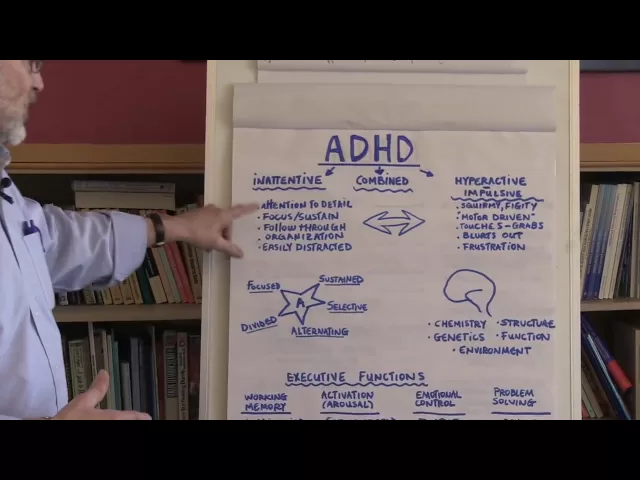
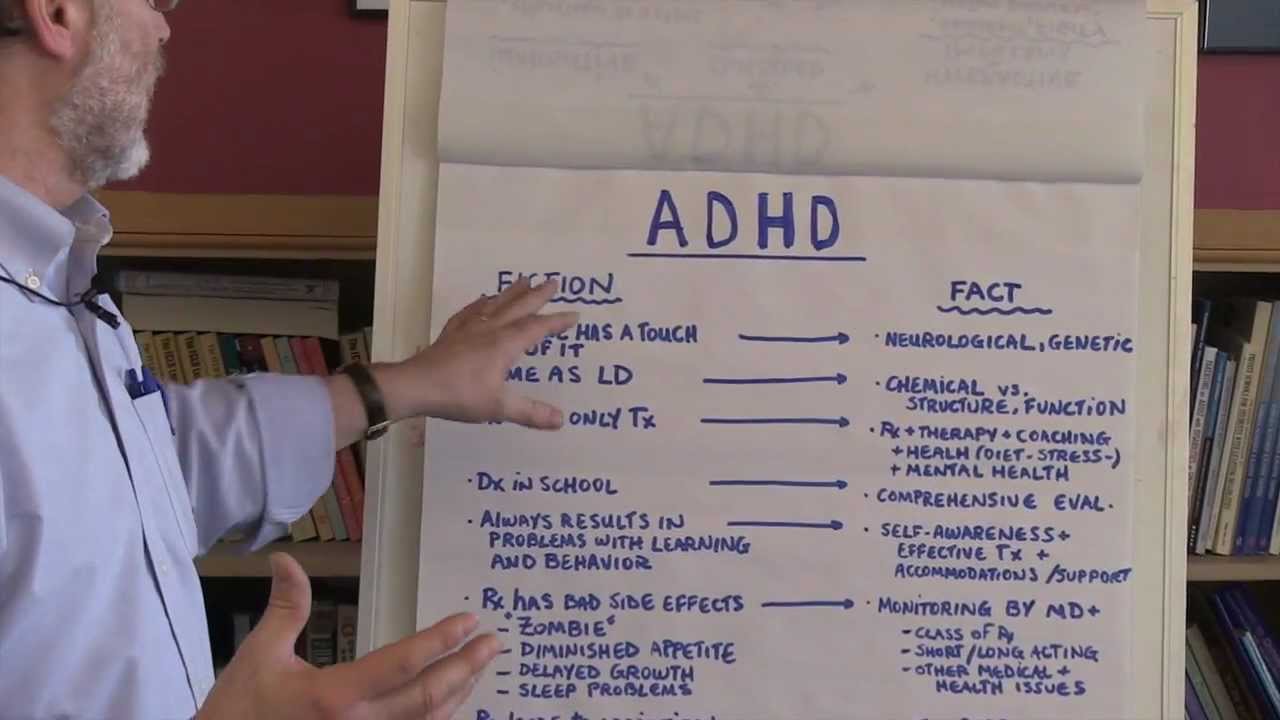
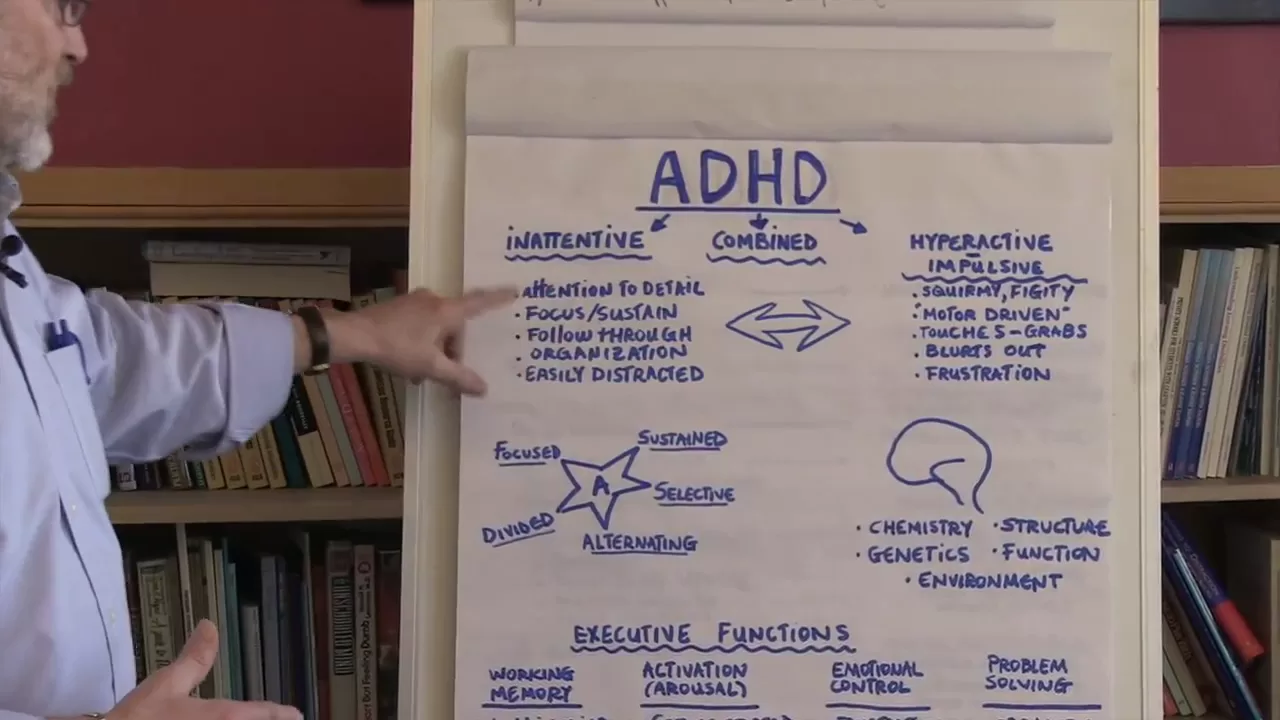
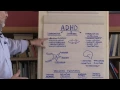
hi I'm Dr Sheldon harwitz here at the national Center for learning disabilities welcome to the next of our ask the expert Series today what I'd like to do is present an overview of ADHD attention deficit hyperactivity disorder ADHD is not a learning disability but it often co-occurs with children who have learning disabilities let's talk just for a moment about the range of possible types of attention deficit hyperactivity disorder that you see in children adolescence and adults it can take the form of an inattentive type it can be hyperactive and impulsive in type or it can
be a combined type of ADHD so let's look at each of those individually just for a second the inattentive ADHD type often manifests itself in a child having difficulty paying attention sometimes they pay attention but the focus is off or they can't sustain attention for very long they have difficulty following through with activities they're not particularly well organized and they're easily distracted that's really the Hallmark of ADHD inattentive type for those individ idual who have ADHD hyperactivity or hyperactive and impulsive type very often you see they're the squirmy kids who are wiggling in their seats
and playing with their pencils and they have a hard time sitting still it's almost like they have this motor inside of them and they're driven by this low level of activity pretty much all the time many of these children have difficulty keeping themselves from grabbing something or holding something or touching something they'll often blurt out responses in class they don't wait their turn and often they have difficulty with frustration tolerance they um get frustrated really easily and it's hard for them to recoup very often although ADHD May manifest itself in in attention or in hyperactivity
and impulsivity very often individuals with ADHD have combined aspects of both so it's not as though you might just have one or the other but there are features of each that are sometimes seen individuals with have who have ADHD now let's talk for a second about attention and as you can see attention isn't one thing when you pay attention to something you could be focused on that particular thing so focused attention might be one aspect of attention that's gone ay in ADHD sustained attention being able to hold on to that focus and attention while you're
doing other things or while you're completing a task selective attention knowing what to pay attention to as opposed to paying attention to everything that comes your way divided attention being able to pay attention to more than one thing at one time and then alternating attention being able to look at something look at something else and then come back these are all manifestations of attention that may be impaired in individuals who have ADHD or some combination of those different types of attention that are Hallmarks of ADHD when we talk about ADHD we talk about it happening
in the brain and we understand that there's a chemical or a neurobiological neuro um transmitter component to ADHD there may be some genetic aspect to it as well ADHD just like LD tends to run in families there are some structural or funural aspects of the brain that may be different and science has begun to understand more about what regions of the brain do when they process information and how it responds to some some of that chemistry and environmental issues not so much pollutants in the environment but environmental triggers things that can trigger ADHD or inattentive
behaviors are part of how the brain impact in ADHD one of the things that we absolutely do know is that the behavioral consequences of ADHD manifest themselves in what we refer to as executive functions so what are some of those executive functions that are Hallmarks of ADHD well working memory is one activation or arousal is another emotional control is another and then problem solving and let's just talk those through and you'll see when you think about ADHD these are the kinds of things that you look for in individuals so working memory being able to hold
something in your memory in your mind long enough to do something with it or access to stored information information that you've learned before but need to retrieve it somehow that's often problematic for individuals with ADHD activation or arousal is another aspect very common particularly in hyperactive impulsive type individuals with ADHD so getting started they often are procrastinators or they don't know how to get started they might start doing something but they may start in the wrong place or in the wrong way they may be over aroused or under aroused um so for example they may
be ready to jump or they may be inattentive and need to be prompted to jump to start an activity they may be inconsistent they may be able to do something sometimes but need prompting and urging and modeling other times it's often difficulty for individuals with ADHD to sustain the effort needed to complete tasks and they often don't always complete those tasks in ways um that follow instructions or start it at one place and end at a desired outcome and they often very often have difficulty listening and waiting taking turns in terms of emotional control individuals
with ADHD um often will have low frustration tolerance um they just can't tolerate waiting they just need to jump in they need to talk they need to share they need to you know be right there in the mix um they may have difficulty reading social cues um they have difficulty transitioning between one activity and another often mood swings are seen and there are other mental health issues that impact upon ADHD as well and turn taking um is often very difficult for them in terms of problem solving individuals with ADHD have difficulty organizing themselves to solve
problems they're often overwhelmed by all of the detail that they need to consider or they pick the wrong detail so they it's difficult for them to organize around the task they have difficulty self-checking or self- evaluating where they are they don't often manage time well and while they're problem solving they often have difficulty with rep repair strategies knowing what to do when things seem not to be going right for more information about ADHD and about learning disabilities and other Co curring disorders please visit the ld.org website thanks for joining