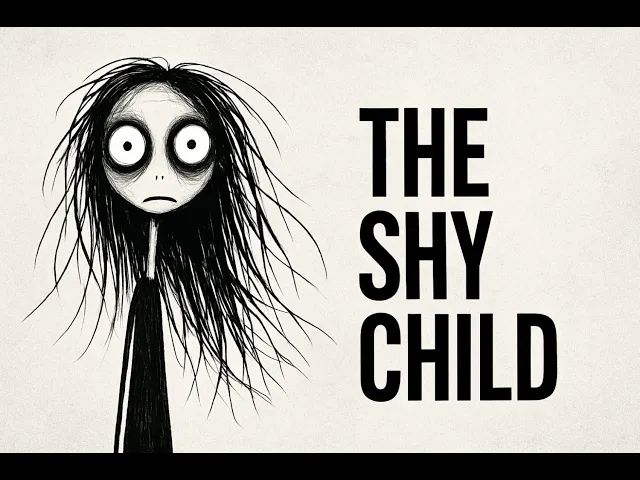
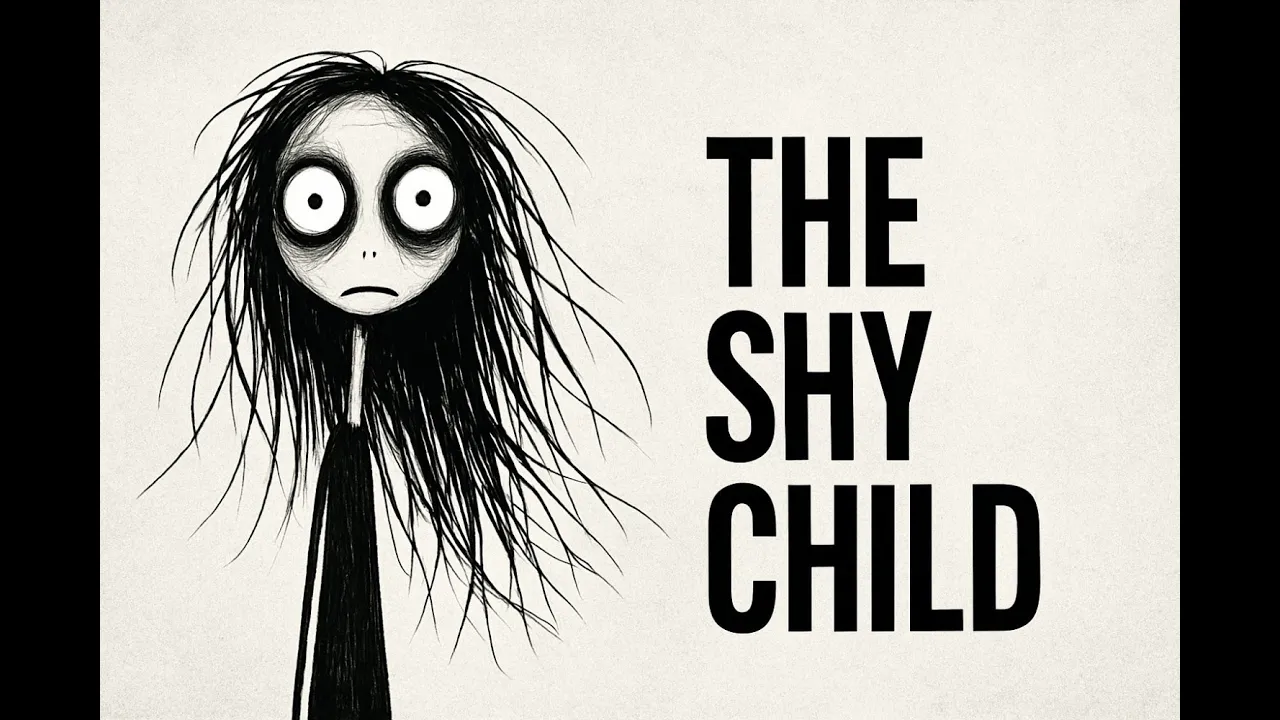
Imagine a little child standing on the edge of a playground. The other kids are running, laughing, their voices filling the air with a kind of chaotic joy. But this child stands quietly, almost frozen, clutching the straps of their backpack, watching from a distance.
They want to join in. They dream of laughing with the others, of being part of the group. But something invisible holds them back, like an invisible wall that only they can see.
Their heart beats a little faster. Their palms grow warm. And though their body wants to move, their voice whispers, "Stay still.
Don't risk it. " That is the quiet world of a shy child. A world not defined by a lack of desire to connect, but by a deep inner storm that makes connection feel heavy, even impossible.
And maybe, as I describe this, you see yourself Before we jump into the depth of this topic, I want to ask you something. Share in the comments where you are watching from and tell me about your personal struggles with shyness, either from your own childhood or what you've observed in others. Now, put your device on full screen and stay with me till the end because there is so much to uncover here and I promise you will walk away seeing shyness in a completely new light.
The psychology of a shy child is not a story of weakness. It's a story of hidden strength, of invisible battles, and of a sensitivity that is often overlooked in a noisy world. To understand it, we need to first understand what shyness actually is.
Shyness is not simply a personality trait. Nor is it a permanent label. At its core, shyness is a psychological and physiological response to social situations.
Imagine the nervous system like a dial. Some children have theirs turned up a little higher. When faced with uncertainty, when eyes are watching them, when words are about to be spoken, their nervous system lights up.
Their body reacts as if the situation is dangerous. even though logically they know it isn't. And yet the body doesn't always listen to logic.
This is why shy children often describe their experience not just in emotions but in sensations. Heart racing, cheeks flushing, a lump in the throat, a heaviness in the chest. But here's the paradox.
Shy children often crave connection just as much, sometimes even more, than their outgoing peers. They want to belong. They want to speak.
They want to laugh freely, but in that moment of possibility, the fear of judgment, the fear of not being enough rises higher than the desire itself. It's not that they don't want to step forward. It's that their psychology makes the step feel 10 times heavier.
And this is where the philosophical layer emerges. Because isn't it interesting that the very thing shy children long for, connection, is also the very thing that feels most threatening. It's as if life sets up a paradox for them to wrestle with.
The heart pulls them one way, the fear pulls them another. That tension shapes them in ways that can last for years. Psychologists have studied shyness for decades, and one of the most fascinating discoveries is that it often has roots in both nature and nurture.
Some children are born with a temperament that is more sensitive, their nervous systems more finely tuned to stimulation. Others develop shyness through experiences. Maybe they were teased.
Maybe they felt overlooked. Maybe they grew up in environments where speaking up was unsafe. But in both cases, shyness is rarely random.
It is the result of a child's mind and body working together in a very particular way. Now, here's something most people don't realize. Shyness and introversion are not the same thing.
Introversion is about where you get your energy. An introvert might prefer solitude, might recharge by being alone, but that doesn't mean they feel anxious in social settings. Shyness, on the other hand, is about fear.
A shy extrovert is absolutely possible. Imagine a child who loves people, who feels energized by social interactions, but who is too scared to start them. They might sit silently in class, not because they don't care, but because the spotlight feels unbearable.
And yet inside they are bursting with thoughts and feelings they desperately wish they could share. This is where the psychology of self-image begins to form. Childhood is when we first start to define who we are in relation to others.
For a shy child, those definitions can become tangled. They might start believing I'm the quiet one. I'm the one nobody notices.
I'm the one who doesn't fit. And here lies the real danger. Not in the shyness itself, but in the story the child begins to tell about themselves.
But there's also something beautiful here. If you look closely, shy children often become keen observers of the world. While others rush into conversations, they listen.
While others speak quickly, they notice the pauses, the body language, the subtleties. Their silence, though born from fear, also gives them the gift of perception. They learn to read the room.
They sense emotions deeply. Many grow up to be artists, writers, thinkers, people who turn their inward depth into something meaningful for the world. And yet, that doesn't erase the struggle of childhood.
Imagine a classroom where participation is rewarded. Imagine a teacher who praises the child, who raises their hand, who dominates the discussion. The shy child, though filled with thoughts, remains quiet.
Slowly, they begin to feel invisible. Not because they have nothing to say, but because their fear silences them. Over time, this can shape their academic self-esteem.
They may start to underperform, not due to lack of ability, but because their voice remains hidden. Now, pause with me here. Have you ever wondered how many brilliant ideas were never spoken?
because the child who thought of them was too shy to raise their hand. How many friendships never formed because the shy child never found the courage to say hello. It's heartbreaking but also inspiring because it reminds us of the potential that still lives within them, waiting for the right conditions to emerge.
Science gives us some clues here. Studies show that shyness often lessens when children feel safe, supported, and understood. environments that pressure them to be louder, bolder, or more outgoing often backfire, making them retreat further inward.
But when adults, parents, teachers, mentors acknowledge their struggle with empathy. When they create gentle invitations instead of harsh demands, something begins to shift. The child feels seen and slowly, step by step, the invisible wall begins to thin.
But let's go deeper. Why does shyness matter so much beyond the classroom and the playground? Because shyness shapes identity.
A shy child often grows up navigating life with an acute awareness of others opinions. This can make them incredibly empathetic, able to imagine how others feel. But it can also make them overly self-conscious, trapped in a cycle of self-monitoring.
They replay conversations in their minds. They analyze how they were perceived. They worry about mistakes nobody else even noticed.
And here lies one of the greatest psychological truths about shyness. It's not just about avoiding others. It's about avoiding the fear of not being accepted.
Deep down, shy children are searching for belonging. They are waiting for the world to tell them, "You are safe here. You are enough as you are, and until they hear it, they often hold back.
" But let me ask you this. What if shyness isn't something to be fixed at all? What if it is simply another way of being with its own strengths and shadows?
After all, some of the most thoughtful, creative, and compassionate people in history were shy children once. Their quietness wasn't a flaw. It was the soil in which their depth was planted.
Still, we must be honest. Shyness, left unacknowledged, can harden into patterns that follow a child into adulthood. They may struggle in job interviews, in relationships, in pursuing opportunities, not because they lack talent or desire, but because the old fear still whispers, "Stay quiet.
Don't risk it. " And so, understanding the psychology of a shy child isn't just about helping them in the moment. It's about shaping the path of their future.
This is why empathy matters. This is why awareness matters. Because when we see a shy child, we're not just seeing a quiet child.
We are seeing a heart that beats loudly in silence, a mind that spins with thoughts, a soul that longs for connection. And when we recognize this, we begin to create a world where their voice can emerge. And maybe, just maybe, the child who once stood alone at the playground will one day stand before others, not as the loudest voice in the room, but as the one who speaks with depth, authenticity, and truth.
Because sometimes it is the quiet ones who have the most powerful things to say. The shy child grows up carrying both shadows and gifts. And it's here in the in between that their psychology becomes so fascinating because what begins as a fear of exposure often transforms into a deep search for meaning.
A shy child learns early that words carry weight. They know what it feels like to want to speak, but to remain silent. And so when they do speak, it is often with intention.
Their words are not scattered, but chosen. Their pauses are not emptiness, but space. Psychologists often describe shyness as a form of social anxiety on a spectrum.
Not a disorder in itself, but a heightened sensitivity to judgment. This sensitivity, however, is not inherently bad. In fact, it's a double-edged sword.
On one side, it can hold a child back, making them hesitant to join activities, friendships, or opportunities. But on the other, it makes them attuned to details that others overlook. They notice kindness.
They notice cruelty. They sense the shifts in energy between people. And this awareness often becomes a kind of compass for how they move through life.
But let's pause and ask something deeper. Why do some shy children eventually blossom while others retreat further inward? The answer lies not in the child alone, but in the environment that surrounds them.
A child who feels gently encouraged, who feels safe to take small risks, begins to stretch. They might whisper and answer in class one day, the next day they raise their hand. Then one day they make a friend.
Each act builds a foundation of confidence stone by stone. But when a shy child is mocked, pressured, or shamed, the opposite happens. They retreat further.
Their inner voice says, "See, I knew I shouldn't have spoken. I knew it was dangerous to try. " And so, the world of shyness becomes self-reinforcing.
It is a loop that either tightens or expands depending on how the child is met. And isn't that true of all of us in some way? When we are met with kindness, we expand.
When we are met with judgment, we shrink. The shy child simply feels this more intensely. Their inner landscape is delicate, like a small flame that can either be nurtured into warmth or extinguished by a careless gust of wind.
Now, here is something powerful. Many shy children grow into adults who describe themselves as empathetic leaders, thoughtful creators, or deep friends. Why?
because their early experiences of struggle forced them to pay attention to what it means to feel unseen. And so as they grow, they make it their mission to ensure others do not feel the same way. The very thing that once held them back becomes the source of their compassion.
Think about that for a moment. The child who once stood in silence on the playground may become the adult who notices when someone else is sitting alone. The child who feared raising their hand in class may become the adult who gives someone else the courage to speak.
Shyness then is not a weakness to outgrow. It is a seed that when nurtured can bloom into profound empathy. But of course it is not always an easy journey.
Shy children often carry lingering habits into adulthood. They may overthink conversations, hesitate to take opportunities or struggle with confidence in professional settings. Yet, here is where psychology offers hope.
The human brain is remarkably adaptable. With gentle practice, with supportive relationships, with experiences of safety, even deeply ingrained patterns can shift. One of the most fascinating studies in developmental psychology shows that children who were identified as inhibited or shy at a very young age often followed different life paths depending on their environments.
Some became anxious adults, hesitant and self-critical. Others grew into confident, capable individuals who simply carried a natural quietness. The difference wasn't in the temperament they were born with.
It was in how the world responded to them. And this should remind us of something very important. Shyness is not destiny.
It is a chapter, not the whole book. The shy child has within them the potential for courage, connection, and growth. Sometimes that growth is slow, sometimes it's quiet, but it is always possible.
Philosophically, there is something profoundly human about this. Aren't we all in some way standing at the edge of a playground, wishing to step in, but fearing the judgment of others? Shyness simply makes that universal human experience more visible.
It reveals what many of us hide, the longing to belong, mixed with the fear of rejection. And when we see the shy child, we see a mirror of our own struggles with vulnerability. So what can be done?
How can parents, teachers, or even peers support a shy child? The answer is simpler than you might think. Not by forcing them to be loud, not by shaming them for their quietness, but by creating spaces where they feel safe enough to try.
Encouragement works best in small doses. An invitation to speak, not a demand. a gentle question, not a spotlight.
Over time, these moments accumulate and the child begins to trust not only the world but themselves. And for those who grew up shy and are now adults, the journey continues. It means learning to embrace the quiet strength within you rather than constantly wishing you were different.
It means recognizing that shyness is not a prison, but a lens, a way of seeing the world more carefully, more thoughtfully. And when you learn to see it not as a curse, but as a form of depth, you begin to reclaim the very parts of yourself that once felt like burdens. Let me leave you with this image.
Imagine a child holding a small candle. The flame flickers, fragile, vulnerable to the winds around it. That child is the shy child.
But with time, with care, with protection, that flame can grow. It can warm a room, it can guide others in the dark. It was never about the size of the flame.
It was always about whether it was given the chance to burn. So if you are shy or if you love someone who is, remember this. Silence is not emptiness.
Quietness is not weakness. The psychology of a shy child is not the psychology of someone destined to be small. It is the psychology of someone destined to see the world with unique clarity, to feel deeply, and to give in ways that louder voices sometimes cannot.
And perhaps the most beautiful truth is this. Shyness often softens with time. But the sensitivity remains.
And that sensitivity when embraced is not a limitation but a gift. It is the gift of empathy, of listening, of depth. It is the gift of seeing the invisible struggles of others because you have lived them yourself.
So the next time you notice a shy child or the shy child still living inside you, don't see silence as absence. See it as potential.