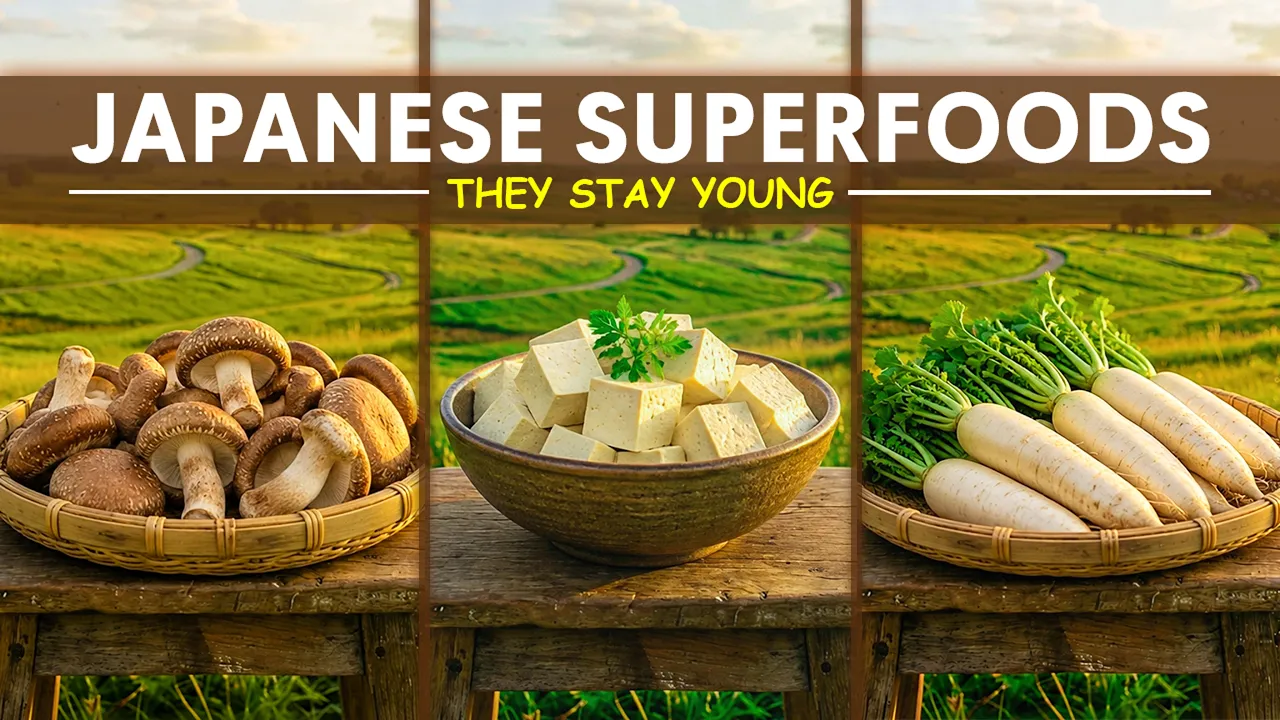
What if I told you that some of the longest living people on Earth are quietly [music] eating the same humble foods their grandparents ate and that many of these foods are sitting on grocery shelves right here in the United States, completely overlooked? Most people have no idea. They spend fortunes on supplements and miracle products while the real secrets [music] have been simmering in ordinary kitchens for centuries.
And today, I am going to show [music] you 20 Japanese superfoods that will change the way you think about staying young forever. Stick around because food seven is a giant white root most Americans push to the side of their plate and food 15 is a humble bean paste that scientists are now studying for reasons our ancestors [music] never imagined. Make sure you hit that subscribe button and give this video a like because here at the Homestead [music] Gardener, we post new videos every week about growing, eating, [music] and living better through plants.
You do not want to miss what is coming. So, let us get into it. Here are 20 Japanese [music] superfoods that people eat to stay young, ranked from mild and familiar to powerful [music] and surprising.
Food one, green tea, the everyday drink that may hold a quiet secret to aging well. Let us start with something you have probably had a hundred times without thinking twice. [music] In Japan, green tea is not just a drink, it is a daily ritual, poured in the morning, sipped [music] through the afternoon, and shared with guests as a sign of welcome.
In some households, the day simply does not begin until the first cup is poured. [music] But here is what most people miss. Green tea is rich in natural compounds called catechins, especially one with a long name that scientists shorten to EGCG.
Research suggests these [music] compounds act as antioxidants, helping the body deal with the kind of cellular stress that builds [music] up over a lifetime. For centuries, monks drank it to stay alert and calm during long hours of meditation. [music] And entire schools of philosophy grew up around the simple act of preparing and serving a cup.
Today, modern researchers are studying it for its possible role in heart health and healthy aging. Think of it as a [music] gentle daily habit rather than a magic potion. A warm cup, unsweetened, is how most Japanese people enjoy it.
Never drowned in sugar or cream. >> [music] >> This is not just a beverage. It is one of the oldest wellness rituals still alive today, hiding in plain sight in nearly every kitchen.
Food two, seaweed, the ocean vegetable that built island health. Now, imagine a vegetable that grows in the sea, [music] costs almost nothing, and has fed an entire nation for thousands of years. [music] That is seaweed.
And in Japan, it comes in many forms, like nori, the dark [music] sheets wrapped around sushi, and wakame, the soft green ribbons floating in miso soup. Here is why that matters. Seaweed is one of the richest natural sources of iodine, a mineral the body needs to keep the thyroid [music] working properly, which in turn helps regulate energy and metabolism.
It also delivers fiber, minerals, and [music] unique compounds found almost nowhere else on land. This is why coastal Japanese communities [music] have valued it for generations, long before anyone knew what iodine was or could even [music] name it. Fisherman and farmers gathered it from the rocks at low tide, dried it in the sun, [music] and stored it for the leaner months.
A word of care though, because seaweed is so rich in iodine, it is best enjoyed in modest everyday amounts rather than huge servings, especially for those with thyroid concerns. This is not just [music] seagrass. It is a forgotten garden beneath the waves that helped shape one of the healthiest [music] diets on Earth.
Food three, natto, the sticky breakfast most foreigners fear. Here is a food that divides [music] every dinner table. Natto is fermented soybeans and it is famous for being sticky, stringy, and powerfully pungent.
Many visitors [music] to Japan take one bite and never try it again, while devoted fans eat it every [music] single morning. But here is what most people miss. Natto is a traditional breakfast in many [music] parts of Japan, especially the eastern regions, and it has been eaten for hundreds of years.
It is [music] packed with protein and fiber and it contains a compound called vitamin K2, which research [music] is studying for its possible role in supporting bone and heart health. Fermented foods like this also support gut bacteria, which modern science increasingly [music] links to overall well-being. This is where things get interesting.
The very thing that makes natto [music] strange, that sticky fermentation, is exactly what gives it value. Legend says it was discovered by accident >> [music] >> when soybeans wrapped in straw fermented during a journey and people found the result oddly delicious. A small [music] bowl over warm rice, often with a little mustard and green onion, is the classic way [music] to eat it.
This is not just an odd breakfast. It is living proof [music] that the foods we find strange are sometimes the ones our bodies thank us for. Food four, miso, the fermented [music] paste at the heart of every meal.
If you have ever had miso soup, you have already tasted one of Japan's oldest superfoods. Miso [music] is a thick paste made from fermented soybeans, salt, and a special culture called koji. Here is why that matters.
[music] The fermentation process can take months or even years and it creates a deep, savory flavor along with beneficial microorganisms. For centuries, miso was a way to preserve protein through long winters before refrigeration existed [music] and families would keep great barrels of it aging quietly in cool storerooms. This is why our ancestors valued it so highly.
Today, researchers are interested in fermented foods like miso for their possible role in digestion and gut health. One gentle note, miso is high in salt, so those watching their sodium intake should enjoy it mindfully. The traditional way is to stir it into warm broth, never boiling, to protect [music] those living cultures that took so long to develop.
Each region of Japan even has its own style from light and sweet to dark and intensely savory. This is not just a soup base. It is a centuries-old preservation [music] method that quietly became a daily source of nourishment.
Food five, tofu, the humble protein that has fed millions. Now, let us talk about a food so plain that most Americans overlook it completely. Tofu is made from soybeans pressed into soft white blocks and >> [music] >> it has been a staple across East Asia for over a thousand years.
But here is what most people miss. Tofu is one of the most efficient plant proteins on [music] Earth, delivering all nine essential amino acids while staying low in saturated fat. In Buddhist temple cooking, it became a centerpiece of meals that avoided meat entirely and monks ate it for both simplicity and strength.
Whole cuisines were built around a single pale block. Here is why that matters for staying young. Replacing some heavier meats with plant proteins is something many heart-healthy diets encourage.
Tofu also absorbs whatever flavor you cook it with, making it endlessly versatile from silky and [music] soft in soups to firm and golden in a hot pan. This is why modern cooks [music] are rediscovering it. This is not just a bland white block.
It is a quiet workhorse that has nourished entire civilizations. Food six, shiitake mushrooms, the forest treasure once [music] given as a royal gift. Deep in the mountain forests of Japan grows a mushroom so prized [music] that it was once presented to rulers as a gift.
That is the shiitake and it has been cultivated on logs for many centuries. [music] Here is why that matters. Shiitake mushrooms are rich in B vitamins, minerals and natural compounds that researchers are studying for their possible effects on the immune system.
In traditional East Asian medicine, [music] they were valued for promoting vitality and long life. This is where [music] things get interesting. When dried in the sun, shiitake mushrooms develop even more vitamin D [music] and a deeper smokier flavor that transforms any broth.
Farmers in the old days would cut notches into fallen oak logs and wait patiently for the mushrooms [music] to appear, a method passed down through families. Modern gardeners are even growing them at home on oak logs just as farmers did generations ago. They store beautifully when dried, lasting through the seasons without any refrigeration.
[music] This is not just a mushroom. It is a piece of forest wisdom that turned the forest floor into medicine and food at once. Food seven, daikon [music] radish, the giant white root hiding in plain sight.
Here is the giant [music] white root I promised you and it is far bigger than you might expect. The daikon is a long white radish that can grow [music] as big as your forearm. And in Japan, it appears in soups, pickles and grated as a fresh garnish.
But here is what most people miss. Daikon is low in calories yet rich [music] in vitamin C and fiber and it contains natural enzymes traditionally believed to aid digestion which is why it is so often served alongside rich or fried foods. For generations, Japanese families preserve daikon by drying or pickling it, [music] turning a simple root into a year-round staple that could survive long winters.
This is why our ancestors valued it. It is easy to grow, fast to mature, [music] and thrives in cool weather, making it a gardener's dream even in modest plots. Grated fresh, it adds [music] a bright, peppery bite that cuts through heavy meals.
This is not just a radish. It is a humble root that quietly supports one of the world's healthiest [music] cuisines. Food eight, edamame.
The young soybeans served in their pods. You have probably seen [music] these bright green pods at a restaurant, sprinkled with salt, waiting to be popped open. Those are edamame, young soybeans harvested before [music] they fully harden.
Here is why that matters. Edamame is a complete plant protein, rich in fiber, folate, and minerals, all wrapped in a fun, hands-on snack. In Japan, they have been enjoyed for centuries, often boiled in salted water and eaten fresh in summer.
A beloved companion to a cold drink on a warm evening. This is [music] where things get interesting. Because they are picked young, edamame are tender and naturally sweet, [music] making them one of the easiest ways to enjoy soy without any of the strong flavors that put some people off.
They are also surprisingly easy to grow in a backyard garden, ready to harvest in a single season. A snack that is both satisfying [music] and nourishing is rare, and this one has delighted families for generations. This is not just a bar snack.
It is a centuries-old summer tradition that turned a humble bean into pure enjoyment. If you are starting to see the pattern here, [music] if you are realizing that some of the most powerful foods are hiding in plain sight, foods your own grocery store probably stocks right now, do me a favor, hit that like button right now. It helps this video reach more people who love plants, gardening, natural living, and old wisdom that still works today.
And if you have not subscribed yet, click that subscribe button and ring the bell. We are building a community here at the Homestead Gardener, and I would love to have you as part of it. Food nine, sweet potato, the island root that may hold a longevity secret.
On the island of Okinawa, home to some of the longest living people [music] in the world, one food once made up a huge part of the daily diet. It was not rice, it was the purple sweet potato. Here is why that matters.
[music] The Okinawan sweet potato is rich in fiber, vitamin A, and antioxidant compounds that [music] give it that striking purple color. For generations, it was the main source of energy on the island, eaten at nearly every meal, baked, steamed, or simmered into countless dishes. Researchers studying Okinawan longevity have pointed to this humble root as one piece of a larger dietary puzzle.
This is why our ancestors valued it. It is filling, naturally sweet, [music] and stores well through long stretches without spoiling, which made it a lifeline in harder times. Gardeners love it because it [music] thrives in warm soil with little fuss, and rewards you with generous harvests.
This is not just a side dish, it is a cornerstone [music] of one of the most studied diets for healthy aging on the planet. Food 10, matcha, the powdered green tea drunk by warriors [music] and monks. We talked about green tea earlier, but matcha deserves its own place because it is green tea taken to another level.
Instead of steeping leaves and throwing them away, matcha [music] is finely ground whole tea leaves whisked into hot water, so you drink the [music] entire leaf. Here is why that matters. Because you consume the whole leaf, matcha delivers a more concentrated [music] dose of those beneficial catechins and antioxidants.
Zen monks drank it to [music] stay calm yet focused during long meditation, and samurai were said to value it before battle for steady nerves. This is where things get interesting. Matcha contains both caffeine and an amino acid called L-theanine, [music] a combination many people describe as calm, steady energy without the jitters.
It is whisked into a frothy bowl in the traditional tea ceremony, a ritual so refined [music] that masters trained for decades to perform it perfectly. That bright green color comes from shading the tea plants before [music] harvest, a careful technique developed over centuries. This is not just a trendy drink, it is a piece of living history in a single bowl.
Food 11, buckwheat noodles, the soba that fed a nation. Picture a steaming bowl of thin brown noodles slurped loudly [music] and proudly across Japan. Those are soba, made from buckwheat.
Here is what most people miss. [music] Despite its name, buckwheat is not wheat at all and it is naturally free of gluten in its pure form. It is rich in fiber, >> [music] >> minerals, and plant compounds that researchers have studied for their possible role in heart health.
For centuries, soba was the everyday food of working people, affordable and filling, sold from humble stalls on busy street corners. This is why our ancestors valued it. On New Year's [music] Eve, the Japanese traditionally eat long soba noodles as a symbol of a long and healthy life, the unbroken strands representing longevity itself.
This is where things get interesting. Buckwheat grows quickly even [music] in poor soil, which made it a reliable crop when other grains failed and famine threatened. [music] It can be enjoyed hot in broth or cold with a dipping sauce on a summer day.
This is not just a noodle, it is a symbol of longevity served in a bowl. Food 12, umeboshi, the sour pickled plum that puckers your face. Here is a food so sour and salty that first-timers often gasp.
Umeboshi are pickled plums and they are one of the oldest preserved foods in Japan. Here is why that matters. For centuries, [music] samurai carried umeboshi as a portable food believed to fight fatigue on long journeys across the country.
[music] They were traditionally used as a folk remedy for an upset stomach and as a natural preservative tucked into rice to keep it fresh in the days before refrigeration. This is [music] where things get interesting. The intense sourness comes from natural acids created during fermentation and the bright [music] red color often comes from a special purple leaf added during pickling.
One gentle note, umeboshi are extremely [music] high in salt, so they are meant to be eaten in tiny amounts. Just one small plum alongside a meal. This is why our ancestors treated them as both food [music] and remedy, never as something to eat by the handful.
This is not just a pickle. It is a tiny burst of tradition that has [music] traveled with the Japanese people for over a thousand years. Food 13, [music] sardines and small fish.
The little fish with big benefits. While much of the world chases large fish, the Japanese have long treasured the small ones. Sardines, mackerel, >> [music] >> and other small oily fish appear constantly in the traditional diet.
Here is why that matters. [music] These small fish are among the richest natural sources of omega-3 fatty acids, which research [music] strongly links to heart and brain health. Because they are eaten whole [music] or nearly whole, they also provide calcium and minerals that larger fillets simply cannot offer.
This is where things get interesting. Small fish sit low on the food chain, which means they tend to accumulate far fewer contaminants than large predator fish. For generations, coastal families dried and preserved them, making protein available [music] all year, even far from the sea.
This is why our ancestors valued them. They are affordable, sustainable, [music] and deeply nourishing, a rare combination in the modern world. This is not [music] just bait fish.
It is one of the smartest protein choices on the planet hiding in a tiny package. Food 14, >> [music] >> konjac. The jiggly food made almost entirely of fiber.
Now, here is one of the strangest [music] foods on this list. Konjac comes from the root of a plant, and it is turned into a wobbly, almost translucent jelly or noodle. Here [music] is what most people miss.
Konjac is made mostly of water and a special [music] soluble fiber called glucomannan, which means it is extremely low in calories, >> [music] >> yet surprisingly filling. For this reason, it has been valued in Japan for centuries as a food that satisfies without weighing you down. [music] Researchers have studied glucomannan fiber for its possible role in supporting healthy digestion and blood sugar [music] already within normal ranges.
One important safety note, because this fiber expands with water, >> [music] >> konjac products should always be eaten with plenty of liquid and chewed well. Never gulp down [music] in large pieces. This is where things get interesting.
It takes on any flavor you cook it with, soaking up sauces and broths like a sponge. Traditional cooks turned it [music] into noodles, blocks, and even little knots for simmer dishes. This is not just a jelly.
It is a clever, low-calorie tradition centuries ahead of its time. Food 15, miso-glazed vegetables, the humble bean paste transforming everyday plants. Here is the bean paste creation I promised you earlier.
>> [music] >> While we covered miso soup, the Japanese also use that same fermented paste to glaze and [music] roast vegetables, turning ordinary plants into something extraordinary. Here is why that matters. By brushing miso onto eggplant, squash, or root [music] vegetables and roasting them, you combine the gut-friendly benefits of fermentation with the fiber and nutrients of fresh vegetables.
This is where things get interesting. The fermentation in miso creates deep, savory umami flavor that makes vegetables crave-worthy, encouraging people to eat more [music] plants naturally and without any forcing. For centuries, this technique stretched precious ingredients and reduced waste, a value at the heart of traditional Japanese cooking where nothing was thrown away carelessly.
[music] This is why modern cooks are rediscovering it. A little miso goes a long way both in flavor and in nourishment and even [music] the plainest vegetable becomes something you actually look forward to eating. This is not just [music] a glaze, it is a centuries-old trick for making healthy food irresistible.
Food 16, hijiki and sea vegetables, the mineral-rich treasures of the tide. Beyond the seaweed we already discussed, [music] the Japanese harvest a whole family of sea vegetables and hijiki [music] is one of the most traditional. These dark, tiny strands are simmered into side dishes across the country.
Here is why that matters. Sea vegetables like hijiki [music] are rich in minerals such as calcium, magnesium, and iron along with fiber, all from the nutrient-dense waters of the ocean. [music] For coastal communities, they were a free and abundant source of nourishment for thousands of [music] years, gathered from the rocks and dried for storage.
One important safety note, some sea vegetables, including [music] hijiki, can naturally accumulate trace elements. So, they are best enjoyed occasionally and in modest amounts rather than daily in large quantities. [music] This is why tradition treated them as a side dish, never the main event, served in small portions alongside rice and vegetables.
This is where things get interesting. [music] The wisdom of moderation was built right into the cuisine long before modern science could explain [music] why. This is not just ocean weed, it is a mineral treasure chest that coastal families learned to harvest [music] with wisdom and care.
Food 17, yuzu, the fragrant citrus that perfumes winter. Imagine a citrus fruit so aromatic that people add it to their bath water. That is yuzu, a tart, fragrant fruit that looks like a small, bumpy [music] lemon.
Here is why that matters. Yuzu is exceptionally rich in vitamin C, and like other citrus, it provides antioxidant compounds that [music] support overall health. This is where things get interesting.
On the winter solstice, [music] there is a beloved Japanese tradition of floating whole yuzu in a hot bath, believed to warm the body and lift the spirit through the cold months. The fragrance alone is said to soothe the mind after a long day. In the kitchen, [music] its juice and zest brighten sauces, teas, and dressings with a flavor somewhere between lemon, lime, and grapefruit, more perfume than ordinary citrus.
This is why our ancestors valued it for both wellness and joy, [music] treating it as a gift of the season. The tree is hardy and can even handle cooler climates than most citrus, [music] which has made it a favorite among adventurous gardeners. This is not just a lemon's cousin.
It is a fragrant celebration of the seasons. Food 18: Adzuki Beans, the little red bean of celebration. Here is a small red bean that shows up at nearly every Japanese celebration.
The adzuki bean is often cooked with rice or sweetened into a paste for traditional desserts. Here [music] is why that matters. Adzuki beans are rich in plant protein, fiber, and minerals, and like other beans, they release their energy slowly, helping you feel full and steady through the day.
For centuries, [music] their red color was considered lucky, so they appeared at festivals, weddings, and the New Year, brightening every important occasion. This is why our ancestors valued them as both food [music] and symbol. This is where things get interesting.
Unlike many sweets, [music] traditional adzuki desserts get much of their substance from the bean itself, [music] making them more nourishing than they appear at first glance. Gardeners find them rewarding to grow, and they store [music] for ages when dried, ready whenever they are needed. This is not just a bean, it is a little red symbol of fortune and nourishment [music] combined.
Food 19, brown rice. The whole grain that nourished the countryside. Long before polished white rice became the fashion, country families across Japan ate their rice whole and brown.
[music] Here is why that matters. Brown rice keeps its outer bran and germ, which [music] means it holds onto fiber, B vitamins, and minerals that white rice loses during polishing. [music] In one traditional form called genmai, it became a foundation of simple, wholesome temple and farmhouse cooking, prized by those [music] who lived close to the land.
This is where things get interesting. Because the whole grain digests more slowly than white rice, it provides steadier, longer-lasting energy through a working day in the fields. For generations, it was considered humble, [music] even poor people's food, while the wealthy preferred their rice gleaming and white, until modern nutrition [music] revealed its quiet value.
This is why modern cooks are rediscovering it. It does take longer to cook, and a good soak beforehand helps soften it into something [music] tender and satisfying. This is not just rice, it is a return to the whole, [music] unpolished wisdom of the countryside.
Food 20, kombu dashi. The savory [music] broth at the soul of Japanese cooking. We end with something that seems almost [music] invisible, yet flavors nearly every Japanese meal.
Kombu dashi is a simple broth made by steeping [music] kelp, a large sea vegetable, in water. Here is why that matters. This gentle [music] broth forms the savory base of countless soups, stews, and simmered dishes, delivering deep umami flavor with almost no calories and very little salt on its own.
[music] It was the discovery of kombu's natural savory compounds that first led scientists to identify umami as a basic taste right alongside sweet, [music] sour, salty, and bitter. For centuries, dashi allowed Japanese cooks to [music] make vegetables and grains taste rich and satisfying without heavy fats or expensive [music] ingredients. This is why our ancestors built their entire cuisine upon it, a quiet foundation holding up everything else.
This is where things [music] get interesting. A pot of dashi takes just minutes and transforms [music] the plainest ingredients into something that tastes like care and tradition. This is not just a broth.
It is the quiet foundation beneath [music] one of the healthiest food cultures in human history. If you made it all the way to the end of this video, you now know something most people completely [music] miss. The secret to staying young in Japan was never a single magic food or expensive supplement.
It was a lifetime of simple, whole, traditional [music] foods eaten in modest amounts, many of them fermented, plant-rich, and pulled from both the garden and the sea. These foods are not just old stories. They are useful, powerful, and worth rediscovering, [music] and most of them are sitting in your grocery store right now waiting for you >> [music] >> to notice them.
So, here is what I want you to do. Smash that like button if this video changed [music] the way you think about food and aging. Drp a comment below and tell me which food surprised you the most.
Are you team green tea, team natto, or team [music] sweet potato? I read every comment and I love hearing from you. And if you have not subscribed [music] to the Homestead Gardener yet, what are you waiting for?
Hit that subscribe button and ring that notification bell so you never miss a video. We are building a community of people who understand that some of the best answers to modern problems are still growing, brewing, sprouting, simmering, or waiting quietly in old wisdom.