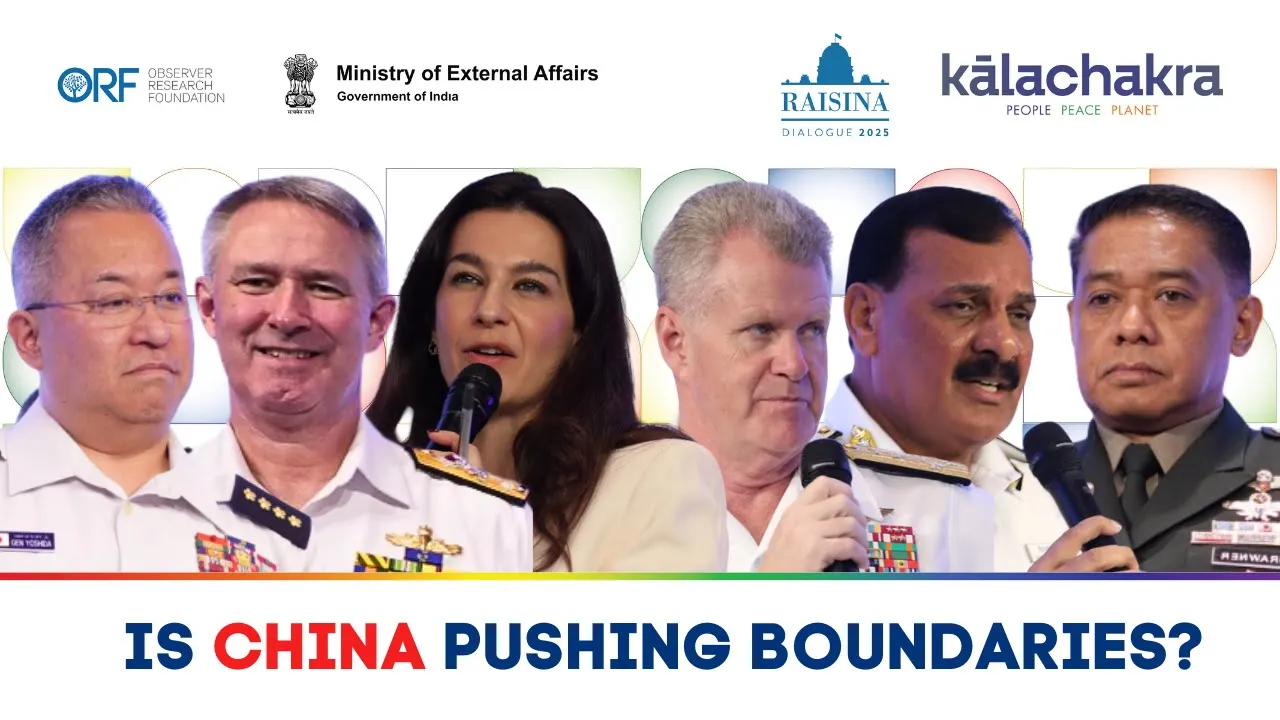
i'm Mara Motherway the vice president of strategy and business development for Loheed Martin Aeronautics it's my pleasure to be here at the 10th annual Racina dialogue to discuss a crucial aspect of global security and prosperity securing trade through red zones before joining the defense industry I served for over 20 years in the United States Navy during that time I was honored to work alongside many representatives from the nations present here in this room today despite the differences we might have held we all acknowledged a simple truth maritime security underpins peace and prosperity for the global
community safeguarding the world's oceans while promoting freedom of navigation is a vital part of ensuring that continued security i felt then and I continue to feel now a sense of responsibility to advocate for these principles you've heard a lot this week about the complex and challenging environment in the Indo-Pacific recent political developments historic tensions critical supply routes and the disruptive role of emerging technology requires us to think differently about how we ensure stability and security for this region today more than 80% of global trade is transported across the world's oceans with millions of ships tankers
and vessels navigating strategic choke points while traveling wellestablished seal lanes additionally over 80% of the world's maritime oil trade and 40% of global trade passes through the Indian Ocean making it a crucial avenue for international commerce the importance of maintaining the flow of trade through these red zones cannot be overstated as it directly impacts the health of the global economy the stability of international relations and the well-being of all nations maritime threats not only endanger the lives of sailors and crew members but also disrupt global trade and commerce with significant economic and societal implications in
addition the increasing use of advanced technologies such as autonomous underwater vehicles cyber capabilities and artificial intelligence are impacting our approach to the maritime domain while these technologies offer many benefits they also raise concerns about the potential for asymmetric threats espionage and disruption of critical infrastructure the very nature of technological advancement means that the broader security environment is evolving more rapidly today than in decades past so what can be done to address these challenges first and foremost any solution should continue to be centered around teaming between like-minded allies and partner nations we are always stronger when
we stand together enabling an integrated and cohesive deterrent capability likewise we must continue working together to build trust confidence and cooperation through maritime diplomacy capacity building and joint exercises this collaboration along with open and honest dialogue helps to reduce tensions prevent miscalculations and promote a more stable and secure security environment while today's focus centers around maritime strategies we can appreciate how this topic is interwoven across land air space and cyber domains those who would seek to threaten peace diminish mutual prosperity and challenge territorial integrity will continue to do so across all domains we must be
prepared to meet the moment by working together through increased interoperability and information sharing we can deliver advanced capabilities faster strengthen our respective security postures in the theater synchronize activities across domains and improve trust so what does it really take to put this into practice it means accelerating the adoption and insertion of 21st century digital technologies into today's security architectures that we embrace a standardsbased modular open architecture approach to enable partners and allies defense companies suppliers and startups alike to increase interoperability across all our efforts it means investing in crucial maritime domain awareness capabilities including surveillance
monitoring information sharing to ideally anticipate threats but when we cannot we must be able to quickly detect and respond to those threats while promoting a more collaborative approach to maritime security it means continuing to find areas for mutual understanding and cooperation recognizing that peace and prosperity is always more sustainable when we work together to address our shared challenges in general securing trade through red zones is a collective responsibility requiring the cooperation and commitment of nations international organizations and civil society a comprehensive approach is the only way to address our shared challenges while promoting a more
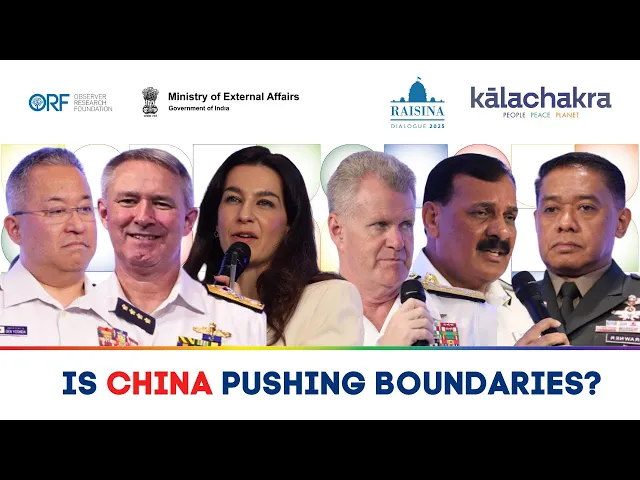
stable secure and sustainable maritime environment at the end of the day we all have the same goal to ensure security stability and prosperity across the Indopacific region i look forward to hearing the distinguished panelists thoughts and the discussion that follows thank you [Laughter] thank you so much uh for for joining us for this panel admiral Paparo I'll let you um pour your water but I'll um begin uh with you i'd like to begin by asking about 2027 this is the year that Xiinping uh has told his military to be ready to take Taiwan uh by
force how important is this date um in reality and and has he really set this as a deadline thank you Yalda can can you Thanks very much well this is a very important point just because it's a matter of open source is that uh is that the general secretary of the communist party uh at the people's republic of China has set this as a as a set of goals and uh and uh the people's liberation army has made good progress towards that it's not a sell by date in the sense that it's not uh the
date on which uh they have decided that they're going to execute a certain operation it is a stretch goal for the for the people's liberation army to be ready it does not mean that before that date they wouldn't choose to execute such an operation it doesn't mean that after that date uh they that they would execute such an operation the s as we approach that date it decreases in its relevance you know on January 2nd 2027 nothing has changed from that date it'll be a set of conditions that will decide whether or not uh the
whether or not uh China has decided to embark on aggression and that will depend on the political situation it will depend on their own set of military capabilities and it will depend depend on what they believe can be gained by aggression uh against what they believe uh the risks of aggression are and so that's why it's uh very important that uh every nation uh that believes that the matter should not be settled by force maintain a strong deterrent posture now uh every state has a policy on the matter and our policies are unchanged we remain
concerned of the militarization across the Taiwan straight we shouldn't put so much emphasis on 2027 that uh that we that that uh we in turn uh have placed an emotional state on it because it will be a conditions base it's an important date as we watch their progress uh but um the simple fact remains is that uh is that it will depend on the political condition it will depend on their own readiness and it will depend on the deterrent value of those that want to that those that uh believe that uh the matter should not
be should not be settled by force and I think that's the uh that is the policy of um of many of the states of the western pacific and in fact I'll also say that that the uh people's republic of China itself has affirmed that the matter should be resolved peacefully itself the United States's policy is that the matter of the Taiwan Strait should be resolved peacefully and we maintain a deterrent capability across those lines as well admiral if they were to make a move on Taiwan what would it look like would it be a from
your assessment a blockade a full-scale invasion it could be anything across that spectrum and accordingly in accordance with the Taiwan Relations Act of 1979 which is a matter of law for the United States of America that directs the nation and the United States Indo-Pacific Command that the United States shall maintain the capacity to resist any resort to force that jeopardizes the social political and economic system of Taiwan that is a matter of public law it's known to everybody here in the room uh and that is the policy that's set forth in the three communicates the
six asurances and the Taiwan relations act and it won't be a secret to the people's republic of China or anyone here in this room it could be a blockade it could be a full invasion and it could be any bit of co of coercion in between are you ready i'm sorry are you ready yes okay uh Vice Admiral um Jones I'm going to bring you into the conversation because your day job basically consists of looking at your platforms seeing what you need so that you too can be ready in the event of something how would
you rate your platforms uh so that is correct my day job is to be a consumer of readiness uh a force employer running the ADF's operations around the globe with a distinct focus on our primary area of military interest which is the northeast Indian Ocean through maritime Southeast Asia and into the southwest Pacific um we are ready on any given day to the extent that uh I I've remarked before is any nation truly ready at any time uh for war and conflict um defense forces have the luxury of focusing on on that and to that
extent uh you know I'm satisfied that we are as ready as we can be right now um and I'm looking forward to the capabilities that the Australian government is procuring over coming years and decades uh and the ability to employ those i want to sort of push you on those capabilities i mean you know we we heard there um from Maya about um being 21st century ready do you think that you are 21st century ready are you investing in the right things and not just the legacy hardware yeah our national defense strategy makes it very
clear that we're pursuing long range strike capabilities uh we're trying to advance uh the pursuit of technologies that can serve to assist us uh across the spectrum of of conflict uh we're definitely on the right pathway it would be disingenuous to suggest that the Australian Defense Force is not in a period of transition uh as we uh have an eye on introducing those capabilities in into service vice Admiral um about 3 weeks ago Chinese military ships were seen about 190 nautical miles from Sydney how worrying was that i know that they were still in international
waters but that is quite far down that they came i'll take a layered approach to this uh and the closest they came to the Australian mainland was 140 nautical miles uh at one point but by and large they were operating on the edge of our exclusive economic zone the Australian interpretation of the exclusive economic zone is that uh it has no bearing on military activities uh so what they were doing was legal uh um I think there were layers to what was going on here the strategic layer is messaging of China's capabilities capacity uh perhaps
intent uh at operational and tactical levels though as I've alluded to what they were doing was what navies around the world do and indeed I want to be able to do that with uh Australia's defense force as well when we are operating and maintaining presence in East Asia and the South China Sea ourselves uh so uh I I advocate for just calm heads uh to prevail here uh they were um variously shadowed and monitored at all times during their transit general uh Bruna I'm going to bring you into the conversation because you're not just dealing
with military ships from China you're dealing with Chinese militia operating in that area could you tell us a little bit more about that because you're constantly being bullied by them threatened by them um just give us a sense of that yes um allow me to give you a short background on the situation in the South China Sea from the perspective of the Philippines in 1995 China built a small structure on Mischief Reef mischief Reef is about uh 250 kilometers away from the Philippines and about 1,270 kilometers away from Hainan uh of China um they they
claimed this to be a fisherman's uh safe haven of warf so we allowed them to do that because they opened it to all fishermen regardless of uh nationality however in 2013 they started to reclaim the mischief reef and today you will see a 2.7 km runway you will see a deep sea port you will see military barracks you will see air defense systems and missile systems and they did not just build on Mischief Reef they started reclaiming Subie Reef they started uh reclaiming Fiery uh um Fiery Cross Reef as well now these three artificial islands
form what uh Admiral Harris Harry Harris uh called the Great Wall of Sand and uh if you look at the map these three uh artificial islands um they sort of uh uh form the boundary of the 9- line that China has uh created in the South China Sea towards the east so the these islands are towards the east and so what does this give uh China it gives them effective control over the whole South China Sea and we know for a fact that um almost uh more than 50% of world trade passes through uh the
South China Sea so their control is really um uh once they take full control of the South China Sea this this would be very harmful for uh world economy so what are they doing uh today um they are trying to do tactics that uh some of us would would uh refer to as grreyzone tactics but in the Philippines we don't call it gray zone we call it according to what these are actually so we call them IAD we came up with the acronym IAD meaning these activities of China are illegal coercive aggressive and deceptive or
destructive so IAT uh and they do this using their uh Chinese coast guard using their Chinese militias ships these are fisher uh these are fishing vessels that are actually manned by uh the PLA Navy um we know this for a fact because in fact I was in one of the ships when uh we were harassed by uh this militia vessels and the Chinese coast guard so um what are what is the Philippines actually doing we have uh three strategies to counter this number one um we try to assert our sovereignty and our sovereign rights in
our exclusive economic zone by maintaining our effective presence in the area second is that we try to create a credible defense posture by modernizing the armed forces of the Philippines and more importantly number three we leverage our alliances and our partnerships with like-minded nations and in fact we have uh created what we call the squad which is composed of four countries the Philippines Japan the United States and Australia and soon uh together with Japan we have been pushing this uh and together with our partners we're we're trying to expand the squad to include India and
probably the uh uh South Korea you just said um that once China takes over the area it will become incredibly difficult is the expectation that they will take over the entirety of the area i mean they are bullying um you know the ships and and those around you've used tribunals in the past and the courts yes yes definitely it is our belief that they will take control of the whole South China Sea in fact they now created a new map wherein uh they extended the 9- line it's actually 10- line now and now they extended
that boundary to include a major island of the Philippines so really uh what we see is that moving forward they're they're going to try to uh really take uh control of the South China Sea can I just ask I mean what does a small nation like yours do to not get squashed in the middle of great power rivalry and great power competition but between the United States and and China but also what China is actively doing there yes so we uh we consider ourselves the tip of the uh of the arrow head we consider ourselves
at the forefront of that uh um competition between the superpowers of uh China and and the US but we as I said we leverage our partnerships because we could not do it alone we are just one small country but because of our location our geo uh political location in the map uh we are really uh forced to uh assert our sovereignty uh despite the the the size and the power of China general Yashida I I'll bring you into the conversation um I know you want to look at sort of the global picture and bring it
down to to the region as well but when we look at the conflict in Ukraine for example what lessons have you taken away from what you've seen in Ukraine thank you so I'll point uh I I'd like to point out the two things in the strategic level one is the uh nuclear strategy the other is the uh DPLK deployment to the Ukraines the first nuclear nuclear strategies and according to my observations Russia the uh making use of the uh and strategic nuclear weapons for coron and might be the limited use for the future i worried
about the uh country the country surrounding Japan uh will change the uh the nuclear strategies the more aggressive ones the this is the first resence runs and the second is the uh DPLK's deployments of the troops to the Ukraines I think DPLK has already crossovers rub Rubicon labor the because the this deployment has made the situation much worse not only the in the uh uh you uh Ukraine front but also the in the uh Korean peninsula so I think the security between the in the Pacific and the uh Euroatlantic is inseparable so that we should
engage the uh engagement to the the respective the regional charities so uh I I'd like to propose the the concept of the global security and in 2006 the first sins of the cabinet proposed the uh concept of the the arc of freedom and prosperity to uh uh confront the to the global terrorism uh that it's formed in the ark of the instability but now this concept has the new meanings to uh to to deal with the uh situation that the uh countries who attempts to the uh change the status quo the these the relationships are
very strong so that we we need the an uh revised the concept of the uh uh of the uh peace and the prosperity the alco peace and prosperity uh general Japan is doubling defense spending can you talk us through your rearmament program yes uh thank you the we have the two tasks the one is uh to improve the the current war fighting capabilities the second is the to prepare for the future uh war fighting the concept and uh uh the the former that we uh the uh increase the effectiveness of the cross domain operation that
we strengthen the uh non-kinetic capabilities such as the cyber and the electromagnetics and also the will strengthen the uh space operation capability in in outer space domains and and also that we introduce the unmanned system the these are the improvement of the current operations on the other hand in the future the uh we should get the decision making speciality in cognitive domain making use of AI or the autonomy system that's a it's a very important uh to prepare for their future which is um where I'd like to bring you in uh Admiral Trapardi because we've
heard about you know preparing for the future you've spoken a lot about uh being future ready when it comes to taking on adversaries how does that look for India uh thank you although first of all uh I thought you have forgotten me so thank you for uh good afternoon uh ladies and gentlemen it is a honor and a pleasure to be here at the 10th edition of Risina dialogue which has uh truly grown from strength to strength in the last decade or so and we as Indians are incredibly proud of it as to what it
has become uh from in the last 10 years uh I have heard with great uh attention all my esteemed co-panelists and uh I've made notes as well as you would seen uh to your uh question per se uh as to how what we're doing to be future ready uh you know we have always as a navy we take pride that uh we are a learning organization and learning organization One of the attributes is that one one has to of course keep your ears and eyes open uh not only at the military domain but also into
geopolitics technology and the tactics as being employed by both state quasi state and non-state actors so we have been doing this for some years and uh the aim is that exactly what you have asked so that we are future ready uh we are not caught unawares we're not uh surprised by the turn of events having said that uh we are also aware that uh for the past several years uh all these three elements which I annunciated the geopolitics technology and tactics in the security domain has been in a state of flux which which have become
faster or accentuated in the last 3 or 4 years and this audience is fully aware of what I'm talking about so uh what we need to do is that as a navy I'm talking as a navy I'm sure as a armed forces of the union as well we have to ensure that uh we are ready to take on all the known challenges we are reasonably prepared for something which is yet to come but uh the importance of what is to come is already seen in a large measure so uh we we have got structures uh
uh in terms of force structuring as to what kind of force structuring we want uh what kind of deployments we want to do uh for deterrence I think one of my co-panelists used that word because we truly believe that a navy which does not deploy does not data and uh we have been uh deploying our ships far and wide we have been working with partners and learning the best practices from them in all domains and uh without exception all my friends who are sitting here we have got multilateral constructs to deal with them to exercise
with them we have got trilateral bilateral constructs we have uh methods by which we can talk to each other exercise with each other so finally I think it will what will come the as future ready as we have seen in last especially in last 3 four us is that we have to have uh self-reliance especially in niche defense technology and uh at any point of time there could be a break in uh supply chains as we have seen in the recent past so there is a greater now I would say importance being given for what
we call in Hindi advata uh self-reliance and I'm very happy to tell you that uh uh there is a great talent uh in the youth especially in the small you know MSMES uh individual entrepreneurs who have got the uh knowledge and more importantly who have got that will to that they want to do something for the country in the defense ecosystem so we are tapping that through multiple structures so that as far as technology is concerned uh we are we always remain ahead of uh the curve having said that I just want to tell you
that uh as far as the technology is concerned uh you know the uh uh there is a word called democratization of technology now earlier when we were growing up in the Navy all the uh innovations in military domain happened either through state sponsored R&D labs or big tech corporations such as Marthas you know they are the ones who led the technology but uh today uh you could uh buy an idea or a technology online I don't want to name online you can assemble in a garage uh you can uh thereafter do some minor adjustments using
3D printing for for example everything is available commercially and thereafter you can show it through social media India again I don't want to name it so there has there has been a kind of uh from proprietary military technology to uh know commercially proliferated technology and in this game uh unfortunately the even the non-state actors are are equally adapt and sometimes uh they could be faster because they don't have to proh follow any rules and regulations processes and procedures so we're keeping a track on that as well and uh we're moving on multiple domains to remain
future ready how do you um become faster uh you know when as you say because you're you're dealing with your own bureaucracies your own governments how do you build faster and you know I mean we're seeing some of the issues in Ukraine for example and you've just talked about the fact that non-state actors don't have the guard rails that that governments do how do you then build faster work faster uh as a government so there is a uh greater realization you know that whole of government approach uh that uh everybody has to be into it
uh finally it is the uh it's we're talking about the uh territorial integrity and sovereignty of the country and therefore uh the security is everybody's business not only in the government in the military but a normal citizen as well and therefore there is a greater participation and greater uh I would say synergy between various departments uh between various organizations and uh I can tell you that in the last decade or so certainly there has been much improvement we have cut down on timelines in the processes and procedures and more importantly we have cut down on
timelines uh in uh assembling or constructing platforms uh for example the last ship which we commissioned uh 2 months back uh there has been a substantial decrease in the construction of that uh you know stealth destroyer and I'm talking of Surat I sort of want to keep pushing you on this point because you know when we look at China for example you know everything from the private sector the the public sector all work uh to the needs of the Chinese Communist Party but that obviously doesn't happen in democracies you know you you sort of can't
necessarily expect the private sector to work to the needs of of the military the navy but how do you develop that synergy within a country especially around national security uh so like I said there is a greater uh uh realization on the part of every citizen of the country that uh what needs to be done uh the government thrust on self-reliance and atma over the past decade or so has uh brought a belief in the youth of uh the country some of them who may be sitting here that if they do produce uh certain niche
technologies and they offer to the armed forces there is greater acceptance and uh they will not be uh you know found hanging you know just for want of orders uh so what uh the government has done is that uh they have facilitated uh through procedures through policies a number of them uh which I'm sure this audience is aware wherein anybody with niche technology can you know take part in various schemes and in many of the schemes the government actually supports financially up to 25 crores which is which is a you know huge money to for
a startup who is just starting we have seen u many success stories out of this uh have we reached where we want to reach i think it's still work in progress so we have some miles to go but we will uh not stop till the time we cross that mile before I open up uh the panel to the audience to ask some questions um Admiral Puparo I I you know I just wanted to come back to you um before we open up i mean you know your nation the United States these partners are dealing with
a formidable enemy and we just talked about the fact that the entire system in China is working towards the national security of China how do you deal with that and the second part of that question is what lessons I put that to uh General Yoshida have been taken away from the war in Ukraine and the Black Sea for example thank you can you hear we must we we definitely must integrate every single lesson from the war in Ukraine and the war in the Black Sea and that is to find what is timeful and to still
maintain what is timeless within all of that and so what we've seen in the war in Ukraine and in the Black Sea is the incredible power of uh of unmanned and the power of drone technology and in the power of uh of mass production and the commoditization of drone technology the power of thousands of the thousands of inexquisite over the power you know over single uh exquisite expensive massive single regret systems you know and how a thousand can overcome uh a weapon system versus one big ponderous system that can be defended against we also see
the power of uh mass data analytics of opensource data that can provide exquisite targeting versus exquisite secret systems and ponderous targeting processes and all of those lessons can be brought to bear uh as we prepare as we continue to prepare for warfare in the 21st century but the uh the uh basics the the timelessness of the principles of warfare of mass maneuver security uh all of those timeless principles still continue to carry the day and uh the vast distance of the Pacific and those requirements uh and so to find the differences uh in the in
the Ukraine conflict and to find what can be applied such as uh the power of unmanned the power of mass data analytics uh how uh how sea denial and air assault denial can be applied in uh narrow maritime domains or in uh exclusive economic zones uh and um how so these are the lessons that we can that we can bring to bear and um all are important so we can't put all all of our eggs in one basket to believe that every single thing from that we can throw away everything that we're that we can
throw all of our eggs in the basket of the war in Ukraine uh and and forget about all the other elements that in the Pacific uh because there's a lot of contested space in the Pacific there was a lot of maritime space in the Pacific but there's so much to be learned in the war on Ukraine that we have exquisite uh access to where uh where Ukraine has shown incredible innovation and incredible partnership with our European partners and um we are learning you know and we are closely linked with them and though the war has
been an absolute human tragedy on an epic scale we've learned an incredible amount from it and are applying it every single day in our operational plans thank you extraordinary um I'm just going to open up uh the floor now i can see some hands i understand there are microphones uh to the corners so if you could make your way to the microphones if you can please keep your uh questions brief please um so as we only have about 10 minutes yes my question is to General Yoshida sir as recently the draft of Japan 2024 digest
was released which focused on four major pillars and the last pillar being um strengthening alliances so as the current maritime challenges of Japan are concerned how do you see or how will we see that the Japanese maritime self-defense force is moving towards building alliances and what priorities would you be considering for strengthening this particular pillar thank you might go so the first uh uh we like to the prepare uh for the two kinds of the warfare one is the uh two attempts to the uh fatal conflict in gray zone and the other is the high-end
warfare so and the uh and one of the lessons learned from the war in Ukraine the very hu and the much functioned the expensive the platforms they were uh defeated by the a large number of the single function and the uh the very cheap the uh platforms so that we have the to change to the uh platform centric to the network centric to the decision centric warfare so more more distributed and a more a large number of the platforms and we transfer to the our the kill chain to the kill web the more the resilience
the it is the uh uh the direction of the of the uh the maritime forces especially the making use of the UUV or the USB is a very effectiveness and also the we enhanced the cooperation between the law enforcement the uh agencies the uh so the Japan the coast squared the the C to deal with the uh grson conflict that it is necessary to cooperation between the law enforcement unit and also the uh uh military and uh uh now we the conducting to the uh capaciability support to the uh Pacific island countries and so on
uh uh uh we deploy the uh JMSDF the vessels the the bolting the MCT the mobile the cooperation team of the Japan coast guard and conducted the capacitor support for the uh law enforcement the organization that uh to deal with the IU facing and so on that this is a law enforcement the area so it is very important inter agency and also the multinational that these two words is the key was to deal with the gray zone the conflict i'm just going to ask um the president uh here to to ask a question and then
I'll take one question from the young fellows well this is a very difficult question um I am from the Moldives but I have to ask this um with the changes in the US policy can the rest of you trust the US to remain with you do you not think that you have to prepare for your own readiness very sorry to ask this question i guess General do you want to answer that question oh yes [Music] we are confident that the US is with the Philippines we have uh we uh received a lot of signals good
signals uh from the uh staff of uh President Trump uh and uh we see that uh while there is a reduction in the uh support to Europe we are foreseeing an increase in the support to the Indo-Pacific region so uh as I said uh we are getting uh good signals especially from Admiral Paparo i I just want to put that question to General Yoshida as well recently President Trump uh said that the security pact between the United States and Japan was not reciprocal does that um you know what what do you think about that and
and where does that position Japan uh it's not uh uh uh it is a very recip uh reciprocal because the uh US has the obligation to the to defend Japan and the Japan has the obligation to the provide to the basis in Japan that's a very le and also the I think the Japan US alliance has not changed because the focus of the uh security strategy is over overlapped to focus on the how to the uh shape and the deter uh in the in the Pacific region so the we we enforce uh we enhance the
uh the deterrence and the uh response capabilities in the uh Japan US alliance admiral Proparo do you do you want to answer that at all in any way about you know the the sort of commitment of the United States to its allies and partners in the Indo-Pacific yes when the uh the Secretary of Defense's first statements were the commitment to build the military a commitment to the warrior ethos commitment to reform the defense acquisition system uh a commitment to the Indoacific and to allies and partners and that was unequivocal and then the um early uh
the early state-to-state meetings was the quad ministerial was one of the earliest the commitment to the um uh to um with Prime Minister Ishaba uh the uh and so I think across every single front uh the audio and the video um has matched and so I I think I would kind of look beyond the Sturman drong and look to the video instead of the audio on um on where we're going from a security standpoint and so um you know I think I would I would I would watch the actions and I'll I'll take Hi just
one question yeah go ahead sure uh I work for an organization called the Global Maritime Forum and I was wondering how do you think the decarbonization of ships with increased use of highly toxic fuels such as ammonia could add additional dynamics for maritime security and and if there are any reflections on how you're preparing for that thanks vice Admiral Jones do you want to take that one and um Admiral Trapati as well there's various um legal instruments and international law and domestic law in our case in Australia that would allow uh defense forces navies in
particular to the point about ships and warships um to distance themselves if you like uh seek waiverss to those kind of requirements u we do not do that in Australia we comply with international law and regulation pertaining to uh fuels to which you've referred this is a difficult question not not that one uh uh I think uh uh my friend from Australia has already brought out what uh we are doing indian Navy is no different we are we want to obviously comp comply with all the international regulations which are being done we want to improve
uh from where we were yesterday and where we want to go tomorrow uh so all efforts in terms of uh uh the uh kind of propulsion the uh the kind of machinery the equipment which uh which are used which could be uh in the past adding to the pollution etc those are being uh phased out and we want to obviously get green uh and clean technology on board our ships submarines and aircraft so that is a constant process uh it is uh not happening today not happening tomorrow as is as in the overall ambit of
uh the uh green emissions and uh you know COP 25 etc so uh we in the navy and the government is committed to ensuring that uh we follow the all the international regulations and minimize pollutions and pollutants uh both uh in harbors as also at sea and we are doing our bit uh towards that we have about a minute left so I'll just ask one more um young fellow to ask a question if you could make it very brief and then I'll have one panelist to ask answer good afternoon yes my question is for the
Indian admiral i wonder if you could give an assessment of the state of strategic competition in the Indian Ocean region particularly visav China and India's top priorities thank you china and uh priorities that a question in the in the Indian Indian Ocean region oh okay uh so like I said uh uh we we we feel that it is our uh uh responsibility uh to ensure that uh the Indian Ocean uh region remains peaceful tranquil and uh it should uh facilitate unhindered movement of uh trade and that was the subject actually of this uh you know
panel uh towards that uh a we are working with uh uh multiple partners and and agencies both in in the country and uh external partners we are uh ensuring that the small island nations and other countries are uh who require our help in terms of whether it is physically uh patrolling their extrude economic zones or in terms of adding to their capabilities on their request we are then more importantly we are uh I think quite uh capable of uh maintaining maritime domain awareness and transparency in what is happening in the Indian Ocean region at any
point of time we are we aware we are aware that uh some of the uh vessels some of the platforms who are here uh they have got probably dual role they are not doing exactly what they think or they tell they're doing so we are keeping a very close watch we are monitoring them and uh in fact on many cases we have acted very very decisively to uh call out as to this is this is just not allowed is not uh done here uh one country alone uh I don't think one navy alone none of
us I think sitting here can say that we have got the capability to do everything and therefore individually we may have constraints uh which we all have but I think together we are not constrained in that sense we are working together with everybody and uh sharing information at some point of time uh with some people sharing intelligence and We as a country as a navy we want to work uh on convergence based issues and we found that those actually bring in you know results much faster and quicker many times than bring going into the alliances
etc so you can be rest assured that in the Indian Ocean region whatever is happening uh we are aware and we know what who is doing what where why and how on that note it brings our panel uh to an end ladies and gentlemen please thank uh my panelists