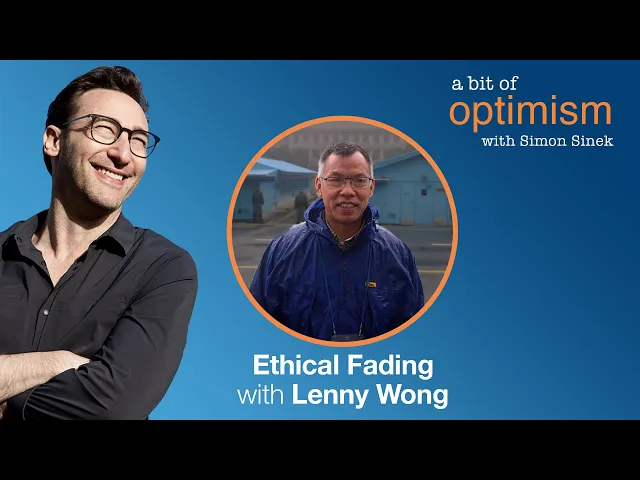
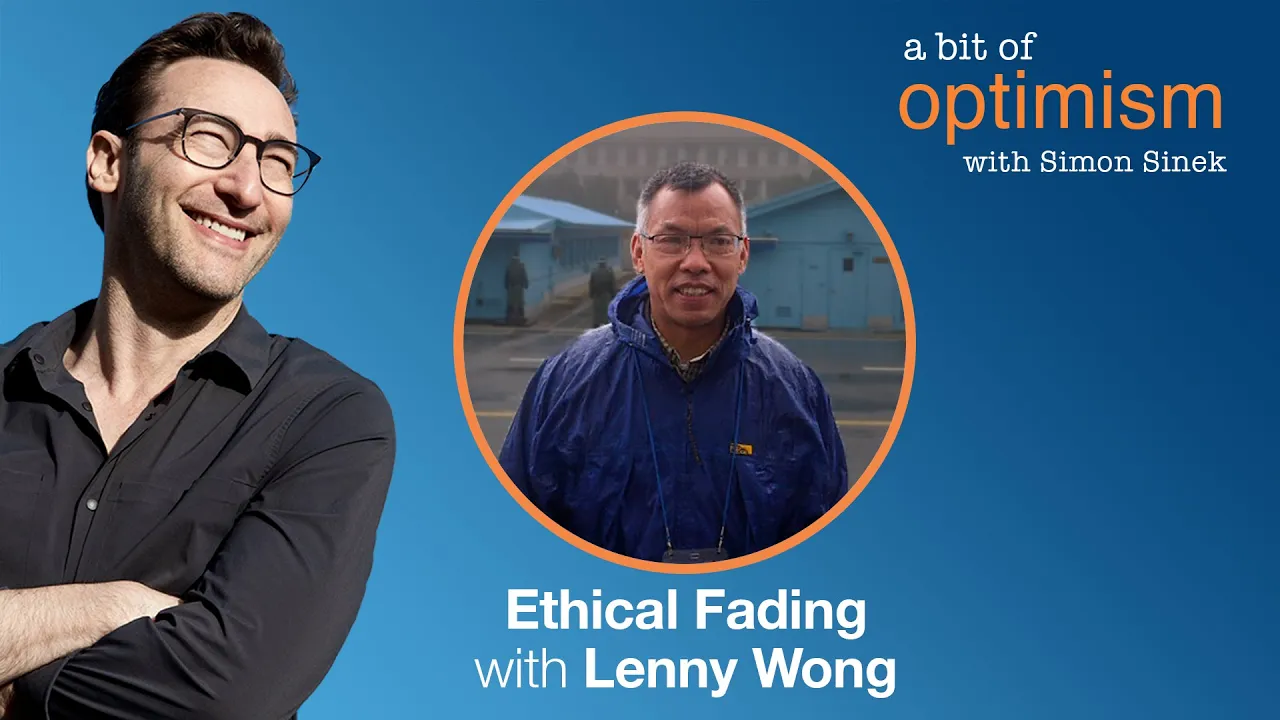
[Music] are you honest let me ask the question a different way have you ever told a lie you can see the problem we've all told little white lies some of us have even told more than that this unfortunately is more pervasive than we think it's called ethical fading and it's something that dr lenny wong has spent many years studying he spent 20 years in the military studying why good cultures turn bad and i actually learned about ethical fading from him in a world in which everybody's trying to get ahead and sometimes we do so by
doing things that are ethically questionable the question is what can we do about it this is a bit of optimism [Music] lenny so good to see you good to see you simon you and i met a bunch of years ago i heard you speak at a conference and you were the one who introduced me to this concept of ethical fading which i ended up writing about in the infinite game correct this concept i find so fascinating and unfortunately the reason i think it's fascinating is it's pervasive in our society today correct me if i get
this wrong but ethical fading is the phenomenon where a large group of people a culture of an organization make unethical decisions believing that they are well within their own ethical framework they don't believe they've done anything wrong and yet from an outsider in it is so obvious that something has gone haywire for example a pharmaceutical company that owns the patent to an essential drug and will raise the price 500 600 800 percent a thousand percent though not illegal highly unethical and the people inside that organization will shrug their shoulders and say there's nothing wrong with
it right it's temporarily suspending any notion of right or wrong and it's very closely related to moral disengagement so the ethical fading came from a professor of psychology named anten brunsel it's basically setting aside the ethical dilemma because you just say well there's no ethics involved in this this is just a decision it's a business decision it's a cost-benefit analysis or whatever but there are no ethics involved in this and so we could just move on and make the decision and 10 bressel calls it a form of of self-deception which i found very interesting as
well not only is that you said it's it's amazing that's so pervasive to me it's amazing that we don't even know it that it's so persuasive but we refuse to look it in the face because i think it collapses so much of what humans do and we rationalize away and it's an ugly thing to look at to admit that no you just told a lie and you just don't want to admit it right some of the things that go into that self-deception we have all done let's be honest we've all done it right it's so
pervasive so for example everyone's doing it i had no choice that's what my boss wanted me to do and this is my favorite one it's the system right so in an organization where all of the pressures upon someone is to do things that are in self-interest of the organization so they would hit a number at an arbitrary date all the incentives pressure them to hit that number so both incentives and disincentives massive amounts of them are thrust upon a person because a few people at the top have thought that this number is more important than
anything else and at the rank and file what ends up happening is they do anything to appease their boss fit the incentive program avoid getting in trouble or worse one person does something highly unethical like at wells fargo bank when thousands of people open millions of fake bank accounts and other things it started i assume because one or two people tried it and somebody went good job and then everybody else did it right right and so those cases it's the system and really what we're expecting that person 14 levels below is not for them to
tell the truth in the first place because we want them to lie to us do you equate ethical fading and lying as synonymous for me it's the easiest example but i think ethical fading really is the ability to develop hypocrisy in our own minds and live with it how do we live with ourself and the answer is ethically faded i've been in the army in uniform for 20 years now as a civilian for 20 years and so in the army you view yourself as a moral upright cut above and to hear ourselves admit it to
lying that really goes against who we think we are ethical fading allows us to live with who we really are and who we think we are and this goes way back to what jesus accused the pharisees of doing it's like you guys are hypocrites because you're telling everyone to do this and when you really look at it you're not doing it yourselves and so it's very human but it's very ugly and that's why i say especially in my organization the military we don't like to look at it because it really attacks who we say and
think we are and perhaps the greatest form of honesty is to look at oneself and say i was dishonest correct but look at all the creeds and codes that we have that say you will never lie cheat or steal your word is sacred and it is but we're also human how do you have an inspirational aspirational organization and yet you fill it with humans that's what's really hard so we can either tell everyone you're really not as good as you think you are or we could say you're the best but let's ignore all this humanness
that creeps out every once in a while yeah how did your interest in this show up so i did a study back in the early 2000s with a friend named steve garris and it's called lying to ourselves where we address this going on in the army and saying we have a problem i looked at all the requirements we placed on junior officers and what we discovered was junior officers have about 256 available training days and when you add up every single requirement that we put on them it equates to about 297 training days and so
it's physically impossible to accomplish everything that the army tells them to do in the amount of time we give them to do it how can we ever develop innovative officers when all they do is run around doing what we tell them to do but what always bothered me when i wrote that study is if they can't literally do it in the time period we give them what are they reporting and so that haunted me for about a decade and so i was sitting in my co-author's office steve garris and i said hey steve i got
a research project that i'd like to work on he says what i said i think even though we don't think we're lying we're lying to ourselves he says i don't know what you're talking about i am an honest person you ask my wife one thing she knows i will never lie to her and he's typing away his computer i said i think there's something there are you listening to me and says yeah i remember this thing he keeps typing away what are you doing and he says i'm filling in all the mandatory training we're supposed
to do saying i did it and he was sitting at his computer filling it all out and i said that's exactly what i'm talking about how can you sit there and do that and yet we tell ourselves we're honest people at the army war college we have a lesson on ethics and ethical fading we always talk about it but finally we are confronting it up in our face that this happens so this got reinforced i was talking to a civilian friend of mine and he's talking about his wife had to move up in the organization
because they had fired somebody and i said what'd they fire him for they said well the person was falsifying training rosters they were saying people were attending training who never did and it made me realize we have really developed a culture where ethical fading is pervasive it's allowed it's not talked about and it's impacting all aspects of our life so that's how we got started on this so the fun example that i talked about where i suffered ethical fading was i had a job where out of the blue the company announced that we had to
start filling out timesheets now i worked 100 on one account what do you need to know i know yeah you know so we had to hand them in weekly i never handed my time sheets on time because i'm just terrible at that kind of stuff and so i would get in trouble so i would sit down for the entire week on friday morning and i would fill out my timesheets right in at nine out at five now i often showed up at whatever time and i always left later but who cares so in nine out
five in nine out five in nine out five done and i think maybe i was two weeks or three weeks behind because you know i'm late so i'm filling out two or three weeks worth of time sheets here in out in and out exactly the same time every single day i go to my boss because somebody has to sign off on my timesheets and he looks at them and he says boy you're a very consistent worker aren't you basically pointing out to me that he knows i fudged my sheets and then he signs them right
and we go about our day and that's where i look at the organizations organizations create the systems that everyone looks at and says that system isn't real so we create in our mind an imaginary line that says that's the fake world that's the world we lie to because someone came up with that system that process that they really don't want truth they just want you to fill it out so all columns are lined up that's where organizations fall in and encourage ethical fading we're not really looking for the truth what we really want to know
is simon did you put in an honest work week yeah i did okay here fill out these timesheets and lie away right just reinforce the narrative that we all want to believe language is a big deal here as well it's the overuse of euphemisms right like in the united states torture violates our values we would never ever torture but enhanced interrogation is extremely helpful right or in the business world or in our personal world we would never spy on our customers but data mining so helpful so valuable right or even referring to human beings as
data points right and the overuse of this language where we literally dehumanize people so we can distance ourselves from the impact we may have on their lives or we create euphemisms so we can again create distance from the impact of our decisions because it just makes it easier right because we don't like the harsh reality of to say well i lied so instead we heard things like i'm just telling them what they want to hear well you're lying or the best one i heard is that's not lying that's good leadership i had my boss when
i was starting to do this study came in and said so what's the study you're working on i told him and uh he says i don't know what you're talking about i just don't see any evidence of that and so i said well wait a minute according to the regulations i'm supposed to get quarterly counseling from you on how i'm doing we've never done that and yet every annual counseling there's all these little dates with your initials by it on how we met and talked i said we never met and talked what do you call
that and he says that's not lying that's protecting my boss and so we don't like to hear those words lying or i didn't tell the truth and even when we came to write up the study it was hard to write down that we lie so we were even looking for different ways of saying lying because it's such a harsh in-your-face word that makes us confront the evilness that we all know so here's the uncomfortable question is it ever okay to lie i think the answer is is no then you have to ask the secondary question
are you ever boxed in where you have to lie not that it's okay i think that's what we have to transmit is that we're human and so it's not like the organization is trying to teach these people to be perfect because we can't expect you to be perfect because you're human so we understand that yes there will be times that you will lie but we want you to know you should never have to lie i'm uncomfortable with this idea of the box because who sets the edges exactly right and that's the problem so there was
a study done about child development and they did these wonderfully innovative experiments to show the development of a child's mind of which one of them was learning to lie because little kids don't lie right they tell you everything it's a fault and the point that was made in the study was that lying is an important social convention and the experiment that they set up was a mother and her friend who are both in on the experiment meet for lunch and the mother brings her little kid and the friend gives the mother a gift and the
mother says thank you i love it and the kid immediately says no you don't you hate it and the mother says no i love it and the kid says no you have one just like this at home and you always talk about how much you hate it and the kid hadn't learned yet this social convention that we have to tell what is a lie in order to not hurt someone's feelings right right but i think the ideal in that is to tell the child it's never good to lie but mom you just lied i know
and i wish i didn't have to lie so i called bs all right ending conversation what else what else you want to talk about simon wait no no listen i'll tell you why because what you said i wish i didn't have to but i do that's exactly it but that's the problem lenny which is if we could all get away with saying i wish i didn't have to but i do it at least makes us aware of the lie but then we go right back to where we started which is i have to get ahead
i got to put food on the table that's what my boss wants me to do everybody's doing it i'm going to get in trouble right it's the first inch of that slippery slope that you start sliding down wait wait what if we find new ways to tell the truth as opposed to lying because look your work screwed with my head lenny like you keep me up at night right you're the reason go back to the example of the gift fine i'll give it to you the mistake she made was saying i love it right thank
you so much for thinking of me no issue oh you didn't have to give me a gift this is so kind of you the mistake she made was i love it the effusive thanks for the generosity and thinking of her was where she should have stopped yeah i'm not going to ever give you a gift first of all simon here but yes but simon what if the person says did you like the gift right now you play a game of obfuscation which is unfair great i got you your gift did you like it i mean
this happened to me where i went to see a friend's play and it was easily the worst thing i've ever seen in my life i mean it was abominable right and i meet my friend backstage right after the play she's still in costume she's still in makeup the adrenaline is still pumping and of course the first question out of her mouth is what did you think right now she knows me to be an honest broker and i say uh it was so fantastic seeing you on the stage i'm so proud of you all true that
was good so this is what i've started to learn which is honesty doesn't have to happen in the moment it can happen at a later date i still wanted to answer her question but the problem was she was so jacked up on adrenaline and the timing was too soon that had i said it now the delta of her excitement to where i was going to put her that's what would have made her upset so the next day when the adrenaline was down and her baseline was lower i said hey can i tell you what i
thought about your play yesterday she goes yeah i'd love to know and i said you know what i got to tell you the script was weak the directing was weak you know it was wonderful to watch you but i felt sorry for you in the middle of it she goes it wasn't good she could now have a rational conversation with me right where the day before there's no way she could have a rational conversation with me so the challenge that i've put to myself is i have to always be honest but i don't always have
to make that on a statement in the moment right but i didn't lie i think that's a great strategy when dealing with people but i have to challenge assignment what happens when you're dealing with a faceless system what happens when you're dealing with a bureaucracy that is demanding timesheets so when you're dealing with people hey that's the way to go because people are malleable and i think you're taking advantage of that simon i don't think you would lie to me and hopefully you don't think i would lie to you but i got a feeling both
of us would lie to a system yeah and that's part of the ethical fading is one of the thing is you said it yourself distance have me talk to a computer and put in my id card and digitally sign it that's so much easier than you look at me in the face and you saying did you like my podcast and so organizations are faceless and a lot of times that ethical fading is so much easier because we're digitally signing it or marking i read your agreement thing in the beginning that's 23 pages long i read
it and understand and agree to it sure i'll do that we've all agreed to everything with none of us have ever read i know if they just said i agree and didn't say i read and understand i'd be fine but i didn't read it i didn't understand it but i want my product so give it to me you know and so that's what i'm saying when you're talking person to person ethical fading doesn't happen as readily as put me in front of a kiosk put me in front of a toll booth put me in front
of something i want that's just blocking me from getting something i need hey i hate to say it we're human now you got to be careful i'm not making excuses for lying i understand hypocrisy is the word that you used before to explain this and it seems to me and i can only refer to my own lifetime because i didn't live earlier but if you look at how divided our nation is if we sit back in our academic ivory towers and you evaluate without putting our own points of views and political points of views on
what either side is saying both sides are filled with unbelievable hypocrisy and the funny thing is is the attack that one side makes on the other side is to point out their hypocrisy but the hypocrisy on both sides that a party or a group of people hold two opinions that are absolutely diametrically opposed in logic right but what we say is you're a hypocrite and it's implied is and i'm not and i'm not and that's not true the answer really is you're a hypocrite and i'm a hypocrite and if if anyone could do that if
a party could do that if a group of people in debate could do that that seems to me like the most essential starting point to actually get to progress and conclusion right because what's wrong with admitting that we're human now some humans are more despicable than other humans so we'll say let's take them out of the picture but still there's nothing wrong with saying i'm human i haven't let a perfect life i will find dirt on anybody because i think they're human too but and this gets back to the army we create a type of
person that we say oh an army officer never tells a lie now they should never tell a lie they should think lies are wrong but they should also admit that they're human because that's part of self-awareness but this binary world that we live in i really love this i mean simply saying look you're a hypocrite we shouldn't actually attack the person we should attack the behavior let's start there you know so what you said was hypocritical that is pure hypocrisy and we are hypocrites too just hearing that just saying those words out loud to you
it lets the pressure out that we can actually have a rational conversation now but you'll never get elected office simon or would you yeah that's a good question is is our society ready for that one of the hardest places i had this discussion with was at west point because at west point a cadet will not lie cheat or steal or tolerate those who do and it is very binary now what's nice about west point is west point started saying that is a very tall hurdle for any young person and so it used to be that
you got kicked out if you violated that at all now what they've discovered is that you could make a mistake and you realize that a cadet should not lie cheat or steal or tolerate those who do but we're not going to kick you out because that would cause you to lie about the fact that you did make a transgression we're going to offer now discretion we're going to have you be developed we'll have you meet with a mentor and discuss what happened and we'll work through it see what we should do is you're human you
aspire to be a person who never lie jesus feel and more importantly you aspire and we will help you exactly and we all admit lying is not good the system is designed to help you right but we're not going to say and the consequences of you lying are so steep that you won't even admit you lie i got this from your work that the punishment for telling the truth was greater than the punishment for lying right so if you told the truth i didn't complete this it would hurt your promotability but if you lied you're
more likely to get promoted if everyone else is lying too then it makes it easier so we start creating an expectation that you have to be perfect when you're talking about young people we talk about soldiers when you talk about employees when you're talking about children we have to really think hard if you expecting them to be perfect what do you expect them to do when something isn't perfect the obvious next step for us to talk about is well how do we change this like how do we combat ethical fainting and what's the solution yeah
i'm just an academic so i don't come up with actual answers but i think you're on to something here which is the solution is to turn truth and honesty not into an absolute but into an ideal a striving it's an idealism it is still an absolute okay okay an aspirational absolute rather than a current state absolutely right it's still an absolute it's still something everyone should try for and yes we could draw the line saying no that was not truthful so it's absolute but what we can't do is say and i want you to surround
me with all these people that never lie i want you to surround me in a system that always tells me exactly what i want to hear and somehow live in that system because that's a false world i think this is where the solution lies this has to be a striving or as an organization we say we believe honesty is important duh whenever the companies give me their list of values and honesty is one of them i always make fun of them i'm like if you have to write honesty on the wall you've got bigger problems
but we believe telling the truth is important by the way everybody thinks they're honest first of all it has to be a verb tell the truth that's number one because everybody knows they don't always tell the truth but everybody thinks they're honest so tell the truth right number one and say you will get punished here more if you lie about the mistake than tell us the mistake that if you hide the indiscretion then tell us the indiscretion because if you tell us we can help you if you tell us we can coach you we can
sit down we can discuss the circumstances we can figure out alternatives if you felt trapped we can work together to figure out alternatives especially if it's person to person because we have solutions for that right but i think that's what these systems and organizations have to become they have to become coaching organizations rather than judging organizations well and i go further is that the army is a profession okay and a profession means that we have these kind of standards it means that we have these kind of expectations but it's also a bureaucracy and it fights
between these two identities the bureaucracy says tell me everything's okay it wants statistics it wants matrix it wants all the measures of the world is good that's the bureaucracy kicking in and what i say is everything that you said yes that should happen but organizationally i think we have to tell the soldiers saying we will try our hardest not to lead by getting you to tell me everything is okay we have to create a safe space for you to be able to tell me that's supposed to be what the suggestion box is right right that's
a huge step you're asking for right that's a huge step you're asking for i'm an idealist but i'm just saying the system cannot rely on processes and checklists that you force the person to tell you everything's okay because they know that's what you want to hear they know that you well-meaningly want to make sure every soldier drives away in a vehicle that's been inspected but don't do it by making the soldiers say my vehicles have been suspected do it by making a leader go down there and check and spend their time checking and so my
solution to your question is how do we solve this my answer is leadership what i'm saying is leaders if you want to know something and it's really that important that you will spend your time checking on it then go check on it if you want to know did everyone qualify at the range then sample 10 of them and you'll find out did everyone really qualify at the range right instead of asking for a roster and the uncomfortable part of this is that we discover the lie when the vehicle crashes and we find out that it
wasn't inspected and then we find out that the entire system that we've been relying on for vehicle maintenance is all a charade and we go around it's not just this unit holy mackerel it's this unit no one's doing this and why aren't they doing it because they view it as ethically fading they really don't want to know the truth here they just got to get through this process to go on leave and this has nothing to do with military your career happens to be a military when you now teach at the military but this is
an organizational issue right companies are exactly the same i mean you look at that 2008 housing crisis everybody was saying checks and balances and it's safe and nobody ever checked right right then all of a sudden all of them corruption or instability or broken systems were all revealed after the whole thing collapsed of course right because as long as the charade is working as long as everybody thinks it's stable including us then we just go about our merry way right i call it mutually agreed deception you know i'm lying i know i'm lying but neither
of us really care so let's move on with it it's sort of like remember the old days simon when we scored a exit row seat and the flight attendant will come around and they give the mandatory talk and then they say are you willing and capable and you look at this 76 pound person sitting beside you that you know cannot lift that exit door if they wanted to right right or they don't speak the language and you know they really don't know what's going on and they say are you willing and capable if you understand
everything if so respond with a verbal yes and the entire row would say yes and then you'd say yeah you're right you know so that's that mutually agreed deception and that's what we can't create in organ stations is that they know we're lying we know we're lying and everyone's happy because we love to be living in this hypocritical world that we've created and there's laziness all around right right the leader doesn't want to have to go down and check the vehicles and again it doesn't have to be every vehicle as you said it's a sampling
you can do samplings or you can do it randomly like there are ways around this but i think the net of this is leadership is hard work leadership is hard work and you can't do everything so if the vehicle's being inspected is that important then inspect them but if it's not that important then think of some other way it's me and my time sheets like what my boss should have done has said simon i know you left at seven o'clock the other night because you and i met at six o'clock so why don't you go
back and redo your time sheets and i say well boss i don't remember what times i came and left because i haven't done these in three weeks he's gonna say fine i'm gonna let you get away with it this once but now i'm checking right are we satisfied that we have a good solution here look the first solution though is admit that this phenomenon happens yeah because then we self-regulate then we say you know i think i'm starting to ethically fade here i think i'm coming with excuses because i'm just trying to get what i
want so that's at the personal level then we kick it up to an organizational level and we start saying wait a minute am i forcing the employees or subordinates to lie on this because i just want them to know that this is important and now i'm making them say this so at the personal level we have to admit it and then say am i doing it at the organizational level we have to say to ourselves am i creating a culture where i'm expecting people to lie to me and so i shouldn't do that leadership is
not always at the top of the organization being a whistleblower is a form of leadership where i'm going to point out what you are making us do the system that you've created for whatever short term gains is forcing behaviors in this organization that are unethical and sometimes illegal and because we said leadership is hard work i'm going to be the one to call it out and tell my boss and say hey boss i need to have an uncomfortable conversation with you the risk is you could lose your job yeah and that's why i temper that
with saying i don't advocate whistleblowing i advocate get with your buddies and when you go into the meeting you say let's tell her the truth finally we're going to tell the truth on this as a group on this and this but she doesn't want to hear the truth on this so we'll just ignore that for now but on these three things we're going to go with the truth and if she wants to tell us to lie to her we're gonna make her tell us so i don't go for the whistle blowing because that'll be the
last whistle you blow in the organization if you do that but this is very very very important what you're talking about which is it is a form of whistleblowing but there's safety in numbers if i go into my boss's office i'm going to lose my job but if i get together with my colleagues we all know what we are subjected to and if we go in and say this is what is happening we need you to be aware we're not accusing you of anything we want you to be aware of this and if you want
this to continue we need you to tell us to lie exactly like i said you gotta use your wisdom on saying look she's backed into a wall on this number it can't be an accusation it has to be a discussion of what the situation we're in and the pressures we're under not like boss you're a liar you're making us a liar because then they're going to dig in their heels and to openly understand reality okay boss you need us to lie to you on this one but on these i think you could cut us a
break because it'd be better for us and you if we had a relationship with you trusted us to tell you the truth on everything that we could that's the ideal because we live in an imperfect system and we're imperfect people so let's try to do as best as we can given who we are and where we live if i were to summarize what i've learned on this ethical fading is a real thing and it is fact we're all human yeah fact all organizations are made up of human beings so if all human beings are imperfect
and at various times we're all hypocrites and we lie then that means that every organization which is made up of all these imperfect beings at various points are hypocrites and they're systemic lying institutionalized lying yeah so what we should do is sensitize ourselves to what is this phenomenon i do it when do i do it i want to minimize that but then there's a next step in saying and i don't want to be a party to creating that environment for somebody else and i choose to be a part of a solution i choose to be
a part of moving myself my friends my organization towards being more honest more ethical every day and so when i find myself in the situation i will be the leader i wish i had i will gather my friends together we will lead in a productive manner make these things known so that we can as a collective with our superiors and our subordinates find a solution and if our bosses are under such extreme pressure that they want us to continue to lie then at least be honest about the lying tell us to our face i want
you to lie which most will struggle to do they will use euphemisms guys guys i don't want you to lie we have to hit our shareholder value of course i don't want you to lie but we have to complete our requirements and to continue to point out to the hypocrisy until either there's a solution or an instruction to lie and because the instruction to lie is way too difficult for someone to give we hope that they choose the easier option which is to find a solution which isn't that what we all want anyway what you're
essentially saying is take down the facade the facade of everything's perfect everyone's telling the truth take that down and say okay look this is the way it is this is reality let's be truthful with one another it's really what it is and so that's not a bad conclusion to this whole discussion we had simon lenny from one imperfect person to another imperfect person i'm glad that we had an imperfect conversation who would have thought we'd get together and both admit that we're imperfect and i feel a little bit closer to perfect in my perfect way
today oh it's been fun thanks for your time i really do enjoy talking to you all right take care [Music] if you enjoyed this podcast and if you'd like to hear more please subscribe wherever you like to listen to podcasts until then take care of yourself take care of each other