so in the first half of this unit we have discussed the development of the prohibition against the use of force in international law and we've also uh started the uh discussing uh very specific aspects of the regime that had been introduced in 1945 in the UN Charter the article 24 prohibition on the use of force and the exception which is found in article 51 the self-defense exception uh we have discussed with regard to the self-defense exception the idea that self-defense is available to a party uh that is the subject of an armed attack and only
the sub party which is subject to an armed attack this is at least the dominant interpretation of article 51 and then there is also a duty to notify the security Council and the Security Council unless the security Council takes effective measures in response the the right to self-defense would continue but then there are uh what one could conceive as unenumerated exceptions or unenumerated conditions that pertain to the right to self-defense that may either limit or extend the scope of the right and and the icj the international court of justice has been involved on a number
of occasions in cases involving the use of Interstate violence or uh violence that may have um uh aspects that resemble uh Interstate uh cases and uh in that context it has expressed its views on the conditions under which the use of force in self-defense would be lawful by in large I what I can say about the international court of justice that it appears to be the the overarching approach of the SEC of the international court of justice has been a narrow approach namely to narrow almost as much as possible uh the ability of State states
to unilaterally use Force without Security Council authorization so for instance in a case relatively close to home the the wall advisory opinion from 2004 in which the international court of justice has considered the legality of the wall or separation barrier that Israel constructed in the West Bank uh the court had incidentally while dealing with this to address a claim that was made by Israel in international fora and that is that the wall or the barrier as Israel referred to it as a security fence is a legitimate defensive measure that Israel has constructed uh in order
to respond to Terror attacks that had been launched against it um putting aside incidentally whether this argument really holds water in the sense that whether the use of whether the construction of offense even qualifies as a use of force so I would have I have my doubts as to whether the claim should have been made at to begin with but in terms of um the the actual handling of this claim by the international court of justice the court says that Israel cannot make this claim because self-defense only applies in the relations between states so you
need one state to attack another state in order for the attacked state to be able to invoke article 51 so essentially what the court says since article uh uh 51 is an exception to article 24 and article 24 regulates uh the use of force between states so that that context also affects the interpretation of article uh 51 no uh right to self-defense if the source of the attack is not a state but actually territory which is under uh belligerent occupation the court has taken a similar approach in a in a subsequent case a case involving
hostilities between the Congo and Uganda in 2005 where the court has basically said that although Uganda was maybe uh uh the the victim of attacks that were perpetrated against it by Ugandan Rebels who were camping in congales territory uh the fact that the attackers were not the state of Congo were not the Democratic Republic of Congo State authorities or an organization which is controlled by by that uh by that government but rather uh Standalone militias the implication was that Uganda could not invoke the right to self-defense in order to invade or in that case to
remain within in an unauthorized manner within the territory of the DRC the Democratic Republic of Congo so so this is the icj approach to the question of what um what is the scope of application of the right to self-defense I should say that this approach doesn't um necessarily correspond with International practice in practice we have seen States invoke self-defense also in context where the source of the attack was not a state but a terror organization or a militant Group which was camping within the territory of another state and perhaps the most um uh spectacular if
one could say so instance of that uh of that practice uh taking shape and and obtaining International recognition is the decision of the security Council no less in the aftermath of 911 uh to recognize the right of the United States to invoke self-defense in response to the attacks against it although at that point in time and also subsequently it was far from certain that any state was behind that attack that attack was uh perpetrated by a terror organization that was hosted by another state but it is very hard to actually stipulate that that other state
Afghanistan actually controlled or directed uh the operation hence uh we do have here uh it is fair to say a difference of opinions between the international court of justice that takes a narrow approach to self-defense and requires interstate elements and the security Council and perhaps other instances in state practice that do uh allow or do um uh uh invoke self-defense in circumstances which do not involve uh necessarily a state on the attacking side the other big interpretive question has to do with the terms of uh the phrase if an armed attack occurs so we have
talked a little bit about what is an armed attack and the international court of justice in Nicaragua and the old platforms case involving Iran has has has made its views known but there is also a question of what constitutes uh occurs what is the temporal dimension of an armed of an armed attack that would justify uh the invocation of self-defense and here uh the the the problem that states are confronting that if you are allowed to use self-defense after you've been attacked what are you expected to do in circumstances when you know that the attack
is on the way so you know that your enemy state is planning to attack you and they're actually taking operative steps towards executing their intentions the question is should you be um sitting like a Yale Professor by the name of Mars MCD McDougall wrote sitting as a Sitting Duck waiting for the blow to hit you before you can respond or uh whether you could actually take preemptive action in engaging what is referred to in the literature as anticipatory self-defense uh now this is of course a question with enormous um uh strategic consequences because uh it
is often in these conflicts the side that hits the first blow that has significant strategic uh advantage and of course if one is thinking about um use of weapons of mass destruction which is an area of laow which we will not be covering in this unit but we will discussing it in another unit on on the use of on the uh International humanitarian law then of course the first blow could also be the final blow so under these circumstances the the temporal element uh becomes extremely important now the language of the charter appears to be
a quite narrow because the term occurs uh is is does appear to indicate that the attack is already on the way is is already present so this is the present tense it doesn't uh uh use the term is expected to occur uh but in in state practice of course we do see uh frequently States actually using force in a pre preemptive or anticipatory way in order to uh minimize the their National Security ex risks and exposure to uh an hostile Act uh directed against them now the matter has not been explicitly dealt with with the
international court of justice actually when it was raised in the uh in the Nicaragua case which I managed before the court ducked the issue and and and pronounced that it will not express views on the issue of temporality the act of the aggression definition which I mentioned before does seem to suggest that there is some leeway at least to argue that this respond the self-defending state doesn't have to wait until the first blow because article two of the definition uh reads that the first use of Armed Force by a state in contravention of the charter
shall constitute Prima fasi Prima FIA evidence of an act of aggression so it is a first indication but it is not necessarily a definite conclusion about whether an act of aggression has actually uh occurred and in a subsequent report uh which was uh commissioned by the UN Secretary General and had notable experts on uh international law and the use of force uh the experts that the security that the Secretary General convene did actually accept the proposition that imminent threats would uh justify the use of self-defense even if the first shot has not yet been fired
so uh there it is fair to say that at this point in time there is Broad agreement that in in situations of imminent armed attack the uh the self-defending state can actually recourse to force before actually being uh presented with the use of force but then the question is what constitutes um a a situation of imminence uh and on this again we have to refer to uh to state practice and to see how different uh manifestations of anticipatory self-defense have been uh met with uh in in state practice and actually Israel has two uh very
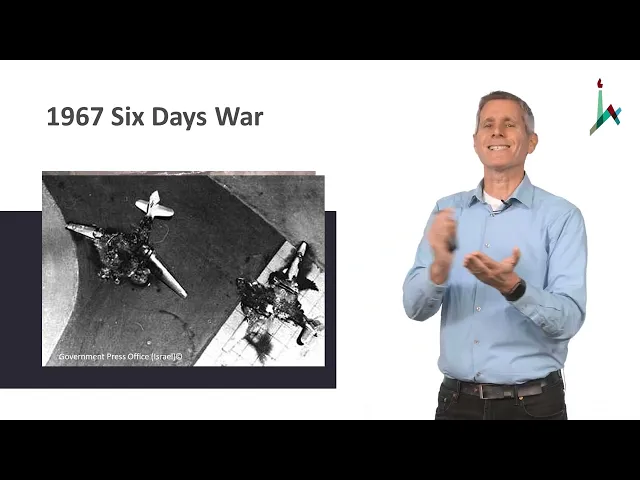
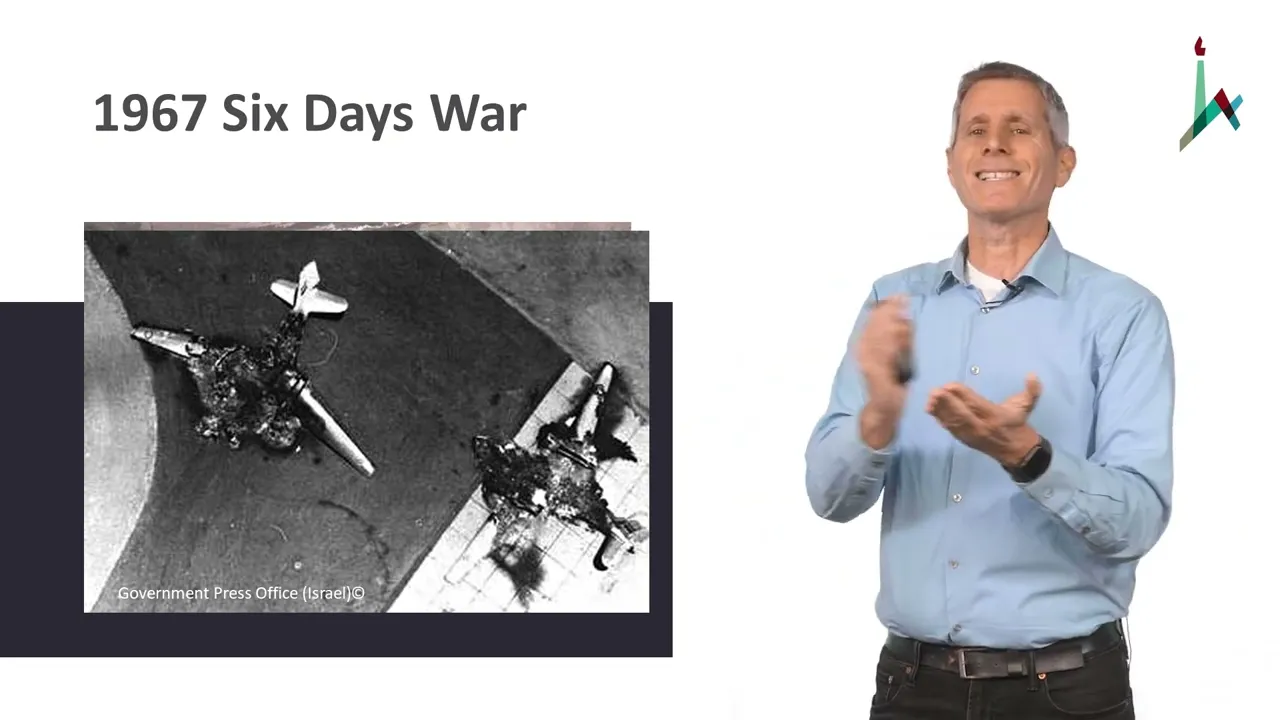
high-profile cases uh which it can it it can compare between when it is trying to uh evaluate what sort of um anticipatory self-defense would be regarded by the International Community as plausible and which will be regarded by the International Community as unacceptable one incident is 1967 the five 5 June 1967 the uh the start of what is called the six day uh War uh uh a war which Israel defined as a self-defense War uh in order to counter an armed attack uh by the uh surrounding Arab states but what is of course uh interesting about
this incident for our purposes is that Israel actually fired the first shot the war started on the morning of 5 June with an Air Force raid uh which was committed by Israel perpetrated by Israel against the air forces of its neighboring states so so the question is how can Israel argue self-defense when it was the first side to actually start the war and Israel actually had a very elaborate uh and and I would say on the whole quite plausible explanation for why it was able to invoke selfdefense despite the fact that it shot the first
the first shot and that is because there has been really a serious of events and activities and developments on the other side which gave rise to uh real um to which gave real indications and gave rise to real concerns about an imminent Armed Force and that had to do with the concentration of uh of uh enemy forces On the Border uh it had to do with the basically uh um ejection of the UN peacekeepers from Sinai it has to do with the closure of the of the uh of the Gulf of akaba straits which in
in in itself could be deemed as an act of aggression uh it also had to do with public pronouncements about uh an operation that is designed to eviscerate the state of Israel and all of these uh indications combined to one with one another did give rise to a real concern that an armed attack is impending and that Israel had uh justification under this narrative to uh to strike first and when you look at the security Council reaction during the war itself you can see that uh there have been calls on all governments to respect uh
the use of to to prevent to deescalate the situation but there hasn't been a finger pointing uh towards Israel in that specific context and by and large Israel's position about uh its right to self-defense has obtained not Universal but quite broad support in the International Community now this is very different from the way in which Israel another Israeli attack the attack on the osir uh nuclear reactor in Iraq in 1981 was uh received by the International Community uh so uh Israeli Air Force again commits uh perpetrates a strike a military strike this time against a
nuclear facility that is uh that is being built in Iraq Israel and Iraq are in a state of War since 1948 so so uh this was one justification that Israel gave and uh this this justification raises significant issues about the difference between an active state of war and a proclaimed state of War there was certainly no active state of war between Israel and Iraq in 1981 but in terms of um self-defense Israel also made the argument uh the nuclear reactor is designed to develop weapons of mass destruction nuclear bomb that could eventually be uh targeted
uh directed towards Israel and therefore Israel had to react before the nuclear reactor becomes operational in in in ways which would really render its its neutralization no longer plausible because of the significant harm that uh uh that attacking it would uh would would generate under these conditions so it was uh really an attack of the last uh within the last window of opportunity that Israel had but here the International Community actually the as as we can see from the security Council resolution took a much more um hostile and much more negative approach basically uh denouncing
Israel and and and and rejecting uh the validity of its claims of self-defense and and what is of course different between the two scenarios is really the notion of imminence uh there was no nuclear bomb there was no specific design to attack Israel at that point in time so Israel was actually invoking not something which is referred to as anticipatory preemptive self-defense or anticipatory interceptive selfdefense but something which is much broader in its scope which is anticipatory preventive selfdefense namely an attack which is designed to deprive an enemy state from the capacity to attack in
the future uh and when you do not have temporal proximity between the anticipated attack and the reaction uh and and and and the uh and the self-defense action then you are no longer within even conceivably within the realm of if an armed attack occurs so even under a very imaginative interpretation one could not de that an armed attack already started when uh when Iraq started to develop a nuclear a bomb in its nuclear reactor and that is very different from the 1967 string of events where you could say that the the train has already left
the station I mean the wills towards an Egyptian and Syrian and Jordanian attack towards Israel against Israel were already in play and then Israel reacted so there is actually this temporal distinction between imminent and non- imminent attack and we have seen the same um approach being uh expounded Visa V the US post 911 national security statement by President George W bush which basically tried to uh assert a right to preventive self-defense that the US would be legal legally uh permitted to uh deprive an enemy state or an enemy organization from being in a position to
threaten the National Security of the United States St so Rog states that were developing weapons of mass destruction were uh viewed as as a menace which the United States had uh a legitimate right to attack in self-defense uh this Doctrine was effectively implemented in the 2003 invasion of Iraq by and large I think it is fair to say that this approach has been broadly criticized by Most states and is viewed by most experts in international law as an untenable assertion so so one I I think could say that whereas with regard to imminence there is
a right to anticipator anticipatory self-defense for long-term risks there is no such right and a state that wishes to dismantle a long-term threat has to work without use of force or through the security Council so other than uh the the unenumerated restrictions on the right to self-defense that we have discussed so far uh which is an inter Interstate nature of of the violence and the uh temporal uh aspect of the violence of the use of force uh a third and a very important unenumerated restriction on the right to self-defense are the Dual conditions of necessity
and proportionality and and these conditions have emerged in state practice uh through um correspondence and um and diplomatic discourse among states that were involved in acts of violence the most um notable example being the Caroline incident from 1837 where the UK Great Britain as it was called at the time uh crossed the border into the United States from Canada and uh and drowned an American ship that was used to uh to arm Canadian rebels in Canada and the United States and and and Great Britain did uh discuss extensively between them the legality of these tax
and they in the end they did reach a formula which is called uh the Caroline formula or the Webster formula in which they agreed that in the future such attacks could only be conceivable if they meet conditions of necessity and proportionality so uh the self-defense or the use of force in these conditions should be instant overwhelming living no choice of means and no moment for deliberation so it really the idea that that force can be used only under uh as as as a matter of Last Resort and that it nothing unreasonable or excessive should be
attempted so these are the conditions of necessity and proportionality and although they're not listed in the charter it is broadly agreed upon and the international court of justice has explicitly stated so again in the Nicaragua case that necessity and proportionality does pertain to uses of force and therefore any state that exercises force in self-defense has to show that this that the force was needed that it was necessary uh and that the reaction is uh proportionate so uh just to give a couple of examples of how proportionality which is which is a difficult notion was applied
uh by again the international court of justice uh you could say that in the Congo case which I mentioned before involving the uh Invasion or the uh retention of Ugandan forces in Congo in in response to border attacks that were perpetrated against Uganda from the territory of Congo by Ugandan Rebels the court said that even if self-defense was available to Uganda the fact that Uganda has occupied in reaction to these border incidents a third of the territory of the Congo which is a huge country is a disproportionately military response hence it doesn't meet the condition
of uh proportionality and and a final example from the case law of the international court of justice which I want to present in this regard has to do with a very interesting advisory opinion that the court issued in 1996 concerning the legality or threat of the use of nuclear weapons where the court has uh generally opined that the use of nuclear weapons would be unlawful under international law but it reserved judgment as to what happens in extreme circumstances of self-defense in which the very survival of the state would be on the line would be at
stake uh and I would argue that this is really a case about proportionality in the sense that we can think as of the use of nuclear weapons is being proportionate only in very extreme circumstances where the very survival of a state is at stake we will now uh we have now concluded discussing uh self-defense under International uh law and after uh the break we will resume by discussing the other two exceptions uh that we find under the charter to the prohibition against the use of force that is collective self-defense and collective security