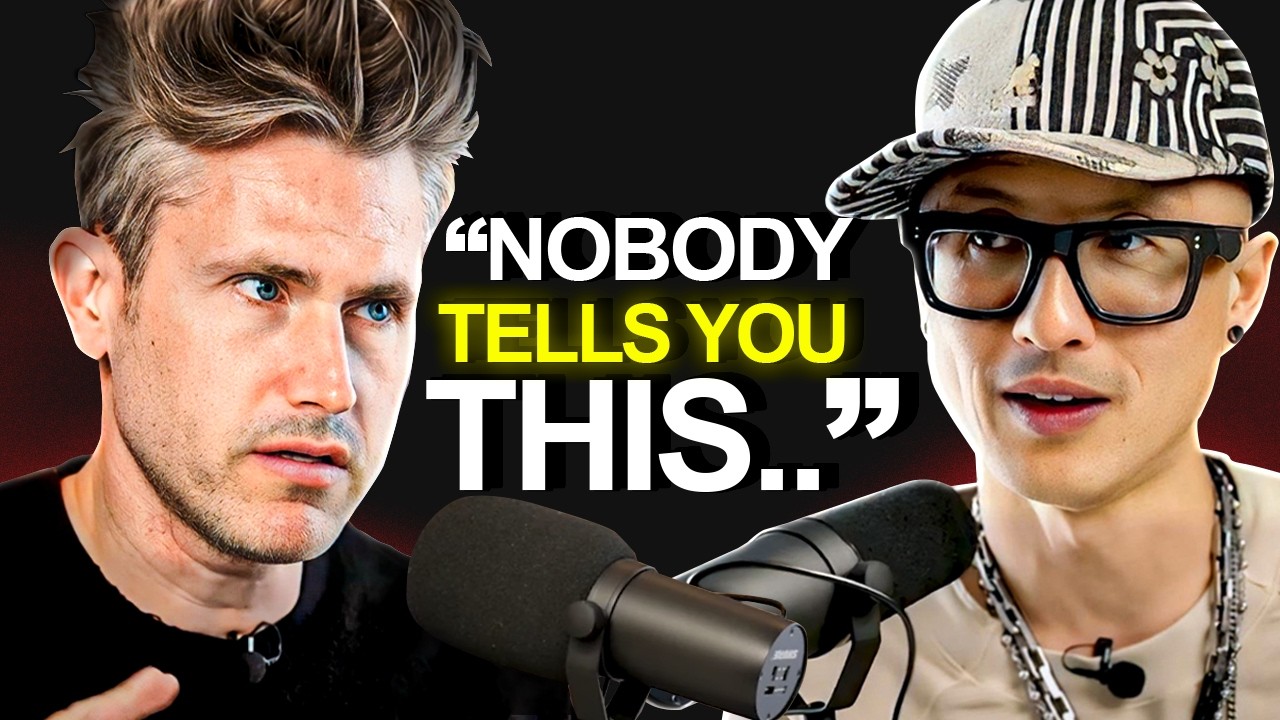
That's one of the big trends. You know, another one is there's kind of a polarization where short form is definitely blowing up on YouTube. I think a hundred billion views a day. It might have got to, it was 75 a while ago. Today I'm joined by Sean Kennel. If you don't know who Sean is, you gotta know Sean. He's the founder of Think Media, a company that helps creators and entrepreneurs sell more with YouTube. He's also co-author of the book, YouTube Secrets And co-host of the Think Media podcast. Sean, welcome back to the show. How
you doing today, Mike? I'm super fired up to be back and uh, I'm doing well. I'm glad you're doing well. Today, Sean and I are gonna explore YouTube updates that marketers need to know, and folks we have a lot to talk about today. However, before we go there, Sean, there are some people listening to this podcast that are maybe paying attention to all the other platforms except YouTube. Um, what are they missing? What do they need to understand? Or maybe they've been on YouTube and they've kind of left it for whatever reason. Um, what's happening
in the YouTube world that marketers need to pay attention to and creators? Yeah, I mean, if you're a marketer, a business owner, you represent a business. I think the reason to pay attention to YouTube is simply because your customers and potential customers are watching and consuming YouTube and you have a chance if you position yourself correctly and create strategic content to get in front of them. You know, there's an interesting stat. 15% of YouTube users in the United States are baby boomers. Um, and that means millions of people are watching, um, YouTube That are in
their sixties and stuff, right, That are in their sixties. In fact, they, 68% of baby boomers say they watch YouTube to be entertained. 68%. So seven outta 10 baby boomers are on YouTube. Now, as you go down, the numbers just get bigger. So Gen X, tons of 'em, millennials even more. And then of course Gen Z. So when you think about reaching every single demographic, And I think this makes sense because you know, TikTok skews a little bit younger, Snapchat sort of off to the side, still going, but a very niche younger audience using certain
features there. But YouTube is kind of like Amazon. It's the everything platform. Hmm. There's something for everybody there. And every pain point they have, marketers want to solve problems for a profit. They're serving people. Um, every pain point they have, education, entertainment, People of all ages, all backgrounds are consuming YouTube. But I think it goes a little bit deeper. You know, there was a, all the Nielsen reporting revealed that YouTube is the most watched platform period. Mm-Hmm. More than Netflix, more than Peacock, more than Hulu, more than any of these other streaming services. And it
just continues to grow. The Washington Post wrote a headline and they said this, the most consequential technology in America is YouTube. Hmm. They said it's the most popular social app And music service, the healthiest economy on the internet. And they also mentioned it's AI training fuel, which is a separate conversation of the fact that a lot of AI is being trained on YouTube. But basically bottom line for marketers is if you're in the reaching people business and in the educating and helping people understand that your product exists and what your product is or your services,
then creating strategic content on YouTube is a great way to reach people. Of course, the challenge is competition. The challenge is what content do you make? The challenge is how do you make it sustainable, sustainable when there's other platforms to keep up with? And so of course we can unpack those things. Yeah. And here's the other side of the equation that I think a lot of marketers may not understand. YouTube pays the most money for creators to be on the platform. Explain why that's so important, Sean. Yeah. When the Washington Post said it's the healthiest
economy on the internet, they've created something that no other platform has been able to replicate. And that is, it is the most desired platform for content creators simply because basically the terms are 50 50, they're gonna split advertising revenue with creators. So what they've created though is this perpetuating cycle of incredible content because there's incentive incentive for people to create great content, try to get views on it, because in doing so, it actually can be quite lucrative to be paid directly from the content. And I think what's actually fascinating about this is one of the
reasons why other platforms I think haven't been able To crack the code, is they did not lead with the initial generosity of YouTube. It probably sounded outrageous at first to say, we're gonna give away half of our ad revenue, we're gonna sell ad advertisers give half to the creators. Because if you look at the other platform platforms, a couple of percent, 5%, even 10%, 50 sounds outrageous. But now history has told us that YouTube has become the dominant video platform and the most desirous end destination. What's funny is a lot of young creators saw TikTok
as a stepping stone to YouTube. Mm-Hmm. A lot of creators on other platforms are like, it's been awesome what I've been able to do there, but my dream destination to be established and an authority would be on YouTube because of how lucrative it is. I think one of the challenges that all platforms have struggled with is monetizing short form YouTube included. And so even though TikTok has been known for RPMs of like 75 cents, which is how much money you earn per a thousand monetized views, which is like a crazy high number, 75 cents. Well,
I remember when YouTube shorts came out, it was like five to 10 cents and now I've seen like 25 cents. You step into long form and it's two to $5. You step into education and marketing and this audience, the kind of content we create, our RPMs are $10, 15, $20, $40 Even. I've had $40. Yeah. But here's the thing folks, this isn't, the reason I'm asking Sean to unpack this isn't because I want y'all to go out there And make money by making videos on YouTube. I just want you to understand YouTube has attracted the
best creators. That's the key. So if the best creators are there, then that's why the audience is there, right? And the key is that anybody who creates great videos has the opportunity to be seen alongside some of those best creators videos, right? With the suggested videos, the homepage. And obviously you could pay to be in front of those videos as well. And that's the secret unlock for marketers. Would you agree? Yes. And I think, yeah, the fact that with this much audience, of course we could talk all about organic content today, but the paid advertising
opportunity to hit local areas, to hit zip codes, local areas, local states or nationwide or international, um, there's just so much attention on YouTube and there's multiple ways to get in front of that attention. And this is only speeding up. It's not slowing down in terms of new content. YouTube adding new features, which we're gonna talk about, The future is bright for YouTube. It's, it feels like they've been on a victory lap and there's not really anybody that's close to competing. A hundred percent. Okay. So now let's talk about some of the content trends you
see happening on YouTube because there has been a lot of changes, right? Like Mr. Beast, let's talk about that a little bit and we've got a bunch of other stuff that we can talk about. But you know, there is an important kind of shift happening that I think is advantageous for anyone who wants to create content on YouTube, right? Yeah. So one of the big CH changes, I think as we everyone listening to this is our strategists culturalists to a point, you're paying attention to trends, you're paying attention to, pendulum swings into different things in
social and maybe certain memes or c certain formats work at a certain time. And, and one of the eras we've been going through is what's been known as the Mr Beatification of YouTube. Some have called it the era of excess and why this didn't touch every form of content. It's just this idea of yelling, high paced editing, Uh, high fast paced editing and continuous, like trying to one up ourselves. Like I shredded a Ferrari in a metal grinder. I shredded 10 Ferrari, I got the biggest yacht. And if you even take it to a smaller
level, I think it was the compounding clickbait, just trying to one up, uh, you know how fast you grew a social. I grew an Instagram account to a hundred thousand followers in one minute. You're like, what are we talking about? Like, just, just like always this and kind of sensational, maybe it, maybe it's sort Of a unicorn story, but it's also maybe just twisted. Maybe it's a lie. And just there was that energy. And I think that that energy stresses a lot of us out. Like I think it caused a lot of anxiety. Well, here's
the good news. There's been a countertrend to that. And I think that is a countertrend summed up in maybe the word authenticity. And I think that authenticity is the new currency. And what does that look like? The countertrend is that it's kind of going back to the old school days of YouTube where people are turning on a camera, sitting down. They still have got a strategic topic 'cause it's what they're talking about and it's how their storytelling and it's how it's coming out of their life. But the thumbnail might not have any editing on it.
In fact, it might have kind of a neutral face, not a hyped YouTube face, no text. And then the video might actually have no editing at all, or maybe a few simple jump cuts. And so the fast-paced editing is come taken out. The over-hyped promises is taken out and what's been replaced with the real, The raw, the vulnerable. And so authenticity is the new currency. Some people are calling this YouTube easy mode 'cause you're seeing it in every single niche you're seeing. It's just this counter trend where at one point everyone was doing so much
editing, so much effects music and all of this stuff, but let's talk about marketers and business people. It's maybe getting in front of, uh, loom or Zoom or Camtasia and just recording your screen and sharing some really valuable information and like hitting record And just delivering value and like turning it off. No music, nothing super fancy. I, and those videos can be blowing up and are blowing up right now in various niches. So I think that's one of the big trends is kind of this authenticity. A couple examples is like clear value tax and a
lot of new creators got discovered right around 2020 and the pandemic and different things that happened. But that's one of my favorite channels. And he stands there with like a clipboard. He's got an outline of his notes. He shoots on a plain wall throw up And he throws his papers behind him when he is done talking, right? Yeah. And he's got, and he puts like a tie and a nice shirt on and he talks very just kind of, he just go, his videos are eight to 12 to 16 minutes and he just delivers value in
an update on a clear title of what's happening with the economy or what the next fed raise is gonna mean or whatever. And so everybody listening to this should look up clear value tax because you, you see that if the value's there And then the knowledge is there and the point of view is there and the perspective of there, it's not the fancy camera. Yeah. I don't even think he has thumbnails. I think he just lets the YouTube video pick a thumbnail, doesn't he? Yeah. So that's, that's one of the big trends. You know, another
one is there's kind of a polarization where short form is definitely blowing up on YouTube. I think a hundred billion views a day. It might have got to, it was 75 a while ago. I think that's the new numbers. Wow. Um, I think we could go down a whole kind of conspiracy, uh, theory of know there's all, well we're, we're Gonna get to shorts in a bit, but what about tv? I, I don't wanna skip that. Are you Gonna get there? Well, I was gonna, I was gonna say the juxtaposition between shorts and long form.
Yeah. Okay. And so shorts is blowing up like, so you go ultra short form versus ultra long form. And both are an opportunity simply meaning that shorts are going well, they're blowing up and they're a competitor to TikTok. And the conspiracy theory is like, I know there's, there's TikTok and ownership and will it get shut down? But it always made me wonder, is there, it would be advantageous for someone at Google for TikTok to be slowed down and shut down? Why? Well, if they wanna take market share, but it doesn't really matter either way. Their
YouTube shorts is making, ma is taking massive ma market share. But so what else is taking market share is ultra long form and a couple facts. YouTube is watched in more living rooms Than Netflix in America and US homes. YouTube is being watched on Smart TVs. That's crazy. And so there is this now maybe passive viewing experience where people like to turn on their TV. And I think about my own behavior. A lot of times when I get done maybe working in my home office, I'll go down, maybe start cooking some dinner for, uh, my
2-year-old and 4-year-old kind of just hanging out and, and I might grab my Apple TV remote, turn on my living room TV and turn on a video podcast and just let it play or turn on something that's a little bit longer form. And so there's been this massive wave of ultra long form. And what do I mean? Well, videos could be 12 minutes, 18 minutes, but 25 is doing really well. If you do look at Mr. Beast, there's something about he was doing a lot, 25 was kind of a target. It's basically one sitcom length
of, of an episode that he would drop. But then you also look at, you know, two hour podcasts and three hour podcasts like Joe Rogan for example, right? Absolutely. And, and people leaning to YouTube to watch this ultra long form content, which ties into one other aspect of this that marketers can apply and people are creating compilations, I think media, we call them content marathons. And that is that people like to you, you maybe make a video that's like part one, part two, part three, part four of something you're teaching through. Well, once you're done
with all those, what happens if you stitch them together, they're all 10 minutes, but you stitch 'em together. Maybe you kind of take out the call to actions that made each episode unique. Maybe you stitch some transitions in the middle, perhaps even like clarifying some questions that were on those four videos you posted over the past couple of weeks. But if you stitch 'em all together, which this is not against YouTube terms of service 'cause it's now a new original video that's 40 minutes and not 10. Well, and it's Your content And it's your content,
your your hacking watch time. Because if, if also YouTube rewards click through rate and average duration, even if the percentage viewed of your 40 minute video is only 25%, that's still 10 minutes on average of people being on the platform as opposed to uploading a 10 minute video and getting three minutes of watch time. So this long form content is being suggested by the algorithm. And I think there's an interesting trend that we can discover as marketers here. And it's related to decision fatigue. One thing I think we can all relate to is That we
have decision for fatigue. There's so many options in the world right now. There's so many different YouTube videos to watch. There's so many different OTT platforms. You know, what show do I I, you know, my wife and I might debate, we could spend an hour just looking for a show and be like, we're too tired, let's just go to bed. We just saved a bunch to our watch list. There's so many choices. Well let's see if Max has any good shows. Well, have we checked Hulu lately? Has Netflix uploaded anything new? Let's watch some YouTube
videos about the shows that are coming out. Okay. Too tired. We don't even watch a show. There's a lot of decisions. Well what's interesting about short form and long form are both serving that meaning YouTube shorts in the shorts feed takes no decision making power. You just swipe and if you don't like it, just move to the next one. But you're not actively searching for something, You're letting content come to you. So not only are you eliminating the half the cho the fact of you having to make a decision, but you're getting this dopamine hit.
And if you just don't like it, you swipe past it but you're like, Hey, just algorithm. Bring me, bring me something that I might like and study my behavior. So you keep bringing me things I might like. It's a solve for decision fatigue. What's also interesting that ultra long form content is also a solve For decision fatigue. Let me turn something on and let it play. Let me turn something on and not have to, okay, I watched a four minute video. What video do I wanna watch next? I watched a shorter video. So those are
some of the trends. I think authenticity is the new currency. I think that there is an ultra long form opportunity. Short form is also blowing up on YouTube. And I think learning about some of, you know, certain human behavior right now a lot of these trends are related To the overwhelm we feel from the era of excess of all that hyper editing. So it's a countertrend there to so many choices. How can we solve for decision fatigue? Make things simple for people, let them turn on the complete guide to something or something that really is
more immersive. It's kinda like maybe I want to pick up a, a book. There's all kinds of good short form. I can read lots of tweets and get lots of information from a blog here and a blog there. But I'm just so scattered all over the place. Let me sit down and immerse myself in long form a little bit and get some stories and some information and kind of an experience with all of this noise around. Gimme just one thing. So it's interesting trends that are happening Back to shorts. Um, talk to me about the
length of shorts 'cause I know it's getting longer and what your thoughts are on that. And also talk about live streams Vertical. Okay, so a, a few trends with YouTube shorts. One big announcement was that you can now upload three minute shorts to YouTube. What's Your take on that? What's your take on that real quick? Um, well we haven't actually seen them starting to show up in the shorts feed yet. What we were given was a deadline that October 15th. Any vertical videos over under three minutes previous to that would remain in their previous state.
They will not become shorts and basically it's square or taller. So any square videos would be shorts and any, any resolution between square and full on Vertical. Yeah, Vertical would all become, uh, would stay as they previously were. But uh, after October 13th they'll start rolling it out into the algorithm. So we'll see. We'll have to actually, you know, observe the data and see what's happening there. My take on it is, there's a couple theories. One is that it actually is gonna kind of be the death of the 3, 4, 5 minute video Because what
does now the three minute horizontal video, what, what, what, what does that, um, what's the point of it? What what does that, you know, why do that? It also, Well, and it sounds like discovery is gonna be a bigger deal potentially with these longer shorts than it would be with the traditional short horizontal video. Is that what I'm hearing you say? Um, well, we'll have to see and I was able to talk to a YouTube employee and you know, they'll, they'll say of course there's also intent And then the algorithm, they do describe as a
black box where they're like, you know, we're not actually trying to tweak things but the algorithm is observing human behavior and it's doing what it's doing. Of course it's gonna reward time on platform, but I I was to bring up to thing things like, you know, a vine style short like seven seconds, that's like funny. And lable is not gonna lose influence over a three minute short just because it's longer. Of course it still does it hold attention. There's different metrics. How, how much is it swiped away from? I think also the, the difficulty of
holding three minutes of attention when shorts is such a dopamine heavy feed. Um, it would Have to be, it's gonna have to be really good, right? But It's have be really good, good story. But There are some, some people listening right now that like have longer videos that are like, man I could, I could edit this video and take the essence of the story. 'cause sometimes people struggle with getting something good in 60 seconds, but three minutes if it's really good. I would imagine there's an opportunity there for us people To repurpose some of their
videos that are longer, that have a really good story into a three minute clip and then all of a sudden you got a new video. Unless you don't think that's wise. No, I'd agree a hundred percent. And there's a couple things. If there's one absolutely incredible point of longer shorts up to three minutes, it's that it made repurposing cross platform, it solved all my personal problems and probably 99% of the marketers listening to this. And here's what I mean, like we do chop vertical content out Of our longer form videos and we repurpose stuff. And
so what happened right is meta Instagram and Facebook, they allow 90 seconds. TikTok they allow, depends on your account, but 10 minutes up to an hour, like it's all kind, you know, all kinds of different lengths. But then Schwartz was at a minute. So the problem was if, and then on TikTok, this is unique to us and we don't like Chase the creator fund over there, but it's something that we can access. But you only get it if you're TikTok Over a minute longer than one minute. Yeah, exactly. So it's kind of like, and we
have an agency that helps us. So it's kinda like we, they would chop up a video and they're like, we wanna make the video a minute 15 or a minute 30 up to 90 seconds. But now it doesn't, you can't actually upload that over on shorts. But you can't on reels and meta but you can't upload it there. The YouTube shorts thing just solved all of that to me, the practical length, it's not a magic number, But the practical length, the vertical content now is 90 seconds. Mm-Hmm. 'cause if you're under 90 seconds and you
want to be multi-platform, you can upload it everywhere without having to do any re-edits or different versions. That's a marketer's dream in terms of just streamline and efficiency. And then I think that um, you know, there's a test I can't report back yet 'cause the three minute shorts haven't started, but I actually shot here in my office Horizontal 4K resolution framed pretty wide three minute videos and we've been releasing them on our channel in horizontal. And once the three minute shorts fully hit, we're going to be doing a comparison. It's actually the same content. There'll
be a couple weeks apart. People probably won't notice it's does. The other interesting thing about shorts and long form is marketers can go into their analytics of their YouTube channel and see That usually what's happening here is you're typically creating two different audiences. Yeah. And that it just kind of is what it is. Like it depends on the channel. But for me, I've had a lot of viral shorts and those will really skew my analytics. It'll say sometimes nine out of 10 people watching your channel only watch shorts. 'cause I've had some shorts that will
get like 20 million views and my long for videos will get like 2 million views. And those are our numbers. So then that makes sense. 18 million people only watch the shorts and then, And then it'll say that only 3% or 5% watch both. Hmm. Interesting. And what some people will say is like, this is ruining my channel. This is messing with my channel. And I think the mistake they make is like kinda Yeah, because what's happening is your analy, your analytics are getting skewed. If you're getting sub lots of subscribers from shorts, which you
will get if you get a multimillion viewed short. The thing is though, you're like, I'm getting all these subscribers But my, my long form views are going down and, and my experience has been no, they're just like not going up. They're just not changing. But now your mind's all messed up because you know, my podcast channel got to a quarter million relatively fast 'cause I had a 20 million viewed short and a 10 million viewed short and that brought in like 30,000 new subscribers. But I'm like, in my mind I just treat it properly. I'm
like, and those subscribers are just an entirely different thing. It's kind of a vanity metric. Right? And they will watch more shorts most likely. And I'm also here for it because I'm like, for the 5% overlap, that's a lot of people out of 10 million. You know, like there's still a lot of, but I also am not letting that vanity metric go to my head on the podcast channel. We have a baseline of about a 800,000 views a month. And when we, you could even look at my it, it actually will mess with your emotions.
The mountain on our analytics, When the short hit 20 million views made it look like we're an utter annihilation. Right now the channel's failing numbers are going down. It's so tiny. 'cause we're now back to this baseline of 800,000 views and we're at 20 million. But I was like, that was what we've been at. We've been at like 800,000 long forum views. Core audience, high quality audience's like the O of HubSpot said YouTube subscribers are the most valuable subscribers on the internet. If I fill in his meaning, and I believe it's what he is referring
to, It means long form subscribers. It means subscribers that care pay attention that are more similar to true fans and that are actually engaged with you. And what short subscribers I don't think fall into that category 'cause it's so much more casual. It's so much more. They are they really connected to your brand? How much time have they really spent? I mean, a long form somebody who listens to a three hour Joe Rogan podcast compared to somebody who is like, that was a funny short click subscribe On a 32nd short. The level of depth and
connection doesn't even compare. Yeah. So I think that's, uh, an interesting thing of what's happening with shorts. And then I would mention you mentioned livestream, we could hit that as well. Yeah. Yeah. Let's, um, just real quick, for those that are listening, we are recording this in November, despite the fact that this three minute thing came out in October, just in case any of it is like this thing was recorded in October. I'm sure by the time people listen to this in December it might actually be out, but yeah, talk to me about live streaming
briefly. You know, um, why would someone vertically live stream? Yeah. So one new YouTube feature that is lesser known is everyone's heard of live streaming as many do on YouTube, um, with Streamy Yard and all kinds of different tools or just YouTube's native features. And, and to a point I would say it's kind of been down prioritized or it's not crazy prioritized. When a feature is new on a platform, it gets a lot of extra Juice and discoverability. I would say that's not true about live streaming right now. It's just solid. It just is what
it is. It's been there. And if, depending on if it's right for you and if your audience is gauged, cool. That's your typical traditional live streaming. What's unique, if you update your YouTube app and you go live on your phone and you go live vertical is vertical live streaming can get discovered in the shorts feed. So Only why it's live presumably, right? Only why it's live. Yeah, for sure. Yeah. So What happens afterward? It just disappears. Um, the, the replay will be on your live stream feed. Oh, I see. Okay. And maybe somebody goes back
and watches the live stream and maybe the replay, maybe the nature of the live stream you do because it, it's not as much evergreen content. Maybe you don't even leave it public. You maybe make it unlisted. Mm-Hmm. Uh, maybe you do leave it public. Maybe you need the watch hours if you're trying to get monetized. But all that to say is, it is a real opportunity and something to test and something I've seen myself all the time when I'm on watching shorts and when I do want to not have to make a decision and want
just a quick, you know, hit of something funny or educational, I'll be swiping through my shorts feed and total strangers will be live. And I'll say, this person is live. And I'll see they have four people watching, 32 people watching, or 3,300 depending on. And so it's an interesting trend, which also speaks to maybe one other trend to throw in here real quick though. It, it, it makes me remem it, it takes me back to live streaming. When, um, Periscope was hot, I dunno if you remember this, like Twitter, periscope, and it was Meerkat and
then Facebook Live, it was all vertical live streaming back in the day. Right. The mobile livestream was vertical mostly so that it was really easy for someone to go live during an experience, right? And then all of a sudden it kind of went to this more high production desktop experience. So I feel like that's actually going back to the way it was, Which I think is kind of intriguing Now, where were you gonna go after that? I was just gonna also say maybe as to tie a bow on new trends as well as shorts and
updates is one of the big trends on YouTube is kind of like subscribers don't matter. Um, content, yes, it's Sad but true isn't it? Sad but true. And, and that we've moved from the social graph to the interest graph. Meaning content itself is the variable. Meaning brand new creators can go viral or get reach because it's just predicated on the content itself. The YouTube algorithm rewards click through rate and average duration. And if you make the right content at the right time about the right topic, uh, with the right, you know, optimization and information in
the video, YouTube is a really great place algorithmically to grow and get discovered. The art form is figuring out what we just mentioned, easier said than done. And this is provable in a couple ways. One again, subscribers. I heard YouTube employees say this way, it's kind of like not a metric of of everyone who's engaged and watching your channel and who is still still there. Especially if your channel is a little bit older. It's kind of like a, a metric of everyone who's ever visited your restaurant in a tourist location. Yeah. It's like a check-in.
So he's kind of saying like, you know, a million people have walked through the doors Of my restaurant in this tourist location over the last 10 years. You're like, okay, cool, but like, how many people came this year? And you're like, oh, well 75,000. So it's like ultimately looking at unique viewers, things like that. And, and so there's not disproportionate advantage to having a lot of subscribers. That's good news. And the, the deeper news is that on a lot of people's homepage and suggestion feeds and YouTube pages, when they're consuming content, YouTube is very intentional.
They have a whole devoted staff to new channels. And a lot of times maybe one out of every four recommendation might be from a, a newer channel, less than a thousand subscribers videos with 44 views, 256 views. They have like an aspect of the platform and it's to their, they're incentivized to do this because if people felt like there was no way to break in and there was no opportunity for new channels to make it then kind of the whole ecosystem or they'd be killing off their future, their Business model is creators incentivized to create
content. So that's just good news that if you're starting right now on YouTube, if you have a smaller channel, if you just invest, invest some time in creating good content and strategy you can break out. And content is the variable. One video could bring in whatever KPI you're trying to achieve, leads awareness, you know, uh, views and, and you don't need a bunch of subscribers to get that reach. And that just ties into the shorts thing as well. The fact of vertical live right now is that it's, It's not just vertical live in the shorts
feed for super established famous legacy creators or business owners and entrepreneurs and marketers. It's brand new channels. And so you could see that YouTube is not saintly in the fact they're doing this. Like they, they, they have incentive to do it as well, but it means there's opportunity. They're trying to create a win-win. They want creators to win. They want viewers to be satisfied and to enjoy the content. They want people to find products they love and use And would, you know, channels they wanna subscribe to and they want to create an ecosystem, um, that
creates a win-win win. So people love the platform and are satisfied with the experience. And so marketers paying attention, there's a lot of opportunity and even a land grab right now as we're kind of in a 2025 world. I Love that. Okay. Um, shopping, YouTube shopping. This is dropping during the holiday season and um, a lot of people don't even know that this, I didn't even know YouTube has shopping, so what the heck is it? Let's start with that and then, um, you know, just kind of lay it out a little bit of, of what
it is. Yeah, so YouTube shopping, um, is a relatively newer feature and it is the opportunity for products to be tagged in live streams, longform videos and launched probably with the intent, although live streams and longform are part of it on vertical videos that YouTube shorts could have a product tagged. I think the best picture of this could be talk about, You know, online shopping and e-commerce for, um, a cool false sweater and like, Hey guys, look at this sweater I'm wearing. You know, click the tag if you wanna buy the sweater and different than
not go to the description, not go to the pin comment, but an overlay of the product image native into the platform trying to optimize for conversions. ui, ux like the user experience, the user interface integrated right into the entire platform, but specifically YouTube shorts. This is also an answer to TikTok shopping And Instagram shopping. And it was kind of funny, I was talking to, uh, our content director and he was like, I bought so much stuff on Instagram shopping. He was like, you connect Apple Pay it kind of, if you think about the Amazon mindset,
why is Amazon so amazing? People have Amazon Prime. You could buy things with one click and it's at your house in two days. And sometimes the impulse buy buys That probably everybody listening to this has been guilty of is when friction is removed. Mm-Hmm. So his whole thing of like, oh that looks kind of cool. That's a cool like phishing knife thing and I love going phishing. Oh, it's on sale. You know, you click it and then you just double click like face scan apple ID and you're like 1, 2, 3 steps and that thing's
on the way to your house. It's all dialed in. So that's also kinda what YouTube shopping is trying to, they're trying To streamline that experience. Now. It, there's already, I wanna say thousands, tens of thousands of retailers integrated, whether that's an aama, a Walmart, um, How does one even find, how do you even find all this stuff? Like is there like a special tab in the app or something like how do you even know that's the first thing? Yeah. How do you find products? And the second thing is how do you get your product in
there? Yeah, okay. So you, it used to be called monetize. If you go into your YouTube studio now, it's called Earn. So you click on earn in your YouTube analytics, your YouTube studio. A couple things marketers should all do is make sure you go to your settings and get your whole channel into compliance. So you have access to all features. This isn't hard to do, but it means you maybe have connected your id, uh, literally a picture of your id, a phone number depending on where you're at. Two factor authentication. It's actually a lot of
stuff like that. You make sure information. There's four kind of levels where you have no upload limits, you have no limits on anything, and you have access to the features to get YouTube shopping. I believe it's 500 subscribers and 3000 hours of watch time and you could start getting access to shopping. Um, there was actually kind of a question on one of my videos 'cause it doesn't necessarily mean it's rolled out to your channel, but always the best way to be compliant is to make, make sure your channel like no copyright strikes, everything's set up
properly. And then you're really in good graces If you hit the 1000 subscribers 4,000 hours of watch time. And for some features they talked about channel memberships communities, sometimes it's a higher subscriber number. So without splitting hairs on that, you go to earn and you wanna make sure you actually turn it on. So there's probably half the people listening to this are like, wow, I didn't even know that was there. And it's not even turned on. Like you just turn it on and then now you have the ability on any video to click, add a
product tag, a product search by product name. And in some cases that one product Might be sold in five places. Like if it was a, you know, a backyard lawn and garden hose sprinkler or something, you might be like, I have the Home Depot option, the Lowes option, the target option. And what's funny Is, oh, so wait, the retailers themselves are the ones that are fulfilling this. Is that what I'm hearing you say? Correct. Target Home Depot. And what's funny is like tar, I always see Target and it's like the affiliate commission is 0%. That's
what I've seen. So I'm like, I, that's not just seem very incentivizing. So I tag Target, they get the sale, I get zero, what, what am I tagging it for? And then when your other option is Walmart's gonna give you 3% or Okay. And then there's other retailers. So I think, you know, depending on the sophistication of the marketer listening. Is Amazon In there? Is Amazon in there or no? Do you think? Well, so, so Amazon is not in there and ah, okay. My understanding I would say this, I don't think YouTube and Amazon are
not friends. Okay. They might be, they might be frenemies. Yeah. Because they don't prohibit Amazon affiliate links saying your YouTube description. What about Shopify? Uh, you can connect your own stores. Okay. So you, the cool thing about shopping is you can connect your own products and they can then be tagged, which is a better experience, and then that's gonna be fulfilled by you through your store. And, and in some videos too, like a lot of times we'll do like top 20 accessories for your smartphone. You could have 20 tags on a, on a video. It's
also against the terms of service to tag something that's not in the video. Okay. So if you're just trying to get clicks on links. And so a couple other interesting insights here is, um, So this is really affiliate marketing is what I'm hearing you say. Right? It's really native affiliate marketing and if you've ever heard of like ridge wallets, um, Which is kind of a no trending direct to consumer, um, kind of more masculine wallet, that's kind of cool. Like right now I see they're running a promotion, 50% commissions for a limited time. So there's
kind of, and then there's some stuff on the backend for creators where there's a marketplace to get free product. Okay. Uh, we're running a promo, 50% commissions for the next three months, click here, sign up, we'll send you free product. So the marketer might think about, yeah, how could I integrate my Shopify? How could I, well of course can I get my product product distributed in a Walmart and then have that tagged on there. Yeah. You know, different things like that. And then the one other thing that's interesting, back to like the Amazon point, and
one of the big changes YouTube made regarding shorts was they took away clickable links altogether, no clickable links in the, in the pin comment and no clickable links in the description. Mm. Partly I think to drive attention to YouTube shopping and YouTube shopping only so they can tag To the shop. Okay, got it. Yeah. And making it impossible to really send traffic anywhere else because it's, you can't even really grab your finger and select text on and who's gonna do that? And, and so, but you can't just click a So you in, I love Amazon
personally, our tech channel and doing affiliate marketing. Amazon's massive for us, but YouTube shorts, this was our aha moment was like, it's an entirely different thing. We, if we use, we are using YouTube shopping, But we're filtering it through not as a way to get to Amazon, but as a way to integrate natively with Aama camera, camera or other brands that are off Amazon directly in YouTube shopping itself. Okay. We've talked a little bit about YouTube studio, um, but when we were prepping for this, you said that there's some stuff that you can do on
the mobile YouTube studio side of things. So I want to talk about that and a few other things, um, on the, on the YouTube studio side of things. So let's start with the mobile app. What is it about the mobile app that maybe is different than what you see when you're logged into a browser in the studio? YouTube studio? Well, a couple things actually. There's the biggest new thing is the inspiration tab. Okay. So this actually is best experienced on desktop. And if you go to your YouTube studio dashboard content analytics, you go all the
way over past revenue, you have the inspiration tab, this is brand new And updated with ai and they're using generative AI to get ideas for your next video. The cool thing about this is this is AI integrated with YouTube itself. And so there's great iis that, including Gemini that's gonna be connected to YouTube and others that have all kinds of data and could tap into human psychology. But the fact that this is integrated right, with YouTube and with your channel. So if I go to the inspiration tab And I type in like best camera for
YouTube, which would be a video we make a lot. Oh, So you actually give it a query when you go to the inspiration tab? Is that what I'm hearing you say? Yeah. And then it gives you, here's what it says, there's a little, uh, circle and it says very high interest from your viewers. Oh. So it's, if you have, and then it says similar ideas, top five cameras for YouTubers, best cameras for YouTubers on all budgets, how to choose the right camera. Then it shows you other videos on the platform you could learn from. Then
it shows you some of the top searches. And then there's that create outline, AI gen No way that will actually help you create the outline for the video. And it, the disclaimer is this might not be good information and it might, what do you call it? It might start hallucinating. Yeah. Um, but it, it even tells me top five cameras considerations, pros and cons, where to buy and, and it, And it's just a rough, uh, outline to get you started. And what they're gonna be doing is they're gonna be adding some thumbnail inspiration. And you
actually could take this pretty crazy deep. There's also, uh, new videos to inspire you. So YouTube will recommend platform wide trending videos related to your channel. So the inspiration, uh, tab has really been taken to another level. Now most people listening to this should already have it, but if you don't, it's not because your channel is new or small or large. It's random. They're just rolling it out progressively because they do, they test, they get feedback, there's bugs, there's errors, there's fixes. My prediction is that 99% of people should have the inspiration tab by the
time they listen to this. Mm-Hmm. Now on mobile, it's also there, but it's a little bit different. And on mobile there's also some feedback related to shorts that you don't get as much on the desktop analytics, which kind of makes sense 'cause you're literally on the mobile studio app. Um, the, my advice for all, all marketers would be to update your apps. Make sure you don't just have the YouTube app, but you also have the YouTube studio app and to spend some time playing with it. And then to go into your desktop and play around
with the inspiration tab. I'm a big fan of all kinds of different tools out there, like the Vid IQs of the world and different things like that. Um, but what's of course really cool about this is it's from YouTube, AI from YouTube And integrated directly into your channel. There's no AI that's in closer proximity, you know, from my perspective than, than this tool. And of course, the API is given over to some of those other tools as well. Um, but yeah, it's a cool tool, tool to have in your tool belt as a marketer. Uh,
talk to me about the community tab real quick. Yeah. Then another thing that's fascinating is YouTube's launched and is progressively rolling out what's called Communities Mm-Hmm. And so if you also update your YouTube studio App on your phone, what used to say comments might now say community or communities. I have two main YouTube channels. Think Media and the Think Media Podcast. One has this feature, the other does not. And when we were talking on our pre-discovery call, you have a couple channels too, and you said the same, you're like, oh, I don't have it. You,
you log into your other channel, you're like, oh, I do have it. Right. Same thing. They're rolling it out. The big vision here is they're trying to make it better, uh, Easier for you to see your most engaged community members. It'll show you their channels, their names, and that they've commented a hundred times in the last month, or 22 times in the last month. Oh. So that's helpful. They're trying to make, what do we do with that Though? Um, uh, one video in my queue is to actually, um, like shout 'em out, make a video
about them and just say, Hey, I want to just shout out and describe and just create and actually send traffic to their channel, To our top people and just let, let let them know that we acknowledge them and whatnot. Um, so that's just one idea. And, and I think I've, I've verbally mentioned it on like our video podcast and I was talking about John, uh, and I was like, John, you, he literally, he says, he always goes very informative video, but he comments on every single video. Hmm. And so I, you know, I mentioned him.
So you think about how we are all listening to this market, Which we're trying to build communities, not, you know, the greatest sound in the universe for most people is the sound of their own name. Right. And so I think shouting people out, doing something cool, maybe creating challenges like, Hey, I have the communities feature. I'm gonna mail some of my merch to the person who gets the most comments this month. And you can do a lot of stuff like getting creative with it. Now there's also, they're trying to have better organization and fil filtration
of your comments and they're integrating AI responses. Um, that's cool. You know, my friend Nick Niman created his own app that's helping you engage and have AI responses and save responses. And there's other, there's different tools that are doing it. He's created one, but like YouTube's also doing that native and there, and then it's getting better. 'cause sometimes you have like three options and it gets kind of generic, but it's like, it's always getting better. So you could just engage at scale with your community. And then it also gives you top line metrics right at
the top Of that, which is interesting. Unique viewers is one of those metrics. And so it's sort of like, oh, unique Viewers. Okay. Interesting. And there was, you could dig to find that information elsewhere, but that's sort of what we've been talking about in regards to subscribers don't matter because Sure, you got this big number of subscribers, but how many people watched in the last month? So I'm looking at, uh, think Media, our main channel last 28 days, 4,800 comments returning viewers, And not even just uniques returning, which would be that. It just shows you
that what they're helping you solve for. Okay. You get a search based topics that's Like returning customers. If you're a business owner, that's important. Right? Yeah. So returning viewers 800 to 74,000, and if I click on that, then you could see, um, uh, the ebbs and flows of that. And they, people who've watched your channel previously and returned your, to watch your channel in the last 28 days, how many returning viewers in the last 90 days? So yeah, things are solving for, am I doing a good job of episodic content or bringing people back? Mm-Hmm.
And then communities will be evolving. And what YouTube is saying is that they want com, the community tab to be more like a Facebook, they didn't use that word, but to be more like a Facebook wall and a Facebook feed, more like your Facebook wall. And like, I recently had a birthday and so, you know, I can go and I see everybody wish me happy birthday on my feed, like on my wall. Viewers are gonna be able to, Specifically on YouTube, you mean? Right? On YouTube. Viewers are gonna be able to post on your community
tab. Wow. This has already been rolled out to a few select channels. And all the feedback has been like, not a lot of people are seeing this or is this the mentality there? Yeah. So there's a level of skepticism that I have about like, will this really take off? I think the tension on that is what will YouTube be in the next six to 12 months? What will YouTube be in the next couple of years As a media destination of communities of how we're, there's other interesting things they're doing, like collaborative playlists. And they talked
about this more for like, if you had friends over and you just wanted to watch funny four minute videos or a little five minute clip of a recent political thing or like, and you want it to all queue up, what's next? You all got your phones out, you're all collaborating on the same playlist and you're all queuing up what's next? Well, you could start doing that in Maybe a digital environment. At least what they're solving for is how do we create more communities? How do we That's cool. Basically stuff like fan art, if you could
upload fan art on somebody else's wall, photos, pictures in both directions. So you're not just necessarily pushing content to people. Of course the community feed could be behind the scenes or as of right now, the community tab could be photos behind the scenes polls to survey your audience, dang. Text-based links to videos. And then you engage in the comments. The goal is to create community. What they're trying to do is just scale that up. The question is what's gonna be the adoption rate? Um, and we'll see Sean Kall, you can meet 'em in person at
Social Media Marketing World 2025 in San Diego. Sean, thank you so much for coming on the show. If people want to connect with you, tell 'em where to find you on YouTube. And then also, uh, where do you wanna send them if they, if they wanna learn more about your business. Yeah, so on YouTube and, uh, thank you so much. I can't wait to be in San Diego again at Social Media Marketing World. And, uh, if on YouTube, if you, if you got questions about cameras, tech lighting, the gear for your setups, our main channel's
called Think Media. And then, uh, I as have a two a week podcast on Think Media podcast, all about YouTube strategy, YouTube features, how to get views. And so that's called the Think Media podcast. That's available on all audio platforms as well as YouTube. And then other than that, the name is Sean Cannell, your Guide to Building a Profitable YouTube channel. So personally on social and you could slide into my DMS or anything if you need help, would be happy to connect. Sean Cannell, thank you so much for joining us today, Mike. Thanks so much.
Appreciate you and your community.