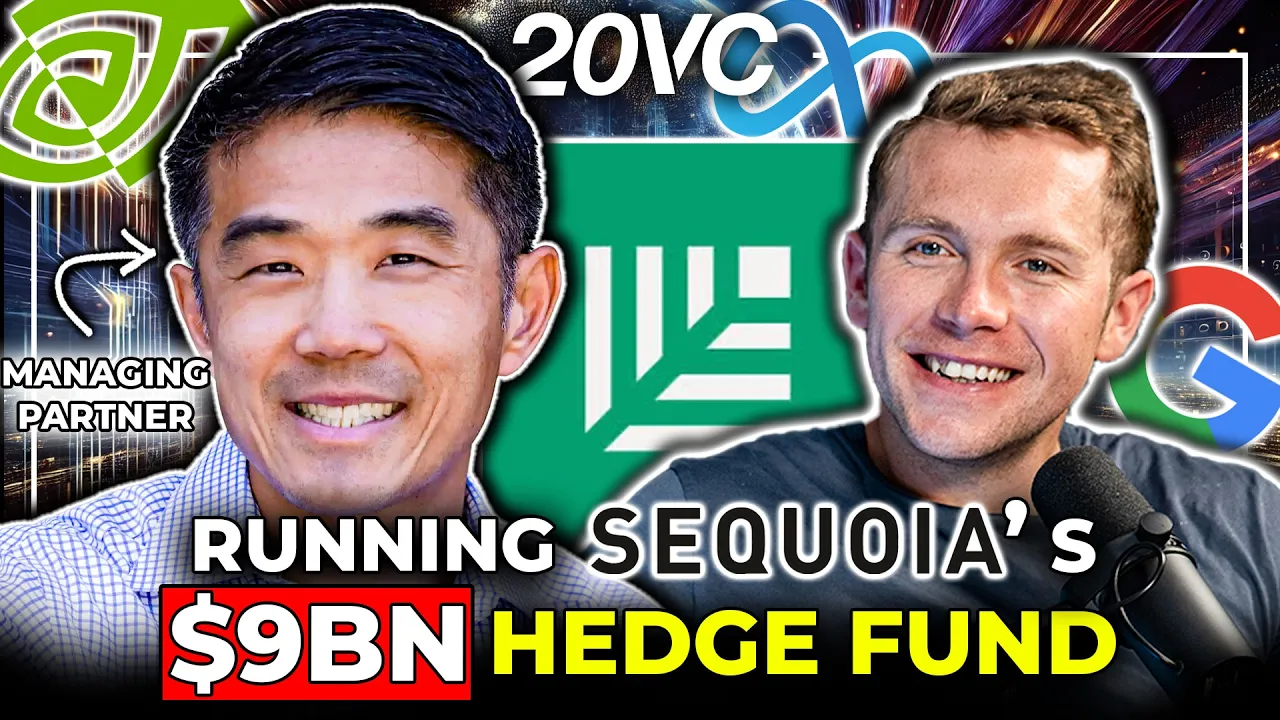
I do think there are more threats on Google's business than there have been ever in the company's history I think nvidia's price is reasonable if you think it's going to continue to keep going for us 70% of our research process is actually upfront on the theme and only 30% on the actual company you have to be a pirate interpreting a treasure map we need to sail to the right Island now if we don't sail to the right Island It doesn't really matter which ship you picked those are just not good Investments ready to go [Music]
Jeff I am so excited for this dude listen I spoke to Mike I spoke to Doug I spoke to Pat many of our mutual friends so thank you so much for joining me today oh thank you so much for having me on the Pod uh by the way I did see your Tweet the other day about your frustration with folks going on the Podcast circuit this is my first podcast ever and I don't expect to do them regularly so I've been listening to your pod for a long time seoa folks have had such good things
to say about you and so I'm super excited to be hon I pay them a lot of money to say things and that's that's a big spend uh listen I want to start in the early days which is how did you come to join scg and just take me to that off a moment and the joining so we started scge or or sey Capital Global Equities in 2009 and it was really hatched actually by Jim gets originally so he worked with Michael Doug and ruof to really get it off the ground and I joined a
year later in 2010 before we externally launched and and raised money from LPS and I think I joined for the same reason that most people join a startup so I believed in the mission uh and this was to build a world-class public equities business partnered with SEO Capital which which I believed at The time and still considered to be the best Venture Capital firm in the world and so I joined as an early employee uh we had 50 million of internal Capital uh we now manage about 9 billion of mostly external LP Capital but that
internal Capital amount is also now about a billion uh the portfolio is about 2/3 public and then 1/3 private and that one3 private is almost exclusively co-investments with sequ and so when the scg opportunity came along I was super Intrigued because it was a chance to go build a public equities business that had true ecosystem advantages in technology and I believe those advantages would translate into the public markets and then I was also encouraged by the supportting backing that scg had from sequoia's most senior leaders like Jim and Doug and Michael and ruoff on the
flip side though uh I was taking a 70% pay cut uh and there was a real risk of failure right most Hedge fund launches don't survive and so my career prospects if it failed wouldn't have looked very good I took the plunge to try to build something special I have to ask I I spoke to Doug before and he said that when you started you were very much a shorts guy uh focusing on shorts yeah yeah um he said that you then showed this specifically nose for Longs and had this unique ability to make the
transition between the two how did you make the transition So successfully between the shorts to Longs and how do you assess that today the way we short is a bit different from how other hedge funds do it so we are not looking for frauds we are not looking for valuation Arbitrage we're looking to further Express a disruptive thematic Viewpoint that we hold on the long side albe it on the short side so it's really important to see these Trends early and so the view into the private ecosystem is actually quite Valuable for that so for
example if you hold a positive view on SpaceX and starlink what does that mean for other satellite businesses what does that mean for Rural Telos if you are bullish on AI what does that mean about call centers so our shorting is really expressing further conviction in the Longs albeit in the other direction I'm so sorry for being naive I specialize in Venture where we're risk on all the time institutions allocate towards hedge Funds in large part because of volatility minimization in hedging is in the name yeah this long short approach really concentrates risk profiles no
that's right so but you can I think you could take risk in different forms formats right so if you are a if you are Citadel if you are another hedge fund that takes a lot of Leverage I do think you need to have low volatility because you're amplifying it with say 6X leverage in our model of the world we Don't take a lot of Leverage and so what we're trying to do is Express more of a specific Viewpoint with low leverage why do you not take leverage where many others do you could take leverage but
then you're taking more volatility and uh I just don't think in technology where you already have a lot of beta you already have a lot of volatility you don't need to take a lot of uh you don't need to take a lot of Leverage especially because there is the power Law in even in the public markets uh not as much as in the Venture Capital world but if you get a stock right there should be a power law that helps you deliver and drive great returns over time without a lot of Leverage it's not that
we don't take any but it's that we take low leverage have you ever had this combination of long and short be very wrong and what did you learn from that there are definitely moments in time where the markets will say we used to Love growth we now love value and if you think about how we are positioned as a fund it's generally long growth and short value right the the value companies are in general the ones that the growth companies are disrupting so there are moments in time where the markets rotate and that's typically a
fun fun of say rates or maybe macro scares where you want to be in more defensive companies and that's uh that is tough for our portfolio but that's Why I think about performance over the long term those those rotations are very painful but they happen in in a typically pretty short period let's say it's 3 months we may have a very rough three months but if I look out over the span of now we've been in business now 15 years we've had one down year over that 15year time frame and and I think you build
your business in a way that you can weather these storms so one of the one of the key things for us is we Uh partner with an LP base that is long-term oriented a lot of them as as I mentioned are Sequoia LPS and so they know how we invest they know our product uh they know that technology can be volatile okay you get it wrong and it goes the opposite of what you think it could be up or it could be down depending on your long or short how do you know when to call
the decision wrong versus when to need more data to see if you were wrong I think It's hard I think it's hard to know and and this is part of the being emotional and attached or not I think it's really important to be dispassionate and look at the data in a way that uh really uh synthesizes it for what it is so if it's good we have to really call it good if it's bad we have to really call it bad and so one of the of the things that we've done is we've actually pulled
in our data science team as an extension of the investment team and so We are uh they join our weekly pipeline meetings uh we have them very tightly integrated with with our investment team to make sure that I think we have that data science angle uh in all of our processes totally get you what are they bring that you didn't have without them what we have as investors is a thesis right we have a thesis on the private side you can get a lot of data to go verify that thesis right you're under NDA or
you're on the board and you have Depth of information that you can then go verify thesis we don't have that in the public markets the data that you have in the public markets is the same as every other investor that's reg FD right so the smallest investor to the largest investor in a company you don't have any different information so to the extent that we can from the outside in verify a thesis that is very helpful for validating how big do we want to make that position Is is that thesis actually still holding true has
something changed has competition come in and knocked us off off the top seat so I think that is very helpful for our investment process Jeff what thesis did you have that proved to be wrong and what did you learn from it so Shopify is uh has been one of our biggest winners it is also one of my bigger regrets in terms of uh postco and so coming out of Co we simply modeled a baseline that still had the Postco trend continue to go up and to the right and that was the case for a lot
of e-commerce companies right so I think one thing that we got wrong is a lot of things returned back to pre-co humans don't really change that much or they change more slowly and so e-commerce really returned back to the pre-co trend line Shopify is still continuing to gain share against the total e-commerce and the total retail in a very nice solid way but to model this You know 800 basis point step up in a year and to say that that was going to continue from that Trend that was obviously Incorrect and we saw that in
the data we started to see that in the data and you know being attached to a company uh really liking the management team there um having it be one of our biggest winners I think it's you have to be dis passionate when you see the data changing and we held out hope for longer that okay this is just a flipping the Data it's going to get better again it's going to return back to this very positive trend line we had and instead it stepped down it's still a great business it still continue to grow against
a very positive trend in e-commerce taking you know share from overall retail spend but that trend line was was simply lower than than we thought so how does that experience impact your go forward mindset it just makes you focus on being dispassionate In a way that I think if I can get help from data science if I can get help from my partners I think that helps us be better and so one of the things that we do is we have a quarterly review of the entire portfolio where we do a reer write of every
single position because right unlike the Venture world we can buy and sell every day every minute typically the re underwrites driven by the teams that the team the uh individual partner and the analyst who Are supporting a particular investment in the controversial Investments one thing that we will do is we will have a fresh underwrite from a different partner where you have a devil's advocate position I think that's important for helping us be dispassionate in 2016 there was a leadership transition which I think was a tough moment Doug told me they did not know whether
to keep Global equities and made you earn it I was writing down Vifer talk to me about that what happened that Jeff so you've probably listened to The seoa Crucible moments podcast where ruoff dies into these difficult moments in a company's Journey that you know require a lot of fortitude but ultimately set the company in a better direction that was 2016 for scg so I'm I'm not a Founder um but I did help guide scg through what I call a refounding moment so SEO hired an original portfolio manager for Scg um you know in 2009
who was a smart hardworking guy but didn't really unlock the synergies that we should have within our ecosystem so um really he he had the same Playbook at his prior hedge fund and so in a lot of ways was trying to recreate his prior hedge fund even investing in non- Te areas for example as opposed to building something special and unique to Sequoia and so performance was good it was not great and so there's this Crucible moment in 2016 where Sequoya decided to part ways with the original pm and actually consider shutting down the business
entirely so as the senior most uh partner remaining on the team I was asked to come up with a business plan and convince the broad partnership why version two would be better uh and for us it was a incredibly unifying moment because we were really fighting for our survival right and so the team actually we actually all left the office we rented some co-working Space down at the Hana house in downtown paloalto just to get some space and clarity for clarity of thinking and ultimately the the prescription the strategy was pretty simple it was just
simply focus on the areas where we have an advantage that is investing in growth Tech with a meaningful thematic overlap with broader Sequoia and co-investing alongside in late stage privates So Gone more the days of investing in lodging companies Port infrastructure we even invested in an airline miles program and so we were just focused on the Sequoia sweet spot and when you looked at the proor analysis of those returns it was actually very strong if we just removed all the non-tech areas and so what we did we pulled together a 50-page PowerPoint strategy presentation and
I had to sit down in front of the partnership in the main in the menal Park office in the main Ford conference Room in the hot seat for Founders and present to the partnership how did you feel I was terrified I was terrified and I didn't I didn't really know if it would really work but I give I give Mike Moritz all the credit for this the way he suggested framing it was yes this is a leap of faith to invest behind this team and this strategy now but it is way less of a leap
of faith than back in 2009 when we didn't have a team we didn't have any capital or LPS no back Off this function no Clarity on whether we would have any ecosystem advantages in the public markets and now we have all these things and we have a team that's bonded together that believes in it I mean this respectfully what's the leap of faith removing the non-tech activities and really staying cool to What sea does best my question more is why do we need a separate team to do it this feels just like a continuation fund
you know I think the public markets Especially when you're trading actively like we do is actually a very different discipline from a continuation fund so in a continuation fund right you're what you're typically doing is saying this company that I've known for a long time do I do I do I sell it or distribute the shares over time and I think that you know most funds most Venture funds can be very good at that what we do is different so there is a portion of our business that our portfolio that is Prior or existing socoa
portfolio companies right that's maybe about a third of the portfolio is that there's a lot of our business that is not there we own for example Shopify was not a sequoia portfolio company it's a company that we admired in the private markets but we did not invest in the private markets and our first chance to invest is when they go public right so that that is a very different discipline and then also having uh having the Discipline to go know when to buy and sell specific companies you know I was talking to Pat Grady about
this the other day we're not just judged on okay did we sell this company at the right time but then did we go buy something else because we sold this company that outperformed this company that when we sold at that time right I mean it's you have to be deploying Capital all the time it's not just is that not a dangerous mindset to tape because if You're always looking for the opportunity cost of capital increase in other words that if I sell here I can put it elsewhere it could force you to sell something you
shouldn't or keep something that you shouldn't yeah and so our bias is definitely I'd say to keep something because you just know it best you uh you know the team you have a lot of confidence in what they're doing I think it is really hard to say sell something that's 10% too Expensive hope to buy it back when it comes down 10% and then continue to ride it that is a very hard discipline and so I don't focus on the short term I think that those are the small dials I I tell my team don't
tell me if you know service now is 10% to expensive if we have a 3 to 5 year investment hold period you know 10% if you get months ahead yourself in terms of the pricing it's not going to impact your IR that much where we have to be careful though Is if it's now 18 months ahead in a 3 to five year investment time Horizon because now it really starts to impact your IRS and then we have to really think about trimming it back and maybe potentially rotating into something else but you know if it's
10% too expensive I I I I don't sweat those details I think about the big dials and the big dials are really are you making the right Investments are you make is your investment process working is this going To be a much bigger company over the next 5 years where was it 10% and it didn't matter actually and where was it 18 months ahead of time and we needed to make a transition or a change I think most of the time it's 10% and it doesn't matter I think 20122 was a period where a lot
of these stocks got ahead of themselves and we should have we we had to trim we trimmed a bunch but we should have trimmed more I mentioned the Shopify example where Shopify you know From the 2022 price is still back to I think about halfway to the peak right whereas you know you have other companies say a service now that is now above the peak so you do need to make those choices very actively which portfolio has performed better the buy and hold of portfolio Company stock from seo's existing portfolio or the net new it's
surprisingly we've looked at this and it's surprisingly consistent I'm not really sure why that's the case but it's Surprisingly consistent and the the area where we have done really well actually are some of these uh private companies where we can partner with the growth team primarily and co-invest alongside early on and so I think the private portfolio has done really nicely and then you Rite into the public portfolio dude I got to talk about that why why why do that that seems to kind of Muddy the waters a little bit suddenly we're now a crossover
fund we're moving into Like late growth rounds which traditionally much less data um pricing is not great actually we still haven't reached that kind of uh realization moment in a lot of cases quite yet of public markets why decide to make that move into the private markets a couple reasons so I think one the crossover thesis of investing in late stage private companies getting to know them well and then having a better view on whether to own them into the public Markets is still fundamentally very sound so do you do you really get to know
them better and if so you get I think so so I'll give you an example so new bank uh is a SE SEO portfolio company as you know Doug is on the board D and I joined Sequoia at around the same time scg LED in a a uh investment in a secondary round in 2019 we participated in later rounds again at the IPO we even bought shares even post IPO right just in the straight public Markets as now a top five position in the portfolio and if we were doing our jobs right I think we
should know that company better than anyone else in the world would you not have had that existing from Doug's partnership with them my question is does it need your attendance at the pre-ipo stage if you just have great tying with the seoa board member I I think it still helps I mean I've known for example I've known D but I've also known uh the CFO logo for A long time before he was the CFO at the company just I mean just growing up even internally at tooa there's only so much that Doug can say look
go help this person or go help that person go go make these connections there's a part of it that just has to be organic okay so that was one what were the other reasons sorry I interrupted you on why so I think also having a perspective on these companies from a competitive standpoint also helps us inform Public Market Investing and vice versa and then we're also able to allocate between publ and privates based on where we see the best opportunities at that specific moment and so right now for example we do not see forg as
many opportunities in the private markets and so most of our attention is actually on the public markets and so we can Flex between those depending on where we see the opportunity set and then I'd say one other thing is over the last few years There have been a lot of tourists as you know a lot of tourists uh mostly on the hedge fund side who've dabbled in private markets and they've gotten burned those tourists are out of the market we don't see them anymore and so I do think the crossover Market is getting more attractive
and it's getting more attractive as this one tourist exit and two as the IPO markets open up again I mean that's a m drop I mean you could you left me you left me with a lot to go With that I have to ask with the crossover in mind do you think private markets ultimately are going to compete and overtake public markets when it comes to volume depth of activity in various asset classes I'm not sure because the public markets are still the biggest I mean they're the biggest Capital markets it is freely tradeable liquidity
is important for a lot of Institutions and I do think there is still for companies still a big branding Event when you go public I do think there will be value to companies going public I don't know when some of these big companies that have stayed private for a long time are going to go public but look I look at say aara I mean Sebastian clearly wants to go public there there are a lot of reasons for that and and I think employees want the these companies to go public right they're excited about it I
mean I think he's also doing the most brilliant Rebranding with his kind of removal of all software products and customer service products brilliant founder brand being created there uh are continuation funds helpful or do you think they're just adding to the pre-ipo backlog that we have I'm not sure if continuation funds are a permanent or a cyclical feature right so well so right now uh the IPO markets have not been open we've not gotten a lot of liquidity I don't know what it looks like when the IPO Markets do reopen and I mean right now
we are still well well below obviously the 2020 2021 levels for the IPO markets we're also well below the pre-2020 you know 2021 levels right pH Philip lefont published this kind of IPO data and it was actually showing that we're actually worse than the financial crisis in terms of number yeah so I mean I think these continuation funds exist some of them EX today because there's no liquidity right and so it's effectively a way to get Some of these LPS liquidity at a time where the IPO markets are shut I do expect the IPO markets
to open say back half this year into next year we'll see but you know we have a number of companies on file Sebastian as you know has been very vocal about going public I think there will be a number of other companies that test the public markets and one of the things that we've seen over the last couple years is that it took a couple years for these companies To write the ship in terms of the financial profile right and now a lot of these companies I think are ready they you know the the days
of rule 40 you're going out at 60 -20 th those are gone you have to be a 30 and 10 40 and zero kind of growing into a a nice profitability curve in order to get public and it took a couple years for the companies to get there it also took a couple years I think for lot of these companies to get to a level of Predictability of their revenue that that the public markets expect right so if you're coming off covid you have all these just weird headwinds Tailwinds to your business that make it
really hard to project and so now I think we've rolled forward a couple years the markets are more stable these companies are more IPO ready and so I do think the IPO Market will open as as we look into next year why would you link or your stripe or your any of these Great firms you can bluntly Finance in private markets for as long as you need to there is such a supply side if you're a great company and they've shown that why would you go public even if you could I think that's kind of
the deal that you made with investors and employees I mean I don't is that I don't know with secondary markets being as as transactional as they are today are you many people are getting secondaries on all of that Stakes I Think there are a couple companies that could do that but do you think the $5 billion SAS company that's a good it's not maybe the best company in the world can really do that no right so like I think there are maybe a certain set of companies out there that can pull off what you're talking
about before 99% of the companies out there I think that's really difficult so with this realization actually that right now we see more opportun Indian public markets Okay in your seat and we're going to stay away from like late stage privates for now what is that reshaping resizing of the portfolio look like in reality then I think it's actually pretty natural and organic for us because we're we're at about a third of the portfolio that is private that is probably more than I Want to Be steady state and that's a function of some of these
companies just not going you know public in the in the time frame that we thought They would what would you like steady state I think closer to 20 to 25% would be more comfortable cuz then that gives us an opportunity to add I think if we are focused primarily on the public markets let's say if we had 50% of the portfolio private that would feel too IL liquid to me so 20 to 25% feels like a pretty comfortable level how do you think about position sizing on a per company basis we have pretty concentrated portfolio
so about 15 to 20 Longs I want to make sure that the top longs can really move the portfolio folio in a major way and as as I mentioned I think the power law still exists in the public markets obviously to a lesser extent than than the private markets but we want to have the top side of the portfolio be pretty chunky and so about 15 to 20 Longs about uh top five are about 35 40% of the portfolio so it's pretty meaningful and then what we'd like to do is to um you know have
The shorts just essentially fall out of that again it's really how much more conviction do we want to express on our longs albe it on the other side we're not necessarily trying to solve for the short sign and a you know Target a particular grosser net have you ever had it where both your long and your short were kind of in in congruous and what I mean by that is you know if we said hey I'm just making it up here totally making it up but staying on this I'm Going to bet on Shopify and
as a result I'm going to short Amazon and actually you were right and you were wrong e e-commerce just grew and both went up so it's a really interesting question and one of the things that so one of the things that I believe and this is a this is a uh this is a visualization that I like to give to everyone who joins our team you have to be a pirate interpreting a treasure Map so we we we need to sail to the right Island and if we get there great for if we get there
first great there is a massive amount of buried treasure but if we're the second ship there we're also doing pretty well even the third ship is going to do pretty well so if we get AI right there will be a lot of good ships Nvidia is clearly the best ship today but a lot of others are doing well also now if we don't sail to the right Island it doesn't really matter which Ship you picked those are just not good Investments so yes we want to pick the best company but we definitely better pick the
right theme and so for us 70% of our research process is actually upfront on the theme and only 30% on the on the actual company and so the example that you gave there I think we'd be we're positive both Shopify and Amazon I don't know which is the first ship to get there but we are positive overall on that theme and you know what we want to Avoid is we want to avoid some of these themes that I don't think have legs where companies whether whether or not you do a lot of great company analysis
it just doesn't matter okay what theme did you swim towards in this pyro analogy which I what theme did you swim towards plant a flag and the boat never came to that Island honestly we we haven't we haven't because I think one we spent so much time making sure the theme is actually working and then two We have you know pretty good uh Insight from seeing what's happening at AOA uh and Doug Doug like to say uh you got to look at what Wiggles right and you got to go hit what Wiggles what does that
mean like from so being able to see what Wiggles be a company or theme early I think is really important and and then being able to see is that wiggle becoming a Tremor is it becoming an earthquake is it getting to be more than a wiggle but if you don't see the wiggle You could do great analysis but if you never see the wiggle you you're not doing any analysis on anything can I ask you what did you not see that you should have seen one one of my bigger regrets and and one of our
bigger losers is um is in a company called twilio so twilio initially was a very good investment for us and actually ended up being a a decent investment overall it could have been a legendary investment um we held on for too long um And as competition started to eat away at the business and we actually saw some sign of it so gross margin was off a few points here or there a couple questionable Acquisitions key executive departures and I think each one of those things you can explain in a vacuum right you can Prof for
analysis for this gross margin this specific quarter or you can say this executive left for a really good opportunity but I think when you take them all together I think clearly Something was a little off and so again that's why I think it's important to regularly re underwrite these Investments each quarter and have a discussion with the full investment team and so again I think that's where one of the one of the ones where the Devil's Advocate point of view actually was really helpful to get a fresh dispassionate perspective I actually share your mistake on
that oh yeah I did the same uh and then everything was good And then I saw Jeff left and I was like right I it I'm like yeah good uh there's that moment when you're like ah bugger that's the final nail and you're like uh it's still hard to sell then I sold at a loss um yeah uh we might have to take that out I don't know if my compliance allows this I thought your compliance was going to be the pain my compliance may be harder on this but like I sold it a lot
but it's still hard To sell and I remember one of my oldest mentors told me Harry be greedy when others are fearful and fearful when others are greedy very famous saying do you buy that I definitely buy that I think it's really hard to do in practice I think most people are fearful when other people are fearful and most people are greedy when other people are greedy I try to combat that I mean you could do you could try to be as dispassionate as you can and do all these do all this Analysis and try
to make sure that but ultimately I think the best way to do it is just to be really long term about it this really long term let's not trade all the time you know there was that day uh I think it was just last month where the Nik was down 12% in a day I mean we just don't trade those days you know you just sit there try to figure out what's going on be longterm about it and not overreact I think hard in those moments but it's also hard to act in those Moments right
what are you trying to do you're just running around with your your head cut off dude this is why I think private and public at the same time you're a freaking genius cuz Harry sees crowd strike you know get hit to and I'm like down 20% still a great business still love the management team bye next day legal lawsuits just like down another 20% I'm like oh maybe maybe timing is important you know I I think You'll be right there I think you'll be right there by the way but thank you I'm still down so
I'll keep holding Holding Out for that one uh I I I absolutely love that can I just go back to a really interesting element for me though which is actually the building of the business side yeah which is you know you started as you mentioned there with like 50 million of Partner money I think it was can you take me to fundraising for this business how did that go in the early Days and what's your favorite memory it was it was difficult um I think the the history of venture PE firms launching public funds has
not been a good one and I I have a lot of thoughts on on why that's the case as well but it was it was difficult to go convince LPS that we're going to go do this uh we have fortunately some very supportive LPS some of who will take the leap of faith with us because we've had such long-term relationships with them but you know it It was very difficult to to be able to convince folks it was a lot easier once we got a track record and got things going what were you selling them
consistency absolute returns I think it's really just to be the best tech public private crossover firm in the world and with our advantages I think we can go Del on that we still got to go execute the other thing that we're not selling though is we are not selling we are not Citadel Citadel I I have a ton Of respect for Citadel and and Ken Griffin we're not selling a a product that is not volatile we're selling a long-term product because I think our advantages are longterm right it's seeing these long-term themes that will play
out over the next 10 years and so if we measure ourselves on a short-term basis I don't think that is productive one other thing that we did to set up uh the structure is because we have this long-term investment Horizon we have a Long-term capital base we also have long-term incentives and I think that's really important so three or more year investment time Horizon threeyear minimum Capital base I.E it takes LPS three years to take your money out and then that is that standard I'm sorry that is not standard that is not standard and then
then the least standard part of what we have is we have also a three-year incentive crystallization and so what that means Is most tones as you probably know just take carry at the end of each calendar year we take carry once every three years and we also vest ourselves over a three-year period and so we have that 3333 type of framework here where I do think it helps us encourages encourages us to think long term if you were a fund where you had monthly redemptions right and you had you paid your people an annual bonus
I think it' be really hard to really truly be longterm I think You're really setting yourself up to incentivize your team to think shortterm I'm so sorry for such a naive question but I'm from The Venture world how on Earth can anyone plan their business on a long-term Horizon when you have monthly redemptions I don't think you can I I think it's really hard to think about business building if you're making Investments and you don't know what your Capital base looks like in the next six months how does the rest of the business Do it
then I'm sorry I'm just I don't understand that so I think that's why most hedge funds fail it is really hard to go build a a real business if you are one of the large hedge funds like Citadel you have strong LP relationships you have lockups you've you've got an incredible long-term track record that makes it a lot easier when you have periods that are not up to your expectations but if you are a $100 million hedge fund today you don't know If you're going to be in business in a year it's hard to go
recruit it's hard to go spend money and say we're going to go build out a data science team and you don't know how much how much time do I spend on recruiting how much time do I spend on management business building LP relationships and that's before you get to the investing right so I I think it's very hard I have a lot of respect for for folks who are trying to do that it is not easy we obviously had to do it And look there's there's a bit of I think for us one of the
things that was most helpful actually in going through that period is that Sequoia does a great job of injecting Sequoia DNA while also allowing these individual businesses to grow up in a way that fits their specific area so uh Doug and Michael and I give them a lot of credit for this the way they set up the various businesses so scg seoa China now hongan Sequoia India now Peak 15 and Sequoia Heritage Was to give each individual team in set of Partners full investment discretion that's very different so obviously we shared a brand administrative functions
office space leadership so Doug's on theg was on theg board now it's ruoff and we collaborated CL clly but the daytoday management and investment process is up to that specific team and I think what it was was it was a recognition that is really hard for uh an American investor to go make great Investment decisions about Chinese startups right similarly it is very hard for a venture investor to go make great decisions about managing a hedge fund or family office it's just not what you're spending every minute of every day thinking about it's also really
hard to recruit great talent if you watch over and second gu every single investment but that said there are also many aspects of running a first class investment firm that do overlap so for Example hiring the best talent so instead what Michael and Doug did was they were heavily and actively involved contributing through leadership and and mentorship so Michael and Jim getts joined our portfolio reviews for the first several years from inception and helped us refine our investment process every week Doug and Jim have been Critical with LP relationship sh uh with recruiting ruoff still
interviews all our key hires Michael's even come with Me to meet public company CEO management teams we've taken multiple International trips together including several to China so it's just you know they helped inject Sequoia DNA in a way that was very very valuable for us now when I speak to other vcp funds that have reached out to me over the years to get advice about launching a similar effort they almost never want to give up control they want to dictate the investing and I just don't think that's A recipe for Success it's when the fundamental
discipline is so different from from what they're doing at the core there are so many benefits to being tied to such great people and such a great brand what are the negatives so yes there are tons of great things I think the biggest risk for us is being based here in silic Valley you believe everything's going to happen overnight mobile or cloud and now ai are taking over the world there's just left Leave all this destruction in the wake and the reality is these things usually happen very fast but also much more slowly than Peak
enthusiasm would suggest right so as a hedge fund we're we're trading Off the Wall Street Echo chamber for the Silicon Valley venture Echo chamber and that certainly got puts and takes one thing that we try to do is is to uh to combat that is to host outside voices to speak on occasion and so I forget if it was Doug or Roff who Organized this but we organized for example Charlie Munger before he passed to come in and talk to the partnership uh we've had Stan ducken Miller come in and talk to us they think
in a very different way than we do and so you're saying the weakness is you can think like a venture investor well we get the benefit right of seeing things very early on we get really excited about AI how it's going to take over the world maybe we put on a short that it's just Too early right it it's going to take time for some of these things to actually happen there are areas within AI where I do think it's very happening very fast I think there's going to be massive disruption for example in call
centers and I don't think that's going to take a lot of time there are other areas in AI now there's this there's this narrative that I hear now that software companies are going away right AI is going to write all all software And I just think that's a naive view it may happen you know you know over the long term but I mean CL Clara are helping to make that happen they are well look and Clara is a very Tech forward company 99.9% of the companies in the world are not clar also like sab's going
to kill me for this but it I've had him on the show and he can come on the show and argue with me if he wants to this is the start of their Journey good luck doing a workday Competitor I wish you well right right so I I completely agree with you there I think there is still a tremend tremendous amount of room to run is MA 7 sustainable it is carrying so much of this Market is it sustainable I think it is for some time so when when you think about AI today productization of
AI is a function of owning the customer and owning the data right we are not in a world where AI has created a new distribution methodology and so if I Think about some of the walled Gardens like a meta you own the customer experience you own the data and so your ability to productize and roll out AI features and functionality to Instagram users very seamlessly is incredibly powerful because meta has this auction Marketplace for ads you also have the ability to reprice your AI features very quickly right you everyone all these Merchants are getting a
return on their ad spend and if someone is getting Better return on ad spend the cpms for these ads go up so I think there's a massive mope for some of these largest companies now what I worry about well not not worry about but what I think will happen over time is this will start to disperse more broadly but at least in the initial stages of AI where your data and distribution are so important I think the mag 7 will continue to do quite well how does Zuck Cash Cow not being Cloud impact his freedom
and Flexibility to act I I'd argue that maybe he actually has a better Cash Cow today for AI because you can actually put he can actually put AI into his products immediately right you can roll it out right away if you are a software company you can roll it out then you have to go strike a new contract with your customer convince them that it's delivering value and how much are you going to pay for if you think about Google and Amazon you've got Google Cloud Cash Cow app AWS Cash Cow and then Zuck is
like oh Instagram is the cash cow actually how does that change how he asks because Google and Amazon do also have distribution they have distribu so on Google I'd argue gcp is not the cash cow right it's it's search and with search I'm not sure I I'm not sure how AI is going to impact search where it is today AI is really good at taking uh low signal data and translating into high value output so in the case of meta Taking what you're looking at on Instagram and figuring out okay you want to go buy
this type of product that is incredibly valuable Google's got an incredibly valuable machine in that you type into the Google search bar exactly what you want right you type in skiing in Park City well guess what I know you you want to go skiing in Park City your intentionality is 100% known at that point for me whereas I think for meta I think the value of AI is at least on the Ad matching side I look at a bunch of what you were uh browsing on Instagram and I say okay Harry wants to go skiing
he hasn't decided yet that he wants to go to Park City maybe he wants to go to Whistler how do I then move you in you know that path to get you to a different location right or maybe you're even earlier on in the funnel and you say I just Harry wants to go on vacation and maybe you haven't even decide on SK maybe you want to go on uh you want to Go to the beach so I think AI has a lot of value for that not sure as much for Google how do you
influence how do you drive a material uplift in search when you have one of the most beautiful businesses out there ever right I tell you what I want you know exactly what I want would you be short or long Google say just in a hypothetical World you've got perplexity eating a lot of consumers fast we're not either long or short Google but I do think there are more Threats on Google's business than there have been essentially ever in the company's history uh I don't think it's just perplexity in fact if I were to say who
do I think is going to be the number two threat in search to Google I think it's probably meta right you are going to have the number two chatbot in the world you know before year end in your Instagram your WhatsApp your Facebook right I mean just just go right Right now just go search meta AI the question that I am perpetually stuck by is will the infusion of AI into products lead to an increase in average revenue per user or will it just lead to a better customer experience I think it's already delivering incremental
arpo uh and I think it'll happen first in companies like meta like I said because you have an auction Marketplace this gets repriced immediately and so if I look at meta we estimate that it's not Just delivering Vue I think it's already delivering about 15 billion of incremental ebit ebit for meta right just in in the form of more content recommendation means you have more time on meta properties equals more ad inventory and better ad matching equals higher cpms and higher cpms just you know it's straight flow through to the bottom line so it's it's
beautiful already for meta now uh I look at the software companies and I just think it Will take more time because you have to go out to your customer and say say look I'm delivering you this value here's the data and when your contract comes up again we're going to raise your prices it it's just a harder conversation but what you have seen even since you recorded the Pod with uh with David canva which you mentioned has raised prices on its Enterprise plan by 3X 3X a lot of flow through I think can I ask
on the infrastructure layer do you Agree with with David in terms of like the $600 billion question and the Divergence between revenue and capex what how do you feel about that I do agree with it where I share his view is that there is this $600 billion AI problem in the sense that ultimately application companies need to deliver positive Roi from these massive Investments where I'm probably more optimistic is is uh in the pace that these application companies can actually Realize that Roi we already talked about meta we've already talked about Cana I think service
now will start to really flow through some of the plus price increases later this year and into next year as well I think you're starting to see the initial hints that AI is going to come through in terms of uh incremental arpo for a lot of these companies now it's happened probably a little bit more slowly than I would have guessed I probably would have been more First half this year as opposed to back half this year but I definitely think you are starting to see it and I think you're starting to see it because
you see the features that can be productized and the clarity from other companies what I mean by that so if you look at what meta has done is really just take what bite dance Has Done Right with a recommendation engine now like I'm plugging a bunch of gpus into it I'm Copying the same thing and just rolling it out to my customers co-pilots I think you will be able to use what you see at GitHub and be able to roll it out across many different companies uh if you look at Enterprise semantic search if you
look at case summarization these are all features that have been proven to deliver Roi uh at certain companies and now you could just pull that into other companies other products I think that's Going to deliver value now what I don't know and this is where I do agree with David there is a massive amount of capital that's going into not the productization side but the mod training research side right that is where all of the capital is going Mar Addison yesterday said how much do you think it is to the audience how much you think
it is I don't know if you saw this clip and then he goes 100 billion just to play the game just to enter do you Really think that's right I've been surprised at how uh the scaling has continued how just throwing more compute more data has improved these models I don't know where that ultimately gets to but I do think 100 billion there are not a lot of companies out there that can spend 100 billion what I do believe is you don't need 10 Foundation models out there I think you need certainly more than one
just for the sake of humanity and I Think China will have one I think the Western World will have at least one so maybe there's three to five Foundation models in the world it's not going to be 10 it's not going to be 20 uh and so I do think the the pool of spend is going to shrink in terms of the number of companies but the amount that each individual company is going to spend is also going to go up so for us I mean there is real overinvestment risk I think yeah um and
so the way that we've Decided to invest in AI in the public markets is to we have some Investments that are semiconductor or Hardware stocks that power AI but we more so invest in the application companies that over time I think will profitably Infuse AI into their products so um if you can buy a nice core business with a call option on an AI I think that is a very good way to play it what's an example of that so I think for us the service now is a interesting way to play it so it's
Got obviously a very good underlying Core Business and I don't know that service now has necessarily the biggest opportunity in AI but it's a very clear opportunity right it ticket deflection is purpose-built for AI right I mean to be able to deflect tickets to resolve them automatically that is very clear that is a very very clear use case in my mind I don't know if it will be the biggest use case right now with all the all the incremental Innovation that There is in models I think coding will obviously could obviously be a much bigger
use case but in terms of clearity service now's opportunity I think is one of the most clear and so then I'd also argue that overinvestment in the semiconductor and Foundation model layer actually should ACR to application companies over time in the form of more better AI capabilities that we can Infuse at lower cost the other thing that I stuck out to me at Larry Ellison's talk was when he said it was me and Elon sitting down with Jensen and we were both just trying to buy gpus and you know your natural takeaway is holy when
you have Larry Allison and Elon Musk begging a provider please take my money invest in the provider right but nvidia's price is so high I think nvidia's price is reasonable if you think it's going to continue to keep going so Nvidia trades at what 25 times Next year earnings and I think the bigger question is what does 26 look like you know hyperscaler capex is going up I think it it's going up at a rate that is surprising to us uh it's growing what 50% year-over-year this year I don't know what's going to grow next
year but it is 26 up another let's say 25 grows another 30% is 26 up another 30% I spoke to one of them the other day who will run R nameless otherwise I will Literally be sued uh uh but they were like it's like the Manhattan Project Harry yeah we can't back out now right so 26 is going to be higher is it 30% higher I mean 30% higher I think would effectively eat away every single dollar of uh Google ebit so what does happen I think it's a great question I think it's a great
you're much more you're much more educated than me Jeff I promise you this is where being a hedge fund is actually helpful for investing In something like AI so we can invest obviously as I mentioned in the application companies but the way we invest in the semiconductor Hardware companies is we can be long Nvidia because I do think Nvidia is has the best position and whether or not envidia has 100% market share in you know three years like it does today I don't know but it will still have very very good market share and so
if you believe the market is growing I don't know if data Center you know GPU spend is 100 billion or 200 or 300 billion but we can go long Nvidia and then we can short a bunch of the companies that I think don't have the depth of modes that Nvidia has so if you think about some of these server Hardware companies for example where I think they're going to get beat up on Gross margins because you know mvidia now has a reference design you have a smaller shrinking pool of customers that are getting more sophisticated
they're Going to that are going to do their own server design so that's how we've chosen to play um Ai and I do think there is overinvestment risk but we can be hedged on that have you gone into the infrastructure establishment category I talked about it with David KH on the show he called it steel servers whatever David call it brilliant Trio um brilliant alliteration yeah yeah have you gone into really the data center deployment space you know we Haven't because I don't know that these ultimately are better businesses uh after right so what you
know now is that there's an incredible amount of demand that demand is growing at very high levels but if I'm talking about a power electronic company or a company a construction company that builds data centers let's say let's say there's incredible growth over the next two years that's going to attract incremental competition are these really Great sustainable businesses with deep modes I think they're okay businesses I think the stocks may work over the next two years but in year two or three do I still want to own them and and I just want to think
about these things as a long-term investor I don't want to be trading in and out of stocks uh as quickly as as I can can I You' mentioned um CLA several times and Sab is an incredible entrepreneur everyone is beating the crap out of Europe right now Degrowth no growth uh unbelievable regulation how do you think about the long-term prospects of Europe and how you think about resource allocation does Europe even matter that's a great question for Clara I think Europe matters but is incrementally mattering less because they have broadened the business they did a
terrific job of expanding the business into the Us and other markets amazingly so I mean that is you know Revolute tried monzo tried different products completely but that is a very hard expansion I think for Clara it matters less but I do think if you are if you are any company that can go Global you start in Europe Europe is a very nice prize but I think the best companies will want to go Global and they want to go after the US opportunity it is you know the US is still probably it is the largest
opportunity for software companies it's probably the Largest opportunity for fintech companies you know if I look at most software compan you're probably 2third kind of Us Canada in terms of Revenue contribution and then onethird everything else so you know you have to succeed in Europe if you you know start out there you're a European company but man the US you know is a pretty big prize do you worry that we're going to go through a period of deglobalization I worry about this intensy which is like We've spent the last few decades obviously globalizing incredibly well
and now we are more insulate than ever before see I think it's already happened right it's already happened does that impact how you invest I think it has to it is it has been more difficult for us uh to say invest in Chinese companies and it's not just the macro right it's it's these companies have been become less transparent with us over time um we know we appreciate less what's going on Internally so I I I think about a company like PDD I think it's a great company I I don't know what's happening there in
terms of why they decide to you know tank the stock because everything that we see on the ground is still very positive for PDD and so those things I think do give me pause in terms of just not appreciating what's going on internally in those businesses will China recover do you think it has to I mean the level of just pure Entrepreneurship the level of just the founder quality how smart and aggressive they are it's just remarkable and I just don't think that goes away I mean if you look at it doesn't but under the
current Administration that is clearly dissipated when you saw in that new company Creation in the graph sure it's destroyed but I think the best Chinese companies like the best European companies will also Go Glo Global so PDD Has gone Global Sheen has gone Global final one and then I promise we'll do a quick fire uh everyone's so jacked up about India these days India is kind of a bit like Europe in my mind which everyone's kind of always going Now's the Time now wait for it wait for it and we're still waiting I'm optimistic overall
the market it's what it what it has created is it's created great consumer companies Great financials Companies I think what we haven't yet seen is great technology companies in part because some of the best technology Founders come to the US but I'm optimistic I just I just uh caught up with a couple of the GPS on uh the peak 15 team last week and I think what they're seeing on the ground I mean I've been impressed for example by what zotto is done right zamato I thought right like the the stock price chart there is
incredible and to be able to uh go from The level of burn that they were doing you know early on to now really turning that into a profitable business I think one of the things that we've seen in India is that that brutal level of competition that you saw actually in the US right too you saw in the US in the zero interest rate environment that has subsided in India as well and so that's allowed companies like as a motto just to become more profitable better businesses you have had the chance to Work with Doug
with Mike with Rolph before we do the quickfire yeah what is your single biggest lesson from working with Doug with Doug F first of all Doug's an incredible human being so he's so good at building trust he's always generous with his time I can get him on the phone no matter what continent he's on he's traveled the world with me to meet with LP so I can tell you what doug likes to eat in every city if you get him to Boston he will absolutely Crush Cherry Stone clams he's just someone that you want to
go with war to war with on their side second uh Doug has what he calls a great sniffer he has uh the just incredible commercial Instinct uh you you've heard him say he likes to listen with these Dumbo ears he's always listening out and keeping those ears open looking for what's working and connecting the dot Doug is exceptional at that for Michael I'd say Michael has superpowers That I will never possess he's got an incredible nose for talent he's a terrific Communicator he's even an accomplished painter now so one thing that I've learned from him
is to borrow his superpowers as opposed to trying to develop them on my own right which is really a lesson in teamwork except that Michael is a star player at almost every position on the team Michael still helps me write my quarterly letters to this day I recall flying out to Ottawa and Meet uh Toby at Shopify with him and Michael walks out of that meeting he just says look Jeff just squat in that investment and just set an alert for yourself if Toby ever gets hit by a bus right and just so his his
nose for talent I can borrow the second I'll tell you a quick story here is who's got a better nose for talent Mike or Doug I think Doug probably has a better nose for Enterprise talent and Michael for Consumer tal good Hedge um okay totally sorry I interrupted you so quick story about Michael um and an important lesson that he taught me somewhat indirectly so when I joined scg obviously had to interview with Michael it was intimidating interview so Michael back then had an office where he actually literally had the wall and door removed from
one side so three three walls but one one opens up to the entire floor so I think he meant it as the ultimate open door Policy so some people have an open door policy he had an open wall policy right but that meant that everyone on the floor could hear everything that was said in his office so I.E my entire interview so I walk in I'm in my suit Michael's peering over my resume and the first thing he says to me and by the way don't forget that the only thing that I've done up to
this point is really technology buyouts so he says to me do you think private Equity has poisoned You yikes right like the the the interview did not go well so I tried to answer the best I could but it was not a good start and I'm sure the people around his office with an earshot were cringing for me so what did you answer I don't remember I don't think it was a good answer because I had to interview with Michael again um but I I think his point and it took me a couple years to
understand it was that just staring at the numbers isn't enough right too much Focus on Eid multiples or financial leverage isn't healthy you have to have the dream Gene and you have to be able to dream about what a Founder a company a team can become over time and it's just not static and so I deeply appreciate that lesson and I'm not even sure that he intended it to be a lesson final one Roloff what have you learned from Roloff now he's joined your board and replaced Doug in that position so I'd say I love
how ruoff has forged A New Path to take SEO into the next 50 years so first it's not easy to transition from great investor to great leader as you know it's also not easy to take over for a legend like Doug right so Doug led the firm from 2012 to 2022 The Venture world was very different back then and so Roff led the development of the scouts program he supported the prod team data science team Arc the sequ capital fund is a good example of his long-term thinking I'm Also impressed by how focused he is
on uh team and culture so at our semiannual uh what we used to call these Steward Council meetings so it's like a Management Group uh we provide business updates to each other so everyone else incl myself included would come in with these long PowerPoint presentations but ruoff would walk in with this two-page word document right and yet somehow he always put the most thought into the talents of both the investors and the Functional leaders on his team and how to put them in the best position to succeed and then at at events like our holiday
party where he makes a speech every year he makes it a point to remember every single person with an Al sequ who had a baby that year and the name of their child he memorizes it no cards he's also super comfortable with the process of becoming excellent so um the idea that it takes time obviously that applies to seoa but he just it Doesn't happen overnight he doesn't get frustrated by it and so you know seoa and all the initiatives but also applies to his personal life so I obviously got to know him a little
bit personally played ping pong with him pickle ball with him golf with him golf actually just last week I've been playing the game for a lot longer than he has Harry as you probably know it is a tough game he he is frustrating that he does not get Frustrated and I think it's because he's hyperfocused on that process of improvement it's everything he does it's from investing to pick a ball from leadership to golf so it's it's frustrating that he doesn't get frustrated I want to do a quick f with you Jeff I can talk
to you all day what do you believe that most around you disbelieve I think that optionality is the most expensive thing you can buy so both Financial options but also more Importantly life options so too many young people spend too much effort focused on preserving optionality in lie of actually making decisions so I find this problem to be most acute the more accomplished you are because your talent opens so many doors and and a lot of folks just waste too much time and effort keeping those doors open as opposed to just choosing one to walk
through honestly I had Tunnel Vision on being a VC since I was 13 and I'm so Grateful for that because it was almost like there was no other option well worked out for you so far I can't complain which Venture investor or investor do you most respect and learn from outside of SEO I think on the Venture side I'd probably say Brad at altimeter um he's also got the public private strategy I think he's a little bit heavier than us on the private side but I love the way that he can connect dots across stage
industry especially Because he will go pretty early sometimes and I think that flexibility of mindset is impressive I actually spoke to him before this show oh really yeah cuz I was like right who does Private crossover that comes straight to M right Brad I I got Jeff on he was very helpful what's been the most challenging Moment In the scg Journey other than the 2016 transition nothing comes close to the 2016 transition but certainly there are moments in time where you know Performance is down you question your process what can we do how do you
not let a bad year hit your confidence and your investing mindset I think the only thing that you can do is focus on the long term I mean a bad year will happen um we we're fortunate to only have had one down year but man that was a tough year it was tough which year was it 2022 how do you rally a team in a down year it's really Hard right you know I think so we do these surveys uh every I think it's every six months just to get a sense for how and they're
Anonymous for how the team is doing and man the you know the initial I'd say right postco the surveys were very positive you know everyone was super happy you know everyone's feeling fulfilled they're doing good work and then you could see the surveys is just getting worse and worse and then in 2022 They're just downright awful and I think one of the things that I've learned is that your mentality is so dictated by performance and that's just you can't you can't live that way right you can't manage your business that way you can't actually go
make decisions that way you have to have stay even killed and say like what is what about my process is not working let me go fix that but if you're you know and this is this is the discussion about greed when you know Your others are greedy fear when others are fearful right if you actually let that impact you in that way you are going to make the wrong decisions and so I think those surveys are actually quite helpful because it gives you a sense for the team's mindset and how it's impact you could probably
almost draw a line on you know the NASDAQ and the team survey the heaviest things in life are not iron or gold but unmade decisions what unmade decision rests on you most significantly Probably not taking Google more seriously so I was at Stanford at the time of its founding uh I was even a section leader for Marissa Mayer uh for computer science class where she was a lecturer and and so I heard about it from her too and I just thought to myself you heard of Yahoo have you heard of infos seek you know and
and so it's a good lesson in just not underestimating the disruption that can occur especially early on in an industry's development How important is it to be the first I don't know it's that it's that important I think it's important to be early but if I think about the public markets we're talking about not years but months right if you are because the public market markets price something so quickly if you figured out last year that hyperscaler capex was going to explode upwards and you're going to buy a lot of gpus you can own Nvidia
at any point you know last year or even this Year and you will have made money and you will have made very good money so I I think it's not important to be first but it's important to be early and again it's months not years have you ever seen a technology environment like this before yeah it happens all the time I mean there's always there's always a lot of enthusiasm I I say technology you've never seen the explosion of capex you've never Seen1 billion thought you talking about the markets I agree you have never seen
this level of investment because I think if you if you roll back to 1999 for example the you didn't have this mag 7 that was throwing off you know 150 billion of free cash flow and you can go invest gobs and gobs of money I think that is truly different right now now the the amount of capital that is going in okay what concerns you most in the world today Jeff I think the disillusion Of the family structure in the world so and I worry about the negative impact it has on kids and the Next
Generation I get that everyone's life circumstances are different I don't frown on anyone who chooses not to get married or get divorced but I do think it's healthy to think hard about it so anyone on my team who's getting married I give them a copy of a book uh the meaning of marriage it's by a Christian Pastor uh by the name of Tim Keller who's actually since Passed uh it's been a big influence on on our marriage so I Howes it influence your marriage it's wonderful to hear one of the key ideas is that marriage
is is not to make you happy right and I think a lot of people approach marriage as like okay I'm going to you know I'm going to get married I'm going to be happier now well no marriage is hard and what marriage does the one of the principal ideas is that marriage makes you more Christlike in that you have This other person who is in your life that you are sacrificing for and you develop hopefully over time a Christlike love for that person I was with a dear friend the other day he's been married for
40 years he said Harry you don't understand marriage I said no I don't tell me and they said marriage is not about happiness no no no it is about endurance who can survive longer not a way to think about it I was like you know what that's romantic thank You for that inspiring words of wisdom um final one for you Jeff what question are you not often asked by your team by your investors by your partners that you should be asked more what would you be doing if not scg so it's one of my favorite
questions to ask in an interview because you get to appreciate what else makes a person tick so I love investing I I really enjoy it but I think I'd also be very fulfilled if my career taken different turns if I was Building product that say Instagram or Apple and just making things that touch billions of people I think that would be also a lot of fun so I'm going to turn the question back on you Harry so what would you be doing if not 20 VC it it's kind of the sameish but not which is
I'd be a filmmaker and the reason I'm be a filmmaker is because I love telling people's stories and I find people fascinating and we kind of do that why am I so jacked about our episode because You are a phenomenal Talent Jeff that the world has not heard from it gives me great joy to be someone who is able to tell a little bit of your story being a filmmaker you're able to bring a light to previously very opaque areas which should be told that's great that's a different medium I mean maybe you should do
that too I think Dave fala's nailed it first per me the move from Venture investor to filmmaker Jeff I've so enjoyed this Thank you so much for making this your first podcast and honestly it's been fantastic as really been really fun for me too thanks a lot Harry