when we make decisions we're always comparing our options and trying to go with what we think is going to be best for us whether we're picking baked goods what kind of sofa we're going to get vacations and day trips career paths potential lovers or what house you want you're weighing your options and planning it so that you're going to come away with the most value for what you put in value is basically when you like something it's when something does something for you it offers some utility keeps you alive gives you comfort or otherwise makes
you feel good but how do we measure it how can you measure how much somebody likes something let's say we're an outsider looking in like an alien or an economist I guess observing and trying to learn from people's behaviors one way we can try to figure out how much people like stuff is to look at what they're willing to trade for it okay if one person offers eight of these beans for a walnut and they trade we can learn from this this person has to give up the Walnut to get the beans so he's losing
the value he feels he has from from the Walnut and is gaining the value he feels he has from the beans and we know that if he's going to make the trade he feels that the value of the beans is higher than the value of the Walnut otherwise he wouldn't trade otherwise he'd be worse off and we know the other person feels a similar way they're going to have different values valuing that Walnut more than those beans otherwise they wouldn't trade either okay this is sort of the basis for measuring the values people place on
things by comparing what the person feels is an equivalent value in something else what each person values is going to be a little bit different than everybody else but we typically don't trade with beans to make trading easier we trade for another good that we call money it's still a good just like any other but it only use is as a trusted item for trading it has the benefit of its quantity being regulated because how much something is worth has a lot to do with its scarcity and if we only produce beans it allows us
to trade from people who don't like beans by trading our beans for money and then trading our money for whatever so can we use this can we use the price as a measure for the value not quite remember when people trade from their point of view that item is worth the same or more than the amount of money that they're trading otherwise they wouldn't make the trade so the price isn't reflecting the value there's an important difference between the price an item is set at and the value someone gets from it we can't measure the
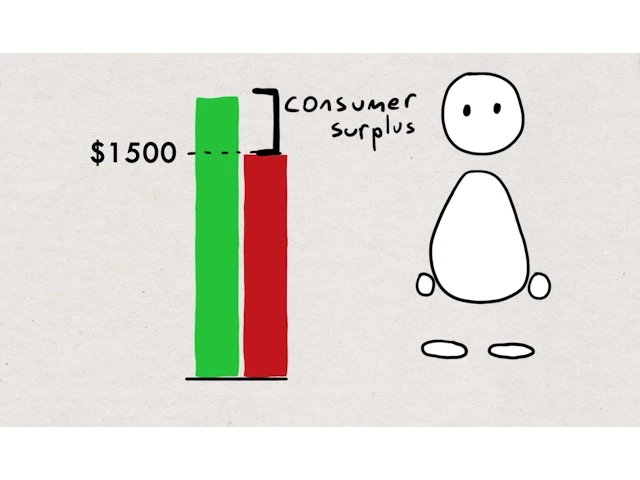
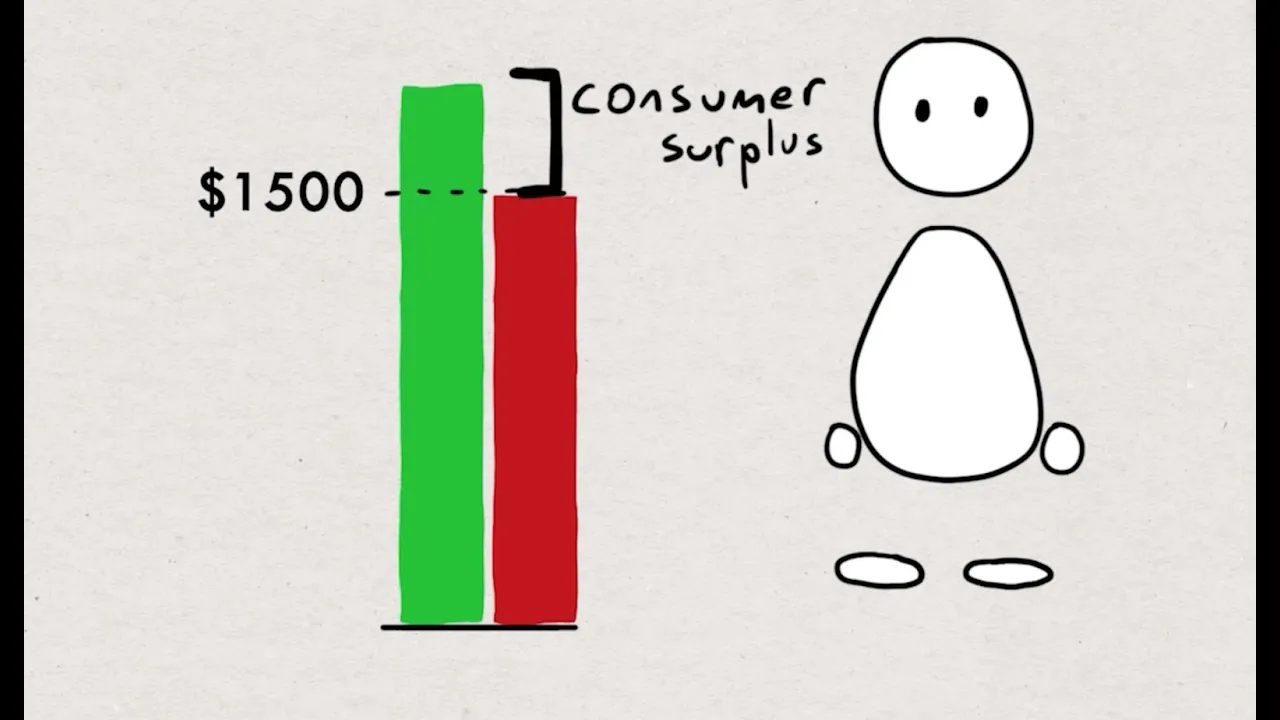
value from the price alone okay so if this person were to make the trade for the couch they are giving up this much utility in the form of money and they are gaining this much utility from the couch so they're essentially netting this much utility from the trade this section here is what they call the consumer surplus it's the extra utility a consumer gets from buying something if the price were up here they only value the thing this much but they would have to give up this much in their minds they're giving up more than
they're getting and they wouldn't make the trade in theory this point here is the Tipping Point for whether they will make the trade or not one penny above and they won't one penny below and they will same price and they're indifferent so it's the maximum this person is willing to pay for the item okay people's willingness to pay or trade is our best measure for how much somebody values something how much somebody values something has to do with for one their preference you know if we were talking about a pound of apples some people would
be willing to pay a lot for a pound of apples because they like apples or they believe they are healthy or whatever and others would only be willing to pay a small amount because they hate them or they think apples are stupid also it has to do with the scarcity of a thing if someone already has 100b of apples how much would they pay for another probably not a lot they have more than they need or want someone who has none will pay relatively more so let's imagine a whole number of people in between the
person that hates apples and the person that loves them or the person that has no apples and the person who is swimming in apples basically we can imagine people who value Apples by different amounts if the price decreases more people will buy apples the new lower price suddenly reflects what they are willing to trade for them at the same time we can look at this like if someone has one pound of apples how much do they value the next how much are they willing to pay for the next pound of apples if they have 2
pounds how much are they willing to pay for the third and so on always valuing the next pound of apples a little bit less the more that they have and we can imagine everyone does a similar thing so the general relationship is as the price decreases more apples will be sold this here is what they call the demand curve even though it's a straight line in this example this relationship may be very steep or not very steep what they call the elasticity just depends on the situation okay let's say the price was set here remember
with one person the extra utility above the utility they gave up from the trade was their consumer surplus with a group it's the same thing this is the number of apples that were sold this is the total benefit they all got from the apples this is the money had to pay and this is their Collective consumer surplus a number in dollars let's stop here for a second what is consumer surplus I mean it doesn't represent any money or Goods changing hands or anything like that it's just sort of the money that consumers might have paid
but didn't that doesn't really exists why is this important to us remember we're trying to measure value value is how much someone likes wants or needs something this thing we're trying to measure doesn't really exist or it's not physically tangible but the idea shows its face when people trade and we can see what people feel is an equivalent value in different things we didn't really get into how we find this line the demand curve but this is very important we'll look at how to find that information in another video for now we're just assuming that
we magically know the maximum willingness to pay or the Tipping points that everyone has for these apples okay let's say apples were completely free magically delivered straight to your house the most the first pound of apples would have traded for on the market would have been this the next pound the most it could trade for is this maybe it's the same person trading or maybe it's somebody else doesn't really matter if we add up the maximum willingness to pay for all the traded pounds of apples this is essentially the equivalent value of the apples traded
on the market in terms of another good in this case money but this is the exact same as saying that to all these people these apples are worth the same as you know whatever number of eggs or whatever number of t-shirts or whatever number of loaves of bread so if people do have to pay these apples here weren't sold nobody valued them at the price they were set at this area here represents value that people got from the apples but they had to give up an equal amount of another good it's sort of Net Zero
value to the consumer so this up here is the consumer surplus it's all the extra value they got from the trade and then we can imagine thousands of transactions and the consumer surplus is all of that extra value added together analyzing Surplus like this is how we determine the change in utility or value doing this in the wild is done by testing people's willingness to pay and observing Market data but many things are not bought and sold in a market and are just given for free from nature for example the pollination service is provided by
natural pollinators allowing certain crops to make fruits nuts or seeds or how about the role of a wet land in water purification the way people trade for things is the way we measure how much people value them so when things aren't traded we don't know how much people value them or at least it takes some additional work to find out which is the problem these things do offer utility they're free but remember price is different from value we can't take these things for granted it's like if apples are magically transported to your house the fact
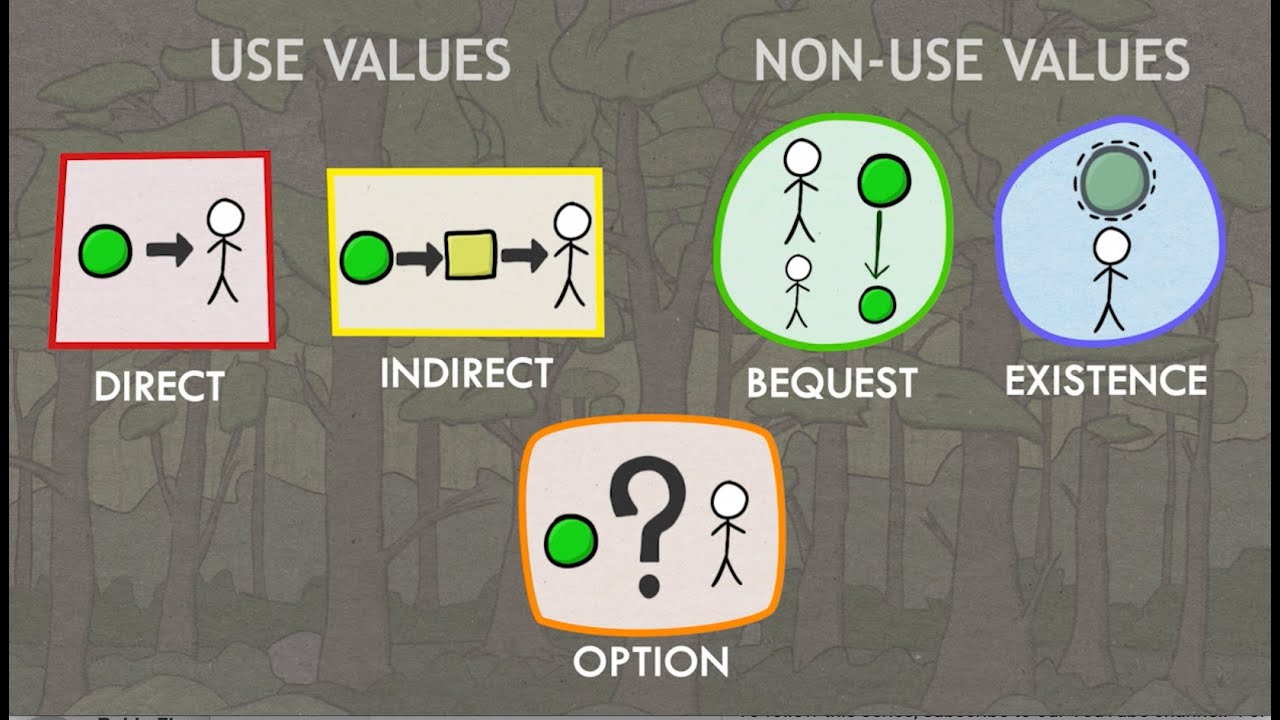
that they're free doesn't change step that it's food and it's useful to you in the following series we're going to look at how to quantify a value for these goods and services that are offered from nature or the environment or whatever you want to call it the non-human provided aspects of Our Lives if we can quantify the benefits then we can compare them against the human provided aspects of our lives so that when we make decisions we can come to the best outcomes first up we're going to go through and break down the kinds of
values an ecosystem can give us try to classify them and then later we'll look at what methods we can use to measure their value f