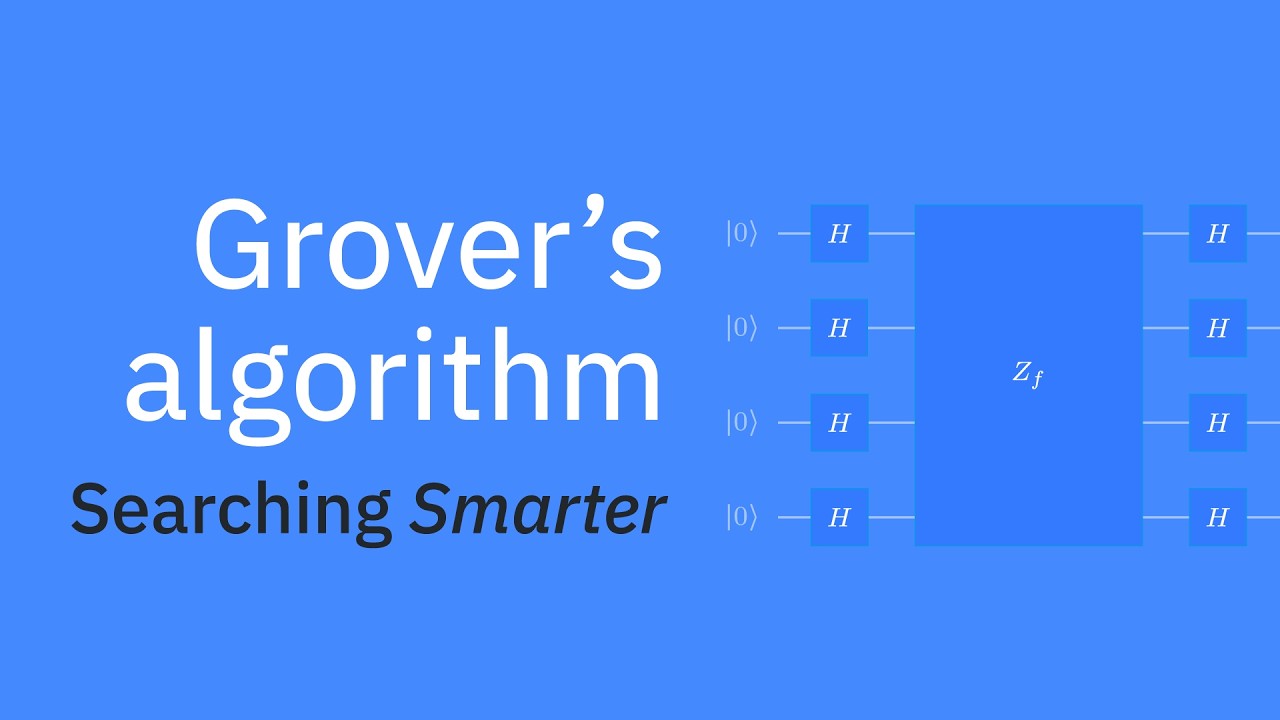
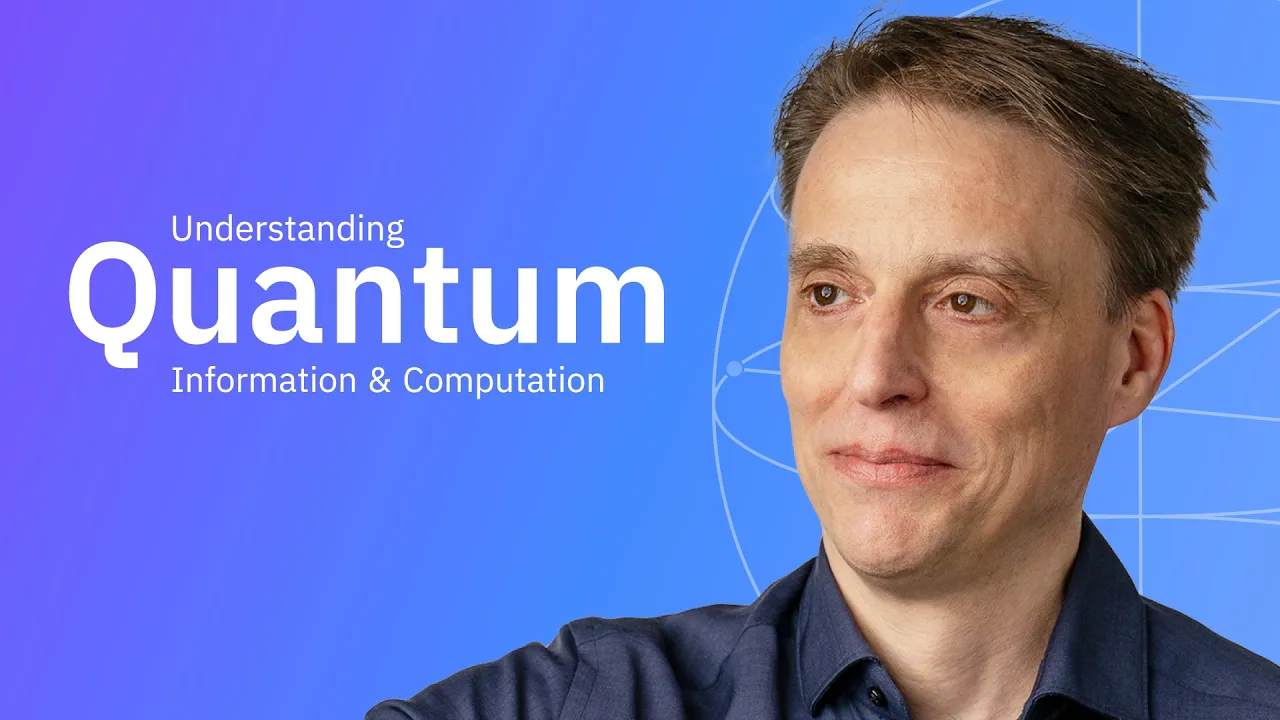
- Hello and welcome to Understanding Quantum Information and Computation. This is a series that explains how quantum information and computation work, at a detailed mathematical level. It's meant for anyone that wants to learn about quantum computing at a level that's comparable to what's taught in universities around the world to students at the advanced undergraduate, or introductory graduate level.
My name is John Watrous, and I'm the Technical Director of Education at IBM Quantum. I first learned about quantum computing in 1994, and I've been studying, researching, and teaching it ever since then. The idea behind this series is pretty simple.
There are a lot of people, all around the world, that want to learn about quantum computing, and ultimately to make contributions of their own to its development and its usage. My goal for this series is to make this content available to anyone that wishes to make use of it. Now, the series surely won't have value for everyone.
If you're not interested in getting into the details and learning about the mathematics behind quantum computing, it probably won't appeal to you. To follow these videos, you'll need to understand the basics of linear algebra, including vectors and matrices, and how to work with them, as well as notions such as linear independence, bases, and dimension. You also need to understand how complex numbers work, and you need to be comfortable with some basic mathematical concepts such as sets and functions.
There's no expectation that you have any background in quantum computing, quantum mechanics, or physics in general. Unit one of the series explains the basics of quantum information, including quantum states, measurements and operations, how quantum circuits work, and some important examples such as quantum teleportation. In unit two, we'll explore quantum algorithms, including Shor's algorithm for factoring integers, as well as some algorithms that are better suited to the quantum devices that are available to us today, which are steadily improving, but still somewhat limited.
In unit three, we'll dive a bit deeper into quantum information, and we'll talk about how it can be described using density matrices, and we'll explore why this is such an important tool for studying quantum information. Finally, in unit four, we'll move on to how we can understand and mitigate the effects of noise on quantum computers. Thank you for watching, and I hope you'll join me for the first lesson of the series.